
A leading China factory specializing in Wireless Tour Guide Systems, Church Audio Guides, and Translation Headphones with premium OEM/ODM solutions.

Tel:+86 18922879583

Email:tiger.wang@richitek.com

RC085, RC9150 and RC2408: The Three Lines a Church Order Leaves Blank

RC085, RC9150 and RC2408: The Three Lines a Church Order Leaves Blank

A church order usually arrives as a quantity. Somebody counts the seats, adds a margin, and sends a number for how many receivers the building needs and how many transmitters the languages need. That arithmetic settles most of the budget and stops where the running costs begin. What gets a parish through its third year is not the count on the first page but a handful of small items that never appear on any page. Our church translation and worship audio solutions are quoted with that second half of the question in mind.

The fastest way to see the gap is to read the warranty rather than the price list. All three units carry a three-year term, and the term names what it protects and what it does not. The document for the RC085 and the RC2408 spells it out in one sentence: the mainboard is covered and the vulnerable parts are excluded, listing a headset, a microphone and a battery. The RC9150 document states the same term against the mainboard and stops there, so the clause quietly names the only three items a congregation is ever likely to wear out.

The Clause With a Named Short List

None of that is a complaint, and a three-year term on the board that carries the radio is reasonable. The exclusion list is instead the best free specification a buyer gets, because it comes from the manufacturer rather than a sales conversation: it states which parts are expected to be replaced before the rest of the unit is, which makes it a parts forecast rather than a limit. The asymmetry matters too, since two of the three name their exclusions item by item while the RC9150 compresses the statement into the word mainboard.

First Excluded Item: The Part That Touches Every Listener

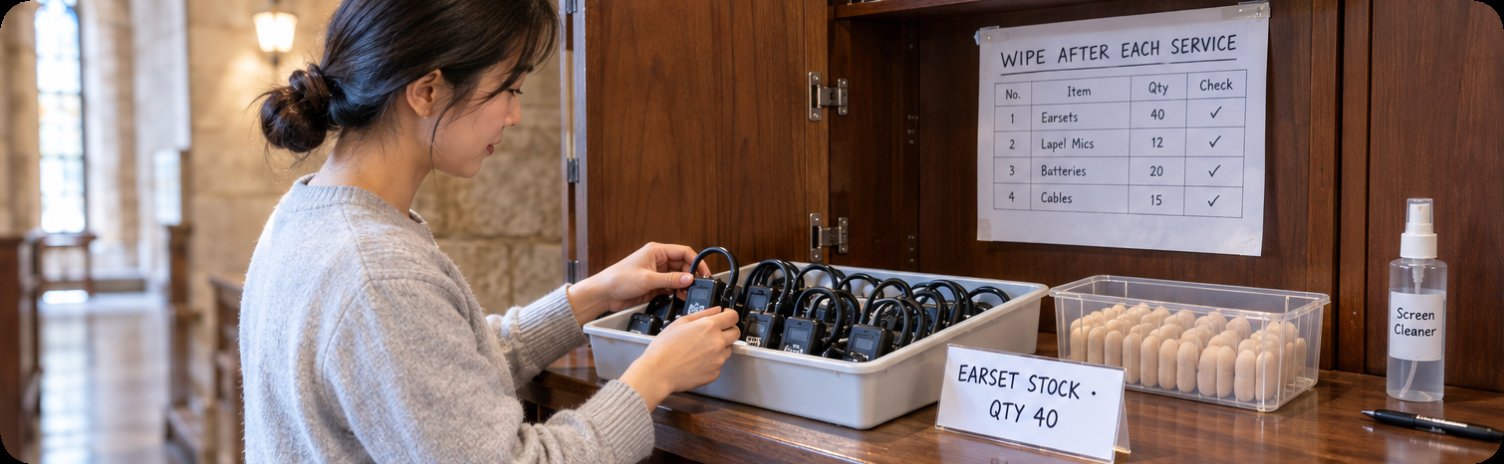
A headset, or an ear hook, is the only piece of the kit that touches a person, and in a church that is a hygiene question rather than a comfort one. It changes how the item is counted. Receivers are counted once, when they are bought, while foam covers and ear pads are counted per service, because the same receiver passes to a different listener on Friday and again on Sunday. A parish running four services a week and a wedding most Saturdays will cycle a small consumable through more than two hundred uses a year.
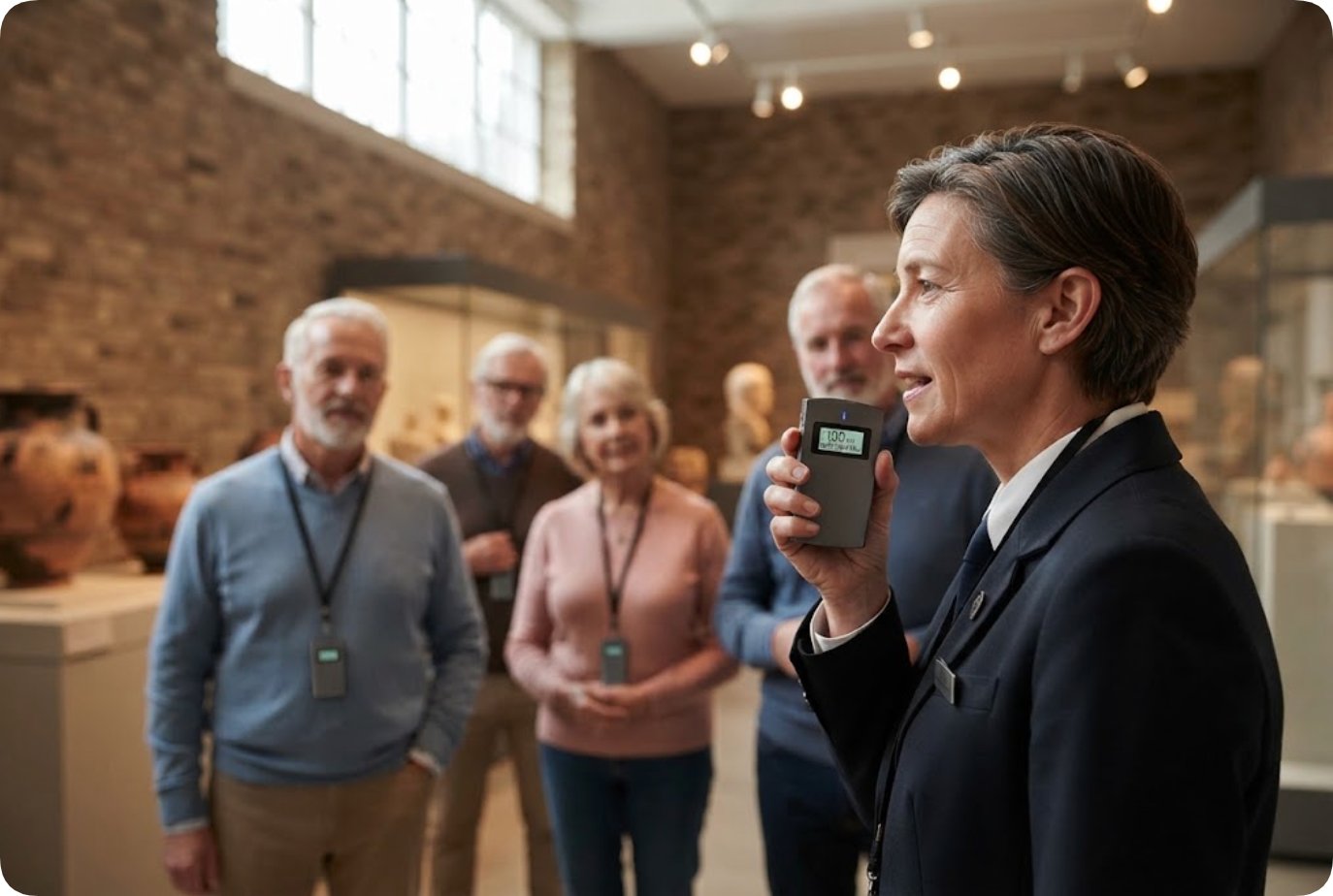
RC085-church_cathedral

The RC085 behaves differently here, and the difference is documented rather than implied. The UHF tour guide system supports an optional headset or lapel microphone, which makes the user-facing item a replaceable component rather than a sealed part of the receiver. A parish standardising on that arrangement keeps a box of covers and a box of headsets in the vestry and treats both as stock. One that does not discovers the same fact later, when the audio still works and the object people put on their heads no longer looks like something a visitor should be handed.

Second Excluded Item: The One That Only Fails in a Crowd

The microphone fails differently from everything else in the kit. A receiver that goes quiet takes one listener out of the service, and that listener leans over and asks a neighbour what was said. A microphone that goes quiet takes out the entire room, and it does so when the room is fullest, because that is when the speaker is furthest from the transmitter and the airborne noise is highest. The failure is not gradual in the way a battery is gradual; it is a threshold, and the crowd is what crosses it.
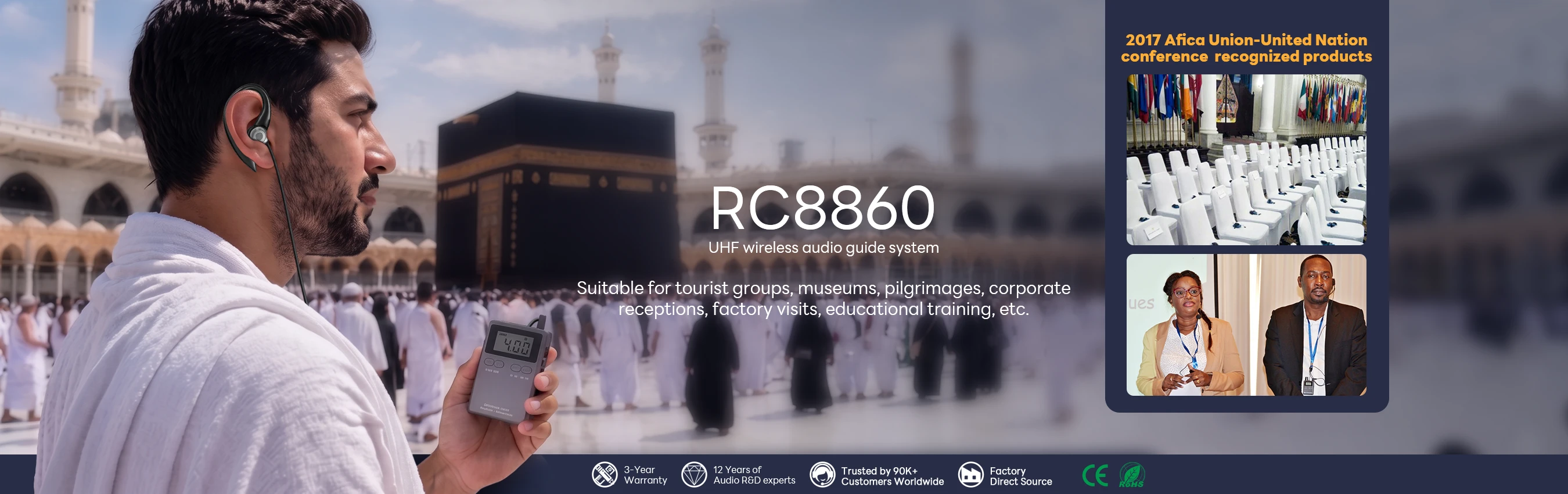
RC2408-church_cathedral

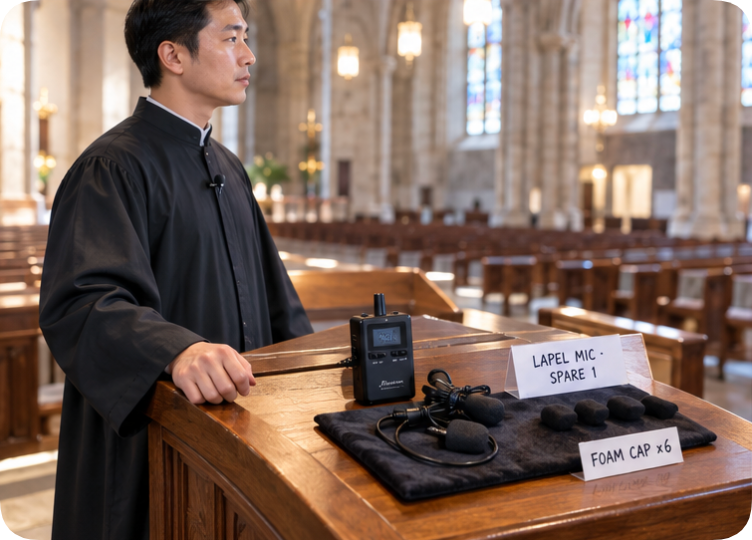
Two spares cover almost every version of this problem, and neither is expensive. The first is a complete second microphone, kept connected and tested, so a fault is answered by swapping an item rather than by diagnosing one in front of a congregation. The second is the foam windscreen, which is the part that actually degrades: it holds moisture, loses its shape, and stops doing its job long before the capsule behind it does. A microphone on the 80-channel wireless audio guide is a consumable with a capsule attached, not a fixture.

Third Excluded Item: The One With Two Degradation Curves

A battery is the excluded item that behaves least like a single component, because every kit contains two of them moving at different speeds. The transmitter cell carries the radio load continuously while the service is in progress, and the receiver cells sit at a much lower draw. On the RC085 the transmitter ships with a 1200 mAh pack against a 1000 mAh receiver pack, the RC9150 uses 1800 mAh on both sides, and the RC2408 pairs a 1500 mAh transmitter pack with a 1000 mAh receiver pack.
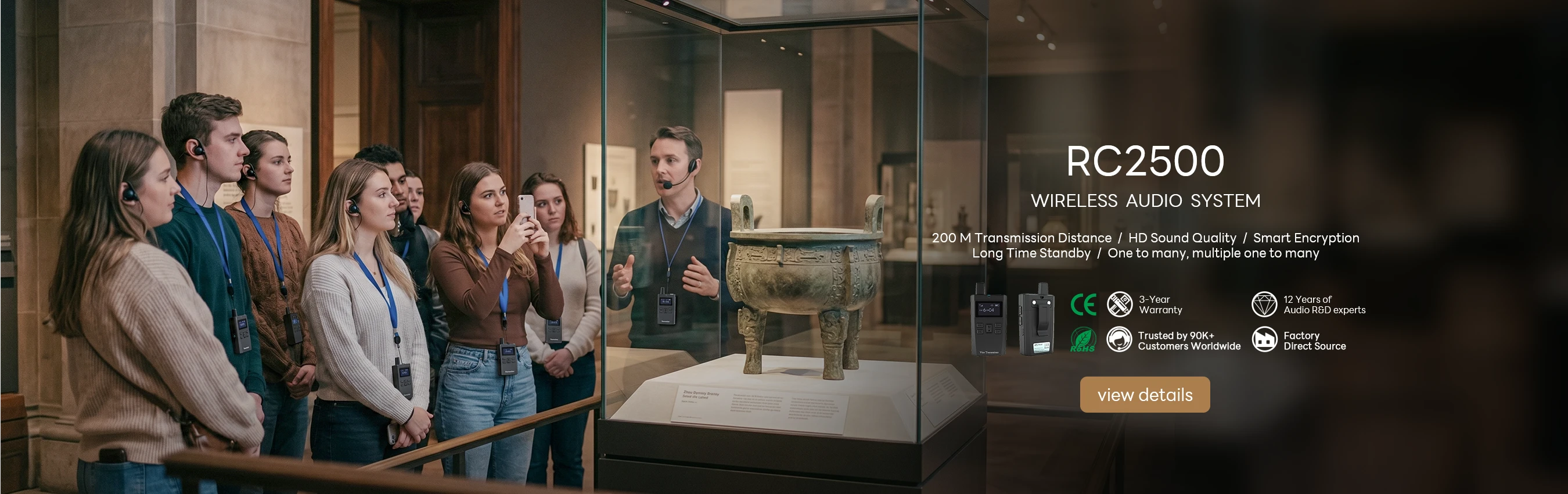
RC9150-church_cathedral

This is why a single spare battery is rarely the right answer for a church. A parish that stocks one spare for the transmitter is protecting the side that announces its weakness, because a transmitter that is flat is obvious within a minute. The side that fails quietly is the receiver, where a pack that has lost a third of its capacity still works for a short service and then fails on the morning when the reading runs long. The long-runtime wireless audio guide system narrows the gap by carrying 1800 mAh on both sides, which turns two replacement intervals into one.

Where the Cells Diverge Across the Range

ItemRC085RC9150RC2408
Core frequency band470-510 MHz UHF2403-2483 MHz2403-2483 MHz
Channels10010080
Transmitter runtime12 h15 h10 h
Receiver runtime20 h35+ h20 h
Transmitter cell3.7 V 1200 mAh3.7 V 1800 mAh3.7 V 1500 mAh
Receiver cell3.7 V 1000 mAh3.7 V 1800 mAh3.7 V 1000 mAh
Charging inputUSBType-CDC
Transmitter weight65 g97.5 g59 g
Receiver weight60 g97.5 g50 g

Read as a replacement plan rather than a feature list, the grid says something the headline specifications do not. The unit with the longest runtime is also the heaviest on both sides, so the parish that wants to charge least often is asking its listeners to wear roughly a hundred grams. Certification and warranty wording are deliberately absent, because the three documents do not enumerate identical lists.

The Connector Question Nobody Puts in Writing

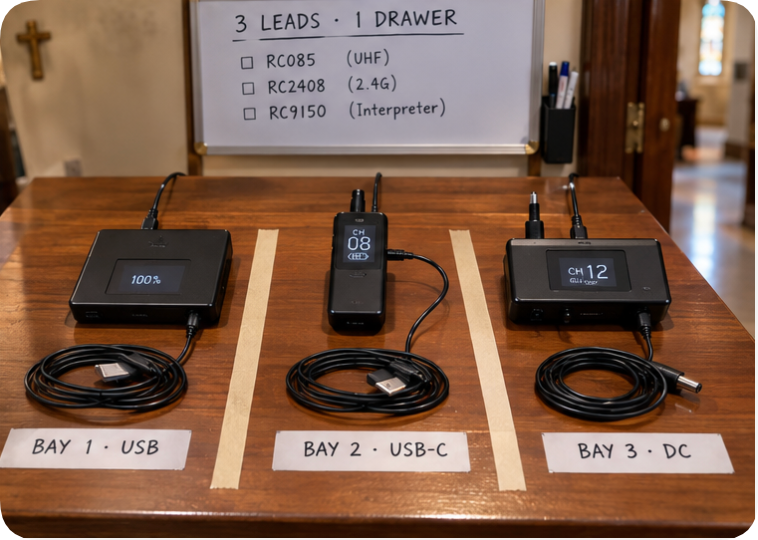
Nothing on a church quotation is described as a cable, yet the vestry drawer is where a kit is most likely to be quietly disabled. The RC085 takes USB, the RC9150 takes Type-C, and the RC2408 takes a DC port, which is three distinct leads for one parish. A lead is the item that walks away, gets borrowed for a laptop, or is pulled out by the cord until the strain relief fails. A receiver placed on a pad and never charged looks exactly like one that was never placed anywhere, and sorting the bays by connector removes that ambiguity for free.

What a Stone Building Does to a Quote

The building also decides part of the order, before any unit is chosen. A medieval interior is not one acoustic space but several: a nave, a side chapel and a crypt behave nothing alike, because stone a metre thick in one direction and a window in another reflects in patterns no floor plan captures. The RC085 answers that with a 470-510 MHz UHF platform and 100 channels, suited to long-range work through heavy masonry, while the two 2.4 GHz units trade some penetration for a lighter receiver. Channel count is the specification most often misread during procurement: a hundred channels is not a capacity of a hundred listeners but a hundred simultaneous frequency assignments, which lets several languages and several guides run at once.

Rewriting a Quote Around What Is Excluded

Put the argument in one line and it becomes a change to the order form rather than the equipment: what a parish buys should include the three items the warranty names as vulnerable. A stock figure for foam covers and an extra headset should sit beside the receiver count, and a spare receiver battery should sit beside the transmitter battery, because the two packs do not age together. None of this requires a larger system, only a quotation carrying the same clause. Browse the wireless tour guide system range or explore our solutions for other building layouts, and ask for the exclusion list with the quote.


2026年09月24日 09:52
click: 12

RC085, RC9150 and RC2408: The Three Lines a Church Order Leaves Blank

time: 2026年09月24日 click:12

RC085, RC9150 and RC2408: The Three Lines a Church Order Leaves Blank

A church order usually arrives as a quantity. Somebody counts the seats, adds a margin, and sends a number for how many receivers the building needs and how many transmitters the languages need. That arithmetic settles most of the budget and stops where the running costs begin. What gets a parish through its third year is not the count on the first page but a handful of small items that never appear on any page. Our church translation and worship audio solutions are quoted with that second half of the question in mind.

The fastest way to see the gap is to read the warranty rather than the price list. All three units carry a three-year term, and the term names what it protects and what it does not. The document for the RC085 and the RC2408 spells it out in one sentence: the mainboard is covered and the vulnerable parts are excluded, listing a headset, a microphone and a battery. The RC9150 document states the same term against the mainboard and stops there, so the clause quietly names the only three items a congregation is ever likely to wear out.

The Clause With a Named Short List

None of that is a complaint, and a three-year term on the board that carries the radio is reasonable. The exclusion list is instead the best free specification a buyer gets, because it comes from the manufacturer rather than a sales conversation: it states which parts are expected to be replaced before the rest of the unit is, which makes it a parts forecast rather than a limit. The asymmetry matters too, since two of the three name their exclusions item by item while the RC9150 compresses the statement into the word mainboard.

First Excluded Item: The Part That Touches Every Listener

A headset, or an ear hook, is the only piece of the kit that touches a person, and in a church that is a hygiene question rather than a comfort one. It changes how the item is counted. Receivers are counted once, when they are bought, while foam covers and ear pads are counted per service, because the same receiver passes to a different listener on Friday and again on Sunday. A parish running four services a week and a wedding most Saturdays will cycle a small consumable through more than two hundred uses a year.

RC085-church_cathedral

The RC085 behaves differently here, and the difference is documented rather than implied. The UHF tour guide system supports an optional headset or lapel microphone, which makes the user-facing item a replaceable component rather than a sealed part of the receiver. A parish standardising on that arrangement keeps a box of covers and a box of headsets in the vestry and treats both as stock. One that does not discovers the same fact later, when the audio still works and the object people put on their heads no longer looks like something a visitor should be handed.

Second Excluded Item: The One That Only Fails in a Crowd

The microphone fails differently from everything else in the kit. A receiver that goes quiet takes one listener out of the service, and that listener leans over and asks a neighbour what was said. A microphone that goes quiet takes out the entire room, and it does so when the room is fullest, because that is when the speaker is furthest from the transmitter and the airborne noise is highest. The failure is not gradual in the way a battery is gradual; it is a threshold, and the crowd is what crosses it.

RC2408-church_cathedral

Two spares cover almost every version of this problem, and neither is expensive. The first is a complete second microphone, kept connected and tested, so a fault is answered by swapping an item rather than by diagnosing one in front of a congregation. The second is the foam windscreen, which is the part that actually degrades: it holds moisture, loses its shape, and stops doing its job long before the capsule behind it does. A microphone on the 80-channel wireless audio guide is a consumable with a capsule attached, not a fixture.

Third Excluded Item: The One With Two Degradation Curves

A battery is the excluded item that behaves least like a single component, because every kit contains two of them moving at different speeds. The transmitter cell carries the radio load continuously while the service is in progress, and the receiver cells sit at a much lower draw. On the RC085 the transmitter ships with a 1200 mAh pack against a 1000 mAh receiver pack, the RC9150 uses 1800 mAh on both sides, and the RC2408 pairs a 1500 mAh transmitter pack with a 1000 mAh receiver pack.

RC9150-church_cathedral

This is why a single spare battery is rarely the right answer for a church. A parish that stocks one spare for the transmitter is protecting the side that announces its weakness, because a transmitter that is flat is obvious within a minute. The side that fails quietly is the receiver, where a pack that has lost a third of its capacity still works for a short service and then fails on the morning when the reading runs long. The long-runtime wireless audio guide system narrows the gap by carrying 1800 mAh on both sides, which turns two replacement intervals into one.

Where the Cells Diverge Across the Range

ItemRC085RC9150RC2408
Core frequency band470-510 MHz UHF2403-2483 MHz2403-2483 MHz
Channels10010080
Transmitter runtime12 h15 h10 h
Receiver runtime20 h35+ h20 h
Transmitter cell3.7 V 1200 mAh3.7 V 1800 mAh3.7 V 1500 mAh
Receiver cell3.7 V 1000 mAh3.7 V 1800 mAh3.7 V 1000 mAh
Charging inputUSBType-CDC
Transmitter weight65 g97.5 g59 g
Receiver weight60 g97.5 g50 g

Read as a replacement plan rather than a feature list, the grid says something the headline specifications do not. The unit with the longest runtime is also the heaviest on both sides, so the parish that wants to charge least often is asking its listeners to wear roughly a hundred grams. Certification and warranty wording are deliberately absent, because the three documents do not enumerate identical lists.

The Connector Question Nobody Puts in Writing

Nothing on a church quotation is described as a cable, yet the vestry drawer is where a kit is most likely to be quietly disabled. The RC085 takes USB, the RC9150 takes Type-C, and the RC2408 takes a DC port, which is three distinct leads for one parish. A lead is the item that walks away, gets borrowed for a laptop, or is pulled out by the cord until the strain relief fails. A receiver placed on a pad and never charged looks exactly like one that was never placed anywhere, and sorting the bays by connector removes that ambiguity for free.

What a Stone Building Does to a Quote

The building also decides part of the order, before any unit is chosen. A medieval interior is not one acoustic space but several: a nave, a side chapel and a crypt behave nothing alike, because stone a metre thick in one direction and a window in another reflects in patterns no floor plan captures. The RC085 answers that with a 470-510 MHz UHF platform and 100 channels, suited to long-range work through heavy masonry, while the two 2.4 GHz units trade some penetration for a lighter receiver. Channel count is the specification most often misread during procurement: a hundred channels is not a capacity of a hundred listeners but a hundred simultaneous frequency assignments, which lets several languages and several guides run at once.

Rewriting a Quote Around What Is Excluded

Put the argument in one line and it becomes a change to the order form rather than the equipment: what a parish buys should include the three items the warranty names as vulnerable. A stock figure for foam covers and an extra headset should sit beside the receiver count, and a spare receiver battery should sit beside the transmitter battery, because the two packs do not age together. None of this requires a larger system, only a quotation carrying the same clause. Browse the wireless tour guide system range or explore our solutions for other building layouts, and ask for the exclusion list with the quote.

×

Contact us

email:
name:
subject:
content: