
A leading China factory specializing in Wireless Tour Guide Systems, Church Audio Guides, and Translation Headphones with premium OEM/ODM solutions.

Tel:+86 18922879583

Email:tiger.wang@richitek.com

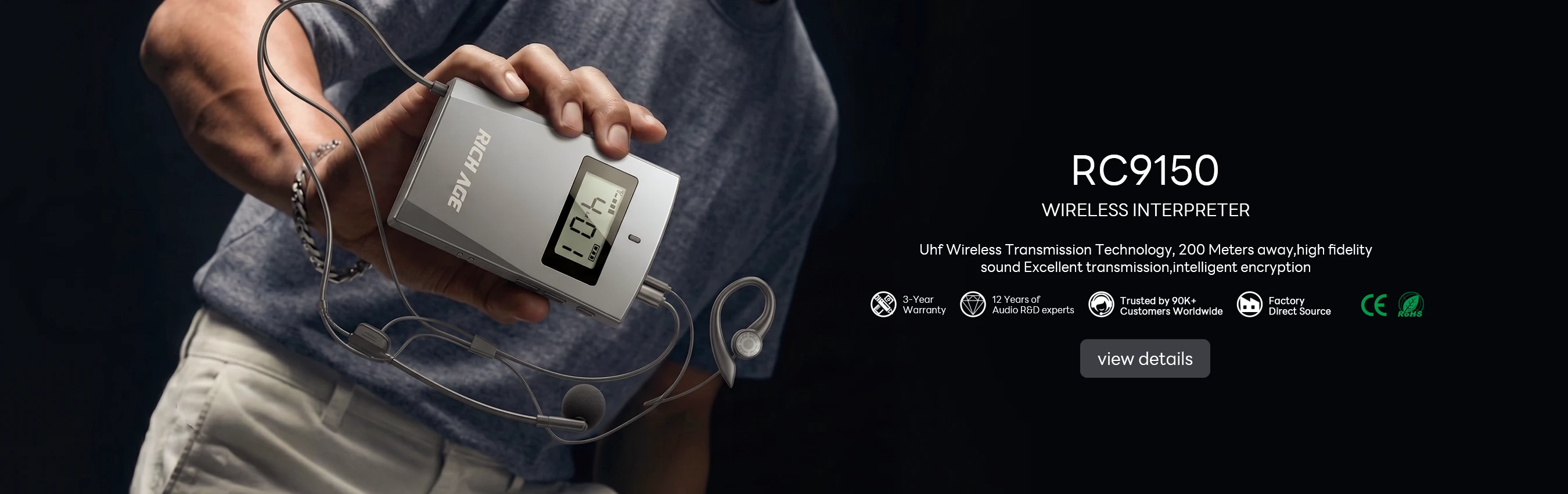
RC9150, RC2406 and RC2401: The Spec Sheet Rows a Data Centre Order Turns On

RC9150, RC2406 and RC2401: The Spec Sheet Rows a Data Centre Order Turns On

Three quotes for a wireless tour guide system land in the same inbox, and at first glance they describe the same product: a 2.4 GHz band, a range up to 200 metres, one transmitter, and a pile of receivers that hang around a neck. The rows a buyer reads first are the rows that separate the units least. What separates them sits further down the page, and those rows only start to matter inside a building where groups are counted, escorted and booked back to back. This article takes the three units most often quoted for controlled-site visits such as data centre tours and works through what each row actually decides.

💡 Why Three Data Centre Quotes Look Identical on Paper

A data centre tour is not a museum walk with a loose crowd. The floor is zoned, some aisles cannot be photographed, shifts overlap through the day, and the security desk counts heads at every door. The brief is short: how many receivers, how many languages, how many groups moving at once. Suppliers answer with sheets that share their top rows, because those rows describe the category rather than the unit. A buyer who reads only them sees parity and picks on price, which is where the trouble starts: the three units suit three sizes of day.

The Rows Every Unit in the Range Repeats

Start with the rows that decide nothing. Frequency reads 2403-2483 MHz on all three, the licence-free ISM band, so none needs a regional permit. Transmission distance reads 1-200 metres on all three and on every one of the ten models in the range. Output power reads 10 mW on eight of those ten. Control mode is PLL frequency synthesis throughout. None of it helps a buyer choose. Two rows look decisive and are not: the RC2406 and the RC2401 publish the same receiver frequency response, and all three share a one-transmitter-to-many-receivers topology. A useful comparison starts below those rows, on three counts that change how a working week feels.

The First Deciding Row Is How Many Rooms Can Talk at Once

Channel count is the first row that changes an order. The RC9150 carries 100 channels, the RC2406 carries 80, and the RC2401 carries 50. On a quiet Tuesday the difference is invisible. On the Tuesday when a client due-diligence walkthrough crosses the hall while a staff induction sits in the training room and an auditor escort waits by the loading bay, the arithmetic becomes real. Three groups need three channels, and each needs one that nothing else in the building is using. At 50 the margin is comfortable only if the site rarely runs more than a couple of simultaneous parties; at 100 the same building can host a conference week without anyone stepping on anyone. The published claim is zero crosstalk, which is what channel separation is meant to buy. What the count really buys is the number of arguments the security desk never has to settle.

RC9150-data_center_tour

The Second Is Which Half of the Kit Runs Out First

Battery life is usually written as one number and should be read as two. The RC9150 publishes 15 hours on the transmitter and 35+ hours on the receiver; the RC2406 and the RC2401 both publish 10 and 20 hours on the same halves. The pair matters more than either figure, because the halves leave the building in different hands. The receiver goes on a visitor and stays on for the whole visit, including the waiting between zones; the transmitter is what a guide holds and switches between languages. Where the receiver outlasts the transmitter by more than a factor of two, as on the RC9150, the half that runs out first is the one in the guide's hand, swappable without touching a visitor. At 10 and 20 the balance is healthy but thinner. The capacities say the same: 1800 mAh in both packs on the RC9150, against 1500 mAh and 1000 mAh on the other two. A data centre week, with one tray charging everything, is where the wider pair earns its keep.
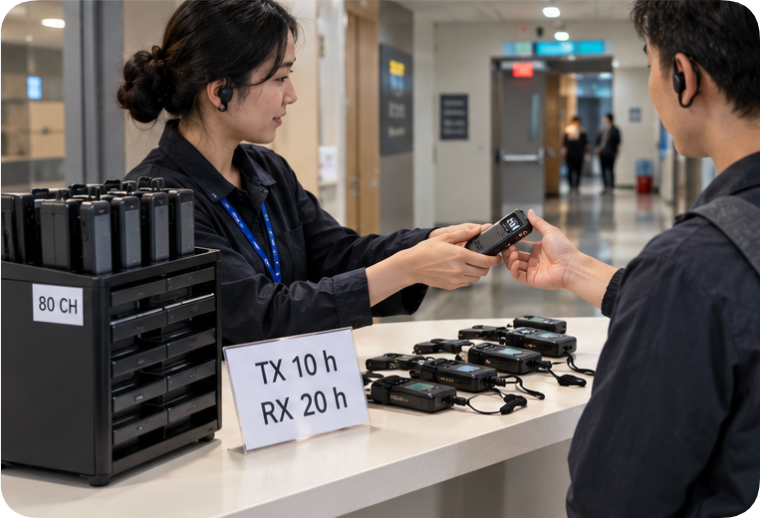
RC2406-data_center_tour

⚖️ The Third Is What Happens Between Two Bookings

Charging decides how the back office looks. The RC9150 charges through Type-C. The RC2406 and the RC2401 charge through a DC port. The difference shows up in the drawer. A site running the RC9150 needs one cable type for every transmitter and receiver, the same cable its staff already carry for laptops, replaceable anywhere. A site running either of the others needs its own DC leads labelled and returned with the kit, twenty of them for twenty receivers, none of which may wander off. The row also feeds back into the previous one: a receiver that reaches 35+ hours gives a site two full days between charges, so the drawer can sit shut through a busy stretch, while a 20-hour receiver asks for a socket every night.
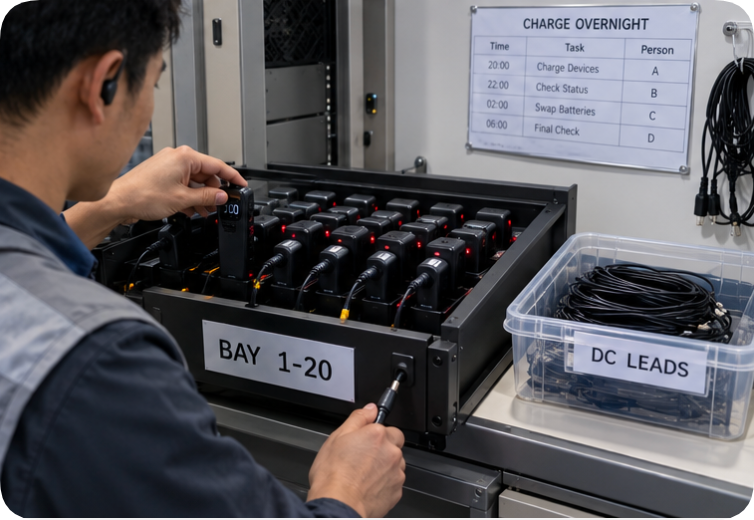
RC2401-data_center_tour

Putting Each Unit in the Same Building

The RC9150 is the unit for a building that hosts several parties at once. Its 100 channels sit above the 80 and the 50 of the other two, its transmitter runs 15 hours against a receiver that runs 35+ hours, both packs hold 1800 mAh, both halves weigh 97.5 g, and the kit charges over Type-C. Published certifications are CE, EMC, LVD, RED and RoHS, with a three-year warranty on the mainboard. It is the heaviest of the three, the price of the larger cell.

The RC2406 is the middle unit, the one to quote when a site runs three or four parties a day and wants headroom without the top of the range. Its 80 channels sit between the other two, the halves run 10 and 20 hours on 1500 mAh and 1000 mAh packs, and it weighs 59 g on the transmitter and 50 g on the receiver. The product page publishes IPX4 against splashes, RoHS compliance, one-click pairing, and a three-year warranty covering the mainboard while excluding the headset, the microphone and the battery.

The RC2401 is the entry into the same platform and the unit for a site booking one or two groups a day. Its 50 channels are the smallest count of the three, the battery pair matches the RC2406, and the weights match at 59 g and 50 g. It carries IPX4, CE and RoHS compliance, one-button synchronisation, and the same three-year mainboard warranty with accessories excluded.

Deciding rowRC9150RC2406RC2401
Core frequency band2403-2483 MHz2403-2483 MHz2403-2483 MHz
Number of channels1008050
Transmission distance1-200 m1-200 m1-200 m
Output power10 mW10 mW10 mW
Transmitter battery life15 h10 h10 h
Receiver battery life35+ h20 h20 h
Transmitter battery3.7V 1800 mAh3.7V 1500 mAh3.7V 1500 mAh
Receiver battery3.7V 1800 mAh3.7V 1000 mAh3.7V 1000 mAh
Transmitter weight97.5 g59 g59 g
Receiver weight97.5 g50 g50 g
Charging portType-CDC PortDC Port

Lines Under the Table Worth Reading Twice

Two details sit below the numbers and rarely reach a comparison. The first is the warranty wording. All three carry a three-year term, and on the RC2406 and the RC2401 the published text names what the term excludes: the headset, the microphone and the battery. Those are the parts that touch every visitor and guide, so they should be priced as consumables. The second is the splash rating. The RC2406 and the RC2401 publish IPX4, and the RC9150 page publishes no rating at all, which says more about the documentation than the hardware; a buyer who needs it in writing should ask before ordering. Weight deserves a look too: the RC9150 is heaviest at 97.5 g on both halves, against 59 g and 50 g, the honest trade for the larger cell and the longer receiver run. A shop for wireless tour guide systems should carry all of these lines, not just the headline ones.

What to Settle Before the Order Is Signed

Four answers settle which unit belongs on the purchase order. How many parties will the building host at the same moment on its busiest day, because that sets the channel floor. How many hours the longest guided shift runs, and who carries the half that will run out first. Where twenty transmitters and twenty receivers get charged overnight, and whether the site wants one cable type or its own set of leads. And what the warranty excludes, because that line decides the running cost over the three years after delivery. Where two candidates remain, the RC2401 vs RC2406 comparison chart puts the channel difference on one page, which is often the only row left to settle.


2026年09月24日 10:25
click: 21
no data

RC9150, RC2406 and RC2401: The Spec Sheet Rows a Data Centre Order Turns On

time: 2026年09月24日 click:21

RC9150, RC2406 and RC2401: The Spec Sheet Rows a Data Centre Order Turns On

Three quotes for a wireless tour guide system land in the same inbox, and at first glance they describe the same product: a 2.4 GHz band, a range up to 200 metres, one transmitter, and a pile of receivers that hang around a neck. The rows a buyer reads first are the rows that separate the units least. What separates them sits further down the page, and those rows only start to matter inside a building where groups are counted, escorted and booked back to back. This article takes the three units most often quoted for controlled-site visits such as data centre tours and works through what each row actually decides.

💡 Why Three Data Centre Quotes Look Identical on Paper

A data centre tour is not a museum walk with a loose crowd. The floor is zoned, some aisles cannot be photographed, shifts overlap through the day, and the security desk counts heads at every door. The brief is short: how many receivers, how many languages, how many groups moving at once. Suppliers answer with sheets that share their top rows, because those rows describe the category rather than the unit. A buyer who reads only them sees parity and picks on price, which is where the trouble starts: the three units suit three sizes of day.

The Rows Every Unit in the Range Repeats

Start with the rows that decide nothing. Frequency reads 2403-2483 MHz on all three, the licence-free ISM band, so none needs a regional permit. Transmission distance reads 1-200 metres on all three and on every one of the ten models in the range. Output power reads 10 mW on eight of those ten. Control mode is PLL frequency synthesis throughout. None of it helps a buyer choose. Two rows look decisive and are not: the RC2406 and the RC2401 publish the same receiver frequency response, and all three share a one-transmitter-to-many-receivers topology. A useful comparison starts below those rows, on three counts that change how a working week feels.

The First Deciding Row Is How Many Rooms Can Talk at Once

Channel count is the first row that changes an order. The RC9150 carries 100 channels, the RC2406 carries 80, and the RC2401 carries 50. On a quiet Tuesday the difference is invisible. On the Tuesday when a client due-diligence walkthrough crosses the hall while a staff induction sits in the training room and an auditor escort waits by the loading bay, the arithmetic becomes real. Three groups need three channels, and each needs one that nothing else in the building is using. At 50 the margin is comfortable only if the site rarely runs more than a couple of simultaneous parties; at 100 the same building can host a conference week without anyone stepping on anyone. The published claim is zero crosstalk, which is what channel separation is meant to buy. What the count really buys is the number of arguments the security desk never has to settle.

RC9150-data_center_tour

The Second Is Which Half of the Kit Runs Out First

Battery life is usually written as one number and should be read as two. The RC9150 publishes 15 hours on the transmitter and 35+ hours on the receiver; the RC2406 and the RC2401 both publish 10 and 20 hours on the same halves. The pair matters more than either figure, because the halves leave the building in different hands. The receiver goes on a visitor and stays on for the whole visit, including the waiting between zones; the transmitter is what a guide holds and switches between languages. Where the receiver outlasts the transmitter by more than a factor of two, as on the RC9150, the half that runs out first is the one in the guide's hand, swappable without touching a visitor. At 10 and 20 the balance is healthy but thinner. The capacities say the same: 1800 mAh in both packs on the RC9150, against 1500 mAh and 1000 mAh on the other two. A data centre week, with one tray charging everything, is where the wider pair earns its keep.

RC2406-data_center_tour

⚖️ The Third Is What Happens Between Two Bookings

Charging decides how the back office looks. The RC9150 charges through Type-C. The RC2406 and the RC2401 charge through a DC port. The difference shows up in the drawer. A site running the RC9150 needs one cable type for every transmitter and receiver, the same cable its staff already carry for laptops, replaceable anywhere. A site running either of the others needs its own DC leads labelled and returned with the kit, twenty of them for twenty receivers, none of which may wander off. The row also feeds back into the previous one: a receiver that reaches 35+ hours gives a site two full days between charges, so the drawer can sit shut through a busy stretch, while a 20-hour receiver asks for a socket every night.

RC2401-data_center_tour

Putting Each Unit in the Same Building

The RC9150 is the unit for a building that hosts several parties at once. Its 100 channels sit above the 80 and the 50 of the other two, its transmitter runs 15 hours against a receiver that runs 35+ hours, both packs hold 1800 mAh, both halves weigh 97.5 g, and the kit charges over Type-C. Published certifications are CE, EMC, LVD, RED and RoHS, with a three-year warranty on the mainboard. It is the heaviest of the three, the price of the larger cell.

The RC2406 is the middle unit, the one to quote when a site runs three or four parties a day and wants headroom without the top of the range. Its 80 channels sit between the other two, the halves run 10 and 20 hours on 1500 mAh and 1000 mAh packs, and it weighs 59 g on the transmitter and 50 g on the receiver. The product page publishes IPX4 against splashes, RoHS compliance, one-click pairing, and a three-year warranty covering the mainboard while excluding the headset, the microphone and the battery.

The RC2401 is the entry into the same platform and the unit for a site booking one or two groups a day. Its 50 channels are the smallest count of the three, the battery pair matches the RC2406, and the weights match at 59 g and 50 g. It carries IPX4, CE and RoHS compliance, one-button synchronisation, and the same three-year mainboard warranty with accessories excluded.

Deciding rowRC9150RC2406RC2401
Core frequency band2403-2483 MHz2403-2483 MHz2403-2483 MHz
Number of channels1008050
Transmission distance1-200 m1-200 m1-200 m
Output power10 mW10 mW10 mW
Transmitter battery life15 h10 h10 h
Receiver battery life35+ h20 h20 h
Transmitter battery3.7V 1800 mAh3.7V 1500 mAh3.7V 1500 mAh
Receiver battery3.7V 1800 mAh3.7V 1000 mAh3.7V 1000 mAh
Transmitter weight97.5 g59 g59 g
Receiver weight97.5 g50 g50 g
Charging portType-CDC PortDC Port

Lines Under the Table Worth Reading Twice

Two details sit below the numbers and rarely reach a comparison. The first is the warranty wording. All three carry a three-year term, and on the RC2406 and the RC2401 the published text names what the term excludes: the headset, the microphone and the battery. Those are the parts that touch every visitor and guide, so they should be priced as consumables. The second is the splash rating. The RC2406 and the RC2401 publish IPX4, and the RC9150 page publishes no rating at all, which says more about the documentation than the hardware; a buyer who needs it in writing should ask before ordering. Weight deserves a look too: the RC9150 is heaviest at 97.5 g on both halves, against 59 g and 50 g, the honest trade for the larger cell and the longer receiver run. A shop for wireless tour guide systems should carry all of these lines, not just the headline ones.

What to Settle Before the Order Is Signed

Four answers settle which unit belongs on the purchase order. How many parties will the building host at the same moment on its busiest day, because that sets the channel floor. How many hours the longest guided shift runs, and who carries the half that will run out first. Where twenty transmitters and twenty receivers get charged overnight, and whether the site wants one cable type or its own set of leads. And what the warranty excludes, because that line decides the running cost over the three years after delivery. Where two candidates remain, the RC2401 vs RC2406 comparison chart puts the channel difference on one page, which is often the only row left to settle.

no data
×

Contact us

email:
name:
subject:
content: