
.webp)
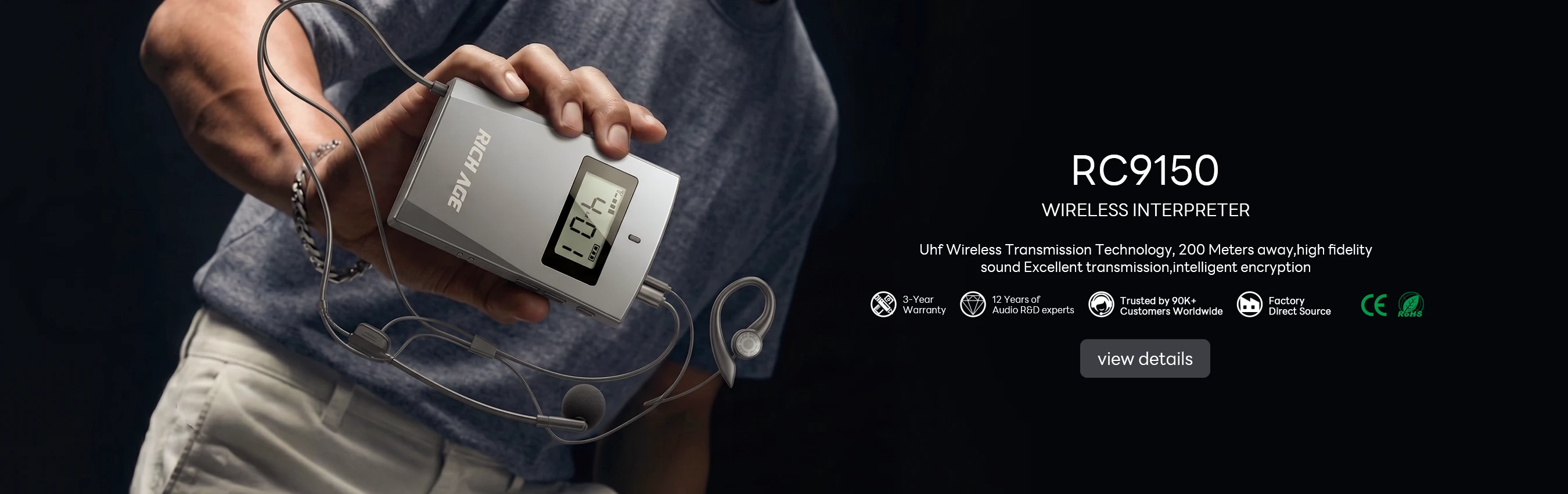
I have sat through the second morning of a four-language conference where one language went quiet for eleven minutes before anyone reacted. Every delegate still had a charged handset in front of them, still switched on, still showing the channel they chose on the first morning. What had stopped was the transmitter on the interpreter's desk, which had been running since eight the previous morning and had finally reached the end of the ten-hour figure that looked generous when the quotation was written.
Nothing about that failure was exotic, and that is the part worth writing about. A language service order is assembled from rows that look alike — transmitters, receivers, chargers, earphones — and priced as though they belonged to one family. They do not. One of those rows is very short, and the delegates' experience of the conference depends on it more than on any other line.
A Language Order Is Counted in Seats, Not in Voices
The arithmetic at the top of a conference audio order always has the same shape. Take the number of seats, multiply by the number of languages, and the answer becomes the receiver count. Four hundred seats across four languages is sixteen hundred handsets, or four hundred if delegates are expected to change channel themselves.
Everything below is filled in from the same logic: chargers, earphones, lanyards, spare ear pads, a case or two. It reads as a complete document, costed line by line and checked against a previous event. The one number that does not follow the pattern is the smallest figure on the sheet, and it is the only one that can end a conference early.
The Row That Reads One per Language
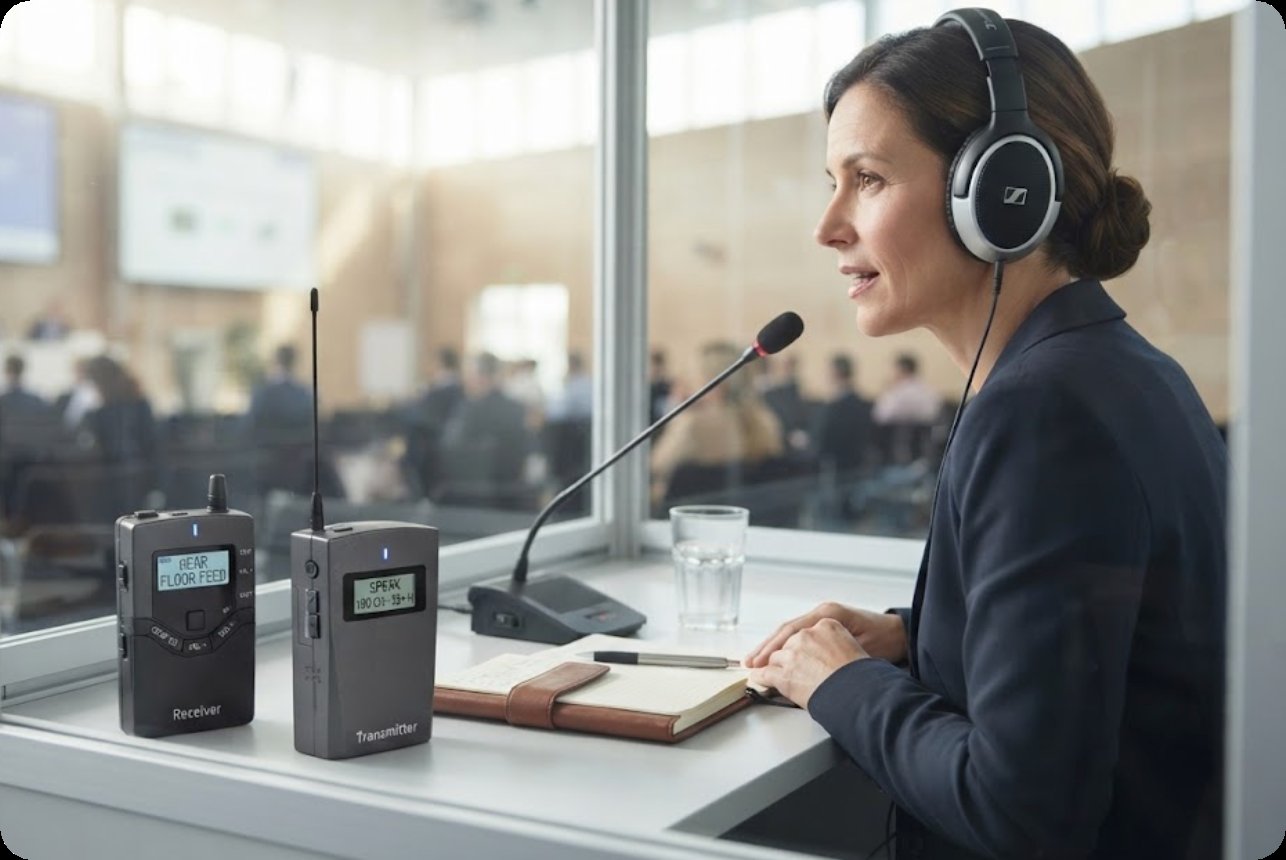
Transmitters are ordered by language, not by seat. A four-language conference needs four of them at the interpreter positions, plus whatever is feeding the floor. It is the shortest row on the document, often four or five units against several hundred receivers, and on price it barely registers.
That disproportion is what makes it easy to under-read. Receivers fail one delegate at a time — a flat battery, a dropped unit, a channel knocked by accident — and each failure produces a single person, absorbed by the event without anyone senior hearing about it. A transmitter failing has no neighbour to lean towards, because everyone on that channel meets the same silence at once, and the interpreter is the last to know.
Simultaneous interpretation and conference audio systems of every make are priced along these lines, so this is not an argument against any particular kit. It is an argument about which row the organiser should be nervous about.
What Minute Four Hundred Does to a Ten-Hour Pack
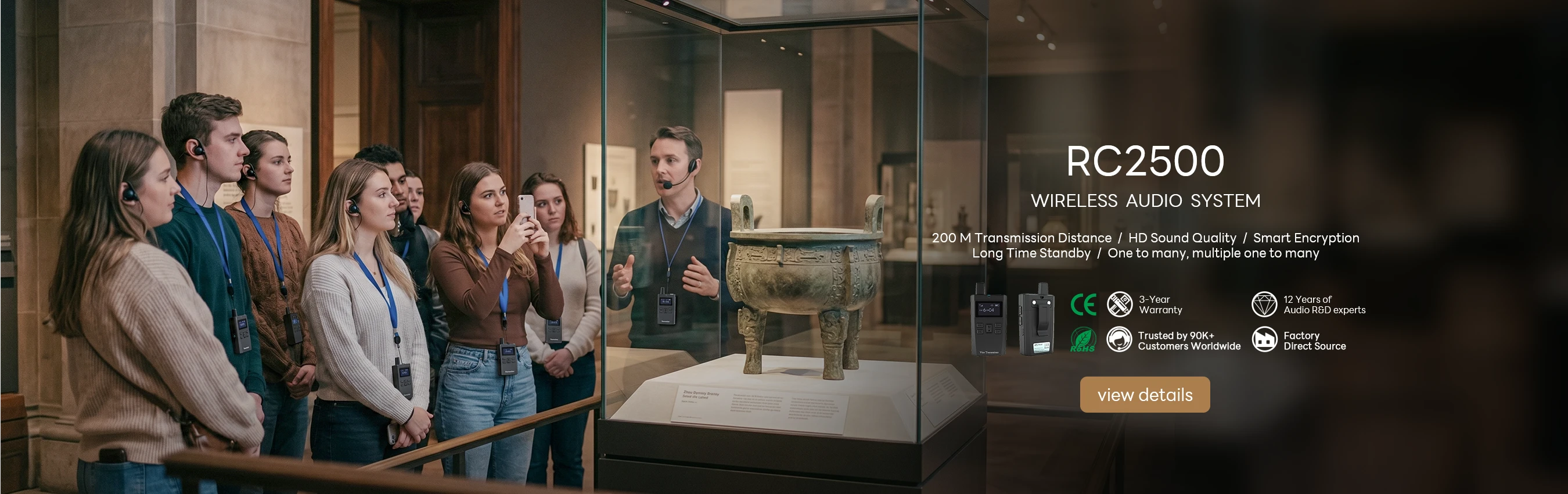
Conference agendas are built in half-days with breaks, and a full day of sessions usually lands between eight and ten hours of powered time before the morning briefing or the evening reception that turns out to need audio as well. A pack rated at fifteen hours on the RC2500 clears that comfortably. A pack rated at ten hours has no margin; it clears the day only if the programme finishes when it says it will.
The awkward part is that this is the one component that cannot be swapped mid-session. A receiver with a flat battery can be exchanged at the back of the room and the delegate loses a sentence. Changing a transmitter's battery stops the interpreter speaking while it happens, and no interpreter wants to take that decision alone.
So the figure on the sheet has to be compared against the longest unbroken stretch of the programme rather than an average day. Where a conference runs a plenary through lunch without a break, the calculation shifts again.
Two Kinds of Silence in the Same Room
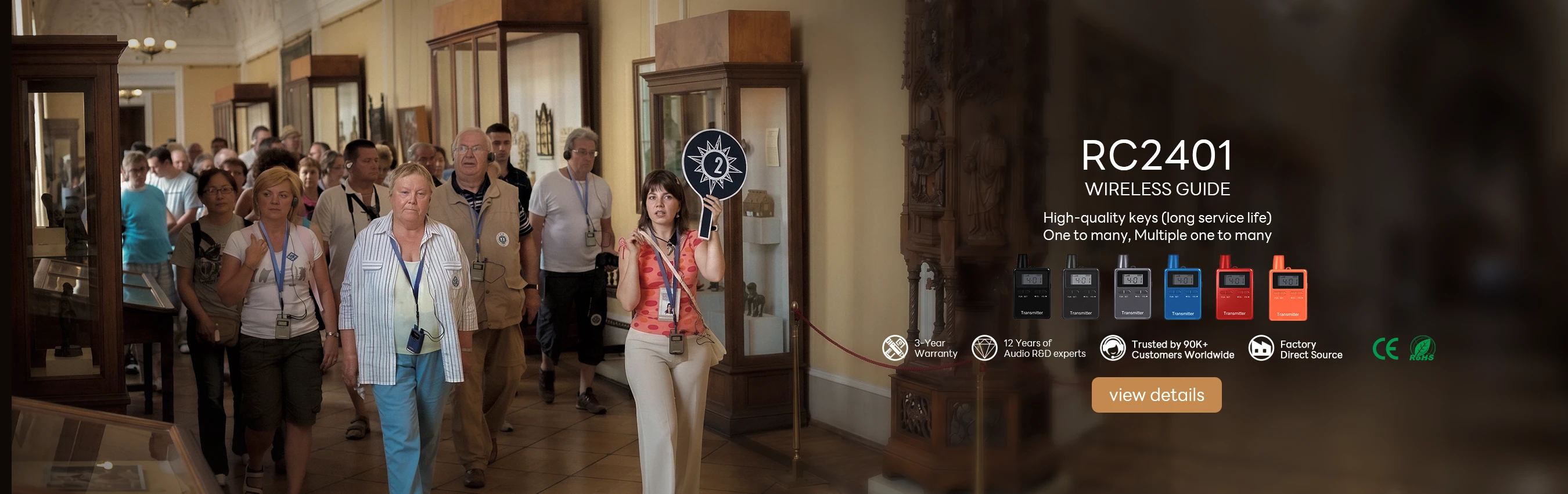
Put the two rows side by side and the difference in consequence becomes plain. The receiver on the RC2401 handset is rated at twenty hours and only has to survive one delegate's day, so twenty against ten leaves a comfortable reserve. Thirty-five hours or more leaves more still, which matters mainly on multi-day programmes where the recharge windows are short.
Those reserves each protect a single person. The transmitter's reserve protects an entire language, drawn from the same class of cell: 1500 mAh on the smaller packs, 1800 mAh on the larger. The difference in outcome is nowhere near proportional to the difference in capacity. It is one delegate missing a paragraph against a quarter of the room losing the session.
The Feed the Interpreter Listens To Is Missing From the Sheet
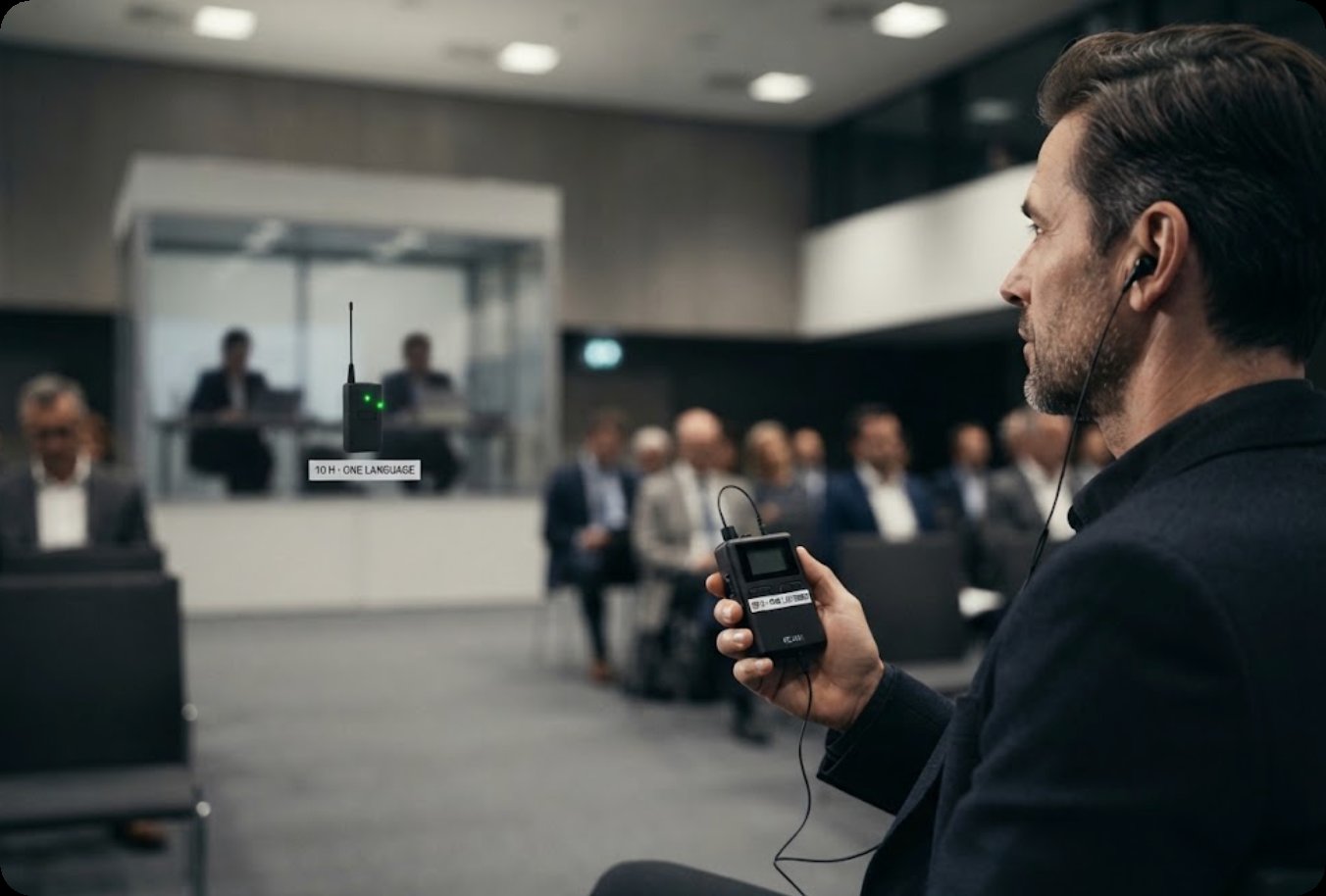
There is a second question on that same row which orders rarely answer, because it is not the supplier who asks it. An interpreter cannot translate what they cannot hear. Whether the floor arrives by a feed from the room's sound desk, a microphone on the podium, or a second channel on the same wireless kit, it has to exist somewhere — and on most orders it exists nowhere.
This is where a language service order quietly doubles. If the same system runs in both directions, an interpreter's position consumes two units rather than one: a transmitter for the language they produce and a receiver for the language they hear. Four languages with two per booth is closer to sixteen units than eight, and every one sits on the row that was already too short.
💡 Why a Spare Sits Better Than a Fifth Language
When an organiser does decide to protect the transmitter row, the reflex is to add capacity rather than a spare: more receivers, a larger case, occasionally an extra language nobody has asked for yet. Those additions answer questions the conference is not asking, since a delegate who has registered does not need a language that is not being carried.
A spare transmitter answers the question actually on the table. It covers whichever language fails, on whichever day, without asking anyone to judge which language matters more — and that is not a judgement a conference should be requiring at nine in the morning.
| The protected side, compared | RC2401 | RC9150 | RC2500 |
|---|---|---|---|
| Transmitter battery life | 10 h | 15 h | 15 h |
| Receiver battery life | 20 h | 35+ h | 35+ h |
| Channels | 50 | 100 | 50 |
| Transmitter weight | 59 g | 97.5 g | 104 g |
| Charging port | DC port | Type-C | Type-C |
Read down the first column and the differences look small. Read the table against a programme that runs from eight until six, and the ten-hour figure stops being a specification and becomes a risk sitting on one desk in the room.
Fifty Channels or a Hundred: What the Extra Range Is For
Channel count gets read as a capacity figure, which it is not. Nobody carries four languages on ninety channels. What the wider set buys is room to keep the floor feed, the language channels, a spare and a rehearsal channel apart from each other, plus enough separation to shift a channel when something else in the building occupies the same slice of spectrum.
That is where a conference hotel differs from a museum. A hotel can have three events running at once, each with its own wireless audio, and the hundred-channel RC9150 finds a clear slot far more easily than a fifty-channel unit does. In a single-purpose hall, that headroom is rarely needed.
Putting the Spare Into the Quote Before It Goes Out
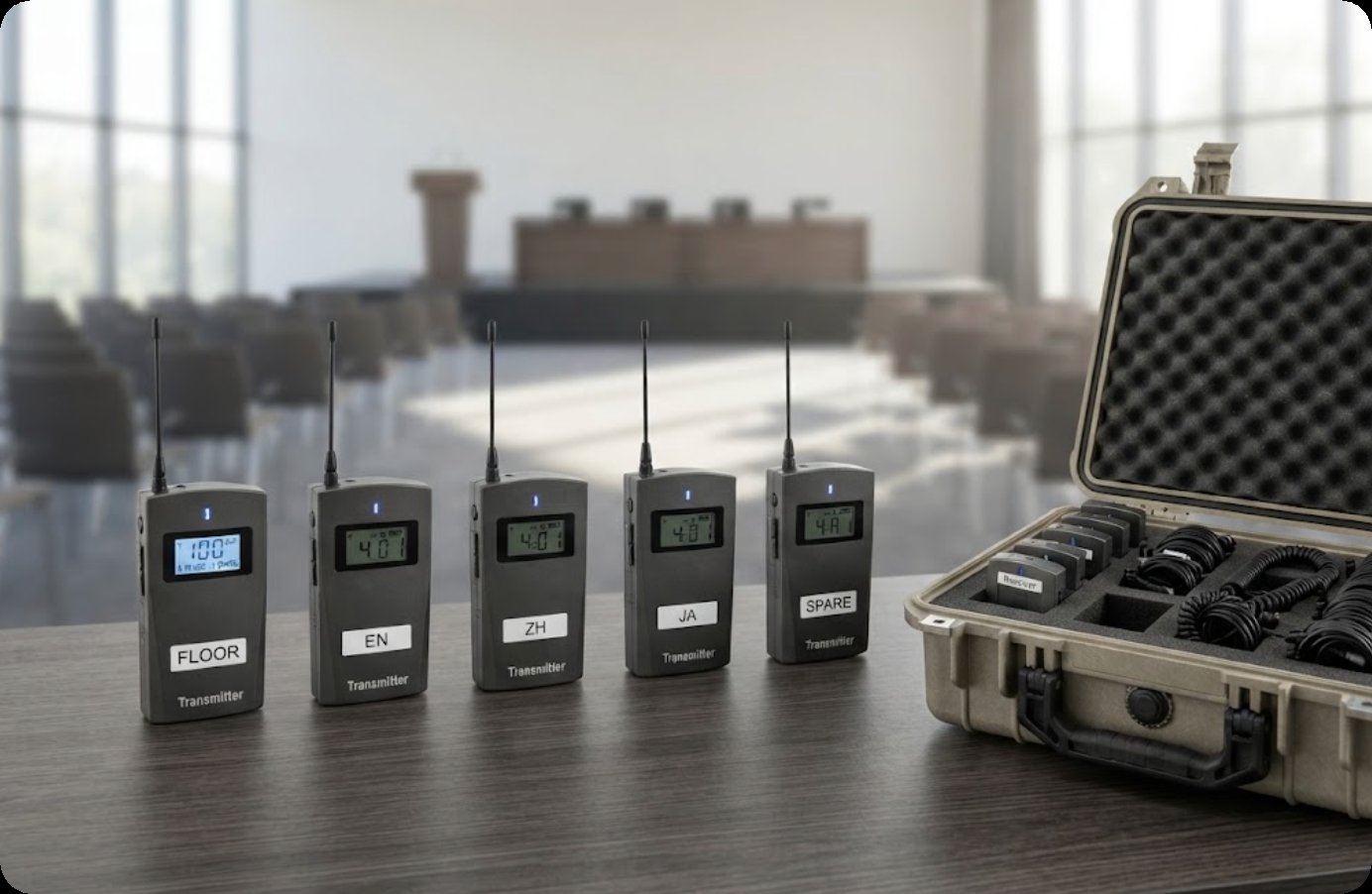
None of this requires a different system. It requires one extra line on the document, written when the transmitter row is priced rather than after the invoice clears — because a spare ordered with the main kit is a line item, while a spare ordered the week of the conference is a favour from a distributor.
Isolating the row makes the choice clean within this range. The RC2401 earns its place where agendas are short, or where a unit is bought purely to sit in a case as cover. The RC9150 suits long plenaries and buildings where somebody else's audio already occupies the spectrum. The RC2500 belongs at the position that changes language most often during the day.
More on how these systems are deployed across events sits in the solutions library, and it is worth reading alongside the programme rather than after it. The line worth adding is small, cheap and unglamorous, and it is the only one on the sheet that can keep a language alive on the day it matters.