
A leading China factory specializing in Wireless Tour Guide Systems, Church Audio Guides, and Translation Headphones with premium OEM/ODM solutions.

Tel:+86 18922879583

Email:tiger.wang@richitek.com

RC9150, RC2501 and RC085: What a Pharma Tour Checks Before the Door Opens

A pharmaceutical plant tour follows a stricter script than almost any other site visit. Guests pass through controlled areas where air, surfaces and movement are all managed, and everything that goes in has to justify itself first. The audio kit is part of that calculation. Before a receiver reaches a visitor's hand, somebody has to decide whether it belongs inside the room at all. Three Rich Age units answer that question with different trade-offs: RC9150, RC2501 and RC085. What separates them is not the first line of a specification sheet. It is the handful of checks a plant engineer actually performs at the door.

💡 Why the Kit Stops at the Turnstile, Not the Meeting Room

Visitors rarely meet the equipment in a meeting room. The check happens at the turnstile, or at the airlock leading to the production floor, with a coat hook and a sanitiser within reach. The timing is deliberate. Once a group is inside a controlled area, turning back for a spare unit breaks the escort's route and forces a second gowning sequence, which is the part nobody wants to repeat. Engineers who run these visits say the same thing: the audio always works, so that is not the question. The questions are whether the case can be wiped, whether one charge covers the visit, and whether two groups sharing a corridor can be kept apart without a conversation. A general factory tour solution covers the first frame. The plant floor adds its own terms.

The Only Hole in the Case

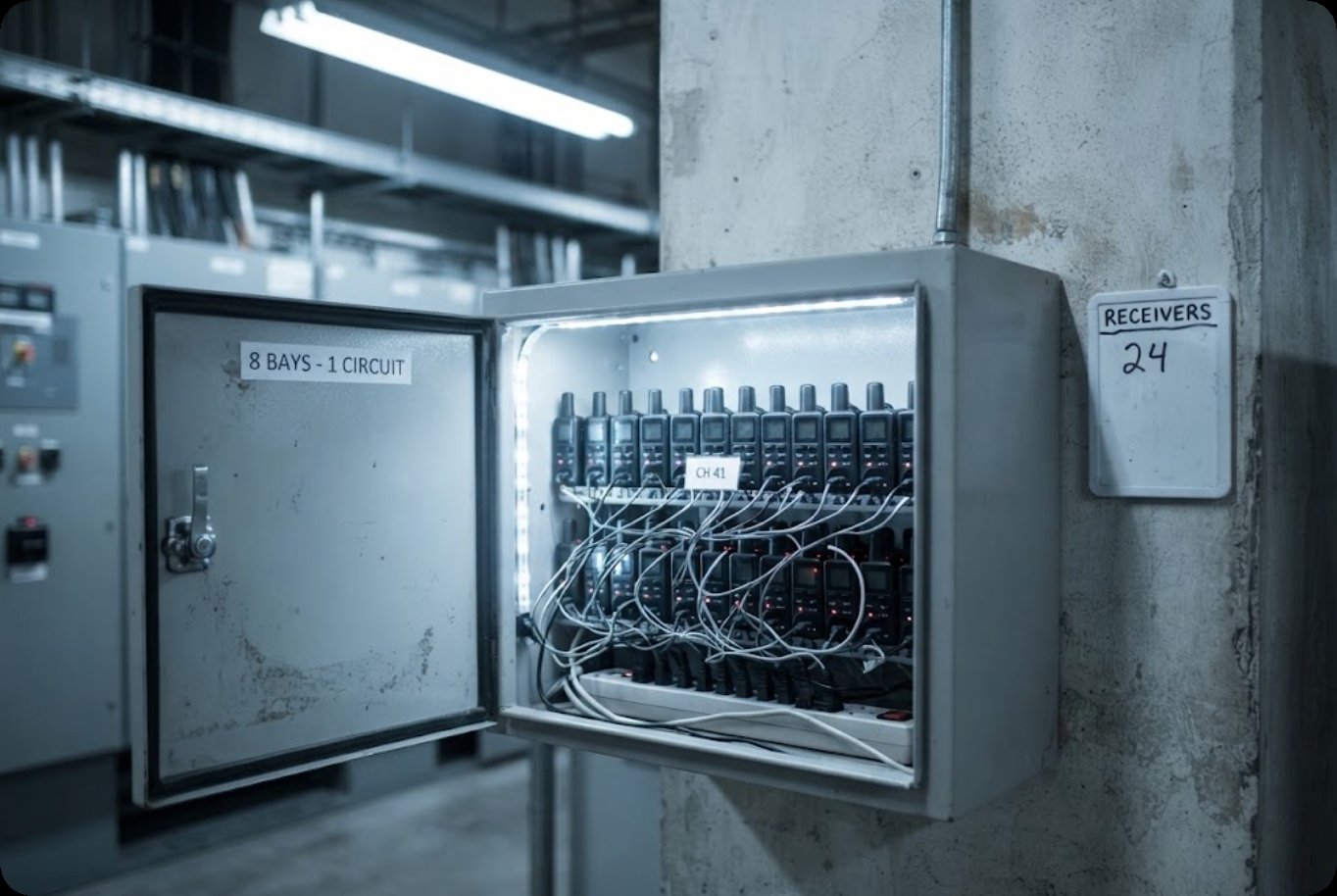
A sealed housing is easy to talk about and hard to achieve. Every handheld transmitter in a tour kit has at least one opening, and that opening is the charging port. On the RC085 it is a USB socket, while the other two units in this group use Type-C. The difference is not electrical. A USB socket is wider and carries a shaped insert that can trap a wipe fibre, and the cable end is directional, so the port stays open slightly longer during each connection. The practical answer is the same either way: charge before the visit begins, close or cap the port, and treat the connection as a one-time action rather than something to repeat mid-tour. That habit covers the only place where the case is not closed.
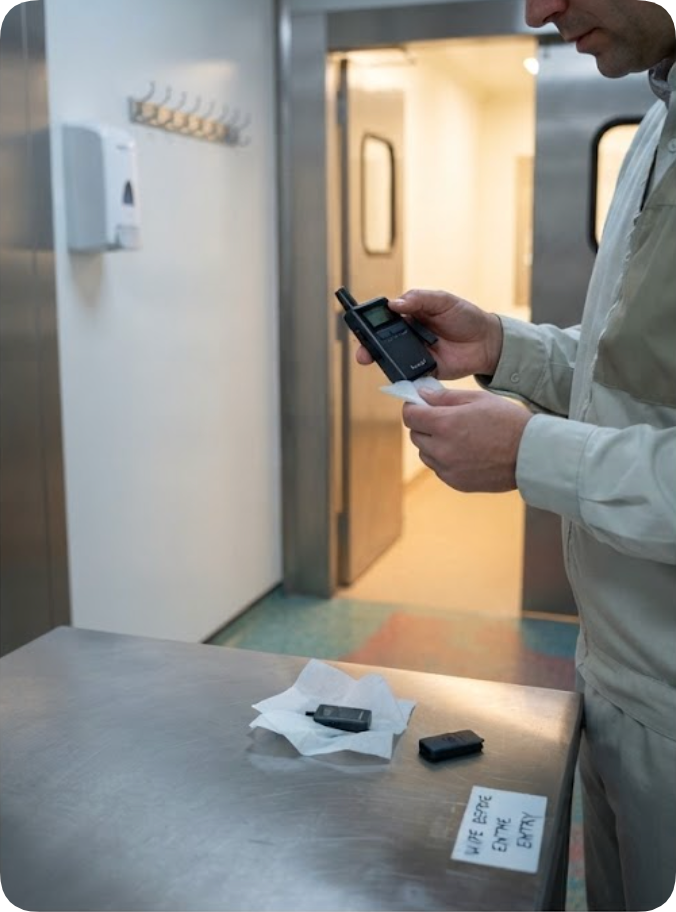
RC085-pharma_factory_tour

Forty-Seven Grams and Where It Rests

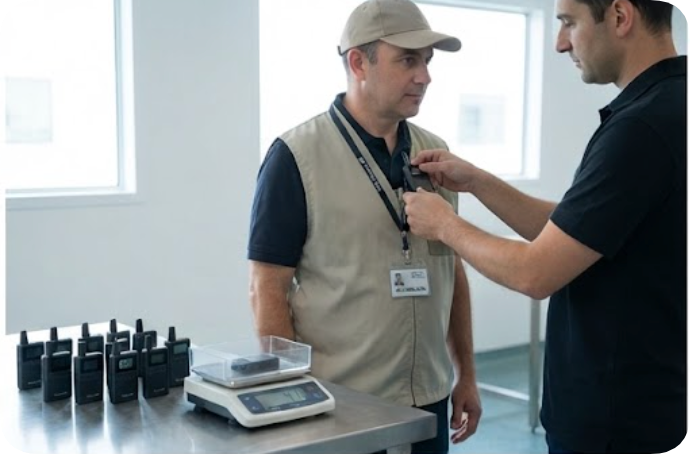
Weight decides where a receiver sits on a person. The RC2501 is the lightest unit here at 47g for both the transmitter and the receiver, against 97.5g on the heaviest of the three and a 65g transmitter with a 60g receiver on the third. That gap changes how the unit is carried. A light receiver hangs from a lanyard without pulling at the neck, and it can be clipped to a lapel or worn on a headband, which is why this unit offers head-worn and lavalier microphone options. The figure matters in a controlled area because a unit that stays put is a unit nobody handles, and handling is what moves material from one surface to the next. Head-worn and lavalier options also matter where visitors are asked to keep a mask on, since a hand microphone is the one piece of equipment most likely to be passed from person to person.
RC2501-pharma_factory_tour

Steel Shelving and the Band That Carries Through It

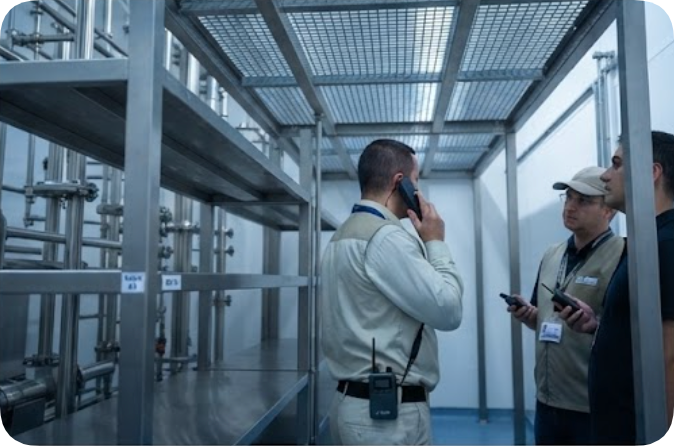
Pharmaceutical buildings are full of metal. Racking, ducting, mezzanine floors and stainless steel panels all sit between a guide and the group, and they behave differently depending on the band in use. The RC9150 operates in the 2.4GHz band between 2403 and 2483 MHz, as does the RC2501. The RC085 moves to UHF between 470 and 510 MHz. Lower frequencies bend around obstructions more readily and pass through dense structures with less loss, which explains why UHF has a long history on industrial sites. All three are rated for 1-200m of transmission, but that figure is measured in the open. Inside a plant, the band decides how often a receiver drops out when a group turns a corner behind a rack.
RC9150-pharma_factory_tour

A Hundred Channels When Two Tours Overlap

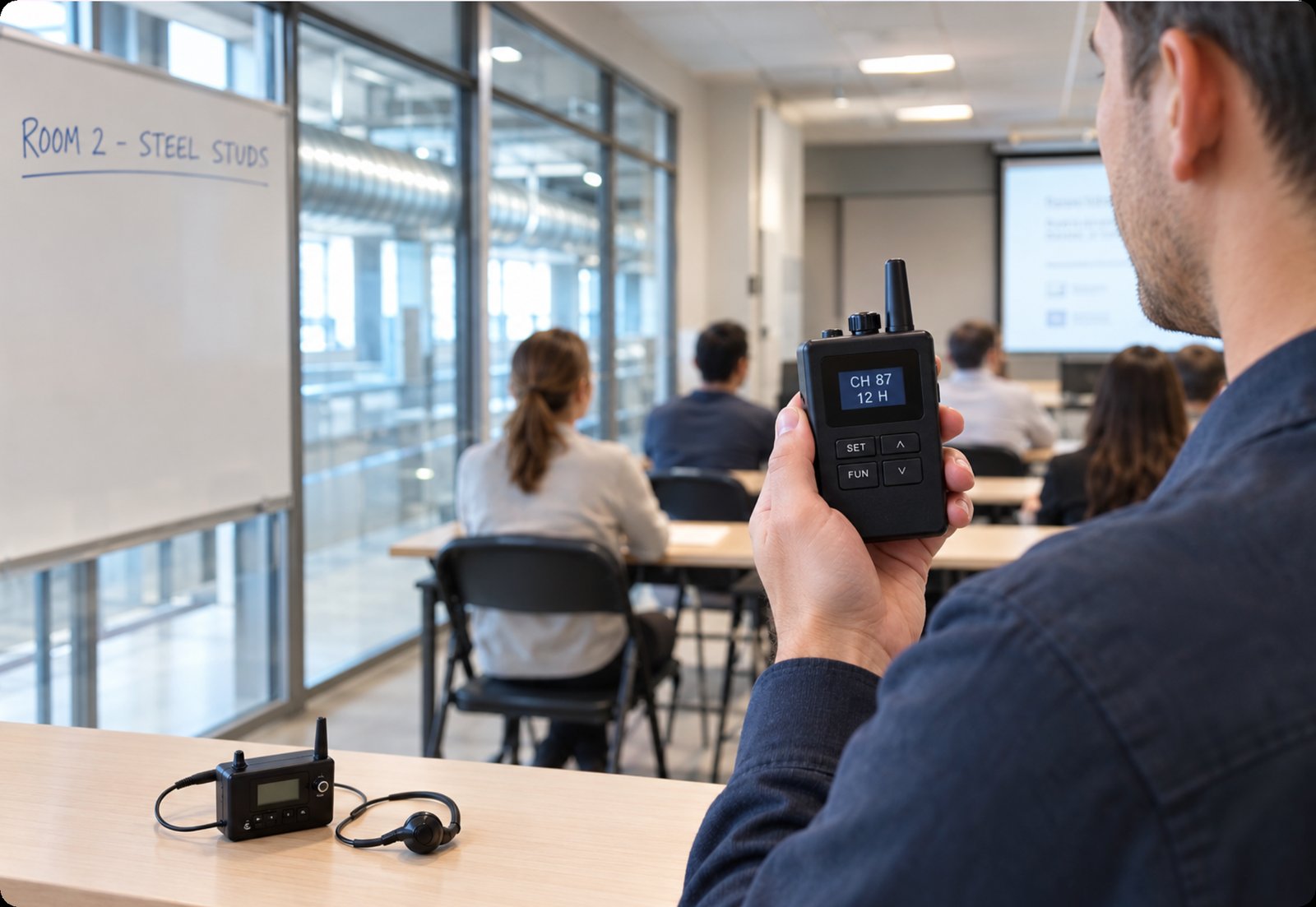
Channel count is usually described as a capacity figure, but inside a plant it works as a wall. The RC9150 and RC085 each carry 100 channels, while the RC2501 carries 50. When a production visit and an audit walk share the same afternoon, separate channels keep the two commentaries from meeting, and the escort does not have to negotiate a handover in a corridor. A hundred channels means the plant can assign a block per group and leave the rest untouched, which matters when the same kit is reused the following day with a different roster. Fifty channels is not a limitation for a single group. It becomes a planning item only when the site routinely runs parallel visits through the same building.

ParameterRC9150RC2501RC085
Frequency band2.4GHz (2403-2483 MHz)2.4GHz (2403-2483 MHz)UHF (470-510 MHz)
Channels10050100
Output power10mW13mW8-10mW
Transmitter battery life15h (typical)15h (typical)12h (typical)
Receiver battery life35+h35+h20h
Transmitter weight97.5g47g65g
Receiver weight97.5g47g60g
Charging portType-CType-CUSB

The table gathers the fields a plant engineer can verify before a visit rather than after one. Only a few of those rows move when the site changes. The remainder are identical on every datasheet and should not drive the decision.

Changing a Cell Where Particles Are Counted

Opening a battery compartment inside a controlled area is the moment a tour kit stops being clean. Every cell change exposes the interior, disturbs the seal and gives an escort one more thing to record. Capacity and runtime are therefore entry checks, not convenience figures. The RC9150 carries 3.7V 1800mAh in both the transmitter and the receiver, with 15 hours of transmit time and more than 35 hours of receive time. The RC2501 pairs a 1500mAh transmitter with a 1000mAh receiver and matches the same runtime. The RC085 runs a smaller 1200mAh transmitter and a 1000mAh receiver, giving 12 hours and 20 hours. For a half-day visit, all three finish the route without a change.

Who Signs the Kit In, and What They Write Down

Someone has to own the kit at the door, and that person is usually the escort rather than the audiovisual technician. The record is short but specific: how many transmitters left the case, how many receivers were handed out, which channel block was assigned, and whether every port cover went back on. Writing those four items down takes less time than resolving a discrepancy afterwards. It also creates a trail that survives a shift change, when the person who prepared the kit has gone home and the person running the next visit is working from a sheet. The channel assignment is the row that saves the most time, because it is the one nobody can reconstruct by looking at the equipment.

The Paper Form Has No Box For It

Most visitor checklists were written for people, not for equipment. They have lines for names, badges and gown sizes, and then nothing. The items that actually decide whether a kit is admitted tend to be missing: the state of the charging port cover, the number of units in the case, the channel block in use, and the battery level at handover. Adding four lines costs nothing and turns a verbal agreement into something a second person can audit. Plants that have done this report the same effect. The conversation at the turnstile gets shorter, because the answers are already on the page. The form stops being a formality and starts doing the job it was written for.

Rich Age supplies the transmitters, receivers and charging hardware behind these visits, and the wireless tour guide system range covers units that differ in exactly the ways a plant entry check cares about. Sites weighing two models against each other usually start from the comparison guide, where the same fields are set side by side. For a visit that has to pass more than one inspection, the right kit is the one whose answers fit on the checklist before anyone walks through the door.

2026年09月28日 12:38
ꄘ click: 21
no data

RC9150, RC2501 and RC085: What a Pharma Tour Checks Before the Door Opens

time: 2026年09月28日 click:21

A pharmaceutical plant tour follows a stricter script than almost any other site visit. Guests pass through controlled areas where air, surfaces and movement are all managed, and everything that goes in has to justify itself first. The audio kit is part of that calculation. Before a receiver reaches a visitor's hand, somebody has to decide whether it belongs inside the room at all. Three Rich Age units answer that question with different trade-offs: RC9150, RC2501 and RC085. What separates them is not the first line of a specification sheet. It is the handful of checks a plant engineer actually performs at the door.

💡 Why the Kit Stops at the Turnstile, Not the Meeting Room

Visitors rarely meet the equipment in a meeting room. The check happens at the turnstile, or at the airlock leading to the production floor, with a coat hook and a sanitiser within reach. The timing is deliberate. Once a group is inside a controlled area, turning back for a spare unit breaks the escort's route and forces a second gowning sequence, which is the part nobody wants to repeat. Engineers who run these visits say the same thing: the audio always works, so that is not the question. The questions are whether the case can be wiped, whether one charge covers the visit, and whether two groups sharing a corridor can be kept apart without a conversation. A general factory tour solution covers the first frame. The plant floor adds its own terms.

The Only Hole in the Case

A sealed housing is easy to talk about and hard to achieve. Every handheld transmitter in a tour kit has at least one opening, and that opening is the charging port. On the RC085 it is a USB socket, while the other two units in this group use Type-C. The difference is not electrical. A USB socket is wider and carries a shaped insert that can trap a wipe fibre, and the cable end is directional, so the port stays open slightly longer during each connection. The practical answer is the same either way: charge before the visit begins, close or cap the port, and treat the connection as a one-time action rather than something to repeat mid-tour. That habit covers the only place where the case is not closed.

RC085-pharma_factory_tour

Forty-Seven Grams and Where It Rests

Weight decides where a receiver sits on a person. The RC2501 is the lightest unit here at 47g for both the transmitter and the receiver, against 97.5g on the heaviest of the three and a 65g transmitter with a 60g receiver on the third. That gap changes how the unit is carried. A light receiver hangs from a lanyard without pulling at the neck, and it can be clipped to a lapel or worn on a headband, which is why this unit offers head-worn and lavalier microphone options. The figure matters in a controlled area because a unit that stays put is a unit nobody handles, and handling is what moves material from one surface to the next. Head-worn and lavalier options also matter where visitors are asked to keep a mask on, since a hand microphone is the one piece of equipment most likely to be passed from person to person.

RC2501-pharma_factory_tour

Steel Shelving and the Band That Carries Through It

Pharmaceutical buildings are full of metal. Racking, ducting, mezzanine floors and stainless steel panels all sit between a guide and the group, and they behave differently depending on the band in use. The RC9150 operates in the 2.4GHz band between 2403 and 2483 MHz, as does the RC2501. The RC085 moves to UHF between 470 and 510 MHz. Lower frequencies bend around obstructions more readily and pass through dense structures with less loss, which explains why UHF has a long history on industrial sites. All three are rated for 1-200m of transmission, but that figure is measured in the open. Inside a plant, the band decides how often a receiver drops out when a group turns a corner behind a rack.

RC9150-pharma_factory_tour

A Hundred Channels When Two Tours Overlap

Channel count is usually described as a capacity figure, but inside a plant it works as a wall. The RC9150 and RC085 each carry 100 channels, while the RC2501 carries 50. When a production visit and an audit walk share the same afternoon, separate channels keep the two commentaries from meeting, and the escort does not have to negotiate a handover in a corridor. A hundred channels means the plant can assign a block per group and leave the rest untouched, which matters when the same kit is reused the following day with a different roster. Fifty channels is not a limitation for a single group. It becomes a planning item only when the site routinely runs parallel visits through the same building.

ParameterRC9150RC2501RC085
Frequency band2.4GHz (2403-2483 MHz)2.4GHz (2403-2483 MHz)UHF (470-510 MHz)
Channels10050100
Output power10mW13mW8-10mW
Transmitter battery life15h (typical)15h (typical)12h (typical)
Receiver battery life35+h35+h20h
Transmitter weight97.5g47g65g
Receiver weight97.5g47g60g
Charging portType-CType-CUSB

The table gathers the fields a plant engineer can verify before a visit rather than after one. Only a few of those rows move when the site changes. The remainder are identical on every datasheet and should not drive the decision.

Changing a Cell Where Particles Are Counted

Opening a battery compartment inside a controlled area is the moment a tour kit stops being clean. Every cell change exposes the interior, disturbs the seal and gives an escort one more thing to record. Capacity and runtime are therefore entry checks, not convenience figures. The RC9150 carries 3.7V 1800mAh in both the transmitter and the receiver, with 15 hours of transmit time and more than 35 hours of receive time. The RC2501 pairs a 1500mAh transmitter with a 1000mAh receiver and matches the same runtime. The RC085 runs a smaller 1200mAh transmitter and a 1000mAh receiver, giving 12 hours and 20 hours. For a half-day visit, all three finish the route without a change.

Who Signs the Kit In, and What They Write Down

Someone has to own the kit at the door, and that person is usually the escort rather than the audiovisual technician. The record is short but specific: how many transmitters left the case, how many receivers were handed out, which channel block was assigned, and whether every port cover went back on. Writing those four items down takes less time than resolving a discrepancy afterwards. It also creates a trail that survives a shift change, when the person who prepared the kit has gone home and the person running the next visit is working from a sheet. The channel assignment is the row that saves the most time, because it is the one nobody can reconstruct by looking at the equipment.

The Paper Form Has No Box For It

Most visitor checklists were written for people, not for equipment. They have lines for names, badges and gown sizes, and then nothing. The items that actually decide whether a kit is admitted tend to be missing: the state of the charging port cover, the number of units in the case, the channel block in use, and the battery level at handover. Adding four lines costs nothing and turns a verbal agreement into something a second person can audit. Plants that have done this report the same effect. The conversation at the turnstile gets shorter, because the answers are already on the page. The form stops being a formality and starts doing the job it was written for.

Rich Age supplies the transmitters, receivers and charging hardware behind these visits, and the wireless tour guide system range covers units that differ in exactly the ways a plant entry check cares about. Sites weighing two models against each other usually start from the comparison guide, where the same fields are set side by side. For a visit that has to pass more than one inspection, the right kit is the one whose answers fit on the checklist before anyone walks through the door.
no data
×

Contact us

email:
name:
subject:
content: