
.webp)
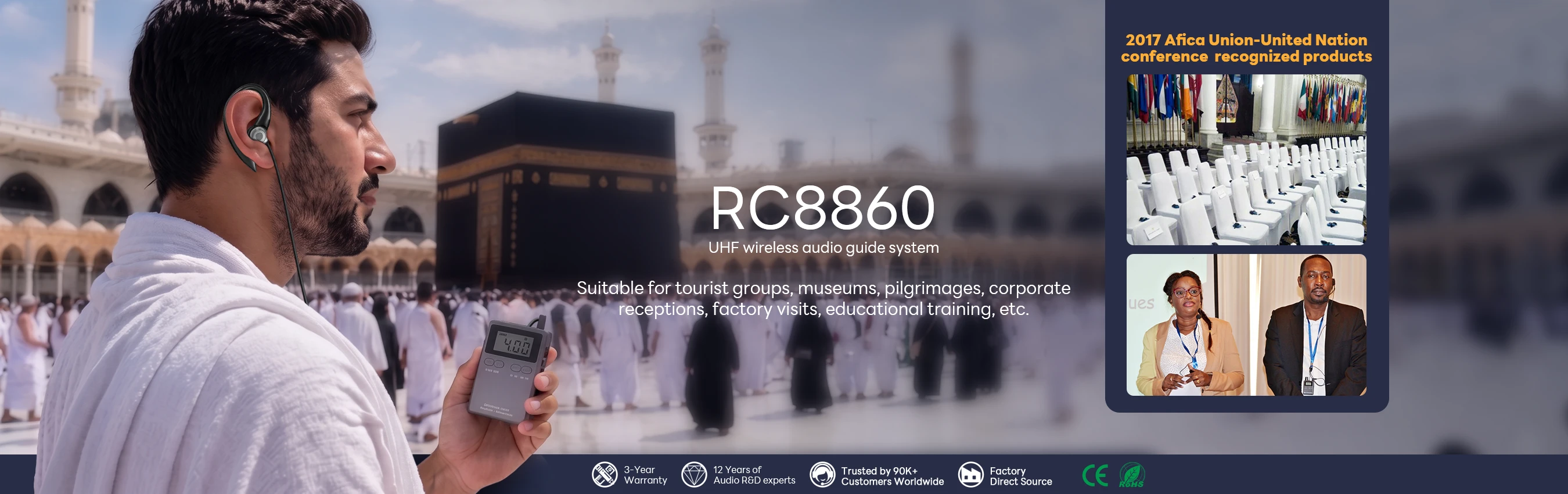
Most heritage sites budget their audio kit against a year. They count open days, multiply by an average group size, then divide the cost across the total. The arithmetic looks tidy and hides the only number that moves. A site can be open three hundred days and still sell none of them out. What a guide system changes is how many people one voice can hold, and that figure sits on the income line. Three Rich Age units approach the same problem from different directions: RC085, RC2401 and RC8860 for heritage and sightseeing routes. The money question is what one departure earns once the group in front of the guide is twice the size.
The Ceiling Is Set by One Voice, Not by the Building
A guide working without a system has a hard limit. It is the distance at which a normal speaking voice stops being intelligible over wind, traffic or a school group walking past. On a stone staircase or across a courtyard, that distance is short. The practical answer is a smaller group, which is why so many heritage walks are capped at a figure nobody justifies in the budget. The cap is not a policy about visitor experience but an acoustics limit wearing a policy costume. Put a receiver on every listener and the limit moves from the back row to the edge of the radio path, which on a clear route is a different number.
🎯 Forty Listeners Walking Behind the Same Guide
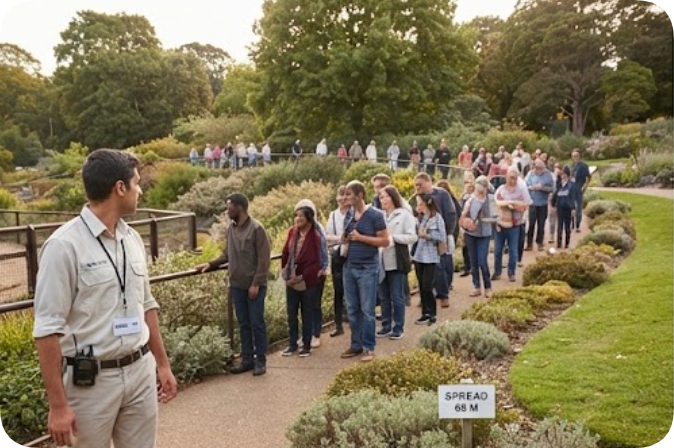
Doubling the group does not double the equipment. A transmitter broadcasts to any number of receivers, so the count that grows is receivers, not transmitters. That single fact is what makes the income side interesting. One guide, one departure time, twice the paying visitors inside it, provided the site has the receivers in the crate. The RC085 and the RC8860 both run one transmitter against an unlimited number of receivers, which keeps the extra cost per additional listener close to the price of a single receiver and a headset. Nothing else on the visit scales that cheaply. The audio layer is the one capacity constraint a site can lift without rebuilding anything.
An Open Day Is Not a Sold Day
Take a site open every day from April to October and ask how many departing tours it actually sells. Weekends in August fill twice over. A wet Tuesday in early May can run to four people. The open day is the supply of departures; the sold day is the demand, and the two curves do not overlap as neatly as an annual average suggests. Any hardware decision built on the seasonal average lands in the wrong place, because the receivers have to exist on the morning the group arrives, not in the month that averages out. Counting sold departures first is what turns a vague seasonal figure into a number a budget holder can act on.
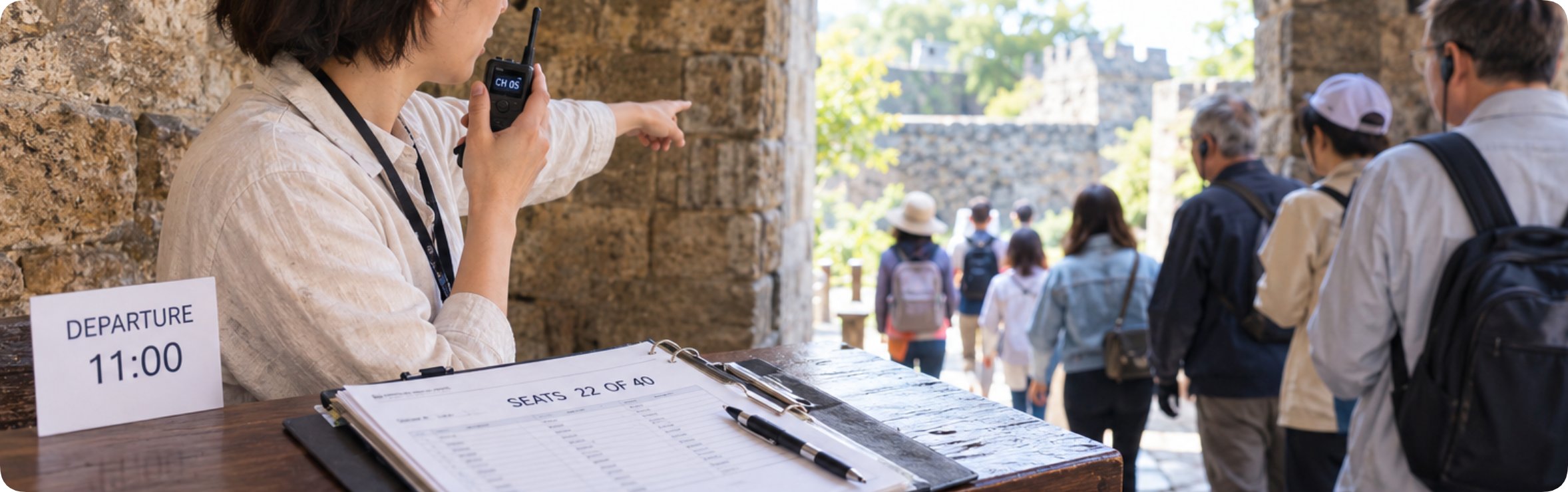
Reading the Booking Sheet Before the Kit List
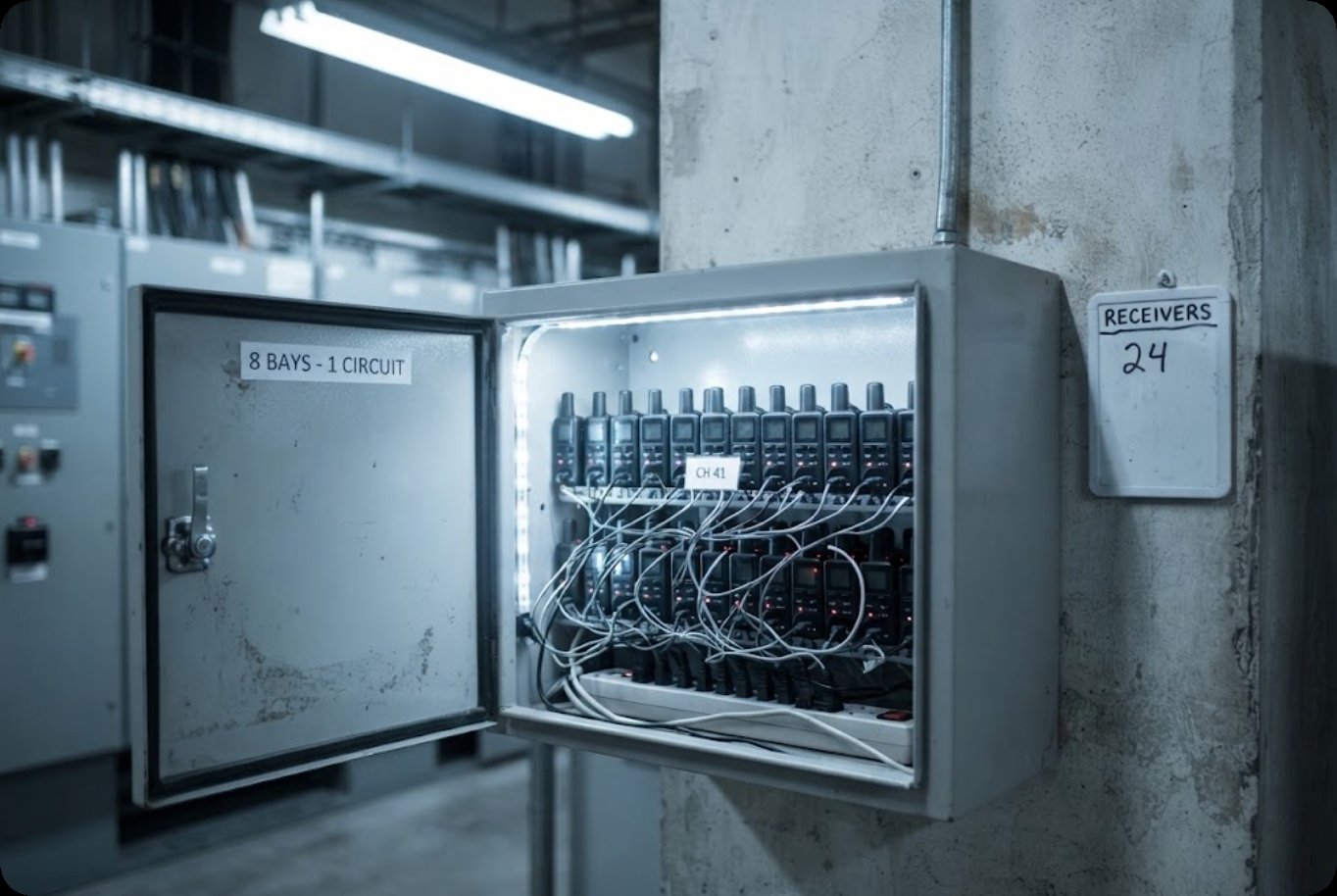
The booking sheet answers questions a specification sheet cannot. It shows the largest party already booked, the days when two parties overlap, and the long midweek stretch where the diary stays empty. That last part decides how much hardware is worth owning. A kit sized for the busiest Saturday sits idle for most of the season, and idle receivers still lose battery cycles and still need a shelf. Sites that book ahead size the crate between the typical party and the peak one, then hire the difference for the two or three days a year a coach party lands. The booking sheet also shows a heritage site its own seasonality, because it records what was reserved rather than what was expected.
The Weeks Where Nothing Fills
Between the peak weeks and the closed season there is a stretch where the site is open and almost empty. Rentals cost money on those days whether a tour runs or not, which is where ownership starts to look different. A rented kit that returns unused for six weeks of a twenty-week season carries a cost with no departure behind it. Owned hardware has a fixed cost that does not grow with silence, and it can be lent to a partner site, used for a members evening, or taken out on a quiet day. The weeks where nothing fills are the strongest argument for ownership on a heritage calendar, and they are usually left out of the comparison.
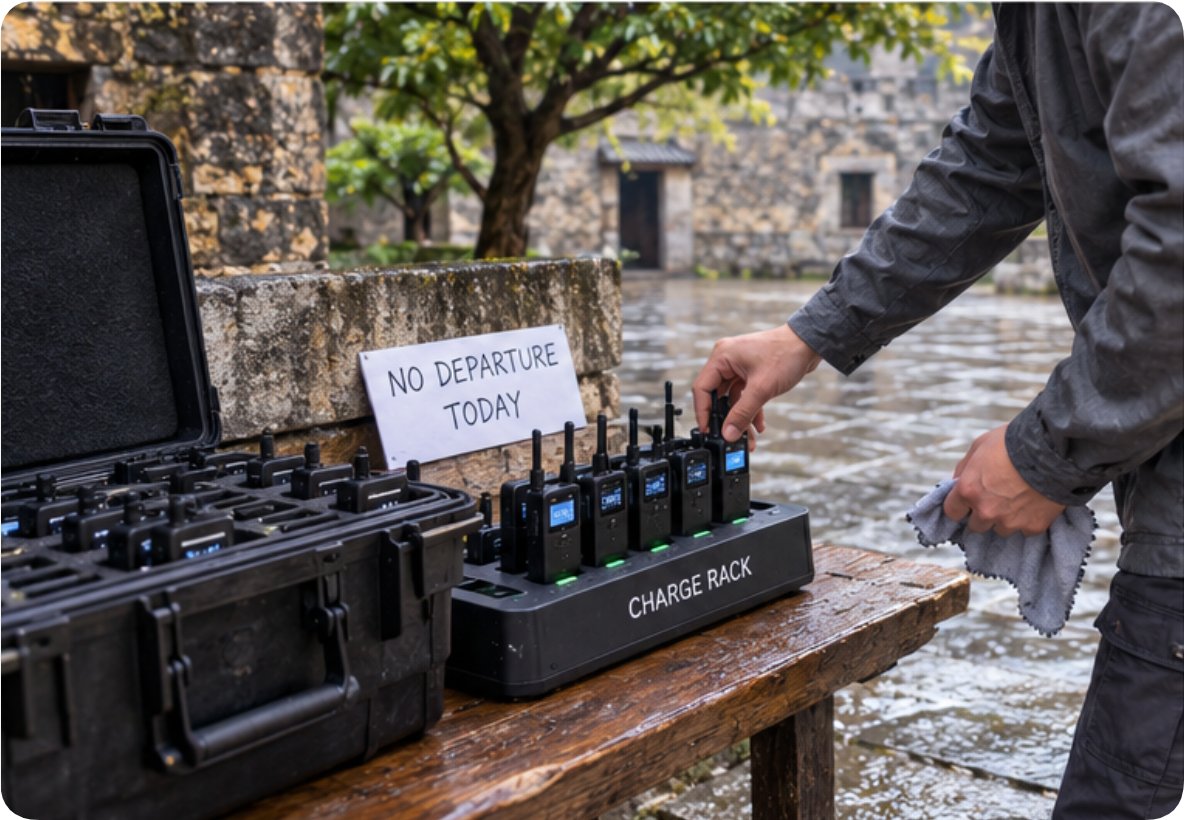
What One Seat Carries of the Hardware
Once the kit is owned, the hardware cost stops being a seasonal fee and becomes a figure per sold seat. Divide the purchase by the seats filled over a season and the same crate looks expensive at four hundred seats and reasonable at three thousand. The RC085 UHF tour guide system sits at the shallow end of that calculation because one transmitter supports an unlimited number of receivers, so extra capacity costs a receiver at a time rather than a second system. The sheet below gathers what a site can verify before ordering: the band each unit runs on, the channel count that decides how many routes run at once, and the working hours that decide how many departures fit into one day before anything goes back on charge.
| Field | RC085 | RC2401 | RC8860 |
|---|---|---|---|
| Frequency band | 470–510MHz UHF | 2403–2483MHz ISM (2.4G) | 860–870MHz UHF |
| Channel plan | Multi-channel group operation | 50 PLL digital channels | 20 channels, PLL synthesis |
| Working range | 200m open route | 200m 2.4G link | 200m, 10mW receiver output |
| Transmitter endurance | Auto sleep extends duty cycle | 10+ hours continuous | 1500mAh, 10 hours talk time |
| Receiver endurance | Multi-channel receiver | 20 hours standby and playback | 1000mAh, 20 hours |
| Unit weight | Lightweight for long-hour use | Handheld to lanyard form | 59g transmitter, 50g receiver |
Every field in that table answers a scheduling question rather than a technical one. Channel count sets how many separate departures can run at the same hour without one group hearing another. Working hours set how many tours fit into a single shift before a charging window has to open. Weight decides whether a visitor objects to carrying a receiver up a hundred and forty steps. None of the three numbers means anything on its own, and all three change the size of the group a heritage route can move through a day.
Three Units, Three Load Sizes
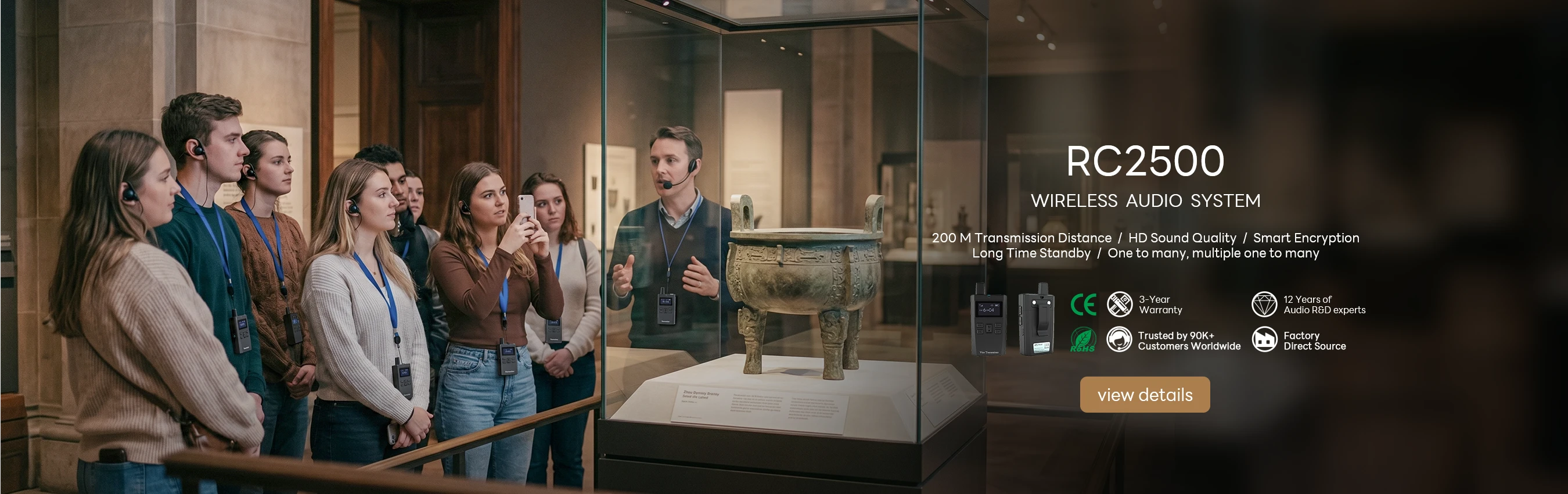
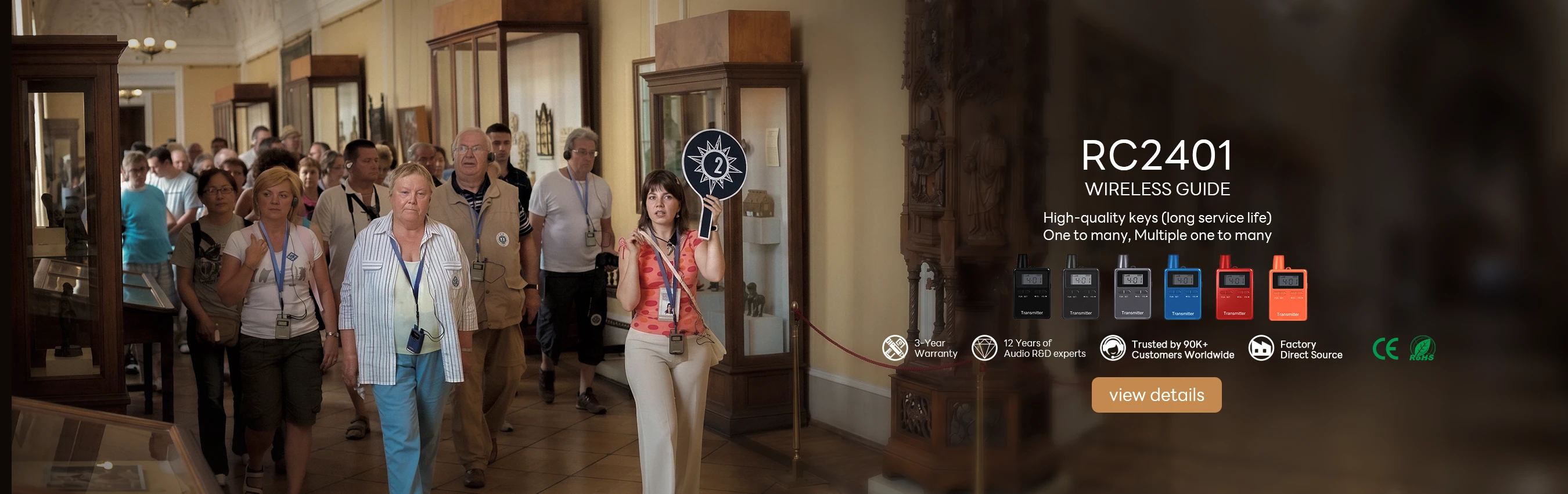
The three units suit three shapes of departure. The RC2401 2.4G wireless tour guide system carries fifty channels and a receiver that runs for twenty hours, which suits a site running several language groups through the same courtyard at once. The RC8860 UHF tour guide system trades channel count for a lighter receiver on the same UHF band, and a fifty-gram receiver disappears into a coat pocket on a two-hour walk. The RC085 works the 470 to 510MHz UHF band, where the longer wavelength pushes further through thick stone and the railings and scaffolding a working site keeps around its fabric. A stone route with one language and one departure time needs a different mix from a city route with three languages and four departures a day.
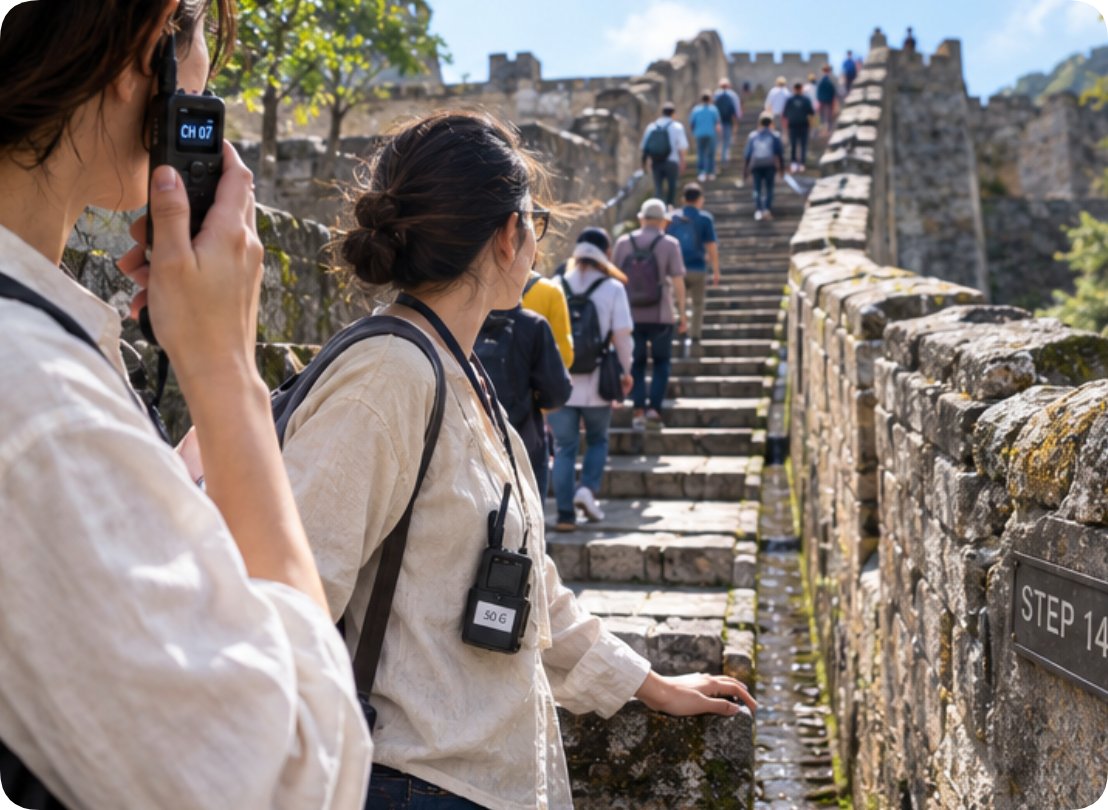
The Figure to Take Into the Funding Round
The number that survives a funding meeting is rarely the one about saved staff hours. It comes from the other direction: extra seats sold per departure, multiplied by the ticket value, multiplied by the departures the site can realistically fill in a season, set against the crate cost and its working life. A site that lifts a group from twenty to forty on sixty sold departures has moved a defensible quantity, and the receivers needed are a known line item. The Mediterránea heritage tour deployment is one worked example of a route where group size, language count and departure times were settled together. Sites that start from the seats rather than the specifications usually find the hardware question answers itself, because the crate size falls out of the departure plan.
Rich Age builds the transmitters, receivers and charging hardware behind routes like these, and the wireless tour guide system range covers units that differ in the ways a heritage departure cares about. A site comparing a UHF unit against a 2.4G one is really comparing how far a guide can walk from the front of the group against how many groups share the same courtyard. Before any order, write down the largest party on the booking sheet, the day two parties overlap, and the hours between the first and last departure. Those three lines decide the crate, and the crate decides what each sold seat quietly carries.