
.webp)
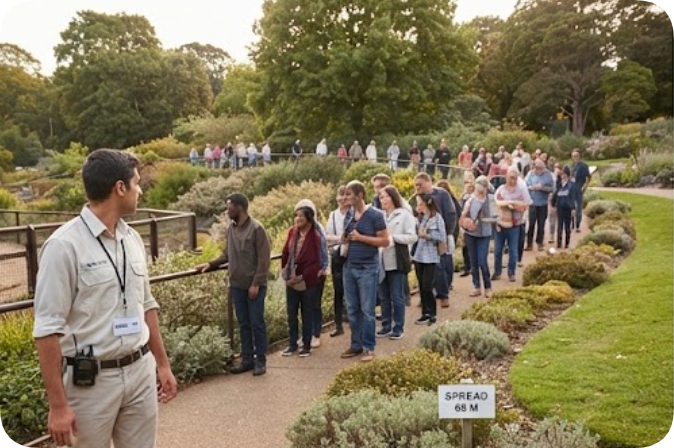
Somebody asks how many guides a route needs, and the answer is always a number: two, three, one for every twenty guests. On a signposted site that works, because the site has already told you where the stops are. On an open-air route with no fixed stops — a shoreline, a hillside path, a stretch of old town with three ways through — the number is the wrong place to begin. What the route actually contains is posts: positions where the commentary has to arrive at a particular moment. Count those first. Most of them, it turns out, do not need anybody standing in them.
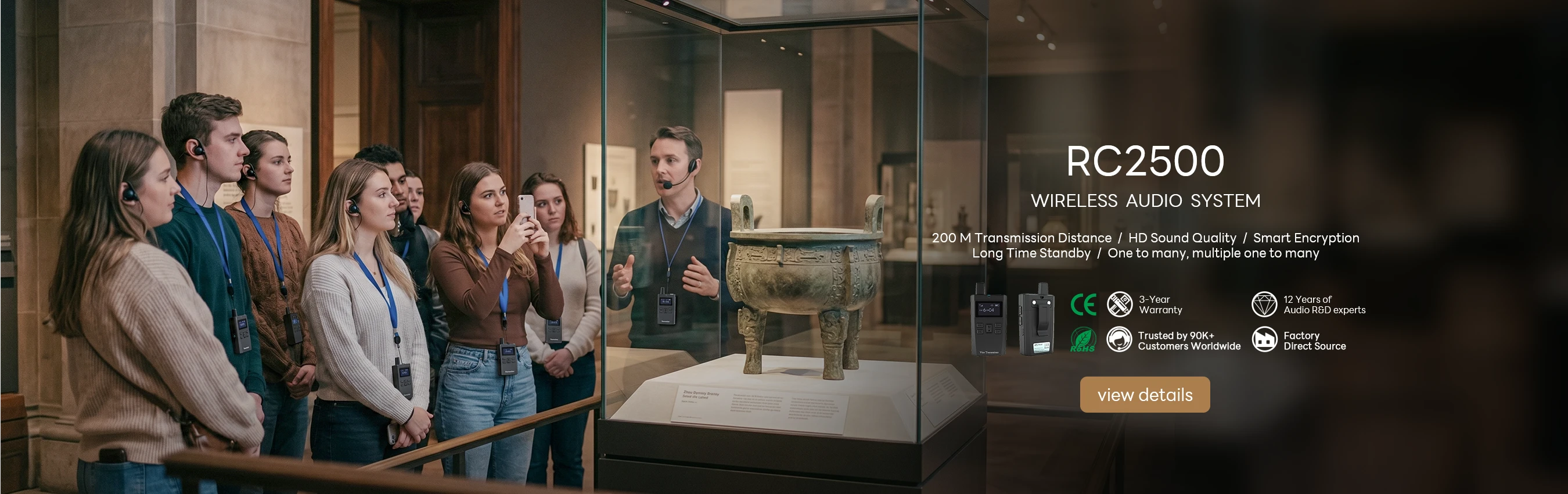
Watch the posts being counted on a real walk and they split cleanly in two. Some exist because something has to be decided there: a gate that may be locked, a group that may want to stop, a headcount that has to be right before the exposed stretch. Others exist only because the sound has to keep moving — the same voice, the same words, carried three hundred metres further back. The first kind needs a person. The second kind needs a transmitter and a set of receivers, which is a different line on the budget. Three units get bought for exactly this, and all three turn up later in the walk: RC2500, RC2408 and RC8860.
Every Route Has Two Kinds of Post
A post is not a pin on a map. It is any position where the audio has to land at a particular moment: the fork where the group can go two ways, the platform at the top of the climb, the corner where the coach is waiting, the long open stretch where nothing echoes back and the back of the line is out of earshot. Walk a route once with a notebook and the posts name themselves, because the voice changes at each one — it speeds up on the easy ground and slows to a stop where something has to be explained. Writing them down takes twenty minutes, and the list settles the whole staffing question in advance.
The One Question That Sorts Them
One question separates the two kinds: has anything at this post ever gone wrong, or could it? A locked gate, a guest who wanders off, ground that turns slick after rain, a route that has to change because the tide is higher than it was yesterday — anything where the right answer depends on what the lead guide can see at that second. That is a judgment post, and no device has ever held one. Everything else is a relay post: the commentary is already written and already being spoken at the front, and the only job left is to get it to the back. Sorted that way, a typical unmarked route comes out with roughly one third judgment posts and two thirds relay posts.
The Post Where Someone Must Take Over
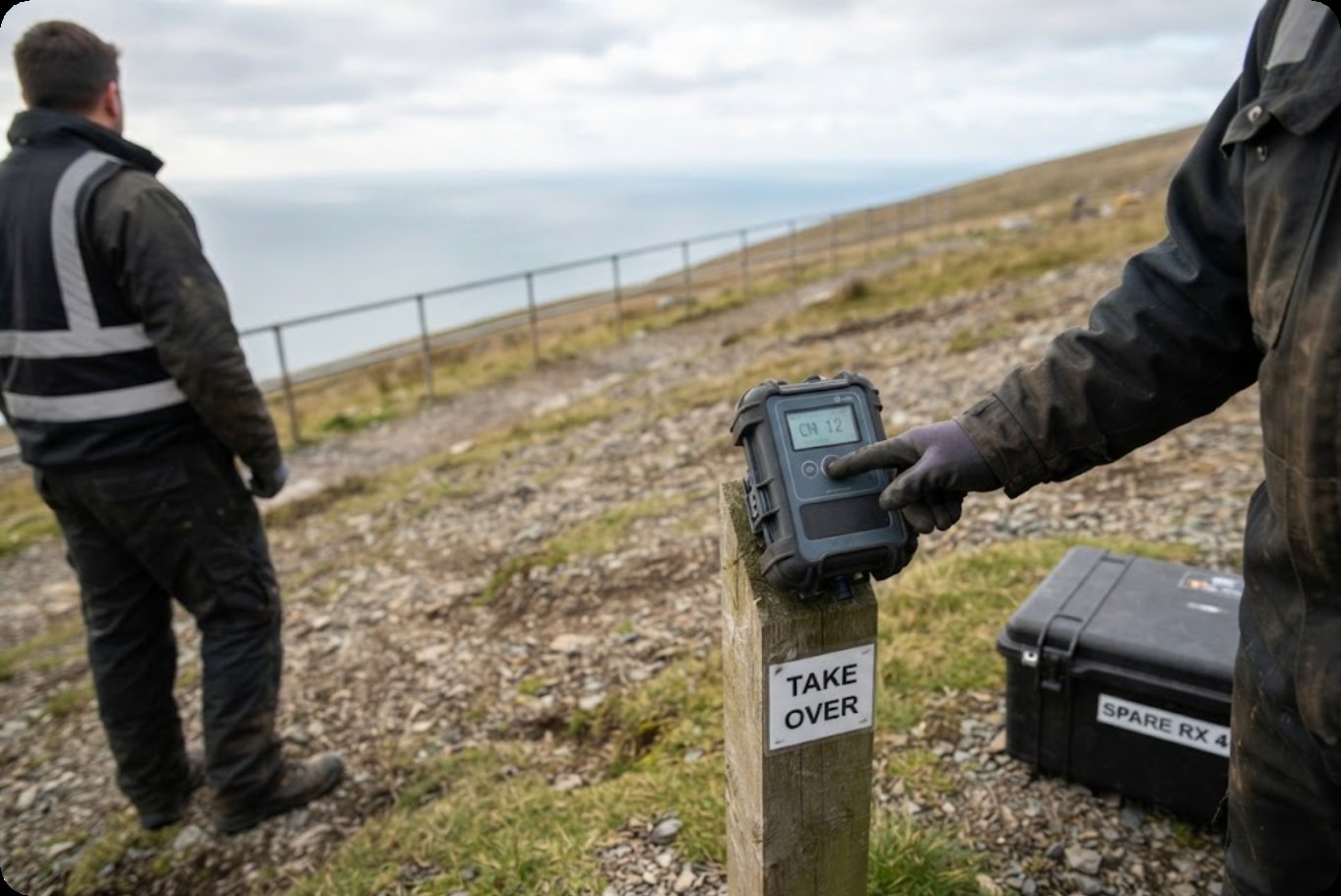
Judgment posts share one property. Whoever stands there has to be able to take over at any second — cut the commentary, mute the whole line, pull a single receiver onto a different channel because one guest has walked into the wrong party. That is a responsibility, not a volume problem, and it is the reason these posts stay staffed even when the audio is perfectly clear. The device at such a post is judged on how fast a human can intervene with it, and on nothing else.
The RC2500 wireless tour guide system is built around that idea. It carries 50 channels, runs 15 hours on the transmitter and more than 35 hours on the receiver, and charges over Type-C. More to the point, it is the only unit in the family with one-key sync, one-key power-off and one-key mute, so the person who has to take over is one press away from doing it. At 104g for both transmitter and receiver it is the heaviest of the three, which costs nothing at a post where nobody is walking.
When Four Conversations Run at Once
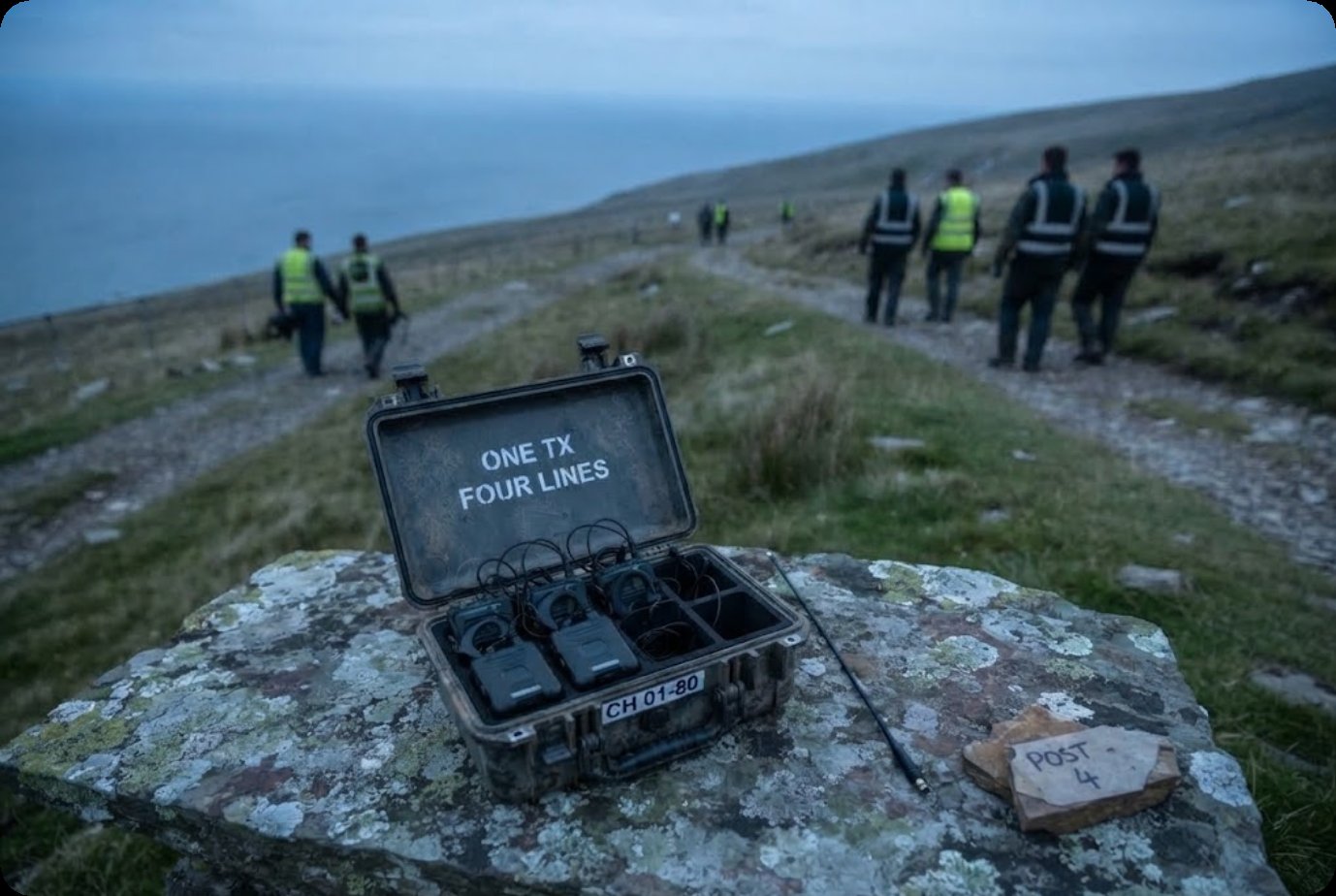
Relay posts multiply with parallel talk, not with distance. Four conversations can run at once on an unfixed route: the main line, the tail, the small group that stopped to photograph something, and whoever has drifted ahead of the lead. Each parallel conversation is another relay post, and on a loose route the count reaches four before the second kilometre. The lead guide is speaking once; the sound has to arrive four times, in three places where nobody is standing.
The RC2408 is bought for that count. It carries 80 channels on the 2403-2483 MHz band, with a 1500mAh transmitter cell giving 10 hours of talk time and a 1000mAh receiver giving 20 hours of use, and it weighs 59g at the transmitter and 50g at the receiver. The channel count is not a specification footnote here; it is the working measure of how many relay posts one transmitter can hold open at the same time without anybody re-tuning anything mid-walk.
🎪 The Corner Nobody Wants to Stand In
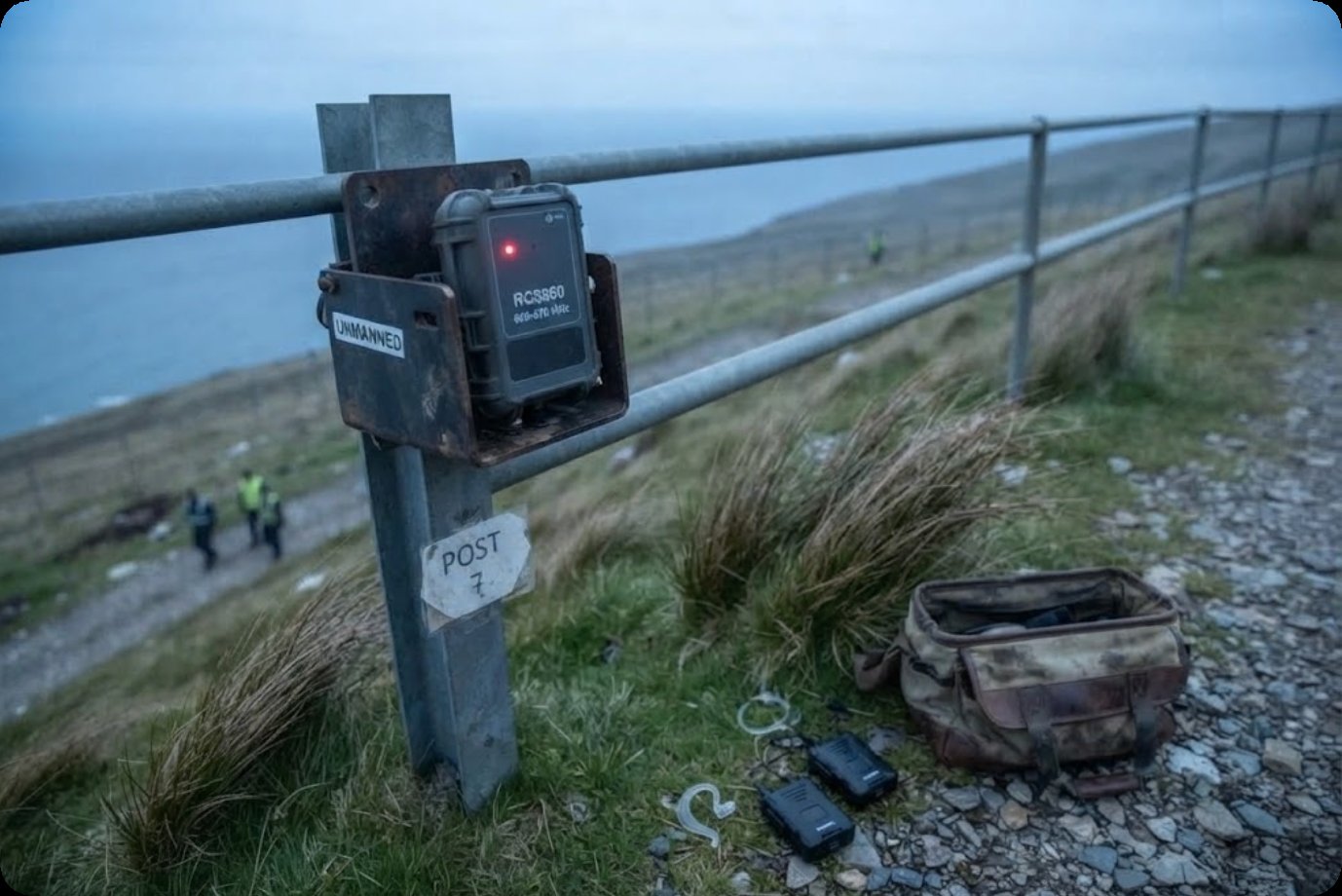
A few posts are judged not by what happens there but by whether anyone will go. The wind gap at the top of a ridge, the corner beside standing water, the far side of a fence line, the end of a pier — somebody would have to stand there for an hour with nothing to do and weather in their face. Those are exactly the positions where the commentary matters most, because the group has spread out and the easy ground is behind them. The staffing answer at such a post is usually not a person at all.
The RC8860 is the unit for that. Its 860-870 MHz UHF band carries past obstacles and into dead ground where the 2.4G units struggle, with a 1500mAh transmitter cell at 10 hours of talk time and a 1000mAh receiver at 20 hours of use, at 59g and 50g. The trade is visible in the same row of numbers: this unit holds only 20 channels, so it is bought for a few difficult posts and never for many easy ones.
🎯 Six Lines That Decide Whether a Post Can Stand Alone
Everything above comes down to six lines, and all three units sit in the same wireless tour guide system range, so the comparison is like for like. Read the rows as questions: how many parallel relay posts can this transmitter hold, how long before someone has to walk back to the vehicle for a spare, and how much does the receiver weigh for a guest who is already tired.
| Specification | RC2500 | RC2408 | RC8860 |
|---|---|---|---|
| Core frequency band | 2403-2483 MHz | 2403-2483 MHz | 860-870 MHz |
| Number of channels | 50 | 80 | 20 |
| Transmitter cell | 1800mAh, 15h talk time | 1500mAh, 10h talk time | 1500mAh, 10h talk time |
| Receiver cell | 1800mAh, 35+h use | 1000mAh, 20h use | 1000mAh, 20h use |
| Weight, transmitter and receiver | 104g each | 59g and 50g | 59g and 50g |
| Charging port | Type-C | DC port | DC port |
What Changes When the Crew Gets Smaller
Once the two lists exist, the cut becomes arithmetic. The relay posts are the ones you can cross off, and each one crossed off is a person who does not have to be recruited, briefed, insured and fed — which on a route that runs twice a week is the difference between a season that pays and one that does not. What never shrinks is the judgment list, and that is where the remaining money belongs: repeaters on the two posts furthest from the vehicle, a printed channel plan, and a spare set of batteries at the post where the walk back is worst.
Settling the List Before Anyone Sets Off
The list is worth nothing on a screen. Print the sorted posts, one line each, with the kind next to it and the channel beside that, and hand it to whoever leads. Before the first departure, walk the two or three posts the list calls judgment and confirm each one still behaves the way it did last month — a gate that has been re-hung, a path that has been re-surfaced, a viewpoint that now has a locked barrier all turn a relay post into a judgment post. Keep the page with the kit, and explore our solutions for the routes that look like this one.