
A leading China factory specializing in Wireless Tour Guide Systems, Church Audio Guides, and Translation Headphones with premium OEM/ODM solutions.

Tel:+86 18922879583

Email:tiger.wang@richitek.com

RC9150, RC085 and the 2.8-Inch Guide: When One Class Fault Arrives in Four Different Words

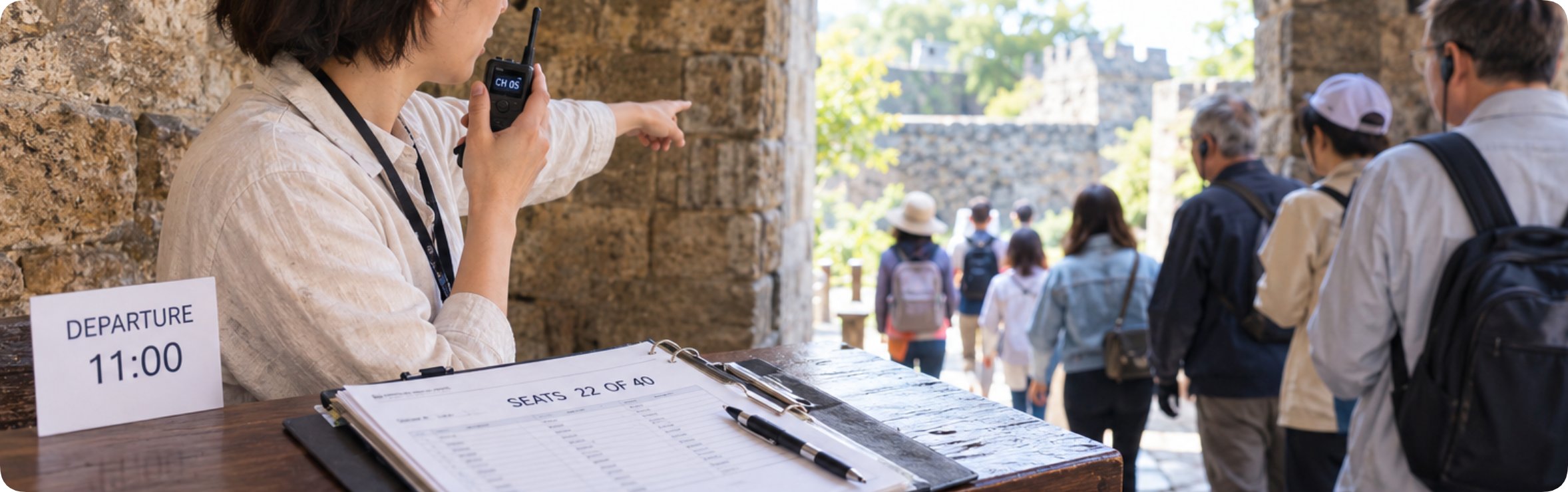
A school visit rarely fails in a way that announces itself. The group walks six or seven rooms, one teacher stays at the back, thirty students wear whatever they were handed at the door, and the exhibits run their own clips. When the audio goes wrong, nobody stops the tour to write a report. What reaches the organiser later is a single sentence, and that sentence depends entirely on who was standing where when it happened.

This is the practical difficulty of a museum education programme. Three different kinds of hardware can share one building on the same morning: a two-way wireless system carried by the teacher, a UHF pair for rooms that ordinary radio struggles to cross, and a self-service keypad player a visitor works alone. Each fails in its own way, and each is reported by a different person. Reading those versions side by side before choosing a unit to test is the part of museum audio guide work that saves the most time.

💡 Who Is Doing the Reporting, and Why It Changes the Answer

An audio fault is one of the few problems in a venue where the witness is not the person who saw it. A dropped projector is spotted by whoever faced the screen. Audio fails in the middle of a group, so the first account comes from someone who was listening rather than looking, built from what they could and could not hear. That is why one broken channel arrives as "the back can't hear", "there's a buzzing", "exhibit six is wrong" and "three came back flat" — four sentences about one event.

🎓 The Accompanying Teacher Describes an Effect, Not a Device

A teacher reports an effect, not a component. "The back of the group stops hearing me" points at nothing in particular, yet on the RC9150 — transmitter carried by the speaker, every listener holding a receiver — it can mean four things: the transmitter drifted behind a wall, the channel was reset between rooms, a receiver cell sits below the point where output holds, or the class spread past the working range. The unit's sheet gives 100 channels across 2403-2483 MHz, 15 h on the transmitter and 35+ h on the receiver, and 10 mW of output power — useful only once you know which of the four.
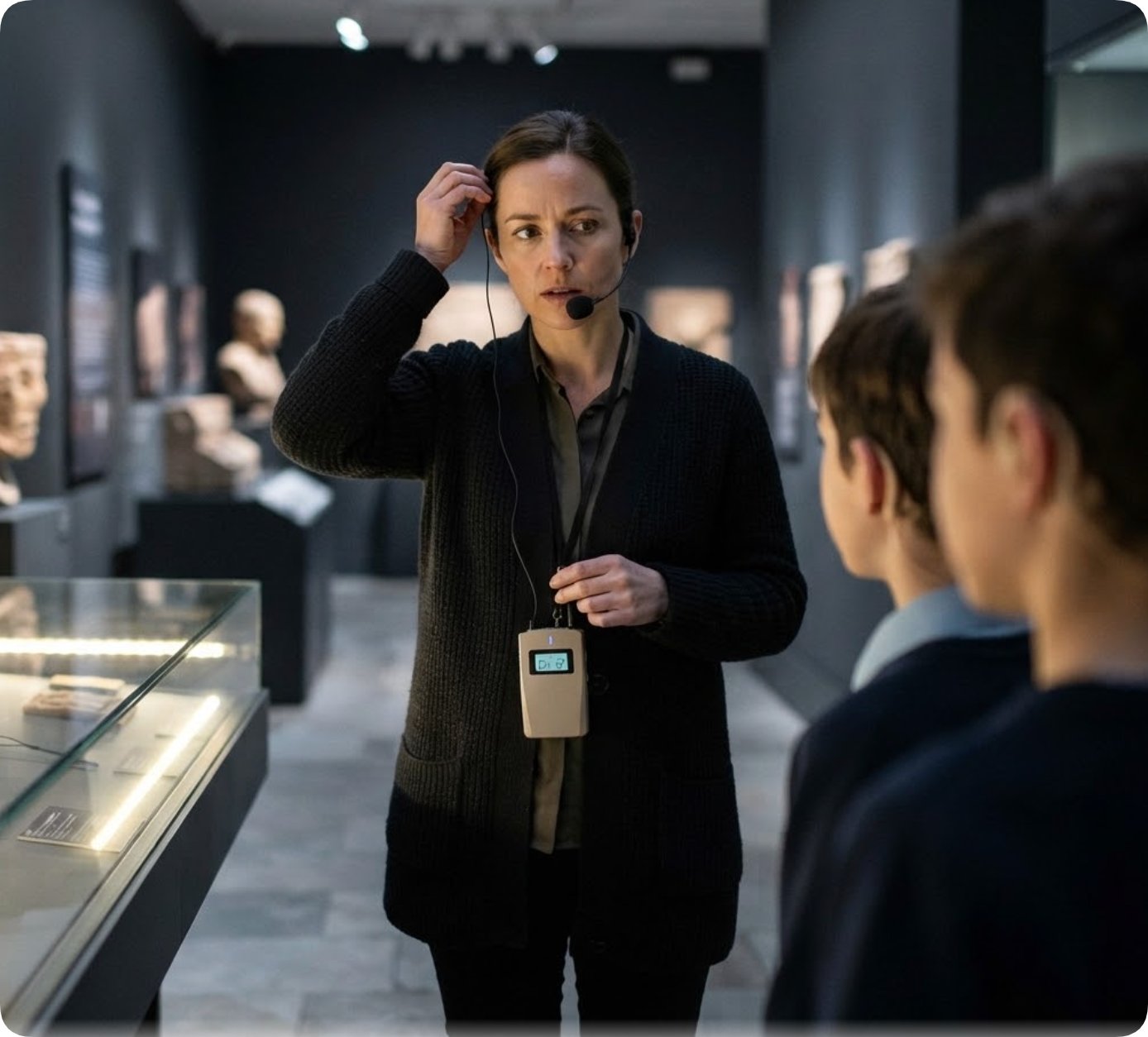
RC9150-museum_education_program

Students Describe What They Hear, Not Which Unit Failed

Students report the sound itself, because the sound is all they have. A buzz under the commentary, a crackle at a corner, a second voice cutting in for two seconds — none of that is a diagnosis, but it narrows the field quickly. Interference of that shape usually means a UHF room where steel, a lift shaft or a plant room sits between the two ends, the case the RC085 was built for. It runs 470-510 MHz with 100 channels, 12 h on the transmitter and 20 h on the receiver, and 65 g and 60 g across the pair — a lighter kit to hand out, on a band that behaves differently from the teacher's.
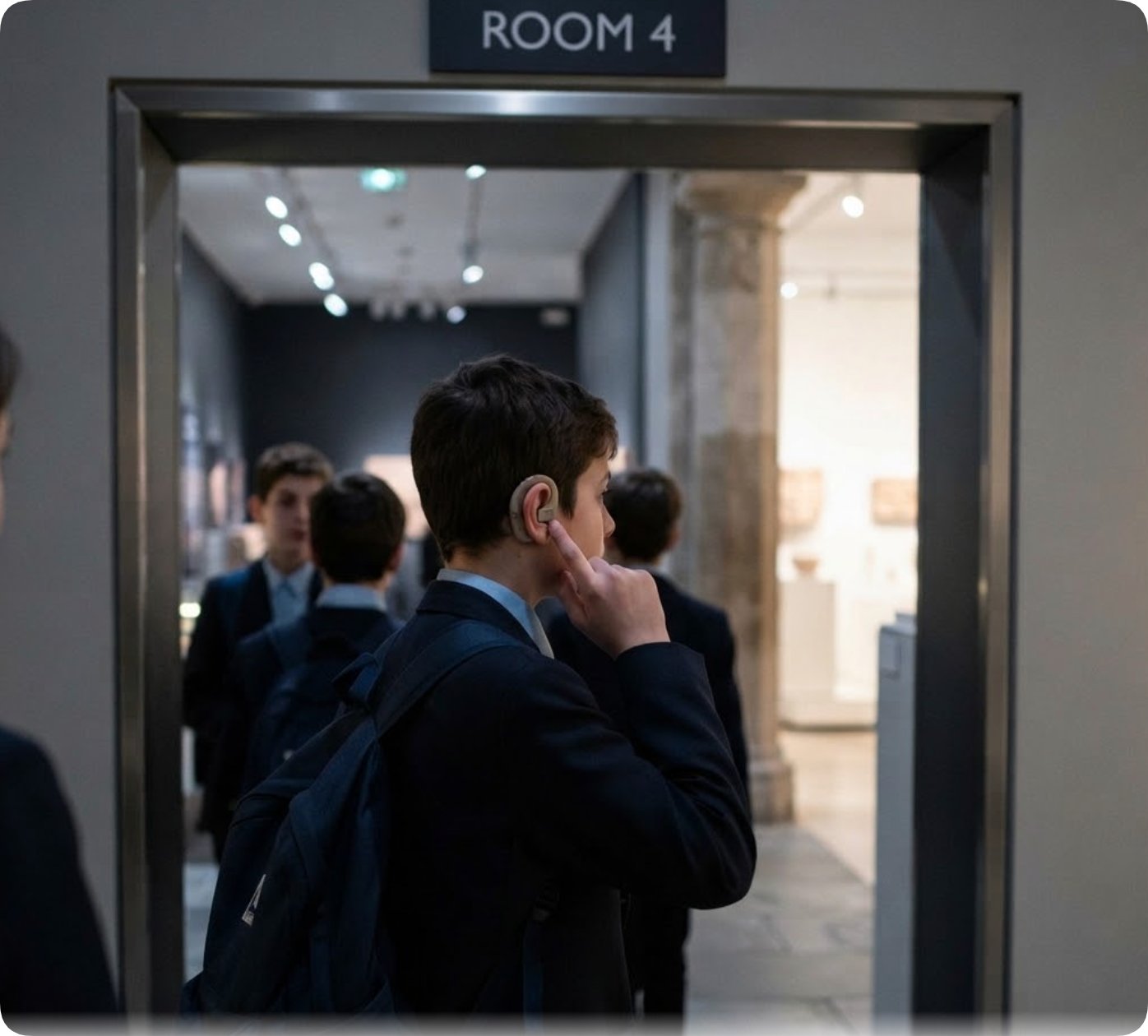
RC085-museum_education_program

The Venue Writes Down a Room and a Time Slot

The venue turns a fault into a place and a time. Its log reads room four, second session, three complaints — the most useful line in the exchange, because it says whether the fault followed the group or the room. It also catches what nobody else reports. The 2.8-Inch Semi-Auto Digital Audio Guide is the example: visitors key a number into the 0-9 pad and the clip plays, so a wrong clip is a file-numbering problem, not a hardware one. The unit holds 16 languages and up to 9999 audio files in 2 GB, and runs about 18 h per charge on Micro USB.
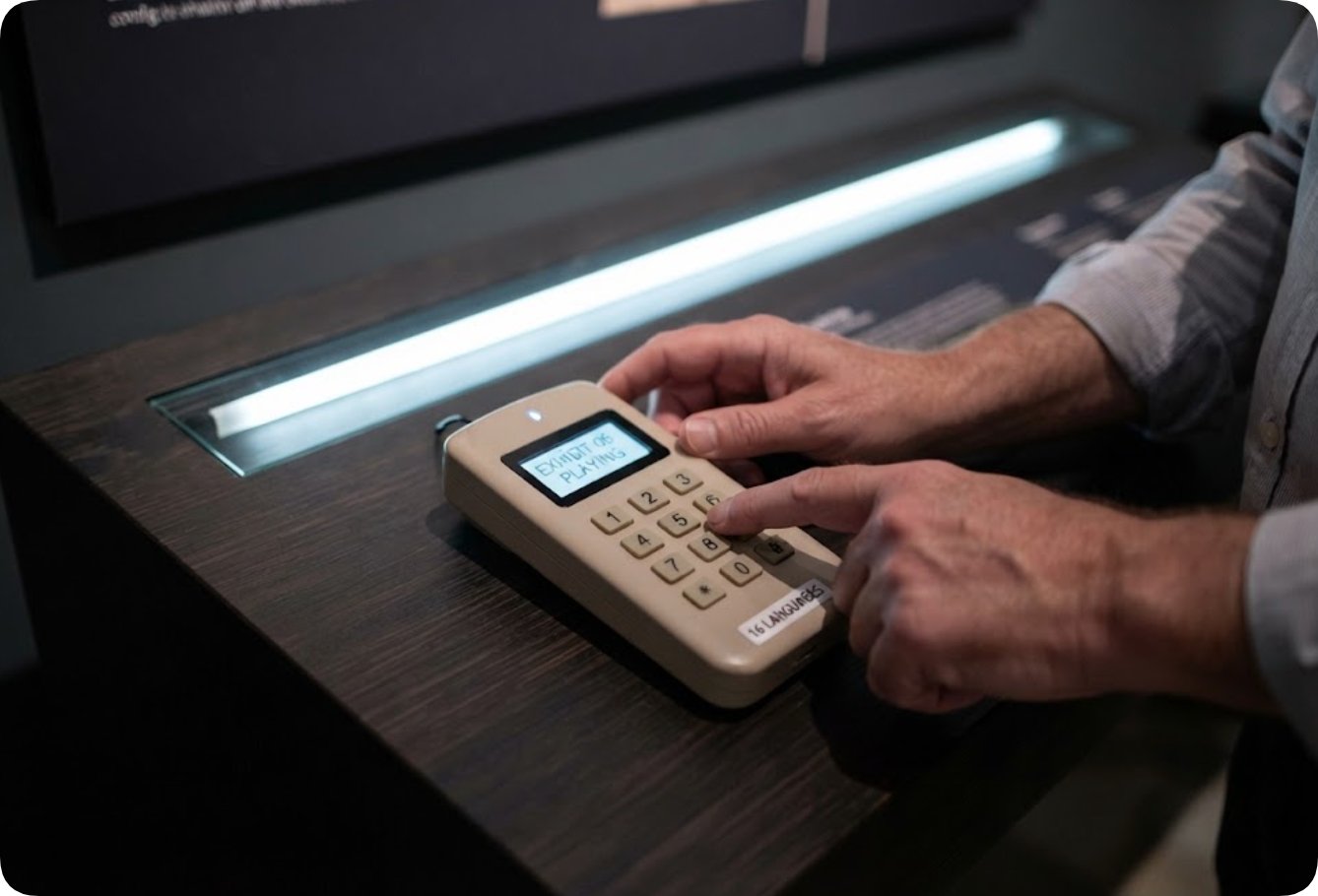
2.8-Inch-museum_education_program

What the Carry Case Shows Before the Units Are Plugged In

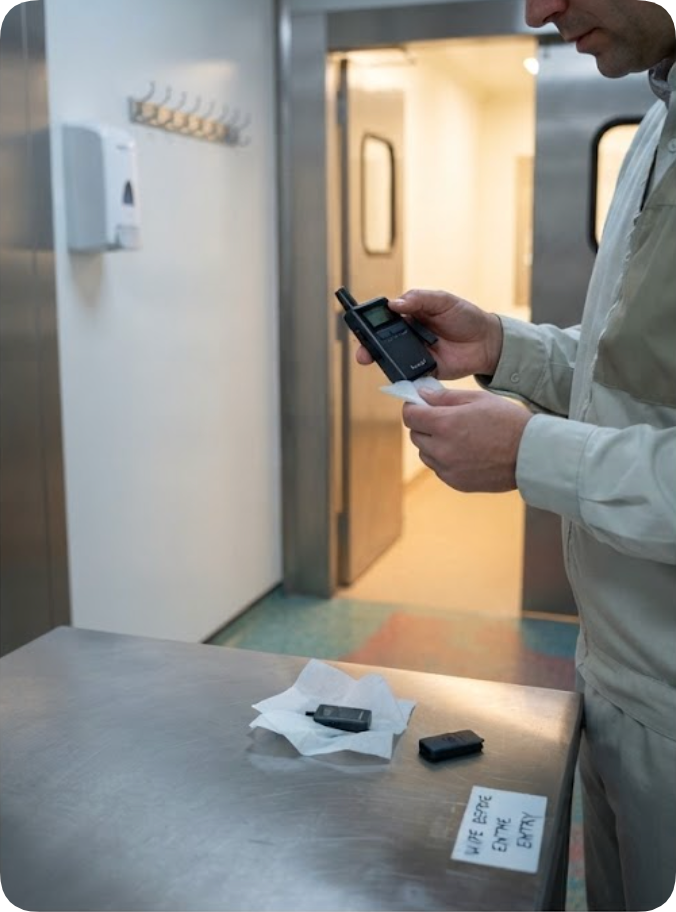
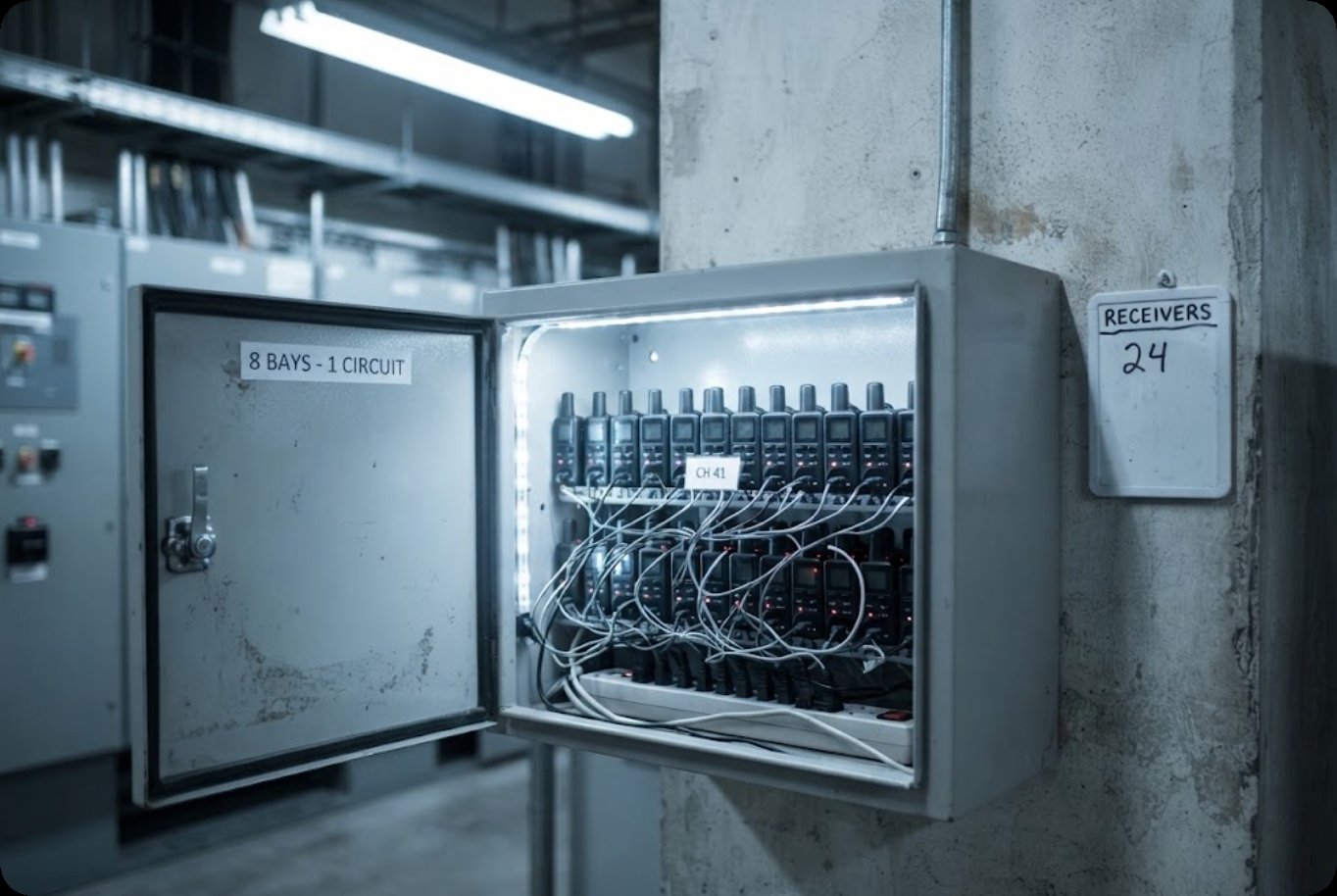
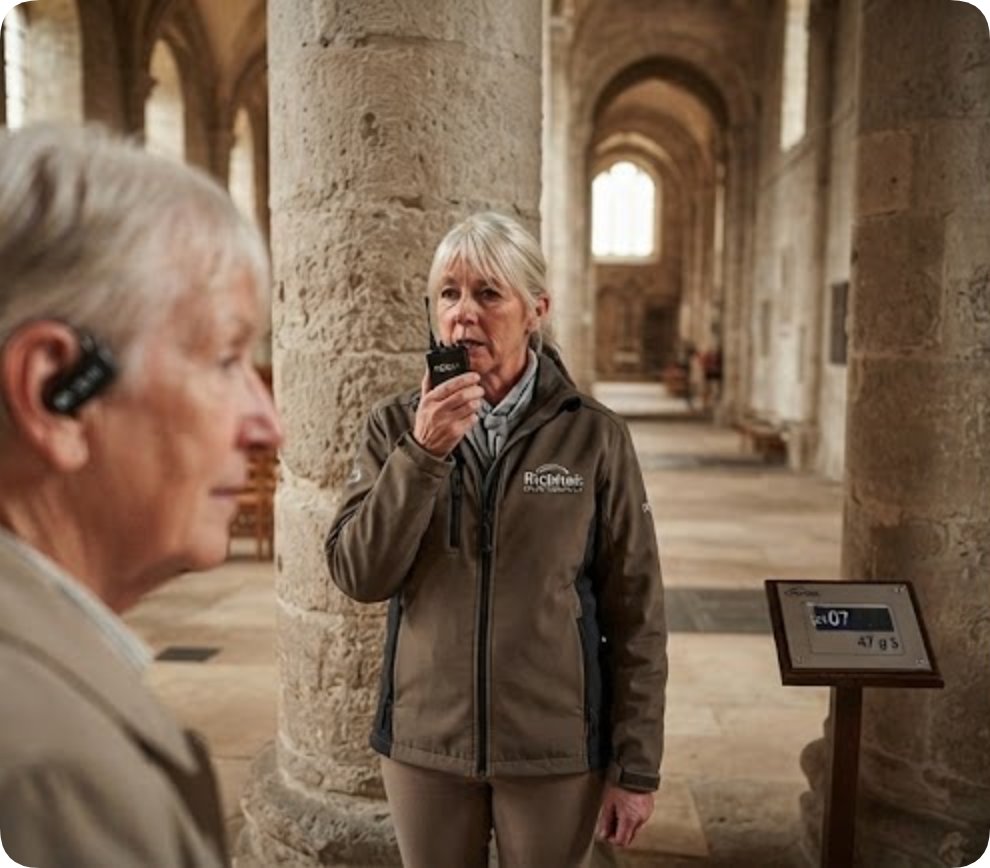
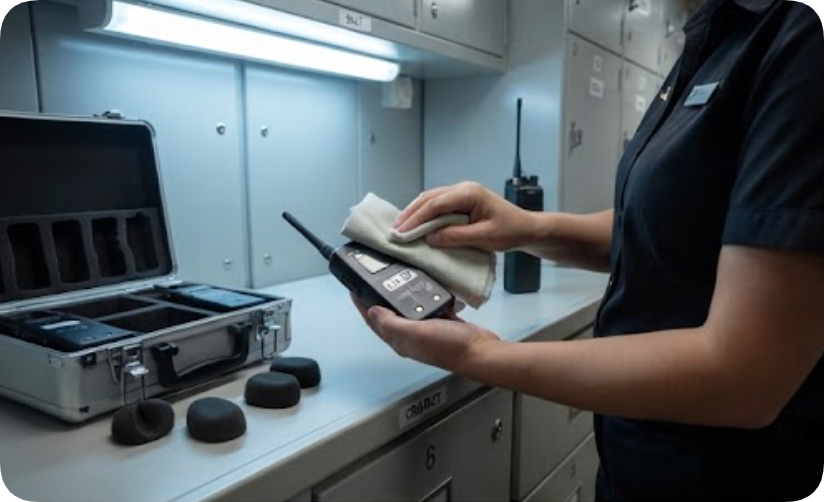
The fourth account is written in the hardware itself. When kits come back, the state of the case is a record of the day nobody typed up: which receivers are still switched on, how warm the units feel, whether the earphones were rewound, and which charging slots were left empty. Three warm receivers from one room usually means the cells never dropped and the fault was elsewhere; a single cold unit in a batch of thirty points the other way. Reading the case takes two minutes and is often the only account that is not an opinion.

From Four Descriptions to a Fault Anyone Can Reproduce

The four accounts have to be folded into one statement that a second person can repeat on purpose. That means a trigger — what was done at the moment the audio failed — plus a place, a time and a unit. "Audio drops out sometimes" cannot be tested; "the last four rows lose the teacher when the group enters room four before 11:00, on any receiver" can be reproduced in ten minutes with the same kit.

What arrives at the deskWho sends itWhich unit it points toFirst thing to check
The back of the group stops hearingAccompanying teacherRC9150 transmitter and the receivers in that groupWhere the transmitter was carried and which channel was set
There is a buzz under the voiceStudentsRC085 UHF pairWhat sits between the two ends in that room
Exhibit six played the wrong clipVenue duty desk2.8-Inch keypad playerFile numbering loaded before the session opened
Three units came back warm and flatKit return checkAny of the three, or none of themWhether those cells had drained at all

The table is not a diagnostic tree. It is a sorting step: it tells you which of the four accounts can be discarded before anyone opens a charging case, and it stops a teacher's sentence from being read as a verdict on a product.

Which Faults Clear Where the Class Is Standing

Most of what a school group reports clears on the spot, and knowing which unit carries which fix keeps the day moving. A channel reset and a repositioned transmitter are teacher-side actions taking under a minute. A UHF buzz at one doorway is a route decision rather than a repair, so the answer is to walk the group through the other side of the room. A wrong clip on a keypad player is a numbering check done between sessions. Only a flat cell or a damaged earphone needs the unit to leave the building.

UnitWhat its own sheet gives you
RC91502403-2483 MHz; 100 channels; 1-200 m; 10 mW output; transmitter 15 h and receiver 35+ h; 97.5 g each; Type-C charging
RC085470-510 MHz UHF; 100 channels; 1-200 m; 8-10 mW output; transmitter 12 h and receiver 20 h; 65 g and 60 g; USB charging
2.8-Inch semi-auto guide0-9 keypad point player; 16 languages; up to 9999 files; 2 GB memory; about 18 h per charge; Micro USB

Read across those rows and the reason for splitting the work is obvious. One pair is a radio link with a channel plan, one is a UHF link for difficult rooms, and one is a standalone player with no radio at all. They fail in different places, so they are reported in different words, and the wireless tour guide system range covers the first two while the player covers the third.

What the Session Record Should Hold After Each Visit

A record that survives to the next term needs four lines: the room, the session time, the unit type, and the sentence the reporter used. Keep the wording as spoken, because paraphrasing is how an effect becomes a cause. After three or four visits a pattern appears — one room, one band, one time of day — and that is when a change of equipment or route can be justified with evidence rather than opinion. More background sits in the solutions library, and a specific room can be worked through with our team directly.
2026年09月30日 12:42
ꄘ click: 2
no data

RC9150, RC085 and the 2.8-Inch Guide: When One Class Fault Arrives in Four Different Words

time: 2026年09月30日 click:2

A school visit rarely fails in a way that announces itself. The group walks six or seven rooms, one teacher stays at the back, thirty students wear whatever they were handed at the door, and the exhibits run their own clips. When the audio goes wrong, nobody stops the tour to write a report. What reaches the organiser later is a single sentence, and that sentence depends entirely on who was standing where when it happened.

This is the practical difficulty of a museum education programme. Three different kinds of hardware can share one building on the same morning: a two-way wireless system carried by the teacher, a UHF pair for rooms that ordinary radio struggles to cross, and a self-service keypad player a visitor works alone. Each fails in its own way, and each is reported by a different person. Reading those versions side by side before choosing a unit to test is the part of museum audio guide work that saves the most time.

💡 Who Is Doing the Reporting, and Why It Changes the Answer

An audio fault is one of the few problems in a venue where the witness is not the person who saw it. A dropped projector is spotted by whoever faced the screen. Audio fails in the middle of a group, so the first account comes from someone who was listening rather than looking, built from what they could and could not hear. That is why one broken channel arrives as "the back can't hear", "there's a buzzing", "exhibit six is wrong" and "three came back flat" — four sentences about one event.

🎓 The Accompanying Teacher Describes an Effect, Not a Device

A teacher reports an effect, not a component. "The back of the group stops hearing me" points at nothing in particular, yet on the RC9150 — transmitter carried by the speaker, every listener holding a receiver — it can mean four things: the transmitter drifted behind a wall, the channel was reset between rooms, a receiver cell sits below the point where output holds, or the class spread past the working range. The unit's sheet gives 100 channels across 2403-2483 MHz, 15 h on the transmitter and 35+ h on the receiver, and 10 mW of output power — useful only once you know which of the four.

RC9150-museum_education_program

Students Describe What They Hear, Not Which Unit Failed

Students report the sound itself, because the sound is all they have. A buzz under the commentary, a crackle at a corner, a second voice cutting in for two seconds — none of that is a diagnosis, but it narrows the field quickly. Interference of that shape usually means a UHF room where steel, a lift shaft or a plant room sits between the two ends, the case the RC085 was built for. It runs 470-510 MHz with 100 channels, 12 h on the transmitter and 20 h on the receiver, and 65 g and 60 g across the pair — a lighter kit to hand out, on a band that behaves differently from the teacher's.

RC085-museum_education_program

The Venue Writes Down a Room and a Time Slot

The venue turns a fault into a place and a time. Its log reads room four, second session, three complaints — the most useful line in the exchange, because it says whether the fault followed the group or the room. It also catches what nobody else reports. The 2.8-Inch Semi-Auto Digital Audio Guide is the example: visitors key a number into the 0-9 pad and the clip plays, so a wrong clip is a file-numbering problem, not a hardware one. The unit holds 16 languages and up to 9999 audio files in 2 GB, and runs about 18 h per charge on Micro USB.

2.8-Inch-museum_education_program

What the Carry Case Shows Before the Units Are Plugged In

The fourth account is written in the hardware itself. When kits come back, the state of the case is a record of the day nobody typed up: which receivers are still switched on, how warm the units feel, whether the earphones were rewound, and which charging slots were left empty. Three warm receivers from one room usually means the cells never dropped and the fault was elsewhere; a single cold unit in a batch of thirty points the other way. Reading the case takes two minutes and is often the only account that is not an opinion.

From Four Descriptions to a Fault Anyone Can Reproduce

The four accounts have to be folded into one statement that a second person can repeat on purpose. That means a trigger — what was done at the moment the audio failed — plus a place, a time and a unit. "Audio drops out sometimes" cannot be tested; "the last four rows lose the teacher when the group enters room four before 11:00, on any receiver" can be reproduced in ten minutes with the same kit.

What arrives at the deskWho sends itWhich unit it points toFirst thing to check
The back of the group stops hearingAccompanying teacherRC9150 transmitter and the receivers in that groupWhere the transmitter was carried and which channel was set
There is a buzz under the voiceStudentsRC085 UHF pairWhat sits between the two ends in that room
Exhibit six played the wrong clipVenue duty desk2.8-Inch keypad playerFile numbering loaded before the session opened
Three units came back warm and flatKit return checkAny of the three, or none of themWhether those cells had drained at all

The table is not a diagnostic tree. It is a sorting step: it tells you which of the four accounts can be discarded before anyone opens a charging case, and it stops a teacher's sentence from being read as a verdict on a product.

Which Faults Clear Where the Class Is Standing

Most of what a school group reports clears on the spot, and knowing which unit carries which fix keeps the day moving. A channel reset and a repositioned transmitter are teacher-side actions taking under a minute. A UHF buzz at one doorway is a route decision rather than a repair, so the answer is to walk the group through the other side of the room. A wrong clip on a keypad player is a numbering check done between sessions. Only a flat cell or a damaged earphone needs the unit to leave the building.

UnitWhat its own sheet gives you
RC91502403-2483 MHz; 100 channels; 1-200 m; 10 mW output; transmitter 15 h and receiver 35+ h; 97.5 g each; Type-C charging
RC085470-510 MHz UHF; 100 channels; 1-200 m; 8-10 mW output; transmitter 12 h and receiver 20 h; 65 g and 60 g; USB charging
2.8-Inch semi-auto guide0-9 keypad point player; 16 languages; up to 9999 files; 2 GB memory; about 18 h per charge; Micro USB

Read across those rows and the reason for splitting the work is obvious. One pair is a radio link with a channel plan, one is a UHF link for difficult rooms, and one is a standalone player with no radio at all. They fail in different places, so they are reported in different words, and the wireless tour guide system range covers the first two while the player covers the third.

What the Session Record Should Hold After Each Visit

A record that survives to the next term needs four lines: the room, the session time, the unit type, and the sentence the reporter used. Keep the wording as spoken, because paraphrasing is how an effect becomes a cause. After three or four visits a pattern appears — one room, one band, one time of day — and that is when a change of equipment or route can be justified with evidence rather than opinion. More background sits in the solutions library, and a specific room can be worked through with our team directly.
no data
×

Contact us

email:
name:
subject:
content: