.webp)
Corporate training is the quiet workhorse of the tour guide equipment market. Safety inductions, floor walkthroughs for new hires, quarterly compliance refreshers, multilingual onboarding at plants that employ five nationalities on one line — the sessions repeat weekly, the content is stable, and the audience is captive in the useful sense: they are there to hear what the trainer says. Buying audio equipment for that job is a procurement exercise, not an impulse purchase, and the checklist below is written to be scored line by line before a purchase order goes out.
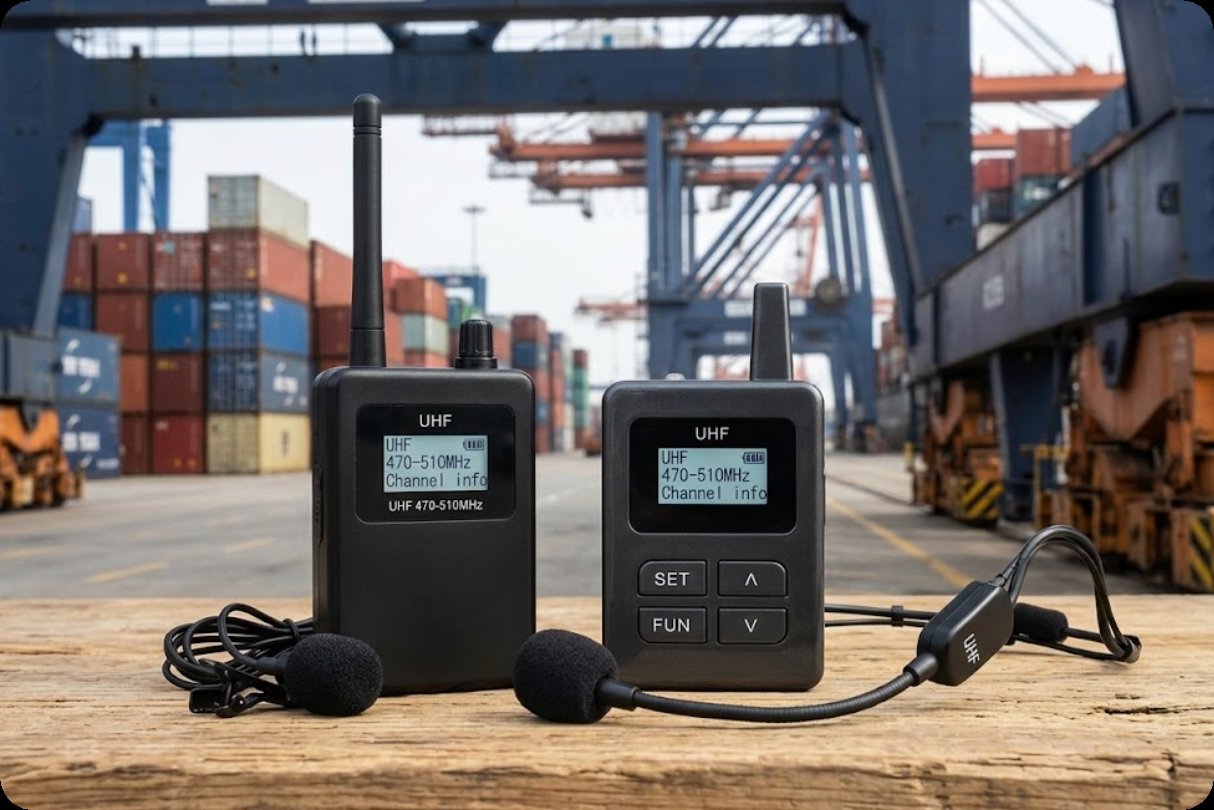
Three devices anchor the checklist, and they represent three different answers to the training problem. The RC2501 is the live-instruction unit: a 2.4GHz wireless tour guide system built around a smart noise-canceling microphone and multi-group transmission. The RC8860 is the interference-proof unit: 20 PLL channels on the 870MHz UHF band, the globally accepted frequency that plant-floor machinery does not fight with. The 2.8-inch semi-auto digital audio guide is the recorded-playback unit: 2GB of internal memory holding up to 16 languages of pre-produced content, played back at the listener's own pace. Every figure below is published on the product pages; where a page is silent, the checklist marks the cell as open homework rather than guessing.
Line One: Live Instruction or Recorded Playback
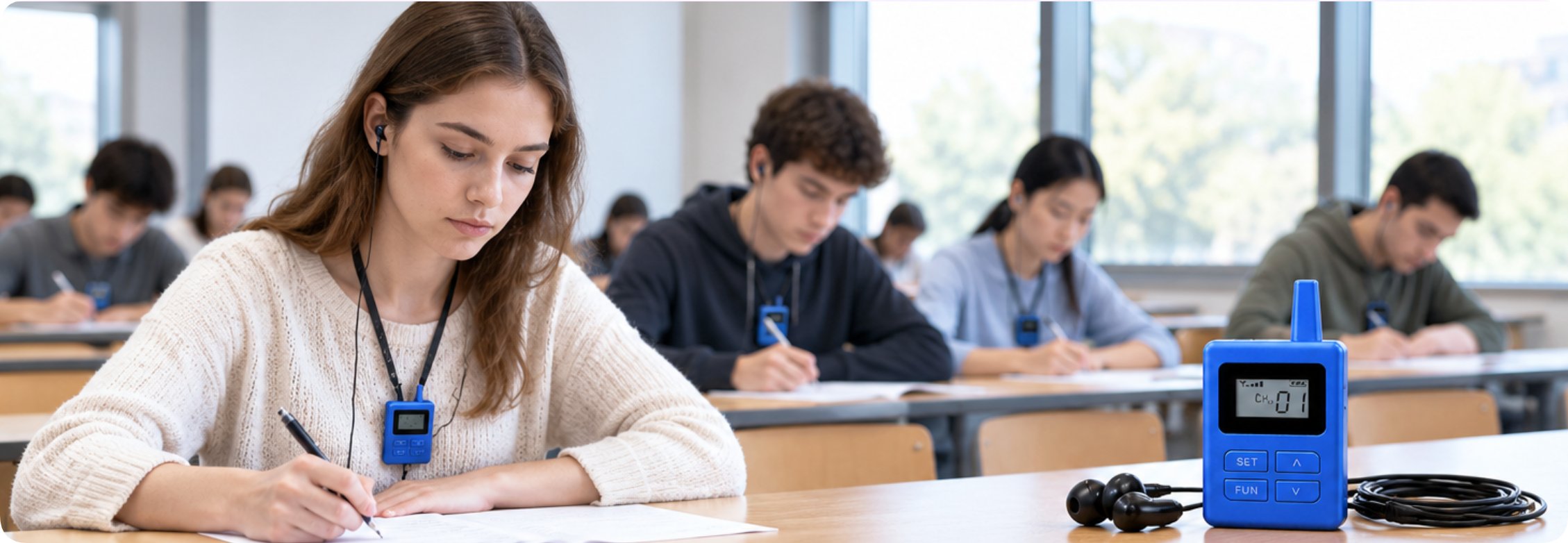
The first line of any training procurement is the delivery mode, and it splits the three devices cleanly. Live instruction — a trainer walking a group through a production line, pausing for questions, adapting to the room — needs a transmitter with a microphone that survives the environment. The RC2501 is positioned exactly here: its smart noise-canceling microphone is the headline feature, engineered so the trainer's voice arrives without the compressor hum, the forklift beeping or the open-plan chatter behind it. Its multi-group channel architecture allows several training sessions to run in the same building without crosstalk between groups.
Recorded playback solves the other half of the training calendar. Safety inductions and compliance modules repeat the same content dozens of times a year, and putting a live trainer in front of every repetition is expensive in hours and inconsistent in delivery. The 2.8-inch semi-auto digital audio guide addresses this directly: 2GB of built-in memory stores the recorded curriculum, the semi-automatic mode lets a visitor or trainee step through the material at their own pace, and with 16 languages supported, one device fleet covers an entire multinational intake without separate recordings per language group. At 18 hours of continuous operation on a full charge, the device outlasts the longest training day without a mid-session charger. The full specification sits on the 2.8-inch semi-auto digital audio guide product page.
Most training departments end up buying both modes: live units for interactive sessions, recorded units for the repeatable core. The checklist's remaining lines score them side by side because the purchase decision usually happens on the same day, against the same budget.
📡 Line Two: Frequency Environment and Interference
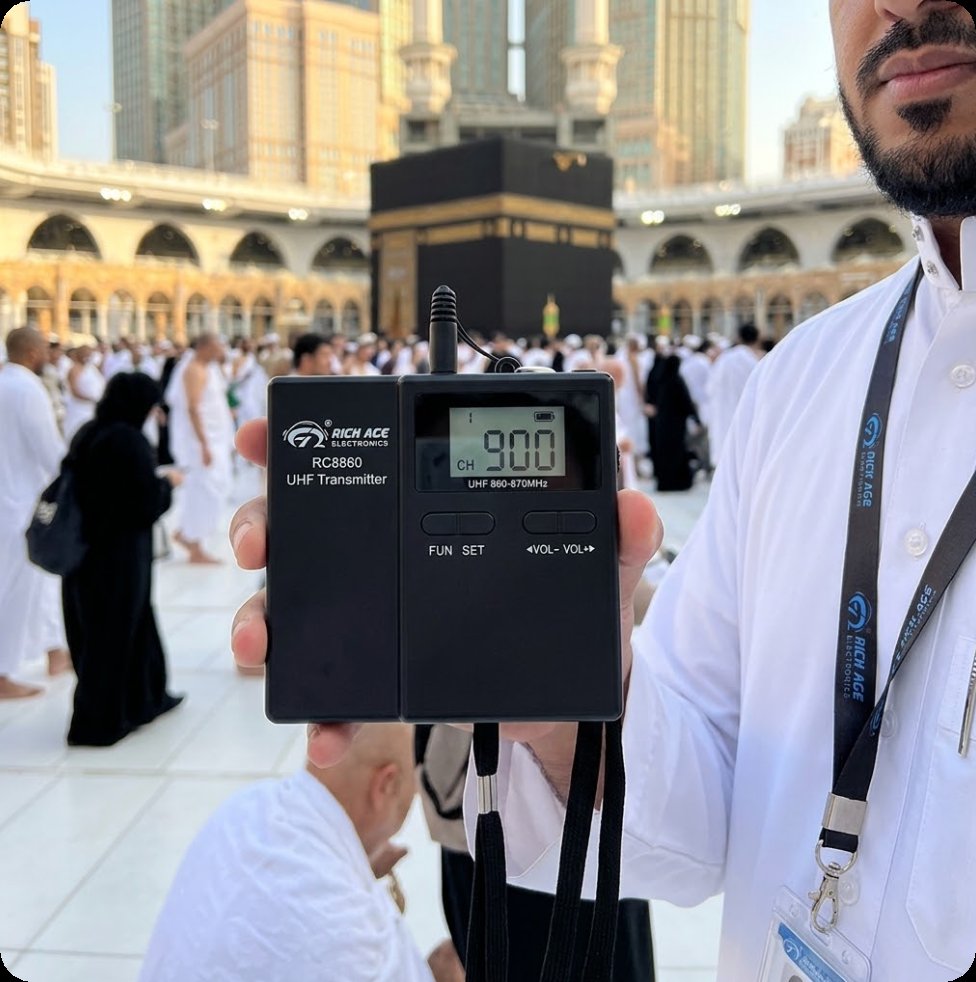
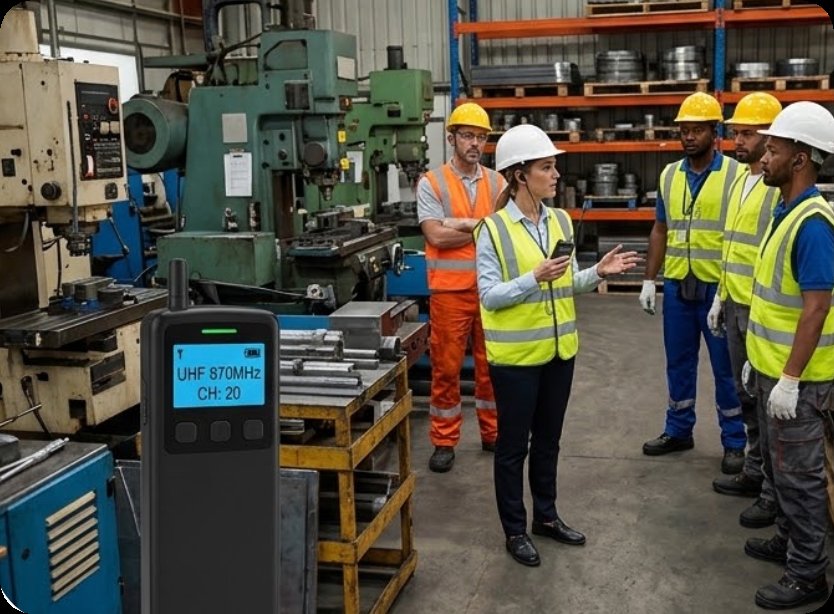
The second line is the RF environment of the training venue, and here the RC8860 earns its place on the shortlist. It operates on the 870MHz UHF band — a globally accepted frequency for tour guide systems — with 20 PLL channels. The practical significance for corporate training is congestion: 2.4G is shared with Wi-Fi, tablets and every phone in the building, while the UHF band the RC8860 uses is not where that consumer traffic lives. In a plant where the training room sits beside the production floor, or a warehouse where the induction happens among the racking, the UHF unit's band is quiet by construction. The RC8860 tour guide transmitter for teaching product page publishes the band and channel details in full.
The RC2501 answers the same problem from the 2.4G side: its multi-group architecture is designed for complete crosstalk elimination between simultaneous sessions, and its effective range reaches up to 200 meters in open areas with the signal holding through obstacles. For training inside modern offices, where the 2.4G environment is busy but managed, that architecture is usually sufficient. The checklist question is blunt: if sessions run beside heavy machinery or dense Wi-Fi, score the RC8860's band advantage; if sessions run in managed conference space, the RC2501's multi-group capacity buys more parallel sessions per purchase.
Line Three: Environment, Endurance and the Numbers the Pages Publish
The third line collects the operating envelope. The RC2501 publishes an operating range of -10°C to 45°C, covering unheated warehouses as well as climate-controlled suites, and an 86×50×19mm ultra-compact body that clips to a lanyard without bulk — a real consideration for trainers who speak for hours and trainees who wear receivers all day. The RC8860 publishes the endurance split that training schedules care about: 10 hours of continuous talk time on the transmitter, 20 hours of continuous use on the receiver, with the transmitter at 59g and the receiver at 50g. Its published range figure is 200m.
The 2.8-inch audio guide's endurance is the standout: 18 hours of continuous operation on a single full charge, charged over Micro USB. For a training department, that means a morning charge covers an all-day intake session with margin, and the devices go back on charge overnight without anyone thinking about it. Where a page does not publish a figure — the RC2501's page does not state battery hours or channel count numerically — the scorecard below leaves the cell open, because a vendor who will not publish a number should be asked for it in writing before the order.

The Scorecard to Put in Front of the Vendor
Condensed to one surface, this is the checklist as a scorecard, with the three devices filled in from published figures. Cells marked open are the vendor's homework, not the buyer's guess.
| Checklist line | RC2501 | RC8860 | 2.8-Inch Audio Guide |
|---|---|---|---|
| Training mode | Live instruction | Live instruction, interference-heavy sites | Recorded playback, self-paced |
| Frequency band | 2.4GHz ISM | 870MHz UHF, 20 PLL channels | Not radio-linked; stored audio |
| Headline feature | Smart noise-canceling mic; multi-group crosstalk elimination | Quiet UHF band beside machinery | 2GB memory, 16 languages |
| Effective range | Up to 200m open areas, holds through obstacles | 200m | Not applicable |
| Endurance | Not published as hours | Transmitter 10h talk / receiver 20h use | 18h continuous on a full charge |
| Weight | Ultra-compact 86×50×19mm | Transmitter 59g / receiver 50g | Not published on page |
| Operating range | -10°C to 45°C | Not published on page | Not published on page |
| Charging | Not published on page | Not published on page | Micro USB |
| Best fit on this checklist | Interactive sessions in managed venues | Plant-floor and warehouse inductions | Repeatable compliance content, multilingual intakes |
Read as a decision, the scorecard says what most training procurement rounds conclude: the delivery-mode line decides which two devices to buy, and the frequency line decides which one leads the order. A department running weekly live inductions beside an active production line buys RC8860 for the floor sessions and the 2.8-inch guide for the repeatable compliance modules; a department training inside managed conference space leans on the RC2501's multi-group capacity and records the rest.
💰 Total Cost of Ownership, Not Ticket Price
Training equipment lives a harder life than museum hardware because it is handled daily by people who did not choose it. The checklist therefore scores durability and supportability on published evidence where it exists: the RC2501's -10°C to 45°C envelope and pocket-sized housing suggest a device meant to travel between sites; the RC8860's 20-hour receiver endurance halves the charging logistics for all-day sessions; the 2.8-inch guide's Micro USB charging uses the most common cable in any office, which quietly eliminates the missing-charger failure mode that dedicated charging cradles create.
The honest line to add is training content itself. A recorded-playback fleet is only as good as its audio production, and the 16-language support on the 2.8-inch guide assumes the department will produce those tracks. Departments that already record safety content find the playback route cheap; departments that do not should score the RC2501's live-instruction route as the primary system and treat recorded content as a later phase, not a launch requirement.

💰 Deploying the Fleet Across a Training Calendar
Deployment is where the checklist meets the calendar, and the pattern that repeats across training departments is division by content stability rather than by seniority. Live units cover whatever changes: new procedures, guest instructors, question-heavy sessions where the trainer improvises. Recorded units cover whatever repeats: the induction module that plays forty times a year, the multilingual safety brief that must be identical in every language the plant employs. The RC2501 wireless tour guide system product page positions the device for exactly the live half of that split, with its noise-canceling microphone and multi-group capacity as the two features trainers notice first.
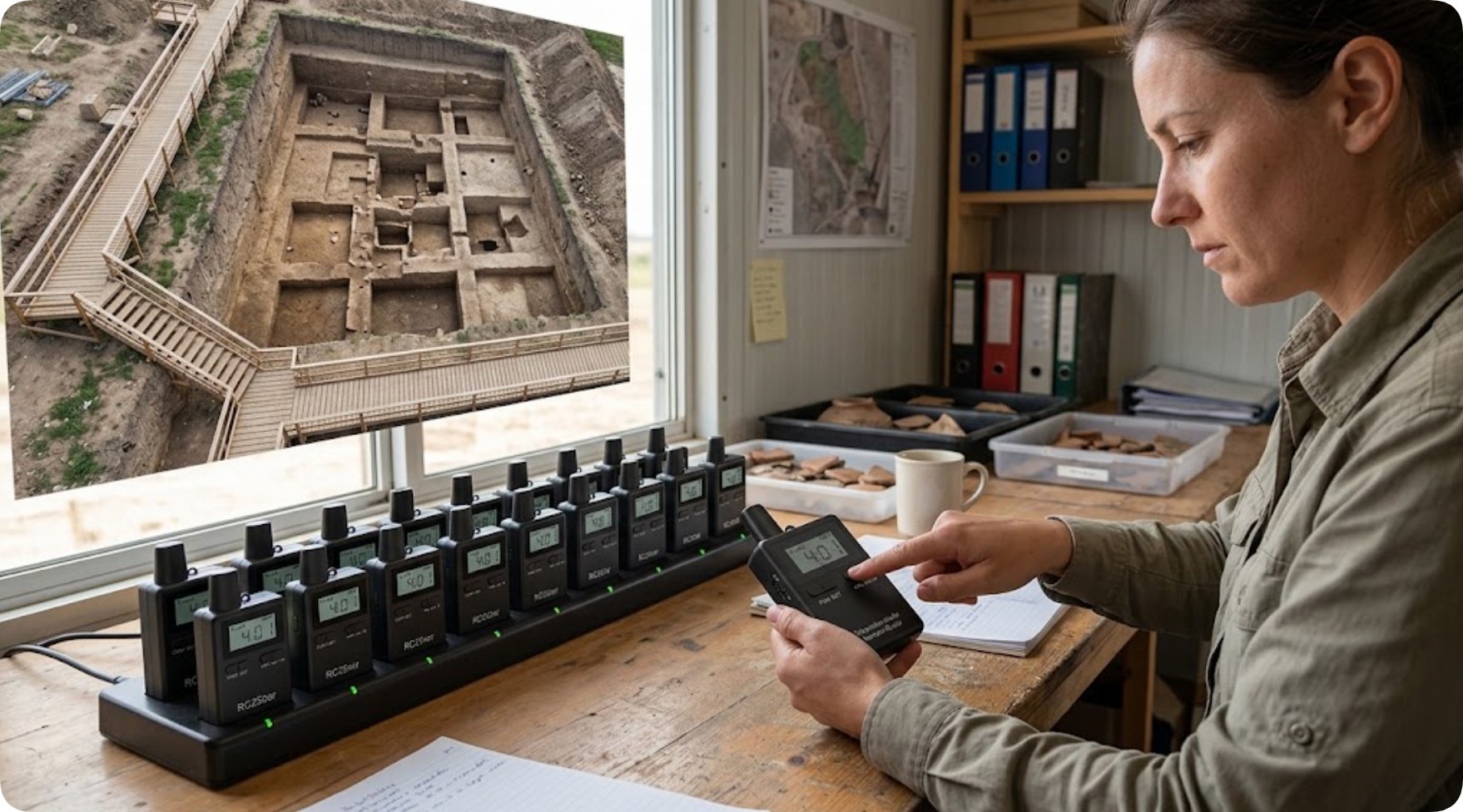
The calendar also decides the charging rhythm, and it is gentler than museum duty. Recorded-playback devices charge overnight after a full day of intakes; live units top up between sessions; the 20-hour receiver endurance on the RC8860 means a Monday charge survives a whole training week of daily sessions. None of this requires a charging room, which is one reason training departments staff the program with one coordinator where a museum needs an equipment technician.
Frequently Asked Questions
1. Can the RC2501 and RC8860 be used in the same building at once?
A: Yes, and mixed fleets are the normal outcome of this checklist. The two units occupy different bands — 2.4GHz ISM for the RC2501, 870MHz UHF for the RC8860 — so they do not interfere with each other, and the RC2501's multi-group architecture keeps simultaneous 2.4G sessions separated internally.2. Is 20 channels enough for a large training operation?
A: Twenty PLL channels on the RC8860 support twenty independent concurrent groups on a band that plant equipment and consumer devices do not crowd. Departments running more parallel sessions than that usually split sites between the RC8860 for RF-hostile zones and the RC2501's multi-group architecture for managed venues, rather than concentrating everything on one band.3. Why buy a recorded-playback device when every trainee has a smartphone?
A: Because controlled distribution is the point of a training fleet. The 2.8-inch guide stores its curriculum in 2GB of internal memory, plays it back semi-automatically, and runs 18 hours per charge — no app to install, no account to provision, no personal device to ask a new hire to use. For compliance content that has to be delivered identically to everyone, that predictability is the feature.4. What should we ask a vendor to put in writing?
A: The open cells on the scorecard: battery hours and channel count for the RC2501, operating range and weight for the 2.8-inch guide, charging accessories for the RC8860. A procurement checklist earns its keep exactly here — every figure a manufacturer publishes is one the buyer never has to verify in the field.Whichever way the scorecard tips, the full range of Richitek wireless tour guide systems covers every tier from pocket-sized transmitters to the UHF flagship, and the equipment behind this checklist appears across our conference and training solutions for venues of every size, with industry-specific deployments documented for museums, plants, churches and city tours.