A battery cell plant is the most demanding factory tour venue we serve, and not because the product is exotic. The building itself fights the guide: production floors wrapped in foil-lined cleanrooms, formation halls packed floor to ceiling with metal cassettes, and a safety perimeter that keeps visitor groups moving or standing still — never lingering. Under those conditions the staffing question stops being "how many people" and becomes "how many voices, on which devices, at which segment of the route".
This article unpacks the staffing plan one of our customers settled on after a full quarter of hosting buyer delegations, certification auditors and investor groups inside a cell manufacturing plant. Their fleet combines the RC2500 Wireless Tour Guide System for the lead guides and the playbook where the building gets hostile to radio — with a third device holding the self-guided end of the route. The numbers below are theirs, adjusted only where the customer asked us to blur volumes.
The Route Is Fixed Before the Headcount Is
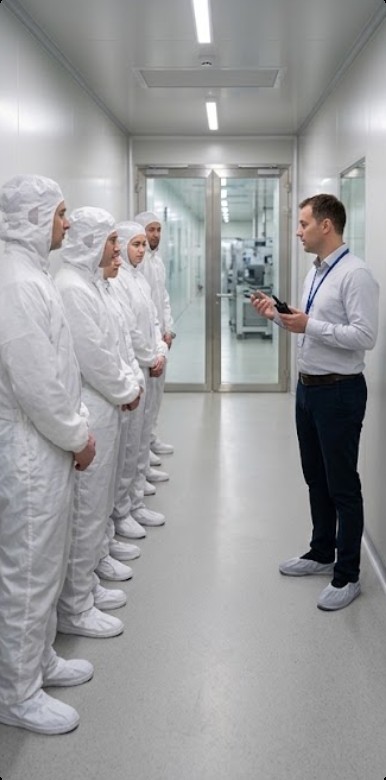
Every visit follows the same three segments, and the order is not negotiable because the fire map says so. Groups enter through the gowning corridor where the ESD and cleanliness briefing happens, walk the electrode and cell-assembly line behind glass, cross to the formation and aging hall where the cassettes live, and finish at the packing and dispatch bay. Two of those segments are loud and metal-dense; the other two are quiet and radio-friendly. No staffing plan can be written until that routing is accepted, because each segment changes what the guide's voice has to overcome.
The customer's first version of the plan ignored this and assigned one guide with one transmitter type to the whole loop. It failed in a specific, repeatable way: the same equipment that carried clearly across the dispatch bay broke up inside the formation hall, and the guide compensated by raising volume, which the headsets turned into distortion. The fix was not more people. It was matching the radio to the segment — a conclusion that reshaped the entire roster, and it is the reason this article is ordered by zone rather than by device. The factory tour solutions page now carries that zone-first version of the plan for other industrial hosts.
🎯 Where the RC2500 Earns the Lead Guide Role
The assembly floor is where most visits are won or lost, and it is the RC2500's segment. Visitors stand at a gallery window while the guide speaks across active machinery, and the audio has to arrive clean over inverter whine and pneumatic actuators without the guide shouting. The transmitter's 20mW output on the 2.4GHz band (2403-2483MHz) pushes a stable 200-meter envelope across the open production floor, which lets the lead guide stay at the front of the group while the tail of the group lingers at the previous window — the signal holds without anyone repositioning.
The second reason the lead role runs on this unit is group separation. The plant hosts two delegations some afternoons — a buyer group and an audit group on staggered starts — and the RC2500's 50 PLL-synthesized channels keep the two tours on adjacent frequency blocks with zero crosstalk. The customer's coordinators treat channel discipline as part of the staffing plan now: the roster names the channel block per delegation alongside the guide's name, which has ended the pre-tour frequency negotiation almost entirely. Battery endurance matters here too — a full reception day on one charge (the receiver is rated at 40 hours, the transmitter at 12) means the charging cart only needs to be true once per day, not between every group.
UHF Carries the Metal-Dense Corners
The formation and aging hall is the opposite radio problem: rows of floor-to-ceiling metal cassettes, each a reflective obstacle, with walkways barely two meters wide. The 2.4GHz signal that cruises across the assembly floor scatters here. The customer moved this segment to the RC085 Digital Tour Guide System, whose 470-510MHz UHF platform with GFSK modulation bends around obstructions in a way higher frequencies physically cannot, and the difference stopped the complaint log from that hall entirely.
The RC085's dual working modes turned out to matter as much as the frequency. In F1 mode the segment runs as a one-way broadcast while the guide walks the aisle; when an auditor joins and the route becomes a question-heavy inspection, switching to F2 two-way lets a second speaker — the plant's process engineer — answer from inside the aisle without the group closing ranks around one microphone. The customer's staffing note describes it as "one transmitter, two jobs": the broadcast role for buyers, the interview role for auditors, no extra equipment issued for either.

The Self-Guided Spill Lane Runs on Numbers
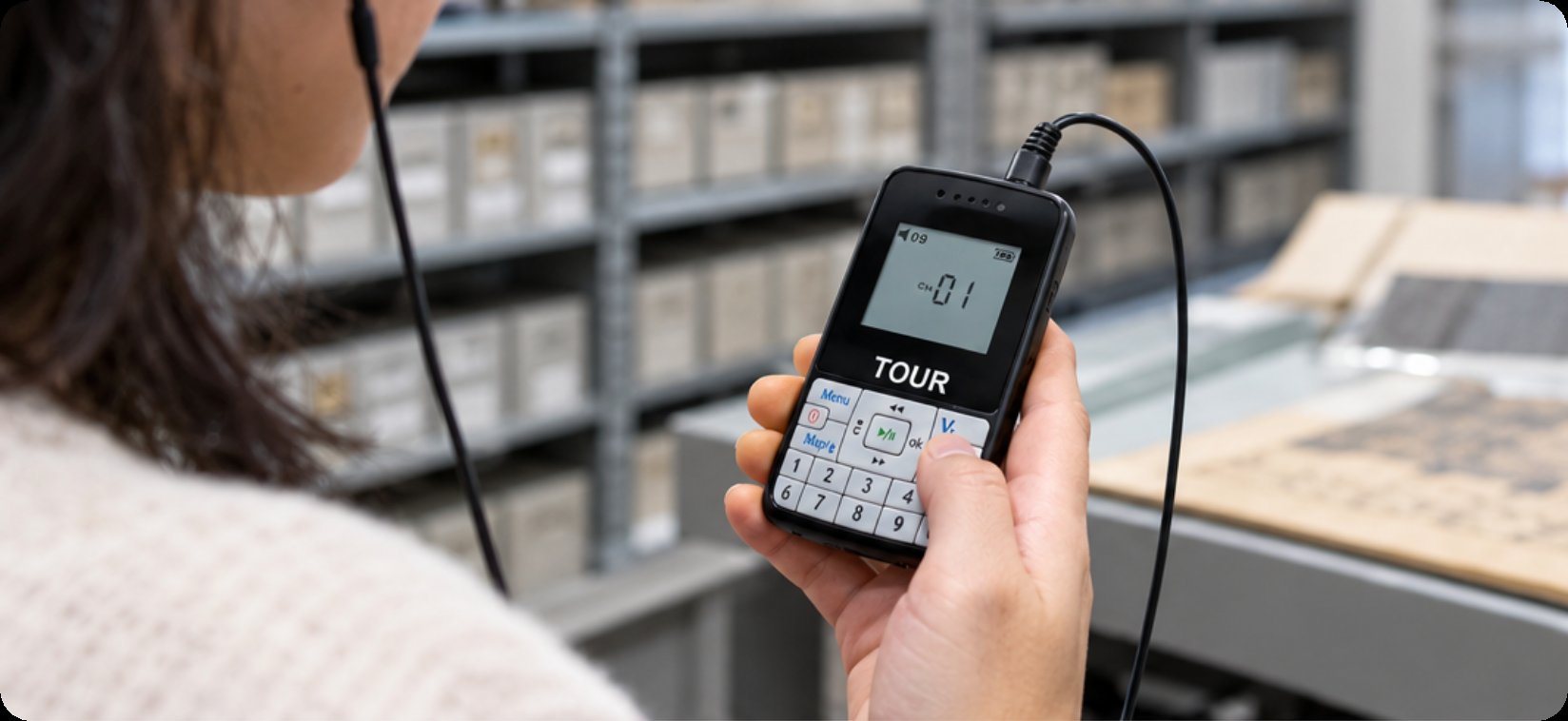
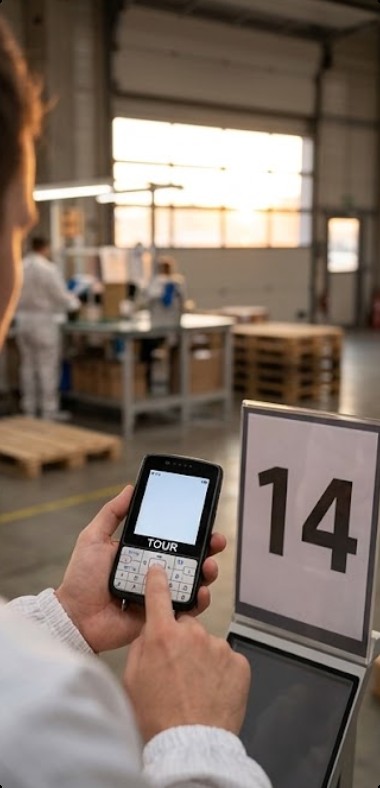
The third staffing problem had no live guide at all. When the packing and dispatch bay fills with a loading crew, or when a delegation's spouses join for the final hour, the plant does not staff a third guide — it hands out the 2.8-Inch Semi-Auto Digital Audio Guide players loaded with the plant's fixed commentary. Visitors type the two-digit code posted at each exhibit — the calendering station, the module palletizer, the traceability wall — and the matching track plays immediately, in any of the sixteen languages the plant has recorded.
The economics only work because the content is fixed. The dispatch bay presentation changes once a quarter, not once a shift, so 9999 file slots and 2GB of memory are loaded once and touched rarely, and the 18-hour battery covers the longest visiting day without a mid-route swap. The customer positions it as overflow staffing in budget terms: one charging tray and a language check at issue time replace the per-visit cost of a third guide who would otherwise stand in the dispatch bay repeating the same nine minutes.
🗺️ Counting Heads per Zone, Not per Tour
The customer's staffing sheet finally stopped being a single number and became a table, which is how we recommend every plant customer think about it. Guides are not assigned to tours; they are assigned to segments, because a segment that runs twice a day with different visitors needs the same coverage every time. The quarter of operation settled the ratio below, and the customer has not adjusted it since.
| Route segment | Staffing | Device assigned | Why this one |
|---|---|---|---|
| Gowning and ESD briefing | 1 coordinator | RC2500 (one-way) | Short, quiet, safety-critical — clarity over range |
| Cell assembly gallery | 1 lead guide | RC2500, 20mW / 50 channels | 200m envelope over machinery; two delegations share the floor without crosstalk |
| Formation and aging hall | 1 guide + process engineer | RC085, F1 or F2 mode | UHF 470-510MHz bends around cassettes; two-way for auditor Q&A |
| Packing and dispatch bay | 0 guides | 2.8-Inch number-input players | Fixed commentary in 16 languages; no staff cost per visit |
The Shift Handover That Keeps Receivers Alive
None of the ratios above survive a charging failure, so the staffing plan owns the power logistics as explicitly as it owns the people. The fleet returns to one tray at day end: RC2500 transmitters and receivers docked by channel block, RC085 units wiped and racked by mode tag, audio guide players emptied of earphones and topped up overnight. All three fleets dock into the same wireless tour guide system charging logic, which is what keeps the evening routine to one tray. The customer's morning check is four items long and takes one person ten minutes — channel labels intact, earphone counts matched, date code on the audio files, trays reporting full.
The discipline exists because the plant tour calendar is unforgiving in one specific way: visits are booked by the week, and a device that shows up half-charged cannot be swapped mid-route the way a projector bulb can. After one near-miss in the customer's second month — a transmitter docked in the wrong slot and missed by the morning check — the handover sheet gained a sign-off column, and the same person who signs the visitor list signs the charging tray. Two signatures, thirty seconds, no repeat incidents since.
What a Quarter of Walkthroughs Change on the List
Three months of operation trimmed the plan in ways nobody predicted at purchase. The audio guide players migrated from "backup for big groups" to "default for the dispatch bay", which cut paid guide hours on the final segment to zero. The RC085 earned a second permanent kit because auditors started requesting the two-way mode by name. And the RC2500 fleet stopped growing at four transmitters — the 50-channel discipline meant four covers every overlapping-delegation scenario the plant ever booked, so the budget line moved from equipment to content translation instead.
The staffing conclusion the customer offers to peers is blunt: buy the radios for the zones they will actually cross, staff the segments that carry liability, and let fixed-content devices absorb the rest. A plant that inverts this — uniform equipment, uniform headcount — pays for coverage it does not use and lacks depth where the building actually fights back. Visitors rarely notice any of this machinery when it works; that invisibility is precisely the deliverable.
For teams planning a similar retrofit of their own visitor program, the charging and management logic behind all three devices is shared, and our explore our solutions desk publishes worked staffing plans for other industrial venues worth comparing before the first purchase order goes out.