
A leading China factory specializing in Wireless Tour Guide Systems, Church Audio Guides, and Translation Headphones with premium OEM/ODM solutions.

Tel:+86 18922879583

Email:tiger.wang@richitek.com

Silent Disco Headphones and RC2501: A Procurement Checklist for a Loud Training Hall

Silent Disco Headphones and RC2501: A Procurement Checklist for a Loud Training Hall

The purchasing file at a machining and assembly school in northern Italy used to be one line long: megaphones, quantity six, reorder yearly. Then the auditor asked why the pass rate on practical assessments dropped in halls B and C, and the answer was embarrassing. The instructor could be heard. The back half of the class just could not repeat what they heard, because a running lathe and a dust extractor were louder than a human voice at nine metres. The school rewrote its purchase order from scratch. The new version has exactly three line items, and each one exists because a specific lesson failed a specific way. This article is that purchase order, with the numbers a buyer should check against each row before signing. The pattern generalises to any noisy workshop, and the training-room audio setup guide shows how the same three rows fit a classroom that is not a workshop at all.

🧾 The Purchase Order Written From Failed Lessons

The office did not start from a catalogue. It started from the term-end review, where three complaints kept reappearing in the trainee feedback forms. First, the machine demonstration: twenty-four trainees, one running machining centre, and the instructor narrating over it — the six people at the back heard a compressor. Second, the walking lesson: an instructor moving between inspection tables with a clipboard in one hand and a handheld transmitter in the other, putting the transmitter down every time he needed to point at a drawing. Third, the rotation queue: thirty trainees cycling through fitting stations while one instructor repeated the same briefing at a whisper, thirty times, until his voice gave out by Wednesday. Each complaint became a line on the order, and each line was costed against the number of trainees it had actually failed. That ordering — failure first, hardware second — is the single most transferable habit from this school's process, because it stops a buyer from paying for coverage they already have.

🎧 Row One: The Demo Nobody at the Back Could Hear

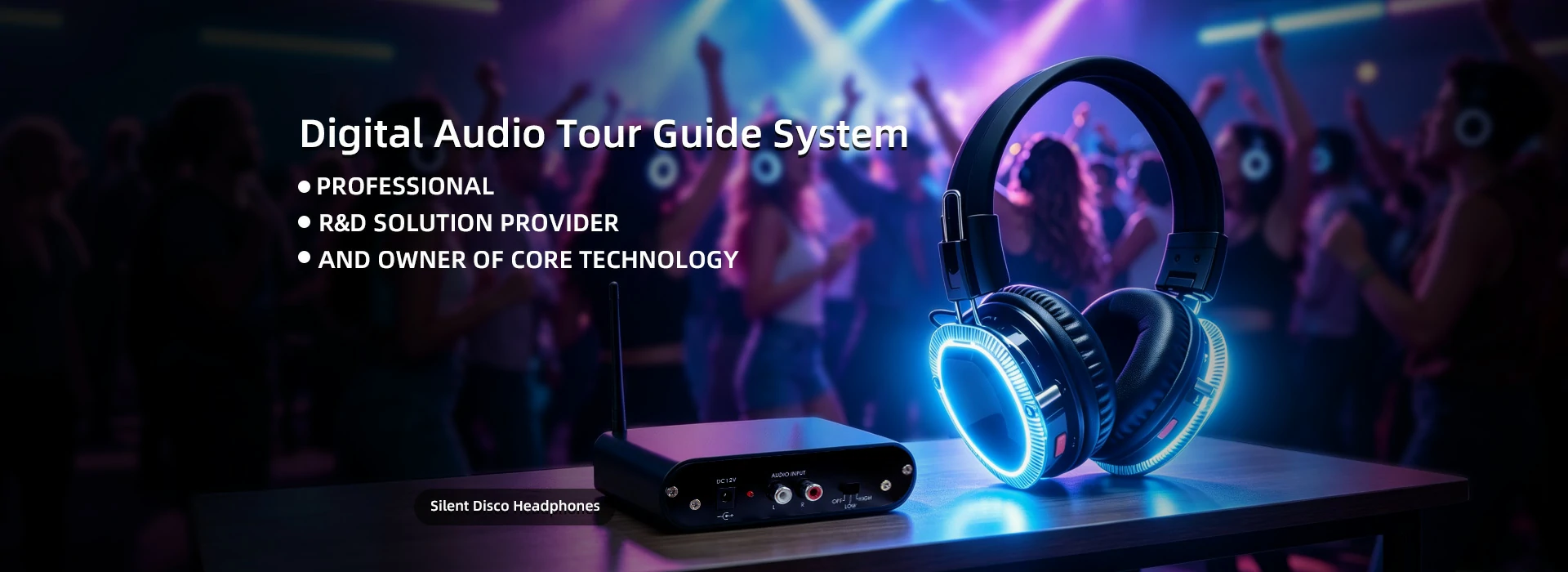
For the machine demonstration the school stopped trying to make one voice louder and moved the voice onto every head instead. The instructor wears a compact FM transmitter; every trainee wears a wireless headset, and the running machine becomes background noise instead of a competitor. The unit the school specified is the Silent Disco headphone system, and the checklist numbers for it are specific. Ten FM channels, which matters because the hall next door runs a simultaneous class and the two rooms must never share a frequency. Forty-millimetre drivers with a signal-to-noise ratio above 75 dB, which is what lets instruction survive a dust extractor running three metres away. A 500 mAh headset battery rated at ten hours of playback, charged in about three hours, so a morning class and an afternoon class can share one crate if the office schedules the swap. The buyer's check on this row is not the driver size — it is the channel count plus the charge time together, because a ten-hour headset that takes all night to charge cannot cover a double booking. On delivery day the office ran its own two-check acceptance before signing the goods-in note: first a same-frequency test with the hall next door running its own FM channel, listened to from the aisle between the two rooms, and second a timed discharge on two sample headsets from a full charge, which stopped at nine hours and forty minutes against the published ten. Both checks passed without argument, and the acceptance note with the timed figures went into the same folder as the purchase order, where the auditor found it four months later without asking a single question about it.

Instructor demonstrating at a running machining centre while the class listens through Silent Disco wireless headsets

🎙️ Row Two: The Instructor Who Needed Both Hands

The walking lesson failed for a hardware reason: a handheld transmitter demands a hand, and a working instructor's hands are already spent. The school's answer was a clip-and-go pair in which the transmitter pins to a collar and the receiver hangs on an ear, leaving both hands on the clipboard, the caliper or the trainee's own workpiece. The unit specified is the RC2501 wireless tour guide system, and its checklist row is short but strict. Both ends weigh 47 grams, which is the difference between an instructor who forgets he is wearing it and one who takes it off during demonstrations. Fifty channels, so three instructors can work the same open floor without any coordination at all. Thirteen milliwatts of output power — the highest in the school's whole order — because the walking instructor covers the longest distances. The battery figures close the row: fifteen hours on the transmitter and thirty-five-plus on the receiver, which the office reads as a two-day teaching week on one overnight charge. A buyer who checks only the channel count will miss the real failure mode of this row, which is transmitter weight after hour five of a standing shift.

Instructor with a clipped-on RC2501 transmitter holding a drawing and caliper while walking between inspection benches

👂 Row Three: The Rotation Queue at the Stations

The third failure was arithmetic. One instructor, thirty trainees, six fitting stations: someone was always waiting for a briefing that had already been given four times. The school did not hire a second instructor. It put a receiver on every ear and let the whole rotation hear the same briefing at once, at conversational volume, from wherever they stood in the room. For this row the office specified the RC2468 ultra-light tour guide system on a simple calculation: the receiver weighs 18 grams in an ear-hook format, which means a trainee can wear it for a full three-hour rotation block and forget it exists, and receivers are the part of any fleet that gets issued thirty at a time. Fifty channels keep the rotation independent of the demo hall next door. The transmitter runs ten hours on a 1,500 mAh cell; the receiver is rated at approximately eight hours on a small 300 mAh battery, which the office deliberately matched to the length of one teaching block rather than to a full day. That mismatch is a feature of the checklist, not an oversight: a receiver that dies at the end of a rotation cannot be walked out of the building in a jacket pocket.
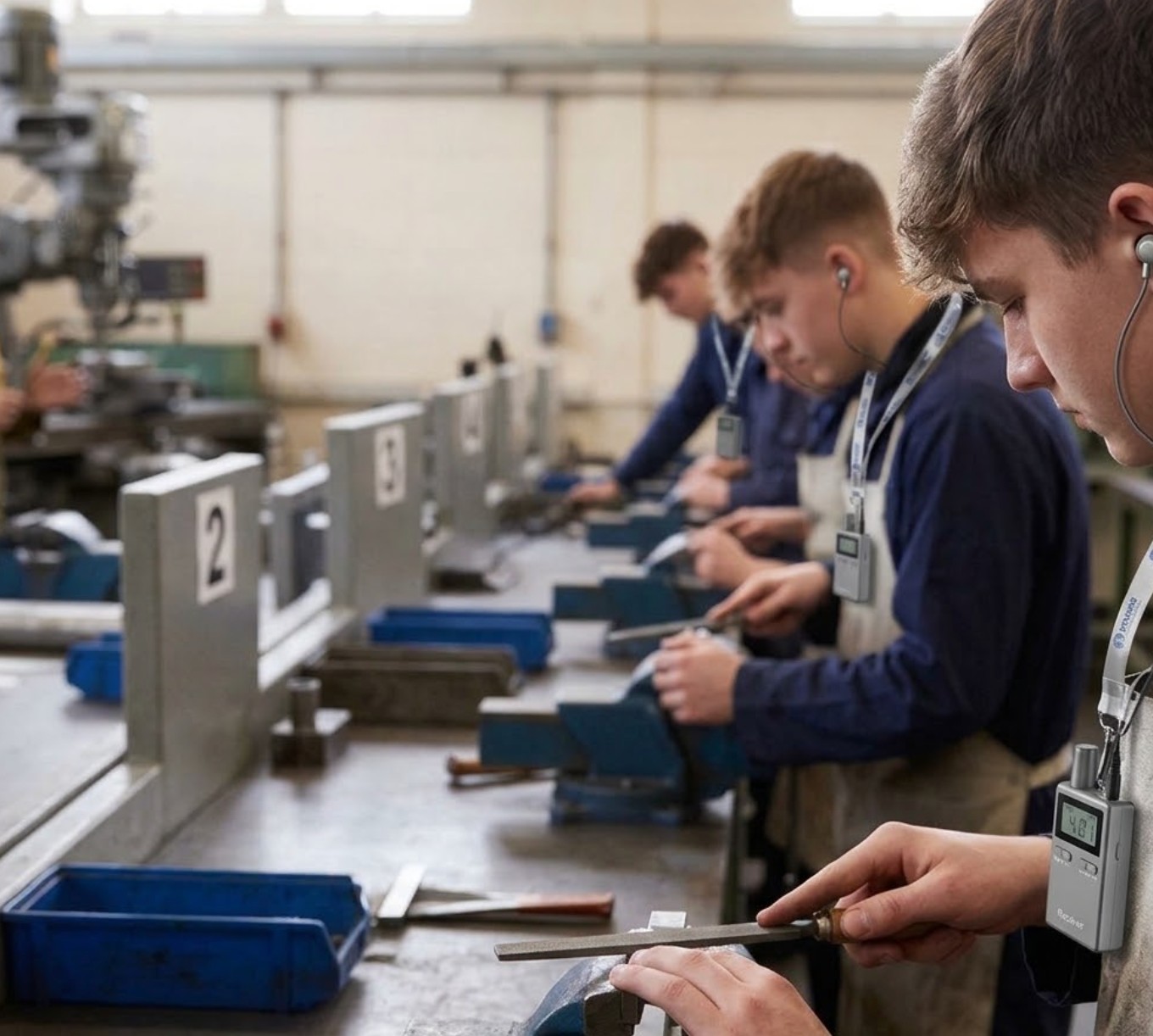
Trainees wearing lightweight ear-hooked RC2468 receivers working at numbered fitting stations in a rotation

📊 One Table, Three Rows, Every Number From the Spec Sheet

The office reduced the whole file to a single table before it went to finance, and the buyer kept the same table in the folder when the vendor called. Every figure below comes from the manufacturer's published specification sheet, and a purchaser checking a competing quotation should strike out any supplier who cannot match them line for line.

Line ItemFailure It RetiresNumbers to Verify on Delivery
Silent Disco headphone systemDemo inaudible over running machinery10 FM channels; 40 mm drivers; SNR >75 dB; 500 mAh, ~10 h playback; ~3 h recharge
RC2501 transmitter-receiver pairInstructor's hands occupied by handheld mic47 g both ends; 50 channels; 13 mW; TX 15 h / RX 35+ h
RC2468 receiver fleetRotation queue waiting on repeated briefings18 g ear-hook receiver; 50 channels; TX 10 h / RX ~8 h; 300 mAh receiver cell

🔌 What Charges Overnight and What Tops Up at Lunch

The school's charging shelf was rearranged around one distinction the checklist makes explicit: transmitter batteries are sized for a working day and receiver batteries for a teaching block. The Silent Disco headsets and the RC2501 pairs go on the overnight shelf, because ten and fifteen hours of runtime both clear a double shift with margin and a three-hour top-up covers a lunchtime turnaround. The RC2468 receivers go on the fast shelf by the door, where the office swaps the small cells between morning and afternoon rotations instead of running cables to thirty charging points. The office logs one number every Friday: how many units came back below twenty percent. In the first term the figure stayed in single digits, which the office attributes to the shelf split rather than to trainee discipline. A buyer copying this layout should measure their own shelf before ordering — the constraint that actually bites is outlet count, not battery chemistry. The physical layout follows a numbering habit borrowed from the tool crib: every charging slot carries a printed number, every unit in the crate carries the matching number on a small label, and a trainee returning a headset slots it back into its own point rather than the first free one. The habit costs an afternoon with a label printer and saves a standing argument, because a unit that fails to charge is now a slot problem, not a whodunit. The office tried a free-slot shelf for the first two weeks of the term and reverted after three unexplained dead units in one morning.

🏭 🧾 What to Ask the Factory Before the Order Leaves

Three questions survived into the school's standard RFQ template, and each one came from a near-miss rather than a disaster. First, channel separation on paper is not channel separation in a building with steel partitions; the school asked for a trial on two simultaneous channels before the main order, and the vendor agreed. Second, the colour split on receivers matters more than it sounds — the office ordered the Silent Disco headsets in two colours so the morning and afternoon pools never get mixed on the shelf, and confirmed in writing that large-quantity orders can be customised. Third, spare-unit ratios: the school buys one spare transmitter per three active and one spare receiver per ten, and it asked the factory to confirm lead time on those spares separately from the main fleet. Buyers who skip the third question usually discover the gap in month nine, when a failed transmitter grounds a whole line item. The full product range behind these three rows is wider than any single school needs, which is precisely why the failure-first order matters.

The rewritten order cost more than six megaphones, and the school knew it would have to defend the difference. The defence took one paragraph. The failed demonstrations and repeated briefings had pushed the practical-assessment retake rate high enough that the school was paying instructor overtime for extra practice sessions — the office calculated the overtime across one term and found it exceeded the cost of the entire three-row order. The new kit was framed not as audio equipment but as a retake-reduction line, and the auditor approved it in the same meeting. Since the fleets went live, the retake rate in halls B and C has fallen every month, and the office now writes the monthly figure on the same whiteboard that used to track megaphone breakages. For a buyer building the same case, the checklist is the argument: three named failures, three rows of verifiable numbers, and a total that fits inside a single term of the problem it retires. Vendor terms and volume pricing are worth comparing separately — the solution pages for organised group audio list the deployment patterns the factory supports.

🏭 🛒 Get the Spec Sheet, MOQ and a Factory-Direct Quote

The three line items in this checklist are all in current production and ship worldwide from the factory directly. A buyer preparing a purchase order can request the full specification sheets, minimum order quantities for custom-colour receiver batches, and a factory-direct quotation matched to their own class sizes and shift calendar. Send the number of trainees per session, the number of simultaneous rooms, and the charging-shelf layout, and the quotation comes back row by row against the same three failures described above — with the trial-channel offer included on request. Quotations normally state the lead time for the main fleet separately from spares, and the factory confirms custom-colour minimums in writing before any deposit is taken. For overseas buyers the shipping case counts, foam inserts and all, are quoted as part of the order so the crates arrive ready for the charging shelf rather than for a storeroom repack.

FAQ: Questions the Buyer Asked Before Signing

1. Can the Silent Disco headsets and the RC2501 pair work in the same hall at the same time?

Yes, and the school relies on it daily. The headphone system runs on FM channels while the RC2501 works the 2.4 GHz band, so the two lines do not interfere even in the same room. The only coordination needed is internal: assign the FM channel per room and the fifty RC2501 channels per instructor, and write both on the same shelf card so a substitute teacher can follow it.

2. How many trainees can one RC2501 transmitter cover in a workshop?

The practical answer is a class, not a number of metres. The published transmission range runs from 1 to 200 metres, but in a machine hall the limit is attenuation from bodies and steel guards, and the school's working figure is one transmitter to a full session of up to thirty earpieces with volume in reserve. For larger intakes the office runs a second transmitter on a separate channel rather than daisy-chaining anything.

3. Is the 18-gram RC2468 receiver durable enough to be handed out thirty times a day?

The school's first term says yes, with one handling rule. The ear-hook shell survived daily issue and return without a single housing failure; the part that needs discipline is the hook itself, which trainees learned to seat rather than snap. The office keeps a one-in-ten spare ratio and has not had to touch it. The receiver runs roughly eight hours per charge, which matches one rotation block by design.

4. What happens when two instructors accidentally pick the same channel?

Both audiences hear a mixed signal until one instructor changes channel, which takes seconds on the channel selectors. The school prevents it procedurally: the channel plan assigns bands per room, and the Friday shelf check includes a two-transmitter interference test in adjacent rooms. On the Silent Disco FM side the ten channels give each room a fixed frequency, so the collision normally only happens with visiting staff who skipped the shelf card.

5. Can a smaller school start with just one of the three rows?

Yes, and the failure-first method tells you which one. The school that wrote this order started years ago with the walking-lesson problem alone, and the RC2501-style pair was its first purchase. The demo row became urgent only when intake numbers grew past what a single voice could cover, and the rotation row when station counts multiplied. Buy the row that matches the failure you are currently paying for, and the other two will announce themselves in the term-end feedback.


2026年10月23日 11:00
ꄘ click: 0

Get the spec sheet, MOQ and a factory-direct quote

Tell us the venue, the group size and how many languages you need. An engineer at our Shenzhen factory replies within one business day with the matching model, a written quote, lead time and the CE / RoHS / ISO 9001 documents.

Talk to an engineer WhatsApp +86 189 2287 9583

Prefer email? tiger.wang@richitek.com  |  OEM / ODM, custom tooling and neutral packaging available  |  send the enquiry through our contact page

Shenzhen Rich Age Electronics Co., Ltd. (Richitek) - manufacturing wireless tour guide systems, church translation headsets and museum audio guide equipment since 2007.

no data

Silent Disco Headphones and RC2501: A Procurement Checklist for a Loud Training Hall

time: 2026年10月23日 click:0

Silent Disco Headphones and RC2501: A Procurement Checklist for a Loud Training Hall

The purchasing file at a machining and assembly school in northern Italy used to be one line long: megaphones, quantity six, reorder yearly. Then the auditor asked why the pass rate on practical assessments dropped in halls B and C, and the answer was embarrassing. The instructor could be heard. The back half of the class just could not repeat what they heard, because a running lathe and a dust extractor were louder than a human voice at nine metres. The school rewrote its purchase order from scratch. The new version has exactly three line items, and each one exists because a specific lesson failed a specific way. This article is that purchase order, with the numbers a buyer should check against each row before signing. The pattern generalises to any noisy workshop, and the training-room audio setup guide shows how the same three rows fit a classroom that is not a workshop at all.

🧾 The Purchase Order Written From Failed Lessons

The office did not start from a catalogue. It started from the term-end review, where three complaints kept reappearing in the trainee feedback forms. First, the machine demonstration: twenty-four trainees, one running machining centre, and the instructor narrating over it — the six people at the back heard a compressor. Second, the walking lesson: an instructor moving between inspection tables with a clipboard in one hand and a handheld transmitter in the other, putting the transmitter down every time he needed to point at a drawing. Third, the rotation queue: thirty trainees cycling through fitting stations while one instructor repeated the same briefing at a whisper, thirty times, until his voice gave out by Wednesday. Each complaint became a line on the order, and each line was costed against the number of trainees it had actually failed. That ordering — failure first, hardware second — is the single most transferable habit from this school's process, because it stops a buyer from paying for coverage they already have.

🎧 Row One: The Demo Nobody at the Back Could Hear

For the machine demonstration the school stopped trying to make one voice louder and moved the voice onto every head instead. The instructor wears a compact FM transmitter; every trainee wears a wireless headset, and the running machine becomes background noise instead of a competitor. The unit the school specified is the Silent Disco headphone system, and the checklist numbers for it are specific. Ten FM channels, which matters because the hall next door runs a simultaneous class and the two rooms must never share a frequency. Forty-millimetre drivers with a signal-to-noise ratio above 75 dB, which is what lets instruction survive a dust extractor running three metres away. A 500 mAh headset battery rated at ten hours of playback, charged in about three hours, so a morning class and an afternoon class can share one crate if the office schedules the swap. The buyer's check on this row is not the driver size — it is the channel count plus the charge time together, because a ten-hour headset that takes all night to charge cannot cover a double booking. On delivery day the office ran its own two-check acceptance before signing the goods-in note: first a same-frequency test with the hall next door running its own FM channel, listened to from the aisle between the two rooms, and second a timed discharge on two sample headsets from a full charge, which stopped at nine hours and forty minutes against the published ten. Both checks passed without argument, and the acceptance note with the timed figures went into the same folder as the purchase order, where the auditor found it four months later without asking a single question about it.

Instructor demonstrating at a running machining centre while the class listens through Silent Disco wireless headsets

🎙️ Row Two: The Instructor Who Needed Both Hands

The walking lesson failed for a hardware reason: a handheld transmitter demands a hand, and a working instructor's hands are already spent. The school's answer was a clip-and-go pair in which the transmitter pins to a collar and the receiver hangs on an ear, leaving both hands on the clipboard, the caliper or the trainee's own workpiece. The unit specified is the RC2501 wireless tour guide system, and its checklist row is short but strict. Both ends weigh 47 grams, which is the difference between an instructor who forgets he is wearing it and one who takes it off during demonstrations. Fifty channels, so three instructors can work the same open floor without any coordination at all. Thirteen milliwatts of output power — the highest in the school's whole order — because the walking instructor covers the longest distances. The battery figures close the row: fifteen hours on the transmitter and thirty-five-plus on the receiver, which the office reads as a two-day teaching week on one overnight charge. A buyer who checks only the channel count will miss the real failure mode of this row, which is transmitter weight after hour five of a standing shift.

Instructor with a clipped-on RC2501 transmitter holding a drawing and caliper while walking between inspection benches

👂 Row Three: The Rotation Queue at the Stations

The third failure was arithmetic. One instructor, thirty trainees, six fitting stations: someone was always waiting for a briefing that had already been given four times. The school did not hire a second instructor. It put a receiver on every ear and let the whole rotation hear the same briefing at once, at conversational volume, from wherever they stood in the room. For this row the office specified the RC2468 ultra-light tour guide system on a simple calculation: the receiver weighs 18 grams in an ear-hook format, which means a trainee can wear it for a full three-hour rotation block and forget it exists, and receivers are the part of any fleet that gets issued thirty at a time. Fifty channels keep the rotation independent of the demo hall next door. The transmitter runs ten hours on a 1,500 mAh cell; the receiver is rated at approximately eight hours on a small 300 mAh battery, which the office deliberately matched to the length of one teaching block rather than to a full day. That mismatch is a feature of the checklist, not an oversight: a receiver that dies at the end of a rotation cannot be walked out of the building in a jacket pocket.

Trainees wearing lightweight ear-hooked RC2468 receivers working at numbered fitting stations in a rotation

📊 One Table, Three Rows, Every Number From the Spec Sheet

The office reduced the whole file to a single table before it went to finance, and the buyer kept the same table in the folder when the vendor called. Every figure below comes from the manufacturer's published specification sheet, and a purchaser checking a competing quotation should strike out any supplier who cannot match them line for line.

Line ItemFailure It RetiresNumbers to Verify on Delivery
Silent Disco headphone systemDemo inaudible over running machinery10 FM channels; 40 mm drivers; SNR >75 dB; 500 mAh, ~10 h playback; ~3 h recharge
RC2501 transmitter-receiver pairInstructor's hands occupied by handheld mic47 g both ends; 50 channels; 13 mW; TX 15 h / RX 35+ h
RC2468 receiver fleetRotation queue waiting on repeated briefings18 g ear-hook receiver; 50 channels; TX 10 h / RX ~8 h; 300 mAh receiver cell

🔌 What Charges Overnight and What Tops Up at Lunch

The school's charging shelf was rearranged around one distinction the checklist makes explicit: transmitter batteries are sized for a working day and receiver batteries for a teaching block. The Silent Disco headsets and the RC2501 pairs go on the overnight shelf, because ten and fifteen hours of runtime both clear a double shift with margin and a three-hour top-up covers a lunchtime turnaround. The RC2468 receivers go on the fast shelf by the door, where the office swaps the small cells between morning and afternoon rotations instead of running cables to thirty charging points. The office logs one number every Friday: how many units came back below twenty percent. In the first term the figure stayed in single digits, which the office attributes to the shelf split rather than to trainee discipline. A buyer copying this layout should measure their own shelf before ordering — the constraint that actually bites is outlet count, not battery chemistry. The physical layout follows a numbering habit borrowed from the tool crib: every charging slot carries a printed number, every unit in the crate carries the matching number on a small label, and a trainee returning a headset slots it back into its own point rather than the first free one. The habit costs an afternoon with a label printer and saves a standing argument, because a unit that fails to charge is now a slot problem, not a whodunit. The office tried a free-slot shelf for the first two weeks of the term and reverted after three unexplained dead units in one morning.

🏭 🧾 What to Ask the Factory Before the Order Leaves

Three questions survived into the school's standard RFQ template, and each one came from a near-miss rather than a disaster. First, channel separation on paper is not channel separation in a building with steel partitions; the school asked for a trial on two simultaneous channels before the main order, and the vendor agreed. Second, the colour split on receivers matters more than it sounds — the office ordered the Silent Disco headsets in two colours so the morning and afternoon pools never get mixed on the shelf, and confirmed in writing that large-quantity orders can be customised. Third, spare-unit ratios: the school buys one spare transmitter per three active and one spare receiver per ten, and it asked the factory to confirm lead time on those spares separately from the main fleet. Buyers who skip the third question usually discover the gap in month nine, when a failed transmitter grounds a whole line item. The full product range behind these three rows is wider than any single school needs, which is precisely why the failure-first order matters.

The rewritten order cost more than six megaphones, and the school knew it would have to defend the difference. The defence took one paragraph. The failed demonstrations and repeated briefings had pushed the practical-assessment retake rate high enough that the school was paying instructor overtime for extra practice sessions — the office calculated the overtime across one term and found it exceeded the cost of the entire three-row order. The new kit was framed not as audio equipment but as a retake-reduction line, and the auditor approved it in the same meeting. Since the fleets went live, the retake rate in halls B and C has fallen every month, and the office now writes the monthly figure on the same whiteboard that used to track megaphone breakages. For a buyer building the same case, the checklist is the argument: three named failures, three rows of verifiable numbers, and a total that fits inside a single term of the problem it retires. Vendor terms and volume pricing are worth comparing separately — the solution pages for organised group audio list the deployment patterns the factory supports.

🏭 🛒 Get the Spec Sheet, MOQ and a Factory-Direct Quote

The three line items in this checklist are all in current production and ship worldwide from the factory directly. A buyer preparing a purchase order can request the full specification sheets, minimum order quantities for custom-colour receiver batches, and a factory-direct quotation matched to their own class sizes and shift calendar. Send the number of trainees per session, the number of simultaneous rooms, and the charging-shelf layout, and the quotation comes back row by row against the same three failures described above — with the trial-channel offer included on request. Quotations normally state the lead time for the main fleet separately from spares, and the factory confirms custom-colour minimums in writing before any deposit is taken. For overseas buyers the shipping case counts, foam inserts and all, are quoted as part of the order so the crates arrive ready for the charging shelf rather than for a storeroom repack.

FAQ: Questions the Buyer Asked Before Signing

1. Can the Silent Disco headsets and the RC2501 pair work in the same hall at the same time?

Yes, and the school relies on it daily. The headphone system runs on FM channels while the RC2501 works the 2.4 GHz band, so the two lines do not interfere even in the same room. The only coordination needed is internal: assign the FM channel per room and the fifty RC2501 channels per instructor, and write both on the same shelf card so a substitute teacher can follow it.

2. How many trainees can one RC2501 transmitter cover in a workshop?

The practical answer is a class, not a number of metres. The published transmission range runs from 1 to 200 metres, but in a machine hall the limit is attenuation from bodies and steel guards, and the school's working figure is one transmitter to a full session of up to thirty earpieces with volume in reserve. For larger intakes the office runs a second transmitter on a separate channel rather than daisy-chaining anything.

3. Is the 18-gram RC2468 receiver durable enough to be handed out thirty times a day?

The school's first term says yes, with one handling rule. The ear-hook shell survived daily issue and return without a single housing failure; the part that needs discipline is the hook itself, which trainees learned to seat rather than snap. The office keeps a one-in-ten spare ratio and has not had to touch it. The receiver runs roughly eight hours per charge, which matches one rotation block by design.

4. What happens when two instructors accidentally pick the same channel?

Both audiences hear a mixed signal until one instructor changes channel, which takes seconds on the channel selectors. The school prevents it procedurally: the channel plan assigns bands per room, and the Friday shelf check includes a two-transmitter interference test in adjacent rooms. On the Silent Disco FM side the ten channels give each room a fixed frequency, so the collision normally only happens with visiting staff who skipped the shelf card.

5. Can a smaller school start with just one of the three rows?

Yes, and the failure-first method tells you which one. The school that wrote this order started years ago with the walking-lesson problem alone, and the RC2501-style pair was its first purchase. The demo row became urgent only when intake numbers grew past what a single voice could cover, and the rotation row when station counts multiplied. Buy the row that matches the failure you are currently paying for, and the other two will announce themselves in the term-end feedback.


Get the spec sheet, MOQ and a factory-direct quote

Tell us the venue, the group size and how many languages you need. An engineer at our Shenzhen factory replies within one business day with the matching model, a written quote, lead time and the CE / RoHS / ISO 9001 documents.

Talk to an engineer WhatsApp +86 189 2287 9583

Prefer email? tiger.wang@richitek.com  |  OEM / ODM, custom tooling and neutral packaging available  |  send the enquiry through our contact page

Shenzhen Rich Age Electronics Co., Ltd. (Richitek) - manufacturing wireless tour guide systems, church translation headsets and museum audio guide equipment since 2007.

no data
×

Contact us

email:
name:
subject:
content: