
.webp)
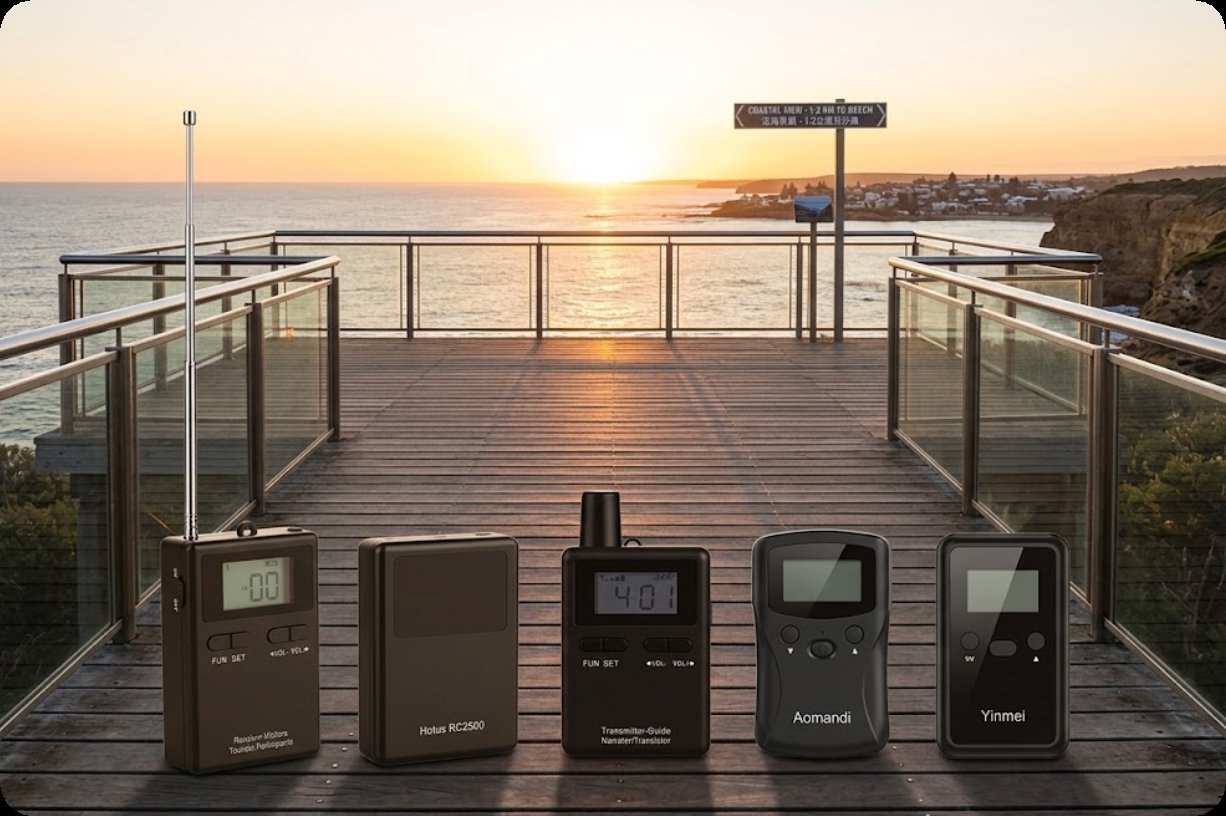
Corporate training lives or dies on two things most buyers forget: clean audio that survives a noisy breakout room, and a system simple enough that a facilitator can hand it to twenty strangers in ninety seconds. A new-hire onboarding, a confidential sales briefing, or an all-day technical workshop each asks something different from the gear. The right conference wireless guide solutions should split a large cohort into parallel language or topic groups, stay discreet during sensitive sessions, and keep running through a full eight-hour day without a battery panic. A fixed PA system cannot follow an instructor who moves between breakout rooms, and consumer radios solve none of the channel or privacy problems a training manager actually faces. Training buyers also underestimate how often one cohort needs the same deck in two languages, or how a temporary offsite changes the RF environment entirely. Below we compare three Richitek systems against two established conference names to help L&D teams buy without overpaying.

| Model | Band | Channels | Power | Tx / Rx battery | Receiver weight | Positioning |
|---|---|---|---|---|---|---|
| Richitek RC2401 | 2.4 GHz | 50 | 10 mW | 10 h / ~20 h | 50 g | Basic, high-value, multi-group |
| Richitek RC2501 | 2.4 GHz | 50 | 13 mW | 25 h / ~40 h | 52 g | Long-life, pro mic, interpretation |
| Richitek RC085 | UHF 470-510 MHz | 100 | 8-10 mW | 12 h / ~20 h | 60 g | RF-crowded, confidential rooms |
| Sennheiser 2020-D | UHF 863-865 MHz | 6 | N/A | N/A | Low-profile | Premium guided audio |
| ListenTALK | 2.4 GHz | Multi | N/A | ~16 h | Transceiver | Two-way meeting system |
RC2401 keeps parallel breakout groups cheap and simple
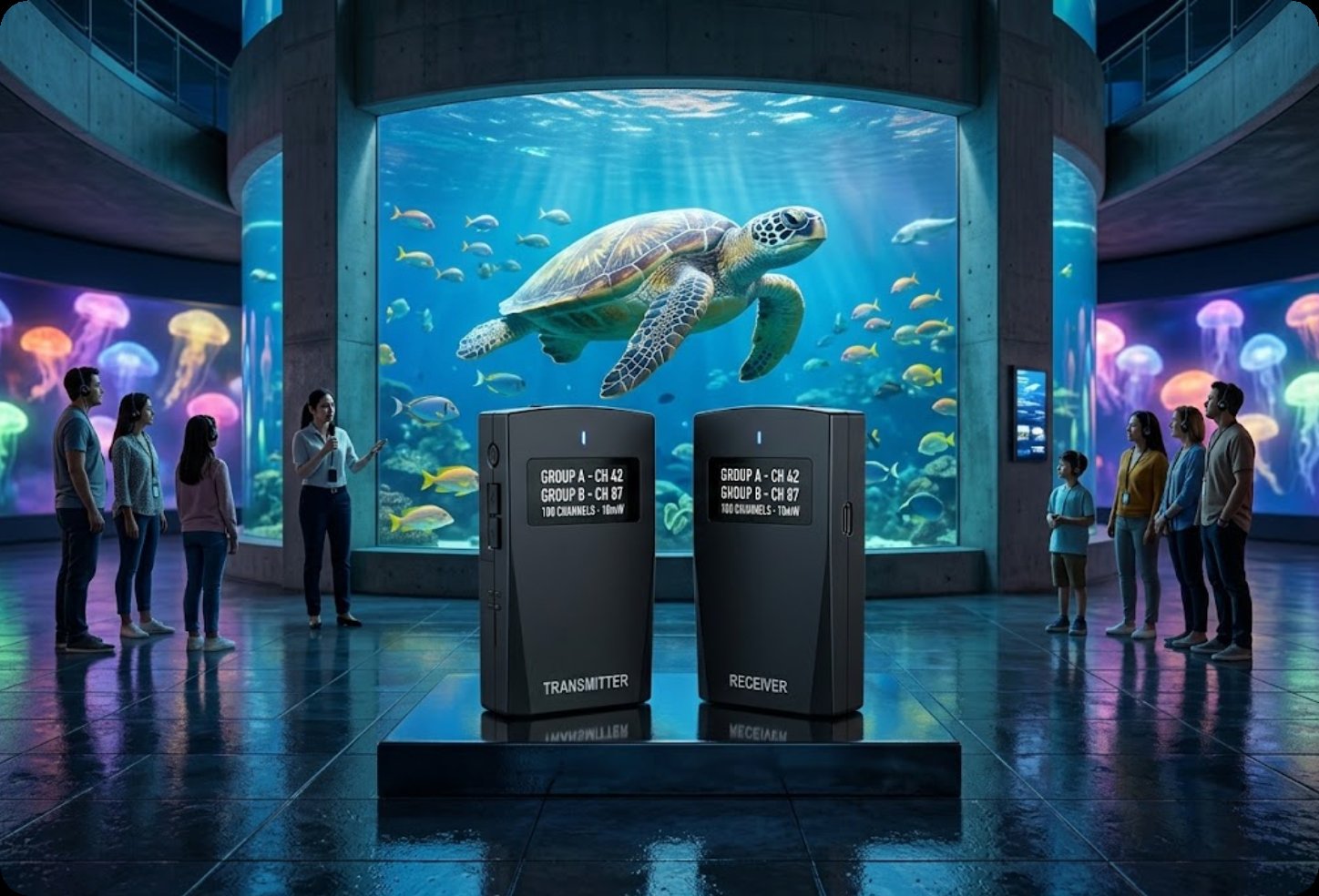
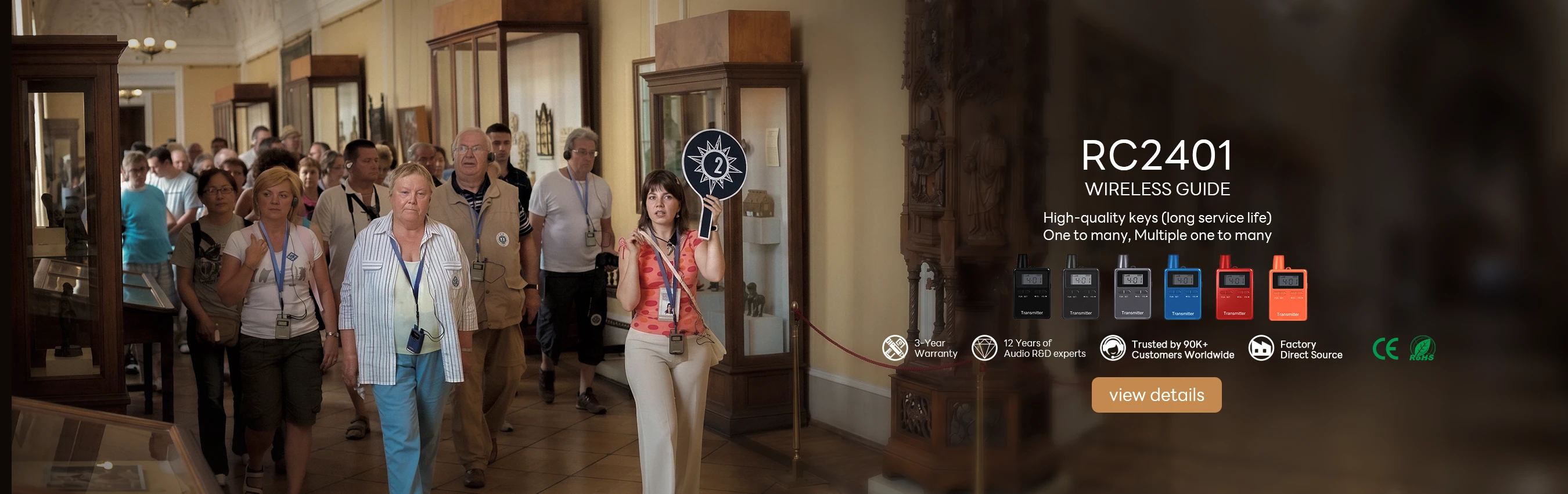
Most corporate training is not one big lecture; it is four breakout rooms running at once. The RC2401 2.4G system is built for exactly that. Its 50 channels let you run several concurrent sessions on the same floor without crosstalk, and the transmitter-receiver pair is light enough (59 g / 50 g) that a facilitator forgets it is there. The multi-color shell is a small but real win: assign a color per track and nobody grabs the wrong unit during a rushed room change. A one-key sync means a trainer can issue a full set to a new cohort in minutes, with no app and no pairing ritual. At a fraction of the per-unit cost of a German conference system, it covers the 80% of training that simply needs clean, movable audio without a procurement headache.
RC2501 carries the all-day workshop
When the agenda is a single deep workshop that runs from nine to five, battery anxiety becomes the real risk. The RC2501 long-life system answers with a receiver that runs roughly 40 hours on a charge and a transmitter good for 25 hours, so a full day of back-to-back sessions finishes without a swap. The optional headset or collar microphone (sensitivity around -90 dBm) keeps the speaker's voice consistent whether they are at the whiteboard or walking the aisles. For a bilingual briefing where a colleague interprets live, that stable mic plus Type-C charging is the combo trainers actually rely on, because a dead transmitter mid-sentence is the one failure a room never forgets. The grey, quantity-customizable shell also blends into a corporate environment instead of looking like tour gear. When a session moves between classrooms, the long runtime means the same units serve the morning and afternoon without a midday charge window.

RC085 when the room is RF-crowded
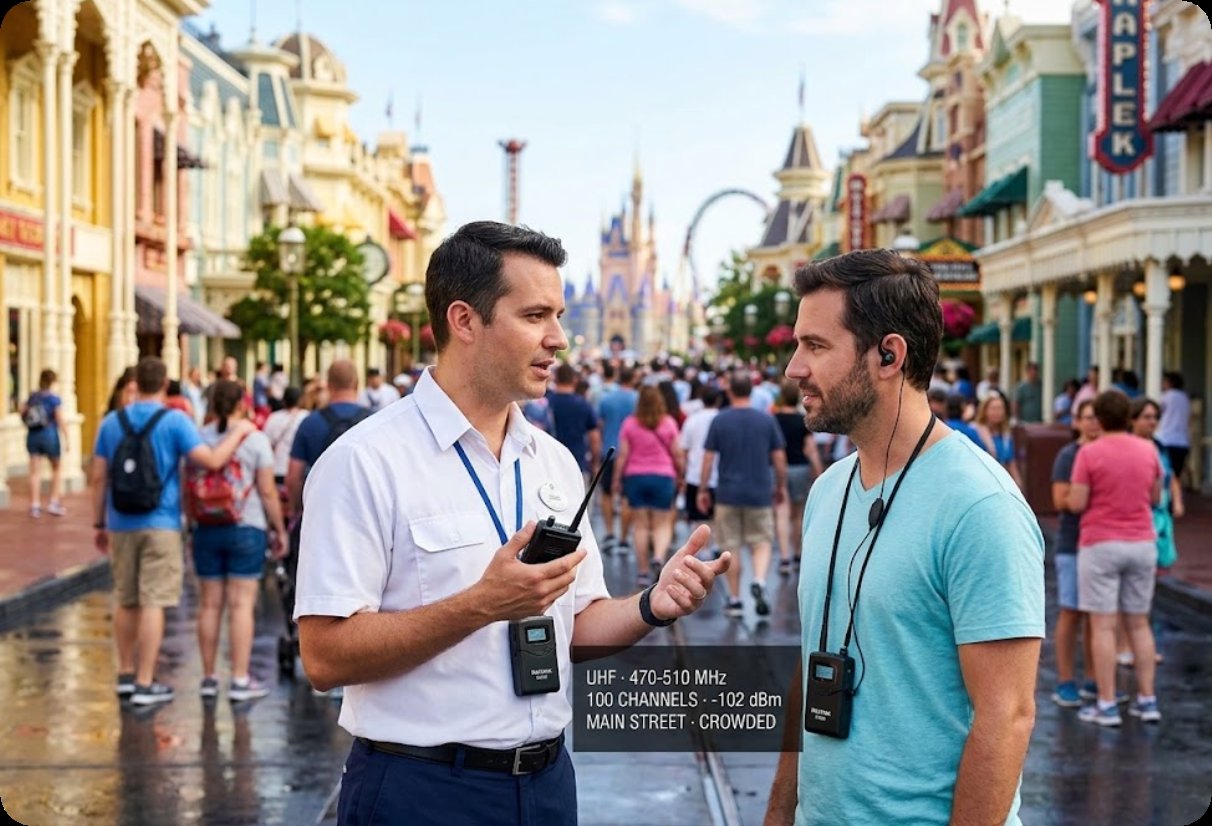
Not every training space is a quiet conference room. An open office, a hospital education center, or an airport-adjacent venue is saturated with Wi-Fi and Bluetooth that can flatten a 2.4G kit. The RC085 UHF system sidesteps the problem entirely by running on 470-510 MHz with 100 selectable channels, so it keeps a clean signal where 2.4G rivals drop out. Its professional collar or headset mic (sensitivity around -102 dBm) pulls the speaker's voice above the room noise. For a confidential briefing in an RF-hostile building, or any session where a dropped channel would leak sensitive content, that UHF headroom is the difference between a smooth program and an embarrassed restart. A USB charge port keeps it compatible with the same bricks a team already carries.
Two conference-grade rivals, priced for a reason
Two established names round out the comparison, though neither was designed as a low-cost guided-training tool. The Sennheiser 2020-D is a genuinely premium German system: UHF 863-865 MHz, a low-profile receiver, and professional-grade sound that large museums and high-end venues trust. But it offers only 6 channels and sits at $300-500+ per unit, which makes parallel breakout groups expensive fast. Listen Technologies ListenTALK is a different animal altogether: a 2.4 GHz two-way system with five headphone options and noise reduction, built for meetings and multilingual exchange rather than one-to-many guiding. At $400-600 per kit it suits interactive sessions, but its talk-back architecture adds cost and complexity most training decks never use, and it cannot scale to dozens of silent listeners the way a tour system can. For a training manager scaling to fifty or a hundred attendees, the per-unit premium of either rival multiplies into a budget line that a disciplined tour system avoids.

| Use case | RC2401 | RC2501 | RC085 | 2020-D | ListenTALK |
|---|---|---|---|---|---|
| Parallel breakout rooms | Best | Good | Good | Poor | Fair |
| All-day single workshop | Good | Best | Good | Fair | Fair |
| RF-crowded / confidential | Fair | Fair | Best | Good | Poor |
| Best value at scale | Best | Best | Good | Poor | Poor |
For most L&D teams the pragmatic stack is the full Wireless Tour Guide System range used together: an RC2401 for cheap parallel breakouts, an RC2501 for the all-day workshop, and RC085 units for RF-crowded or confidential rooms. When you are ready to weigh every option side by side, use our compare all models page to match a system to your exact room and cohort size.