
.webp)
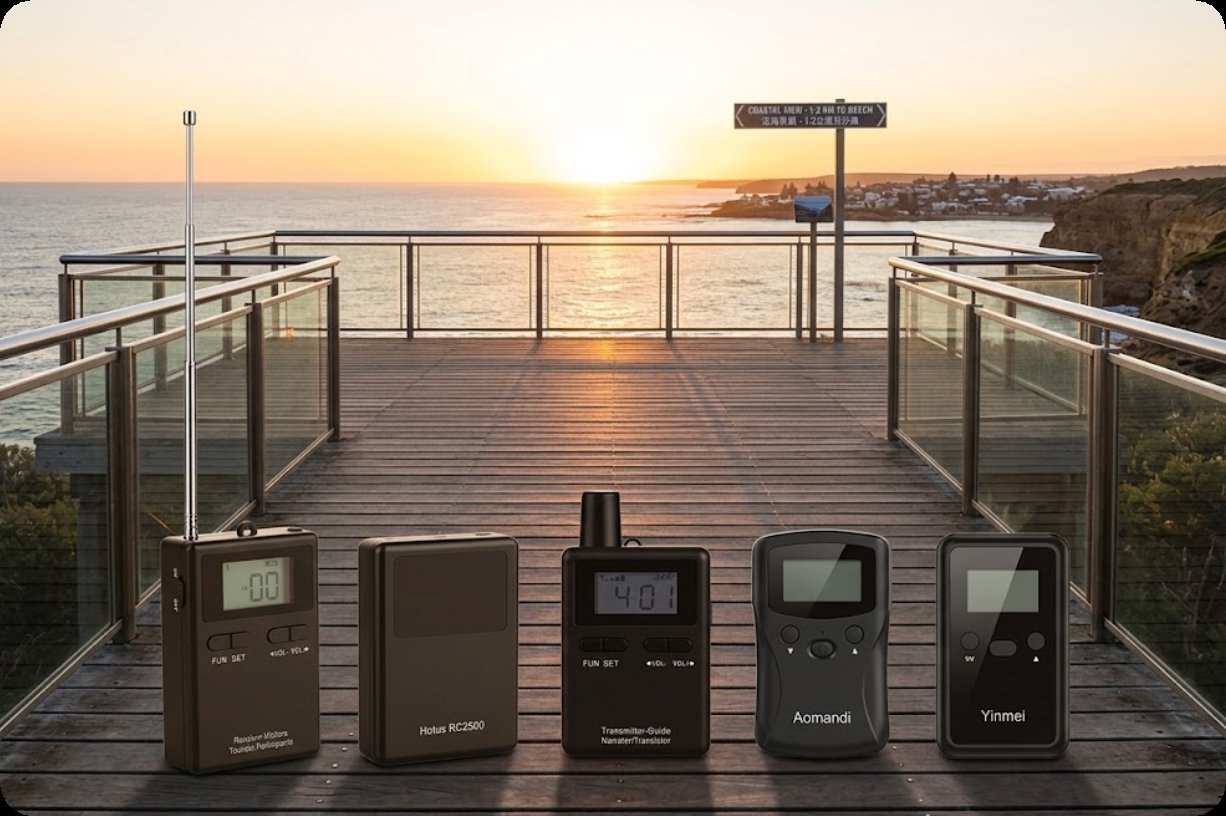
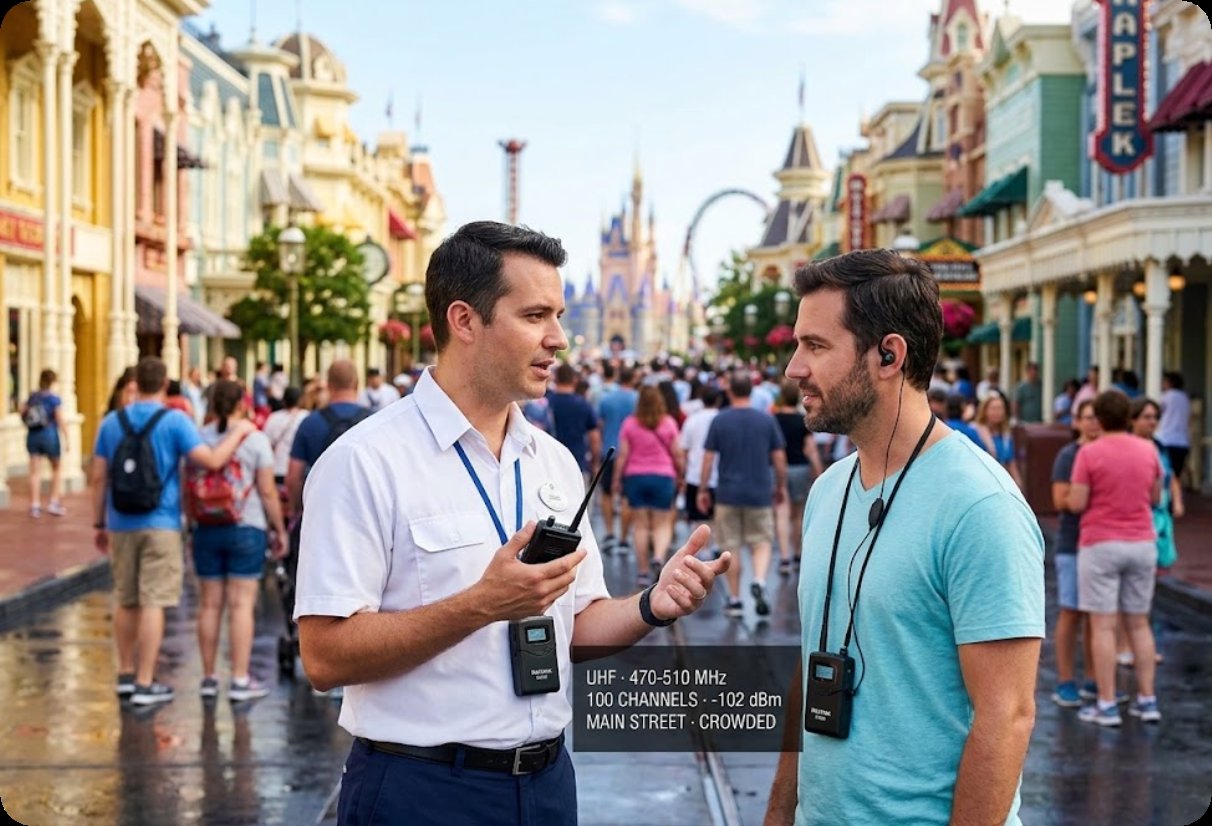
An outdoor tour is a harder acoustic problem than any boardroom. Wind runs across a quiet voice, a group fans out across a plaza instead of sitting in rows, and metal railings plus parked vehicles throw the radio around in ways a walled room never does. The hardware has to stay clear at range, survive a full day of sun and walking, and let one leader run two languages at the same moment without a laptop in hand. We set three Richitek units built for those exact stresses against two names that have long occupied this category.
Start any outdoor group tour plan with two numbers most buyers skip: the furthest listener's distance from the transmitter, and how many separate channels you must run at once. Set those and the model choice almost makes itself.
The three Richitek units at a glance
| Spec | RC2401 | RC085 | RC2500 |
|---|---|---|---|
| Band | 2.4 GHz multi-channel | UHF digital | 2.4 GHz |
| Weight | 72 g | 62 g | 55 g |
| Battery | 14 hours | 12 hours | 12 hours |
| Ingress | IP42 | IP42 | IP42 |
| Standout | Split-group channels | LCD + long UHF reach | Smallest, lightest |

RC2401 — the multi-channel backbone for split groups
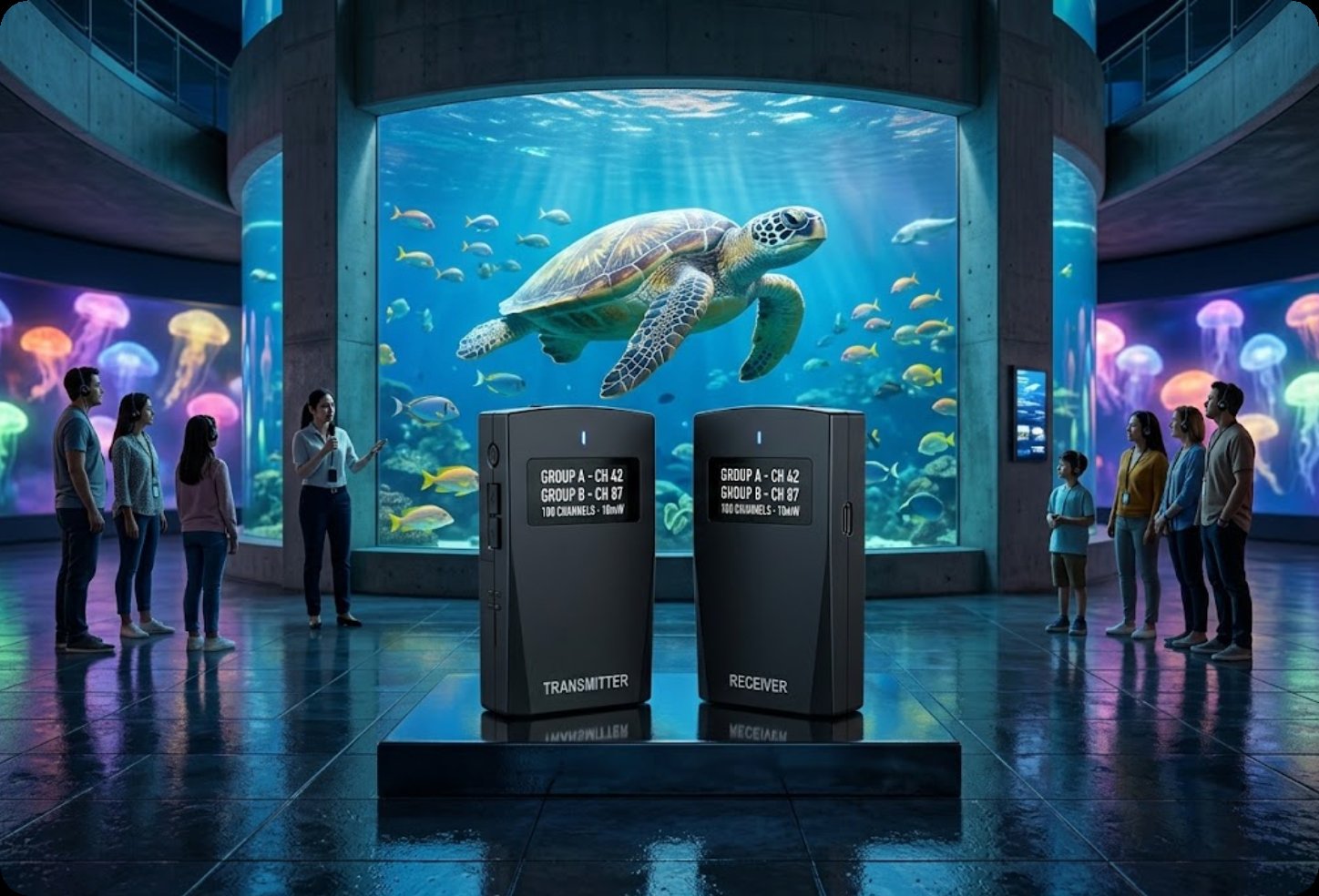
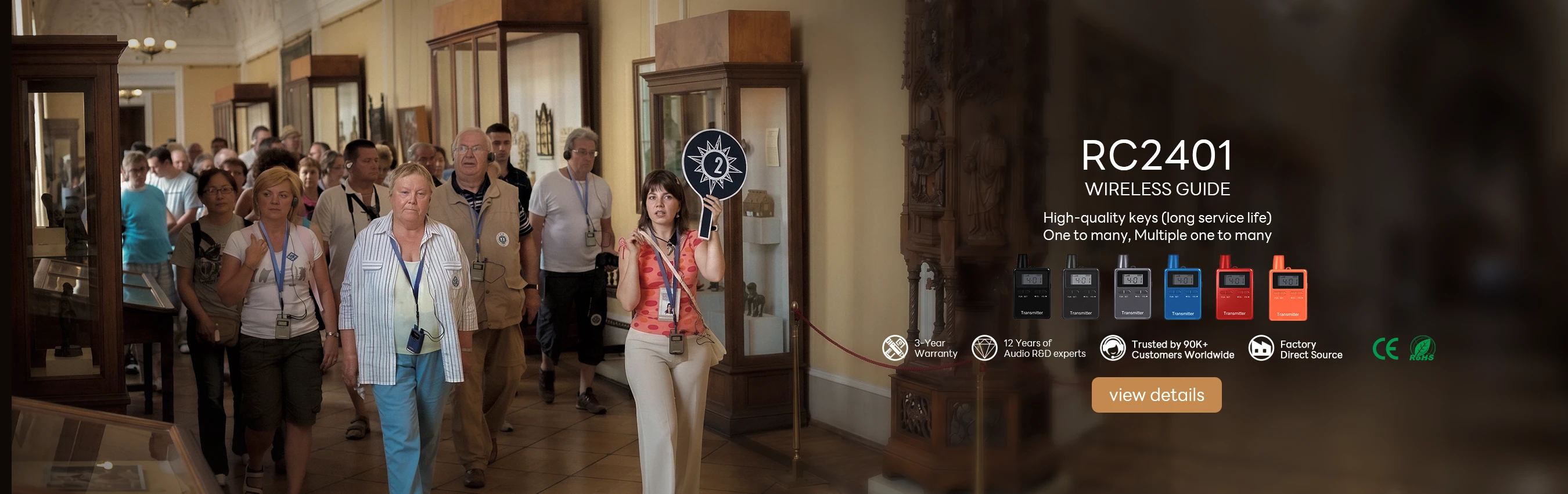
When one ground needs two languages at the same time, the RC2401 multi-channel system earns its place in the kit. Its 2.4 GHz radio carries several simultaneous channels, so a single leader can feed a foreign-language loop and a local loop from one transmitter instead of swapping boxes between stops. At 72 g with a 14-hour cell it outlasts the longest festival day and still leaves charge for a second round. We have watched it keep a clean signal down a tree-lined path where a single-channel unit started dropping words at the back of the column.
For a city walking tour that meets bilingual guests, that split-channel ability removes the awkward choice of running two separate guides. One person speaks; both audiences hear in their own band. The units pair with a one-touch sync, so a late arrival can join the correct channel without the group waiting in the sun while you fumble with menus.
RC085 — UHF reach across open ground
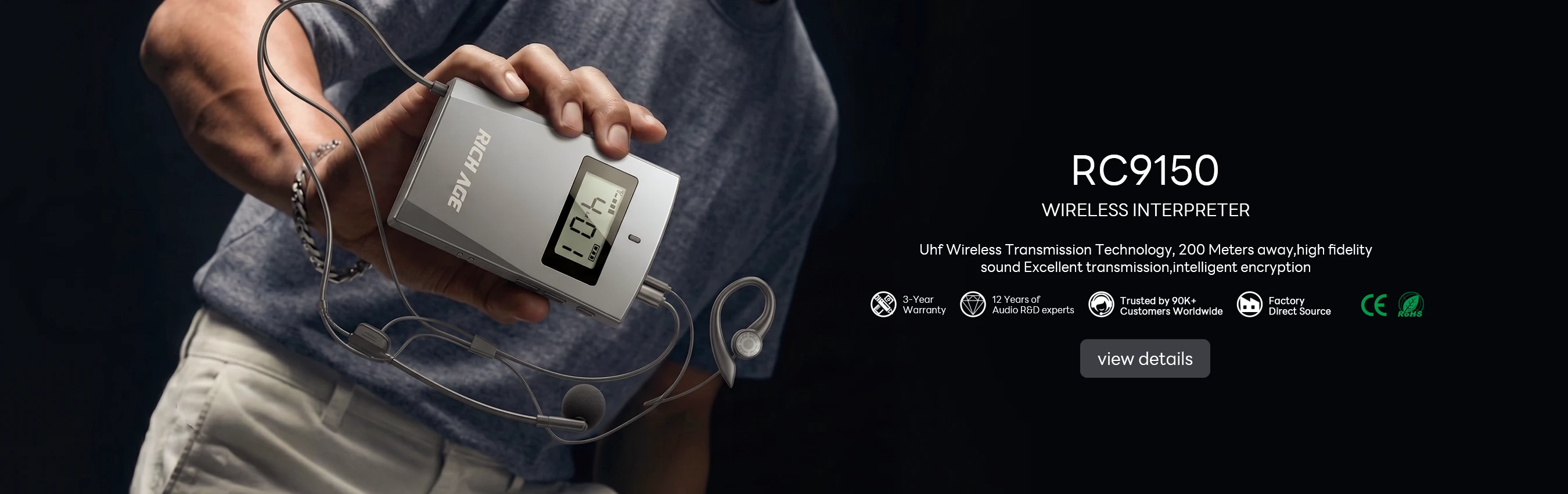
Distance is where the RC085 digital guide with LCD pulls ahead. UHF travels flatter and resists the drop-outs that 2.4 GHz can show near crowded metal, which matters on a plaza lined with fences, sculptures, and food trucks. The onboard screen lets a presenter confirm channel and battery at a glance rather than guessing mid-talk. At 62 g and a 12-hour charge it sits between the other two in heft, and the digital link keeps the voice crisp even when wind noise climbs at an open-air amphitheater.

In a large garden or a sprawling campus the RC085 is the unit you hand to the guide covering the long leg. Listeners spread across a lawn still catch every word, and the LCD means a substitute presenter can take over mid-route without training. That resilience under reflection is exactly what separates a field-ready radio from a desk-bound one.
RC2500 — the compact unit for close follow
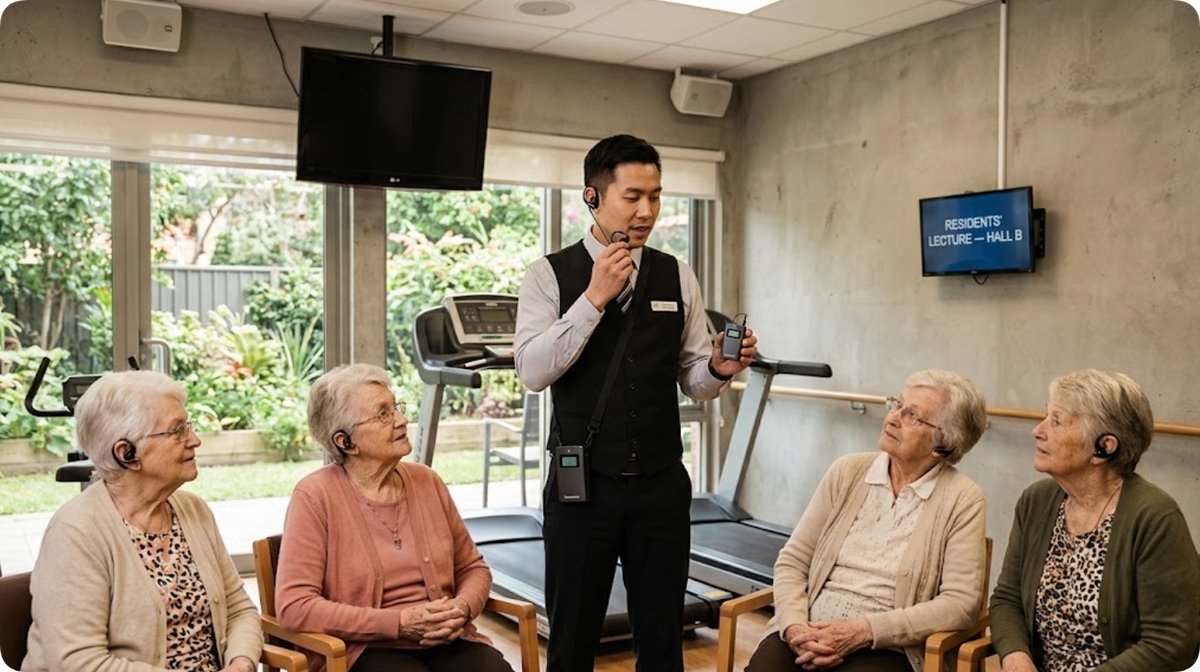
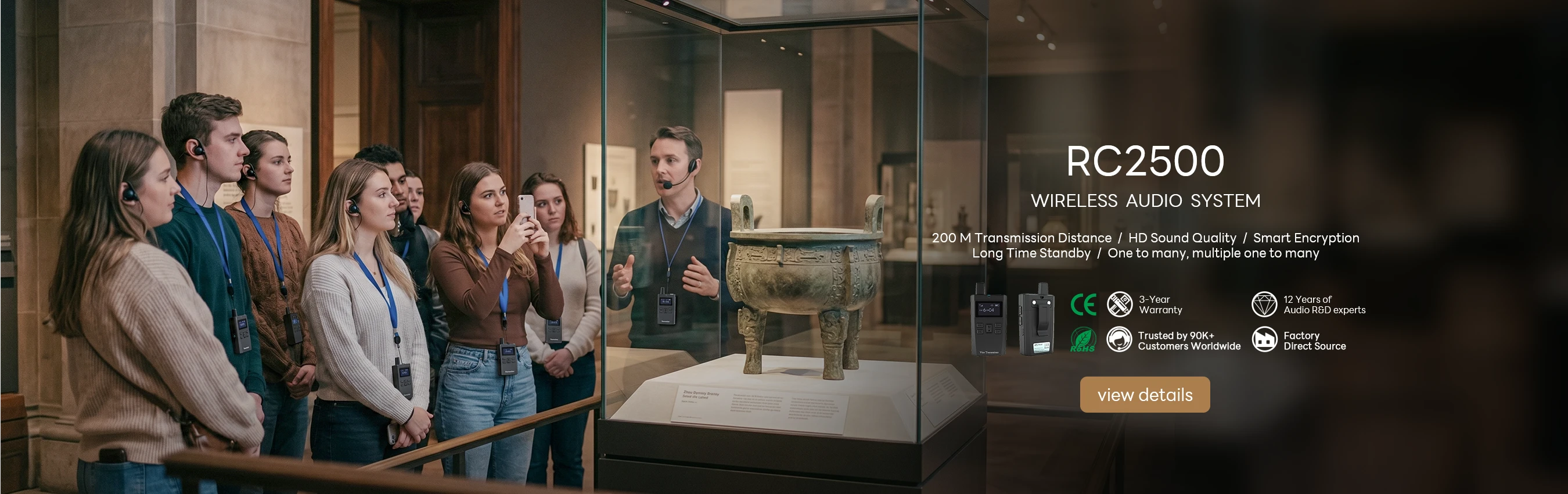
For the guide who walks shoulder-to-shoulder with a small party, the RC2500 compact tour guide is the easy carry. At 55 g it is the lightest of the three and slips into a pocket between stops; its 12-hour battery covers a full schedule of repeat viewings around a monument or a market square. The shorter range is a feature here, not a flaw: in a tight cluster the last thing you want is stray chatter leaking to the next group ten meters away.
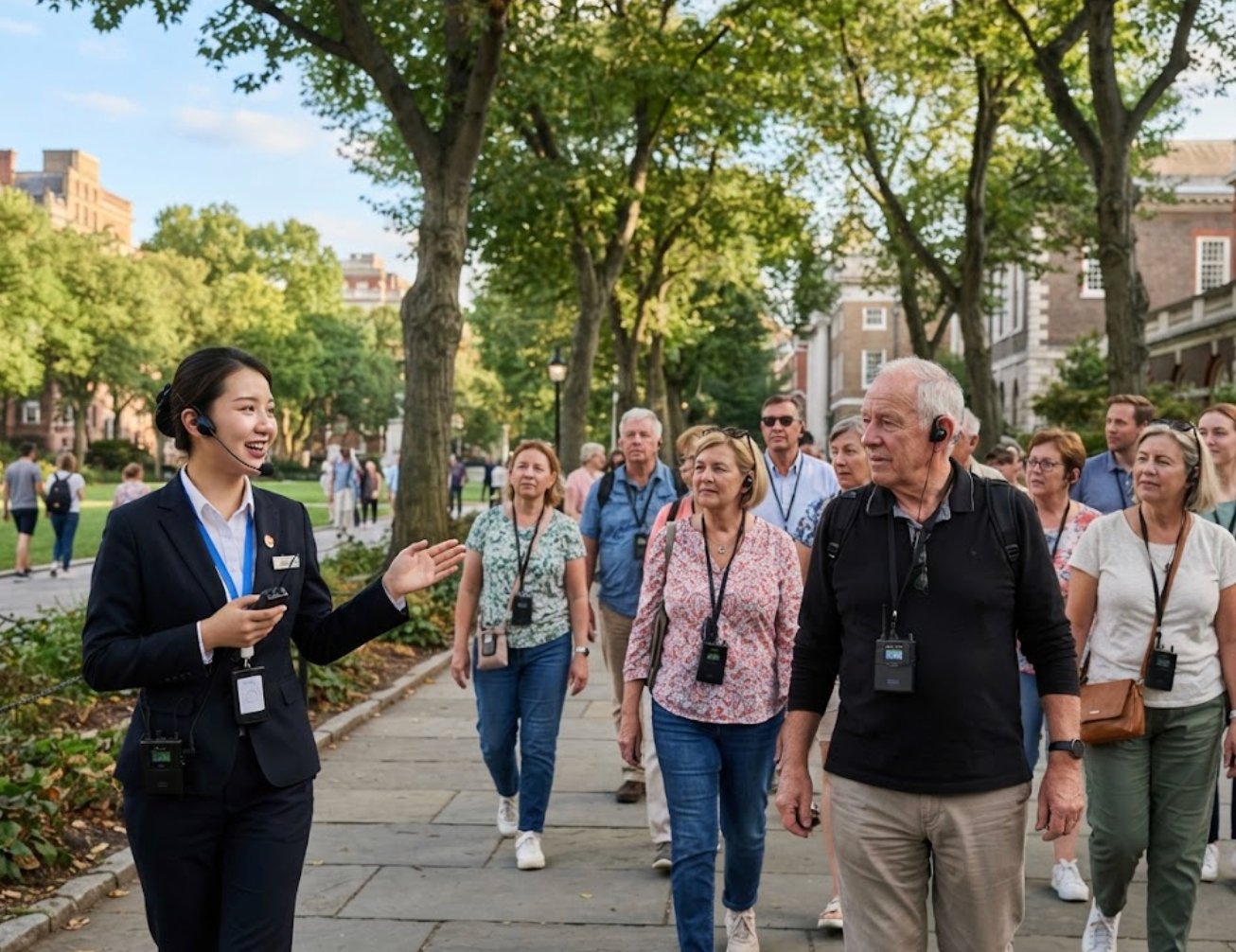
Hand the RC2500 to a docent leading six visitors through a crowded courtyard, and the low weight disappears from the equation by the second hour. Guests hear a calm, even voice; nearby groups hear nothing they should not. It is the right tool precisely because it does not try to be the long-range one.
Williams Sound and TOA — where the incumbents sit
| Brand | Typical band | Positioning | Outdoor fit |
|---|---|---|---|
| Williams Sound | 72 / 216 MHz, some 2.4 G | Long-established tour brand | Solid, higher unit cost |
| TOA Corporation | UHF | Pro-audio house, guide line | Reliable, fewer low-cost kits |
Both names are respected, and either will do the job on a normal day. The trade-off is price and flexibility: their kits tend to cost more per head and lock you into one band, whereas the three Richitek units let you mix 2.4 GHz reach with UHF penetration in a single roster. For a buyer running varied outdoor programs through a season, that mix-and-match freedom is the real saving, not a footnote on the spec sheet.
Weather, batteries, and a spare plan
Outdoor programs live or die on the boring details. Carry one spare transmitter per three guides so a dead cell never ends a route, and keep the units out of direct noon sun while parked. IP42 shrugs off light drizzle but not a downpour, so a simple zip pouch turns a risky day into a routine one. The 12- to 14-hour cells above cover a full season of short tours on a single morning charge.
Putting them together for an outdoor day
A practical outdoor roster pairs the RC2401 for any split-language moment, the RC085 for the long hauls across open ground, and the RC2500 for the close, quiet clusters. One leader carries all three and switches by situation instead of by device. Browse the full Richitek tour guide catalog to build the exact mix, or open our side-by-side model comparison to set each system against your distances, languages, and daylight hours.