
A leading China factory specializing in Wireless Tour Guide Systems, Church Audio Guides, and Translation Headphones with premium OEM/ODM solutions.

Tel:+86 13825295213

Email:tiger.wang@richitek.com

Audio That Works Where the Signal Does Not

Audio That Works Where the Signal Does Not

A river cruise looks like the easiest audio job in tourism: one guide, one group, one stretch of water. Then the vessel enters a lock, the valley walls close in, half the passengers are on foreign roaming plans and the rest have handsets at eleven percent. An app-based commentary system hands the tour's success to three things the operator cannot control. Dedicated 2.4GHz hardware takes all three back.

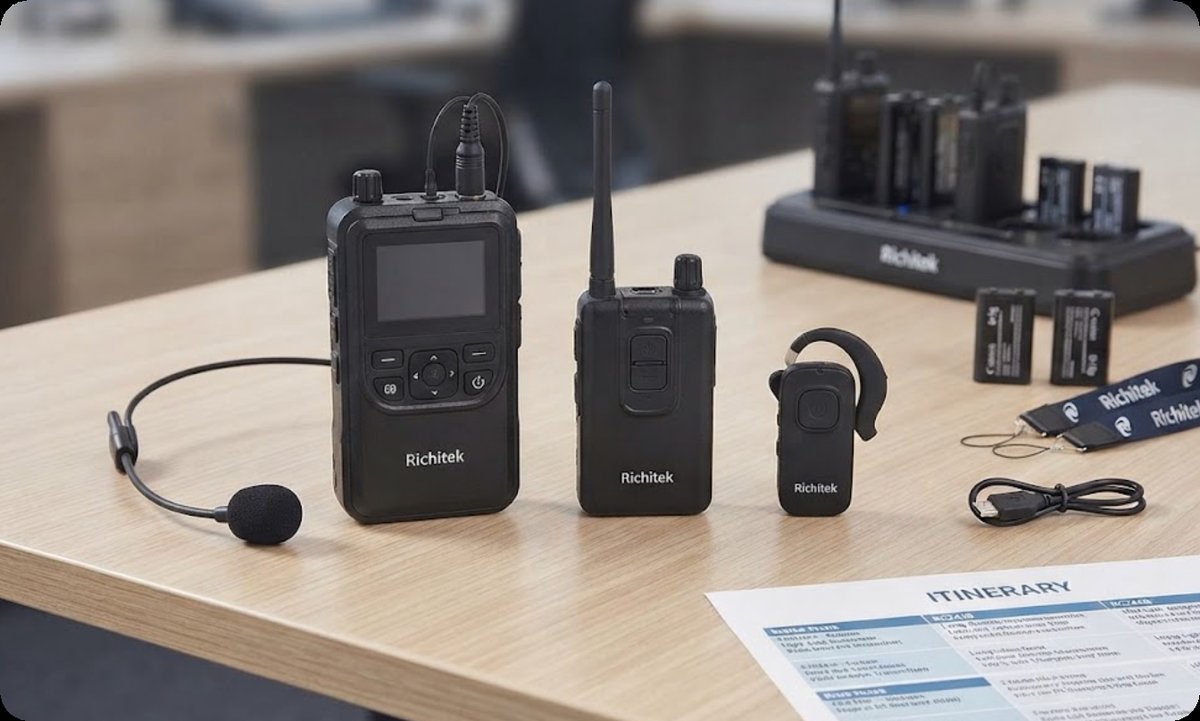
Audio That Works Where the Signal Does Not(图1)

Why Richitek RC9150, RC2408 and RC2468 Stay On Air Offshore

All three Richitek systems transmit on the 2403-2483 MHz ISM band, licence-free in virtually every country a river or coastal vessel visits. Nothing depends on a shore-side network: transmitter and receivers form their own link, reaching 200 metres in open area. For an operator sailing the Danube through Austria, Slovakia and Hungary in one week, that removes frequency paperwork and connectivity risk. Crews can review dedicated wireless tour guide solutions for city and river itineraries before the season starts.

What Breaks First When a River Valley Swallows the Signal

Coverage loss is the obvious failure, but rarely the only one. Steel hulls absorb cellular signal, so a passenger on the sun deck may hold three bars while the same handset in a lower-deck lounge holds none. Locks and gorges cut service for minutes at exactly the moment commentary matters. Where signal survives, cross-border roaming turns a preloaded file into a bill the passenger never expected, and that complaint lands with the crew rather than the app publisher.

The Handset Problem: Battery, Roaming and App Fatigue

An app-based guide asks every visitor to complete a task first: find the app, download it, connect, keep the screen alive. Completion is never universal, and the passengers who struggle most often need spoken commentary most. Battery is worse. A phone navigating, photographing and streaming all morning will not reliably survive an afternoon excursion. A dedicated receiver is charged by the crew, not the guest.

Wind, Engines and the Case for a Dedicated Receiver

Open decks combine two of the hardest conditions for speech intelligibility: broadband wind noise and low-frequency engine rumble. Phone speakers and consumer earbuds were not designed for that. The RC2468 and RC9150 receivers pair ambient noise filtering with a Hi-Fi voice response tuned for speech, and a receiver the guest wears rather than holds stays usable while the vessel moves.

Live Commentary Versus Preloaded Playback

The deepest difference is timing. An app plays a scripted track; it cannot tell the group that the castle on the left bank is lit unusually tonight, or that the scheduled stop has moved. A live transmitter broadcasts one guide to unlimited receivers in real time, which is what shore excursions need when the itinerary changes at the last minute.

RC9150: One Hundred Channels for Multilingual Shore Days

The RC9150 is the choice when one sailing carries several language groups. One hundred channels with intelligent encryption let German, French and English groups walk the same old town without crosstalk, and the receiver runs more than thirty hours per charge, enough for a full week of excursions. The transmitter gives fifteen hours of talk time. Operators planning mixed-language shore programmes can check the RC9150 high-end simultaneous interpretation system.

RC2408: Two-Way Talk From the Deck to the Dock

The RC2408 adds something most tour guide systems lack: two-way communication. A guide on the quay and a crew member further up the group can speak to each other while everyone else listens, which solves the problem of a straggling passenger or a coach that has moved. Eighty channels with one-key synchronisation cover multi-group operations, and the receiver lasts twenty hours. Details sit on the RC2408 long-range wireless tour guide page.

RC2468: An 18-Gram Receiver for Port-Heavy Itineraries

On itineraries with two or three port stops a day, weight decides. The RC2468 receiver weighs 18 grams, light enough that passengers forget they wear it, while the 59-gram transmitter handles twelve hours of talking. Fifty PLL-synthesised channels keep groups separated, and Micro USB 5V/1A charging means any power bank on board can top up the fleet. Six transmitter colours let crews assign one per guide or excursion group. The RC2468 ultra-light tour guide system page lists full specifications.

Where App Guides Genuinely Win

Smartify, a UK app-based platform, deserves a fair hearing. There is no hardware to buy, charge, sanitise, distribute or collect. Passengers use their own handsets, so a boutique operator can offer multilingual content without a single device in storage, and social sharing extends the excursion beyond disembarkation. For a short city stop with reliable coverage, that is a genuinely lighter operation.

Where AI Guides Genuinely Win

Zetronix brings AI-driven speech recognition and natural-language processing, so visitors ask follow-up questions instead of following a fixed track. That suits self-paced museum visits and tech-forward demographics. The trade-off is dependence: AI behaviour needs processing and connectivity, and neither is guaranteed on a steel vessel in a river valley.

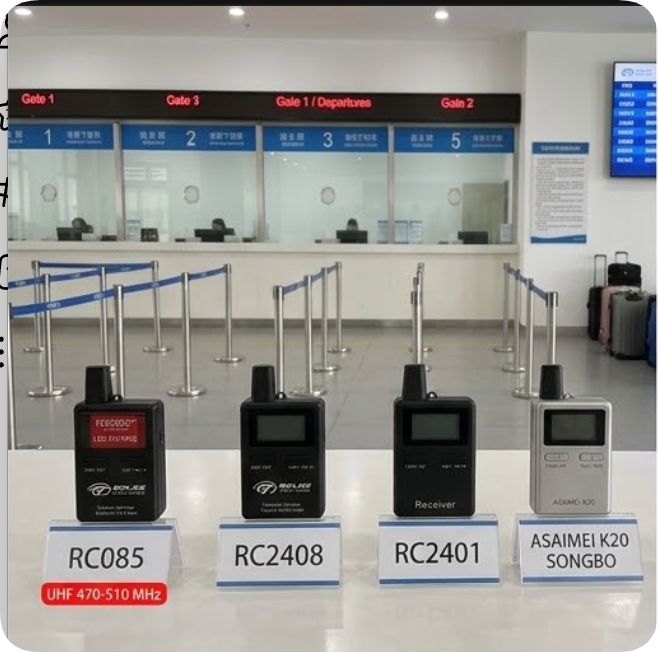
Audio That Works Where the Signal Does Not(图2)

Specification Comparison

SpecificationRC9150RC2408RC2468SmartifyZetronix
Band2403-2483 MHz2403-2483 MHz2403-2483 MHzNot publishedNot published
Channels1008050 PLLNot publishedNot published
Range200 m200 m200 mNot publishedNot published
TX battery15 h10 h12 hNot applicableNot published
RX battery30+ h20 h10 hHandset dependentHandset dependent
Receiver weight75 g50 g18 gOwn phoneOwn phone
Shore network neededNoNoNoYesYes
Visitor handset neededNoNoNoYesYes

Matching the Hardware to the Sailing

Excursion typeBest fitWhy
Multi-language shore dayRC9150100 channels, 30-hour receivers cover several language groups per charge
Open-deck sail-by commentaryRC2408Two-way talk and one-key sync suit a moving vessel
Port-heavy all-day itineraryRC2468The 18 g receiver stays comfortable across three stops a day
Small boutique vesselRC240880 channels below the interpretation flagship's entry point

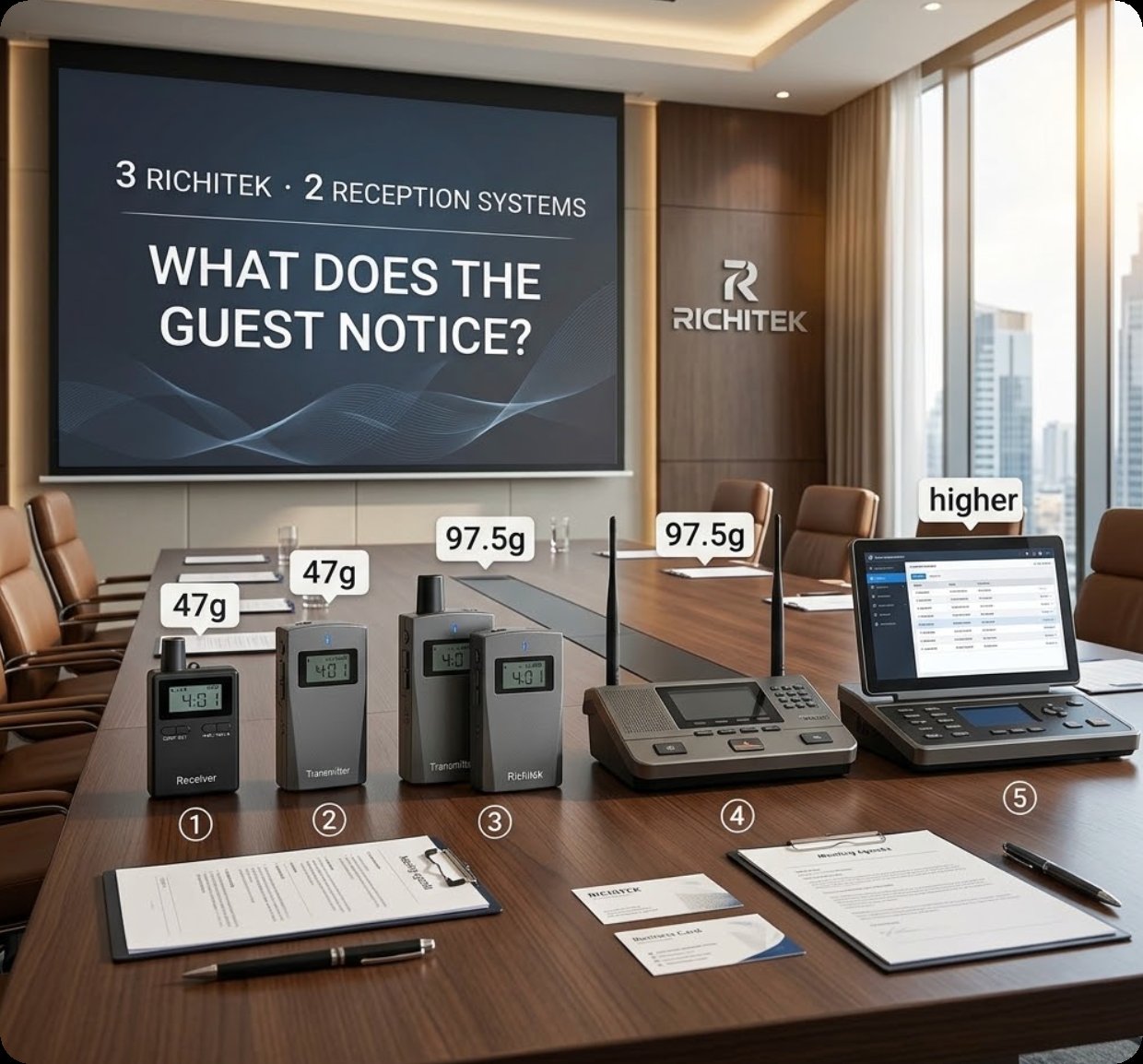
Audio That Works Where the Signal Does Not(图3)

The Honest Trade-Off

Hardware is not free of cost. Every sailing requires someone to charge the fleet, sanitise earpieces, hand units out and collect them again, and that labour repeats each turnaround. Passengers carry one more item, and a receiver can be left in a cabin. There is also real capital outlay up front, where an app download costs nothing. Operators choosing hardware buy certainty of delivery, not convenience of ownership. The wider Richitek wireless tour guide range lets fleets mix models across vessels, and the comparison library sets these systems against other brands by scenario.

Final Thoughts

The decision is not really hardware versus software; it is about who carries the risk. An app hands battery, roaming and coverage to the passenger. A dedicated 2.4GHz system keeps all three with the crew, and on water that difference is the whole commentary.

2026年09月09日 13:38
click: 12
no data
Home > VS

Audio That Works Where the Signal Does Not

time: 2026年09月09日 click:12

Audio That Works Where the Signal Does Not

A river cruise looks like the easiest audio job in tourism: one guide, one group, one stretch of water. Then the vessel enters a lock, the valley walls close in, half the passengers are on foreign roaming plans and the rest have handsets at eleven percent. An app-based commentary system hands the tour's success to three things the operator cannot control. Dedicated 2.4GHz hardware takes all three back.

Audio That Works Where the Signal Does Not(图1)

Why Richitek RC9150, RC2408 and RC2468 Stay On Air Offshore

All three Richitek systems transmit on the 2403-2483 MHz ISM band, licence-free in virtually every country a river or coastal vessel visits. Nothing depends on a shore-side network: transmitter and receivers form their own link, reaching 200 metres in open area. For an operator sailing the Danube through Austria, Slovakia and Hungary in one week, that removes frequency paperwork and connectivity risk. Crews can review dedicated wireless tour guide solutions for city and river itineraries before the season starts.

What Breaks First When a River Valley Swallows the Signal

Coverage loss is the obvious failure, but rarely the only one. Steel hulls absorb cellular signal, so a passenger on the sun deck may hold three bars while the same handset in a lower-deck lounge holds none. Locks and gorges cut service for minutes at exactly the moment commentary matters. Where signal survives, cross-border roaming turns a preloaded file into a bill the passenger never expected, and that complaint lands with the crew rather than the app publisher.

The Handset Problem: Battery, Roaming and App Fatigue

An app-based guide asks every visitor to complete a task first: find the app, download it, connect, keep the screen alive. Completion is never universal, and the passengers who struggle most often need spoken commentary most. Battery is worse. A phone navigating, photographing and streaming all morning will not reliably survive an afternoon excursion. A dedicated receiver is charged by the crew, not the guest.

Wind, Engines and the Case for a Dedicated Receiver

Open decks combine two of the hardest conditions for speech intelligibility: broadband wind noise and low-frequency engine rumble. Phone speakers and consumer earbuds were not designed for that. The RC2468 and RC9150 receivers pair ambient noise filtering with a Hi-Fi voice response tuned for speech, and a receiver the guest wears rather than holds stays usable while the vessel moves.

Live Commentary Versus Preloaded Playback

The deepest difference is timing. An app plays a scripted track; it cannot tell the group that the castle on the left bank is lit unusually tonight, or that the scheduled stop has moved. A live transmitter broadcasts one guide to unlimited receivers in real time, which is what shore excursions need when the itinerary changes at the last minute.

RC9150: One Hundred Channels for Multilingual Shore Days

The RC9150 is the choice when one sailing carries several language groups. One hundred channels with intelligent encryption let German, French and English groups walk the same old town without crosstalk, and the receiver runs more than thirty hours per charge, enough for a full week of excursions. The transmitter gives fifteen hours of talk time. Operators planning mixed-language shore programmes can check the RC9150 high-end simultaneous interpretation system.

RC2408: Two-Way Talk From the Deck to the Dock

The RC2408 adds something most tour guide systems lack: two-way communication. A guide on the quay and a crew member further up the group can speak to each other while everyone else listens, which solves the problem of a straggling passenger or a coach that has moved. Eighty channels with one-key synchronisation cover multi-group operations, and the receiver lasts twenty hours. Details sit on the RC2408 long-range wireless tour guide page.

RC2468: An 18-Gram Receiver for Port-Heavy Itineraries

On itineraries with two or three port stops a day, weight decides. The RC2468 receiver weighs 18 grams, light enough that passengers forget they wear it, while the 59-gram transmitter handles twelve hours of talking. Fifty PLL-synthesised channels keep groups separated, and Micro USB 5V/1A charging means any power bank on board can top up the fleet. Six transmitter colours let crews assign one per guide or excursion group. The RC2468 ultra-light tour guide system page lists full specifications.

Where App Guides Genuinely Win

Smartify, a UK app-based platform, deserves a fair hearing. There is no hardware to buy, charge, sanitise, distribute or collect. Passengers use their own handsets, so a boutique operator can offer multilingual content without a single device in storage, and social sharing extends the excursion beyond disembarkation. For a short city stop with reliable coverage, that is a genuinely lighter operation.

Where AI Guides Genuinely Win

Zetronix brings AI-driven speech recognition and natural-language processing, so visitors ask follow-up questions instead of following a fixed track. That suits self-paced museum visits and tech-forward demographics. The trade-off is dependence: AI behaviour needs processing and connectivity, and neither is guaranteed on a steel vessel in a river valley.

Audio That Works Where the Signal Does Not(图2)

Specification Comparison

SpecificationRC9150RC2408RC2468SmartifyZetronix
Band2403-2483 MHz2403-2483 MHz2403-2483 MHzNot publishedNot published
Channels1008050 PLLNot publishedNot published
Range200 m200 m200 mNot publishedNot published
TX battery15 h10 h12 hNot applicableNot published
RX battery30+ h20 h10 hHandset dependentHandset dependent
Receiver weight75 g50 g18 gOwn phoneOwn phone
Shore network neededNoNoNoYesYes
Visitor handset neededNoNoNoYesYes

Matching the Hardware to the Sailing

Excursion typeBest fitWhy
Multi-language shore dayRC9150100 channels, 30-hour receivers cover several language groups per charge
Open-deck sail-by commentaryRC2408Two-way talk and one-key sync suit a moving vessel
Port-heavy all-day itineraryRC2468The 18 g receiver stays comfortable across three stops a day
Small boutique vesselRC240880 channels below the interpretation flagship's entry point

Audio That Works Where the Signal Does Not(图3)

The Honest Trade-Off

Hardware is not free of cost. Every sailing requires someone to charge the fleet, sanitise earpieces, hand units out and collect them again, and that labour repeats each turnaround. Passengers carry one more item, and a receiver can be left in a cabin. There is also real capital outlay up front, where an app download costs nothing. Operators choosing hardware buy certainty of delivery, not convenience of ownership. The wider Richitek wireless tour guide range lets fleets mix models across vessels, and the comparison library sets these systems against other brands by scenario.

Final Thoughts

The decision is not really hardware versus software; it is about who carries the risk. An app hands battery, roaming and coverage to the passenger. A dedicated 2.4GHz system keeps all three with the crew, and on water that difference is the whole commentary.
no data
×

Contact us

email:
name:
subject:
content: