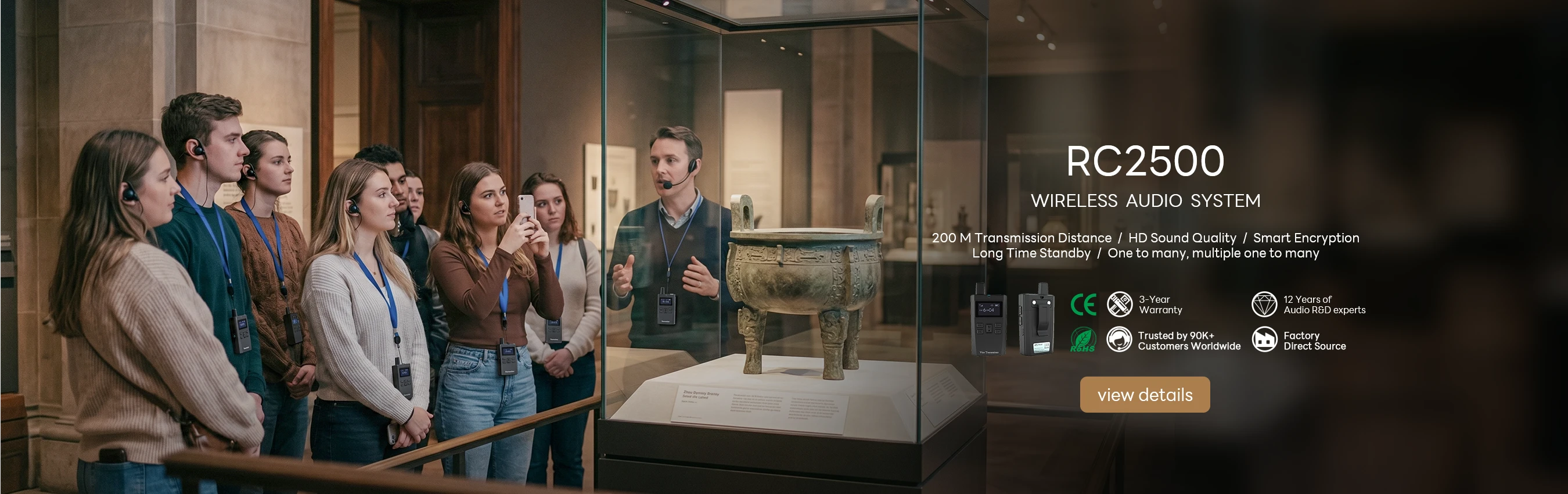

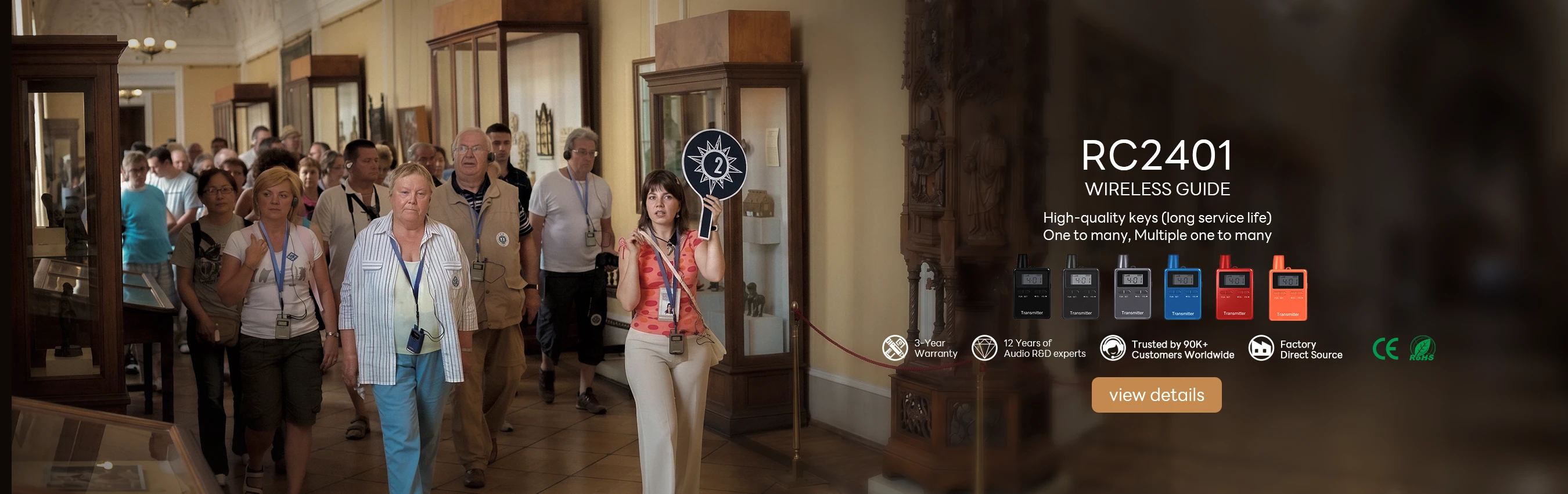
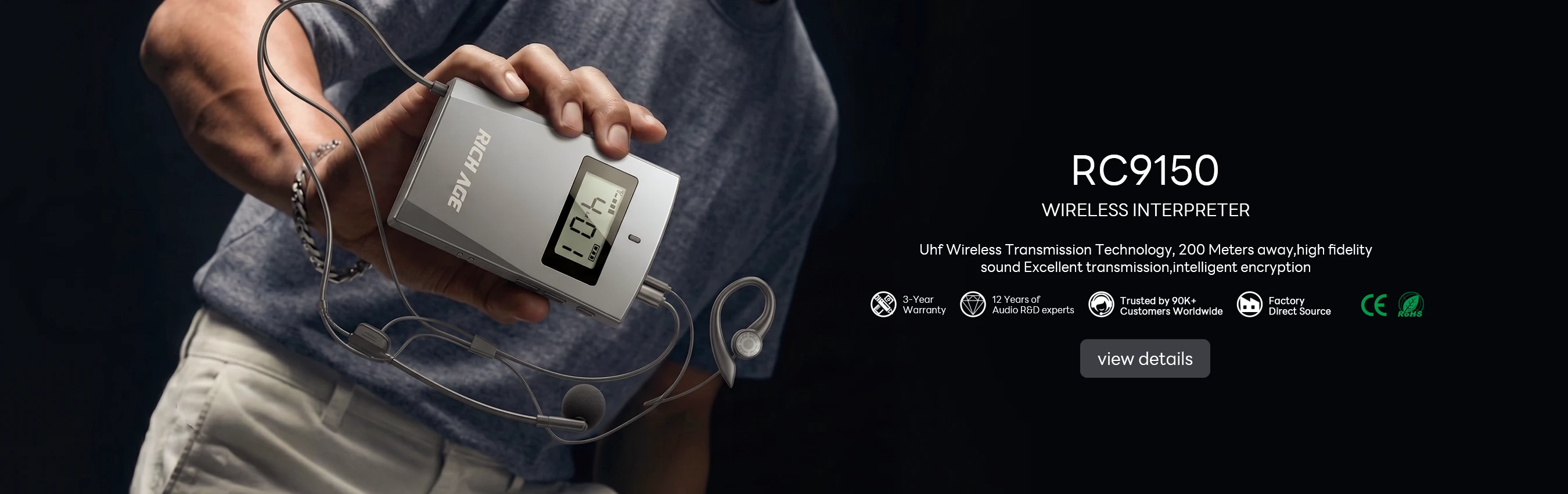
A leading China factory specializing in Wireless Tour Guide Systems, Church Audio Guides, and Translation Headphones with premium OEM/ODM solutions.

Tel:+86 18922879583

Email:tiger.wang@richitek.com

Richitek RC9150, RC2401 and RC8860 vs Sennheiser Tourguide 2020 D and Bluehertz SPL-1360 for Pharmaceutical Plant Tours

The Tour Is Part of the Audit

At a pharmaceutical plant, a visitor walkthrough is never just hospitality. Customer quality teams, notified-body inspectors and prospective distributors all walk the same corridors, and what they see — and hear explained — becomes part of the audit file. A tour guide system for factory visits in this industry has to behave like lab equipment: predictable, quiet, re-issued cleanly between parties, and traceable in its charging routine. This comparison runs the Richitek RC9150, RC2401 and RC8860 against two European challengers, the Sennheiser Tourguide 2020 D ecosystem and the Bluehertz SPL-1360 Magnetic, through the questions a pharma site actually asks: how many inspection parties can run at once, how fast units turn around between visits, and what the wearing form does to a garbing procedure.

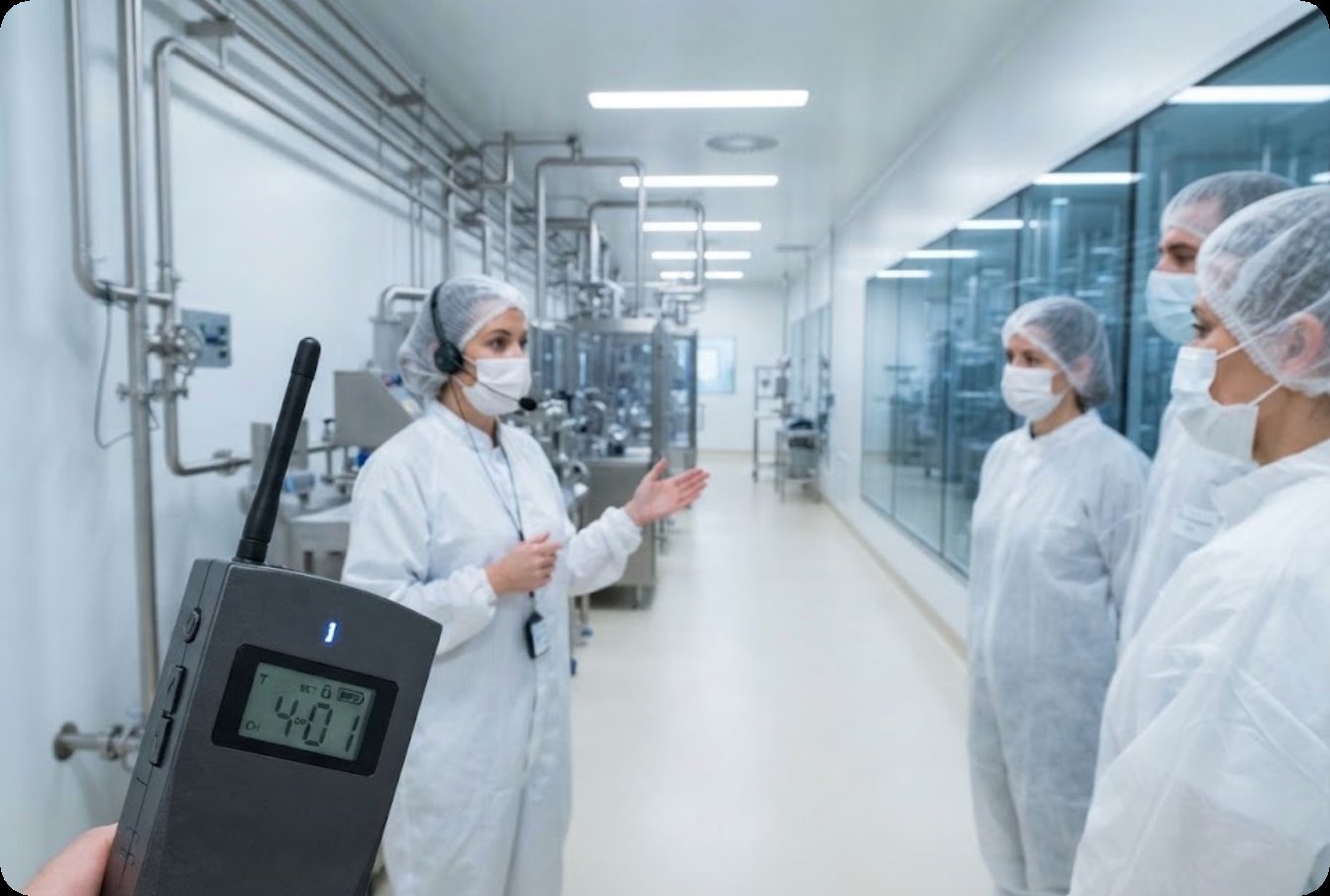
Pharma tours differ from general plant walkthroughs in three ways. First, they are scheduled in parallel: a contract manufacturer may host a customer audit, a regulatory pre-inspection and a distributor visit on the same morning, each with its own escort and its own commentary that must never bleed into another group. Second, the route crosses pressure-cascade zones with airlocks and gowning buffers, so any equipment handed to visitors must be donned in seconds and never dangle into a workstation. Third, turnover is unforgiving — units come back worn over gowns, get wiped down, and go out again the same afternoon.

RC9150: One Hundred Channels for Concurrent Inspections
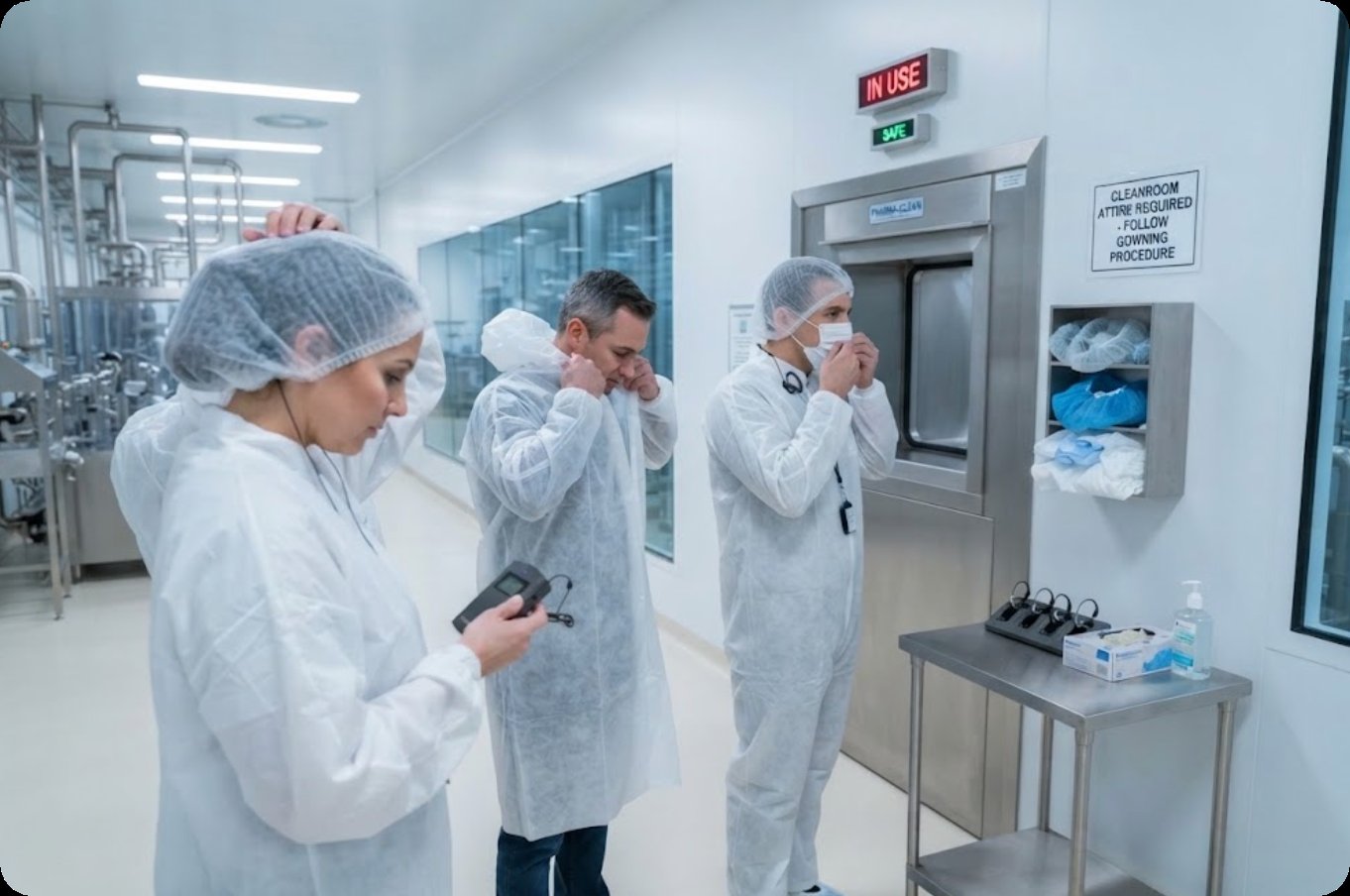
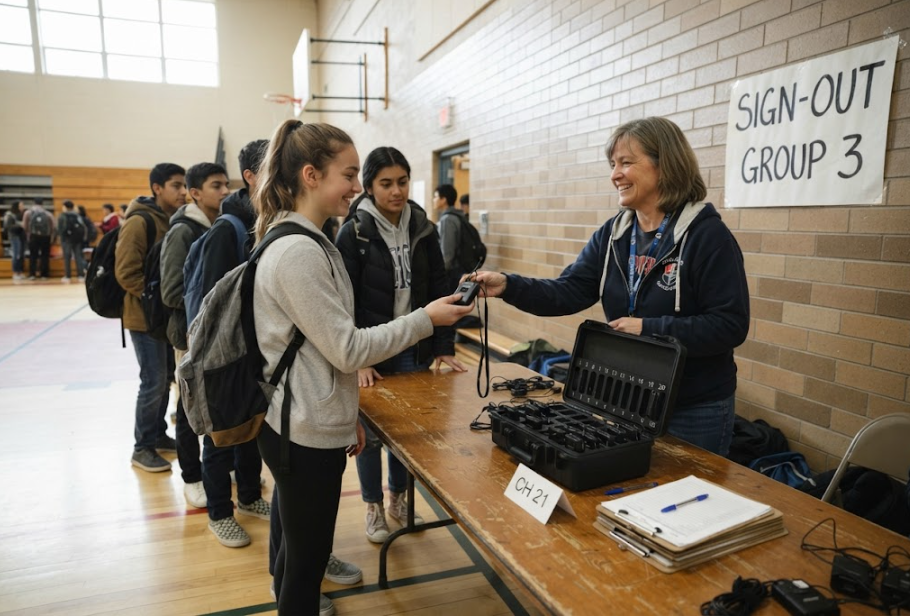
richitek pharma_factory_tour vs sennheiser bluehertz 1

The RC9150 is built for exactly the parallel-audit morning. One hundred PLL-locked channels in the licence-free 2403-2483 MHz band mean a site can run a customer group on the packaging floor, an inspector party along the API line and a distributor walkthrough in the warehouse without any two transmitters meeting on air. Endurance is the second argument: the transmitter runs fifteen hours from a 1800 mAh cell and the receiver exceeds thirty-five hours on the same capacity, so a unit issued at the morning gowning session survives an evening site walk without visiting the charger. At 10 mW the signal stays local to the group, and the 1-200 metre range covers a full production suite. The 97.5 g receiver is the heaviest in this trio, a real consideration when visitors wear it over gowning hoods, though the single Type-C port keeps the recharging trolley simple.

✅ RC2401: The Standard Issue Unit for Visitor Days

Most pharma sites buy receivers by the cabinet, and the RC2401 is the cabinet filler. It runs the same 2.4 GHz platform at 10 mW with fifty channels — fewer than the flagship, but still enough that a site hosting three concurrent parties has comfortable headroom for the day a fourth escort joins. The transmitter holds ten hours from 1500 mAh and the receiver twenty hours from 1000 mAh, an honest single-day rotation: units return to the charging rack at lunch and leave full for the afternoon party. Weighing 59 g as a transmitter and 50 g as an ear-hook receiver, it sits lightly over a gown collar, and the identical control layout across the line means a new escort learns one interface, not three.

RC8860: Through Walls on a Regional Licence
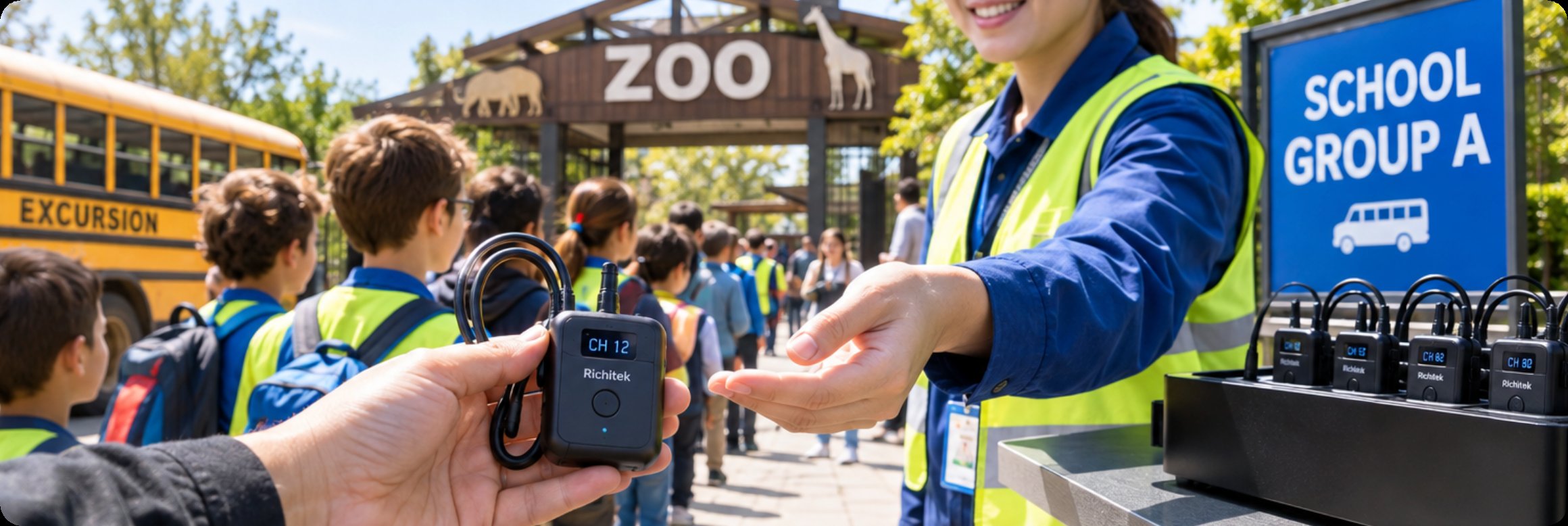
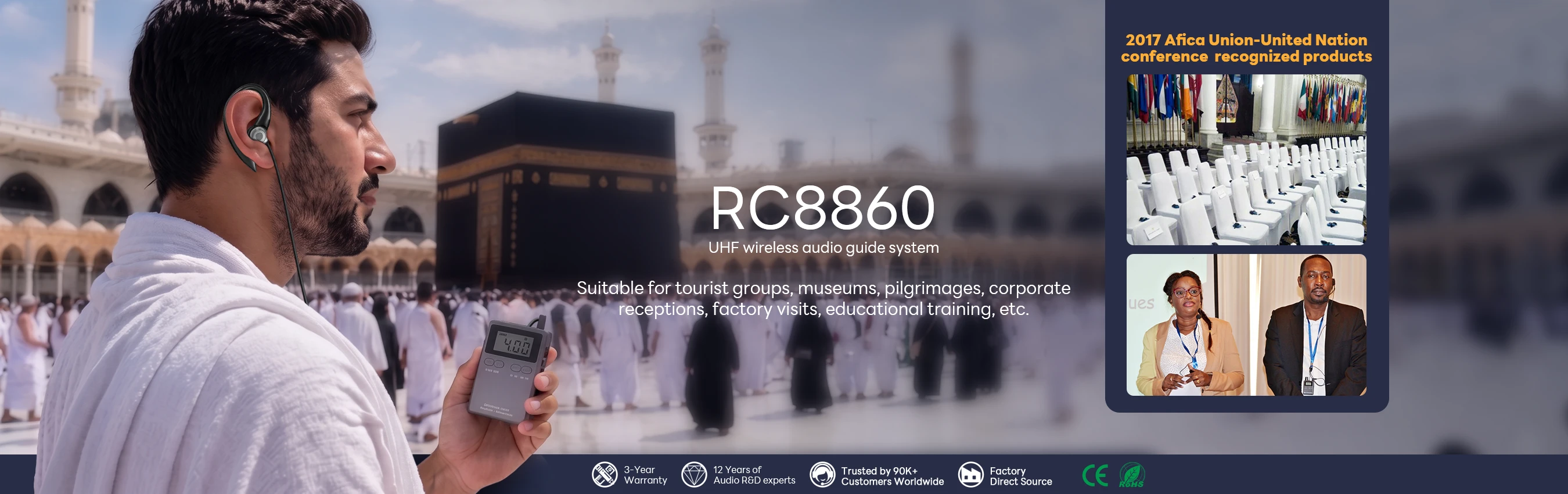
richitek pharma_factory_tour vs sennheiser bluehertz 2

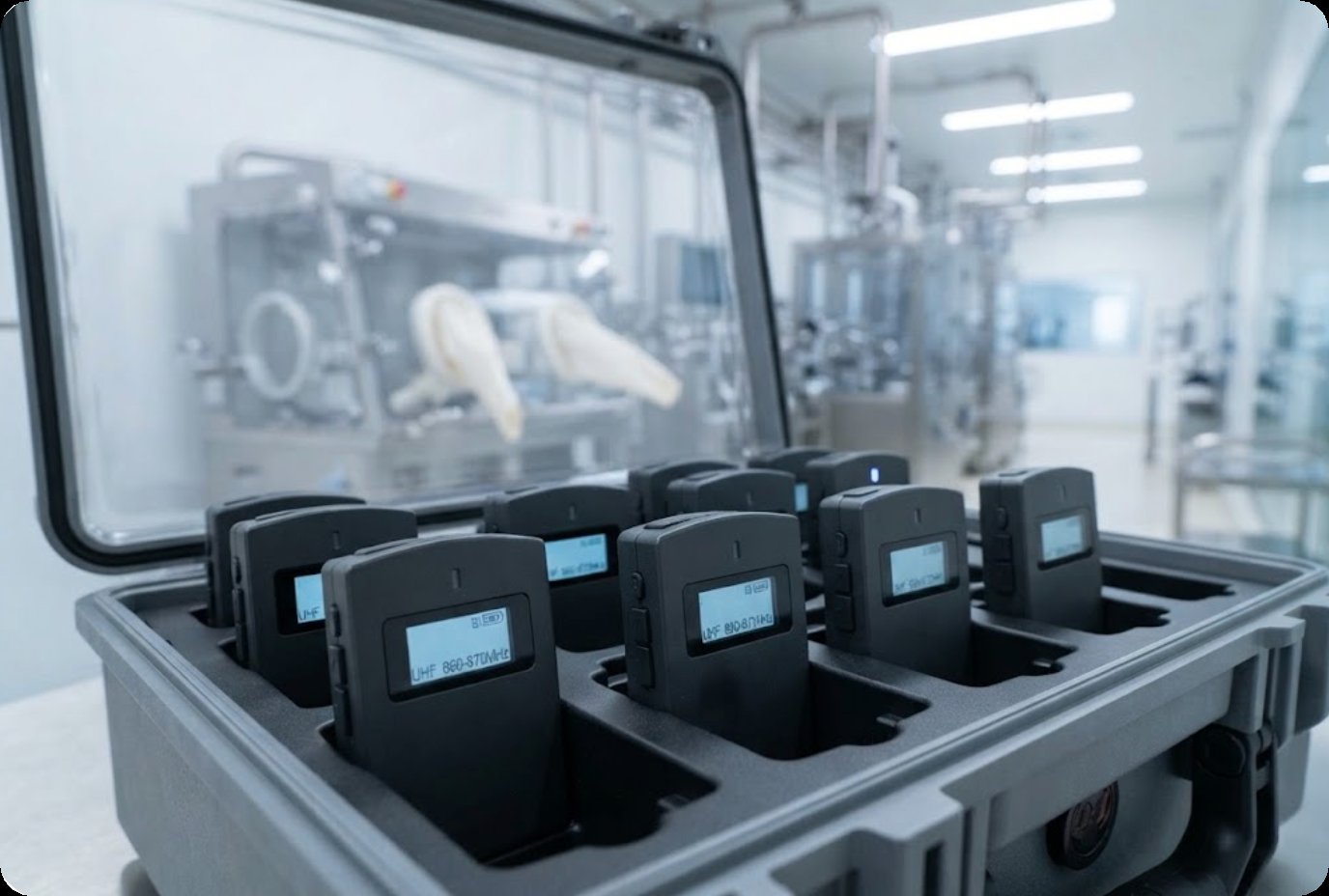
The RC8860 covers the case the 2.4 GHz units cannot: long, signal-hostile buildings. Its UHF carrier at 860-870 MHz has a wavelength near thirty-five centimetres, roughly three times that of the 2.4 GHz band, which diffracts more readily through doorways, glazed observation panels and the dense steel of isolator lines — the reason it holds twenty channels rather than eighty is spectrum width, not range. Output is 10 mW with a ten-hour transmitter and twenty-hour receiver from 1000 mAh cells, at 59 g and 50 g. The trade-off is the one this series keeps repeating: UHF allocations differ by country, so a multinational visitor party or a site near a border needs its licence homework done before the units travel.

🇪🇺 The Challengers: Six Channels and a Magnetic Neckloop

The two challengers bring serious engineering to different bottlenecks. The Sennheiser Tourguide 2020 D ecosystem is the German professional standard: the SK 2020-D bodypack transmitter and HDE 2020-D-II receivers work in the 863-865 MHz band with six channels, and the surrounding logistics are what money buys — the L 2021-40 forty-bay charger, the EZL 2020-20L twenty-bay case with temperature-controlled fast charging and a copy function, even the GZR 2020 transport trolley. Six channels, however, cap a plant at six simultaneous parties, and the pricing sits in the 300-500 dollar-plus bracket per kit. The Bluehertz SPL-1360 Magnetic from Spain is a parameters-first system: 250 m range, ninety-nine channels, noise reduction, 51 g of weight, nineteen hours of battery and a ninety-minute recharge, certified CE, FCC and RoHS. Its wearing form is the magnetic neckloop, which suits a museum queue better than a gowning buffer, where every item a visitor carries must be donned, doffed and wiped on a schedule.

Specification Comparison

Figures come from the published vendor sources; entries marked n.p. are not published.

ModelBandChannelsTX batteryRX batteryWeight TX/RXPharma fit
RC91502.4 GHz10015 h (1800 mAh)35+ h97.5 g bothParallel audit parties
RC24012.4 GHz5010 h (1500 mAh)20 h (1000 mAh)59 / 50 gCabinet-fill rotation
RC8860UHF 860-870 MHz2010 h (1500 mAh)20 h (1000 mAh)59 / 50 gSignal-hostile suites
Tourguide 2020 D863-865 MHz6n.p.n.p.n.p.Charging logistics
SPL-1360 MagneticDigital9919 hn.p.51 g neckloopFast recharge, museum form

What Remains Unresolved

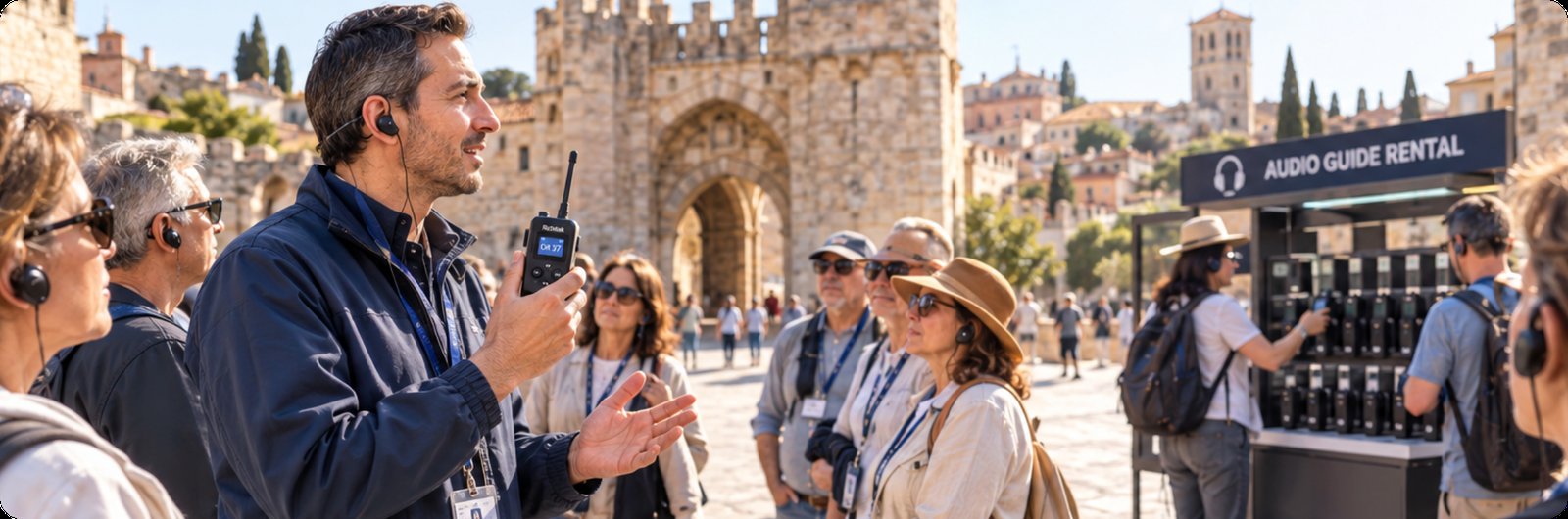
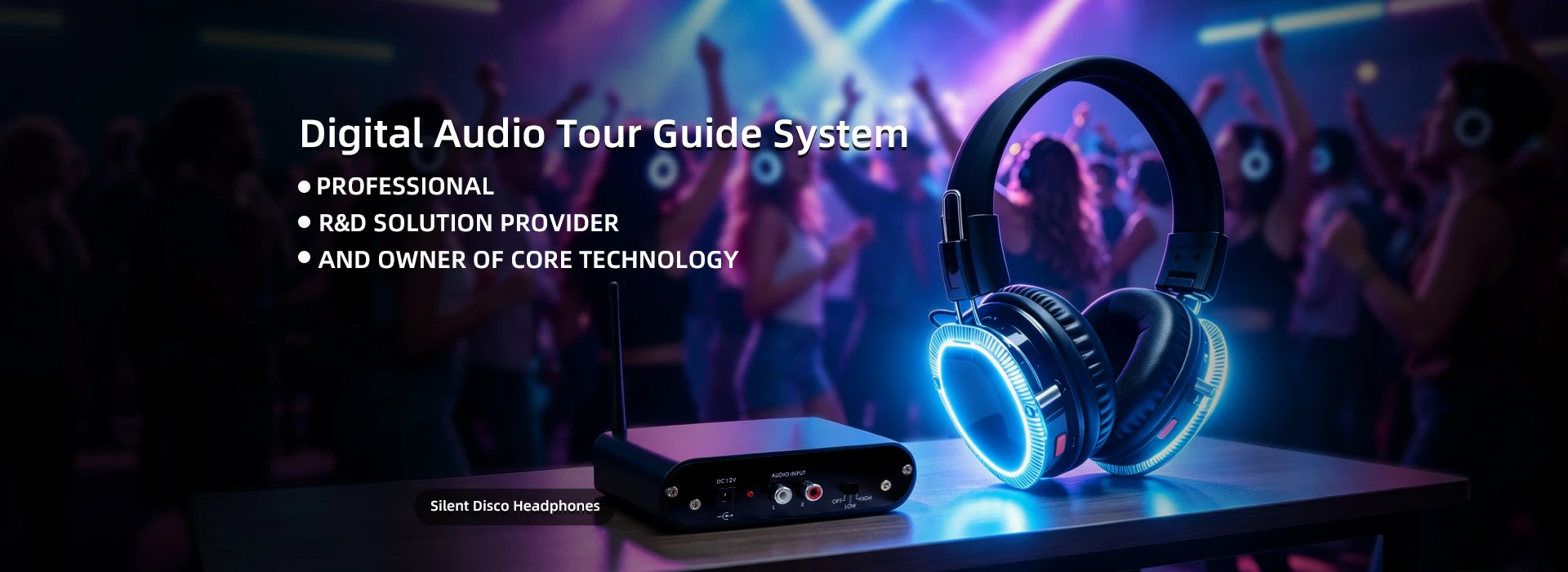
richitek pharma_factory_tour vs sennheiser bluehertz 3

None of the five vendors publishes a chemical-wipe compatibility list for its housings, so each site should test its own disinfectant on a spare unit before rolling the fleet into gowning routines. The RC8860 keeps its twenty-channel ceiling, a real constraint for a campus hosting many parties at once. The RC9150's 97.5 g receiver asks the most from a visitor wearing it over a hood for two hours. On the challenger side, Sennheiser's six-channel ceiling and kit pricing belong in the budget conversation from day one, and Bluehertz does not publish receiver battery figures for the SPL-1360, so the nineteen-hour claim cannot be split between transmitter and receiver duty.

Matching the System to the Visit Calendar

Build the fleet around the audit calendar, not the catalogue. Count the concurrent parties a busy morning really brings, add the escorts, and let that number pick the channel ceiling. High-volume visitor days with a single guide suit the RC2401's fifty-channel rotation, while production suites lined with isolators and steel are the RC8860's territory, provided the local UHF licence position is confirmed. The complete wireless tour guide system lineup backs all three, and the vs comparison library keeps every scenario breakdown under the same published-figures discipline.

2026年09月24日 12:24
click: 12
no data
Home > VS

Richitek RC9150, RC2401 and RC8860 vs Sennheiser Tourguide 2020 D and Bluehertz SPL-1360 for Pharmaceutical Plant Tours

time: 2026年09月24日 click:12

The Tour Is Part of the Audit

At a pharmaceutical plant, a visitor walkthrough is never just hospitality. Customer quality teams, notified-body inspectors and prospective distributors all walk the same corridors, and what they see — and hear explained — becomes part of the audit file. A tour guide system for factory visits in this industry has to behave like lab equipment: predictable, quiet, re-issued cleanly between parties, and traceable in its charging routine. This comparison runs the Richitek RC9150, RC2401 and RC8860 against two European challengers, the Sennheiser Tourguide 2020 D ecosystem and the Bluehertz SPL-1360 Magnetic, through the questions a pharma site actually asks: how many inspection parties can run at once, how fast units turn around between visits, and what the wearing form does to a garbing procedure.

Pharma tours differ from general plant walkthroughs in three ways. First, they are scheduled in parallel: a contract manufacturer may host a customer audit, a regulatory pre-inspection and a distributor visit on the same morning, each with its own escort and its own commentary that must never bleed into another group. Second, the route crosses pressure-cascade zones with airlocks and gowning buffers, so any equipment handed to visitors must be donned in seconds and never dangle into a workstation. Third, turnover is unforgiving — units come back worn over gowns, get wiped down, and go out again the same afternoon.

RC9150: One Hundred Channels for Concurrent Inspections

richitek pharma_factory_tour vs sennheiser bluehertz 1

The RC9150 is built for exactly the parallel-audit morning. One hundred PLL-locked channels in the licence-free 2403-2483 MHz band mean a site can run a customer group on the packaging floor, an inspector party along the API line and a distributor walkthrough in the warehouse without any two transmitters meeting on air. Endurance is the second argument: the transmitter runs fifteen hours from a 1800 mAh cell and the receiver exceeds thirty-five hours on the same capacity, so a unit issued at the morning gowning session survives an evening site walk without visiting the charger. At 10 mW the signal stays local to the group, and the 1-200 metre range covers a full production suite. The 97.5 g receiver is the heaviest in this trio, a real consideration when visitors wear it over gowning hoods, though the single Type-C port keeps the recharging trolley simple.

✅ RC2401: The Standard Issue Unit for Visitor Days

Most pharma sites buy receivers by the cabinet, and the RC2401 is the cabinet filler. It runs the same 2.4 GHz platform at 10 mW with fifty channels — fewer than the flagship, but still enough that a site hosting three concurrent parties has comfortable headroom for the day a fourth escort joins. The transmitter holds ten hours from 1500 mAh and the receiver twenty hours from 1000 mAh, an honest single-day rotation: units return to the charging rack at lunch and leave full for the afternoon party. Weighing 59 g as a transmitter and 50 g as an ear-hook receiver, it sits lightly over a gown collar, and the identical control layout across the line means a new escort learns one interface, not three.

RC8860: Through Walls on a Regional Licence

richitek pharma_factory_tour vs sennheiser bluehertz 2

The RC8860 covers the case the 2.4 GHz units cannot: long, signal-hostile buildings. Its UHF carrier at 860-870 MHz has a wavelength near thirty-five centimetres, roughly three times that of the 2.4 GHz band, which diffracts more readily through doorways, glazed observation panels and the dense steel of isolator lines — the reason it holds twenty channels rather than eighty is spectrum width, not range. Output is 10 mW with a ten-hour transmitter and twenty-hour receiver from 1000 mAh cells, at 59 g and 50 g. The trade-off is the one this series keeps repeating: UHF allocations differ by country, so a multinational visitor party or a site near a border needs its licence homework done before the units travel.

🇪🇺 The Challengers: Six Channels and a Magnetic Neckloop

The two challengers bring serious engineering to different bottlenecks. The Sennheiser Tourguide 2020 D ecosystem is the German professional standard: the SK 2020-D bodypack transmitter and HDE 2020-D-II receivers work in the 863-865 MHz band with six channels, and the surrounding logistics are what money buys — the L 2021-40 forty-bay charger, the EZL 2020-20L twenty-bay case with temperature-controlled fast charging and a copy function, even the GZR 2020 transport trolley. Six channels, however, cap a plant at six simultaneous parties, and the pricing sits in the 300-500 dollar-plus bracket per kit. The Bluehertz SPL-1360 Magnetic from Spain is a parameters-first system: 250 m range, ninety-nine channels, noise reduction, 51 g of weight, nineteen hours of battery and a ninety-minute recharge, certified CE, FCC and RoHS. Its wearing form is the magnetic neckloop, which suits a museum queue better than a gowning buffer, where every item a visitor carries must be donned, doffed and wiped on a schedule.

Specification Comparison

Figures come from the published vendor sources; entries marked n.p. are not published.

ModelBandChannelsTX batteryRX batteryWeight TX/RXPharma fit
RC91502.4 GHz10015 h (1800 mAh)35+ h97.5 g bothParallel audit parties
RC24012.4 GHz5010 h (1500 mAh)20 h (1000 mAh)59 / 50 gCabinet-fill rotation
RC8860UHF 860-870 MHz2010 h (1500 mAh)20 h (1000 mAh)59 / 50 gSignal-hostile suites
Tourguide 2020 D863-865 MHz6n.p.n.p.n.p.Charging logistics
SPL-1360 MagneticDigital9919 hn.p.51 g neckloopFast recharge, museum form

What Remains Unresolved

richitek pharma_factory_tour vs sennheiser bluehertz 3

None of the five vendors publishes a chemical-wipe compatibility list for its housings, so each site should test its own disinfectant on a spare unit before rolling the fleet into gowning routines. The RC8860 keeps its twenty-channel ceiling, a real constraint for a campus hosting many parties at once. The RC9150's 97.5 g receiver asks the most from a visitor wearing it over a hood for two hours. On the challenger side, Sennheiser's six-channel ceiling and kit pricing belong in the budget conversation from day one, and Bluehertz does not publish receiver battery figures for the SPL-1360, so the nineteen-hour claim cannot be split between transmitter and receiver duty.

Matching the System to the Visit Calendar

Build the fleet around the audit calendar, not the catalogue. Count the concurrent parties a busy morning really brings, add the escorts, and let that number pick the channel ceiling. High-volume visitor days with a single guide suit the RC2401's fifty-channel rotation, while production suites lined with isolators and steel are the RC8860's territory, provided the local UHF licence position is confirmed. The complete wireless tour guide system lineup backs all three, and the vs comparison library keeps every scenario breakdown under the same published-figures discipline.

no data
×

Contact us

email:
name:
subject:
content: