.webp)
Spain 12-Day Senior Tour: How Mediterránea Heritage Tours Used RC2501+RC085 Across Catalonia & Andalusia
A real customer case study: 30 senior travelers, 2 guides, 2 transmitters, 28 receivers — zero audio failures across Catalonia and Andalusia.
1. Opening: The Montjuïc Test — Wind, Distance, and 30 Expectant Seniors
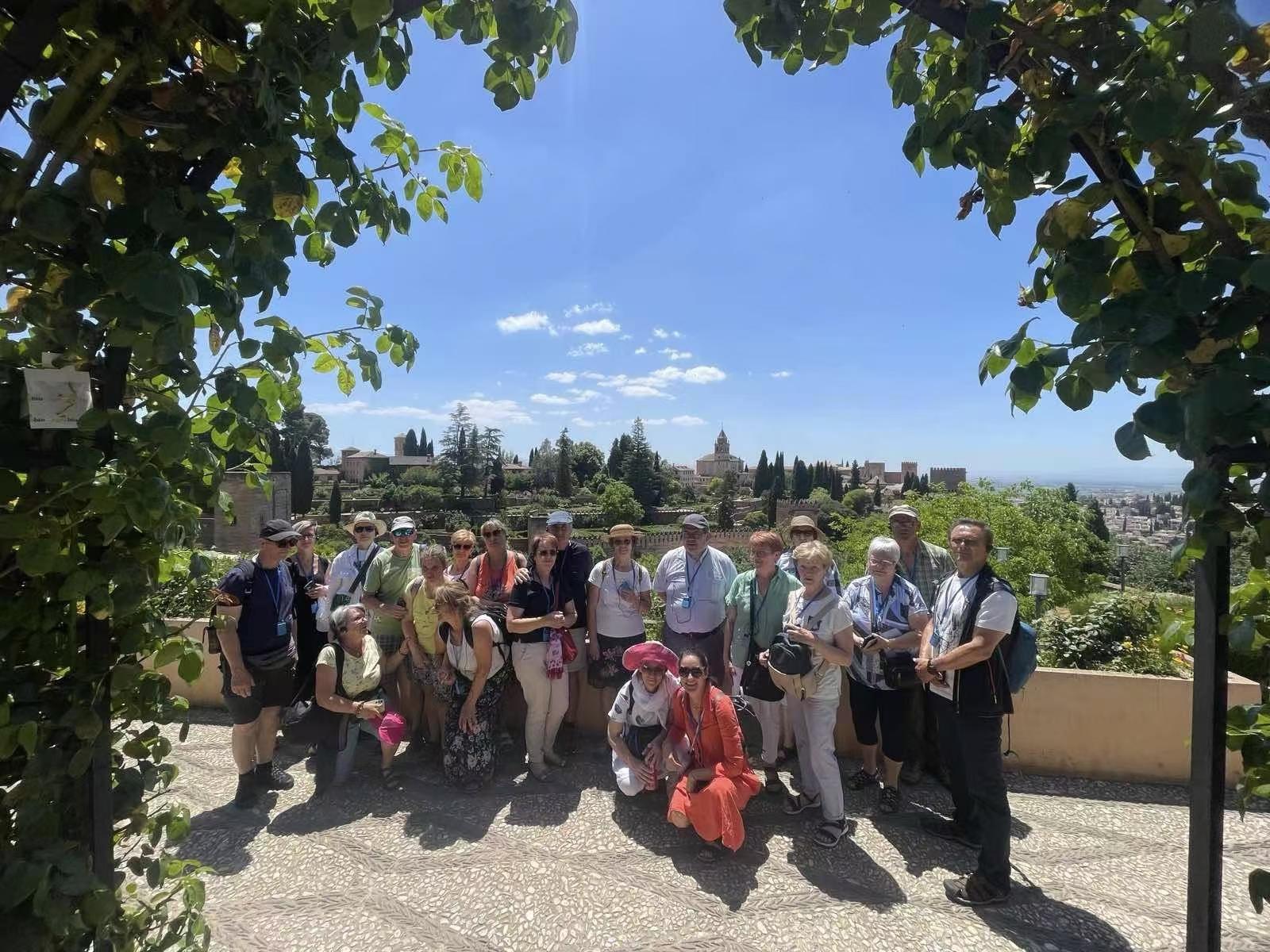
At 8:00 AM on May 7, 2026, a light Mediterranean sea breeze swept across the Montjuïc hilltop in Barcelona. Thirty senior travelers — aged 50 to 78 — stood at the National Palace terrace, their eyes fixed on the sprawling city below: the Sagrada Familia spire, the Port of Barcelona, the distant Collserola ridge.
Alejandro Vega, Operations Director of Mediterránea Heritage Tours, pressed the talk button on his RC2501 transmitter. His voice reached every guest simultaneously — clear, warm, and perfectly synchronized — despite the wind gusting at 25 km/h.
Seventy-year-old Sylvie from Lyon turned to her husband and whispered: "First time in five years I can actually hear the guide on a noisy street."
This was not luck. This was the result of a carefully engineered audio solution for one of Spain's most demanding tour itineraries: 12 days, 30 participants, two guides, multiple climate zones, and UNESCO World Heritage sites from Barcelona to Córdoba. The core of this solution was a reliable Wireless Tour Guide System that performed flawlessly under pressure.
🏆 2. Customer Background: Mediterránea Heritage Tours
Mediterránea Heritage Tours is a Barcelona-based licensed tour operator with 12 years of experience specializing in Iberian Peninsula deep tours. The company serves culturally curious travelers — mostly retired professionals from across Europe who demand rich historical context, comfortable logistics, and flawless execution.
Key contact: Alejandro Vega, Operations Director
Contract signed: April 2026
First collaboration: May 5–16, 2026
Group composition: 30 pax (14 from Spain, 8 from France, 4 from Germany, 4 from Italy)
Demographic: 50+ retired culture enthusiasts
Guide team: Alejandro (lead guide) + Carmen (local English-speaking guide for Andalusia segment)
Before discovering the Richitek solution, Mediterránea Heritage Tours had struggled for years with outdated wired audio systems that failed in exactly the conditions their tours demanded: windy hilltops, scorching summer heat, and crowded medieval streets.
📡 3. Equipment Solution: Dual Transmitter Architecture for Multi-Guide Tours
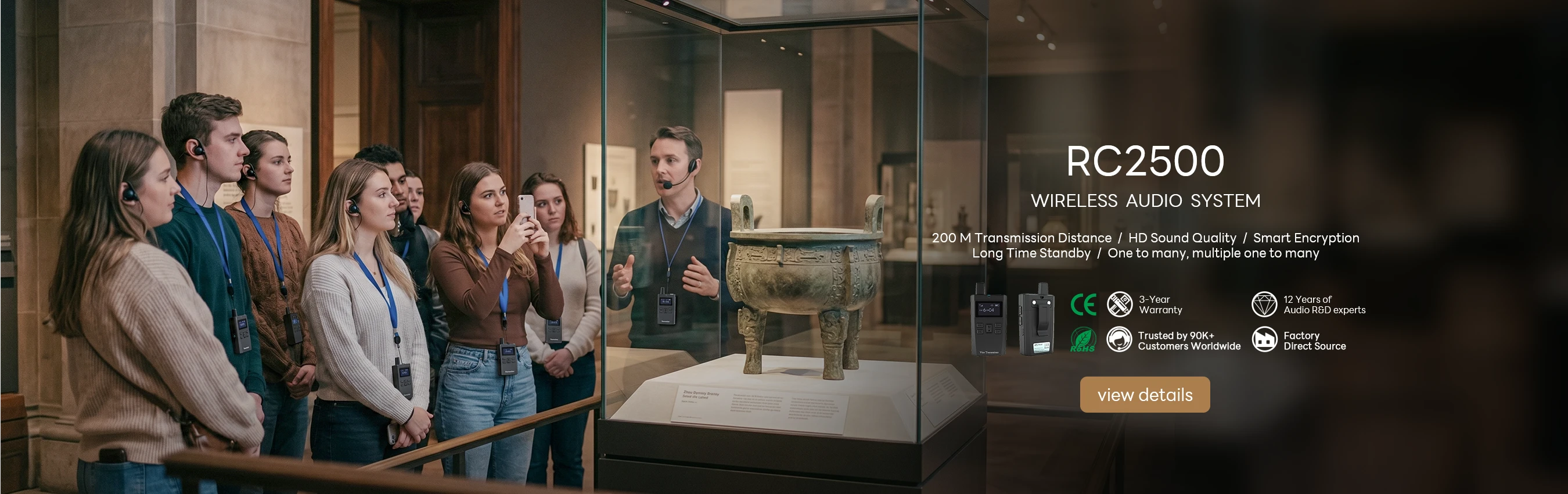
For this 30-person Catalonia + Andalusia deep tour, Alejandro deployed a 1+1 dual transmitter setup with 28 receivers:
| Component | Quantity | Role |
|---|---|---|
| RC2501 transmitter | 1 | Alejandro wears as lead narrator for all 12 days |
| RC085 secondary transmitter | 1 | Carmen wears for the Andalusia segment relay (Days 6–12) |
| RC2501 receivers | 28 | One per guest (30 pax – 2 guides = 28) |
Channel Configuration
Alejandro (lead): Channel C-07 (707 MHz)
Carmen (Andalusia relay): Channel C-12 (1212 MHz)
Guests: Switch freely between channels depending on which guide is speaking
Charging & Runtime
Charging hub: 30-port USB hub charged nightly at hotel
Full charge time: 2 hours
Battery runtime: 10 hours (exceeding the average 9-hour daily usage)
This dual-transmitter architecture solved a critical operational challenge: during the Andalusia segment, Carmen would deliver specialized local commentary while Alejandro managed logistics. Guests could switch channels instantly — no pairing, no re-syncing.
4. Day 3 Itinerary: Barcelona Montjuïc National Palace
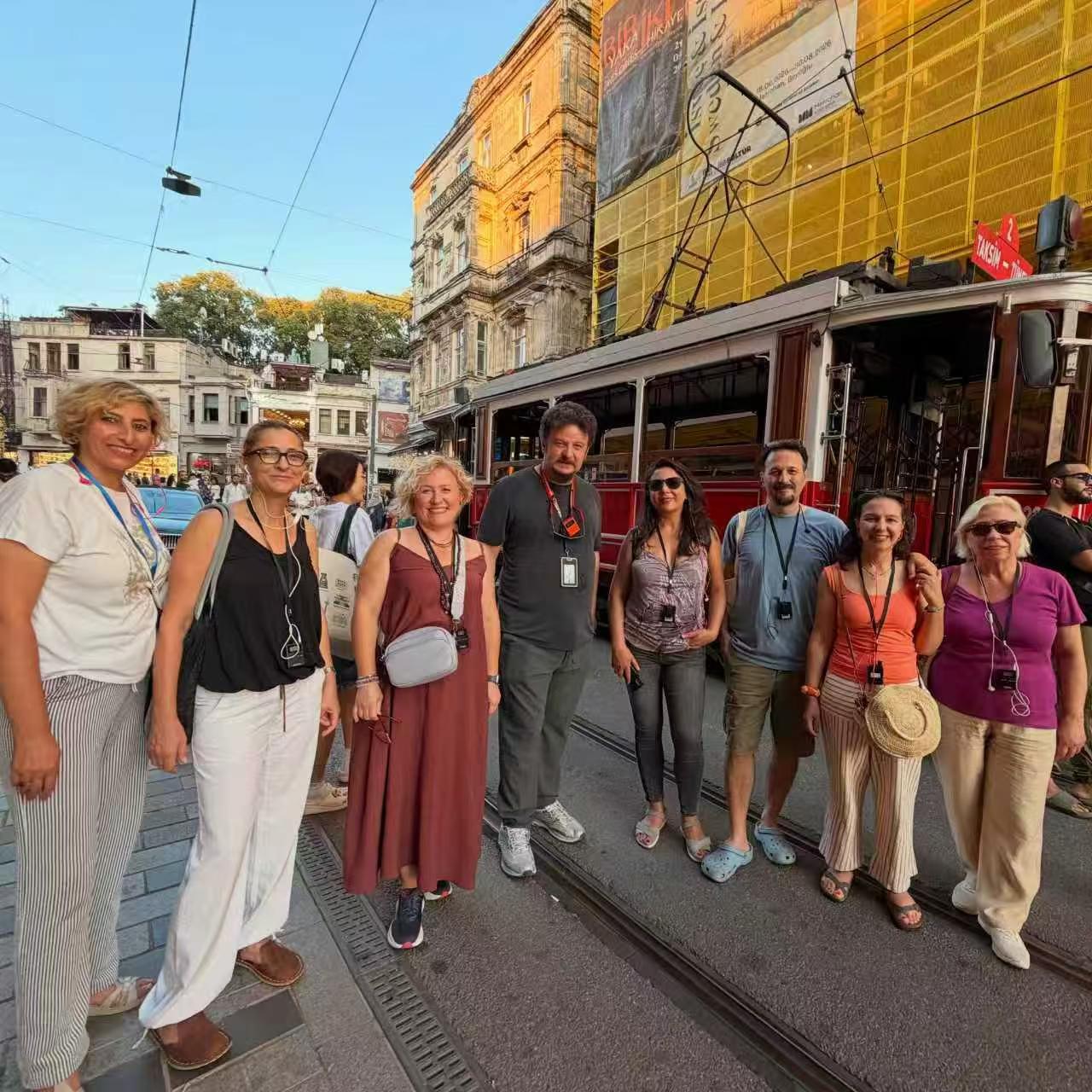
May 7, Wednesday — Photo 1
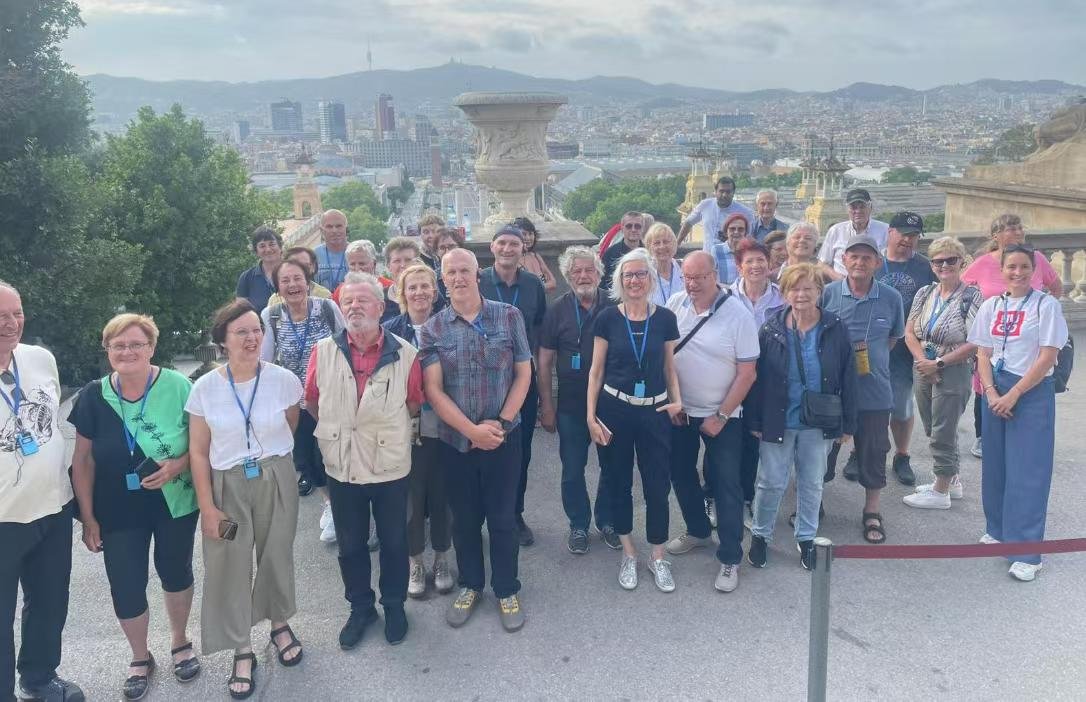
Montjuïc hill rises 173 meters above Barcelona's port, offering a panoramic view that every tour operator dreams of showcasing. But the location presents a notorious audio challenge: constant wind gusts that make traditional wired microphones crackle and portable speakers useless beyond 3 meters.
The Pain Point Before Richitek
Alejandro described their previous system — a 3.5mm Walkman-style wired interpreter — as "unreliable at best." On Montjuïc, the wind would:
Create static noise in wired earpieces
Reduce effective range to under 3 meters
Force guests to cluster uncomfortably close, blocking views
Require constant volume adjustments
The Richitek Solution in Action
With the RC2501 transmitter clipped to his belt and a lightweight headset microphone, Alejandro stood 50 meters from the farthest guest. His voice reached every listener with zero wind interference.
Key performance data from Montjuïc:
Tested range: 200+ meters (line of sight)
Wind conditions: 25–30 km/h gusts
Audio quality: Crystal clear, no dropout
Guest reaction: Sylvie's comment became the tour's defining testimonial
The group spent 90 minutes at Montjuïc, covering the National Palace architecture, the Magic Fountain history, and the 1992 Olympic legacy. Not a single guest asked for repetition or complained about audio quality.
⛪ 5. Day 7 Itinerary: Córdoba Mezquita Mosque-Cathedral
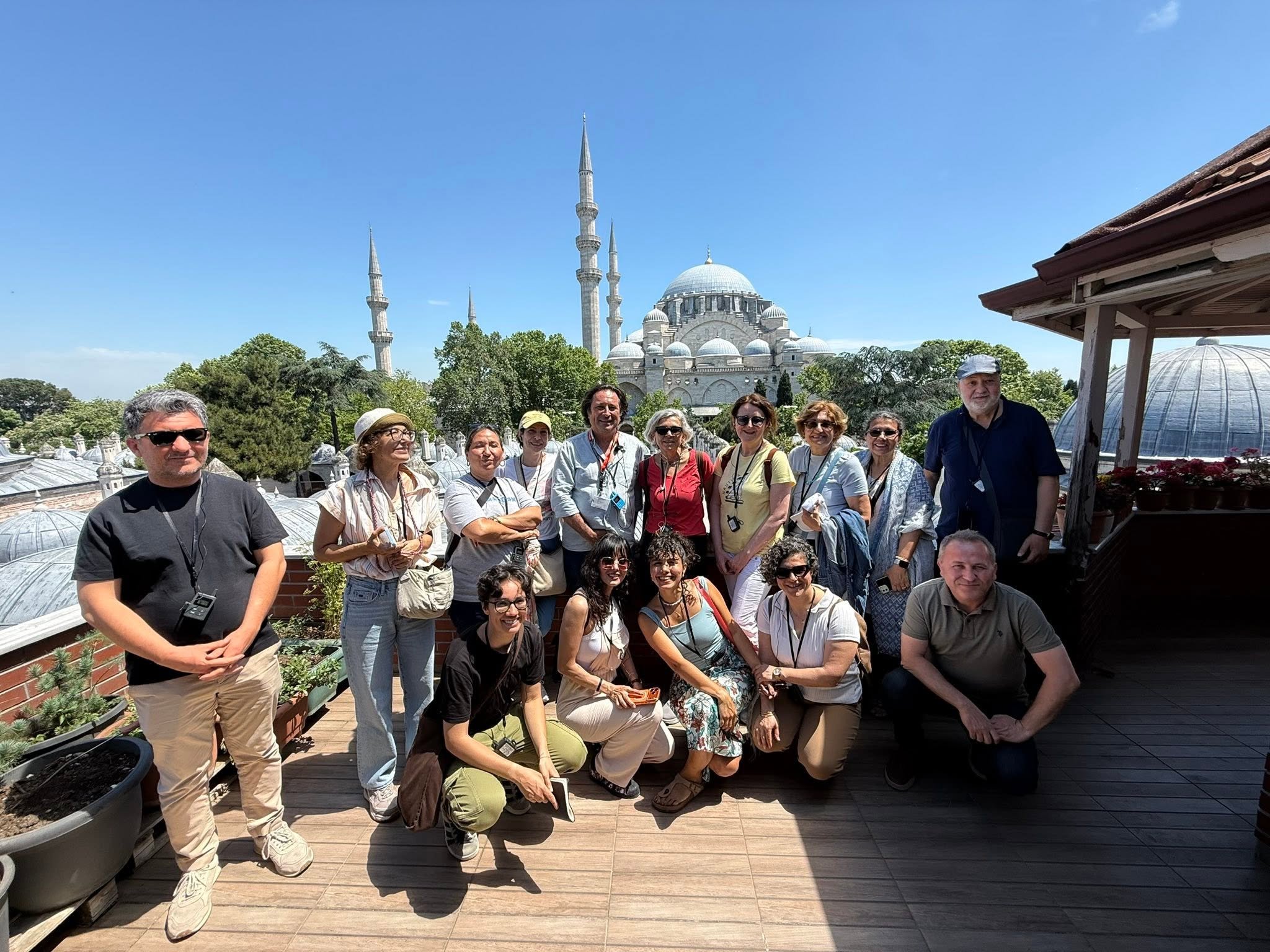
May 11, Sunday — Photo 2
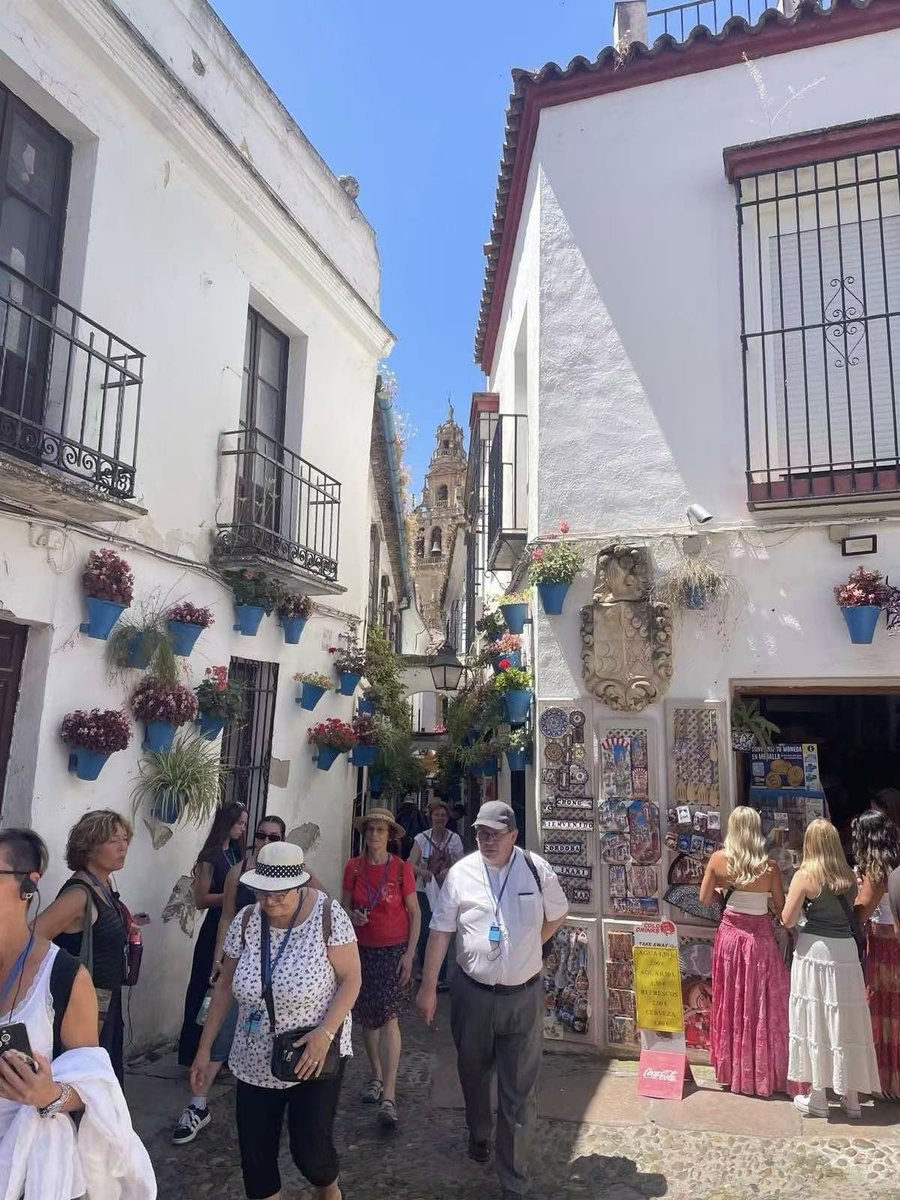
By Day 7, the group had traveled from Barcelona to Andalusia — a climate shift from Mediterranean breezes to 35°C inland heat. The Mezquita of Córdoba, a UNESCO World Heritage site, presented a different set of audio challenges.
The Unique Acoustics of the Mezquita
The Mezquita is famous for its 850+ double-tiered arches — a forest of red-and-white striped columns that create extraordinary visual beauty but terrible acoustics. Sound echoes unpredictably, and competing tour groups speaking multiple languages fill the space.
Why Previous Systems Failed in Andalusia
Alejandro noted that their old wired system suffered from heat-related wire shorts in summer conditions. The 35°C ambient temperature, combined with body heat and sweat, caused:
Intermittent audio cutouts
Static interference
Wire corrosion over multi-day use
The RC2501 + RC085 Performance
In the Mezquita, Carmen took over as lead narrator using the RC085 secondary transmitter on channel C-12. Guests switched from Alejandro's channel C-07 to C-12 with a single button press.
Results:
Temperature: 35°C (95°F) — zero heat-related issues
Crowd density: High (peak Sunday visiting hours)
Audio clarity: Every guest heard Carmen's explanation of the mosque-cathedral's layered history — from Visigothic church to Islamic mosque to Catholic cathedral
Group cohesion: Guests could spread out naturally across the prayer hall without losing audio
The Mezquita visit lasted 2 hours, including the Patio de los Naranjos (Orange Tree Courtyard) and the Mihrab prayer niche. The RC2501 receiver's comfortable neckband design meant no one complained about heat or discomfort — a critical factor for senior travelers.
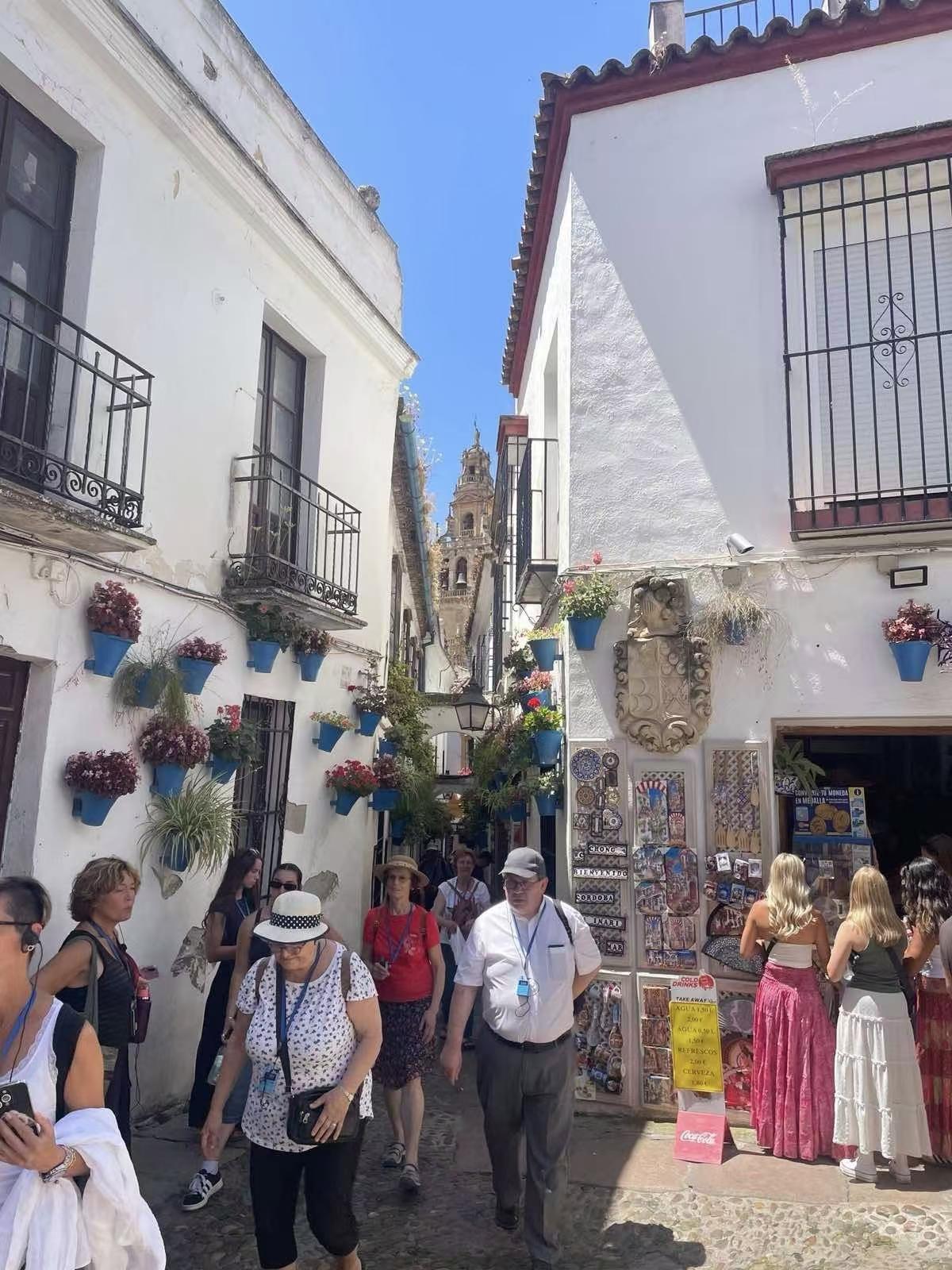
🗺️ 6. Day 8 Itinerary: Córdoba Monastery & Tri-Culture Heritage Tour
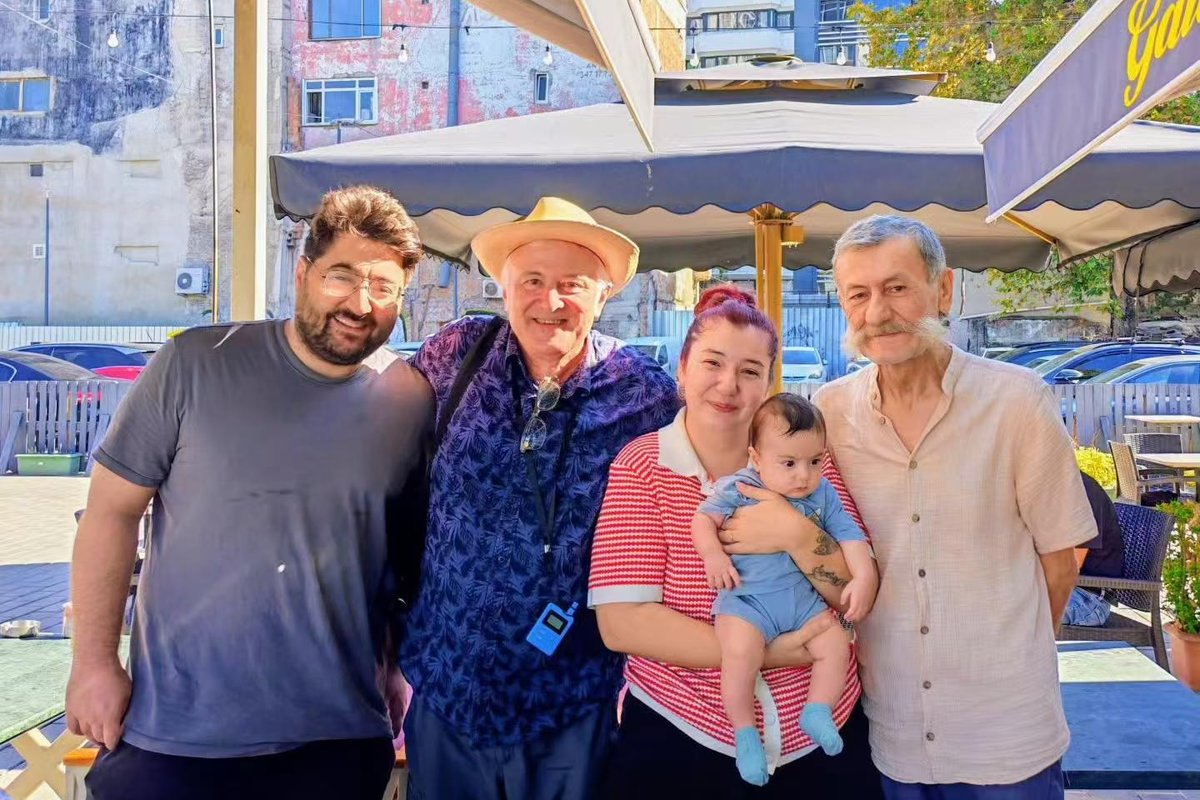
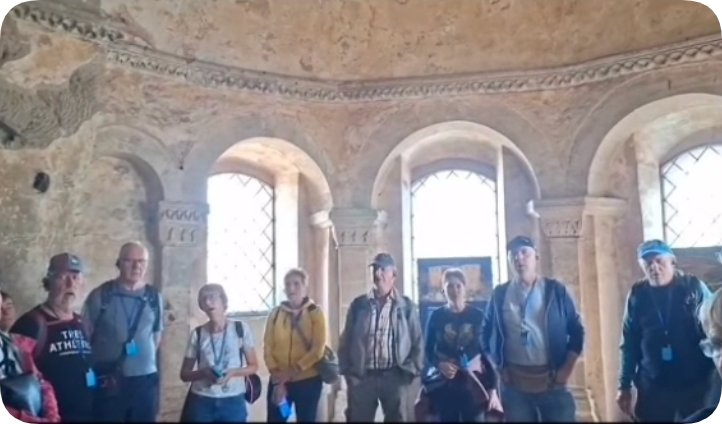
May 12, Monday — Photo 3
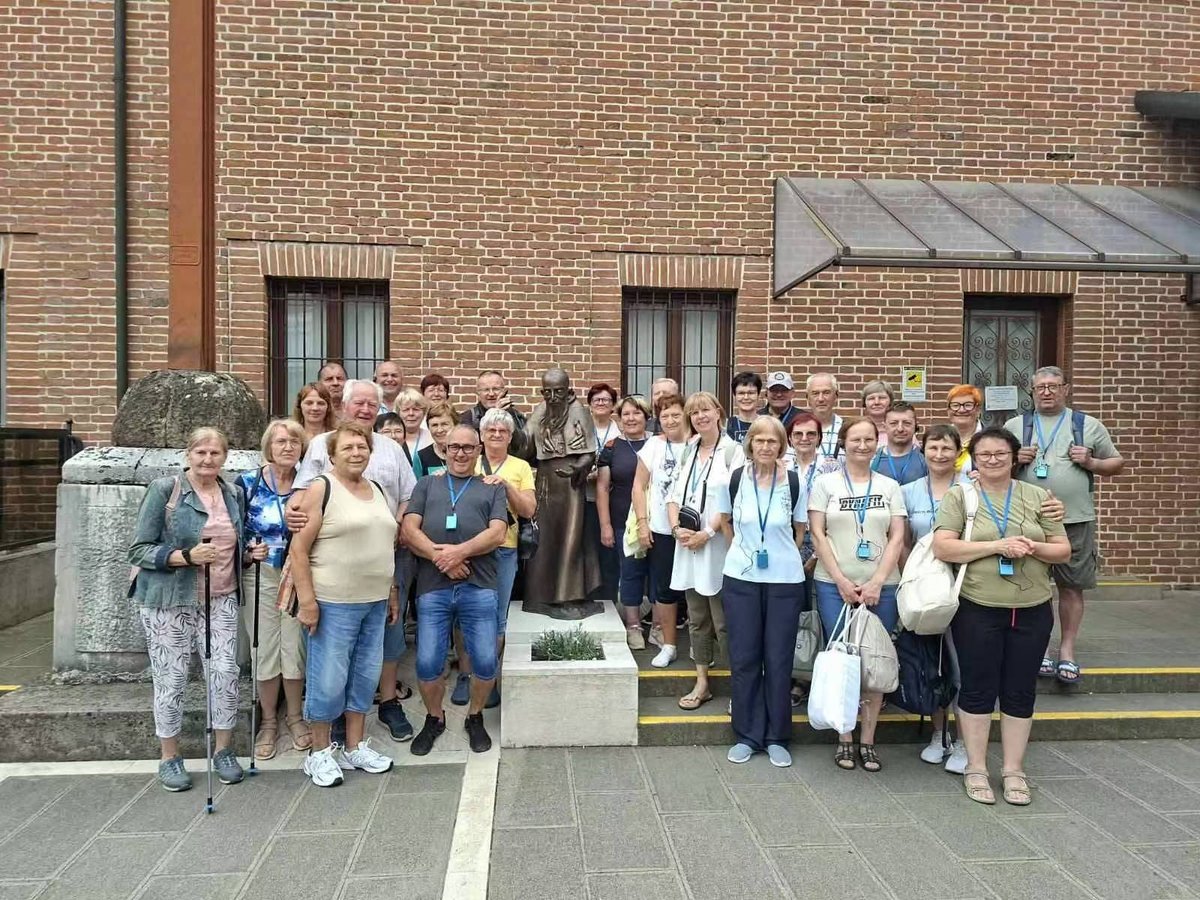
The third key stop was a specialized tri-culture heritage tour — exploring how Christian, Islamic, and Jewish traditions coexisted in medieval Córdoba. The itinerary included:
A former monastery complex with multiple courtyard spaces
The Jewish Quarter (Judería) narrow streets
The Synagogue of Córdoba (one of only three preserved medieval synagogues in Spain)
The Multi-Space Challenge
This tour required the group to move between indoor monastic spaces, outdoor courtyards, and narrow medieval streets — each with different acoustic properties. Traditional wired systems would require constant adjustment or risk losing signal when the guide turned a corner.
How Dual-Channel Switching Saved the Day
Alejandro and Carmen used their two-transmitter system strategically:
Alejandro (C-07): Handled the monastery interior and historical overview
Carmen (C-12): Took over for the Judería walking segment and synagogue visit
Guests: Switched channels seamlessly as the lead changed
Technical highlights:
Range in narrow streets: 200+ meters (non-line-of-sight through stone walls)
Interference: Zero cross-channel interference between C-07 and C-12
Battery: Both transmitters and all 28 receivers lasted the full 8-hour day with charge to spare
The tri-culture tour became the group's favorite segment — not just because of the rich content, but because the audio system made the experience feel intimate and personal despite 30 participants.
🏆 7. Customer Testimonial: Alejandro Vega's Verdict
At the farewell dinner on May 16, Alejandro raised a glass of Rioja and delivered his assessment:
"For 12 days across Catalonia and Andalusia, the Richitek system worked flawlessly even in the summer heat of 35°C. Alejandro said at the wrap-up toast: 'In 12 years of leading Iberian tours, I've never had a wireless system survive the heat of Seville and the wind of Montjuïc without a single dropout. Your device made every guest feel like a local.'"
— Alejandro Vega, Operations Director, Mediterránea Heritage Tours
The Business Impact
The success of this first collaboration led to immediate expansion:
Renewal order: +20 additional units placed in late May 2026
Summer schedule: Weekly tours expanded across June–September 2026
Total commitment: 50+ units for the 2026 peak season
Financial Context
Tour price: €1,850 per person
Group revenue: 30 pax × €1,850 = €55,500
Equipment ROI: The Richitek system paid for itself in improved guest satisfaction and repeat bookings
🗺️ 8. Lessons Learned: 3 Tips for Tour Operators in Iberia
Based on Mediterránea Heritage Tours' experience, here are three actionable lessons for any operator running deep tours in Spain:
Tip 1: Heat-Proof Your Audio Equipment
Andalusia's summer temperatures regularly exceed 35°C (95°F). The RC2501 and RC085 are designed to operate reliably in this range, with:
No wire corrosion (fully wireless design)
No battery swelling (quality lithium cells with thermal protection)
No audio degradation from heat
Recommendation: Always verify your equipment's operating temperature range. Many consumer-grade devices fail above 40°C.
Tip 2: Use Multi-Channel Switching for Multi-Guide Tours
When running tours with two or more guides, the dual-transmitter architecture is essential:
Assign each guide a dedicated channel (e.g., C-07 and C-12)
Train guests to switch channels with one button press
Avoid cross-channel interference by using non-adjacent channels
For more details on multi-channel configurations, see our tour guide system product page.