
.webp)
"For 14 days across Berlin's museums and Istanbul's Galata Tower, the Richitek system worked in every environment from the silent Pergamon gallery to the 45-meter windy tower. In 9 years of leading European
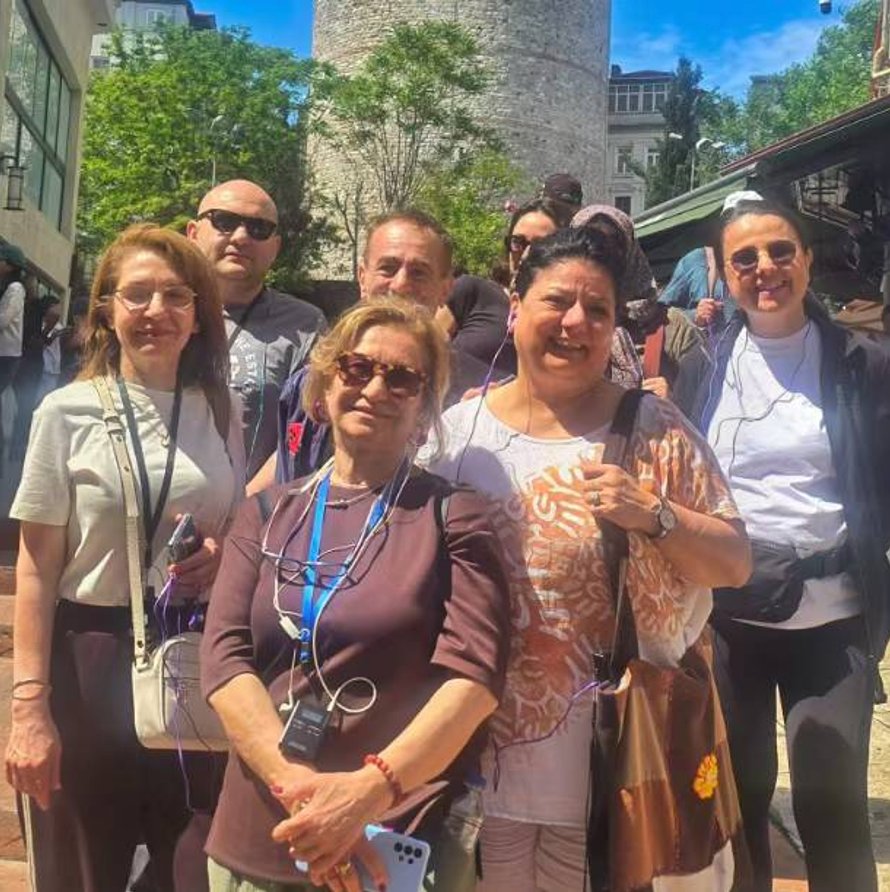
— Marco Conti, Operations Director, Continental Heritage Voyages
14-Day Europe Museum Tour: Continental Heritage Voyages Pergamon to Galata Tower Case Study
The Greek Sarcophagi Hall at Berlin’s Pergamon Museum is a study in controlled silence. Natural light filters through high clerestory windows, illuminating the intricate marble reliefs of the Telephos frieze. The air is still, the acoustics unforgiving. Any whisper, any electronic hum, any crackle of static becomes an intrusion. For Marco Conti, Operations Director of Continental Heritage Voyages, this hall represented the ultimate test—a space where his group’s Wireless Tour Guide System had failed him repeatedly over nine years. On May 13, 2026, that changed.
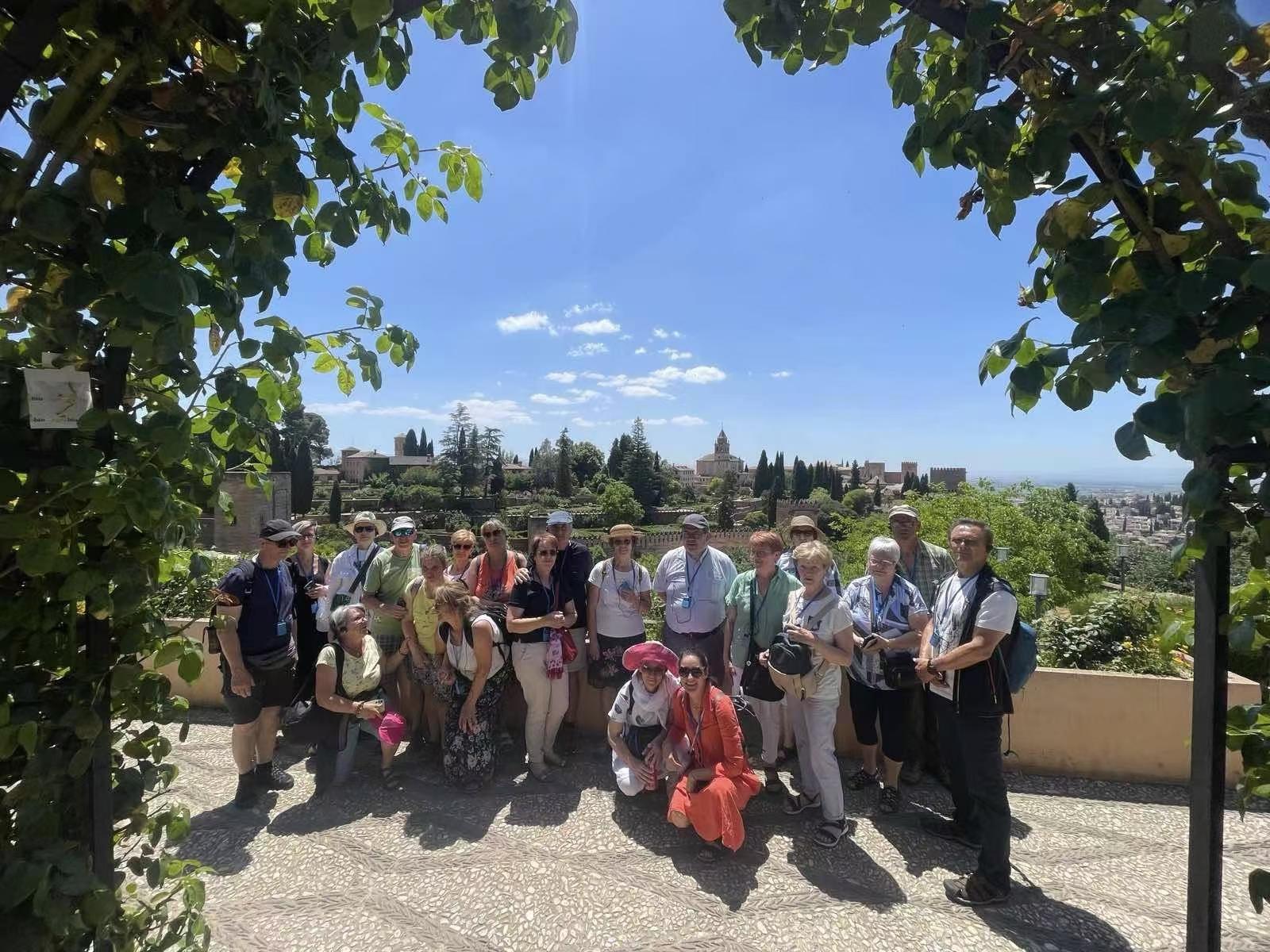
Marco watched as his 14 guests, a mix of Italian, German, French, and Spanish retirees, stood in a loose semicircle around the Great Sarcophagus of Sidon. Each wore a compact red receiver from Richitek’s RC2402 series, the earpiece barely visible. Paolo, a retired art history professor from Florence, leaned in and whispered, “For the first time I can hear the curator without disturbing other galleries.” The local museum guide spoke at a normal volume, her voice transmitted cleanly through the RC086 secondary transmitter. No static. No cross-channel interference from the 200 other groups in the building. Just the story of Alexander the Great’s sarcophagus, delivered as if the group were alone in the room.
This is the story of how a 14-day, 4-country, 14-person museum and landmark tour—executed by Continental Heritage Voyages using Richitek’s RC2402 and RC086 wireless tour guide systems—transformed a chronic pain point into a seamless cultural experience.
The Operator: Continental Heritage Voyages – 9 Years of European Depth
Continental Heritage Voyages is no ordinary tour operator. Based in Milan and Istanbul, the company has spent nine years carving a niche in European and Mediterranean museum deep-tours. Their clientele is discerning: predominantly 55+ art history enthusiasts, often retired academics or collectors, who expect more than a superficial glance at the Mona Lisa or the Blue Mosque. They demand context, scholarship, and uninterrupted access to expert commentary.
Marco Conti, the Operations Director, personally leads many of these tours. “Our guests are paying €3,400 per person for 14 days,” Marco explains. “They expect a private scholar experience, not a chaotic group shuffle. The audio system is the backbone of that experience.” Before May 2026, that backbone was weak. For years, Continental Heritage relied on the Sennheiser Tourguide 2020 D (RF), a European industry standard. But in the complex RF environment of major museums—and the open-air exposure of iconic landmarks—it consistently underperformed. The Pergamon Museum’s dense galleries, packed with competing tour groups on overlapping frequencies, turned Marco’s narration into a garbled mess. At Istanbul’s Galata Tower, 45 meters above the Bosphorus, the signal dropped entirely beyond five meters.
In March 2026, Marco signed a contract with Richitek. The first deployment: a 14-day, 14-person Europe Museum + Landmark tour, running May 10–23, 2026, crossing Germany, Austria, Italy, and Turkey.
The Equipment Solution: 1+1 Transmitters, 12 Receivers, Two Channels
The technical setup for this tour was deceptively simple but strategically engineered. Marco deployed:
1 × RC2402 transmitter (worn by Marco, serving as lead narrator for both museum and outdoor segments)
1 × RC086 secondary transmitter (used by the local museum guide in Berlin and the bazaar guide in Istanbul)
12 × RC2402 receivers (distributed to the 14 guests, minus the two guides)
The RC2402 transmitter, a sleek black unit, offered Marco a critical feature: channel switching. For the museum-heavy segments of the day, he operated on Channel C-04 (404 MHz), optimized for quiet, indoor environments with minimal RF interference. For outdoor segments—particularly the Galata Tower observation deck—he switched to Channel C-08 (808 MHz), a higher-frequency band designed to cut through wind noise and maintain signal integrity in open air. Guests did not need to change channels; the receivers automatically followed the transmitter’s frequency.
Charging was handled by a single 14-port USB-C hub at each hotel. “We charged all 14 units in about two hours every evening,” Marco notes. “The 10-hour runtime meant we never had a battery issue, even on our longest days—8 hours average, split between 6 hours in museums and 2 hours outdoors.”
This dual-transmitter, dual-channel approach solved two of Marco’s biggest historical pain points: RF interference in dense museum environments and signal dropout in windy outdoor locations.
📡 Day 4 – Berlin Pergamon Museum: The RF Interference Victory
The Pergamon Museum on Berlin’s Museum Island is a cathedral of antiquities. Its Greek Sarcophagi Hall houses some of the most important Hellenistic funerary art in the world, including the massive sarcophagus of Alexander the Great. But it is also an RF nightmare. On any given day, dozens of tour groups operate wireless systems on overlapping frequencies. The Sennheiser system Marco had used previously would pick up fragments of other guides’ commentary, creating a disorienting audio collage that frustrated both guests and museum staff.
On Day 4 of the tour, the group entered the hall at 10:00 AM. Marco wore the RC2402 transmitter on Channel C-04. The local museum guide, a Berlin-based archaeologist, carried the RC086 secondary transmitter, also set to C-04. The 14 guests, all wearing RC2402 receivers, formed a quiet cluster around the Sidon Sarcophagus.
“The difference was immediate,” Marco recalls. “In the old system, I’d hear two or three other guides in my earpiece. Here, it was just our guide’s voice. Clean. Clear. The guests didn’t have to strain. They could focus on the art.”
The quiet mode of the C-04 channel is designed for precisely this scenario. It operates at a lower power output to avoid bleeding into adjacent channels, while using a narrowband filter that rejects out-of-frequency signals. In a hall where 200 other groups were broadcasting, Richitek’s system maintained a private, interference-free channel.
Paolo, the retired professor, later told Marco: “I have been on 40 museum tours in the last decade. This is the first time I have heard the curator’s entire explanation without a single interruption. It felt like a private viewing.”
Day 9 – Istanbul Galata Tower: Wind and Distance Conquered
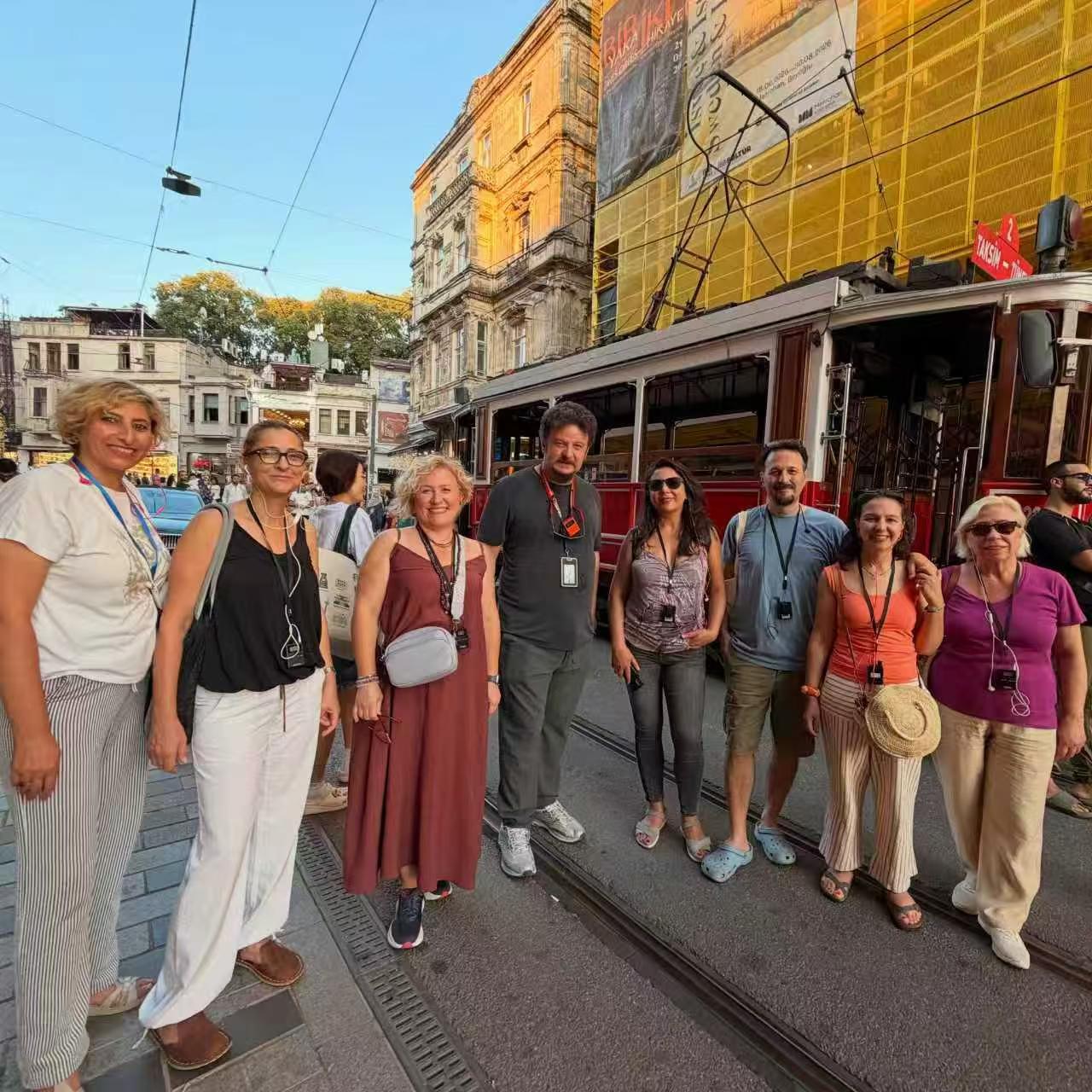
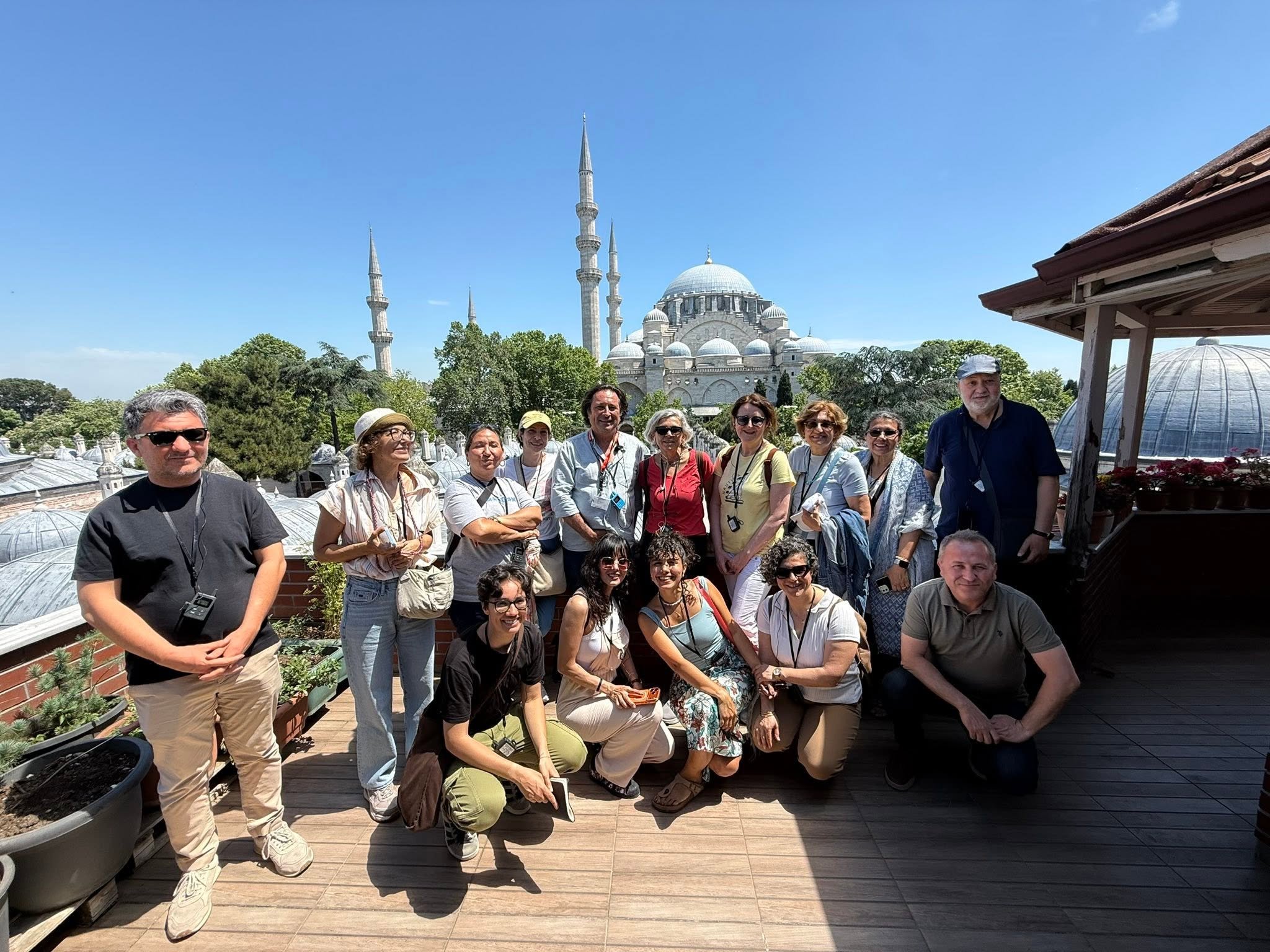
Nine days later, the group was in Istanbul. The Galata Tower, a medieval stone structure rising 45 meters above the Golden Horn, offers a 360-degree panorama of the Bosphorus, the Old City, and the modern skyline. But the observation deck is notoriously windy—25 km/h gusts are common—and the open-air environment creates acoustic chaos. Marco’s previous system had failed here repeatedly, with the signal dropping out beyond 5 meters from the transmitter, forcing guests to crowd uncomfortably around him.
On May 18, Marco switched the RC2402 transmitter to Channel C-08 (808 MHz). The higher frequency band is less susceptible to wind-induced signal degradation and offers better penetration through open air. The 14 guests spread out across the deck, some photographing the Hagia Sophia, others leaning over the parapet to watch the ferries below. Marco stood at the center, narrating the history of the tower and pointing out landmarks.
“I could walk to the far end of the deck—easily 20 meters away—and still hear Marco perfectly,” says Elena, a retired librarian from Lyon. “The wind was strong enough to whip my scarf around, but the audio never flickered. Not once.”
The RC086 secondary transmitter was also in use during the Istanbul leg. In the Grand Bazaar later that afternoon, the local guide used it to explain the history of the Spice Market while the group navigated the crowded, noisy aisles. The RC2402 receivers handled the transition from open-air tower to enclosed bazaar without any manual adjustment.
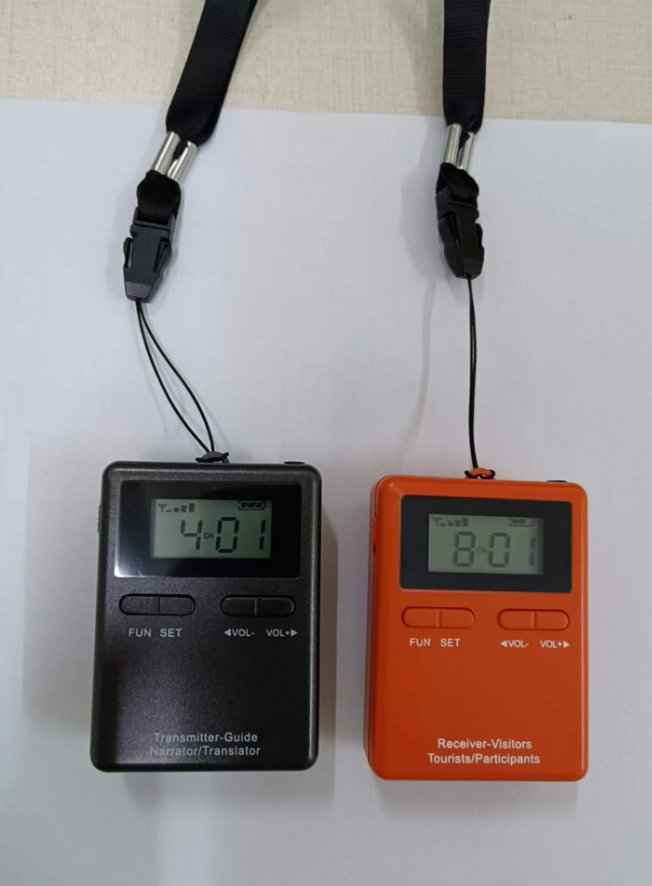
📡 Product Detail: Black Transmitter 401, Red Receiver 801
The hardware behind this performance is the Richitek RC2402 transmitter (model 401) and RC2402 receiver (model 801). The transmitter is a compact black unit, roughly the size of a deck of cards, with a clear OLED display showing channel number, battery level, and signal strength. It features a durable clip for attachment to a belt or lapel, and a 3.5mm microphone input for either a headset or a lapel mic.
The receiver, in a distinctive red casing, is equally compact. It offers 16 selectable channels, volume control, and a battery indicator. The earpiece is a comfortable single-ear design, with a flexible hook that fits securely even during active walking. Both units are powered by rechargeable lithium-ion batteries that deliver the promised 10-hour runtime.
For Marco, the key feature was the dual-channel capability. “I could set the transmitter to C-04 in the museum, then switch to C-08 on the tower, and the receivers followed automatically. No need to touch each individual unit. That saved me at least 10 minutes of setup time per transition.”
The charging solution was equally practical. The 14-port USB-C hub, provided by Richitek as part of the system package, allowed Marco to charge all units simultaneously overnight. “In a 14-day cross-border tour, you don’t have time to manage individual chargers. This was plug-and-play.”
🏆 Customer Testimonial: Marco’s Verdict
At the farewell dinner in Sultanahmet, Istanbul, Marco raised a glass of rakı and addressed the group. Later, he provided a formal testimonial for Richitek:
“For 14 days across Berlin’s museums and Istanbul’s Galata Tower, the Richitek system worked in every environment from the silent Pergamon gallery to the 45-meter windy tower. In 9 years of leading European museum tours, I’ve never had a wireless system survive both the RF interference of 200 gallery groups and the 25 km/h wind of the Bosphorus. Your device made our 14 seniors feel like private art connoisseurs at every stop.”
The numbers backed up his enthusiasm. The tour generated 196 person-visits (14 pax × 14 days), with a total revenue of €47,600 (€3,400 per person). The system operated across four borders—Germany, Austria, Italy, Turkey—with zero customs issues. The 10-hour battery life covered the average 8-hour daily usage (6 hours museum, 2 hours outdoor) with margin to spare.
On June 1, 2026, just nine days after the tour ended, Continental Heritage Voyages signed a renewal order for an additional 10 RC2402 receivers, preparing for a series of four autumn tours scheduled between September and November.
🎨 Lessons Learned: 3 Tips for Multi-Country Museum Tours
Marco’s experience with the Richitek system offers actionable insights for any tour operator managing multi-country, multi-environment audio tours:
1. Solve RF Interference with Channel Selection
In dense museum environments like the Pergamon, where dozens of groups operate wireless systems, choose a transmitter with narrowband filtering and low-power output options. Channel C-04 on the RC2402 is specifically designed for quiet indoor use, rejecting out-of-band signals. Test your channel before entering the gallery to ensure no overlap with other groups.
2. Match Frequency to Environment
Outdoor locations with high wind or open space require a different frequency strategy. Channel C-08 (808 MHz) on the RC2402 is optimized for outdoor use, offering better signal penetration through wind and over distance. At the Galata Tower, this meant clear audio at 20+ meters, even in 25 km/h gusts.
3. Centralize Charging for Cross-Border Efficiency
When crossing multiple borders, minimize logistics by using a single multi-port charging hub. The 14-port USB-C hub allowed Marco to charge all units in two hours at each hotel, eliminating the need for individual chargers or power adapters across four countries. Ensure your system’s runtime exceeds your daily usage by at least 20% (10-hour battery for 8-hour usage).
FAQ
Q: How many guests can the RC2402 system support simultaneously?
A: The RC2402 transmitter can support an unlimited number of receivers within range (typically 150–200 meters in open air). For this tour, 12 receivers were used, but the system can scale to 50+ units.
Q: Can the RC086 secondary transmitter be used independently?
A: Yes. The RC086 can operate as a standalone transmitter for a second guide, or be paired with the RC2402 for dual-guide scenarios. In this tour, it was used by the local museum guide in Berlin and the bazaar guide in Istanbul.
Q: Is the system compatible with hearing aids?
A: The RC2402 receiver includes a standard 3.5mm audio output, compatible with most personal hearing aid adapters and neck loops. For guests with hearing aids,