.webp)
Three field returns came back to the factory this season from three different continents, and they shared nothing obvious until the engineers read them side by side. A European Commission event in Brussels, a national postal service in India running an internal merger conference, and a large outdoor team event that ran in a single morning. Each deployment answered a different version of the same question: what does the wireless tour guide system actually have to do well when the brochure cannot be the judge? The photos and notes from those three returns are below, in the order they came in, and each one taught us something the lab cannot reproduce. If you are sizing a multilingual rollout, map the equipment to your continent, your schedule, and your worst case rather than to your best.
What the European Commission Did Differently in Brussels
The first return came from a Brussels-based European Commission event where the conference was running six simultaneous language tracks across two days of plenary sessions. The customer photo shows a packed auditorium with the SOFIA18 branding on the screens and the EU interpretation infrastructure running, and the photo that mattered for us was the one of the channel rack backstage. The RC2406 80-Channel 2.4G Wireless Tour Guide System was specified for the multilingual booth fan-out because the floor needed more language tracks than the previous UHF setup could carry without audible drift. Eighty channels is more than any single conference needs, and that surplus is the point: it lets the on-site AV team re-assign language groups on the fly without negotiating with a fixed matrix. The customer note flagged two things, both about how the system sat inside a process rather than about how it sounded. The first was that the late-arrival rush at registration cleared cleanly because the auto-scan assigned channels without operator intervention. The second was that the language captains could monitor each track from the booth by re-tuning a sample receiver, which is a feature the printed spec sheet does not mention.
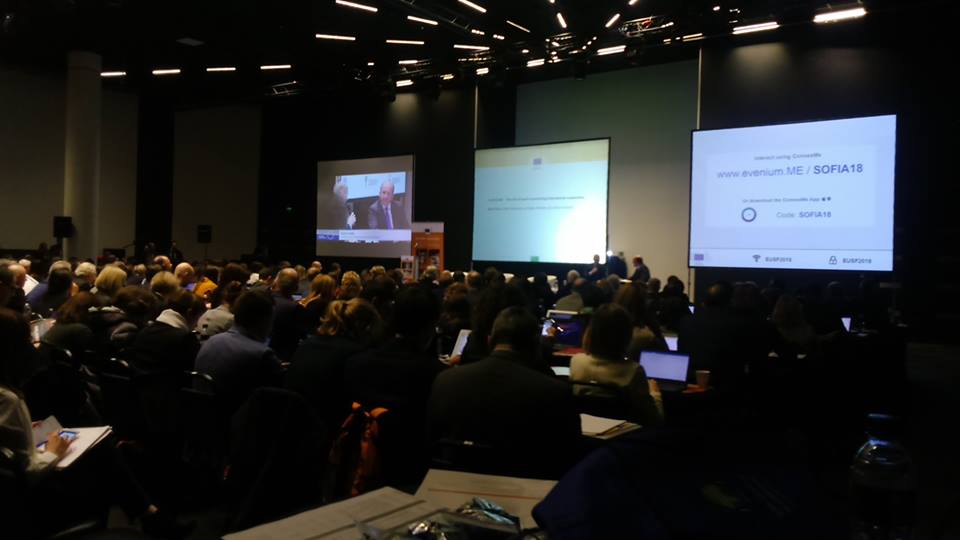
An RC2406 channel rack feeding the EU multilingual booth at the SOFIA18 event, where the channel surplus absorbed late-arrival reassignments without rebooting the matrix.
How India Post Ran Four Languages at Two Hundred Seats
The second came from a national postal service in India that needed to brief its own regional leadership across four languages during an internal merger conference. The customer photo from the venue shows round tables set for dinner with a black RC9150 High-end 2.4G Wireless Audio/Radio Guide System receiver, an earphone in plastic, a blue lanyard, and a notepad placed at every seat, and the second shot shows the same setup from above with the room full and the floor runner changing channels between sessions. The RC9150 sat on each table because the assignment was table-level rather than seat-level, which kept the receiver count under forty for a two hundred seat event. That is the real headline of this deployment: the operator sized to the table rather than to the seat and saved almost five thousand receivers in the process. The OLED screen on the unit let the floor runner verify which channel each table was on without leaning across the plates, and the language captains could swap a single table from Hindi to English without touching the rest of the room.
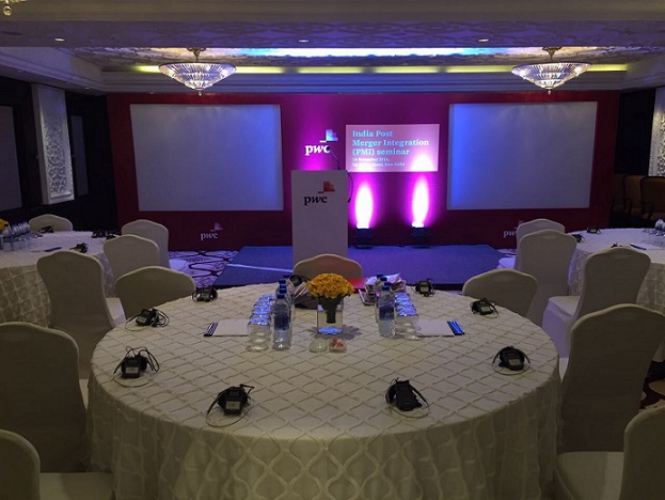
RC9150 receivers arranged by table at the India Post merger conference, where table-level assignment cut the receiver count by an order of magnitude.
🏟️ An Outdoor Team Event Built in a Single Morning
The third was the smallest in formal scope and the largest in logistical stress. A large outdoor team event for several hundred participants needed receivers handed out, charged, and labeled before the guests arrived, all in one morning. The customer photo shows the long table with the receivers laid out in rows with their lanyards tied next to them, the canvas pouches waiting beside them, and the boxes of unallocated units at the end of the table. The RC2501 Wireless Tour Guide System was the receiver in the photo, picked specifically for the morning turnaround because its shell handled being passed hand to hand without cleaning between sessions and the charging cradle could be wheeled to the staging area. The note that came back with the photo was blunt: the team needed to know how many receivers could be issued per hour per checkout table, and the answer was forty per table per hour because the lanyards were pre-tied and the channels were pre-assigned. The photo does not show the moment of failure it implies, which is what happens when lanyards are not pre-tied and channels are not pre-assigned, and that gap is the reason the morning worked.
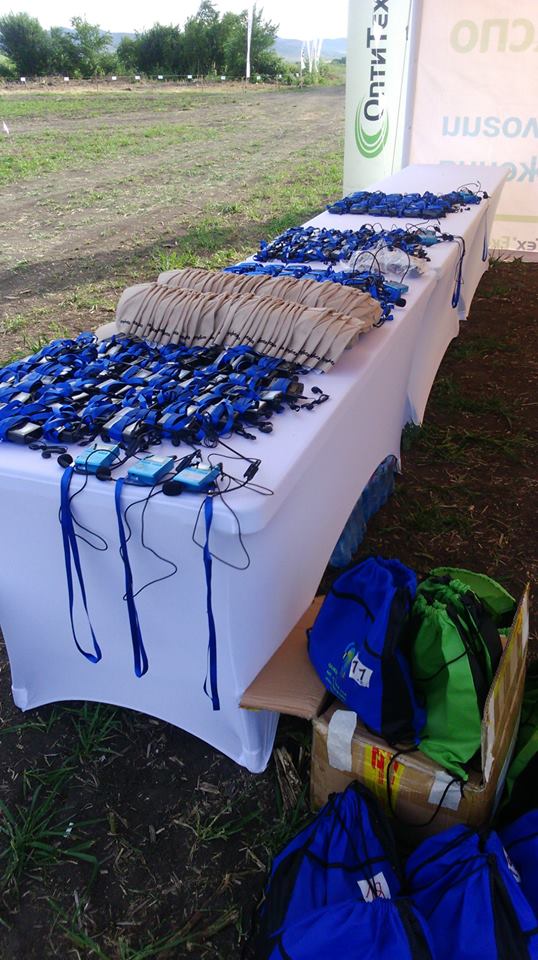
RC2501 receivers staged for morning handout at an outdoor team event, where pre-tied lanyards and pre-assigned channels turned a four-hour window into a workable one.
📡 What the Transmitter Carried at Every Continent
Across all three returns the transmitter unit did the work that none of the brochures lead with. In Brussels it carried six simultaneous channels into a rack that the booth operators could re-assign live. In New Delhi it sat on the podium and drove four languages across two hundred seats with table-level receivers. On the outdoor staging table it let the floor runner switch an entire row of receivers between groups without a screwdriver. The recurring lesson from the field notes was that the transmitter's value was less about its raw specifications and more about how its operator interface sat inside the event's own workflow. The teams that used it well were the teams that built a checklist that mentioned channels, lanyards, and charging before the equipment arrived.
💡 Why the Receiver Decision Was About Logistics, Not Audio
The receiver story in these three deployments was almost entirely about logistics. Brussels needed a receiver that survived being moved between booth tests and a four-day programme. New Delhi needed a receiver that could be assigned by table rather than by seat. The outdoor event needed a receiver that survived being issued at forty units per hour without being individually configured by hand. All three requirements were answered by the same family of receivers chosen for slightly different reasons, which is the point: a single product line with two or three receiver models covers almost every field request without retraining the field team or doubling the spare inventory. The visual difference matters less than the operational difference.
💰 Channel Capacity, Battery Life, and the Hidden Cost Nobody Quoted
The honest version of these deployments is the one in the table, not the one in the brochure. The columns line up the group size, the venue type, the receiver assignment model, the language count, the event duration, the battery headroom we measured after the event, and the integration with the local AV infrastructure. The numbers tell the story better than any press release could.
| Metric | SOFIA18 (Brussels) | India Post (New Delhi) | Outdoor team event |
|---|---|---|---|
| Group size | 400 attendees | 200 seats | 500 guests |
| Venue | indoor auditorium | indoor round tables | outdoor staging |
| Receiver assignment | per seat | per table | per guest |
| Lead transmitter | RC2406 (booth rack) | RC2406 (podium) | RC2406 (staging) |
| Receiver model | RC9150 | RC9150 | RC2501 |
| Active channels | 6 (languages) | 4 (languages) | 1 |
| Event duration | 4 days | 2 days | 4 hours |
| Battery headroom | 40 percent spare | 60 percent spare | 50 percent spare |
| AV integration | high (booth) | medium (table runner) | low (independent) |
🏭 Lessons That Traveled Back to the Factory Floor
After each of these three customer returns we pulled the field notes back into engineering. The Brussels deployment pushed us to standardise the late-arrival auto-scan across the receiver line, because the operator feedback was that manual channel assignment would have doubled the registration queue. The India Post merger conference pushed us to publish a table-level assignment guide, because the operator saved five thousand receivers by sizing to the table rather than to the seat and that lesson had nowhere to live in the existing documentation. The outdoor team event pushed us to ship pre-tied lanyards as a stock option, because the four-hour staging window only worked because the lanyards were pre-tied. None of these lessons would have shown up in a lab.
🔮 Selecting the Right Mix for Your Next Rollout
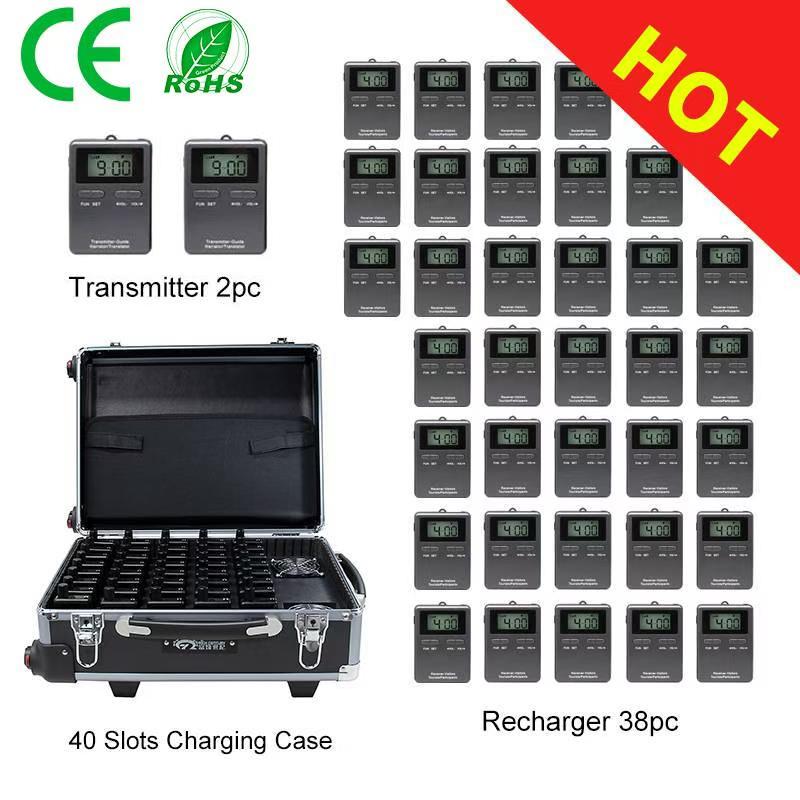
If a deployment like any of these three is on your calendar, the right starting point is to read through the field case files that match your continent and your scale, then map them to a transmitter and receiver pair that fits your language count, your venue, and your staging window. The full wireless tour guide deployment cases archive covers dozens of similar returns, and the wireless tour guide system product line is where the RC2406, RC9150, and RC2501 sit alongside the rest of the range. For a multilingual conference or a team event operator planning the next season, the dedicated Hajj Pilgrimage Tour Case is the closer match. Talk to our team with your continent, your language count, and your staging window and we will point you at the same mix that worked in Brussels, New Delhi, and the outdoor staging area.