A leading China factory specializing in Wireless Tour Guide Systems, Church Audio Guides, and Translation Headphones with premium OEM/ODM solutions.

Tel:+86 13825295213

Email:tiger.wang@richitek.com

RC8860, RC2500 and RC2406: One Waterfront Walking Route, Three Devices, Three Jobs

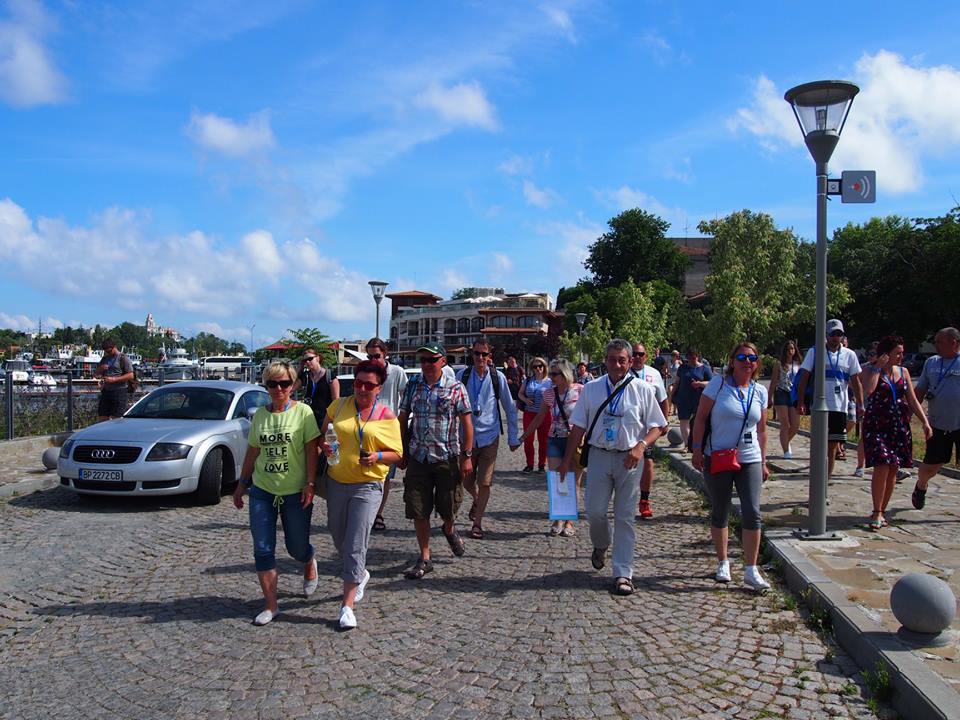
A tour operator on the Black Sea coast sent us a set of photographs last month, and every frame comes from a single morning on a single route. The first shows them strung out along a coastal path above the bay, the walkers spread in ones and twos with the water behind them. The second has them bunched two abreast on the breakwater beside the fish harbour, close enough to touch shoulders. The third shows the guide standing under a cast-iron lamp post with a blue paddle raised above his head, counting heads back in. Same route, same morning, same people. What changes between the frames is the shape the group takes, and that shape is the entire reason their kit bag holds three different systems rather than one.

I have written before about matching a walking tour to the radio environment it runs through. This piece is narrower. It is a record of how one operator splits a 4.6-kilometre route across three products, with their own photographs as the evidence and the published figures as the argument.

🏆 What the Client Sent and Why It Was Not One System

The operator runs a morning and an afternoon departure along the same line: east end of the old harbour, west along the promenade, across the breakwater where the fishing boats tie up, into the old town, and back to a small square with a lamp post in the middle of it. Two guides, one route, roughly forty to fifty walkers per departure and a fair number of them over sixty. They tried standardising on one model in 2023; six weeks later they were back to a mixed bag, and their city walking tour audio setup has stayed mixed ever since. Three street segments, three different problems, and no single unit that answers all three at a price they were willing to pay. The group geometry changes before the equipment does: the promenade produces a long thin line, the breakwater a narrow column, and the square a loose crowd with the guide in the middle of it.

Segment One: The Promenade Stretch

The promenade is the longest piece, about 1.8 kilometres of uneven stone paving with street trees, parked cars, café frontages and a line of lamp columns down the seaward side. With fifty walkers on it, the head and the tail end up sixty to eighty metres apart and out of sight of each other. The guide walks at the front with a paddle up; the person at the back is out of sight around the bend. What defeats audio here is not noise, it is distance plus the solid stuff in between: tree trunks, parked vehicles, and building corners that cut the line of sight and the radio path at the same time. This is why the operator uses the RC8860 UHF wireless tour guide system on the promenade. It carries twenty channels on PLL synthesis and reaches 200 metres in open ground, and UHF gets through walls, machinery and the kind of obstruction a city street throws up far better than a 2.4 GHz signal. The transmitter runs a 1500mAh cell for ten hours of talk time and weighs 59 grams; the receiver runs 1000mAh for twenty hours at 50 grams. Twenty channels is plenty here, because only two groups ever run the promenade at once.
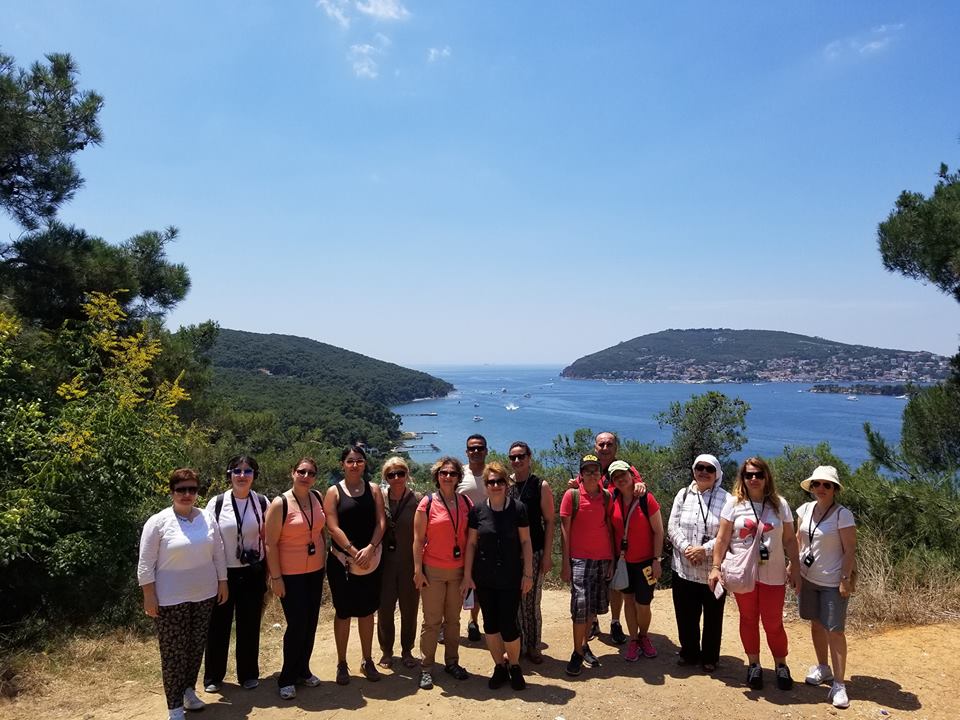
Coastal-viewpoint-walking-group-city_tourism

Segment Two: The Fish Harbour and the Breakwater

The breakwater is about 900 metres and it does the opposite of the promenade. The column narrows to two abreast because there is water on one side and moored boats on the other, so the group compresses and the distance problem disappears. What arrives instead is the harbour itself: wind off the water, hulls knocking against the quay, outboard engines, gulls, and the hard reflective surfaces of the marina buildings behind. In a narrow column everyone is within a few metres of the guide, so range stops mattering and channel count and audio quality start to. This is where the RC2500 wireless tour guide system takes over. Fifty independent PLL channels give the operator room to run several departures through the harbour at once, transmission reaches 200 metres in open area, the audio frequency response covers 20Hz to 20kHz, and the operating range of minus 15 to 50 degrees Celsius covers a Black Sea August and a North Sea April alike. The transmitter runs twelve hours and the receiver forty, the longest standby of the three units in the bag, and one-click frequency synchronisation makes swapping a receiver over at the harbour gate a ten-second job.
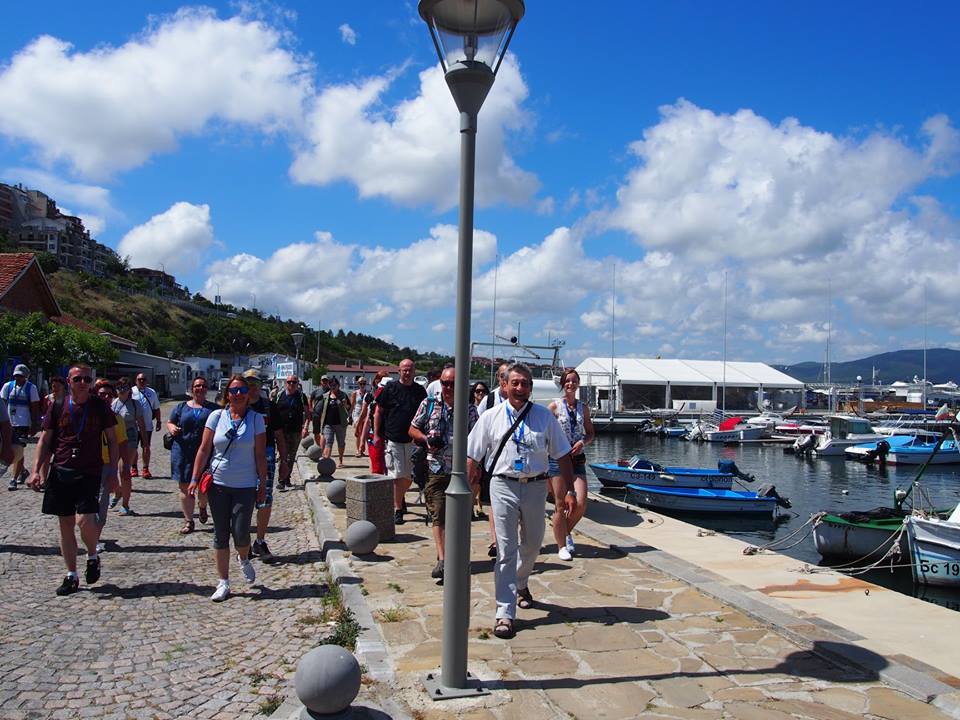
Harbour-breakwater-walk-city_tourism

🎯 Segment Three: The Lamp Post Where the Guide Counts Heads

The old town square is the turnaround point and the busiest fifteen minutes of the route. The guide stops under the lamp post, raises the paddle, and counts. In high season four to six other groups are doing the same thing within earshot, some of them with their own transmitters running. The problem at the lamp post is not distance and not harbour noise. It is neighbours. Two 2.4 GHz channels that overlap, or a guide who has drifted onto an occupied one, produce the worst failure mode in guided audio: a stranger's commentary arriving in your group's ears mid-sentence. The RC2406 80-channel wireless tour guide system is the answer here: eighty channels on the 2403 to 2483 MHz ISM band, PLL anti-interference technology, 200 metres of open-area range, a 50-gram body at both ends, and full-day continuous use on a charge. Splash resistance is rated IPX4, which covers the sea spray that finds its way onto the square on a windy afternoon.
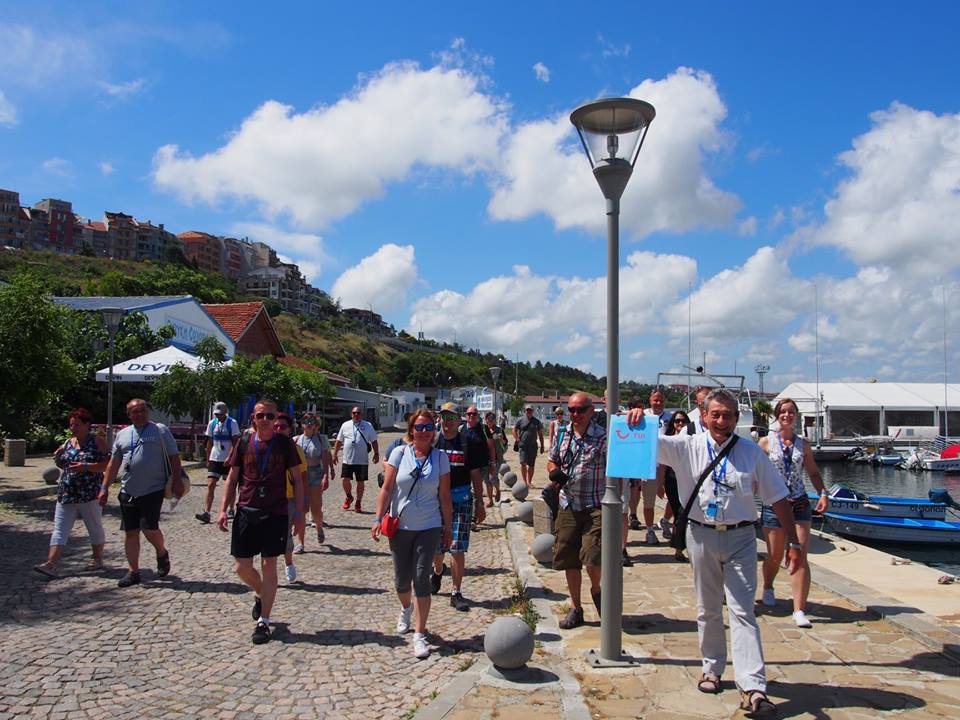
Lamp-post-head-count-city_tourism

Look at the three photographs together and the split explains itself. Receivers ride on lanyards over shirt fronts in all three; nobody is holding anything and nobody has stopped walking. In the first frame the group is spread thin enough that range is the only thing that matters, in the second they are shoulder to shoulder and channel discipline takes over, and in the third they are milling around a guide who has to be heard over half a dozen other operators on the same square.

Published Figures, Side by Side

ModelFrequency bandChannelsRangeBattery (TX / RX)
RC8860UHF with PLL synthesis20Up to 200 m, open ground10 h (1500mAh) / 20 h (1000mAh)
RC25002.4 GHz ISM, PLL50Up to 200 m, open area12 h / 40 h
RC24062.4 GHz ISM, 2403–2483 MHz80Up to 200 m, open areaFull-day continuous use

Weight is deliberately absent. The RC8860 publishes 59 grams for the transmitter and 50 for the receiver, the RC2406 publishes 50 grams, and the RC2500 page does not publish a weight at all, so the column would compare two figures against an empty cell. What the table does show is the part that drove the decision: one UHF unit for the segment with buildings in the way, two 2.4 GHz units differentiated by channel count and standby time.

💡 Why the Fleet Stays Mixed

The obvious objection is that three systems means three spares boxes, three charging routines and three sets of labels. The operator's answer is that a single model would have to be bought for the worst segment, and the worst segment is the promenade. A 2.4 GHz unit bought for the promenade would need repeaters or a mid-route relay to cover 1.8 kilometres with buildings in the way, and the operator priced that and declined it. Once the promenade unit is UHF, the other two segments can be filled by whichever 2.4 GHz model fits the channel count and the wear time, and everything comes off the same bench because the entire tour guide system range shares one charging philosophy and a three-year warranty on the mainboard.

There is a limit to this advice. Mixing only pays if the route genuinely pulls in different directions. A single-room museum tour, or a factory walk that never leaves one building, has no such tension and should buy one model. The mixed bag is a response to a mixed route, not a default.

Where Each Unit Stops Being the Right Answer

It is worth being clear about the edges, because this operator found them the hard way. The RC8860 stops being the right answer the moment five groups need to work in one square, because twenty channels is a ceiling and UHF channel plans in a dense old town crowd fast. The RC2500 stops being the right answer indoors, where 2.4 GHz has to fight through stone walls a UHF signal would walk through. The RC2406 is the opposite case: eighty channels is more than a two-guide operation will ever use on its own, and the operator only justified it because the same units double as the fleet for multi-language departures in the shoulder season.

🔮 What the Next Batch Changes

Three things are on the operator's list for next season, and all three are small. Channel numbers get printed on the receiver bodies rather than written on labels that fall off in sea air. Spare headsets travel in the guide's own bag rather than the office, because the failure they see most often is a cable, not a circuit board. And the paddle gets a clip so it can hang from a belt when the guide needs both hands to help someone over the breakwater steps. The equipment side of the route is settled; what is left is the fifteen minutes around it. If you are planning a coastal walking route and want to see how the split looks on someone else's itinerary, our Istanbul city tour case study follows the same logic across three stops in one day.

2026年09月15日 15:04
click: 11
no data

RC8860, RC2500 and RC2406: One Waterfront Walking Route, Three Devices, Three Jobs

time: 2026年09月15日 click:11

A tour operator on the Black Sea coast sent us a set of photographs last month, and every frame comes from a single morning on a single route. The first shows them strung out along a coastal path above the bay, the walkers spread in ones and twos with the water behind them. The second has them bunched two abreast on the breakwater beside the fish harbour, close enough to touch shoulders. The third shows the guide standing under a cast-iron lamp post with a blue paddle raised above his head, counting heads back in. Same route, same morning, same people. What changes between the frames is the shape the group takes, and that shape is the entire reason their kit bag holds three different systems rather than one.

I have written before about matching a walking tour to the radio environment it runs through. This piece is narrower. It is a record of how one operator splits a 4.6-kilometre route across three products, with their own photographs as the evidence and the published figures as the argument.

🏆 What the Client Sent and Why It Was Not One System

The operator runs a morning and an afternoon departure along the same line: east end of the old harbour, west along the promenade, across the breakwater where the fishing boats tie up, into the old town, and back to a small square with a lamp post in the middle of it. Two guides, one route, roughly forty to fifty walkers per departure and a fair number of them over sixty. They tried standardising on one model in 2023; six weeks later they were back to a mixed bag, and their city walking tour audio setup has stayed mixed ever since. Three street segments, three different problems, and no single unit that answers all three at a price they were willing to pay. The group geometry changes before the equipment does: the promenade produces a long thin line, the breakwater a narrow column, and the square a loose crowd with the guide in the middle of it.

Segment One: The Promenade Stretch

The promenade is the longest piece, about 1.8 kilometres of uneven stone paving with street trees, parked cars, café frontages and a line of lamp columns down the seaward side. With fifty walkers on it, the head and the tail end up sixty to eighty metres apart and out of sight of each other. The guide walks at the front with a paddle up; the person at the back is out of sight around the bend. What defeats audio here is not noise, it is distance plus the solid stuff in between: tree trunks, parked vehicles, and building corners that cut the line of sight and the radio path at the same time. This is why the operator uses the RC8860 UHF wireless tour guide system on the promenade. It carries twenty channels on PLL synthesis and reaches 200 metres in open ground, and UHF gets through walls, machinery and the kind of obstruction a city street throws up far better than a 2.4 GHz signal. The transmitter runs a 1500mAh cell for ten hours of talk time and weighs 59 grams; the receiver runs 1000mAh for twenty hours at 50 grams. Twenty channels is plenty here, because only two groups ever run the promenade at once.

Coastal-viewpoint-walking-group-city_tourism

Segment Two: The Fish Harbour and the Breakwater

The breakwater is about 900 metres and it does the opposite of the promenade. The column narrows to two abreast because there is water on one side and moored boats on the other, so the group compresses and the distance problem disappears. What arrives instead is the harbour itself: wind off the water, hulls knocking against the quay, outboard engines, gulls, and the hard reflective surfaces of the marina buildings behind. In a narrow column everyone is within a few metres of the guide, so range stops mattering and channel count and audio quality start to. This is where the RC2500 wireless tour guide system takes over. Fifty independent PLL channels give the operator room to run several departures through the harbour at once, transmission reaches 200 metres in open area, the audio frequency response covers 20Hz to 20kHz, and the operating range of minus 15 to 50 degrees Celsius covers a Black Sea August and a North Sea April alike. The transmitter runs twelve hours and the receiver forty, the longest standby of the three units in the bag, and one-click frequency synchronisation makes swapping a receiver over at the harbour gate a ten-second job.

Harbour-breakwater-walk-city_tourism

🎯 Segment Three: The Lamp Post Where the Guide Counts Heads

The old town square is the turnaround point and the busiest fifteen minutes of the route. The guide stops under the lamp post, raises the paddle, and counts. In high season four to six other groups are doing the same thing within earshot, some of them with their own transmitters running. The problem at the lamp post is not distance and not harbour noise. It is neighbours. Two 2.4 GHz channels that overlap, or a guide who has drifted onto an occupied one, produce the worst failure mode in guided audio: a stranger's commentary arriving in your group's ears mid-sentence. The RC2406 80-channel wireless tour guide system is the answer here: eighty channels on the 2403 to 2483 MHz ISM band, PLL anti-interference technology, 200 metres of open-area range, a 50-gram body at both ends, and full-day continuous use on a charge. Splash resistance is rated IPX4, which covers the sea spray that finds its way onto the square on a windy afternoon.

Lamp-post-head-count-city_tourism

Look at the three photographs together and the split explains itself. Receivers ride on lanyards over shirt fronts in all three; nobody is holding anything and nobody has stopped walking. In the first frame the group is spread thin enough that range is the only thing that matters, in the second they are shoulder to shoulder and channel discipline takes over, and in the third they are milling around a guide who has to be heard over half a dozen other operators on the same square.

Published Figures, Side by Side

ModelFrequency bandChannelsRangeBattery (TX / RX)
RC8860UHF with PLL synthesis20Up to 200 m, open ground10 h (1500mAh) / 20 h (1000mAh)
RC25002.4 GHz ISM, PLL50Up to 200 m, open area12 h / 40 h
RC24062.4 GHz ISM, 2403–2483 MHz80Up to 200 m, open areaFull-day continuous use

Weight is deliberately absent. The RC8860 publishes 59 grams for the transmitter and 50 for the receiver, the RC2406 publishes 50 grams, and the RC2500 page does not publish a weight at all, so the column would compare two figures against an empty cell. What the table does show is the part that drove the decision: one UHF unit for the segment with buildings in the way, two 2.4 GHz units differentiated by channel count and standby time.

💡 Why the Fleet Stays Mixed

The obvious objection is that three systems means three spares boxes, three charging routines and three sets of labels. The operator's answer is that a single model would have to be bought for the worst segment, and the worst segment is the promenade. A 2.4 GHz unit bought for the promenade would need repeaters or a mid-route relay to cover 1.8 kilometres with buildings in the way, and the operator priced that and declined it. Once the promenade unit is UHF, the other two segments can be filled by whichever 2.4 GHz model fits the channel count and the wear time, and everything comes off the same bench because the entire tour guide system range shares one charging philosophy and a three-year warranty on the mainboard.

There is a limit to this advice. Mixing only pays if the route genuinely pulls in different directions. A single-room museum tour, or a factory walk that never leaves one building, has no such tension and should buy one model. The mixed bag is a response to a mixed route, not a default.

Where Each Unit Stops Being the Right Answer

It is worth being clear about the edges, because this operator found them the hard way. The RC8860 stops being the right answer the moment five groups need to work in one square, because twenty channels is a ceiling and UHF channel plans in a dense old town crowd fast. The RC2500 stops being the right answer indoors, where 2.4 GHz has to fight through stone walls a UHF signal would walk through. The RC2406 is the opposite case: eighty channels is more than a two-guide operation will ever use on its own, and the operator only justified it because the same units double as the fleet for multi-language departures in the shoulder season.

🔮 What the Next Batch Changes

Three things are on the operator's list for next season, and all three are small. Channel numbers get printed on the receiver bodies rather than written on labels that fall off in sea air. Spare headsets travel in the guide's own bag rather than the office, because the failure they see most often is a cable, not a circuit board. And the paddle gets a clip so it can hang from a belt when the guide needs both hands to help someone over the breakwater steps. The equipment side of the route is settled; what is left is the fifteen minutes around it. If you are planning a coastal walking route and want to see how the split looks on someone else's itinerary, our Istanbul city tour case study follows the same logic across three stops in one day.

no data
×

Contact us

email:
name:
subject:
content: