A leading China factory specializing in Wireless Tour Guide Systems, Church Audio Guides, and Translation Headphones with premium OEM/ODM solutions.

Tel:+86 18922879583

Email:tiger.wang@richitek.com

RC2500, RC9150 and RC2408: What a Client's Conference Day Asks of Each Device

RC2500, RC9150 and RC2408: What a Client's Conference Day Asks of Each Device

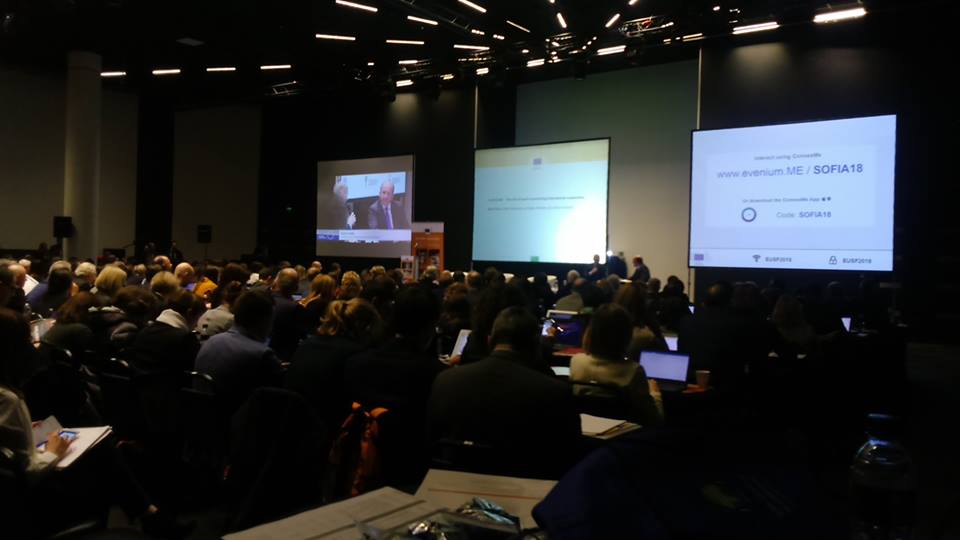
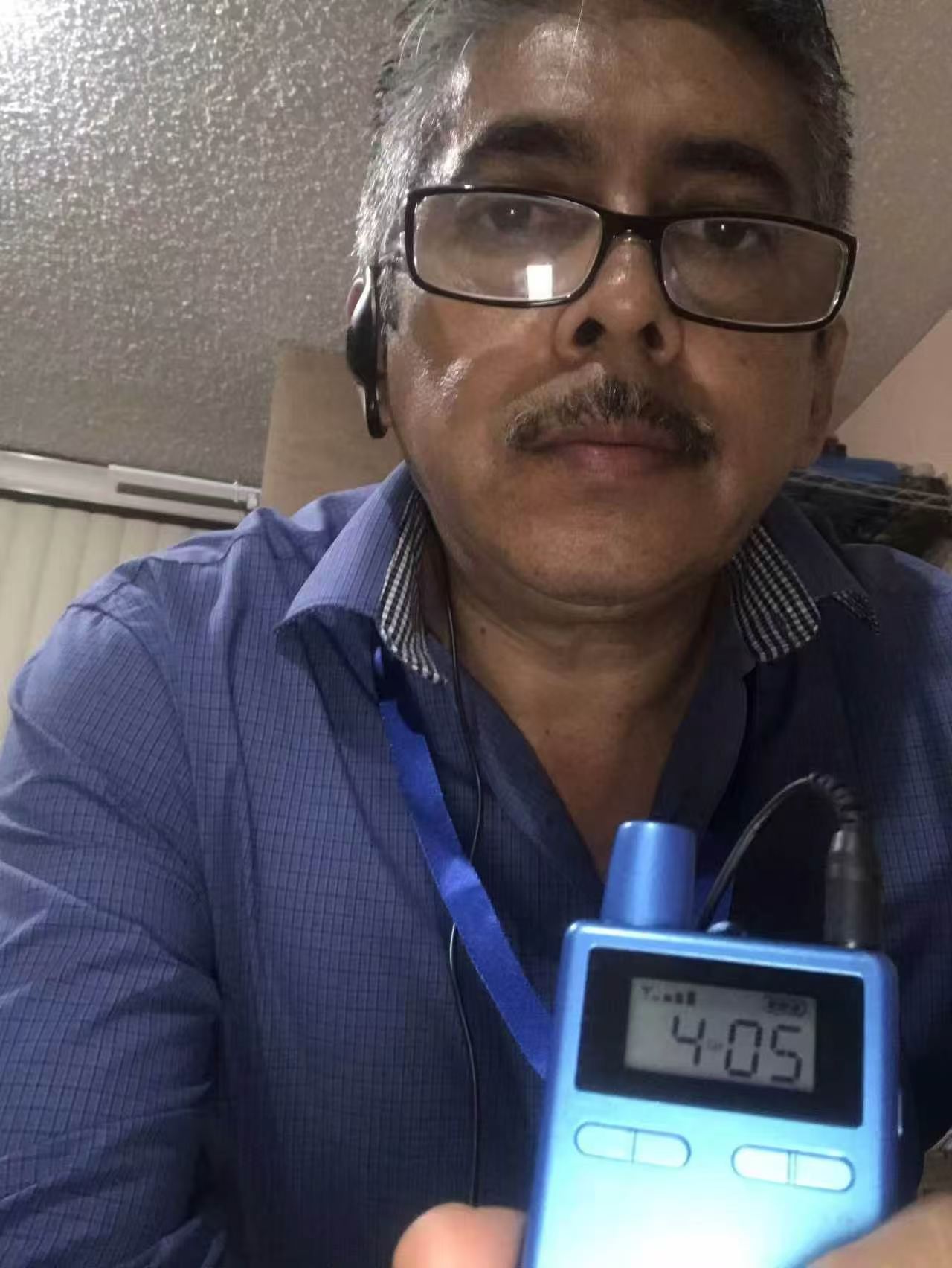
A two-day conference reads as one event on the programme. On the floor it is three jobs running at the same time, and none of them pauses while the audio is adjusted. The photograph the client sent back was taken mid-session: a presenter with a handheld transmitter in one hand and an earpiece receiver in place, in a room with a lectern at one end and a door table where units are handed out in the morning and counted back in the evening.

That layout decides more about equipment than any specification sheet does. A unit that behaves well at the lectern can be the wrong choice at the door, and a receiver that suits a seated audience is not automatically the one a presenter wants in hand while speaking. What follows is one conference day followed through three posts, with the three devices that carried it: the RC2408, the RC2500 and the RC9150.

Three Posts a Conference Day Creates

The posts are not invented for the sake of structure. They appear the moment a room is divided into a speaking end and a listening end, and they stay fixed for the whole event. Post one is the door: units move out and come back, and every one of them has to be paired before it leaves the table. Post two is the lectern: one person speaks for forty minutes without wanting to look down at a screen. Post three is the seating: somewhere between forty and two hundred people listen in a room whose acoustics were never designed for a single voice.

Each post fails differently. The door fails in a queue. The lectern fails mid-sentence. The seating fails silently, when someone at the back stops hearing and does not raise a hand. The device choice that follows is therefore about which failure you are willing to tolerate at the least convenient moment, and the three units here were chosen against that question rather than against a price list.

At the Door, Where the Units Change Hands

The door table has one metric that matters in the morning and another one in the evening: how long the queue is when the doors open, and how many units are missing when the room clears. Both are counting problems before they are audio problems. A stack of receivers that all sit on the same channel will work perfectly during the session and still cost the coordinator an hour at the desk afterwards, because nothing can be traced back to a seat or a name.
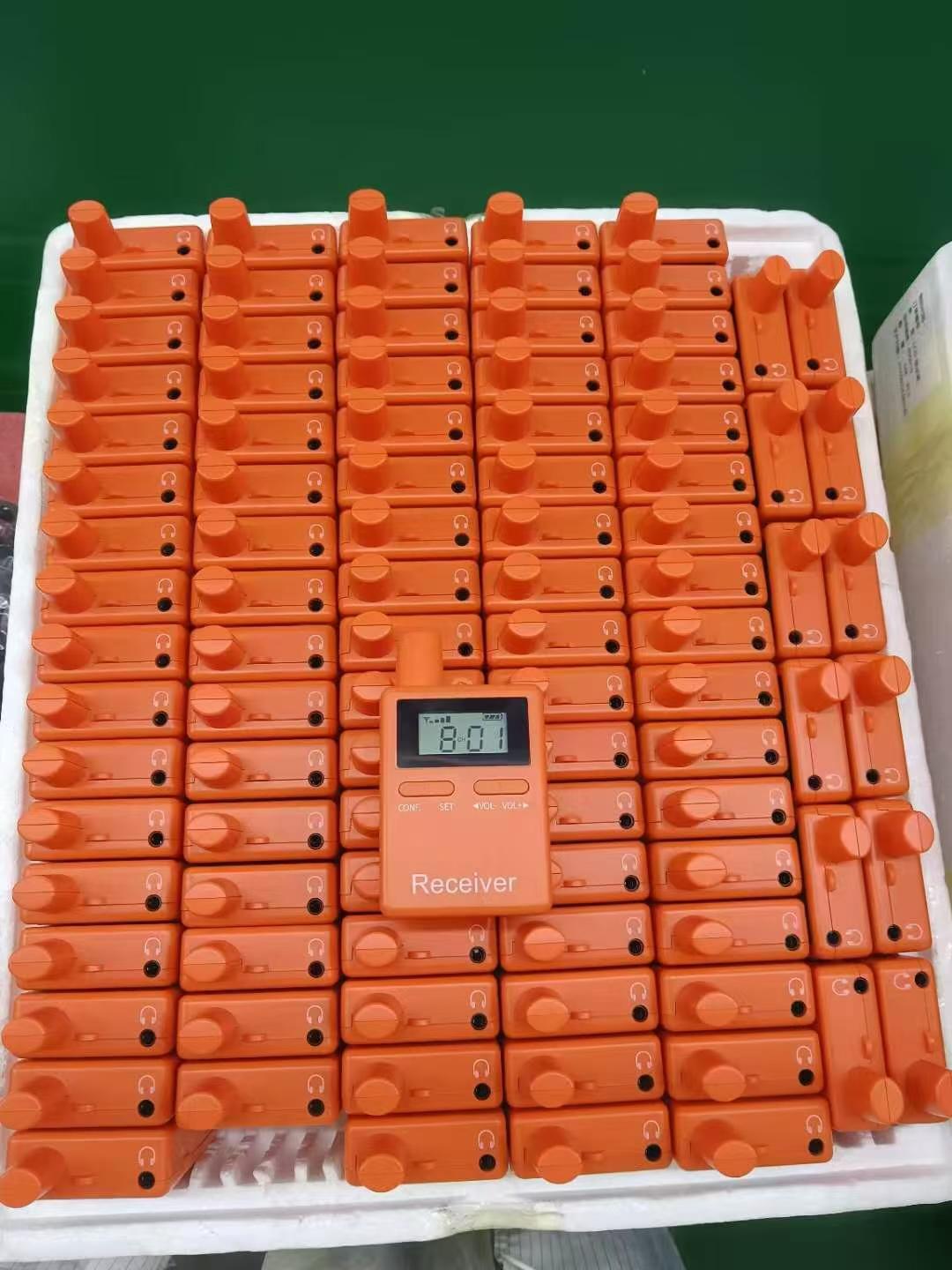
RC2408-corporate_training

RC2408 answers that with eighty channels, which is enough to keep separate sessions on separate numbers even when the same room is split twice in one day. Its transmitter weighs 59 g and its receiver 50 g, so a delegate who keeps the unit around the neck for six hours is not carrying anything that pulls on a lanyard. Battery figures are 10 hours on the transmitter and 20 hours on the receiver, and the unit charges through a DC port, which matters if the venue has a charging trolley rather than a row of USB sockets.

At the Lectern, Where Nobody Wants to Touch a Control

A presenter at the lectern has both hands accounted for. One holds notes, the other gestures, and the moment either one reaches for a button the room notices. What a speaker needs from a transmitter is therefore not a rich interface but a predictable one: the same channel it was set to at the start, a mute that responds the first time, and a body that does not drift against a shirt while the speaker turns to the screen.
RC2500-corporate_training

RC2500 was the unit that stayed on the lectern. It carries 50 channels, synchronises, shuts down and mutes from a single control set, and its transmitter runs for 15 hours against 35 hours or more on the receiver. At 104 g it is the heaviest of the three, and that weight is the point: a heavier body sits still on a lectern edge, and a unit that stays put is a unit that does not get unplugged at minute thirty-eight of a keynote. The Type-C port also means the same cable that charges a laptop can top it up between sessions.

In the Seats, Rows That Fill at Different Times

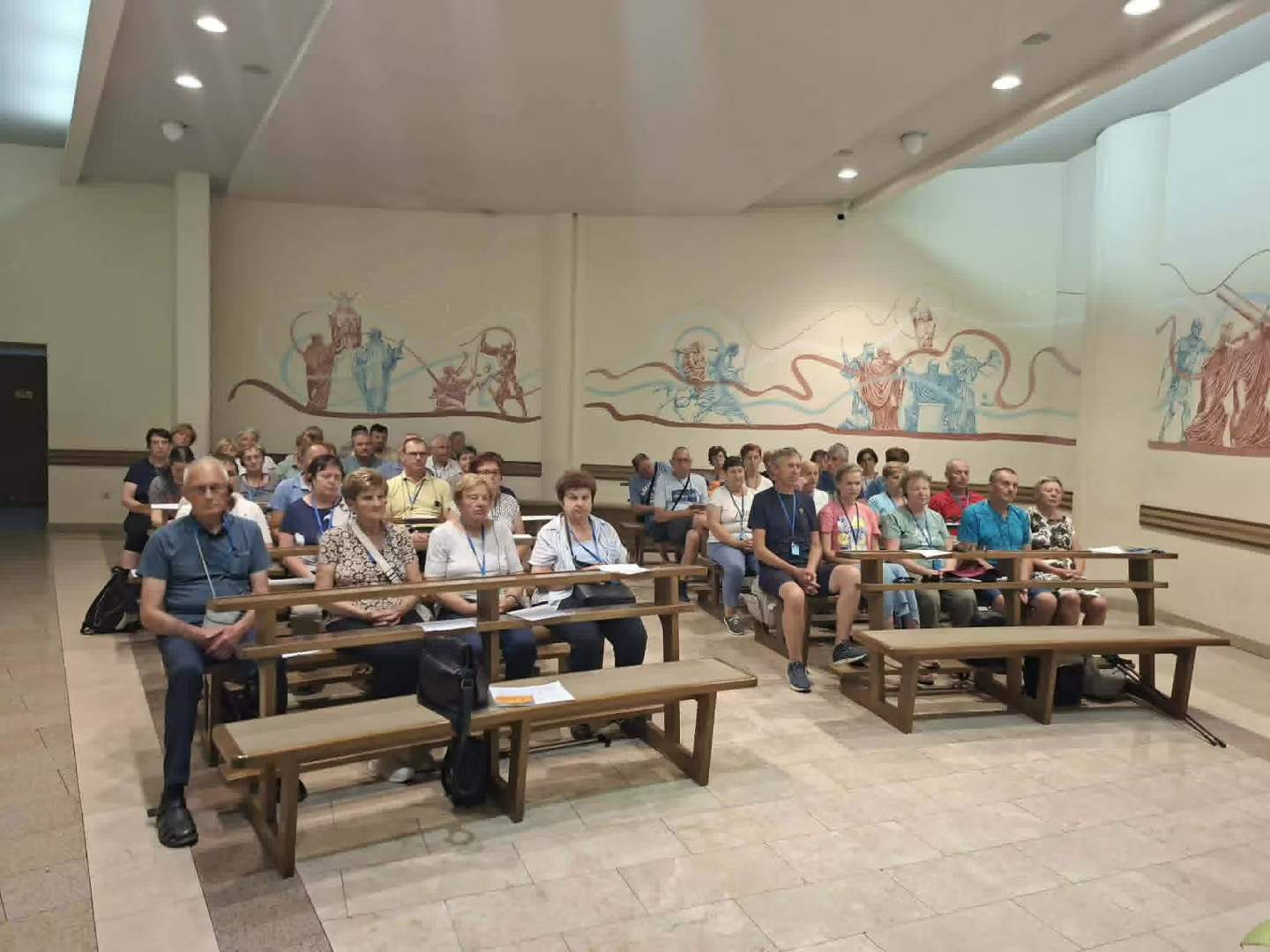
The seating area is where a conference stops being a single audience. Delegates arrive in waves, the front rows fill first, and late arrivals take the back, which is exactly where the signal has the most work to do. Add a second language and the room acquires two simultaneous feeds, and the person who cannot hear becomes the person who stops taking notes rather than the person who complains.
RC9150-corporate_training

RC9150 was specified for that end of the room. It offers the widest channel count of the three at 100, a 20 Hz to 8 kHz frequency response that is the broadest of the three on paper, and a 15-hour transmitter paired with a receiver rated above 35 hours. Its transmitter and receiver are both listed at 97.5 g, so swapping a unit with a neighbour mid-session does not mean trading a light device for a heavy one. The same Type-C port as the RC2500 keeps charging simple across the kit.

When the Room Splits Into Two Sessions

Most two-day conferences break into parallel tracks on the second afternoon. That is the moment when channel planning stops being a formality: two rooms, two presenters and two audiences, all inside the same concrete shell, with delegates walking between the two and expecting their units to keep working. The practical rule the coordinator settled on was to keep whole tracks on separate channel blocks rather than to reassign channels per session.

This is also where the difference between a 50-channel and a 100-channel line shows up in daily operations rather than in theory. There is room to hold the morning allocation, the afternoon allocation and a spare block without reissuing anything, and that reserve is what absorbs a last-minute change of room.

What the Batteries Are Asked to Carry

Battery figures are usually read as a single number per device. In a conference they behave as two separate budgets, because the person who talks and the people who listen are not draining at the same rate. A presenter on a 15-hour transmitter may finish the day with charge to spare while a receiver in the back row is still running on the same charge it started with. The comparison below uses the manufacturer's published figures across the dimensions that actually differ between the three units.

SpecificationRC2408RC2500RC9150
Frequency band2403-2483 MHz2403-2483 MHz2403-2483 MHz
Channels8050100
Working range1-200 m1-200 m1-200 m
Output power10 mW10 mW10 mW
Transmitter battery life10 h15 h15 h
Receiver battery life20 h35 h or more35 h or more
Transmitter weight59 g104 g97.5 g
Receiver weight50 g104 g97.5 g
Frequency responseTX 50Hz-200kHz / RX 50Hz-12kHz50Hz-8kHz20Hz-8kHz
Charging portDCType-CType-C

Two rows in that table are worth pausing on. The first is channel count, because it is the only dimension where the three units differ by a factor of two. The second is receiver weight, which decides how long a delegate is willing to keep a unit on. A conference that ends with half the receivers left on the chairs has not failed on audio; it has failed on handling.

Working range is identical across all three at 1 to 200 m, and output power is 10 mW for every unit in the table. Those two rows are the ones most often used to sell an upgrade, and here they offer no reason to move between models.

What the Client Asked Before the Order Went Out

The questions that arrived before the order were not about frequency response. They were about the parts of the day the specification sheet does not describe. How long does it take to pair forty receivers if two of them are switched on late? What happens if a presenter walks into the seating area while still speaking? Can the same charger serve the whole kit?

The answers came back to the same theme: keep the configuration simple enough that a volunteer can run it. That is why the door table used the eighty-channel units, why the lectern used the heavier single-control transmitter, and why the seating used the widest channel block. The RC9150 and RC2500 comparison settled the last open question, which was whether the extra channels were worth the higher unit weight for a seated audience. For a room that splits into tracks, they were.

Rehearse Before the Next Event

None of the three posts needed new procedures, only a rehearsal. The useful preparation for a conference is not a technical checklist but a timed run: hand out the units as if the doors were open, walk the room with a transmitter, and stand at the back row while somebody speaks. That run costs forty minutes and surfaces the two or three things that a venue will otherwise surface for you at the worst possible moment. Our conference audio guide systems are specified for exactly that kind of room, and the wider wireless tour guide system range covers the smaller rooms a conference usually spills into.

If you are planning a multi-day event and want the layout reviewed before the order goes in, send us the room plan, the number of delegates and the number of parallel sessions. We will come back with a channel plan and a unit count rather than a catalogue page.


2026年09月17日 12:20
click: 134
no data

RC2500, RC9150 and RC2408: What a Client's Conference Day Asks of Each Device

time: 2026年09月17日 click:134

RC2500, RC9150 and RC2408: What a Client's Conference Day Asks of Each Device

A two-day conference reads as one event on the programme. On the floor it is three jobs running at the same time, and none of them pauses while the audio is adjusted. The photograph the client sent back was taken mid-session: a presenter with a handheld transmitter in one hand and an earpiece receiver in place, in a room with a lectern at one end and a door table where units are handed out in the morning and counted back in the evening.

That layout decides more about equipment than any specification sheet does. A unit that behaves well at the lectern can be the wrong choice at the door, and a receiver that suits a seated audience is not automatically the one a presenter wants in hand while speaking. What follows is one conference day followed through three posts, with the three devices that carried it: the RC2408, the RC2500 and the RC9150.

Three Posts a Conference Day Creates

The posts are not invented for the sake of structure. They appear the moment a room is divided into a speaking end and a listening end, and they stay fixed for the whole event. Post one is the door: units move out and come back, and every one of them has to be paired before it leaves the table. Post two is the lectern: one person speaks for forty minutes without wanting to look down at a screen. Post three is the seating: somewhere between forty and two hundred people listen in a room whose acoustics were never designed for a single voice.

Each post fails differently. The door fails in a queue. The lectern fails mid-sentence. The seating fails silently, when someone at the back stops hearing and does not raise a hand. The device choice that follows is therefore about which failure you are willing to tolerate at the least convenient moment, and the three units here were chosen against that question rather than against a price list.

At the Door, Where the Units Change Hands

The door table has one metric that matters in the morning and another one in the evening: how long the queue is when the doors open, and how many units are missing when the room clears. Both are counting problems before they are audio problems. A stack of receivers that all sit on the same channel will work perfectly during the session and still cost the coordinator an hour at the desk afterwards, because nothing can be traced back to a seat or a name.

RC2408-corporate_training

RC2408 answers that with eighty channels, which is enough to keep separate sessions on separate numbers even when the same room is split twice in one day. Its transmitter weighs 59 g and its receiver 50 g, so a delegate who keeps the unit around the neck for six hours is not carrying anything that pulls on a lanyard. Battery figures are 10 hours on the transmitter and 20 hours on the receiver, and the unit charges through a DC port, which matters if the venue has a charging trolley rather than a row of USB sockets.

At the Lectern, Where Nobody Wants to Touch a Control

A presenter at the lectern has both hands accounted for. One holds notes, the other gestures, and the moment either one reaches for a button the room notices. What a speaker needs from a transmitter is therefore not a rich interface but a predictable one: the same channel it was set to at the start, a mute that responds the first time, and a body that does not drift against a shirt while the speaker turns to the screen.

RC2500-corporate_training

RC2500 was the unit that stayed on the lectern. It carries 50 channels, synchronises, shuts down and mutes from a single control set, and its transmitter runs for 15 hours against 35 hours or more on the receiver. At 104 g it is the heaviest of the three, and that weight is the point: a heavier body sits still on a lectern edge, and a unit that stays put is a unit that does not get unplugged at minute thirty-eight of a keynote. The Type-C port also means the same cable that charges a laptop can top it up between sessions.

In the Seats, Rows That Fill at Different Times

The seating area is where a conference stops being a single audience. Delegates arrive in waves, the front rows fill first, and late arrivals take the back, which is exactly where the signal has the most work to do. Add a second language and the room acquires two simultaneous feeds, and the person who cannot hear becomes the person who stops taking notes rather than the person who complains.

RC9150-corporate_training

RC9150 was specified for that end of the room. It offers the widest channel count of the three at 100, a 20 Hz to 8 kHz frequency response that is the broadest of the three on paper, and a 15-hour transmitter paired with a receiver rated above 35 hours. Its transmitter and receiver are both listed at 97.5 g, so swapping a unit with a neighbour mid-session does not mean trading a light device for a heavy one. The same Type-C port as the RC2500 keeps charging simple across the kit.

When the Room Splits Into Two Sessions

Most two-day conferences break into parallel tracks on the second afternoon. That is the moment when channel planning stops being a formality: two rooms, two presenters and two audiences, all inside the same concrete shell, with delegates walking between the two and expecting their units to keep working. The practical rule the coordinator settled on was to keep whole tracks on separate channel blocks rather than to reassign channels per session.

This is also where the difference between a 50-channel and a 100-channel line shows up in daily operations rather than in theory. There is room to hold the morning allocation, the afternoon allocation and a spare block without reissuing anything, and that reserve is what absorbs a last-minute change of room.

What the Batteries Are Asked to Carry

Battery figures are usually read as a single number per device. In a conference they behave as two separate budgets, because the person who talks and the people who listen are not draining at the same rate. A presenter on a 15-hour transmitter may finish the day with charge to spare while a receiver in the back row is still running on the same charge it started with. The comparison below uses the manufacturer's published figures across the dimensions that actually differ between the three units.

SpecificationRC2408RC2500RC9150
Frequency band2403-2483 MHz2403-2483 MHz2403-2483 MHz
Channels8050100
Working range1-200 m1-200 m1-200 m
Output power10 mW10 mW10 mW
Transmitter battery life10 h15 h15 h
Receiver battery life20 h35 h or more35 h or more
Transmitter weight59 g104 g97.5 g
Receiver weight50 g104 g97.5 g
Frequency responseTX 50Hz-200kHz / RX 50Hz-12kHz50Hz-8kHz20Hz-8kHz
Charging portDCType-CType-C

Two rows in that table are worth pausing on. The first is channel count, because it is the only dimension where the three units differ by a factor of two. The second is receiver weight, which decides how long a delegate is willing to keep a unit on. A conference that ends with half the receivers left on the chairs has not failed on audio; it has failed on handling.

Working range is identical across all three at 1 to 200 m, and output power is 10 mW for every unit in the table. Those two rows are the ones most often used to sell an upgrade, and here they offer no reason to move between models.

What the Client Asked Before the Order Went Out

The questions that arrived before the order were not about frequency response. They were about the parts of the day the specification sheet does not describe. How long does it take to pair forty receivers if two of them are switched on late? What happens if a presenter walks into the seating area while still speaking? Can the same charger serve the whole kit?

The answers came back to the same theme: keep the configuration simple enough that a volunteer can run it. That is why the door table used the eighty-channel units, why the lectern used the heavier single-control transmitter, and why the seating used the widest channel block. The RC9150 and RC2500 comparison settled the last open question, which was whether the extra channels were worth the higher unit weight for a seated audience. For a room that splits into tracks, they were.

Rehearse Before the Next Event

None of the three posts needed new procedures, only a rehearsal. The useful preparation for a conference is not a technical checklist but a timed run: hand out the units as if the doors were open, walk the room with a transmitter, and stand at the back row while somebody speaks. That run costs forty minutes and surfaces the two or three things that a venue will otherwise surface for you at the worst possible moment. Our conference audio guide systems are specified for exactly that kind of room, and the wider wireless tour guide system range covers the smaller rooms a conference usually spills into.

If you are planning a multi-day event and want the layout reviewed before the order goes in, send us the room plan, the number of delegates and the number of parallel sessions. We will come back with a channel plan and a unit count rather than a catalogue page.

no data
×

Contact us

email:
name:
subject:
content: