.webp)

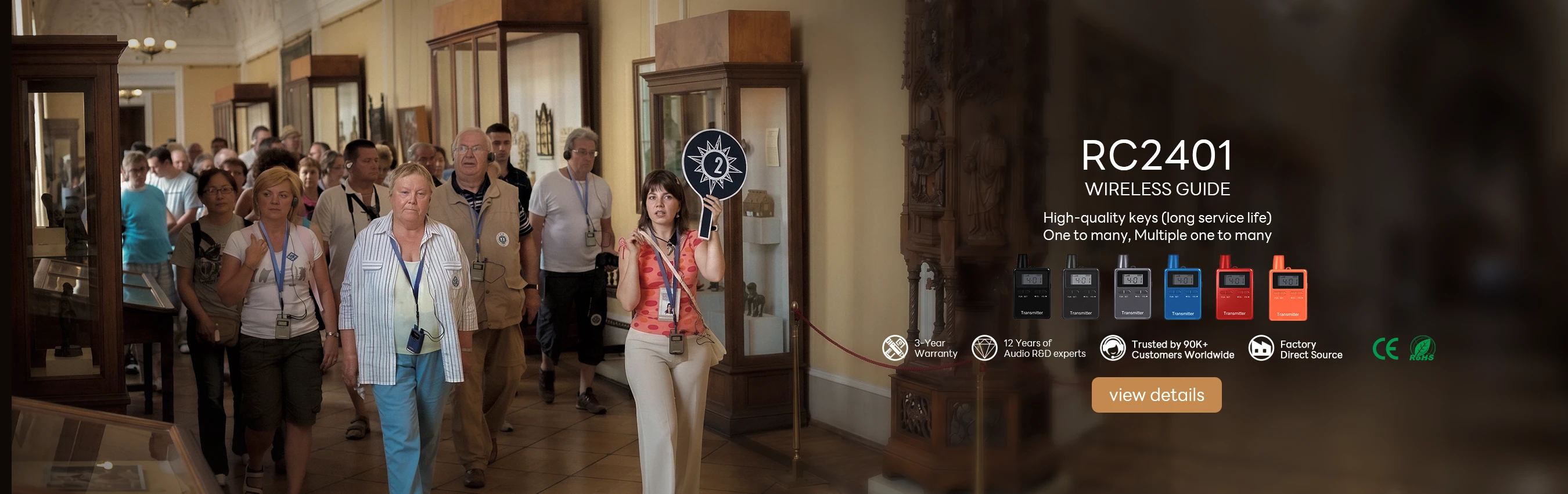
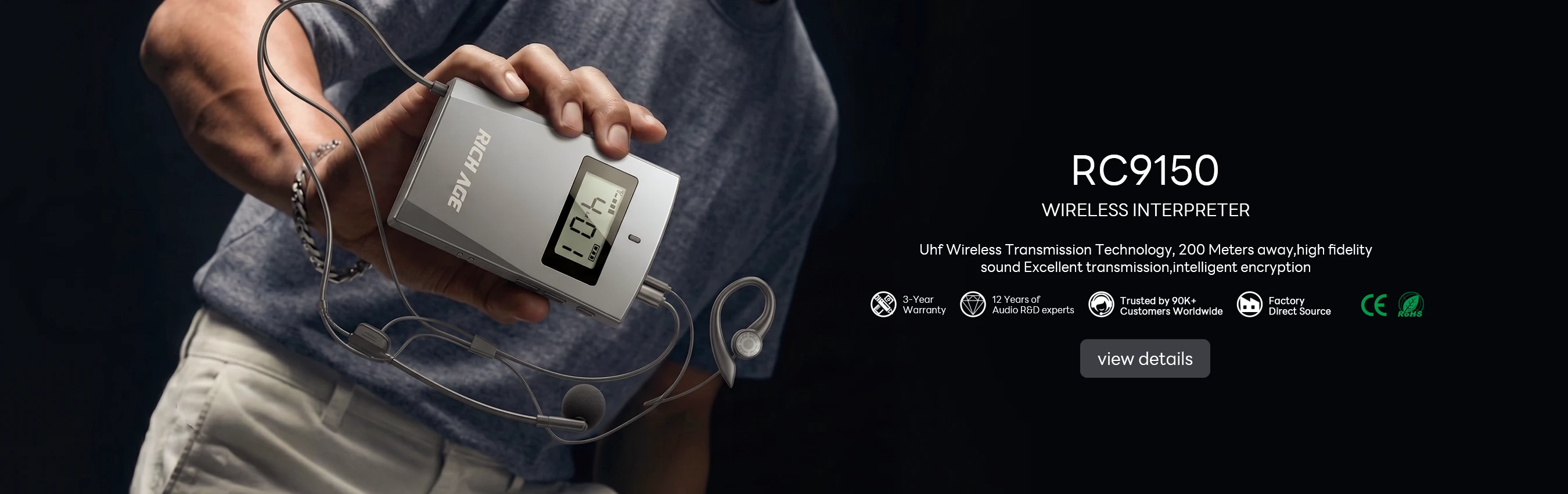
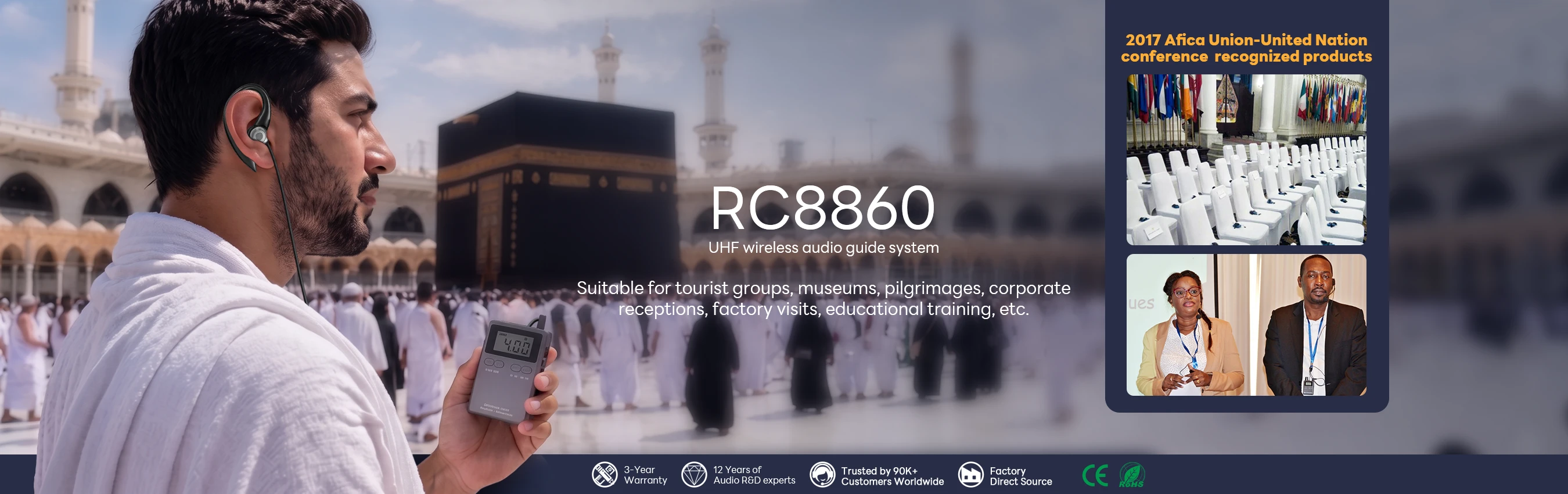
Customer feedback usually arrives as a star rating or a one-line review. Once in a while it arrives as three phone calls, each with a story attached. After a parish pilgrimage that moved between a basilica square, a Romanesque portal and a packed interior service, the lay organizer called us three times in one week, and what she described is a better specification document than any datasheet. Her group ran two kits side by side: an RC9150 set for the main group, and an RC2406 set for the second-language group that followed a different commentary. This article is her account, arranged in the order the day actually happened.
Before Anyone Talked About Equipment
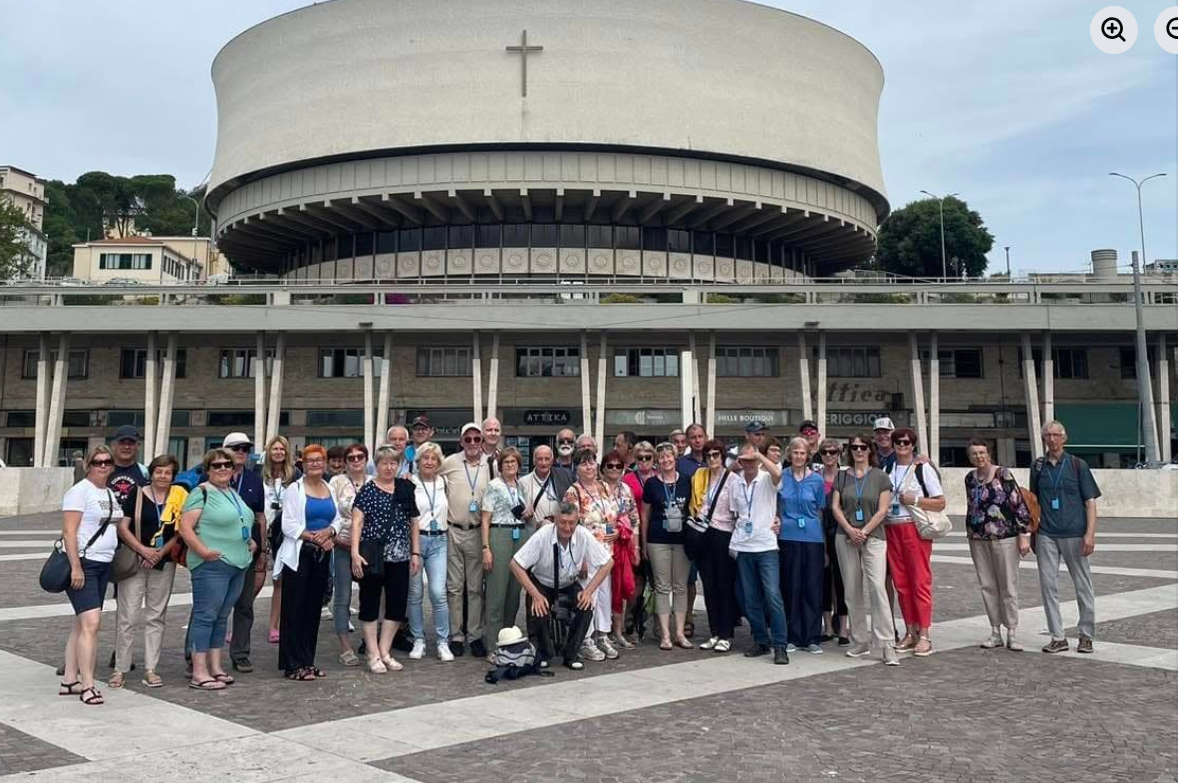
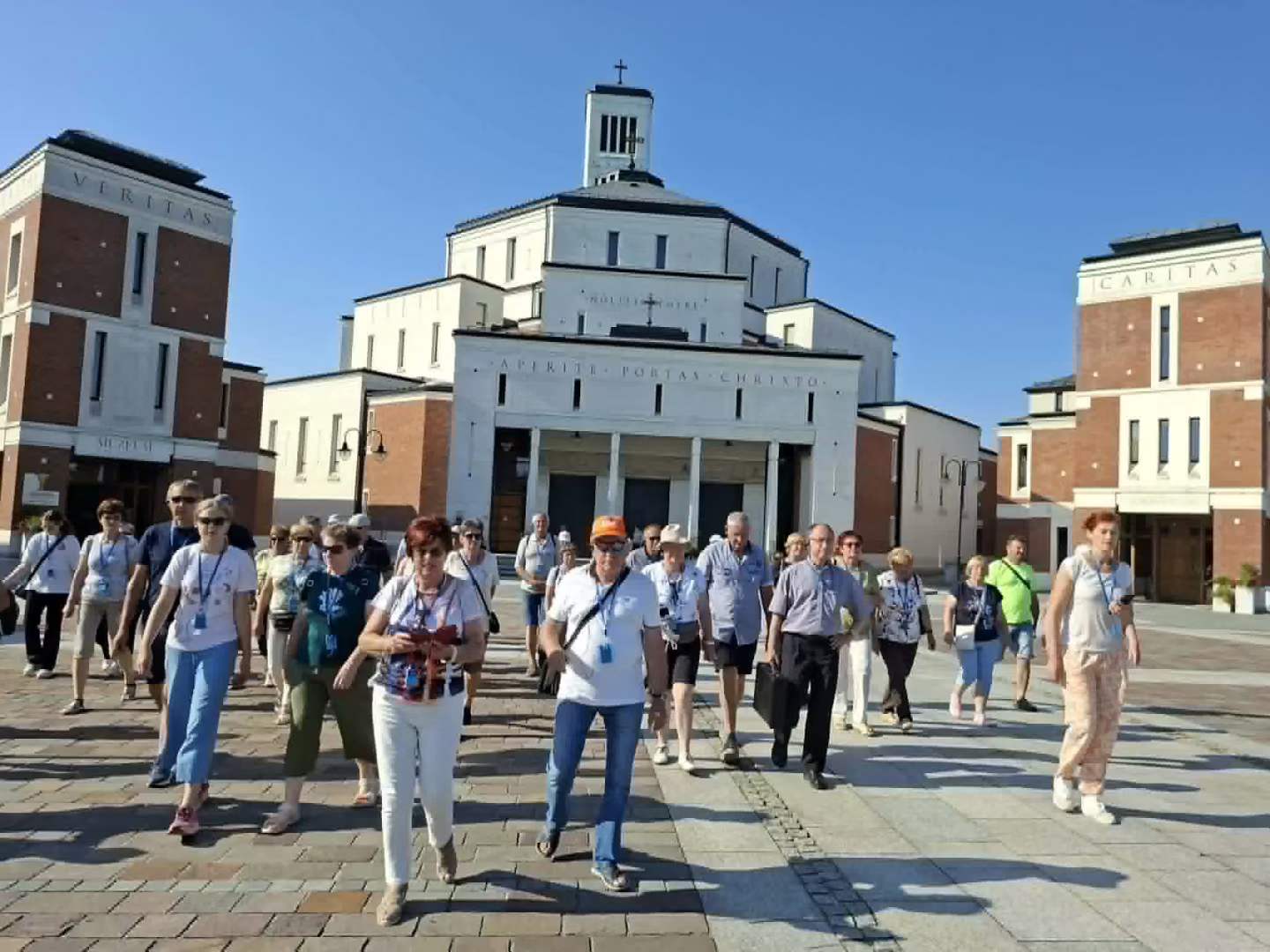
The first call was not about the devices at all. It was about the schedule. Her parish had planned a route that put the group outdoors in the morning, at the great doors of the old church before noon, and inside for the midday service, and she wanted to know whether one charge could cover all three stops. That question set the shape of the whole day. Kits that die halfway through a service are the reason she had replaced her previous system, so the planning call focused on battery figures rather than range: the RC9150 transmitter is rated at fifteen hours and its receivers at more than thirty-five on standby, and the RC2406 receivers carry twenty hours of use. We told her the honest version, that ratings assume light use, and she took the risk anyway. The day proved her right.
Fifty-Five Listeners and One Voice in the Square
The morning assembly happened on the open square in front of the basilica, where the group gathered around a single guide and the noise came from other parties, street work and wind. She reported that the RC9150 channel held clean across the whole square, and that the part she feared most, keeping fifty-five people of very different ages on the same page while walking, turned out to be the easiest part of the day. The transmitter rode in a coat pocket, the antenna up, and nobody had to gather closer than they wanted to. Her words: the guide stopped performing for the front row and started talking to the whole group at the same volume. For a parish crowd that includes grandparents, that single change was worth the entire purchase.
The Photo That Did Not Break the Circle
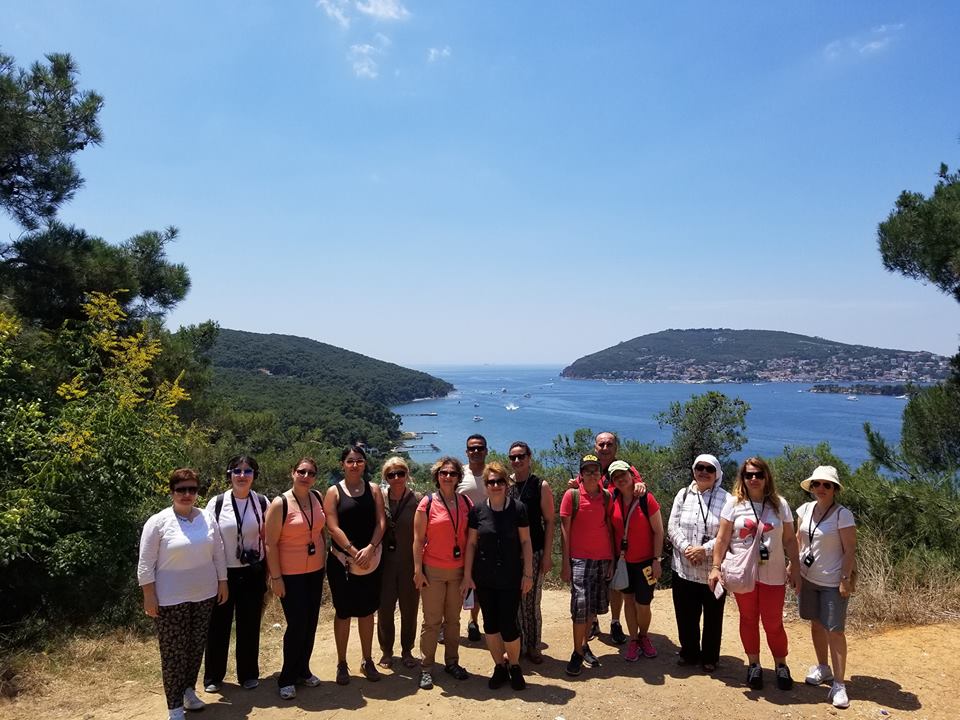
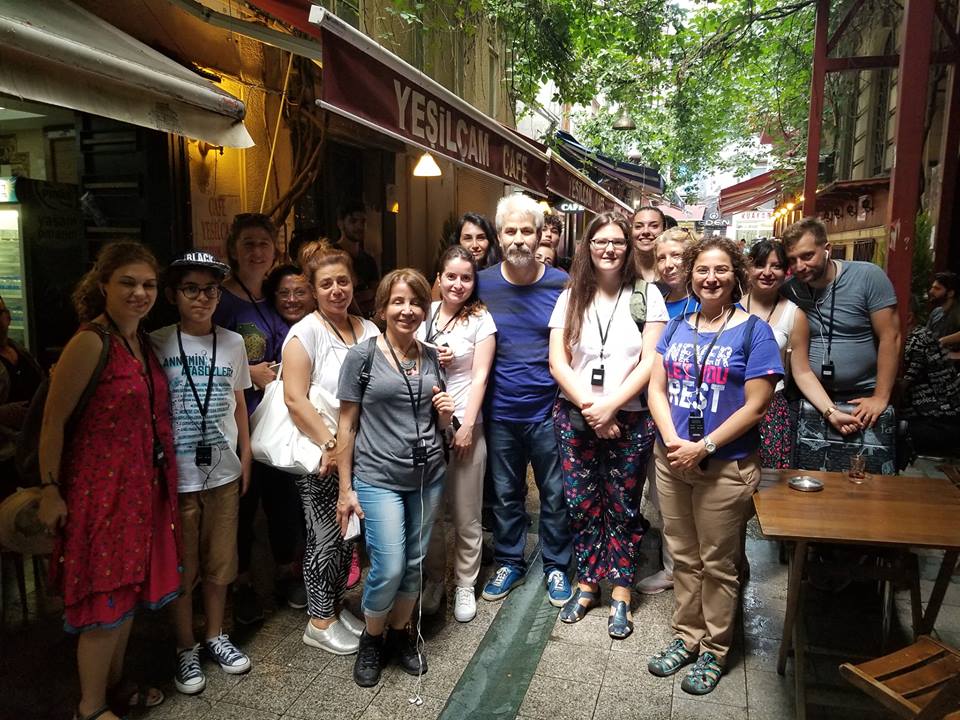
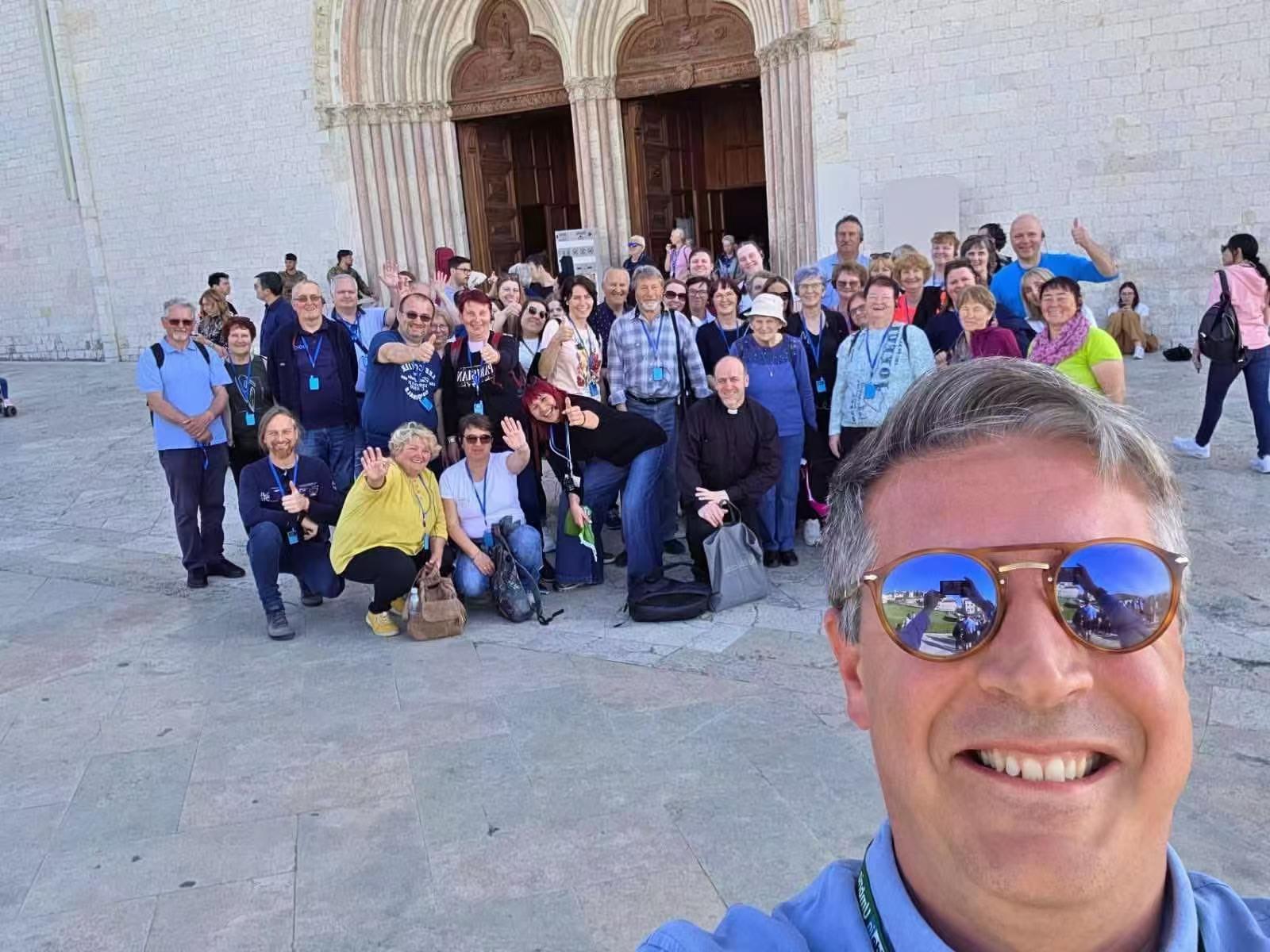
At the portal of the old cathedral the group did what every group does: it stopped for a photograph. Her second call was about this moment, because with her previous system the photograph was where attention died. Headsets came off, units went into pockets and bags, and re-collecting them took longer than the visit that followed. This time the units stayed on. The neck cords kept everything in place while arms went up for the picture, and when the group re-formed, nobody was hunting for a lost receiver or a swapped channel. She called it the smallest improvement of the trip and the one she described first. Gear that survives a group photo is gear that survives a pilgrimage.
Inside, Quiet Became a Requirement
The midday service was the hardest test on the route and the reason the second kit exists. Inside a stone interior, her second-language group followed the service through the RC2406 set while the celebration itself continued at a hushed volume, and the eighty-channel designation mattered more indoors than it ever does outside, because a historic building that hosts hundreds of visitors a day is also a building full of stray radio traffic. Her report: no interference at any point in the service, and several older listeners who normally leave early stayed to the end because they could follow every word at a comfortable level. For the hard-of-hearing members of a congregation, that is not a convenience feature; it is the difference between attending and being present in name only.
Two Kits, One Day, Side by Side
| As deployed | Main group | Second-language group |
|---|---|---|
| Kit | RC9150 set | RC2406 set |
| Channels | 100 | 80, tuned away from the main group |
| Rated endurance | 15 h transmitter, 35+ h receiver standby | 10 h transmitter, 20 h receiver |
| Charging | Type-C | DC port |
| Her verdict | Held the square and the walk without a drop | Clean through the entire indoor service |
The Complaints Worth Passing On
Her third call contained the criticism, and it is the part we take most seriously. The RC2406 charges over a DC port while the RC9150 uses Type-C, so her volunteer team had to keep two kinds of cables in the same bag, and one went missing on the road. She also asked why the second kit could not share the first kit's channels, which is a fair question from someone who does not think in frequency bands. Neither complaint is a defect; both are the kind of detail that only surfaces in real use, and both are now attached to the follow-up conversation. Feedback that only praises tells you nothing about the next order. Hers told us exactly what to fix.
The Follow-Up Order
A week after the third call, the parish ordered a second RC2406 set for next spring's route, which is the most honest verdict a customer can give. If your congregation or pilgrimage group is weighing a first system, her sequence is a good template: plan the battery around your longest stop, keep the channel plan simple enough for volunteers, and judge the equipment by whether it survives the unglamorous moments, the photograph, the doorway, the ride home. The church wireless audio solutions page gathers the full picture for worship settings, and the RC9150 and RC2406 pages carry the specifications behind her account. Our church translation headphones overview covers the listening side in depth, the tour guide system line page lists every model in the family, and the European Catholic Pilgrimage case records a longer route told the same way.