A leading China factory specializing in Wireless Tour Guide Systems, Church Audio Guides, and Translation Headphones with premium OEM/ODM solutions.

Tel:+86 18922879583

Email:tiger.wang@richitek.com

RC2402, RC9150 and RC2468 on an Old Istanbul Heritage Walk: A Case Study

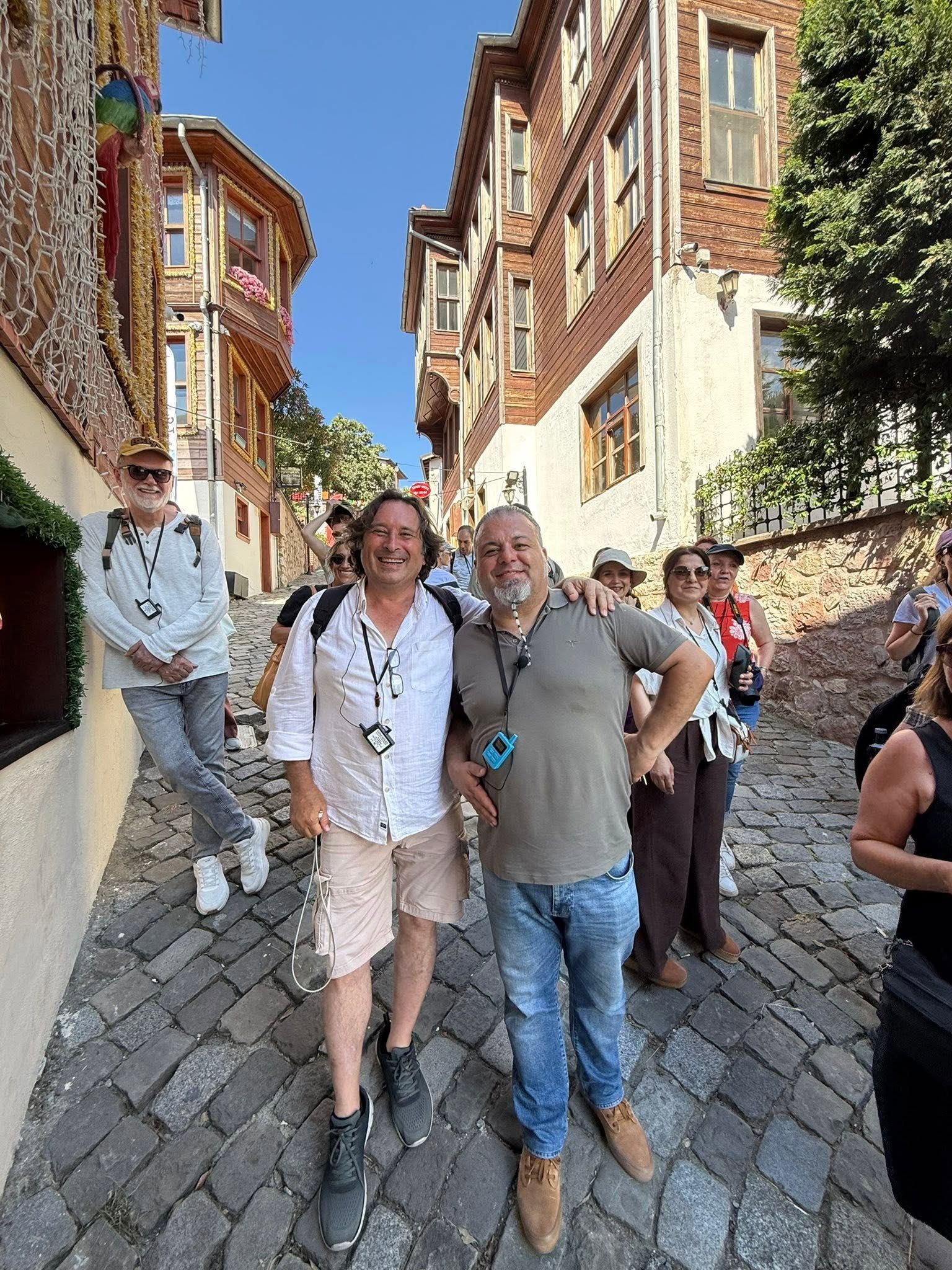
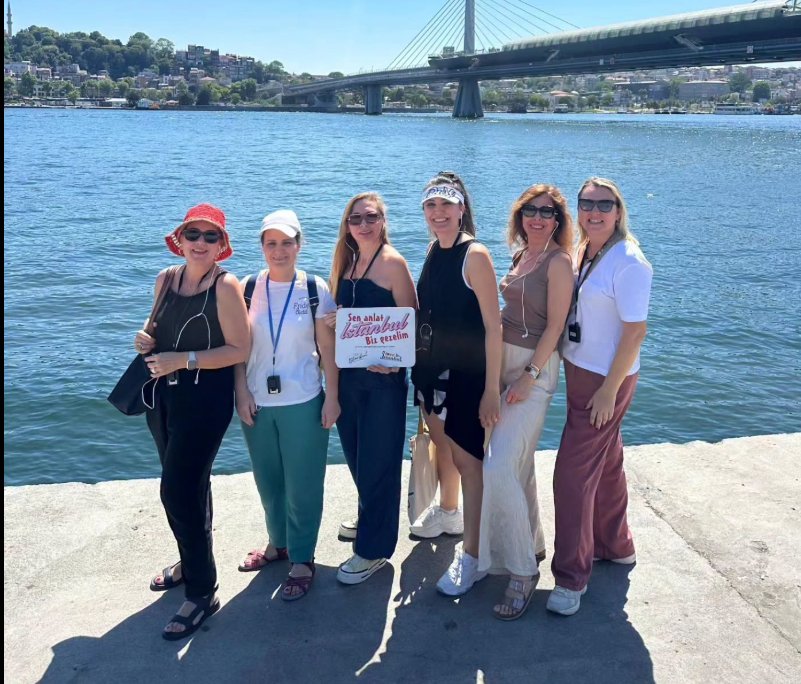
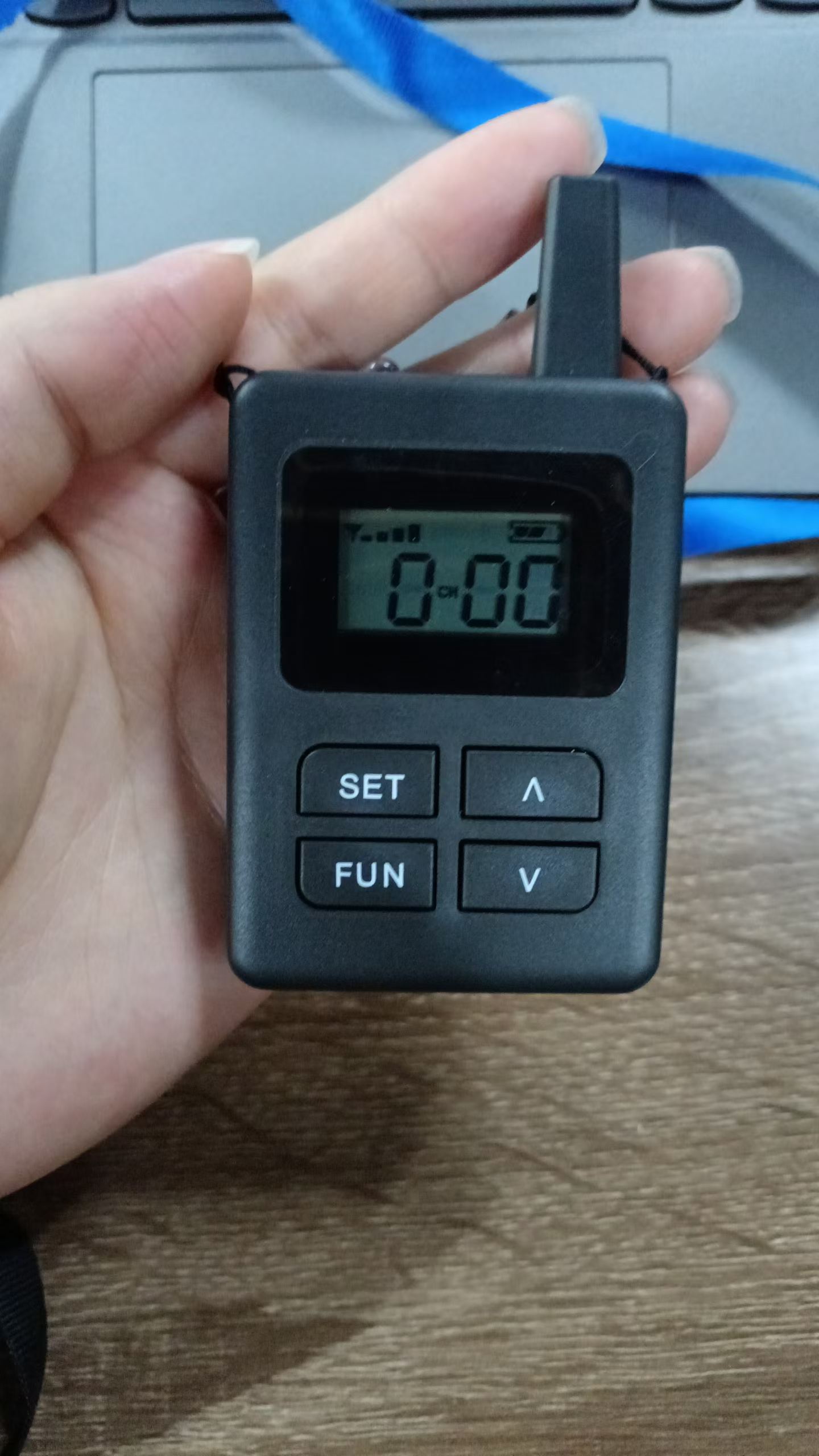
Some of the clearest feedback we get comes from photographs. A guide in Istanbul sent back three pictures from a single working day in the old city: a walking group threading a lane of Ottoman wooden houses, the same group gathering on the waterfront promenade with the bridge behind them, and a close-up of the guide's pocket transmitter with its display lit. Nothing staged, no product photography. Just a device that survived a full route and a guide who thought that was worth documenting.

This case study follows that day. The customer runs heritage walking tours through the districts below the mosque complex, where the terrain mixes steep cobbled lanes, timber-framed houses that lean over the street, and a waterfront promenade where the day ends with the bridge line across the water. The kit on duty combined the RC2402 as the guide's working transmitter-and-receiver pair, the RC9150 for the longest leg of the route, and the RC2468 where receiver weight mattered most.

💡 Why This Route Stresses a Tour System

A heritage district is not a conference hall. The group walks single file through gaps barely wider than two shoulders, then spreads out again on the open waterfront. Walls of old timber and stone sit a few meters apart, and every one of them reflects or absorbs sound differently. Add cruise-day crowds and street vendors, and the acoustic floor of the route changes every few minutes.

On foot, the guide also cannot stop and troubleshoot. Whatever the system does, it has to do while everybody keeps moving. That combination of narrow gaps, moving bodies and changing acoustics is what made this route a useful test.

The Route in Three Spaces

The day's route runs through three distinct spaces. It starts on a cobbled lane where wooden houses from the Ottoman era rise on both sides. It continues uphill past a row of low shops, and it ends on the waterfront promenade, where the group gathers for the closing talk with the bridge line across the water.

Each space treats radio differently. The lane compresses the group and shortens the distance between guide and listeners, but it also bounces audio off close walls. The waterfront does the opposite: nobody is close to anybody, and the guide's voice has to carry across open air with the water in view.

Street Level: Cobblestones and Wooden Houses

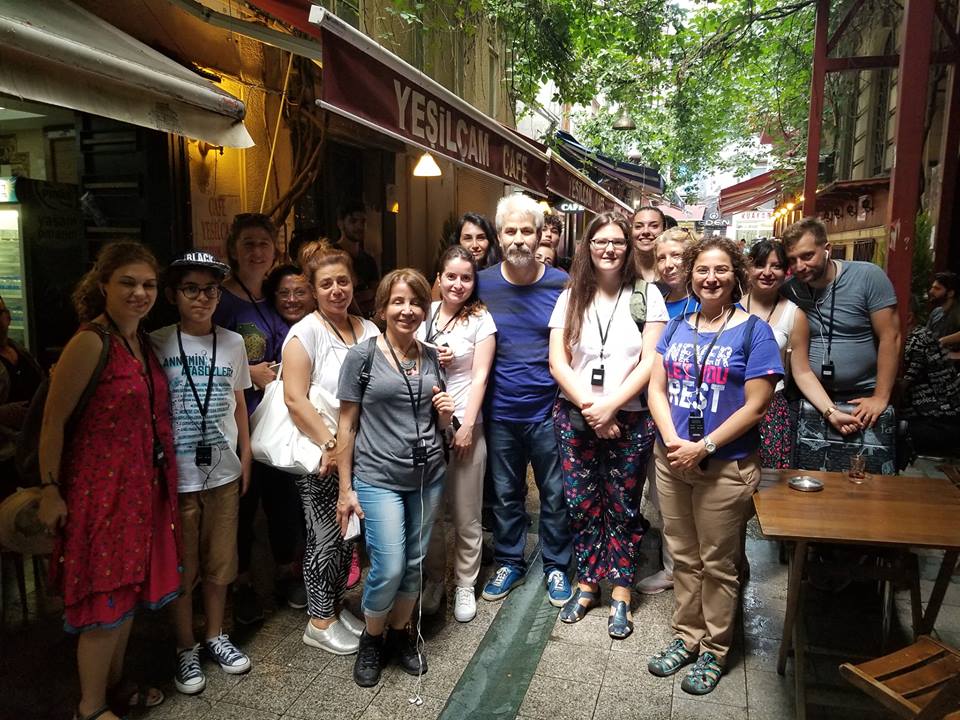
In the wooden-house lane the group wore the RC2468 ear-hook receivers. At 18 grams per unit, they disappear on the listener after a minute, which matters when visitors are also carrying cameras, water and shopping. The customers in the photograph are all wearing lanyards, but the receiver itself sits on the ear, not around the neck.
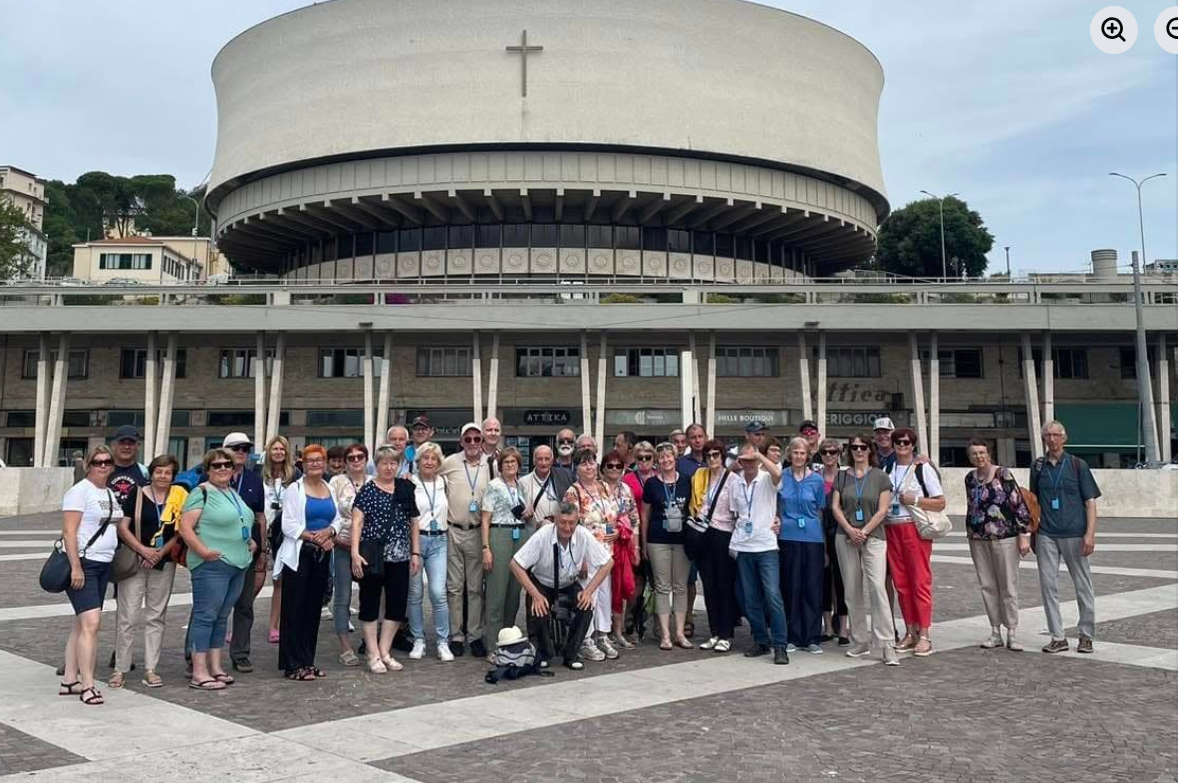
Old-street-wooden-houses-heritage_sightseeing_tour

The lane is the tightest acoustic space of the day. Between the overhanging eaves and the stone retaining wall, the guide and the last listener were never more than twenty meters apart, well inside the system's 200 meter transmission window. What the distance figure does not show is the surface clutter, and this is where a digital 2.4G link earns its keep: the signal stays clear at close range instead of picking up the garble that cheaper analog kits suffer in reflected sound.

The Waterfront Closing Talk

The closing stop inverts every condition of the lane. The promenade is open and breezy, and the group spreads along the quayside rather than queueing behind the guide. For this leg the operator switched the group to the RC9150 units, whose 35-hour receiver battery had already handled the morning without a recharge.
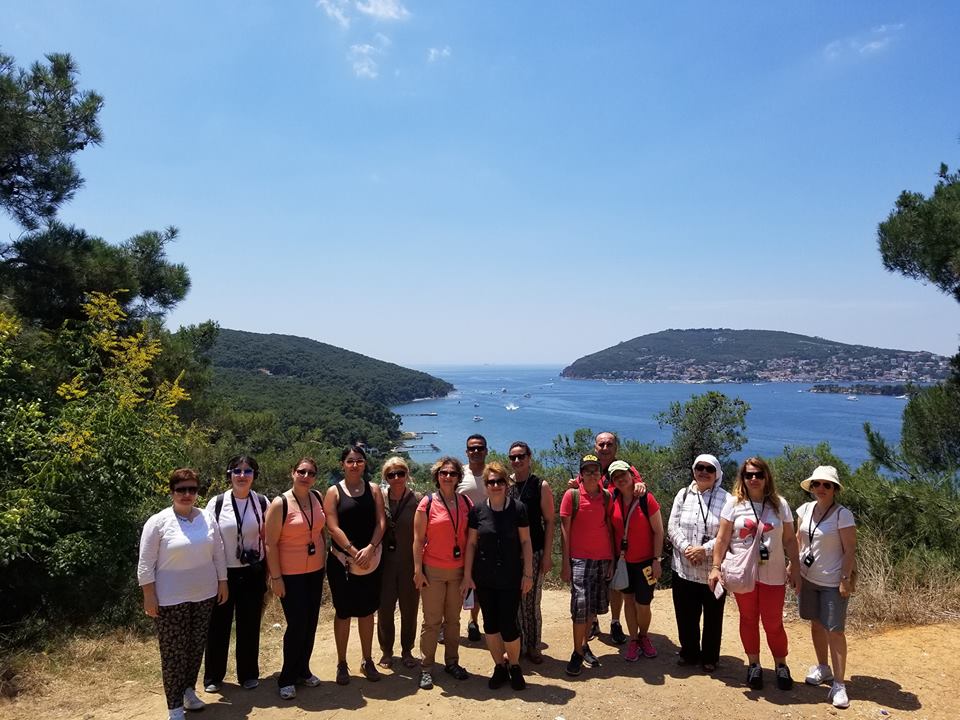
Bosphorus-waterfront-closing-talk-heritage_sightseeing_tour

Distance on the promenade stayed under fifty meters, but open air and open water flatten a voice quickly. With listeners free to look out at the ferry traffic, the commentary reached them while their eyes were on the horizon, not on the person speaking.

What Channel 05 Had to Do

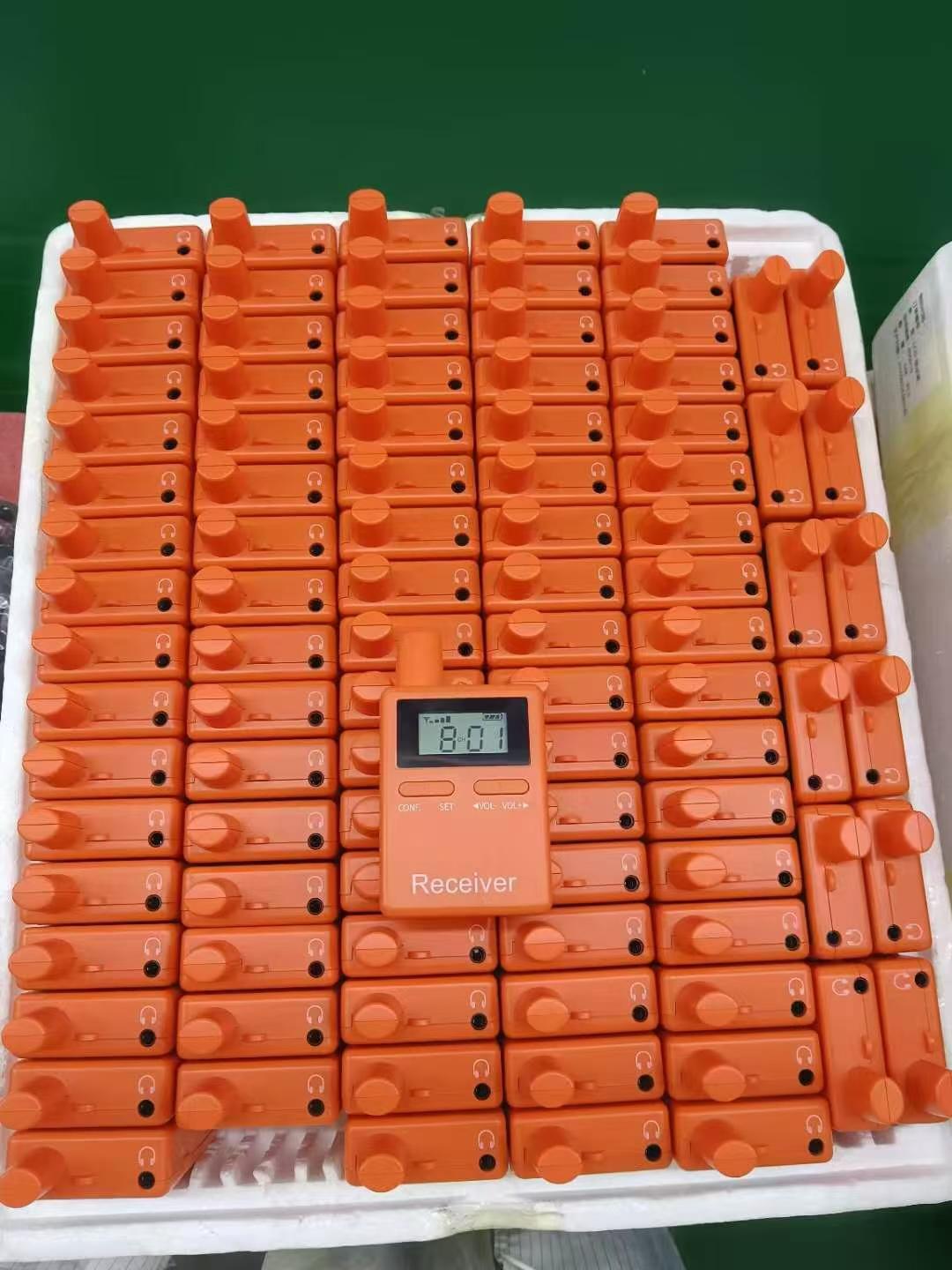
Before the first stop, the guide photographed his own pocket transmitter during the morning check, its display still resting at channel 00. That number did not survive the day. The old city on a cruise day is dense with other groups, and channel separation is what keeps one guide's commentary from bleeding into another's.
Guide-transmitter-display-heritage_sightseeing_tour

Once paired to channel 05, the kit held it for the whole route without a re-pair, through lanes, an uphill stretch and the open waterfront. One device, one number, one full day. For the operator, that stability is the difference between running a tour and babysitting hardware.

How the Three Units Split the Day

Each model in the kit had a job that matched its strengths. The RC2402 worked as the guide's everyday pair through the middle stretch of the route, with fifty channels available if the operator had needed to move the group off a crowded band. The RC9150 took the waterfront leg, where its long receiver endurance and clean digital audio handled the open air. The RC2468 carried the lane section, where 18-gram ear-hook receivers kept the group comfortable in close quarters.

Nobody swapped a unit mid-route because of a fault. The division of labor was planned at the office, and the day confirmed it.

The Numbers Behind the Kit

UnitChannelsTransmitter batteryReceiver batteryReceiver weight
RC915010015h35+h97.5g
RC24685010happrox. 8h18g
RC24025010h20h50g

All three run the 2403-2483 MHz 2.4G band at 10 mW output, and all three share the same 200 meter transmission window, which is why they can be mixed across one route without re-pairing between legs.

What the Operator Kept From the Day

Asked afterwards what the photographs proved, the guide's answer was short: the group stayed together, nobody asked anyone to repeat a sentence, and the hardware came back charged enough for the next morning. On a heritage route with this much vertical climbing, receiver weight and battery endurance decide whether visitors finish the day listening or merely tolerating the equipment.

The operator's conclusion was to keep the same three-way split for the autumn season, adding a second charging case ra确认提交ther than any new device. Sometimes the strongest case for a system is that nothing about it needs changing.

Planning a Similar Walk Through a Historic District

The same combination suits guides working old-city routes, mosque and palace surroundings, and any itinerary that mixes narrow lanes with open viewpoints. The full wireless tour guide system line covers lighter and longer-range options beyond the three units in this case, and the heritage sightseeing tour audio solutions page maps typical kit sizes to group counts.

To talk through a specific route, send the itinerary and expected group size through the application scenarios page, and the team will recommend a configuration matched to the terrain rather than a one-size kit.
2026年09月21日 12:26
click: 41
no data

RC2402, RC9150 and RC2468 on an Old Istanbul Heritage Walk: A Case Study

time: 2026年09月21日 click:41

Some of the clearest feedback we get comes from photographs. A guide in Istanbul sent back three pictures from a single working day in the old city: a walking group threading a lane of Ottoman wooden houses, the same group gathering on the waterfront promenade with the bridge behind them, and a close-up of the guide's pocket transmitter with its display lit. Nothing staged, no product photography. Just a device that survived a full route and a guide who thought that was worth documenting.

This case study follows that day. The customer runs heritage walking tours through the districts below the mosque complex, where the terrain mixes steep cobbled lanes, timber-framed houses that lean over the street, and a waterfront promenade where the day ends with the bridge line across the water. The kit on duty combined the RC2402 as the guide's working transmitter-and-receiver pair, the RC9150 for the longest leg of the route, and the RC2468 where receiver weight mattered most.

💡 Why This Route Stresses a Tour System

A heritage district is not a conference hall. The group walks single file through gaps barely wider than two shoulders, then spreads out again on the open waterfront. Walls of old timber and stone sit a few meters apart, and every one of them reflects or absorbs sound differently. Add cruise-day crowds and street vendors, and the acoustic floor of the route changes every few minutes.

On foot, the guide also cannot stop and troubleshoot. Whatever the system does, it has to do while everybody keeps moving. That combination of narrow gaps, moving bodies and changing acoustics is what made this route a useful test.

The Route in Three Spaces

The day's route runs through three distinct spaces. It starts on a cobbled lane where wooden houses from the Ottoman era rise on both sides. It continues uphill past a row of low shops, and it ends on the waterfront promenade, where the group gathers for the closing talk with the bridge line across the water.

Each space treats radio differently. The lane compresses the group and shortens the distance between guide and listeners, but it also bounces audio off close walls. The waterfront does the opposite: nobody is close to anybody, and the guide's voice has to carry across open air with the water in view.

Street Level: Cobblestones and Wooden Houses

In the wooden-house lane the group wore the RC2468 ear-hook receivers. At 18 grams per unit, they disappear on the listener after a minute, which matters when visitors are also carrying cameras, water and shopping. The customers in the photograph are all wearing lanyards, but the receiver itself sits on the ear, not around the neck.

Old-street-wooden-houses-heritage_sightseeing_tour

The lane is the tightest acoustic space of the day. Between the overhanging eaves and the stone retaining wall, the guide and the last listener were never more than twenty meters apart, well inside the system's 200 meter transmission window. What the distance figure does not show is the surface clutter, and this is where a digital 2.4G link earns its keep: the signal stays clear at close range instead of picking up the garble that cheaper analog kits suffer in reflected sound.

The Waterfront Closing Talk

The closing stop inverts every condition of the lane. The promenade is open and breezy, and the group spreads along the quayside rather than queueing behind the guide. For this leg the operator switched the group to the RC9150 units, whose 35-hour receiver battery had already handled the morning without a recharge.

Bosphorus-waterfront-closing-talk-heritage_sightseeing_tour

Distance on the promenade stayed under fifty meters, but open air and open water flatten a voice quickly. With listeners free to look out at the ferry traffic, the commentary reached them while their eyes were on the horizon, not on the person speaking.

What Channel 05 Had to Do

Before the first stop, the guide photographed his own pocket transmitter during the morning check, its display still resting at channel 00. That number did not survive the day. The old city on a cruise day is dense with other groups, and channel separation is what keeps one guide's commentary from bleeding into another's.

Guide-transmitter-display-heritage_sightseeing_tour

Once paired to channel 05, the kit held it for the whole route without a re-pair, through lanes, an uphill stretch and the open waterfront. One device, one number, one full day. For the operator, that stability is the difference between running a tour and babysitting hardware.

How the Three Units Split the Day

Each model in the kit had a job that matched its strengths. The RC2402 worked as the guide's everyday pair through the middle stretch of the route, with fifty channels available if the operator had needed to move the group off a crowded band. The RC9150 took the waterfront leg, where its long receiver endurance and clean digital audio handled the open air. The RC2468 carried the lane section, where 18-gram ear-hook receivers kept the group comfortable in close quarters.

Nobody swapped a unit mid-route because of a fault. The division of labor was planned at the office, and the day confirmed it.

The Numbers Behind the Kit

UnitChannelsTransmitter batteryReceiver batteryReceiver weight
RC915010015h35+h97.5g
RC24685010happrox. 8h18g
RC24025010h20h50g

All three run the 2403-2483 MHz 2.4G band at 10 mW output, and all three share the same 200 meter transmission window, which is why they can be mixed across one route without re-pairing between legs.

What the Operator Kept From the Day

Asked afterwards what the photographs proved, the guide's answer was short: the group stayed together, nobody asked anyone to repeat a sentence, and the hardware came back charged enough for the next morning. On a heritage route with this much vertical climbing, receiver weight and battery endurance decide whether visitors finish the day listening or merely tolerating the equipment.

The operator's conclusion was to keep the same three-way split for the autumn season, adding a second charging case ra确认提交ther than any new device. Sometimes the strongest case for a system is that nothing about it needs changing.

Planning a Similar Walk Through a Historic District

The same combination suits guides working old-city routes, mosque and palace surroundings, and any itinerary that mixes narrow lanes with open viewpoints. The full wireless tour guide system line covers lighter and longer-range options beyond the three units in this case, and the heritage sightseeing tour audio solutions page maps typical kit sizes to group counts.

To talk through a specific route, send the itinerary and expected group size through the application scenarios page, and the team will recommend a configuration matched to the terrain rather than a one-size kit.
no data
×

Contact us

email:
name:
subject:
content: