
A leading China factory specializing in Wireless Tour Guide Systems, Church Audio Guides, and Translation Headphones with premium OEM/ODM solutions.

Tel:+86 18922879583

Email:tiger.wang@richitek.com

Where a Receiver Hangs on a Cathedral Visit: Steps, Nave and Pews

A group of fifty does not move through a cathedral the way it moves through a museum. It arrives as one block and stands in the open air, then funnels through a single door into a room where every voice returns from the stone, then sits down for a talk that can run forty minutes without a break. That is three different postures inside one morning, and the same small box has to cope with all of them. Whoever packs the case is not choosing a product for a place. They are choosing it for a sequence.

The programme in these photographs is a church and cathedral operation run week after week, with groups between thirty and sixty: some standing on the forecourt before the doors are unlocked, some pressed together inside the choir enclosure, others settled in the pews while the guide keeps talking. Seen from the office, this looks like one activity. Seen from the door, it is a hand-over, a walk and a sit, and each of those puts a different question to a wireless tour guide system. What follows is how those three questions get answered on a working church and cathedral audio programme, and which unit ends up carrying which one.

Before the Doors Open, Someone Counts

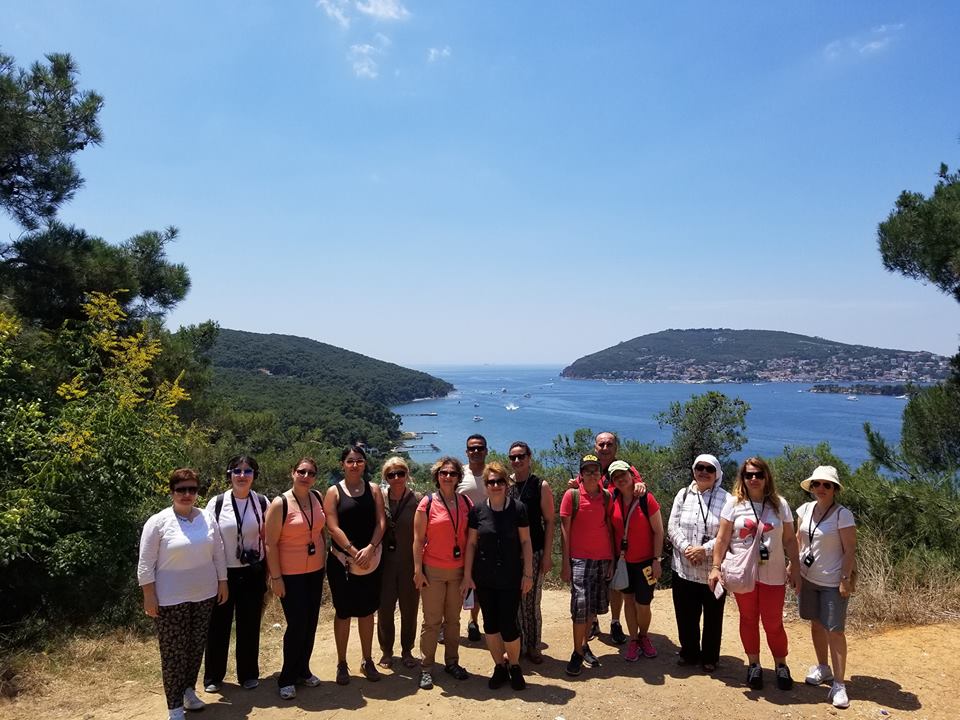
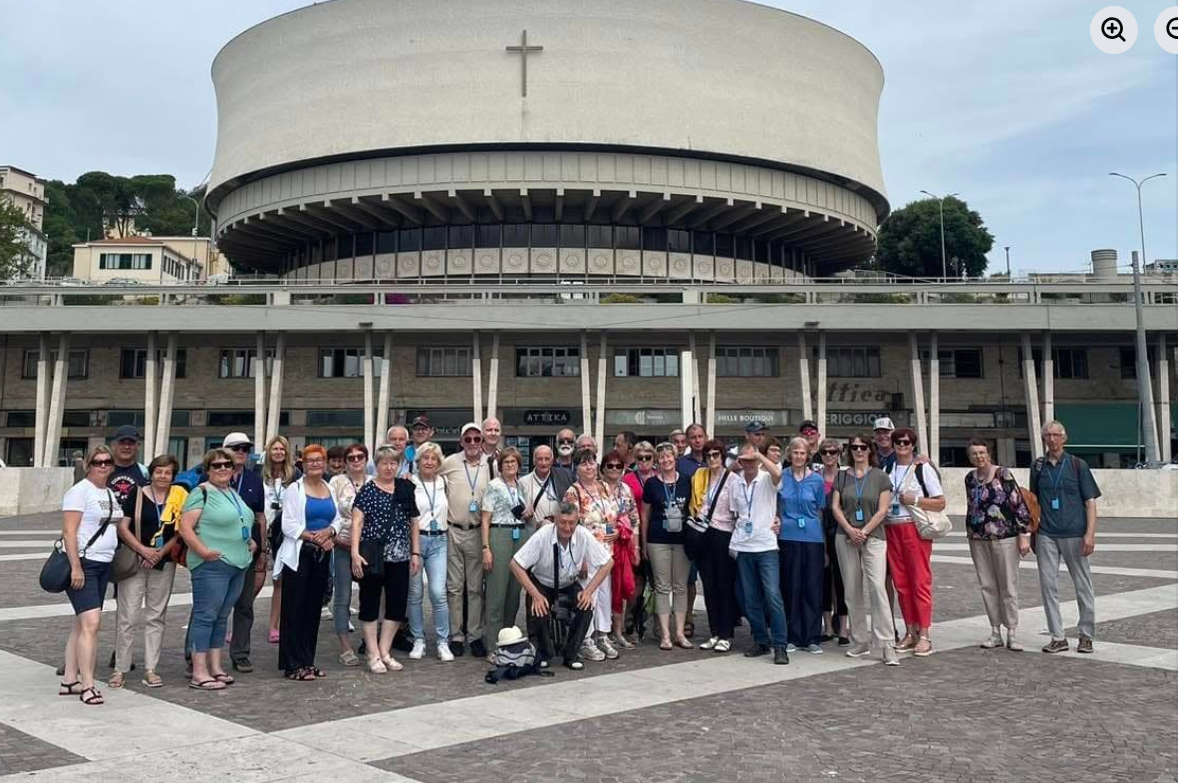
The first ten minutes of a cathedral morning happen outside, in the open, with nobody listening yet. Lanyards are handed along the rank, earphones are checked, the guide walks twenty metres away and says a line to confirm that the audio arrives. On a sixty-person booking that is a two-person job, and it fails in the same way every time: the queue for a receiver is longer than the queue for the door. The photograph below is that moment — the block standing together on the stone before anyone has gone in.

What this stretch rewards is speed of handling. A receiver that switches on the moment it leaves the case, with nothing to configure, keeps the hand-over to a couple of minutes. It also has to arrive with charge left, because a coach run may cover two venues in a day and there is rarely a socket on the forecourt.

The Kit That Goes Out on Every Coach

For the everyday booking the operator uses the RC2401, the standard 2.4G unit. Its transmitter runs for 10 hours and its receiver for 20, which covers a two-venue day on one charge and leaves the evening free for a top-up rather than a full cycle. The receiver body weighs 50g, so a lanyard does not drag on a shirt collar during the wait. It charges through a DC port, which suits a kit that lives in a case and never in a display cabinet. Fifty channels is its ceiling, and for a single group occupying one building at one time that ceiling is comfortable — the guide picks a channel in the morning, stays on it, and the only person touching the dial is the guide.
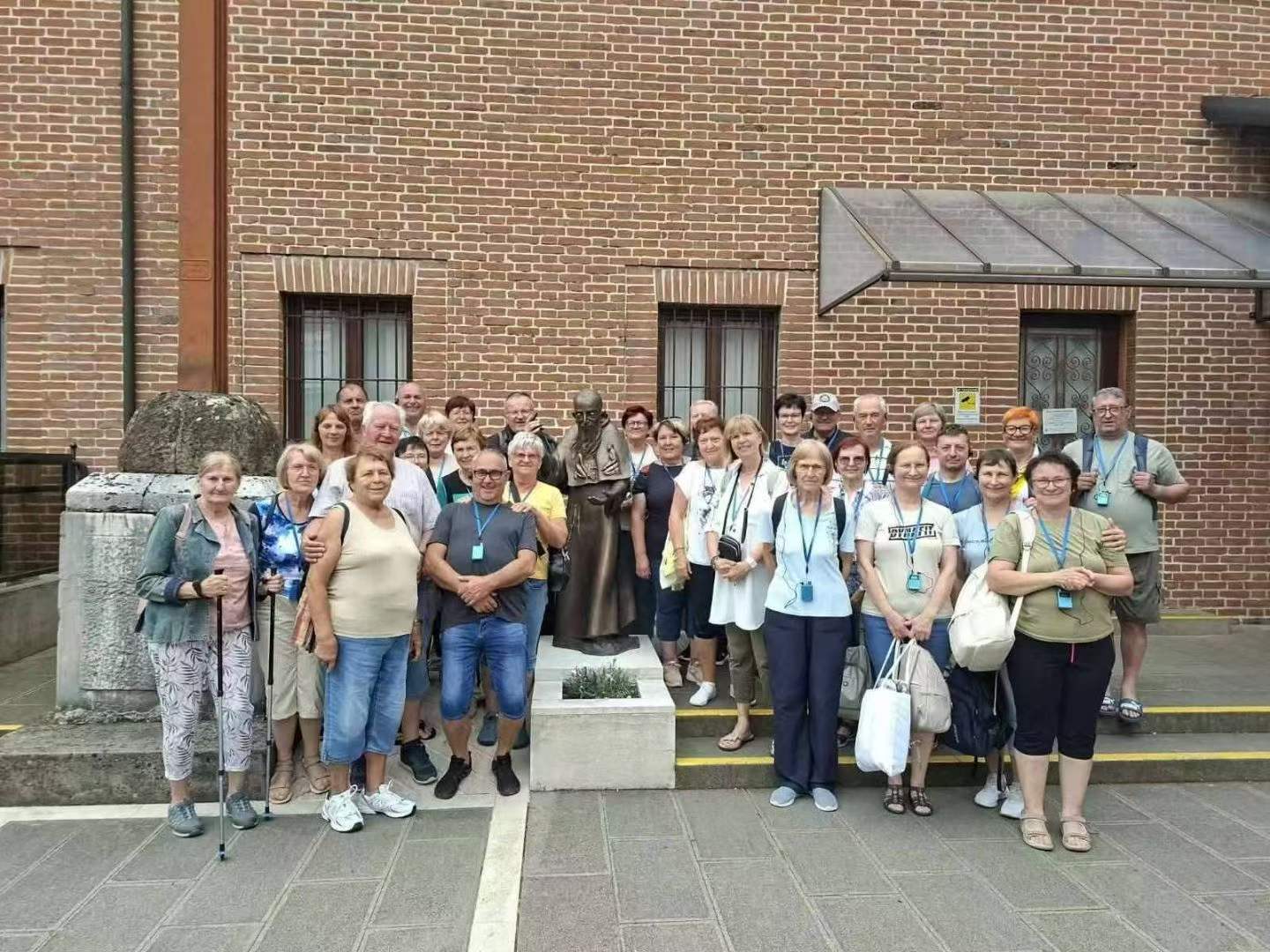
Arrival-group-outside-church_cathedral

Under the Vault, Where a Whisper Comes Back Twice

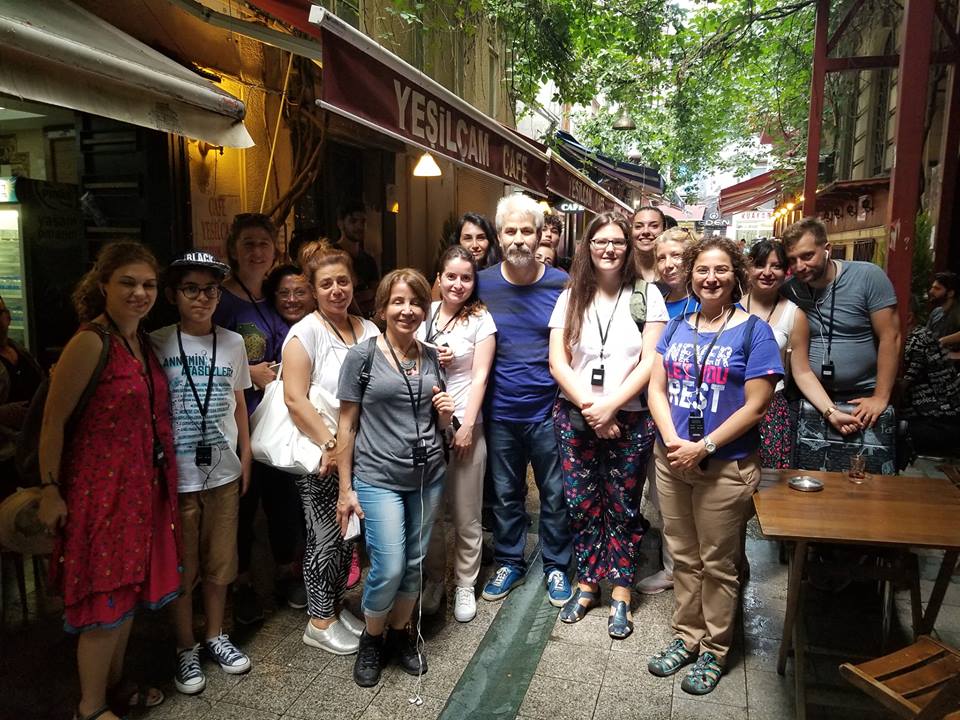
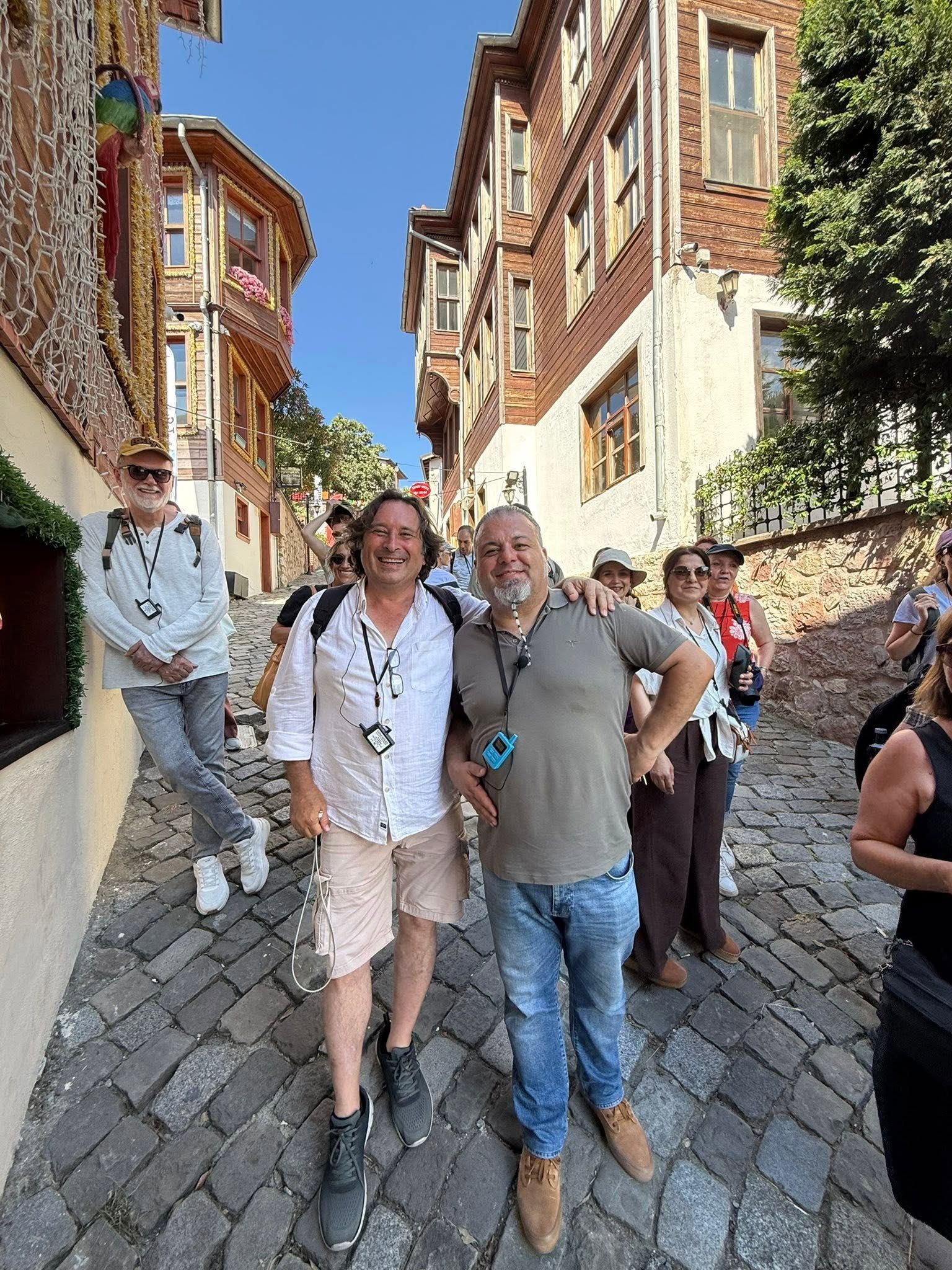
Inside, the rules change. Stone returns sound, and the longer the room, the longer the tail. A guide who raises their voice to reach the back of a nave is fighting a room that will repeat the effort a beat later, so the practical answer is to speak softly into the microphone and let the receivers carry the volume instead. That only works if the whole group is genuinely in the circuit. Anyone still at the door, anyone who drifted into a side chapel, hears nothing at all — not a faint version, nothing. The device has to make the group behave as though it were standing in the same square metre.

A second pressure arrives at the same time. A working cathedral is rarely empty. Guided visits, a service in a side chapel, a school party and a wedding rehearsal can share one building, and each of them wants its own audio channel. This is where a channel count stops being a specification and becomes an operating constraint.

Thirty More Channels Than the Room Needs on Paper

That constraint is the reason the second unit in the case is the RC2408. It is built around 80 channels instead of 50, with the extra headroom aimed squarely at interference: more simultaneous groups, each on its own frequency, in a building that already contains a lot of metal, glass and stone. Everything else about it is deliberately familiar — the same 59g transmitter body, the same 50g receiver on the lanyard, the same 10-hour transmitter and 20-hour receiver, the same DC charging port. The difference between the two units is the thirty channels and what they buy. On a quiet weekday the two are interchangeable; on the morning three groups are booked into the same nave, only one of them keeps everybody separate.
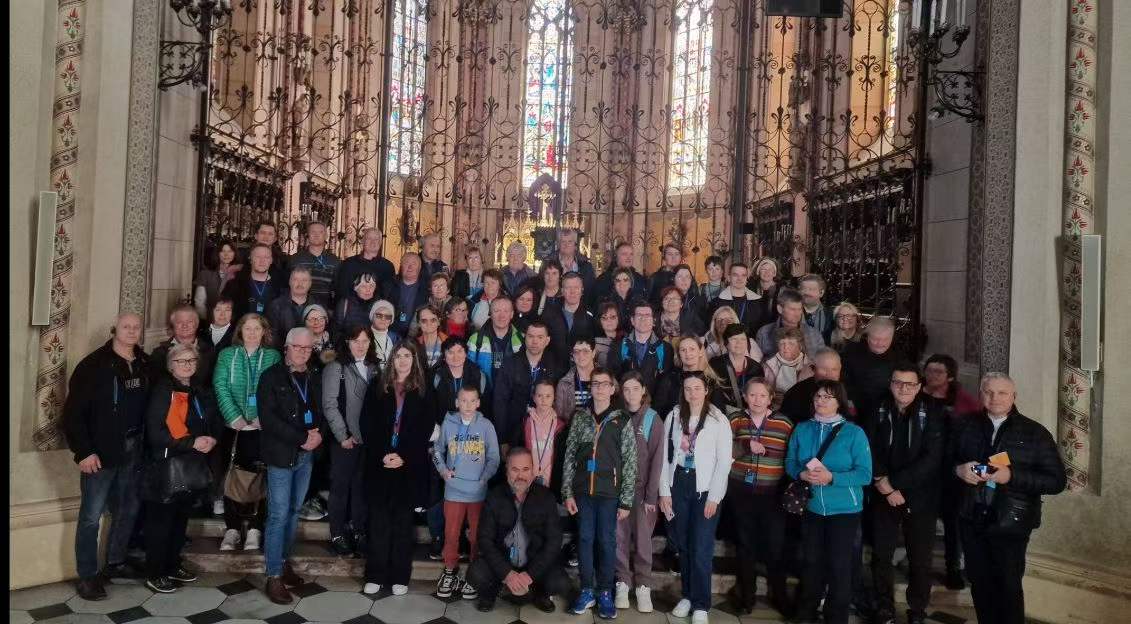
Group-inside-the-nave-church_cathedral

Seated for the Long Reading

The third posture is the quietest and the hardest on hardware. Once a group is seated in the pews, the receiver stays on a body for the length of a talk — often forty minutes, sometimes an hour when a reading or a piece of music is included. Nobody thinks about the device in that time, which is exactly the point: it has to be forgotten. A receiver that is heavy enough to notice, or an earphone that has to be held in place by hand, will pull attention away from the guide in the one part of the visit where attention is the whole product. And the battery is no longer covering a walk. It is covering a sit, plus the walk back out, plus the second venue if there is one.

The Unit That Has to Survive a Seated Hour

For that stretch the kit carries the RC2500, and the reason is standby rather than volume. Its receiver is rated over 35 hours against the 20 of the other two, and its transmitter 15 hours against 10, so a seated programme cannot flatten it by accident. It also moves the controls off the display: one key for synchronising, one for power, one for mute, which matters in a pew where a guide cannot see what a visitor is doing with a button. The trade-off is honest and worth stating plainly — the RC2500 receiver weighs 104g, twice the lanyard units above it, and it charges through Type-C. For a standing forecourt hand-over that weight is a small annoyance. For a seated hour it is the price of never thinking about charge again.
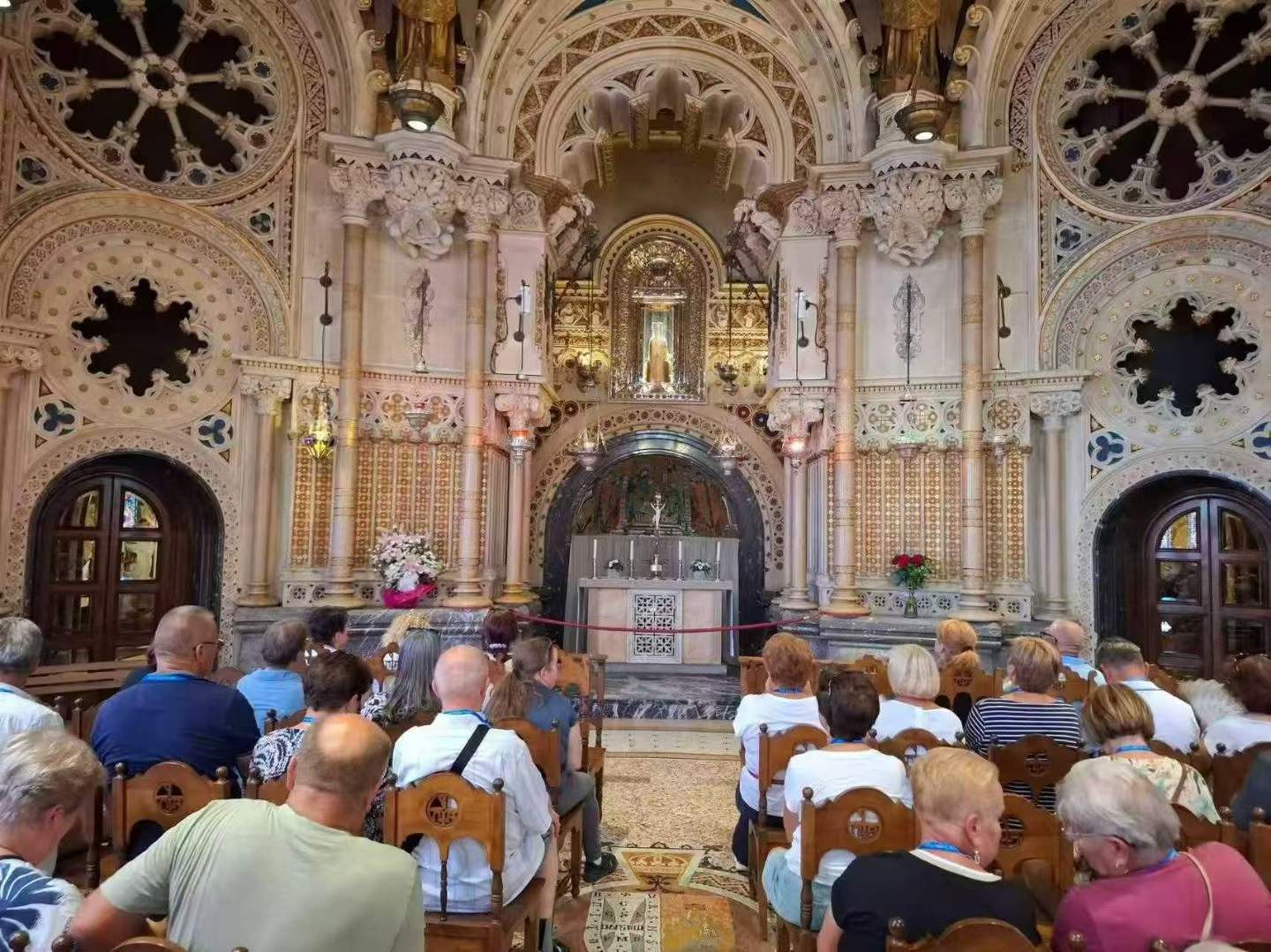
Seated-listeners-in-the-pews-church_cathedral

Three Units on One Table

Set beside each other, the three units are not three grades of the same thing. They answer three different moments, and the numbers below show where they part company.

SpecificationRC2401RC2408RC2500
Channels508050
Transmitter battery life10h10h15h
Receiver battery life20h20h35+h
Receiver weight50g50g104g
Charging portDC PortDC PortType-C
Special designStandard 2.4G, simplest to hand out80-channel anti-interferenceOne-key sync, power and mute

What the Guides Stopped Carrying

Read across the three postures and the choice stops being a ranking. The forecourt wants handling and reserve charge, so the lightest receiver with a familiar single-channel routine does the job. The nave wants separation, so the unit with thirty extra channels earns its place on the mornings several groups share one building. The pews want standby and a control surface nobody can misread, which is what the heaviest receiver in the case is actually for. A guide who plans by posture, rather than by whichever unit is newest, stops carrying spares for problems that never happen and starts carrying them for the two that do. Other programmes that run the same way, from single cathedrals to week-long religious itineraries, are collected in our church tour case notes.
2026年09月22日 11:22
click: 42
no data

Where a Receiver Hangs on a Cathedral Visit: Steps, Nave and Pews

time: 2026年09月22日 click:42

A group of fifty does not move through a cathedral the way it moves through a museum. It arrives as one block and stands in the open air, then funnels through a single door into a room where every voice returns from the stone, then sits down for a talk that can run forty minutes without a break. That is three different postures inside one morning, and the same small box has to cope with all of them. Whoever packs the case is not choosing a product for a place. They are choosing it for a sequence.

The programme in these photographs is a church and cathedral operation run week after week, with groups between thirty and sixty: some standing on the forecourt before the doors are unlocked, some pressed together inside the choir enclosure, others settled in the pews while the guide keeps talking. Seen from the office, this looks like one activity. Seen from the door, it is a hand-over, a walk and a sit, and each of those puts a different question to a wireless tour guide system. What follows is how those three questions get answered on a working church and cathedral audio programme, and which unit ends up carrying which one.

Before the Doors Open, Someone Counts

The first ten minutes of a cathedral morning happen outside, in the open, with nobody listening yet. Lanyards are handed along the rank, earphones are checked, the guide walks twenty metres away and says a line to confirm that the audio arrives. On a sixty-person booking that is a two-person job, and it fails in the same way every time: the queue for a receiver is longer than the queue for the door. The photograph below is that moment — the block standing together on the stone before anyone has gone in.

What this stretch rewards is speed of handling. A receiver that switches on the moment it leaves the case, with nothing to configure, keeps the hand-over to a couple of minutes. It also has to arrive with charge left, because a coach run may cover two venues in a day and there is rarely a socket on the forecourt.

The Kit That Goes Out on Every Coach

For the everyday booking the operator uses the RC2401, the standard 2.4G unit. Its transmitter runs for 10 hours and its receiver for 20, which covers a two-venue day on one charge and leaves the evening free for a top-up rather than a full cycle. The receiver body weighs 50g, so a lanyard does not drag on a shirt collar during the wait. It charges through a DC port, which suits a kit that lives in a case and never in a display cabinet. Fifty channels is its ceiling, and for a single group occupying one building at one time that ceiling is comfortable — the guide picks a channel in the morning, stays on it, and the only person touching the dial is the guide.

Arrival-group-outside-church_cathedral

Under the Vault, Where a Whisper Comes Back Twice

Inside, the rules change. Stone returns sound, and the longer the room, the longer the tail. A guide who raises their voice to reach the back of a nave is fighting a room that will repeat the effort a beat later, so the practical answer is to speak softly into the microphone and let the receivers carry the volume instead. That only works if the whole group is genuinely in the circuit. Anyone still at the door, anyone who drifted into a side chapel, hears nothing at all — not a faint version, nothing. The device has to make the group behave as though it were standing in the same square metre.

A second pressure arrives at the same time. A working cathedral is rarely empty. Guided visits, a service in a side chapel, a school party and a wedding rehearsal can share one building, and each of them wants its own audio channel. This is where a channel count stops being a specification and becomes an operating constraint.

Thirty More Channels Than the Room Needs on Paper

That constraint is the reason the second unit in the case is the RC2408. It is built around 80 channels instead of 50, with the extra headroom aimed squarely at interference: more simultaneous groups, each on its own frequency, in a building that already contains a lot of metal, glass and stone. Everything else about it is deliberately familiar — the same 59g transmitter body, the same 50g receiver on the lanyard, the same 10-hour transmitter and 20-hour receiver, the same DC charging port. The difference between the two units is the thirty channels and what they buy. On a quiet weekday the two are interchangeable; on the morning three groups are booked into the same nave, only one of them keeps everybody separate.

Group-inside-the-nave-church_cathedral

Seated for the Long Reading

The third posture is the quietest and the hardest on hardware. Once a group is seated in the pews, the receiver stays on a body for the length of a talk — often forty minutes, sometimes an hour when a reading or a piece of music is included. Nobody thinks about the device in that time, which is exactly the point: it has to be forgotten. A receiver that is heavy enough to notice, or an earphone that has to be held in place by hand, will pull attention away from the guide in the one part of the visit where attention is the whole product. And the battery is no longer covering a walk. It is covering a sit, plus the walk back out, plus the second venue if there is one.

The Unit That Has to Survive a Seated Hour

For that stretch the kit carries the RC2500, and the reason is standby rather than volume. Its receiver is rated over 35 hours against the 20 of the other two, and its transmitter 15 hours against 10, so a seated programme cannot flatten it by accident. It also moves the controls off the display: one key for synchronising, one for power, one for mute, which matters in a pew where a guide cannot see what a visitor is doing with a button. The trade-off is honest and worth stating plainly — the RC2500 receiver weighs 104g, twice the lanyard units above it, and it charges through Type-C. For a standing forecourt hand-over that weight is a small annoyance. For a seated hour it is the price of never thinking about charge again.

Seated-listeners-in-the-pews-church_cathedral

Three Units on One Table

Set beside each other, the three units are not three grades of the same thing. They answer three different moments, and the numbers below show where they part company.

SpecificationRC2401RC2408RC2500
Channels508050
Transmitter battery life10h10h15h
Receiver battery life20h20h35+h
Receiver weight50g50g104g
Charging portDC PortDC PortType-C
Special designStandard 2.4G, simplest to hand out80-channel anti-interferenceOne-key sync, power and mute

What the Guides Stopped Carrying

Read across the three postures and the choice stops being a ranking. The forecourt wants handling and reserve charge, so the lightest receiver with a familiar single-channel routine does the job. The nave wants separation, so the unit with thirty extra channels earns its place on the mornings several groups share one building. The pews want standby and a control surface nobody can misread, which is what the heaviest receiver in the case is actually for. A guide who plans by posture, rather than by whichever unit is newest, stops carrying spares for problems that never happen and starts carrying them for the two that do. Other programmes that run the same way, from single cathedrals to week-long religious itineraries, are collected in our church tour case notes.
no data
×

Contact us

email:
name:
subject:
content: