
.webp)
A city walking tour operator judges a radio system long before the first season ends. The catalogue talks about channels and battery hours. The delivery day talks about how many boxes arrive, whether the units are already paired, and what happens when forty visitors spread out along a pavement. We asked one operator to keep notes from the day the kit landed and send us whatever they wrote down. What came back was not a review. It was a list of four small things, each with a photograph attached. Their route network is typical of the operations covered under city tours, with several departures a day, mixed groups and no fixed gate.
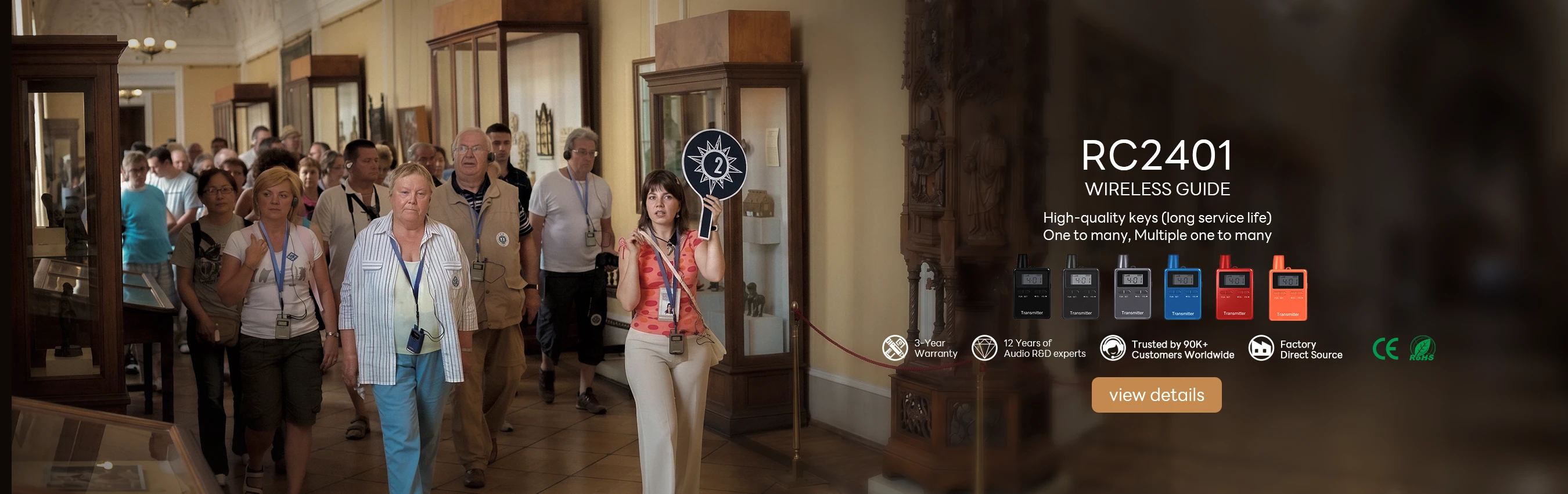
The three systems in this article arrived together, and the operator kept all three in service rather than settling on one. RC2401 is the light one in their words, the unit a guide carries when that guide is also handling tickets. RC085 is the unit reserved for the busiest crossings, where every shopfront runs its own wireless. RC2500 is the one that stays in the office and goes out on the long routes. Which of those three labels survives contact with a real season is what the rest of this article is about.
💡 Why the First Week Reads Nothing Like the Brochure
The gap between a specification sheet and a first week of operations is not about honesty. It is about vocabulary. A sheet describes a unit on its own: frequency band, channel count, battery hours, weight. A first week describes a fleet in motion: how long the handover takes at the meeting point, how many units come back flat, how often a guide has to press something on a receiver in the middle of a tour. Operators rarely write that second list down, because it never looks like data. It looks like an ordinary Tuesday. That is exactly why the list is worth reading when someone does write it down.
🏆 First: The Box the Client Counted on Arrival
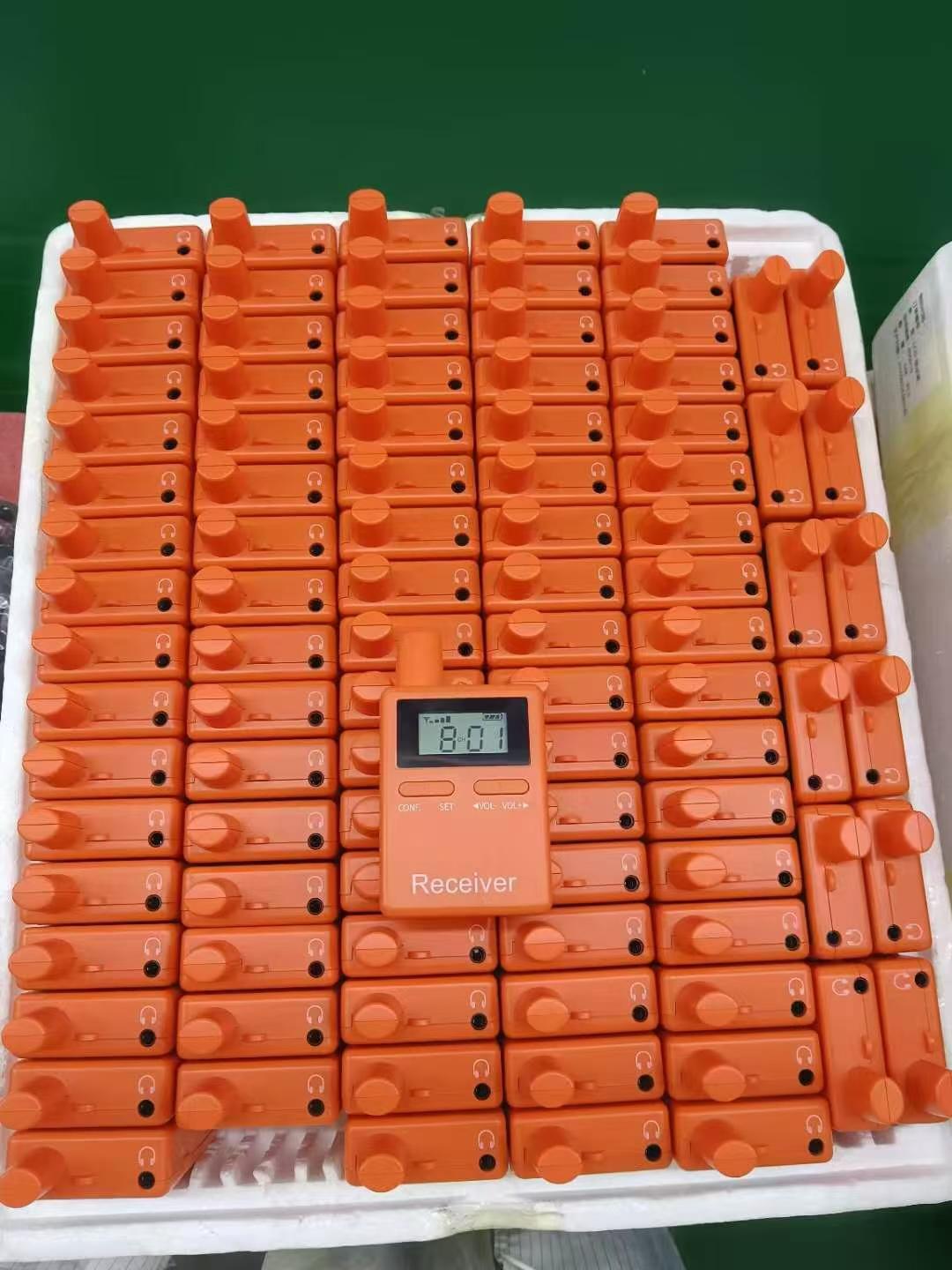
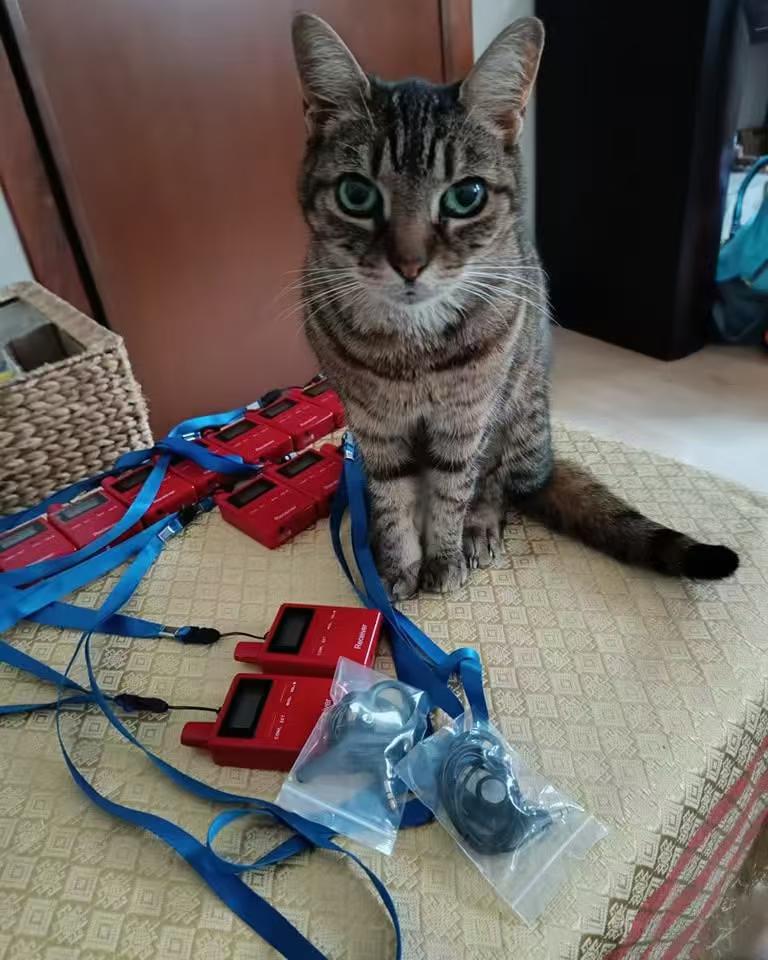
The first photograph is a box emptied onto a table: red-bodied units, blue lanyards, earpieces still sealed in their bags, and a spare charging lead coiled beside them. What the operator counted first was not the receivers. It was the ratio of transmitters to receivers, because that ratio decides how many groups can run in parallel on a given morning. A pack that ships with one transmitter for every twenty receivers holds an operation to a single departure at a time. The lightest unit in that box was the RC2401, quoted at 59 g as a transmitter and 50 g as a receiver, which matters once a guide is also carrying a folder and a cash pouch. It works on the 2403-2483 MHz band with 50 channels.
Second: The Group That Set Off at Nine
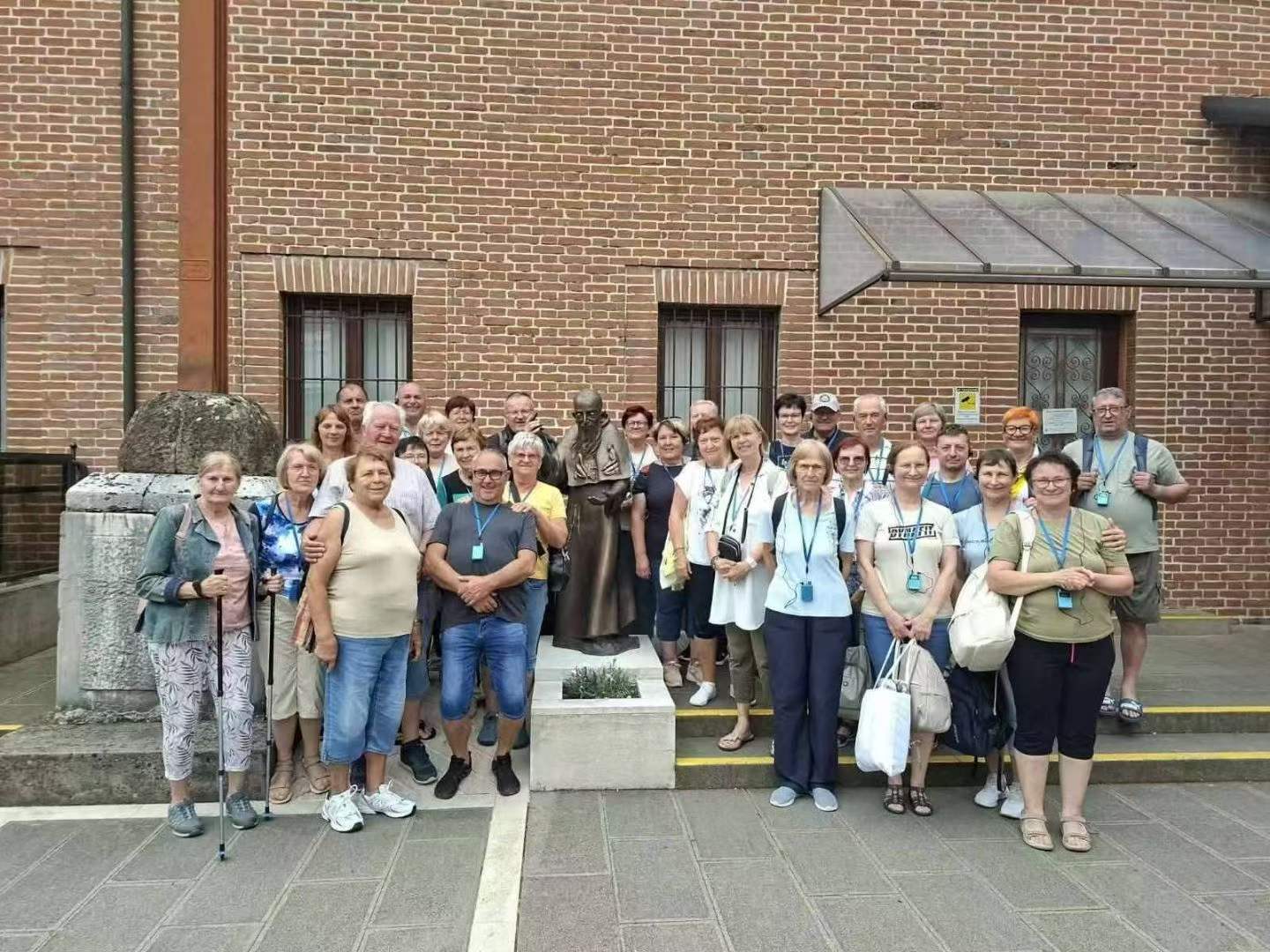
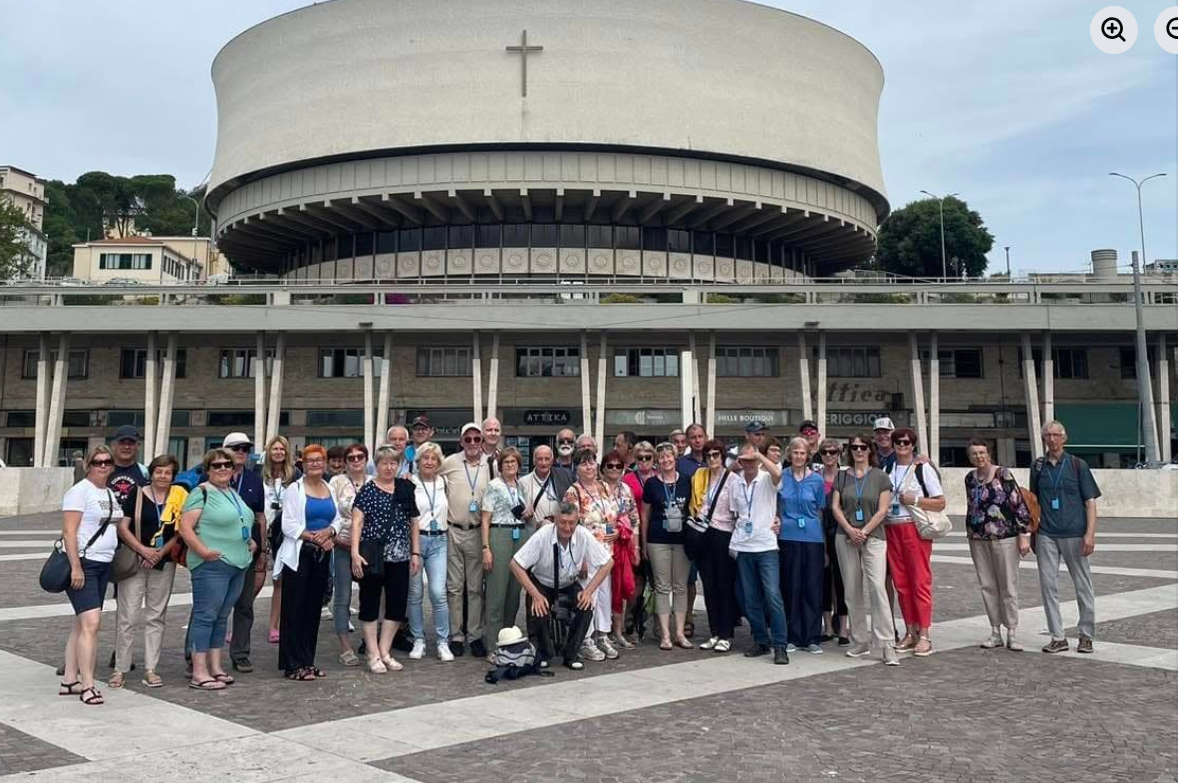
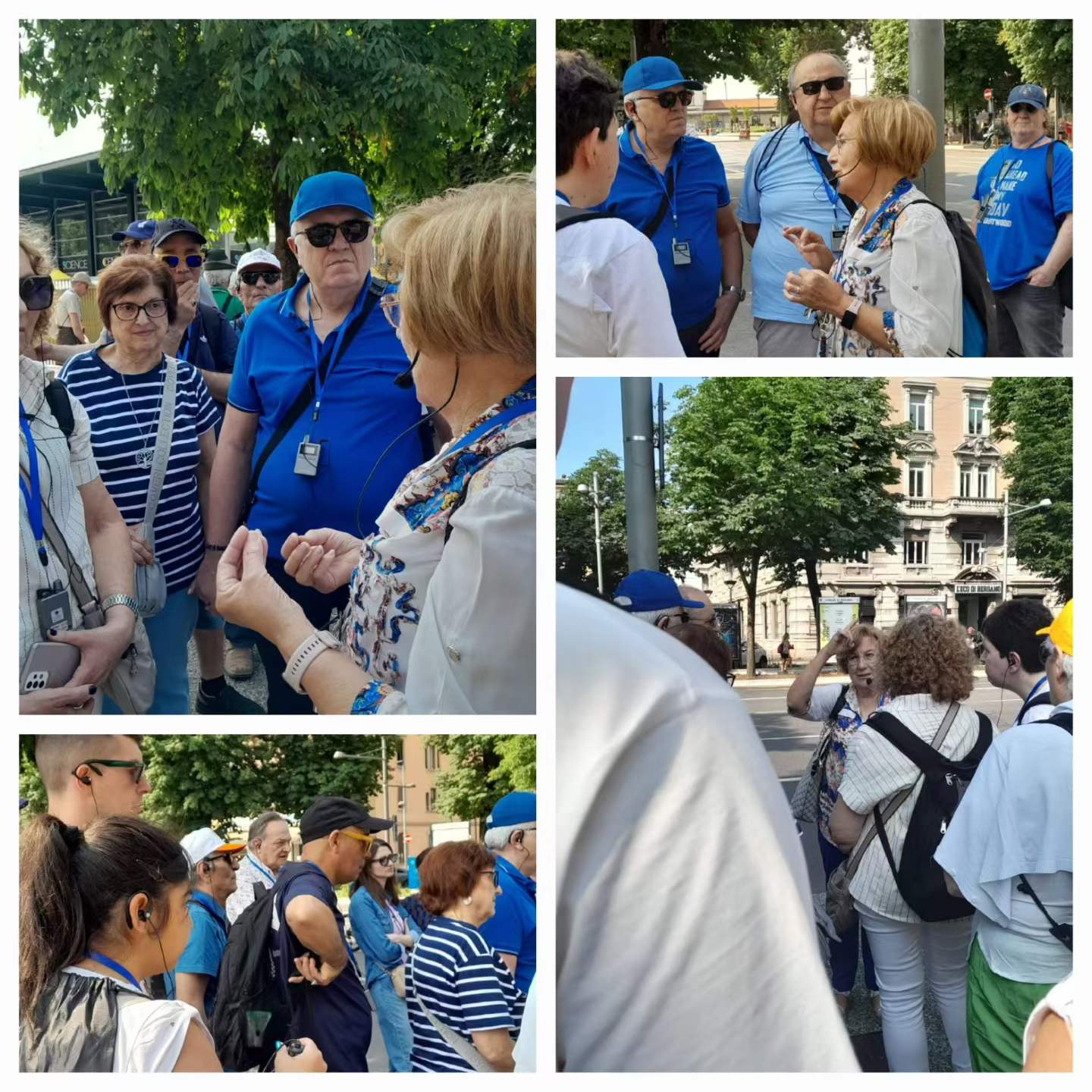
The second photograph was taken at the meeting point at nine in the morning, and the operator sent it because of what is missing from the frame: a second group leaving the same square, heading the same way, along a street lined with shops. Congestion in that band is not a hypothetical problem in a dense retail district. It is the reason the operator kept a UHF system on the shelf. The RC085 sits in the 470-510 MHz band with 100 channels, so a second departure can be moved clear of the first without swapping any hardware. The operator reserved it for the crossings where the pavements narrow to two people abreast.
🏆 Third: Two Readings the Client Photographed
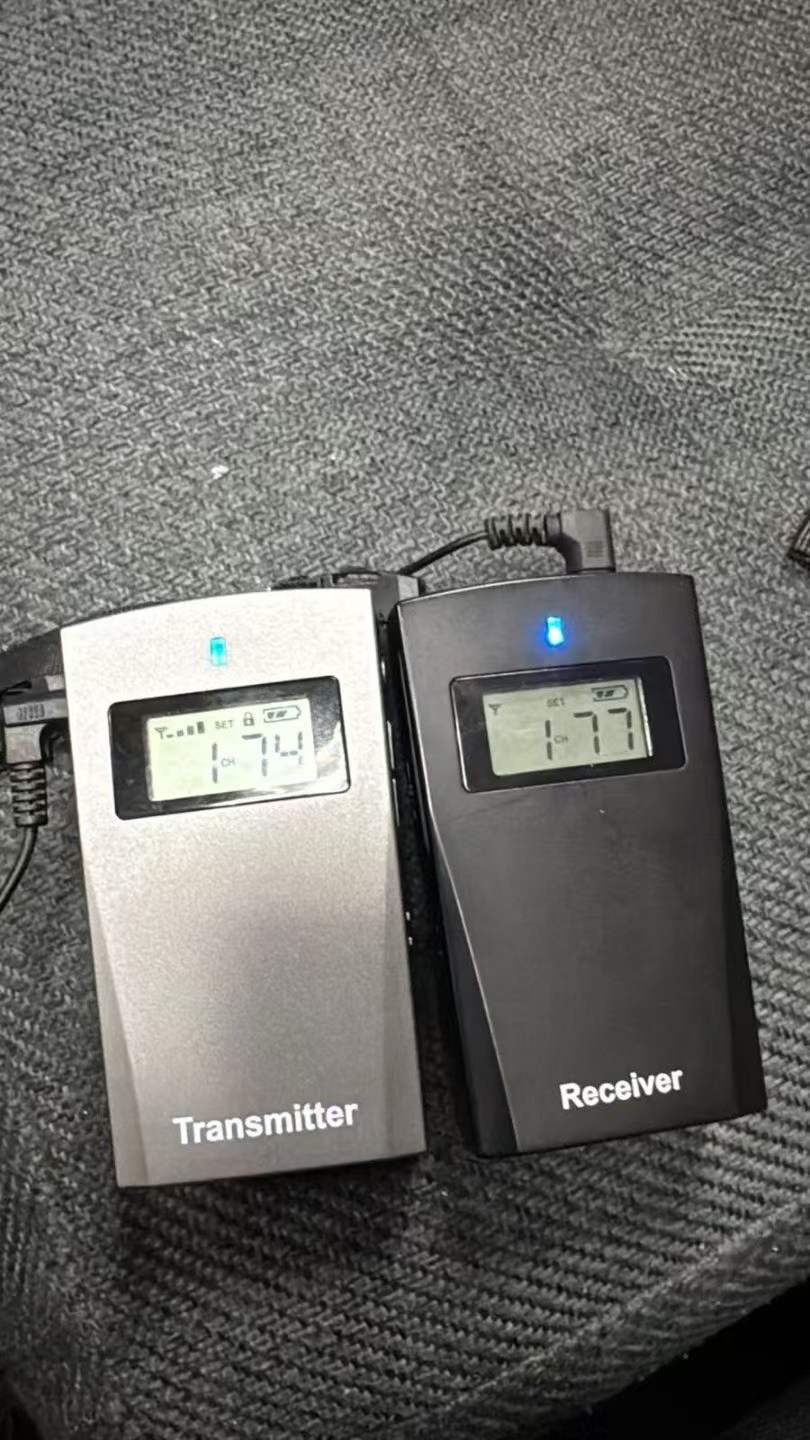
The third photograph is a close-up of two units laid side by side on a textured cloth, and it came with a one-line note: these came out of the same bag. The transmitter display reads CH 74 and the receiver next to it reads CH 77. Nothing is broken. Two units set to different channels simply will not talk to each other, and on a busy morning that silence is easy to misread as a dead battery. This is the practical argument for a pair that syncs without a menu. The RC2500 carries one-touch sync, one-touch mute and one-touch power, and its receiver is rated at 35 hours or more, which is why it is the unit the operator leaves on charge for the long routes.
How the Three Systems Are Rated
These are not three grades of one product, and the published figures make that plain. The table below lists the fields that decide how a fleet gets split, not the fields that look impressive on a landing page. All three are quoted at 1-200 m of working range, so range is not the differentiator here. What separates them is the band, the channel count, how long each half of the pair runs on a charge, and how you have to charge them.
| Rating | RC2401 | RC085 | RC2500 |
|---|---|---|---|
| Frequency band | 2403-2483 MHz | 470-510 MHz | 2403-2483 MHz |
| Channels | 50 | 100 | 50 |
| Transmitter battery life | 10h | 12h | 15h |
| Receiver battery life | 20h | 35+h | |
| Transmitter weight | 59 g | 65 g | 104 g |
| Charging port | DC Port | USB | Type-C |
Two of the three sit in the same band, which is worth noticing before ordering a mixed fleet, because they can then share spare units as long as the channel plans are kept apart. The third one cannot, so a guide moving between routes has to check which unit is in the bag before leaving the office. The wider range of wireless tour guide systems is built on the same pairing logic, which is why a fleet assembled from different models still behaves predictably against one allocation sheet.
🏆 Fourth: What the Client Flagged After Two Weeks
The fourth note arrived two weeks after the delivery photographs, and it was a complaint rather than a question. The three systems charge three different ways: a DC port, a USB socket and a Type-C socket. In a product listing that difference is a footnote. In a tour office with one power strip behind the counter, it is three separate leads, three spare cables, and one more item that can be left behind on a coach at the end of the day. The operator also flagged the weight spread across the fleet, because the receiver on the long-route unit is 104 g, roughly double the lightest one in the set.
🔮 Changes the Operator Would Make Before Next Season
None of the four notes called for a different system. They called for a different allocation of the units already owned. The heaviest pair goes to the shortest route, where the receiver is worn for the least time during a day. The UHF unit stays on the schedule with the densest shopfronts and the most simultaneous departures. The lightest unit becomes the default for guides working without an assistant. The office also began pairing each transmitter with a named receiver on a laminated card, so a mismatched pair is caught at the counter rather than discovered at the meeting point. On charging, the fix is administrative rather than technical: one lead type per shelf, each shelf labelled, and a rule that no unit leaves the office without its own cable. The operator's own summary was that the fleet was fine and the shelf was not.
Planning a Similar Walk in Your Own City
If you run departures from a public square, the four notes above make a reasonable checklist for any kit you are considering: how many transmitters arrive with the receivers, which band your busiest street already occupies, whether the pair syncs without a menu, and how many charging standards you are willing to stock behind the counter. Our solutions pages set out the route types we build for, and the delivery-day questions are the same whether the route is one square or six stops. Tell us the route and the group size, and we will match the units to it.