We are a large factory from China.Specializing in the production of wireless tour guide systems translation headphones for church、Museum audio guide equipment, Simulation Interpretation etc

Tel:+86 18922879583

Email:tiger.wang@richitek.com

The Role of Anti-Interference Technology in Modern Wireless Tour Guide Systems

The Role of Anti-Interference Technology in Modern Wireless Tour Guide Systems

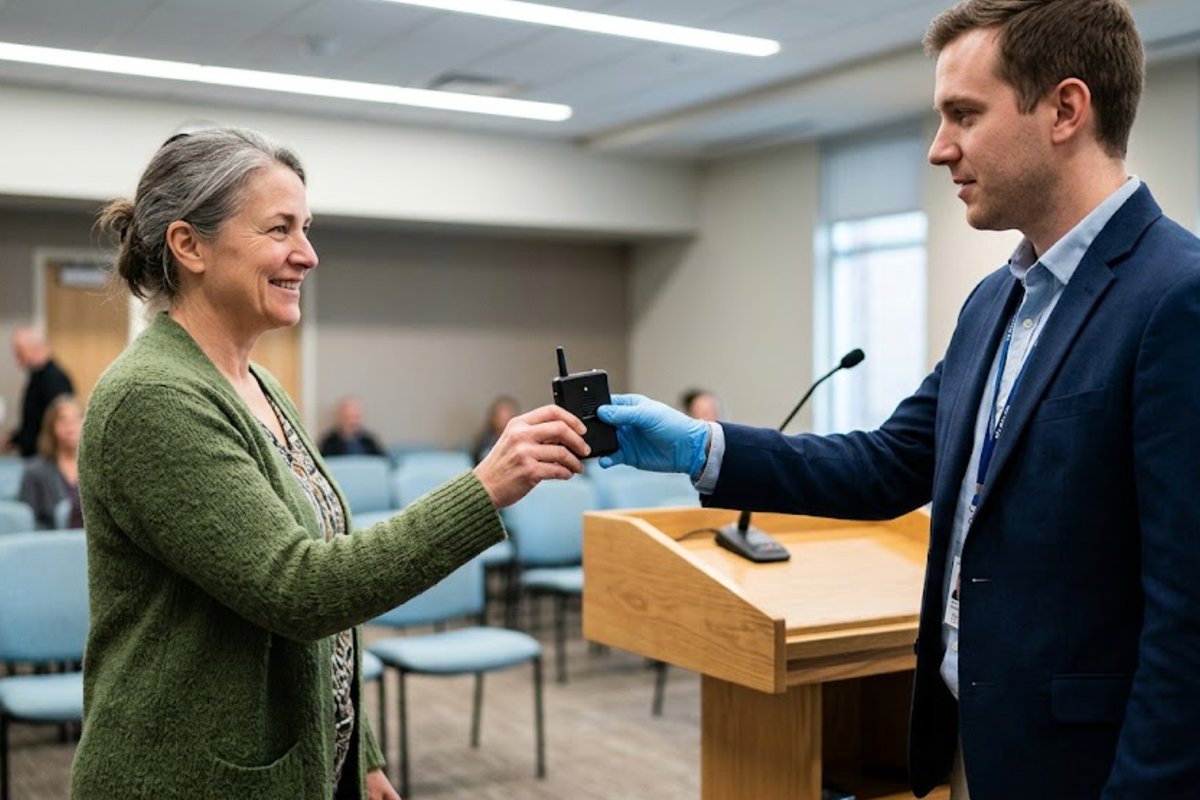
In professional guided tours, audio clarity is non-negotiable. Whether leading a group through a bustling exhibition hall, a live production floor, or a multi-group museum tour, the primary challenge is not volume — it is interference. A Wireless Tour Guide System must deliver crystal-clear audio in environments saturated with radio signals, machinery noise, and competing tour groups. For international trade buyers and factory procurement managers, understanding the anti-interference architecture behind these systems is critical to ensuring reliable communication in real-world conditions.
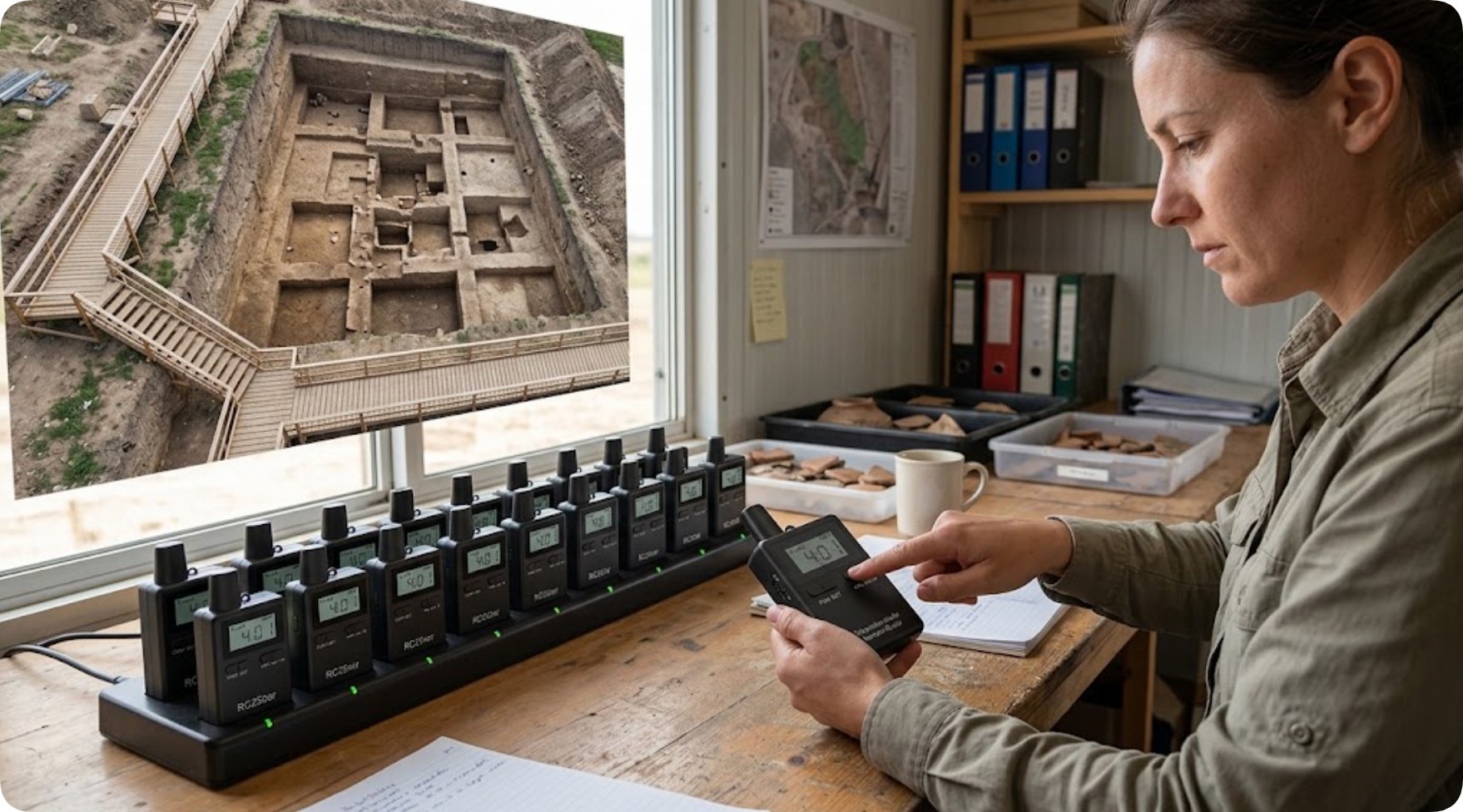
The Role of Anti-Interference Technology in Modern Wireless Tour Guide Systems(图1)

Why Anti-Interference Is the Backbone of Professional Tour Guide Audio Systems

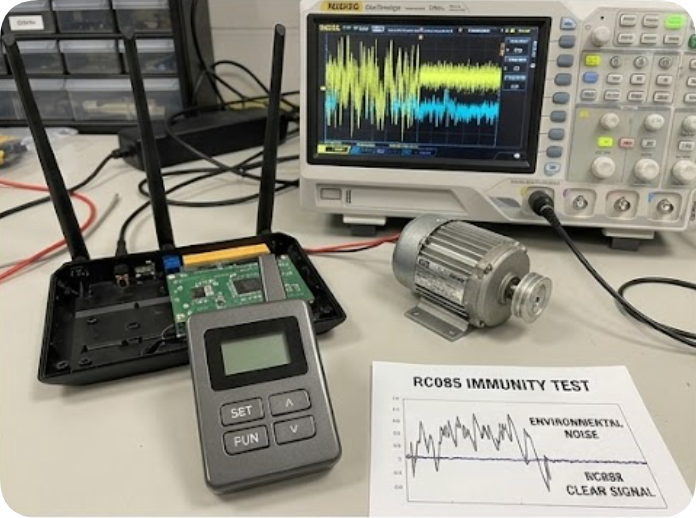
Modern venues are electrically noisy. From fluorescent lighting and elevator motors to Wi-Fi routers and Bluetooth devices, radio frequency (RF) pollution is everywhere. A standard consumer-grade audio system will struggle to maintain signal integrity under such conditions. That is why a tour guide audio system designed for B2B use must incorporate dedicated anti-interference hardware and software.

The RC085 Digital Tour Guide System, for example, operates in the 2.4G frequency band with a digital spread-spectrum mechanism. This technology automatically hops across 80 available channels to avoid collisions with other RF sources. The result is a stable audio link even when dozens of other wireless devices are active in the same space. By transitioning from analog FM bands to intelligent digital RF protocols, modern units isolate the human voice from ambient wireless chatter, dropping background hiss entirely.

Noise Cancellation in Noisy Environments: Factories and Outdoor Venues

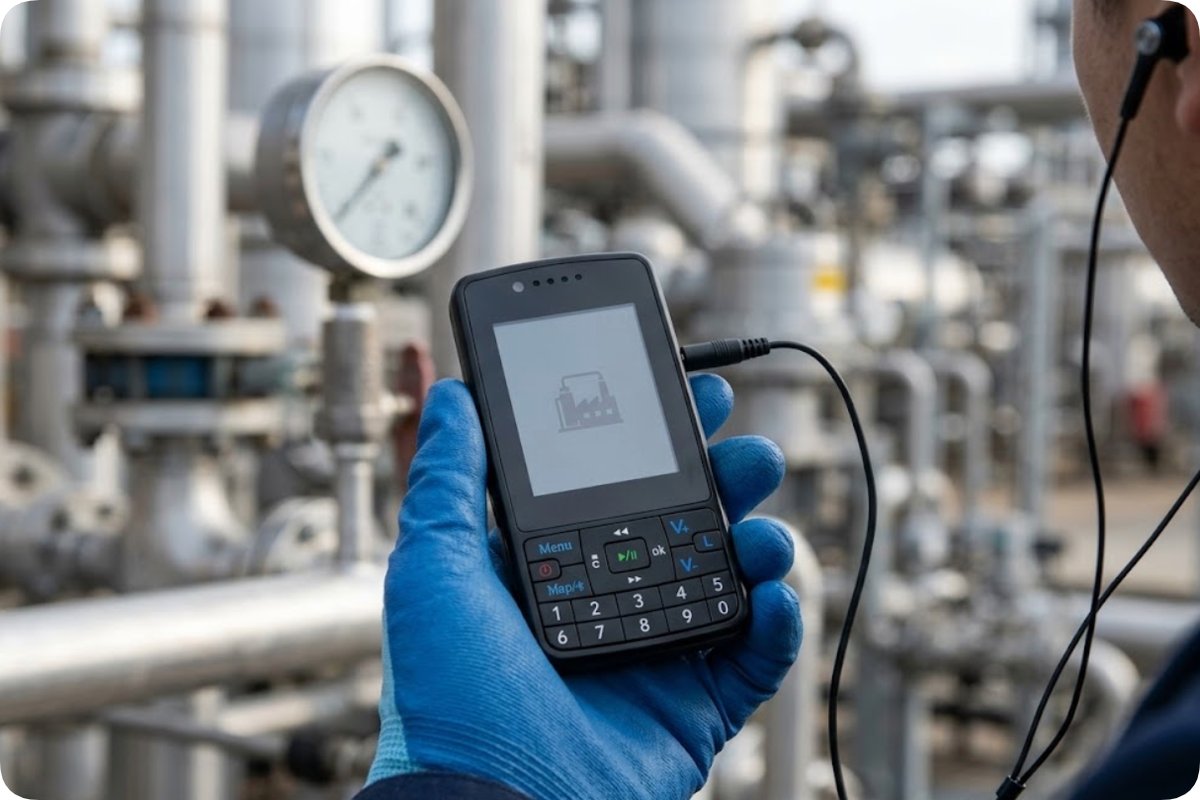
Consider a guided tour inside a working automotive assembly plant. The ambient noise level can easily exceed 85 dB — from pneumatic tools, conveyor belts, and metal stamping presses. In such settings, the guide’s voice must cut through clearly without forcing the speaker to shout. The RC085 system features an integrated noise cancellation circuit that filters out low-frequency background rumble while preserving vocal frequencies between 300 Hz and 3.4 kHz.

This is not a software gimmick; it is a hardware-level filter applied at the transmitter and receiver stages. For outdoor venues like historical ruins or botanical gardens, wind noise becomes the primary disruptor. The system’s microphone capsule is designed with a wind-resistant mesh and a shock-mounted diaphragm, reducing wind-induced distortion by up to 18 dB compared to standard omnidirectional microphones.

Real-World Scenario: Factory Tour Equipment in Action

During a recent deployment at a heavy machinery plant in Germany, the RC085 system maintained clear communication across a 200-meter radius, even as the guide walked past arc welders and hydraulic presses. The factory tour equipment logged zero audio dropouts over a two-hour tour, demonstrating the practical value of robust anti-interference design. Listeners reported clean vocal transients without the typical popping and scratching artifacts that plague low-tier UHF hardware when subjected to heavy electromagnetic fields.

Channel Stability and Multi-Group Simultaneous Tours

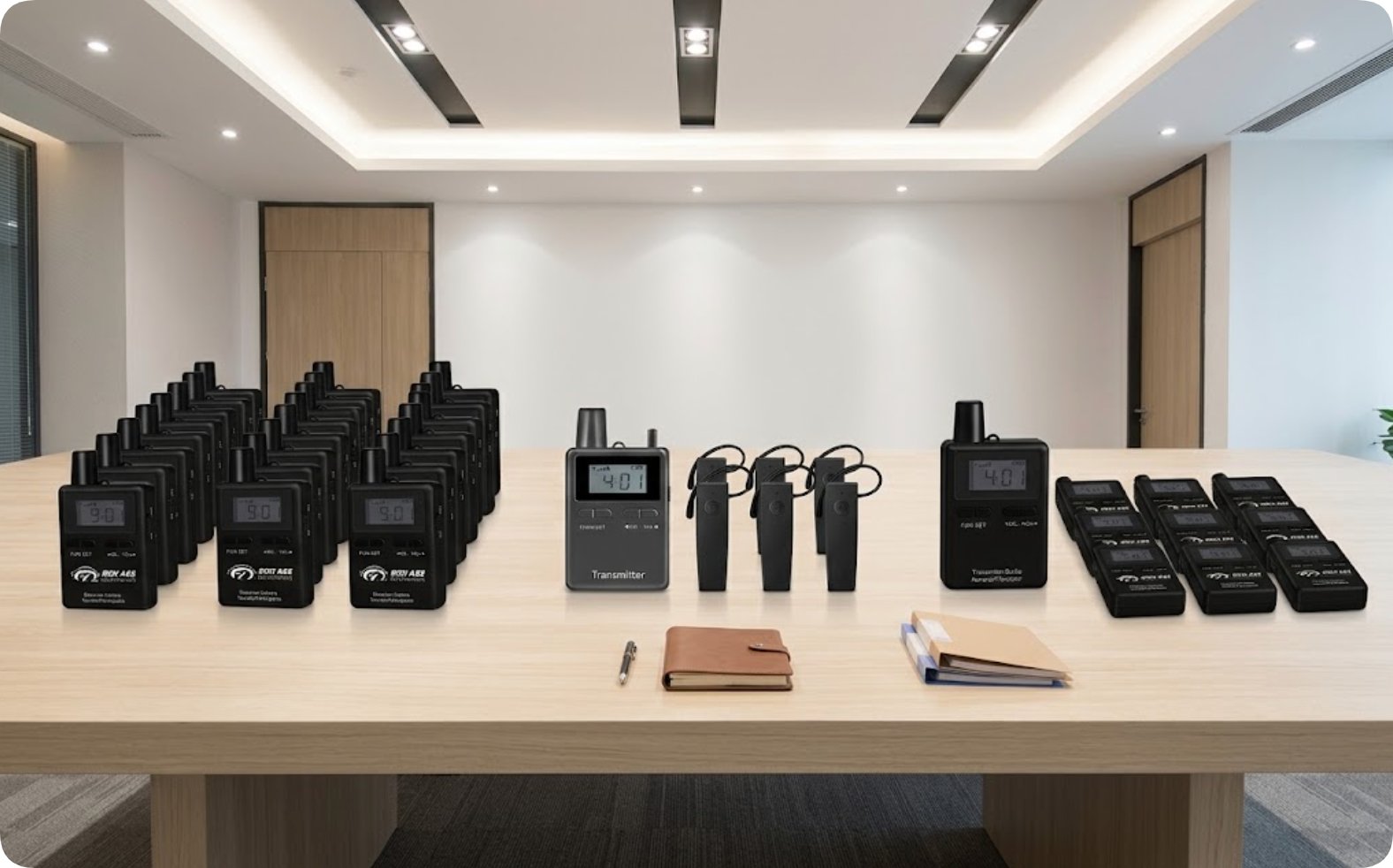
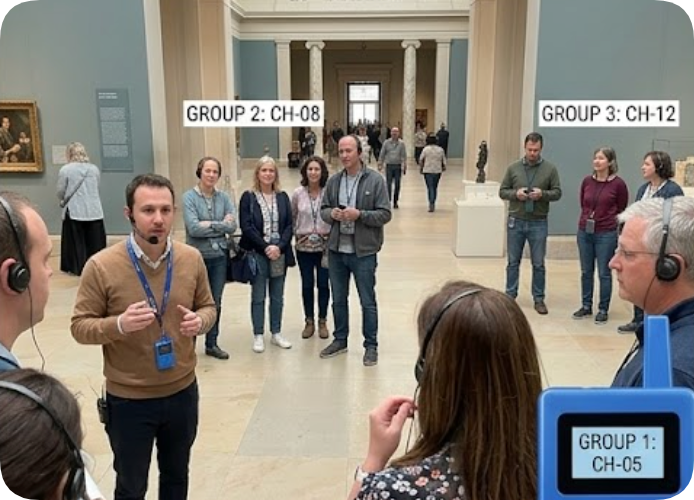
Large venues often run multiple guided tours at the same time. A museum, for instance, might have three groups moving through different wings simultaneously. Without proper channel management, each group’s audio would bleed into the others, creating a confusing cacophony. The RC085 addresses this with its 80-channel capacity and anti-interference frequency-hopping algorithm.

Each transmitter locks onto a unique channel pair, and the receivers automatically follow. The system also employs a digital encryption handshake between paired units, so receivers only accept audio from their designated transmitter. This eliminates cross-talk even when groups are within 10 meters of each other.
Technical Detail: Adaptive Frequency Hopping

Unlike simple fixed-frequency systems, the RC085 scans the RF environment every 20 milliseconds. If it detects interference on a currently used channel, it seamlessly hops to a clearer one without interrupting the audio stream. This process is transparent to both guide and listener, ensuring continuous, uninterrupted communication. By operating dynamically across a wider spectral footprint, it bypasses congested local channels, completely ignoring stationary industrial signals.

How RICH AGE Solves Real-World Interference Problems

As a technology leader in the wireless tour guide market, RICH AGE designs systems from the ground up for industrial and commercial reliability. The RC085’s RF front end uses a high-linearity amplifier and a ceramic bandpass filter that rejects out-of-band signals by more than 50 dB. This means that a nearby Wi-Fi router or a 2.4G cordless phone will not degrade audio quality. For event organizers managing large-scale conferences or trade shows, the system’s channel stability allows them to assign up to 80 individual groups without frequency coordination. Each group operates independently, with no risk of interference.

Additionally, the RC085 includes a built-in automatic gain control (AGC) that adjusts the microphone sensitivity in real time. If the guide moves from a quiet hallway to a noisy exhibition hall, the AGC compensates instantly, preventing distortion or sudden volume drops. This is particularly valuable for tour operators who lead groups through mixed environments — from quiet galleries to roaring factory floors. The automatic adjustments minimize operational friction, allowing presenters to focus entirely on their narrative rather than adjusting dials.

Conclusion: Choosing the Right Tour Guide System for Demanding Environments

For international trade buyers and procurement managers, the decision should hinge on real-world performance, not marketing claims. A wireless tour guide system with genuine anti-interference technology — including digital spread spectrum, hardware noise cancellation, and adaptive frequency hopping — will outperform generic alternatives in every demanding scenario. The RC085 Digital Tour Guide System exemplifies this engineering approach, delivering reliable, clear audio in factories, outdoor venues, and multi-group tours.

When evaluating tour guide audio system suppliers, ask for specific dB rejection figures, channel count, and field test data. RICH AGE provides these details because we build systems that work where others fail. Investing in commercial-grade anti-interference technology eliminates visitor complaints, protects your brand image during high-profile corporate inspections, and ensures that your message is heard clearly, every single time.


Procurement Architecture: Demanding Long-Term Hardware Value

Sourcing tour equipment at an enterprise level requires careful verification of build materials and regulatory compliance. When coordinating deployments across global offices, devices must adhere to local transmission standards without requiring continuous field calibrations or software licensing renewals.

  • Global Frequency Compliance: Operating on the universal 2.4GHz band ensures your equipment passes customs regulations seamlessly, whether deployed in North America, Europe, or Asia, eliminating regional spectrum penalties.

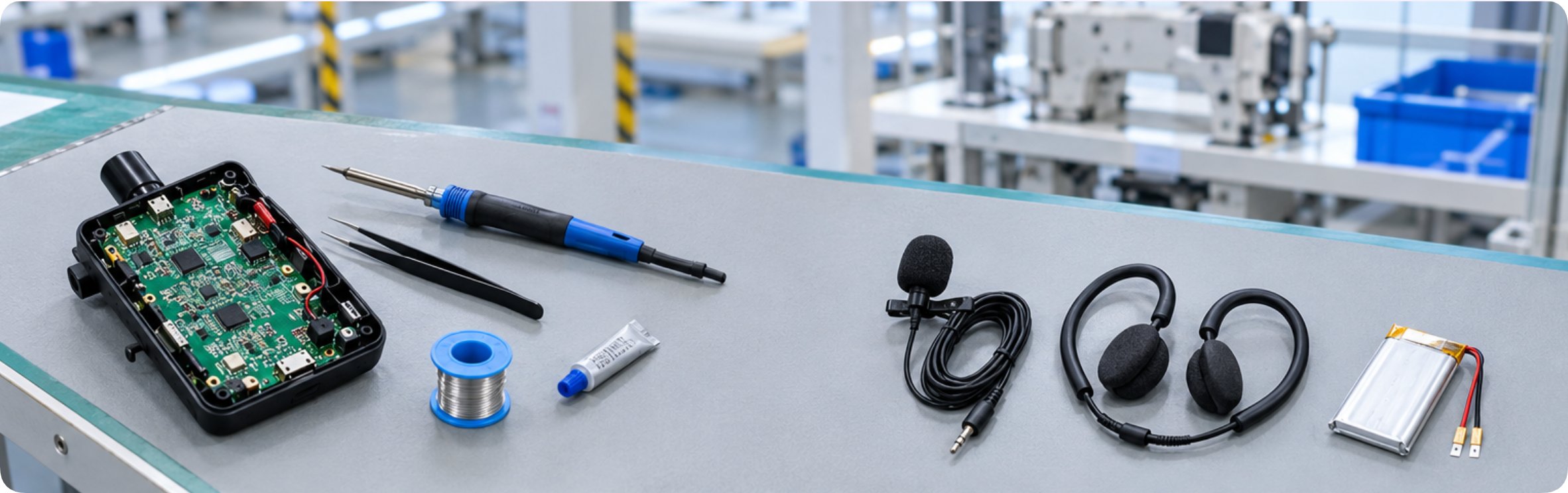
  • Industrial Li-polymer Power Delivery: High-capacity internal cells provide continuous 10-to-15-hour operation cycles, eliminating sudden battery dropouts mid-presentation and offering rapid charging over unified multi-slot docking stations.

  • Ruggedized ABS Enclosures: Drop-resistant structural engineering safeguards internal PCB boards and ceramic filters from operational drops on concrete plant floors, maintaining structural integrity across years of heavy usage.

By integrating commercial-grade hardware filters with long-term spectral agility, RICH AGE delivers communication security where generic consumer devices fall short. For deep technical specifications, multi-device charging configurations, or to secure direct factory-level pricing tiers, explore our complete line of professional Wireless Tour Guide System models to match your facility's operational layout.

2026年05月29日 09:27
click: 0

The Role of Anti-Interference Technology in Modern Wireless Tour Guide Systems

time: 2026年05月29日 click:0

The Role of Anti-Interference Technology in Modern Wireless Tour Guide Systems

In professional guided tours, audio clarity is non-negotiable. Whether leading a group through a bustling exhibition hall, a live production floor, or a multi-group museum tour, the primary challenge is not volume — it is interference. A Wireless Tour Guide System must deliver crystal-clear audio in environments saturated with radio signals, machinery noise, and competing tour groups. For international trade buyers and factory procurement managers, understanding the anti-interference architecture behind these systems is critical to ensuring reliable communication in real-world conditions.

The Role of Anti-Interference Technology in Modern Wireless Tour Guide Systems(图1)

Why Anti-Interference Is the Backbone of Professional Tour Guide Audio Systems

Modern venues are electrically noisy. From fluorescent lighting and elevator motors to Wi-Fi routers and Bluetooth devices, radio frequency (RF) pollution is everywhere. A standard consumer-grade audio system will struggle to maintain signal integrity under such conditions. That is why a tour guide audio system designed for B2B use must incorporate dedicated anti-interference hardware and software.

The RC085 Digital Tour Guide System, for example, operates in the 2.4G frequency band with a digital spread-spectrum mechanism. This technology automatically hops across 80 available channels to avoid collisions with other RF sources. The result is a stable audio link even when dozens of other wireless devices are active in the same space. By transitioning from analog FM bands to intelligent digital RF protocols, modern units isolate the human voice from ambient wireless chatter, dropping background hiss entirely.

Noise Cancellation in Noisy Environments: Factories and Outdoor Venues

Consider a guided tour inside a working automotive assembly plant. The ambient noise level can easily exceed 85 dB — from pneumatic tools, conveyor belts, and metal stamping presses. In such settings, the guide’s voice must cut through clearly without forcing the speaker to shout. The RC085 system features an integrated noise cancellation circuit that filters out low-frequency background rumble while preserving vocal frequencies between 300 Hz and 3.4 kHz.

This is not a software gimmick; it is a hardware-level filter applied at the transmitter and receiver stages. For outdoor venues like historical ruins or botanical gardens, wind noise becomes the primary disruptor. The system’s microphone capsule is designed with a wind-resistant mesh and a shock-mounted diaphragm, reducing wind-induced distortion by up to 18 dB compared to standard omnidirectional microphones.

Real-World Scenario: Factory Tour Equipment in Action

During a recent deployment at a heavy machinery plant in Germany, the RC085 system maintained clear communication across a 200-meter radius, even as the guide walked past arc welders and hydraulic presses. The factory tour equipment logged zero audio dropouts over a two-hour tour, demonstrating the practical value of robust anti-interference design. Listeners reported clean vocal transients without the typical popping and scratching artifacts that plague low-tier UHF hardware when subjected to heavy electromagnetic fields.

Channel Stability and Multi-Group Simultaneous Tours

Large venues often run multiple guided tours at the same time. A museum, for instance, might have three groups moving through different wings simultaneously. Without proper channel management, each group’s audio would bleed into the others, creating a confusing cacophony. The RC085 addresses this with its 80-channel capacity and anti-interference frequency-hopping algorithm.

Each transmitter locks onto a unique channel pair, and the receivers automatically follow. The system also employs a digital encryption handshake between paired units, so receivers only accept audio from their designated transmitter. This eliminates cross-talk even when groups are within 10 meters of each other.

Technical Detail: Adaptive Frequency Hopping

Unlike simple fixed-frequency systems, the RC085 scans the RF environment every 20 milliseconds. If it detects interference on a currently used channel, it seamlessly hops to a clearer one without interrupting the audio stream. This process is transparent to both guide and listener, ensuring continuous, uninterrupted communication. By operating dynamically across a wider spectral footprint, it bypasses congested local channels, completely ignoring stationary industrial signals.

How RICH AGE Solves Real-World Interference Problems

As a technology leader in the wireless tour guide market, RICH AGE designs systems from the ground up for industrial and commercial reliability. The RC085’s RF front end uses a high-linearity amplifier and a ceramic bandpass filter that rejects out-of-band signals by more than 50 dB. This means that a nearby Wi-Fi router or a 2.4G cordless phone will not degrade audio quality. For event organizers managing large-scale conferences or trade shows, the system’s channel stability allows them to assign up to 80 individual groups without frequency coordination. Each group operates independently, with no risk of interference.

Additionally, the RC085 includes a built-in automatic gain control (AGC) that adjusts the microphone sensitivity in real time. If the guide moves from a quiet hallway to a noisy exhibition hall, the AGC compensates instantly, preventing distortion or sudden volume drops. This is particularly valuable for tour operators who lead groups through mixed environments — from quiet galleries to roaring factory floors. The automatic adjustments minimize operational friction, allowing presenters to focus entirely on their narrative rather than adjusting dials.

Conclusion: Choosing the Right Tour Guide System for Demanding Environments

For international trade buyers and procurement managers, the decision should hinge on real-world performance, not marketing claims. A wireless tour guide system with genuine anti-interference technology — including digital spread spectrum, hardware noise cancellation, and adaptive frequency hopping — will outperform generic alternatives in every demanding scenario. The RC085 Digital Tour Guide System exemplifies this engineering approach, delivering reliable, clear audio in factories, outdoor venues, and multi-group tours.

When evaluating tour guide audio system suppliers, ask for specific dB rejection figures, channel count, and field test data. RICH AGE provides these details because we build systems that work where others fail. Investing in commercial-grade anti-interference technology eliminates visitor complaints, protects your brand image during high-profile corporate inspections, and ensures that your message is heard clearly, every single time.


Procurement Architecture: Demanding Long-Term Hardware Value

Sourcing tour equipment at an enterprise level requires careful verification of build materials and regulatory compliance. When coordinating deployments across global offices, devices must adhere to local transmission standards without requiring continuous field calibrations or software licensing renewals.

  • Global Frequency Compliance: Operating on the universal 2.4GHz band ensures your equipment passes customs regulations seamlessly, whether deployed in North America, Europe, or Asia, eliminating regional spectrum penalties.

  • Industrial Li-polymer Power Delivery: High-capacity internal cells provide continuous 10-to-15-hour operation cycles, eliminating sudden battery dropouts mid-presentation and offering rapid charging over unified multi-slot docking stations.

  • Ruggedized ABS Enclosures: Drop-resistant structural engineering safeguards internal PCB boards and ceramic filters from operational drops on concrete plant floors, maintaining structural integrity across years of heavy usage.

By integrating commercial-grade hardware filters with long-term spectral agility, RICH AGE delivers communication security where generic consumer devices fall short. For deep technical specifications, multi-device charging configurations, or to secure direct factory-level pricing tiers, explore our complete line of professional Wireless Tour Guide System models to match your facility's operational layout.
×

Contact us

email:
name:
subject:
content: