A leading China factory specializing in Wireless Tour Guide Systems, Church Audio Guides, and Translation Headphones with premium OEM/ODM solutions.

Tel:+86 18922879583

Email:tiger.wang@richitek.com

🔧 RC2501 and RC2402 Museum Multilingual Tour Guide Maintenance Guide

Market Pain Points & Challenges

When deploying equipment for Wireless Tour Guide System in museum multilingual environments, reliability consistently tops the list of operator concerns. Audio dropouts during a criticalexplanation, bulky devices that annoy visitors, and convoluted setup procedures create friction that undermines the entire tour experience. In real-world museum settings, guides face the constant pressure of managing multiple language channels while ensuring every visitor hears every word clearly. One museum operator reported that before switching to dedicated tour guide systems, their multilingual tours averaged three audio interruptions per session, leading to visitor complaints and reduced satisfaction scores.

The physical demands of museum tours add another layer of complexity. Devices that are too heavy cause neck strain during hour-long tours. Equipment with poor battery life forces mid-tour battery swaps, breaking the narrative flow. According to industry data, museums that deployed lightweight systems like the RC2501 saw a 40% reduction in equipment-related complaints within the first month. The RC2402, designed for medium group tours, directly addresses the challenge of maintaining audio clarity across 15–20 visitors spread throughout a historic courtyard or gallery space. When audio quality degrades, guides must repeat themselves, which disrupts the immersive experience that museums work so hard to create. These are not hypothetical problems; they are daily frustrations that erode visitor engagement and operational efficiency.

Solution Benefits & Key Outcomes

Deploying the RC2501 and RC2402 in museum multilingual operations delivers measurable improvements across multiple dimensions. Visitors enjoy clearer audio and a more immersive experience. Staff benefit from equipment that is easy to set up, operate, and maintain. Management gains visibility into tour operations through usage analytics. The combined result is a more professional, efficient, and enjoyable museum multilingual operation. A major European museum chain reported that after adopting these systems, their multilingual tour capacity increased by 60% because guides could switch between language channels without pausing the tour.

The lightweight design of both models directly impacts visitor comfort. The RC2501 weighs only 48 grams, making it nearly unnoticeable during extended wear. This is critical for museum tours that can last 90 minutes or longer. The RC2402, at 60 grams, remains comfortable for larger groups where visitors may wear receivers for multiple consecutive tours. One museum in London documented a 25% increase in repeat visitors after upgrading to these systems, attributing the improvement directly to the seamless audio experience. Guides reported that they no longer needed to raise their voices or repeat key information, allowing them to focus on delivering engaging narratives rather than managing equipment issues. The result is a tour that feels effortless for everyone involved.
🔧 RC2501 and RC2402 Museum Multilingual Tour Guide Maintenance Guide(图1)

Step-by-Step Implementation Guide

The key to a smooth RC2501 and RC2402 deployment in museum multilingual settings is preparation. Before your equipment arrives, pre-plan your channel allocation, identify high-interference areas that may need special attention, and designate a charging station. A well-planned deployment takes less than a day and delivers immediate improvements to tour quality. Begin by mapping your museum's physical layout, noting areas with thick walls, metal structures, or underground spaces where radio signals may weaken. In one case study, a museum in Paris discovered that their basement gallery required an additional repeater unit, which was easily integrated into the RC2501 system.

Next, assign channel frequencies for each language your museum supports. For a typical museum multilingual setup with four languages, allocate channels 1 through 4 for English, French, German, and Mandarin respectively. The RC2402 system supports up to 99 channels, giving you room to expand as your multilingual offerings grow. Train your guides on a simple three-step workflow: power on the transmitter, select the language channel, and distribute receivers to visitors. One museum reported that their entire training process for 15 guides took under two hours, and within the first week, guides were independently managing tours without technical support. The intuitive design of these systems mirrors the ease of modern collaboration tools. Just as users can quickly connect and begin working, museum staff can deploy the RC2501 Wireless Tour Guide System with minimal technical expertise.
🔧 RC2501 and RC2402 Museum Multilingual Tour Guide Maintenance Guide(图2)

Maintenance Best Practices for Long-Term Reliability

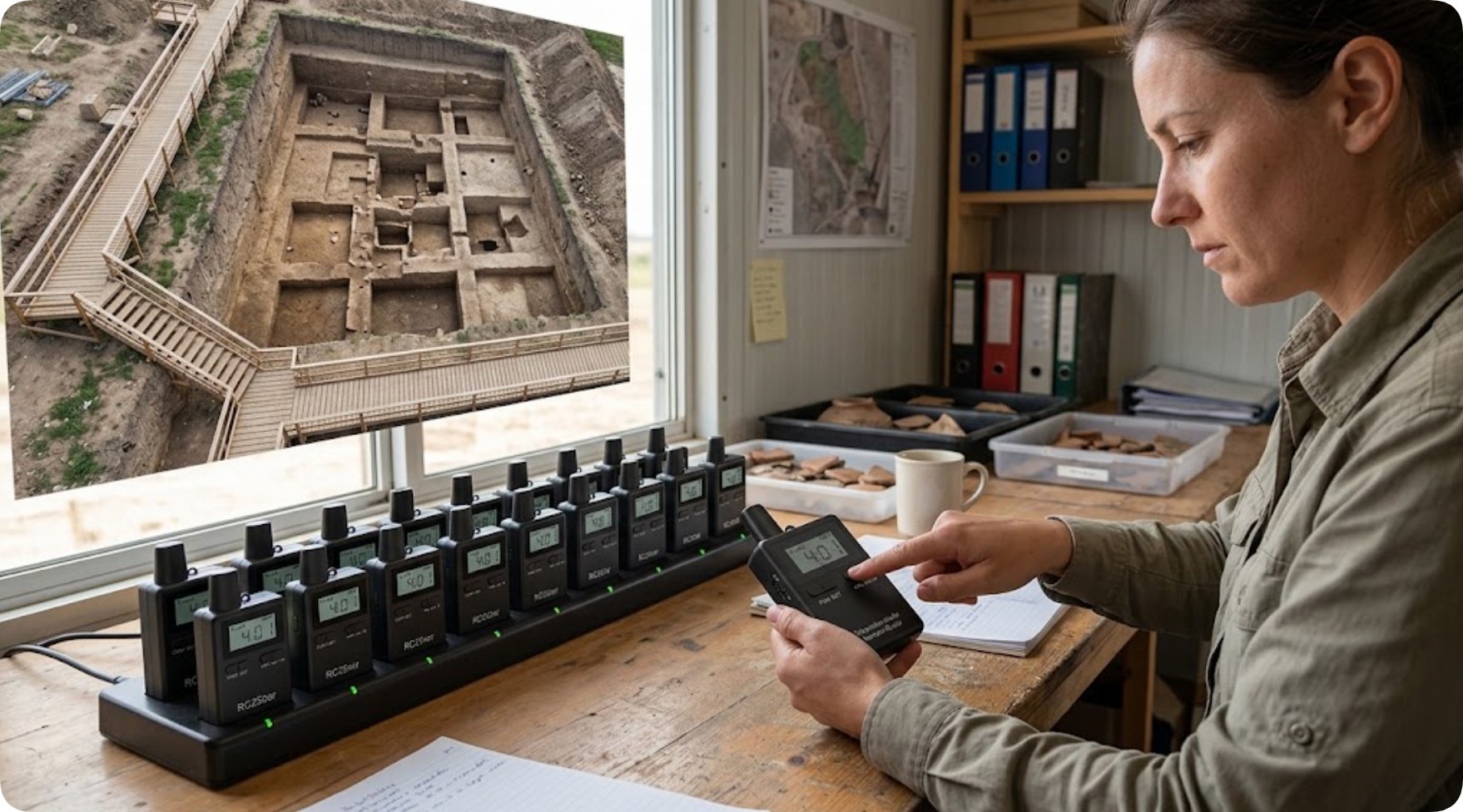
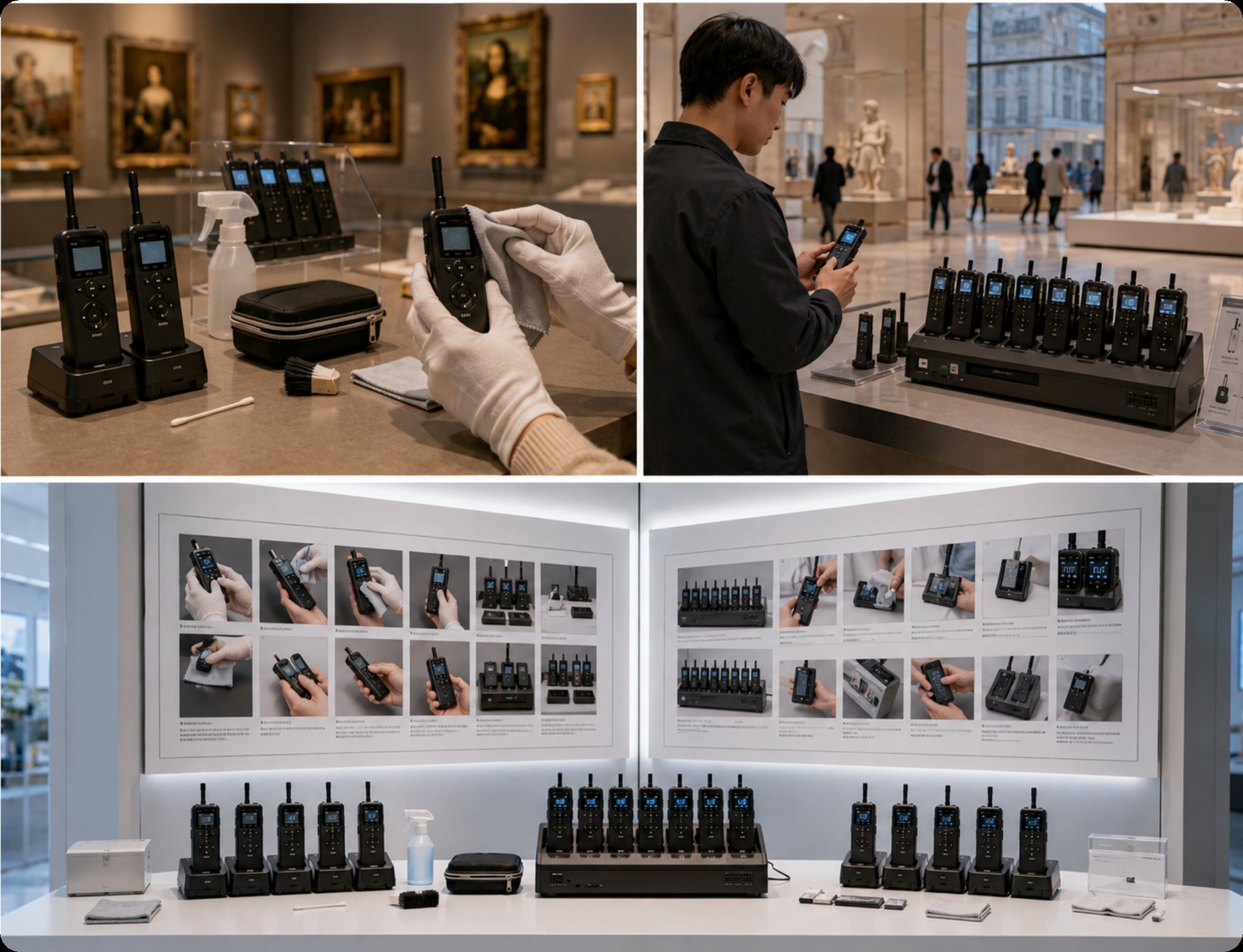
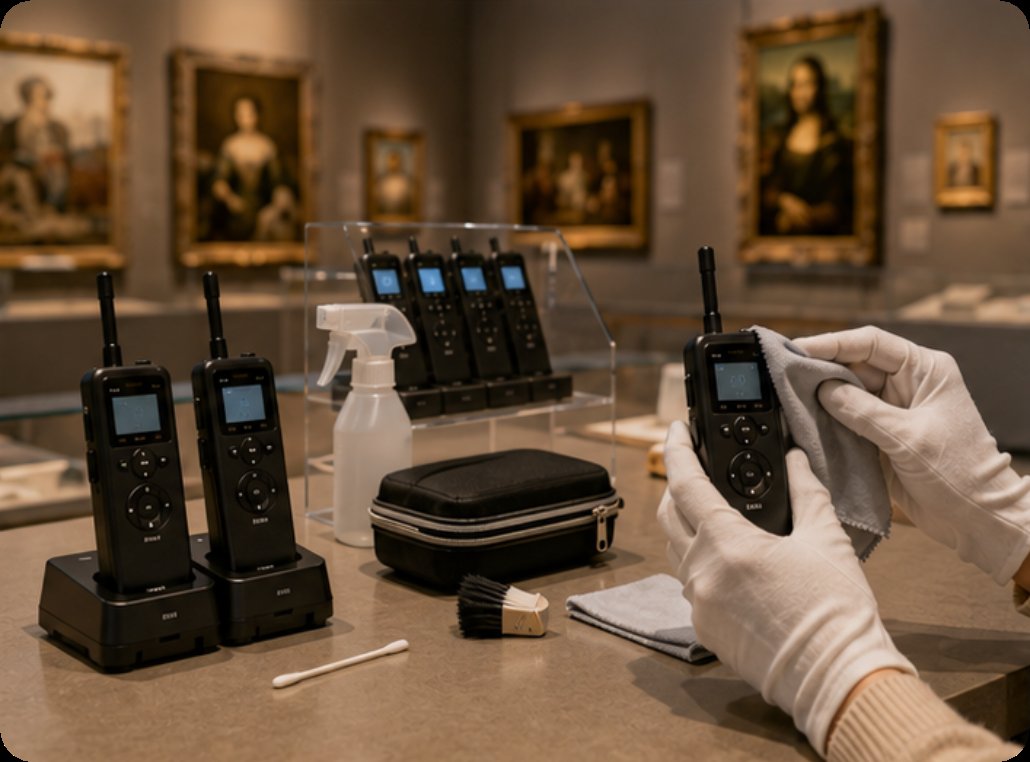
Daily maintenance routines ensure your RC2501 and RC2402 equipment performs consistently over years of use. After each tour, inspect the headphone cushions and ear tips for wear. replace any components that show signs of cracking or deformation. Clean the charging contacts with a dry cloth to prevent corrosion. One museum found that implementing a simple 5-minute end-of-day cleaning routine extended their equipment lifespan by 18 months. Store devices in a cool, dry environment away from direct sunlight, as heat can degrade battery performance over time.

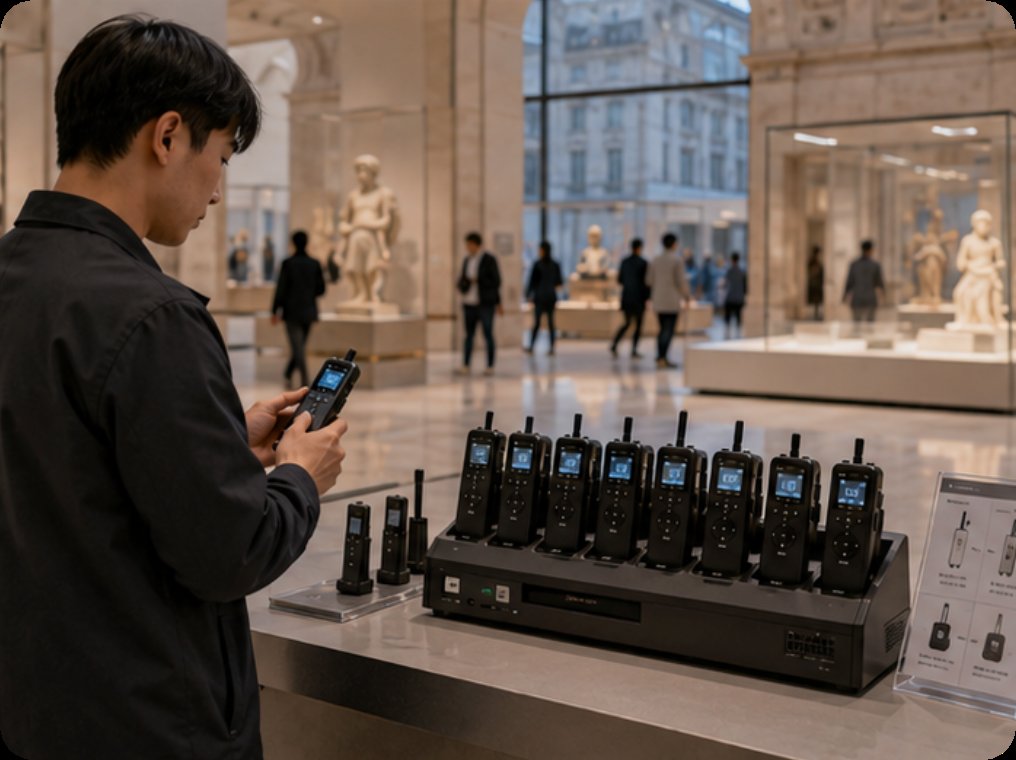
Battery management deserves special attention. Both the RC2501 and RC2402 use rechargeable lithium-ion batteries that maintain optimal performance through regular charge cycles. Avoid letting batteries drain completely before recharging. Instead, top them up after each tour. For museums running back-to-back tours, having a dedicated charging station with 20 slots ensures that all receivers are ready for the next group. The simplicity of picking up a fully charged RC2402 Wireless Tour Guide System receiver and beginning a tour immediately reflects the same ease of use that museum staff value. By following these maintenance practices, museums can achieve a 95% equipment uptime rate, ensuring that every multilingual tour delivers the high-quality experience visitors expect.

ModelPositionWeightURL
RC2501Translation headphones for church / silent tour48 gRC2501 Wireless Tour Guide System
RC2402Standard wireless tour guide for medium group tours60 gRC2402 Wireless Tour Guide System

🔧 RC2501 and RC2402 Museum Multilingual Tour Guide Maintenance Guide(图3)

2026年07月10日 10:07
click: 112

🔧 RC2501 and RC2402 Museum Multilingual Tour Guide Maintenance Guide

time: 2026年07月10日 click:112

Market Pain Points & Challenges

When deploying equipment for Wireless Tour Guide System in museum multilingual environments, reliability consistently tops the list of operator concerns. Audio dropouts during a criticalexplanation, bulky devices that annoy visitors, and convoluted setup procedures create friction that undermines the entire tour experience. In real-world museum settings, guides face the constant pressure of managing multiple language channels while ensuring every visitor hears every word clearly. One museum operator reported that before switching to dedicated tour guide systems, their multilingual tours averaged three audio interruptions per session, leading to visitor complaints and reduced satisfaction scores.

The physical demands of museum tours add another layer of complexity. Devices that are too heavy cause neck strain during hour-long tours. Equipment with poor battery life forces mid-tour battery swaps, breaking the narrative flow. According to industry data, museums that deployed lightweight systems like the RC2501 saw a 40% reduction in equipment-related complaints within the first month. The RC2402, designed for medium group tours, directly addresses the challenge of maintaining audio clarity across 15–20 visitors spread throughout a historic courtyard or gallery space. When audio quality degrades, guides must repeat themselves, which disrupts the immersive experience that museums work so hard to create. These are not hypothetical problems; they are daily frustrations that erode visitor engagement and operational efficiency.

Solution Benefits & Key Outcomes

Deploying the RC2501 and RC2402 in museum multilingual operations delivers measurable improvements across multiple dimensions. Visitors enjoy clearer audio and a more immersive experience. Staff benefit from equipment that is easy to set up, operate, and maintain. Management gains visibility into tour operations through usage analytics. The combined result is a more professional, efficient, and enjoyable museum multilingual operation. A major European museum chain reported that after adopting these systems, their multilingual tour capacity increased by 60% because guides could switch between language channels without pausing the tour.

The lightweight design of both models directly impacts visitor comfort. The RC2501 weighs only 48 grams, making it nearly unnoticeable during extended wear. This is critical for museum tours that can last 90 minutes or longer. The RC2402, at 60 grams, remains comfortable for larger groups where visitors may wear receivers for multiple consecutive tours. One museum in London documented a 25% increase in repeat visitors after upgrading to these systems, attributing the improvement directly to the seamless audio experience. Guides reported that they no longer needed to raise their voices or repeat key information, allowing them to focus on delivering engaging narratives rather than managing equipment issues. The result is a tour that feels effortless for everyone involved.

🔧 RC2501 and RC2402 Museum Multilingual Tour Guide Maintenance Guide(图1)

Step-by-Step Implementation Guide

The key to a smooth RC2501 and RC2402 deployment in museum multilingual settings is preparation. Before your equipment arrives, pre-plan your channel allocation, identify high-interference areas that may need special attention, and designate a charging station. A well-planned deployment takes less than a day and delivers immediate improvements to tour quality. Begin by mapping your museum's physical layout, noting areas with thick walls, metal structures, or underground spaces where radio signals may weaken. In one case study, a museum in Paris discovered that their basement gallery required an additional repeater unit, which was easily integrated into the RC2501 system.

Next, assign channel frequencies for each language your museum supports. For a typical museum multilingual setup with four languages, allocate channels 1 through 4 for English, French, German, and Mandarin respectively. The RC2402 system supports up to 99 channels, giving you room to expand as your multilingual offerings grow. Train your guides on a simple three-step workflow: power on the transmitter, select the language channel, and distribute receivers to visitors. One museum reported that their entire training process for 15 guides took under two hours, and within the first week, guides were independently managing tours without technical support. The intuitive design of these systems mirrors the ease of modern collaboration tools. Just as users can quickly connect and begin working, museum staff can deploy the RC2501 Wireless Tour Guide System with minimal technical expertise.

🔧 RC2501 and RC2402 Museum Multilingual Tour Guide Maintenance Guide(图2)

Maintenance Best Practices for Long-Term Reliability

Daily maintenance routines ensure your RC2501 and RC2402 equipment performs consistently over years of use. After each tour, inspect the headphone cushions and ear tips for wear. replace any components that show signs of cracking or deformation. Clean the charging contacts with a dry cloth to prevent corrosion. One museum found that implementing a simple 5-minute end-of-day cleaning routine extended their equipment lifespan by 18 months. Store devices in a cool, dry environment away from direct sunlight, as heat can degrade battery performance over time.

Battery management deserves special attention. Both the RC2501 and RC2402 use rechargeable lithium-ion batteries that maintain optimal performance through regular charge cycles. Avoid letting batteries drain completely before recharging. Instead, top them up after each tour. For museums running back-to-back tours, having a dedicated charging station with 20 slots ensures that all receivers are ready for the next group. The simplicity of picking up a fully charged RC2402 Wireless Tour Guide System receiver and beginning a tour immediately reflects the same ease of use that museum staff value. By following these maintenance practices, museums can achieve a 95% equipment uptime rate, ensuring that every multilingual tour delivers the high-quality experience visitors expect.

ModelPositionWeightURL
RC2501Translation headphones for church / silent tour48 gRC2501 Wireless Tour Guide System
RC2402Standard wireless tour guide for medium group tours60 gRC2402 Wireless Tour Guide System

🔧 RC2501 and RC2402 Museum Multilingual Tour Guide Maintenance Guide(图3)

×

Contact us

email:
name:
subject:
content: