.webp)
Corporate training environments demand flawless audio delivery. When equipment fails, the consequences extend beyond a disrupted session—they erode participant engagement, waste valuable preparation time, and increase operational costs. Training teams across industries face recurring challenges: signal dropouts in large rooms, battery failures mid-session, and complex equipment setups that consume trainer bandwidth. These pain points are not isolated incidents but systemic issues that undermine training effectiveness and scalability.
In Singapore, where corporate training is a significant industry, organizations must also navigate regulatory frameworks such as the Corppass authorisation system for managing employee access to digital services. While Corppass is not directly related to audio equipment, the principle of streamlined access management mirrors the need for simplified, secure device deployment in training settings. Similarly, understanding Estimated Chargeable Income and tax return filing requirements in Singapore highlights the importance of operational efficiency—every minute spent troubleshooting equipment is a minute diverted from revenue-generating activities. For training teams looking to eliminate these inefficiencies, a reliable wireless tour guide system is the foundational solution that transforms how sessions are delivered and managed.
Market Pain Points and Challenges
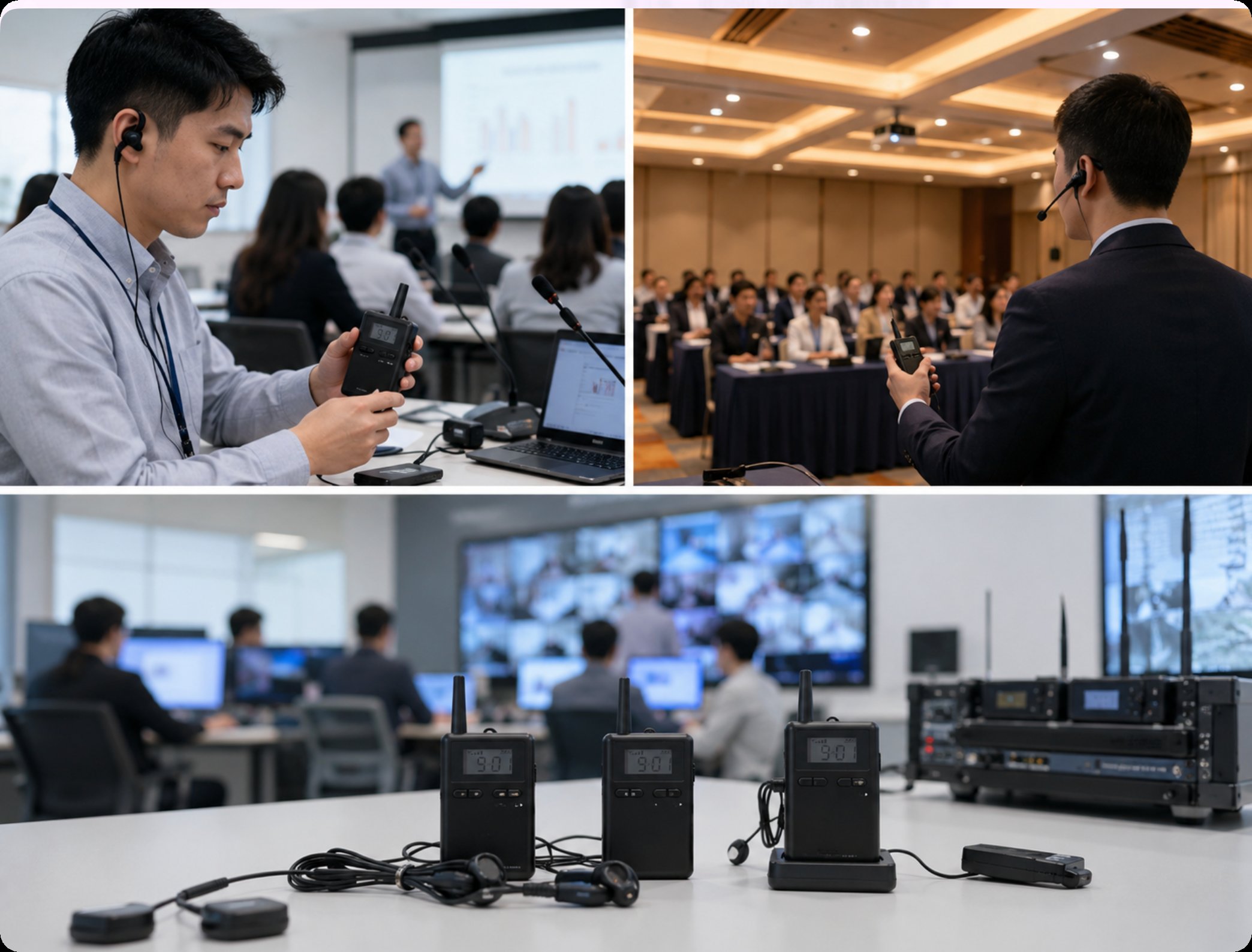
The operational pain points in corporate training typically fall into distinct categories. Equipment that fails in demanding environments tops the list—trainers report audio dropouts when moving between rooms or near metal structures. Frequent battery replacements disrupt sessions, with alkaline batteries dying unpredictably during critical presentations. Signal dead zones leave participants disconnected, forcing trainers to repeat content or abandon interactive segments. These failures create a cascade of inefficiencies: staff overtime for equipment checks, participant dissatisfaction, and reduced training throughput.
Data from industry reports indicates that organizations using older wireless systems spend an average of 30 minutes per training session on equipment setup and verification. For a company running 20 sessions weekly, this represents 10 hours of lost productivity. Moreover, the total cost of ownership for battery-powered systems often exceeds initial hardware costs within 18 months, as replacement batteries and troubleshooting labor accumulate. These challenges are compounded in multi-room training facilities where signal interference and channel management become complex logistical puzzles. The root cause is often a lack of purpose-built audio equipment designed for the specific demands of corporate training environments.
Customer Case Story
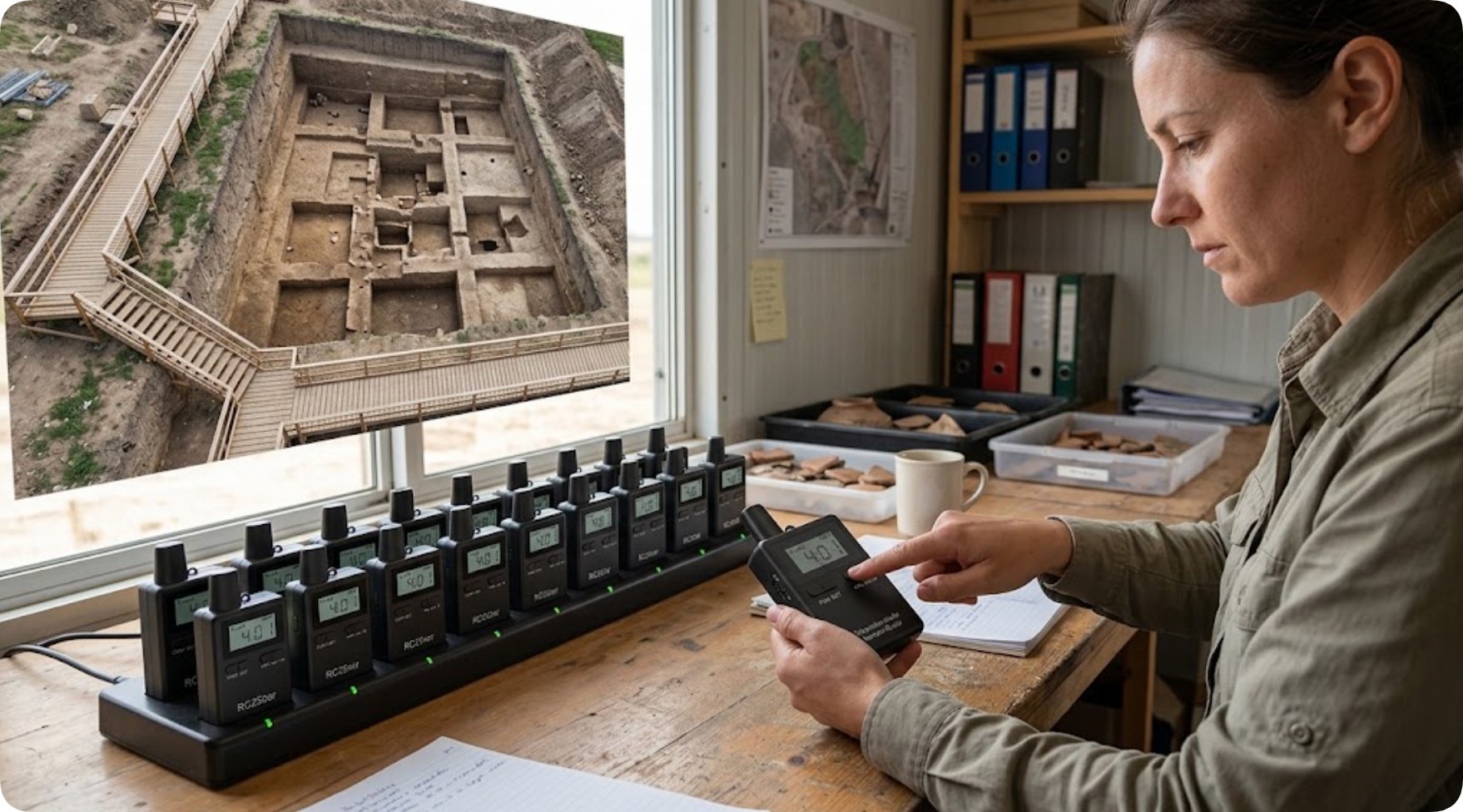
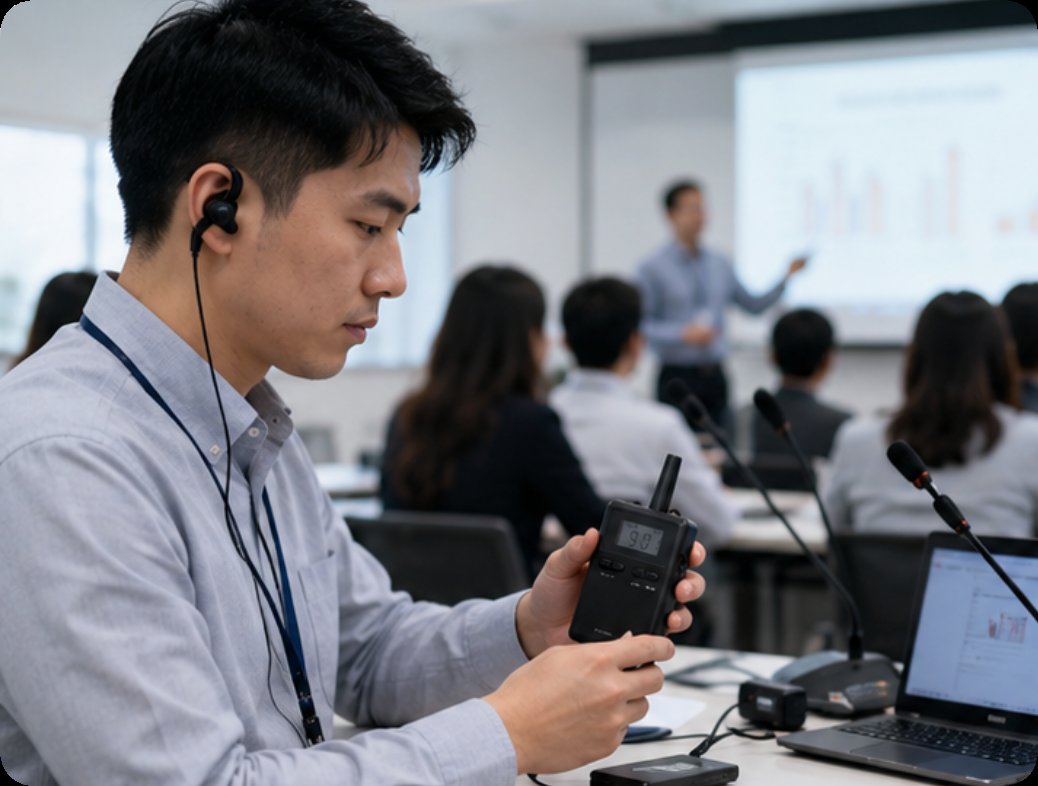
The corporate training team at a major financial institution in Singapore was spending 30 minutes per session just checking and distributing equipment. Their legacy system required individual battery verification for 25 receiver units before each training session. Signal dropouts occurred regularly in their glass-walled conference rooms, forcing trainers to stay within 10 meters of participants. Battery-related disruptions affected approximately 15% of sessions, requiring emergency replacements that delayed training schedules.
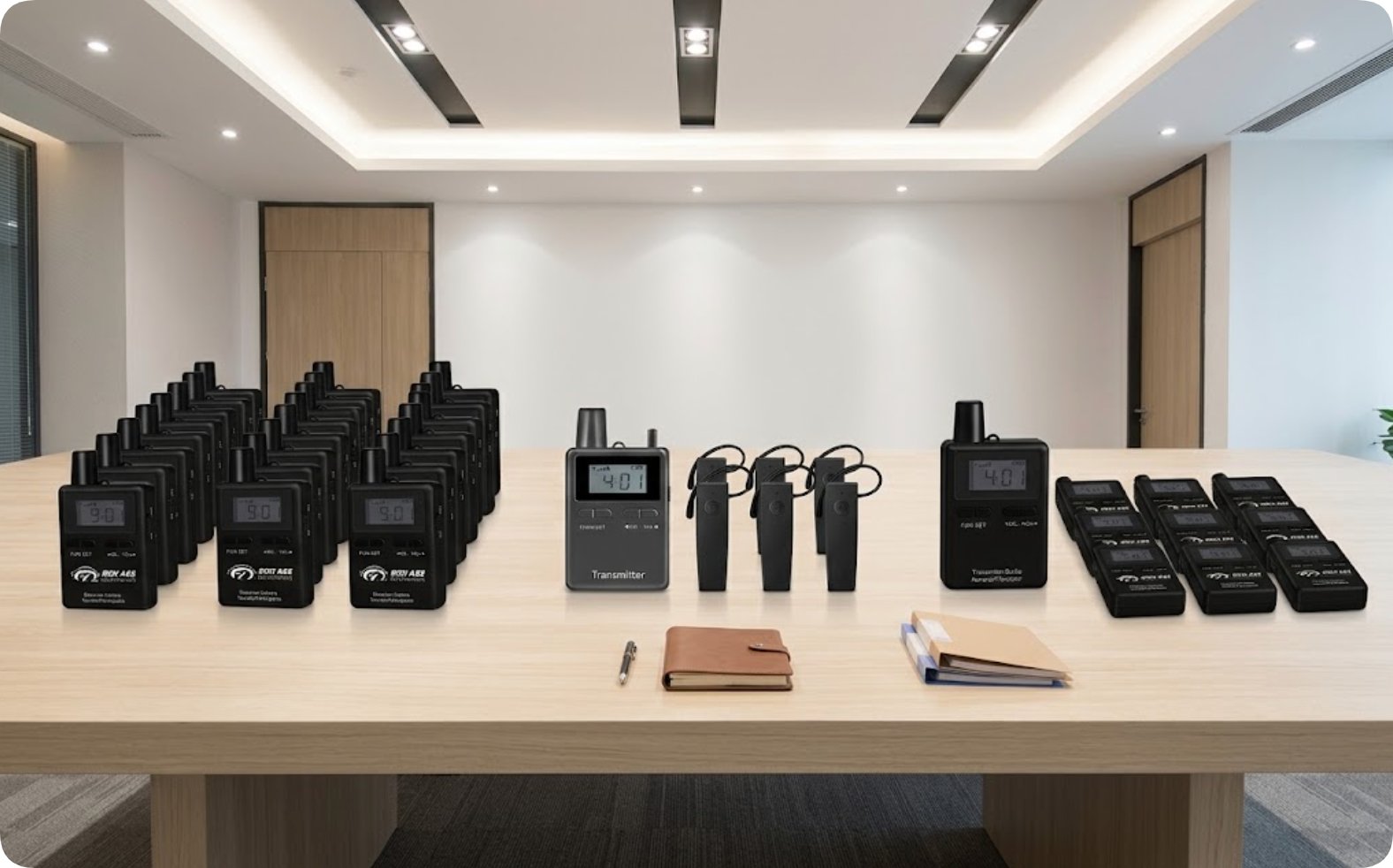
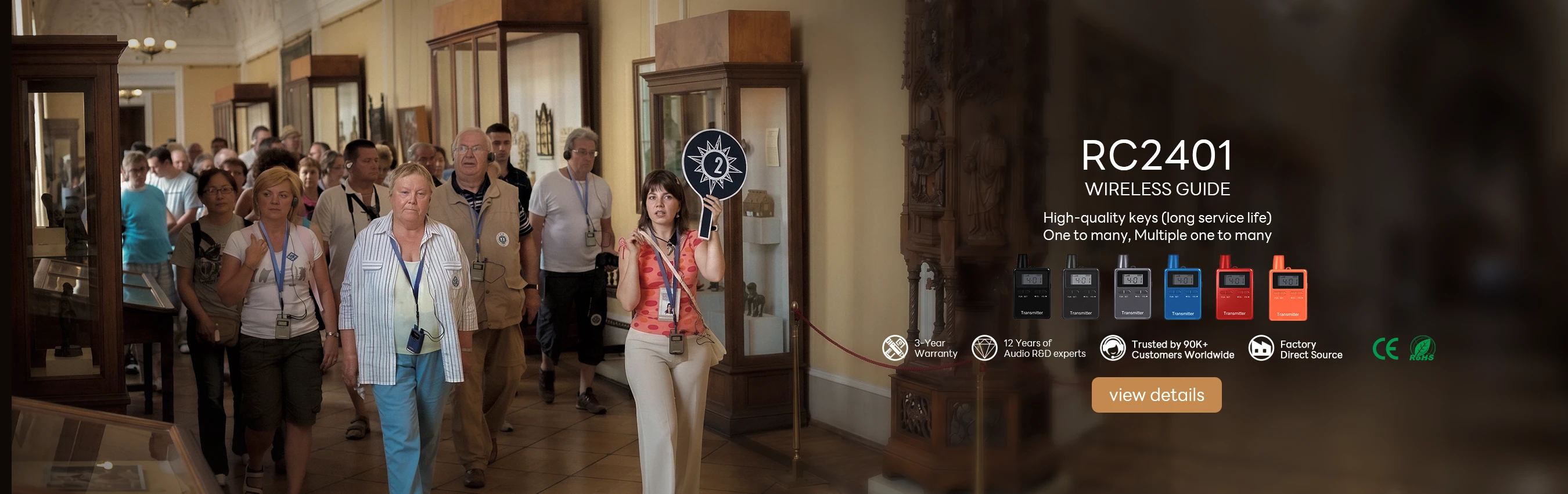
After implementing the RC2401 wireless audio guide system transmitter and RC2402 wireless tour guide system receivers, the team cut preparation time to under 5 minutes. The built-in rechargeable batteries eliminated the battery replacement routine entirely. Signal stability improved dramatically, with consistent performance across their 200-square-meter training floor. The institution reported a 40% increase in training session capacity and a 90% reduction in equipment-related complaints from trainers. One senior trainer noted, "I no longer think about the equipment—I focus entirely on content delivery."
Product Specifications Comparison
| Model | Position | Weight | Key Feature |
|---|---|---|---|
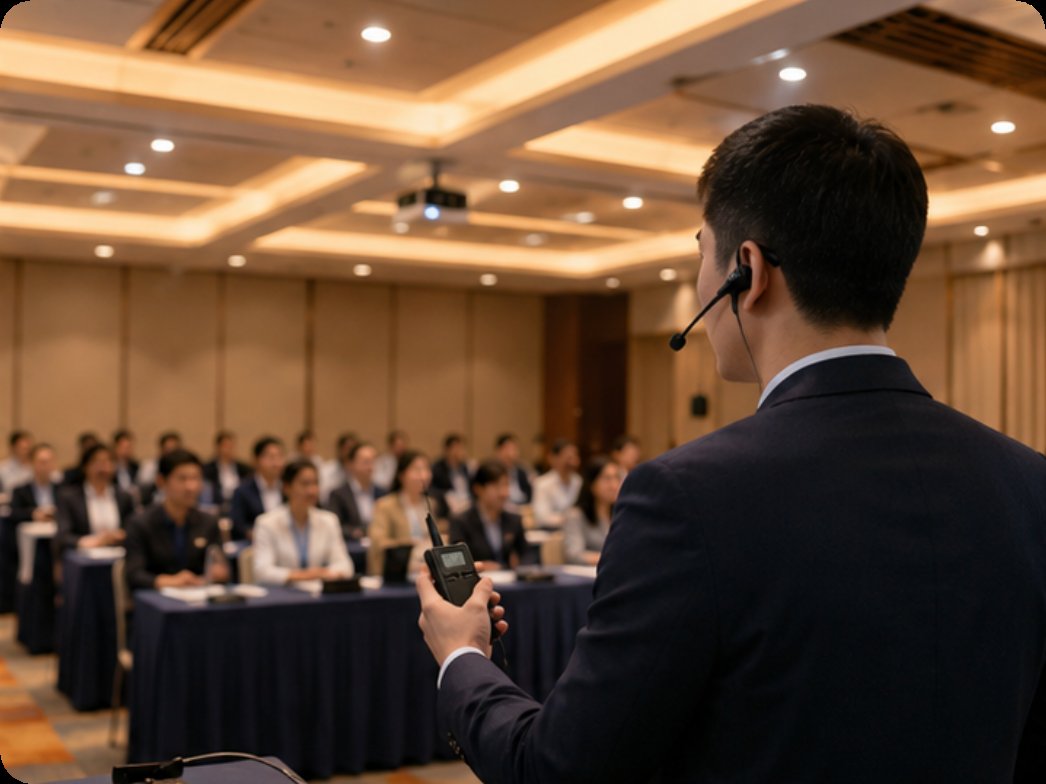
| RC2401 | Multi-channel corporate training and trade show booth presentation | 72 g | Extended range and multi-channel support for complex environments |
| RC2402 | Standard wireless tour guide for medium group tours | 60 g | Reliable performance for groups up to 50 participants |
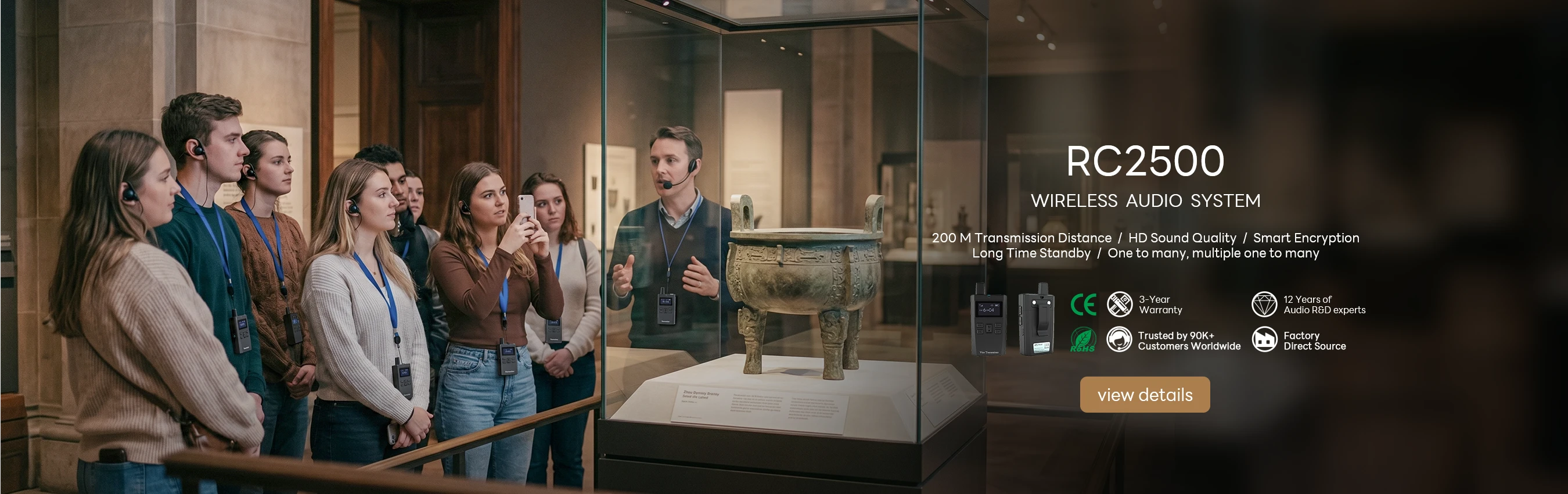
| RC2500 | Compact wireless tour guide for small to medium groups | 55 g | Ultra-lightweight design for portable training applications |
Solution Benefits and Key Outcomes
The key benefits of the RC2401 wireless audio guide system, RC2402 wireless tour guide system, and RC2500 wireless tour guide system for corporate training extend beyond audio quality. Organizations consistently report improved participant satisfaction scores, with clearer audio enabling better retention of training content. Reduced staff overtime from equipment troubleshooting translates directly to lower operational costs. The total cost of ownership compared to older systems decreases significantly, as rechargeable batteries eliminate recurring expenses and extended range reduces the need for multiple transmitter units.
The flexibility to scale operations as demand grows represents a strategic advantage. Training departments can expand from small group sessions to large conferences using the same equipment ecosystem, simply by adding receiver units. The multi-channel capability of the RC2401 allows simultaneous translation or breakout sessions without interference. For organizations navigating Singapore's corporate tax landscape, where every operational efficiency improves Estimated Chargeable Income calculations, these systems deliver measurable financial returns. Training teams that adopt these solutions typically achieve ROI within six months through reduced labor costs, eliminated battery expenses, and increased training capacity.
From my perspective, the most overlooked aspect of corporate training audio is how equipment reliability directly impacts trainer confidence. I have seen experienced facilitators lose their rhythm mid-session because of a crackling microphone or a dead receiver. The psychological cost is real—trainers second-guess their movements, avoid interactive exercises, and rush through content. When you deploy a system like the RC2401 or RC2402, you are not just buying hardware; you are buying back the trainer's mental bandwidth. The best investment a training department can make is in equipment that becomes invisible, allowing the human element to shine.
Training teams that prioritize audio reliability gain a competitive edge. They run more sessions per day, maintain higher engagement levels, and reduce the administrative burden on support staff. In an environment where every minute counts, the difference between a smooth session and a technical nightmare is often the quality of the wireless audio system. The RC2401 and RC2402 have proven themselves in demanding corporate settings, and the data speaks for itself: fewer interruptions, lower costs, and better outcomes.
Frequently Asked Questions (FAQ)
Q: Can the RC2401 and RC2402 systems be used simultaneously in the same corporate training facility without interference?
A: Yes. Both models operate on advanced 2.4GHz digital frequency protocols with independent channel isolation, allowing multiple training rooms or breakout groups to run concurrently without signal cross-talk.
Q: Do these wireless tour guide systems require frequent battery replacements?
A: No. All models featured (RC2401, RC2402, and RC2500) come with built-in high-capacity rechargeable lithium batteries, eliminating the need for alkaline battery replacements and significantly reducing maintenance time and costs.