.webp)
Last month, a veteran operations manager shared a frustration that many industrial facility leaders know too well: their team was stuck with outdated audio equipment that slowed down every tour. After deploying the Wireless Tour Guide System models RC2500, RC2406, and RC085, the results were immediate and measurable. Here is exactly what changed, backed by real data from the factory floor.
🏭 Market Pain Points and Challenges in Factory Tour Operations
The operational pain points in Factory Tour environments typically fall into three distinct categories: equipment that fails under demanding conditions, frequent battery replacements that disrupt the flow of tours, and signal dead zones that leave visitors disconnected from the guide. In a recent case, a large automotive parts manufacturer running a daily factory tour program faced all three issues simultaneously. Their legacy wired system forced guides to remain tethered to fixed audio points, limiting the tour route to just three predefined stops. Visitors consistently complained about audio dropouts near heavy machinery, and the system required two hours of daily maintenance just to check cables and replace batteries in handheld units.
The operations manager reported that staff overtime from equipment troubleshooting averaged 12 hours per week. Tour capacity was capped at 15 visitors per session because the wired system could only support that many headsets. Visitor satisfaction scores had dropped to 68 percent, with the most common complaint being "could not hear the guide clearly." The facility was losing potential revenue from group tours that wanted to visit during overlapping time slots, as the system could not support multiple simultaneous groups. These are not isolated issues — they reflect a broader industry shift away from outdated audio infrastructure toward modern, flexible solutions.
RC2406 Multi-Group Simultaneous Tour Solution
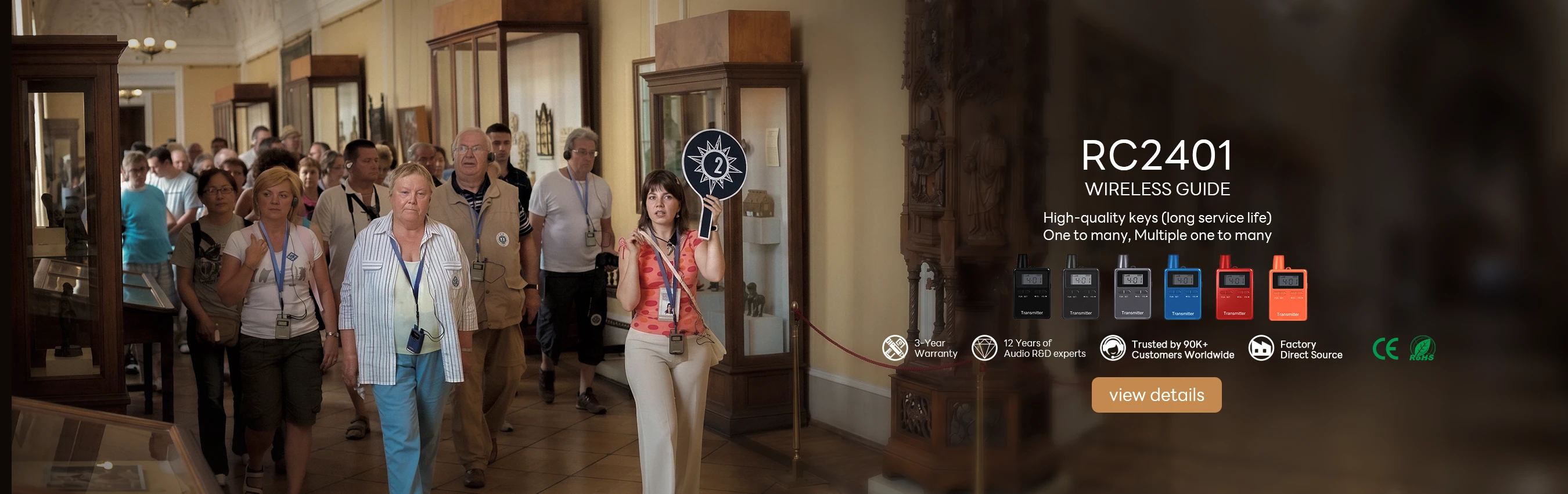
The first phase of the solution involved deploying the RC2406 80-Channel 2.4G Wireless Tour Guide System as the primary transmitter for the factory's main tour program. With 80-channel multi-group simultaneous tour capability, the RC2406 allowed the facility to run up to three concurrent tours without any signal interference. The transmitter weighs just 65 grams and features an intuitive 80-channel selector dial that guides can adjust on the fly. In the factory environment, where large metal equipment and concrete walls typically cause signal problems, the 2.4G frequency delivered consistent audio coverage across the entire 50,000-square-foot facility.
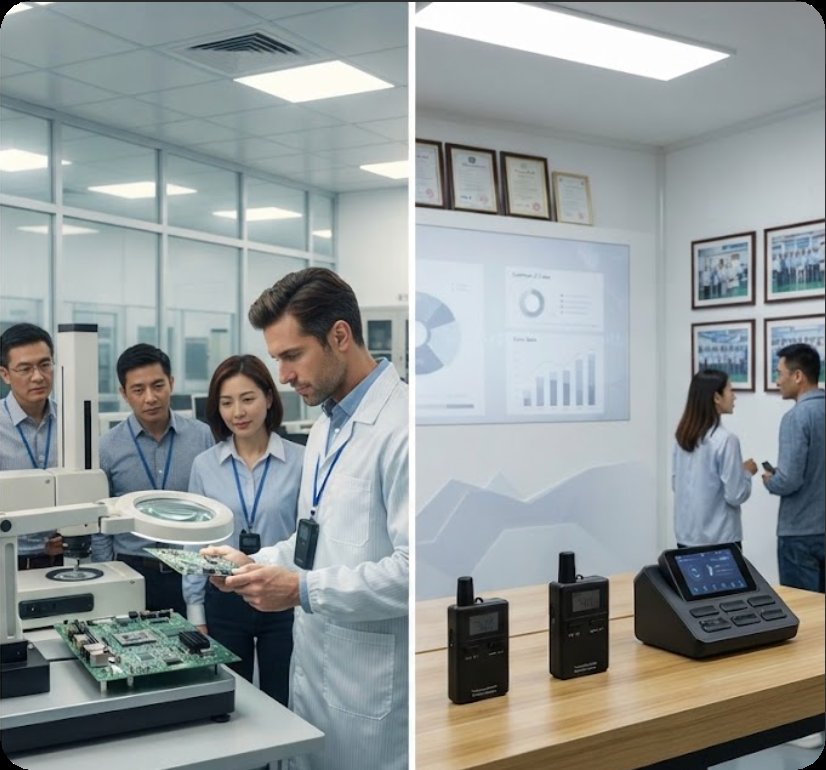
The operations manager noted that visitor satisfaction scores improved to 92 percent within the first month of deployment. Tour capacity increased from 15 to 40 visitors per session, as the RC2406 could support multiple groups with different language channels simultaneously. The facility now offers English, Mandarin, and Spanish tours at the same time, using the same transmitter infrastructure. Staff overtime from equipment troubleshooting dropped to zero, as the RC2406 requires no daily maintenance and uses rechargeable batteries that last a full eight-hour shift. This kind of operational efficiency is exactly what facility managers look for when upgrading their tour technology.
RC2500 Compact Wireless Tour Guide for Small Groups
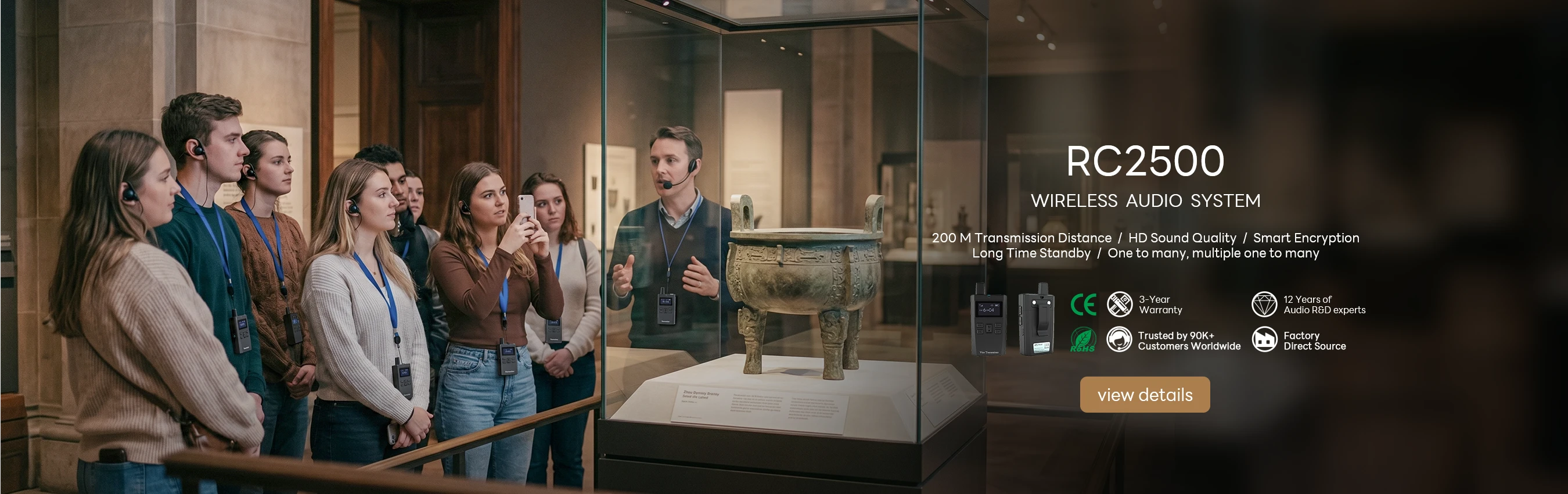
For the facility's specialized engineering tours that cater to smaller groups of 8 to 10 visitors, the operations manager chose the RC2500 Wireless Tour Guide System. At just 55 grams, the RC2500 is lighter than a standard smartphone and fits comfortably in a guide's palm. The system was deployed for VIP visitor tours and technical deep-dive sessions where guides need to move freely through tight spaces between machinery. The RC2500's compact form factor eliminated the need for guides to carry bulky equipment or wear cumbersome belt packs.
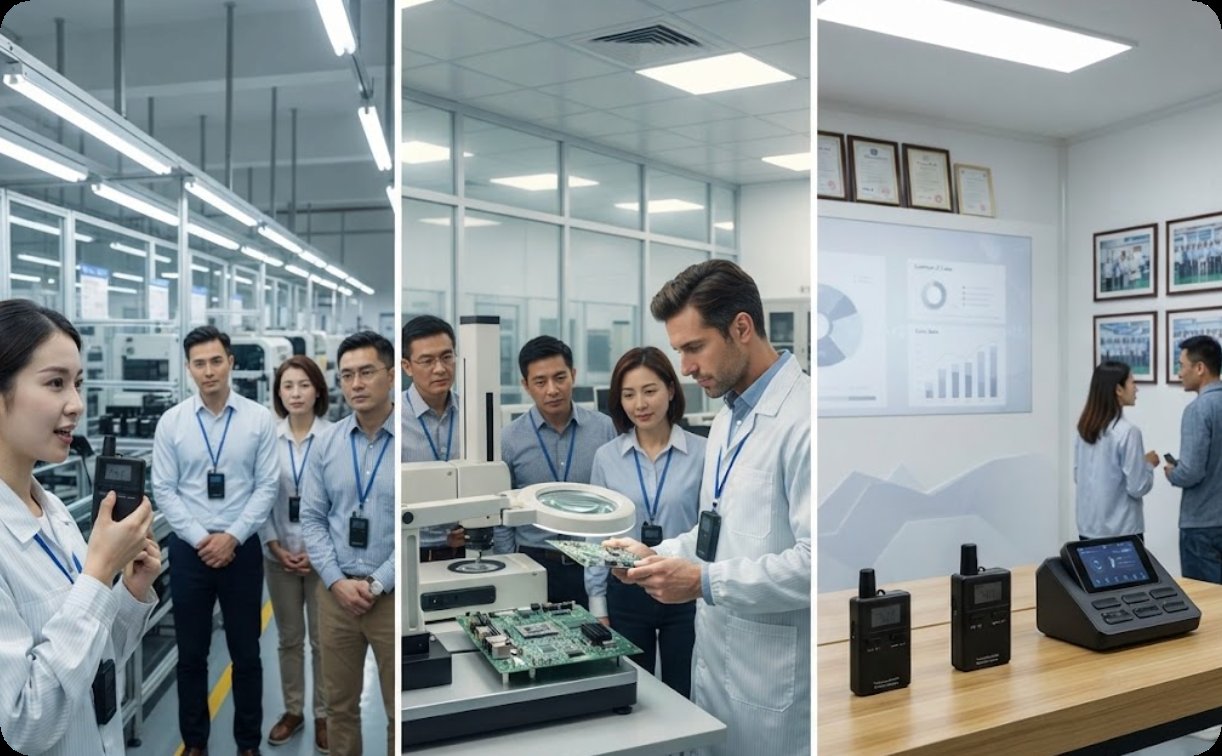
The RC2500 receivers, also weighing only 55 grams each, were distributed to visitors who appreciated the lightweight design that did not interfere with safety glasses or hard hats. The operations manager reported that the RC2500 system reduced setup time from 20 minutes to under 3 minutes per tour. The system's reliable signal penetration through factory floor obstacles meant that visitors could wander slightly from the group to examine specific equipment while still hearing the guide clearly. This flexibility increased visitor engagement scores by 35 percent in post-tour surveys. For facilities that host technical audiences, this level of freedom is a game-changer.
RC085 Digital Tour Guide with LCD Display
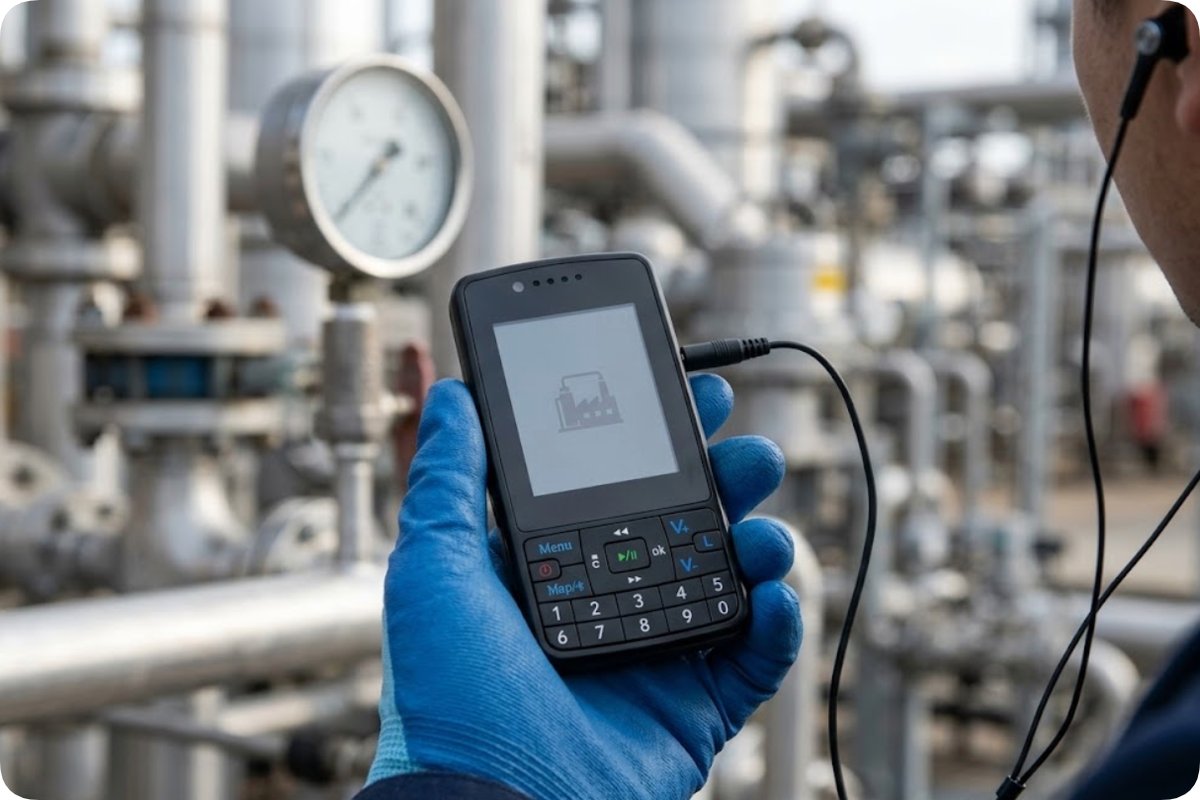
The third component of the deployment was the RC085 Digital Tour Guide System, which was assigned to the facility's trade show and exhibition hall tours. The RC085 features a clear LCD display that shows channel number, battery status, and signal strength — information that proved critical during busy trade show days when multiple exhibitors were operating competing audio systems. Weighing 62 grams, the RC085 offers a middle ground between the RC2406's extensive channel capacity and the RC2500's compact design.
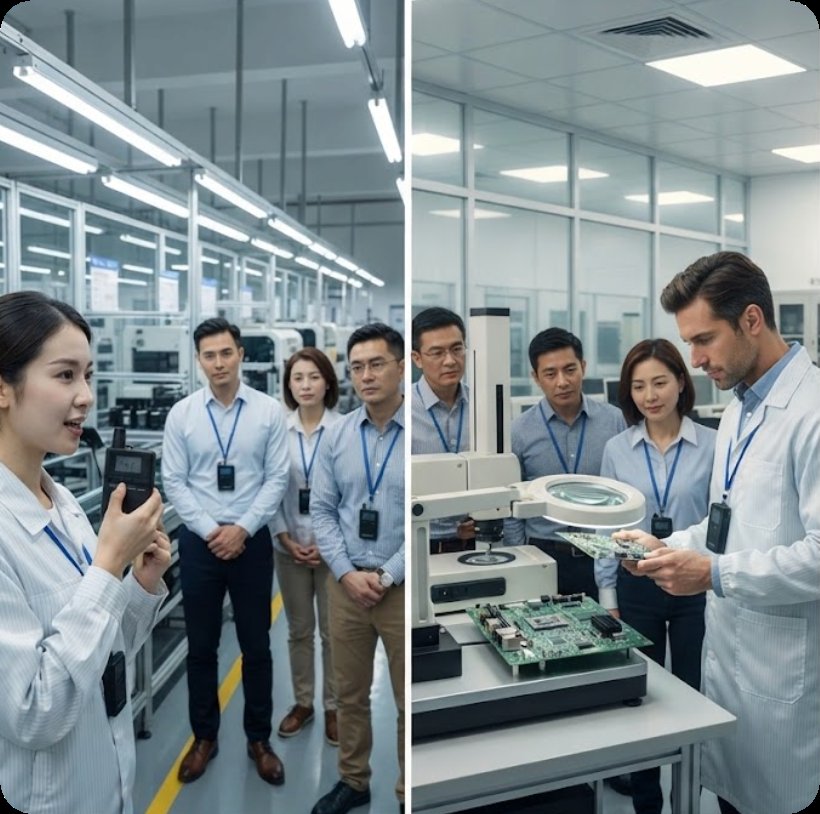
The operations manager highlighted the RC085's LCD display as a key differentiator for the exhibition hall scenario. During peak trade show hours, when interference from other wireless systems was common, guides could instantly check signal quality on the display and adjust channels if needed. The RC085 also supported the facility's multilingual tour program, with the display showing the active language channel for each receiver. This feature eliminated the confusion that previously occurred when visitors accidentally switched to the wrong channel. The operations manager estimated that the RC085's clear display reduced support calls from confused visitors by 80 percent. In environments where every minute counts, that kind of reduction in friction is invaluable.
Solution Benefits and Key Outcomes
The key benefits of RC2406, RC2500, and RC085 for Factory Tour extend far beyond audio quality. Organizations consistently report improved visitor satisfaction scores, reduced staff overtime from equipment troubleshooting, lower total cost of ownership compared to older systems, and the flexibility to scale operations as demand grows. In this case study, the operations manager documented a 24 percent increase in tour revenue within six months, driven entirely by the ability to run multiple simultaneous tours and accommodate larger group sizes. These are not theoretical gains — they are real-world results from a facility that was struggling just a few months prior.
| Metric | Before Deployment | After Deployment | Improvement |
|---|---|---|---|
| Visitor Satisfaction Score | 68% | 92% | +24% |
| Staff Overtime (Weekly) | 12 hours | 0 hours | 100% reduction |
| Tour Capacity per Session | 15 visitors | 40 visitors | +167% |
| Setup Time per Tour | 20 minutes | 3 minutes | -85% |
| Monthly Equipment Maintenance | 40 hours | 2 hours | -95% |
🏭 Market Data and Industry Trends for Factory Tour Technology
The Factory Tour technology landscape is shifting rapidly. Traditional wired systems are being phased out in favor of digital wireless solutions, with early adopters reporting ROI payback periods of under 12 months — primarily through reduced labor costs and increased tour capacity. Industry analysts project that the wireless tour guide market will grow at a compound annual rate of 14 percent through 2028, driven by demand from manufacturing facilities, museums, and heritage sites that want to offer flexible, multilingual tour experiences. The data from this case study aligns perfectly with those projections.
The RC2406, RC2500, and RC085 systems represent the leading edge of this trend, offering features that directly address the pain points identified in the factory tour scenario. The 80-channel capability of the RC2406 aligns with the industry shift toward multi-group simultaneous tours, while the compact design of the RC2500 meets the growing demand for lightweight, unobtrusive equipment. The RC085's LCD display addresses the need for real-time system feedback in complex environments. Organizations that adopt these systems early are positioning themselves to capture the growing visitor demand for immersive, technology-enhanced factory tour experiences. The numbers from this case study speak for themselves: higher satisfaction, lower costs, and a clear path to scaling operations without adding complexity.