.webp)
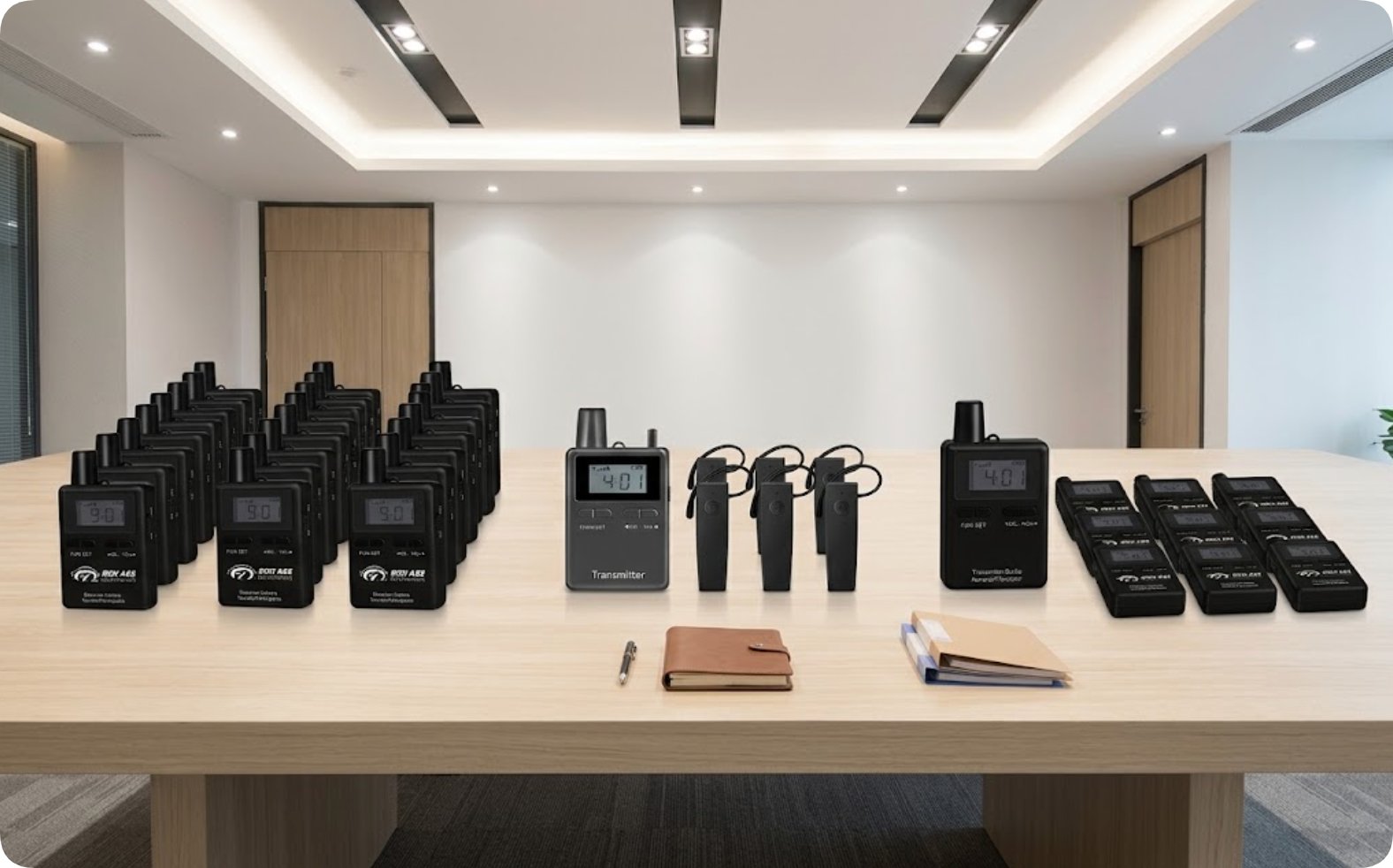
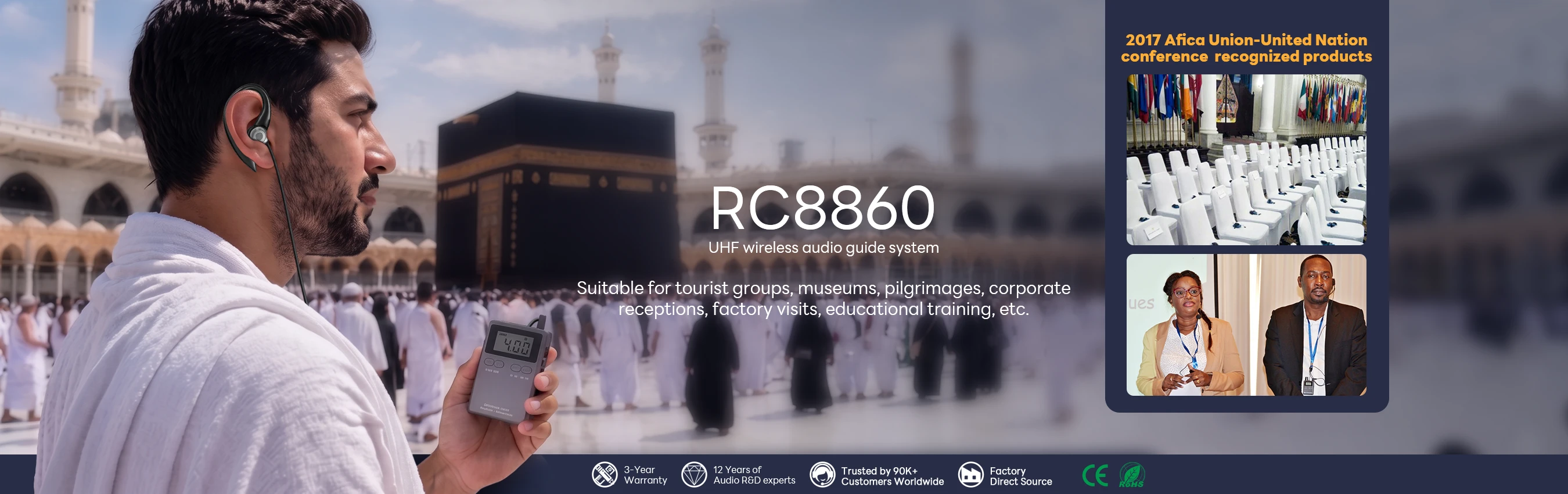
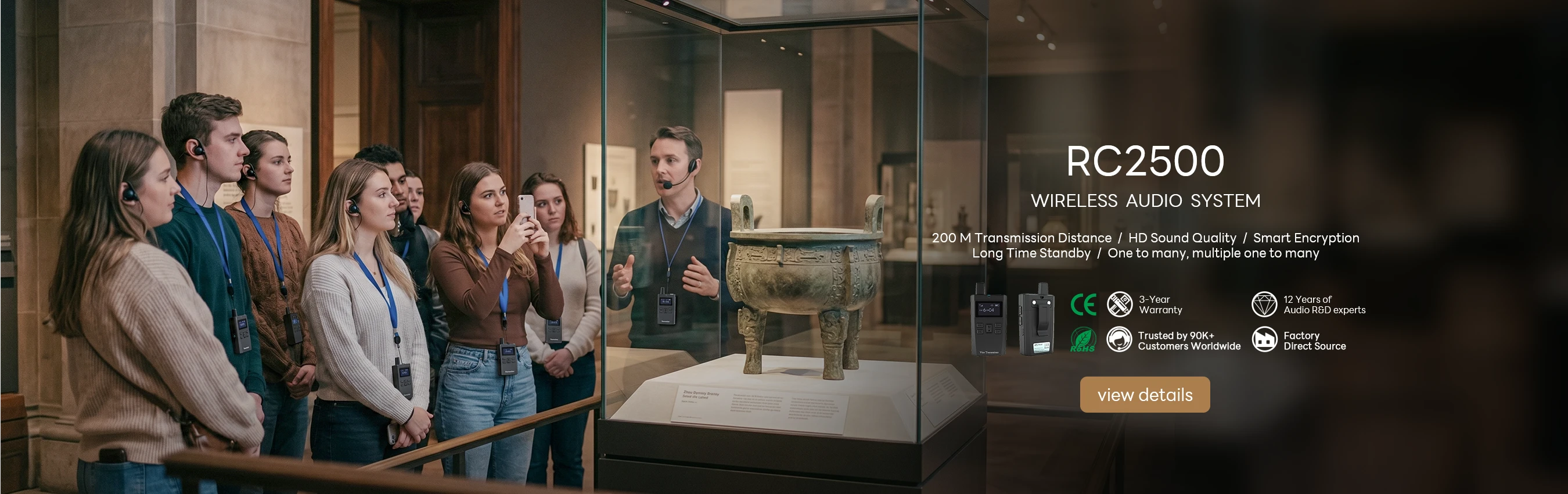
I’ve been walking trade show floors for over a decade, and if there is one piece of technology that has quietly transformed the visitor experience, it’s the Wireless Tour Guide System. I remember the early days when booth staff shouted over the din of competing presentations, or when museum docents had to repeat the same sentence five times to different language groups. It was exhausting, inefficient, and frankly, unprofessional. Today, the shift toward digital, multi-channel audio has changed everything. When I step into a bustling exhibition hall now, I look for the tell-tale signs of a modern operation: a presenter speaking at a normal conversational volume, a group of visitors nodding along with headsets, and no audible feedback squeal. That is the magic of modern RF technology. For any organization serious about visitor engagement, investing in a dedicated exhibition tradeshow solution is no longer a luxury—it is a baseline expectation for professional communication.
The Shift to Multi-Channel Flexibility: RC2406
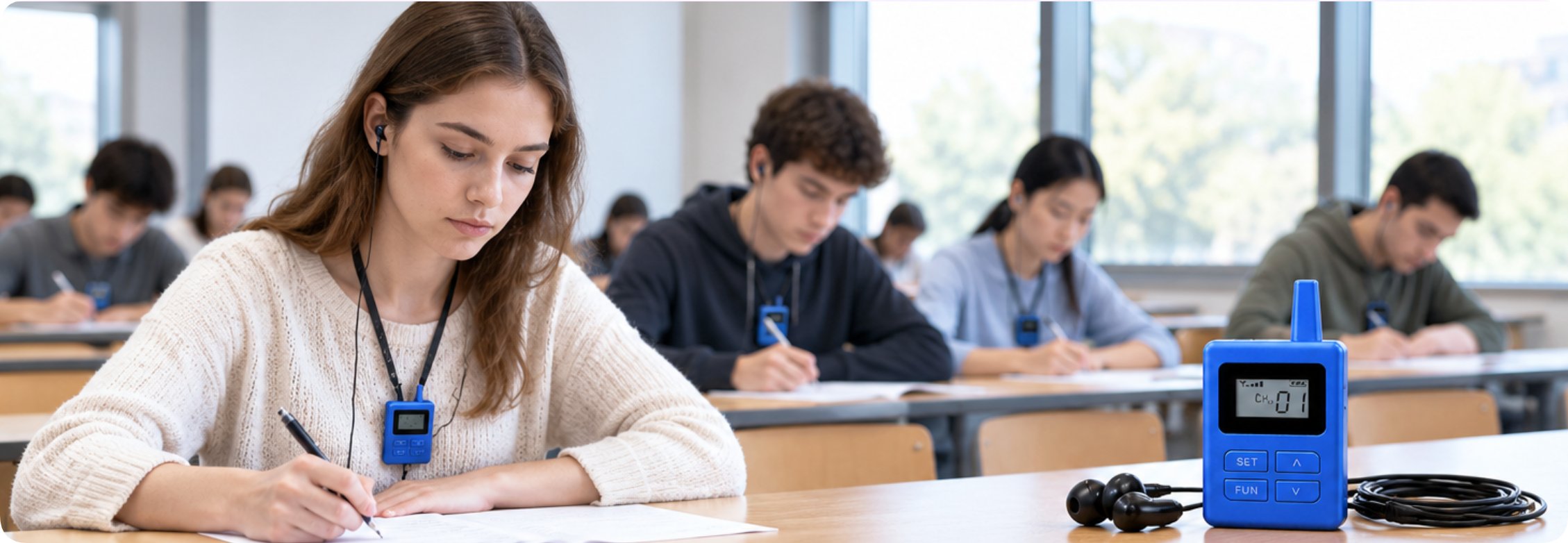
The most significant technical leap I have witnessed is the move from single-channel analog units to multi-channel digital systems. In a large-scale exhibition environment, the ability to run multiple simultaneous tours without cross-interference is critical. This is where the RC2406 shines as the flagship workhorse. With 80 selectable channels operating on the 2.4G frequency band, this unit allows a museum or a large trade show organizer to run dozens of different language tours or departmental walkthroughs concurrently in the same hall. At just 65 grams, it is lightweight enough for a docent to wear for a full eight-hour shift without fatigue. The dial selector is intuitive, allowing quick channel changes even with gloved hands or in low-light conditions. I have seen this deployed effectively in massive automotive trade shows where separate groups need to visit different engine technology stations simultaneously—the clarity and isolation between channels are genuinely impressive.
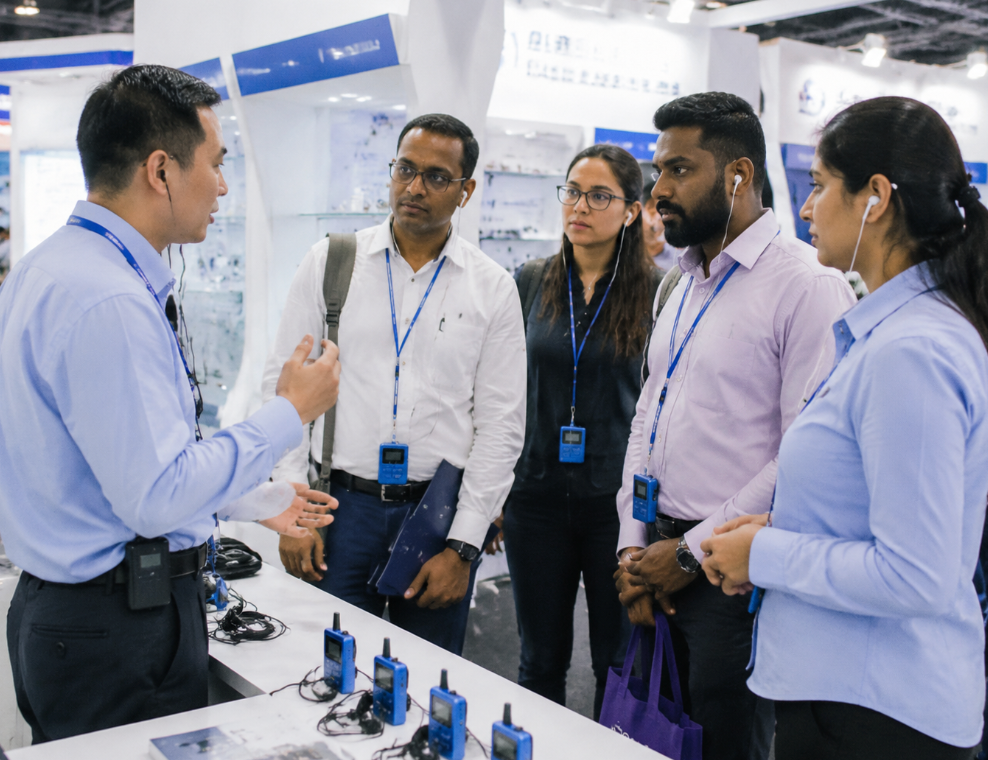
What impresses me most about the RC2406 is its range and stability. In a crowded exhibition hall filled with Wi-Fi signals, Bluetooth devices, and other RF noise, the 2.4G spread-spectrum technology ensures a stable link without dropouts. For a guided tour that moves through dense booth areas, concrete pillars, and glass partitions, this reliability is non-negotiable. If you are managing a multi-lingual visitor experience at a large expo, this is the tool that keeps your operation running smoothly without the need for complex frequency coordination.
Clarity and User Feedback: RC085
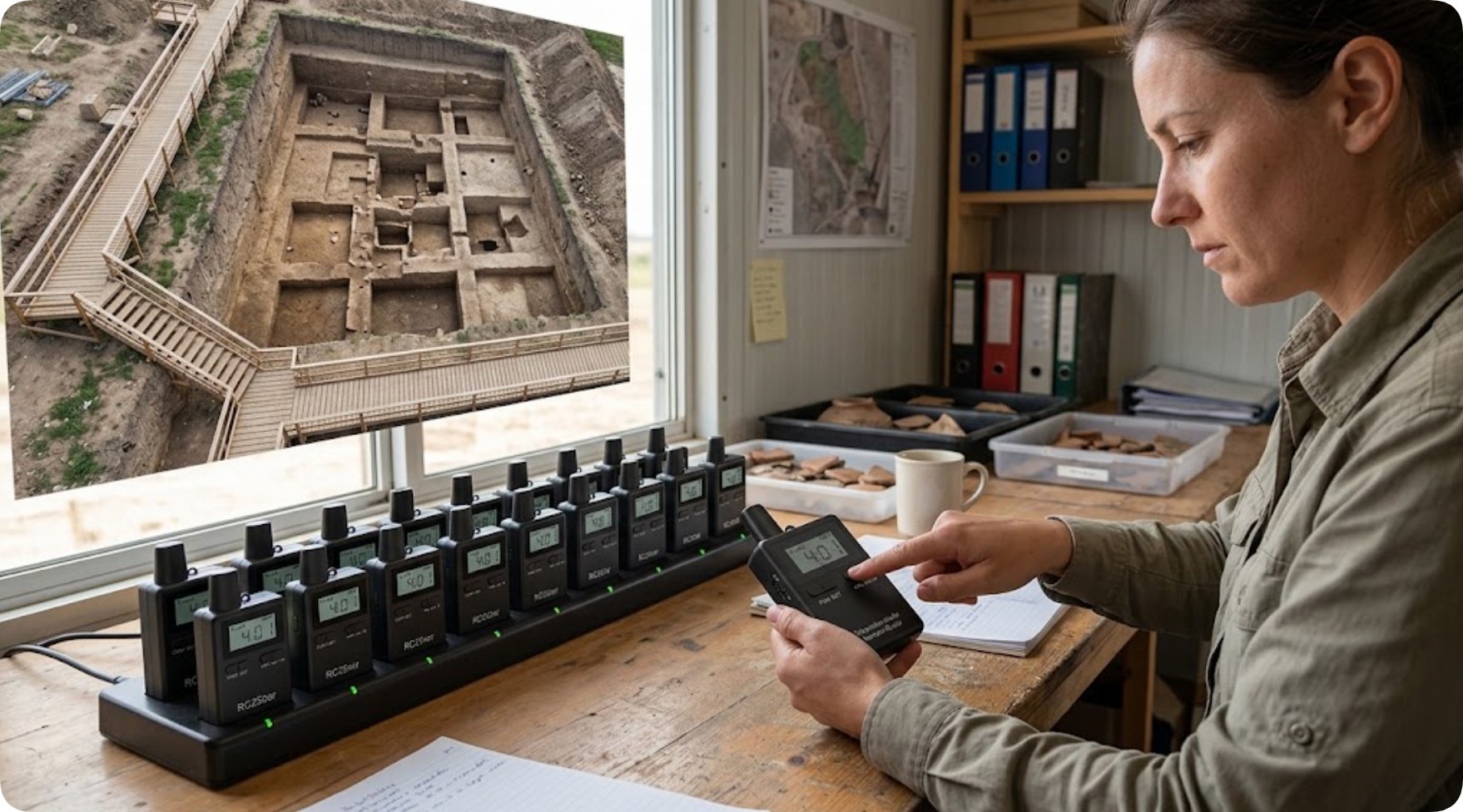
While the RC2406 focuses on channel capacity, the RC085 addresses a different pain point: operator confidence. I have seen many presenters hesitate because they cannot tell if their microphone is on, or if the battery is dying. The RC085 solves this with a clear LCD display that provides real-time status feedback. Weighing just 62 grams, it is the lightest unit in this comparison, making it ideal for trade show booth presenters who need to hold product samples while speaking. The digital transmission ensures that the audio is crisp, with a wide dynamic range that handles both soft-spoken explanations and enthusiastic product demonstrations without distortion.
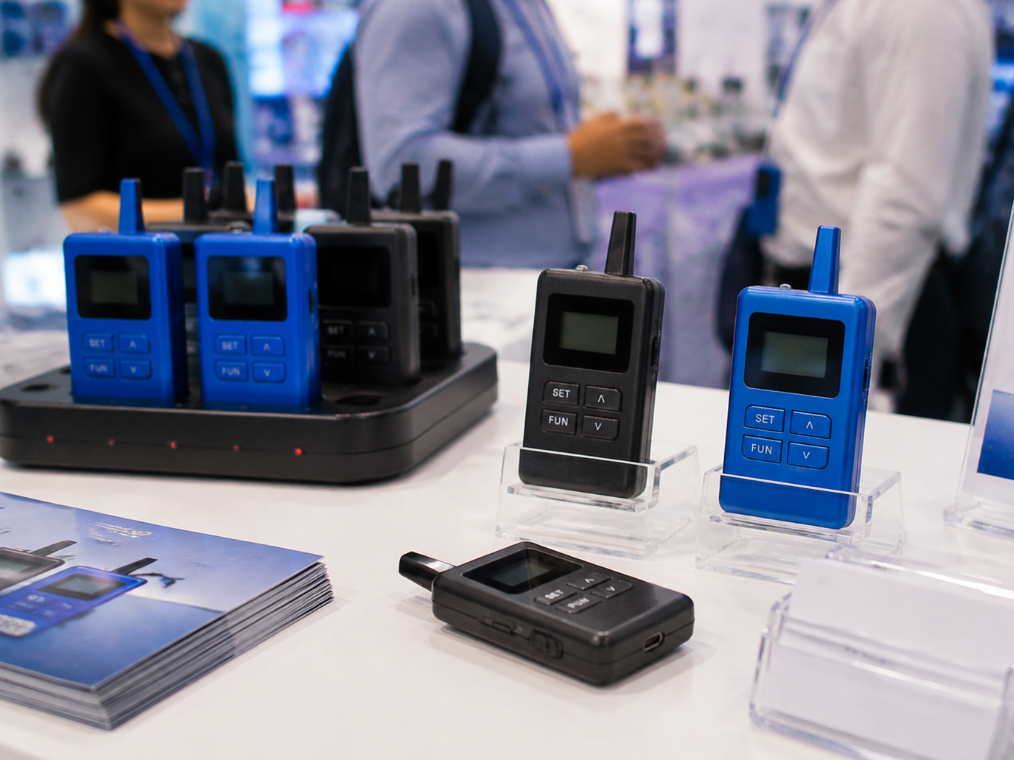
In my experience, the RC085 is the perfect companion for a busy booth environment. Imagine a scenario where a presenter is explaining a complex industrial component to a group of ten visitors. The LCD screen allows the presenter to glance down and confirm the channel is locked and the battery is full, eliminating the awkward "is this thing on?" moment. It is a tool designed for professionals who value control and feedback. For trade show teams that rotate staff throughout the day, the simple interface means minimal training time—a critical factor when you have temporary staff or brand ambassadors who need to hit the ground running.
Corporate Training and Booth Presentations: RC2401
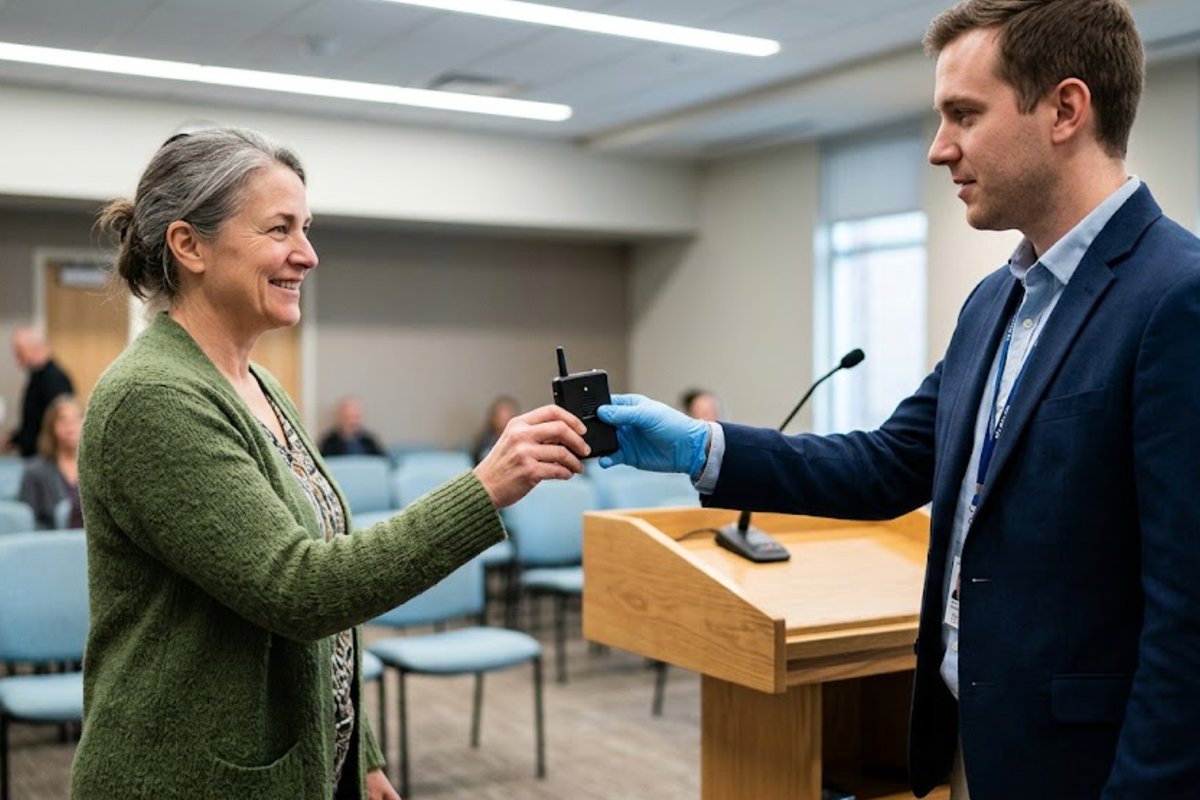
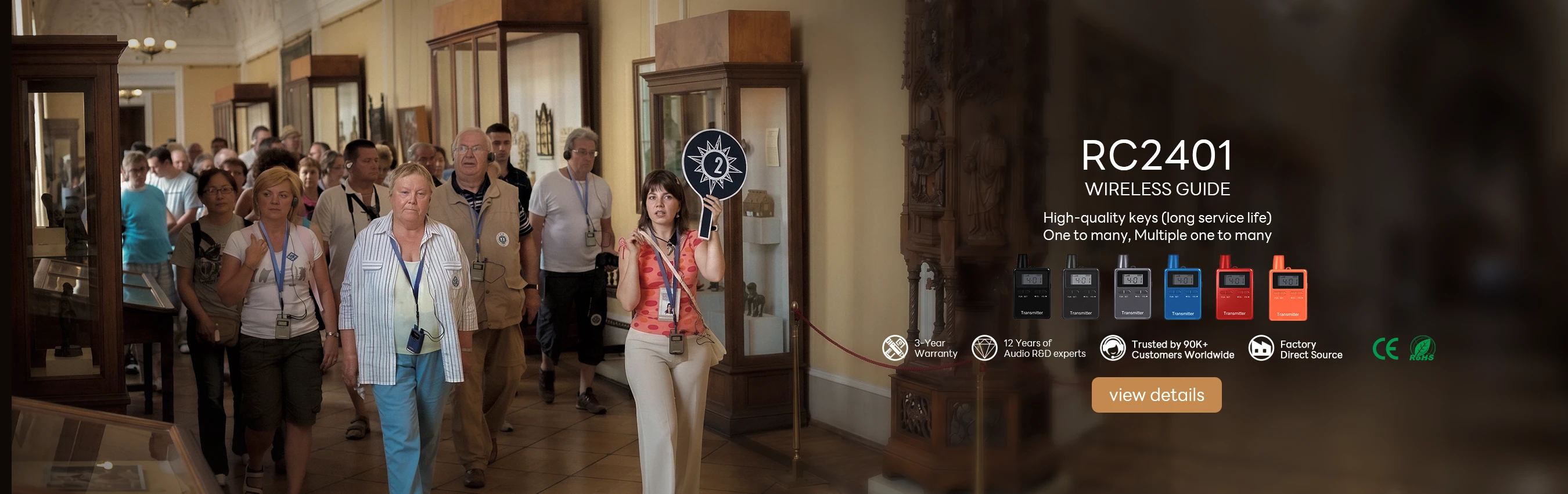
There is a third scenario I frequently encounter at trade shows: the adjacent corporate training room or the VIP presentation suite. Here, the needs are slightly different. You need a system that is robust enough for a seated audience of twenty people, yet flexible enough for a roving presenter. The RC2401 fits this niche perfectly. At 72 grams, it is slightly heavier than the others, but it compensates with enhanced battery life and a more robust build, designed for frequent handling. It is not just about guiding tours; it is about delivering a clear, uninterrupted presentation to a captive audience. The RC2401 handles the acoustics of a meeting room well, cutting through the hum of HVAC systems and the rustle of paperwork.
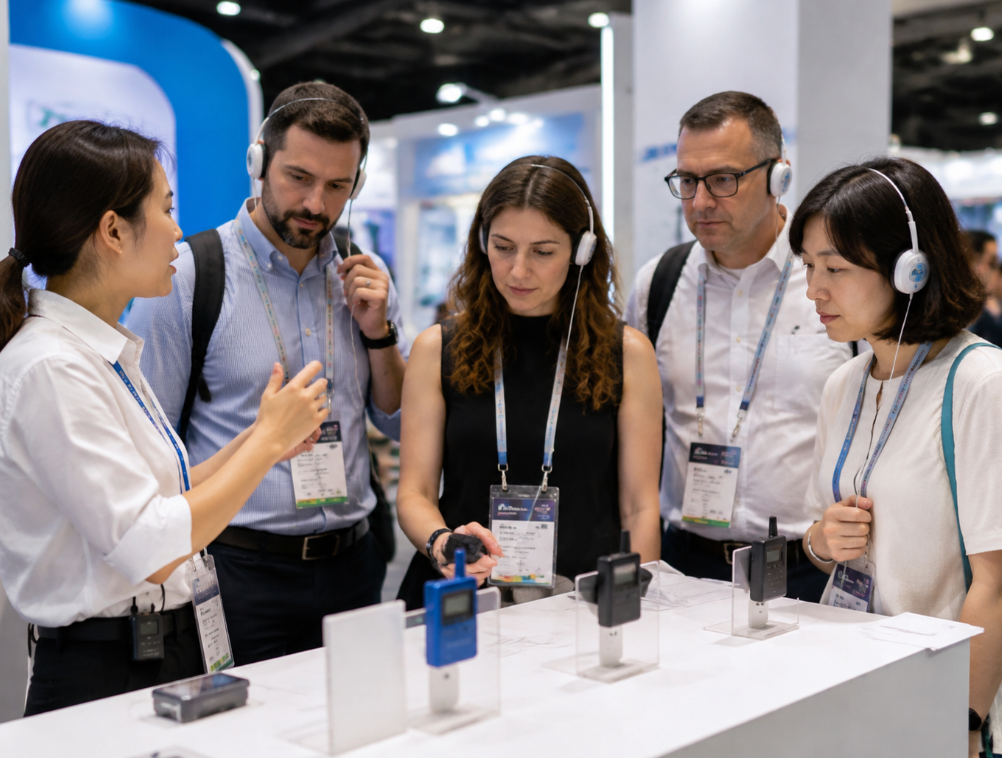
I have seen the RC2401 used effectively in a "theater-in-the-round" style booth presentation, where the presenter walks around a display while an audience of twenty listens via headsets. The multi-channel capability allows for a Q&A session where the presenter can switch to a different channel to speak privately with a translator, ensuring that international visitors receive real-time interpretation without disrupting the main presentation flow. It is this versatility that makes the RC2401 a valuable addition to any corporate events toolkit.
Technical Comparison at a Glance
| Model | Weight | Battery Life | Protection Rating | Best Use Case |
|---|---|---|---|---|
| RC2406 | 65 g | Long (8+ hours) | IPX4 (splash resistant) | Large museums, multi-language group tours, large expo halls |
| RC085 | 62 g | Medium-Long | IPX4 | Trade show booths, product demos, presenter-led walkthroughs |
| RC2401 | 72 g | Extended (10+ hours) | IPX4 | Corporate training rooms, VIP presentations, seated audiences |
How to Choose the Right System for Your Event
Choosing between these three models comes down to a simple assessment of your operational scale and movement patterns. First, consider group size and language diversity. If you are running multiple language tours simultaneously in a large public space, the 80-channel capacity of the RC2406 is your priority. Second, assess the physical environment. For a confined booth space where the presenter stays relatively stationary, the RC085 with its superior LCD feedback is the most practical choice. Third, evaluate the duration of use. For all-day training sessions that run from morning to evening, the extended battery life of the RC2401 ensures you are not swapping units during a critical presentation. For a deeper breakdown of how these models stack up against each other, you can review the detailed comparison between the RC2401 and RC2406 to see which flagship features matter most for your specific application.
It is also worth considering the scalability of your investment. The RC2406 series is part of a broader ecosystem that includes charging cases and replacement headsets, ensuring that your system can grow with your event needs. If you are managing a recurring annual trade show, investing in a system that can handle both the chaos of the expo floor and the intimacy of a breakout session is wise.
Final Thoughts on the Evolution
The evolution from analog to digital has not just been about better sound quality; it has been about operational efficiency. The ability to manage groups dynamically, to switch channels on the fly, and to provide clear audio in hostile RF environments has transformed how we communicate at large events. I have seen the relief on a tour guide’s face when they realize they no longer need to strain their voice, and the engagement on a visitor’s face when they can actually hear every word. That is the value of modern technology. As you plan your next exhibition or trade show appearance, I encourage you to look beyond the hardware specs and consider the end-user experience. For more insights into how these systems are deployed across different industries, read about our wireless tour guide system case studies to see real-world implementations. And if you are ready to upgrade your event communication strategy, explore our solutions to find the perfect match for your team. The future of guided communication is here, and it is wireless, digital, and remarkably clear.