
.webp)
Wireless Tour Guide System for Sports Venues: RC2501 vs RC8860 Compared
I have spent the last decade specifying audio equipment for venues that range from cavernous convention centers to windswept outdoor arenas, and if there is one piece of technology that consistently gets underestimated, it is the Wireless Tour Guide System. In a sports stadium, the acoustics are brutal. You have crowd noise, echoing concourses, the distant thump of a bass-heavy PA, and the persistent rumble of ventilation. Trying to deliver a coherent behind-the-scenes tour, a tactical analysis session, or a VIP hospitality briefing without a dedicated audio link is a losing battle. That is why I always push facility managers toward a proper tour guide system rather than relying on the venue's main speakers or, worse, shouting. The right system does not just amplify your voice; it isolates it, delivering crystal-clear instruction directly to the listener's ear regardless of the ambient chaos. For stadium tours, corporate events in skyboxes, and pitch-side coaching, the choice of hardware makes or breaks the experience.
When I evaluate equipment for this specific environment, I look at two very different contenders from the Richitek lineup: the RC2501 and the RC8860. Both are excellent wireless tour guide systems, but they are engineered for different halves of the stadium equation. The RC2501 is my go-to recommendation for the indoor, controlled chaos of a stadium tour—think luxury suites, museum-style trophy rooms, and tunnel walkthroughs. The RC8860, on the other hand, is built for the outdoor, high-motion reality of pitch-side coaching, equestrian events within the stadium grounds, and any scenario where the instructor is moving fast and the environment is wide open. Choosing between them is not about which is "better"; it is about matching the tool to the task. Below, I break down where each unit shines and how to make the call for your specific operation.
RC2501: The Quiet Professional for Indoor Venue Tours
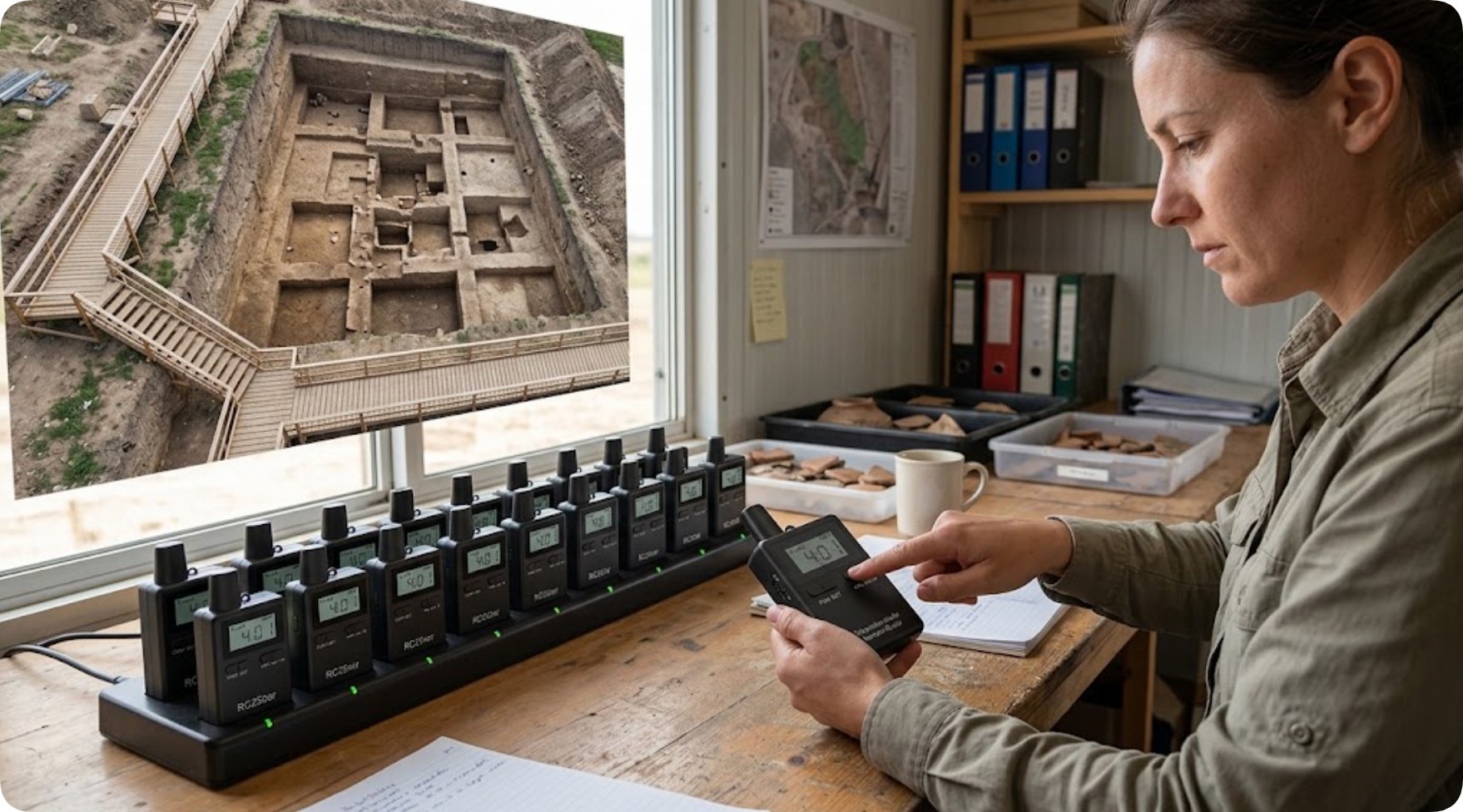
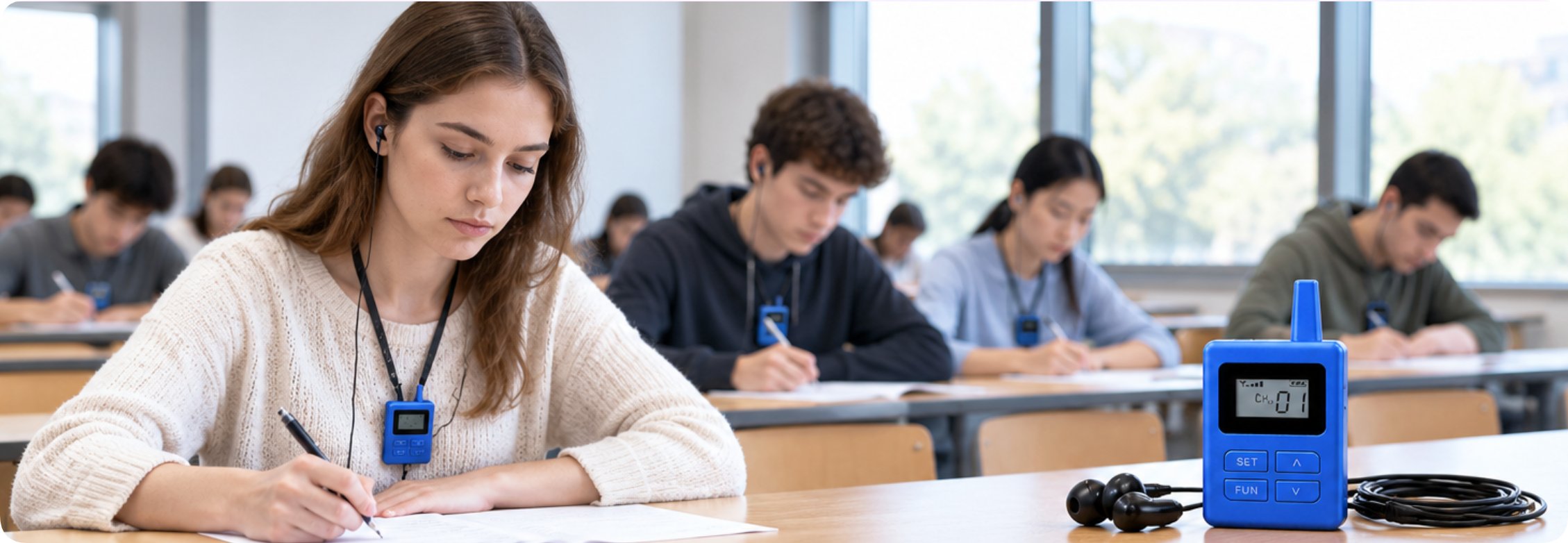
For the bulk of stadium hospitality and behind-the-scenes tours, the RC2501 is the unit I trust. Weighing in at just 48 grams, it is featherlight, which matters when your guides are wearing it for four-hour shifts across multiple tours. The design philosophy here is discretion and clarity. In my experience, visitors in a premium suite do not want a bulky headset dominating the experience; they want to hear the story without feeling like they are on a factory floor. The RC2501 delivers that with a clean, wearable form factor that pairs with a compact receiver. I have used this unit to guide small groups of eight through the echoing concrete corridors of a football stadium, and the voice reproduction remained intimate and free of the metallic slap-back you get from room audio. It is also a stellar choice for the church and silent tour applications it was originally designed for, but do not let that pigeonhole it—in a stadium context, it excels at any guided walk where background noise is moderate and the priority is speech intelligibility in a confined space.
Battery life is where the RC2501 proves its mettle for stadium operations. You are not swapping batteries between tours; you are charging overnight and running all day. The unit supports a robust operational window that easily covers a full schedule of back-to-back group visits. I also appreciate the simplicity of the controls. When you have a part-time guide who only works match days, you do not want a device that requires a manual to operate. The RC2501 is intuitive enough that a new hire can be proficient in under five minutes. For a stadium that runs multiple language tours simultaneously—say, English, Spanish, and Mandarin for international visitors—the RC2501's channel selection handles the separation cleanly without crosstalk bleeding between groups. If your primary use case is the indoor tour route, the hospitality floor, or the club museum, this is the workhorse you want.

RC8860: The Rugged Performer for Outdoor and High-Motion Coaching
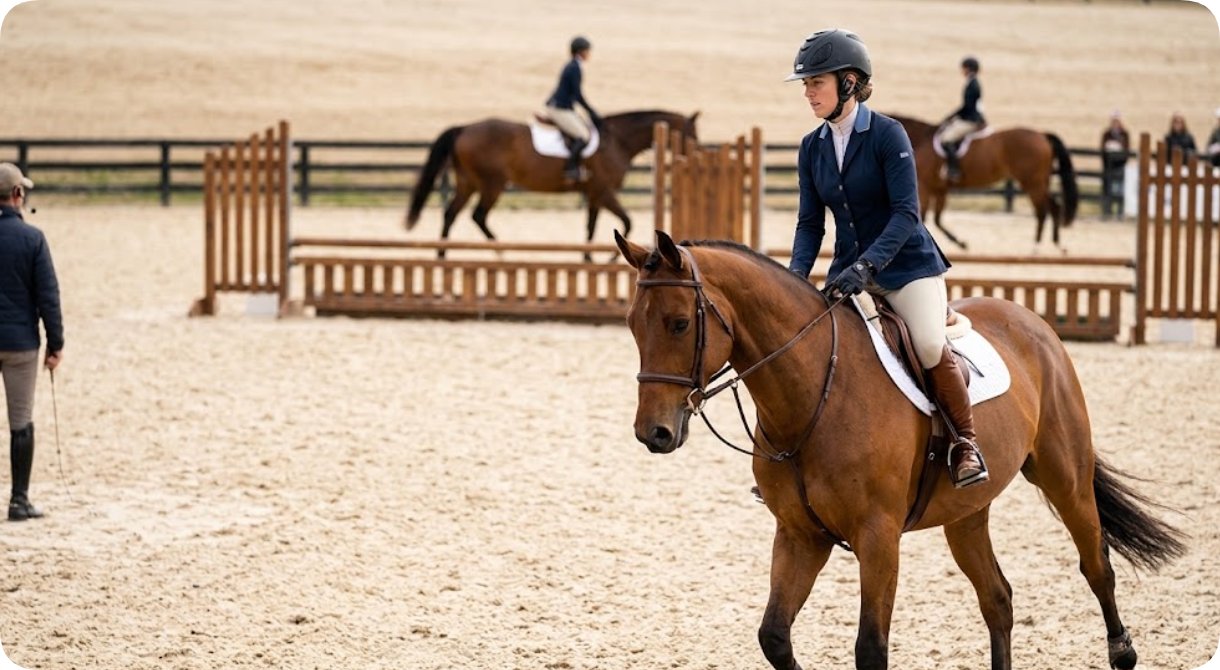
Step outside the concourse and onto the training pitch, and the game changes entirely. The RC8860 is the answer to the question, "How do I coach a group of riders or athletes when we are spread across a field and the wind is picking up?" This unit is heavier than the RC2501 at 59 grams, but that extra heft buys you a significant upgrade in durability and transmission stability. I have used the RC8860 in equestrian training scenarios, where the coach is stationary but the riders are moving at a canter, and the audio link never falters. The transmitter clips securely to a waistband or pocket, and the receiver units stay put on the athlete, even during jumps or abrupt stops. This is not a device for a sedate museum walk; this is a device for active instruction where the coach needs to correct a rider's form in real-time without shouting across a field.
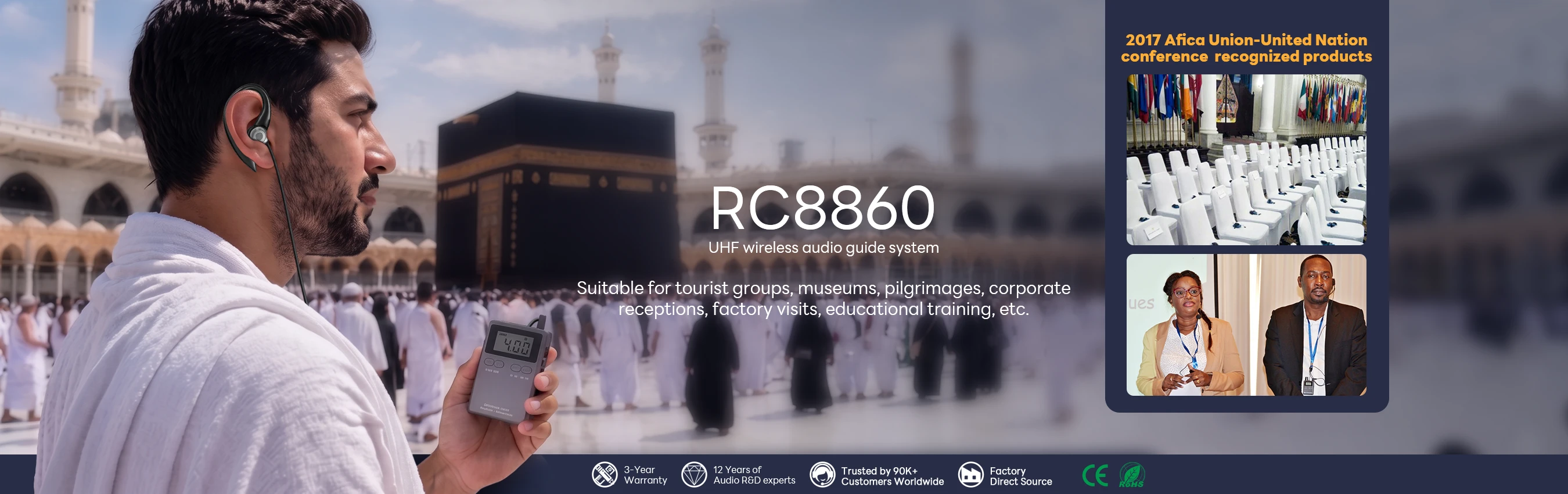
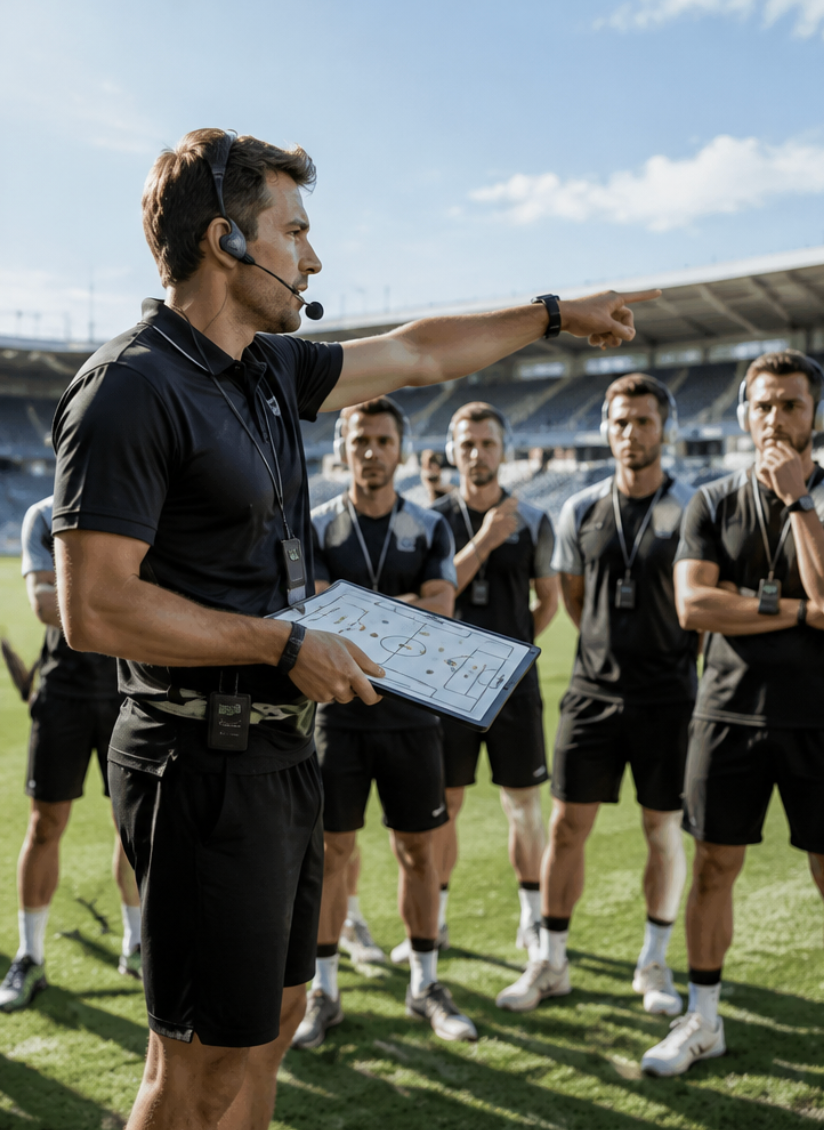
What sets the RC8860 apart in my testing is its resilience to environmental interference. Outdoor stadium environments are full of RF noise—broadcast trucks, walkie-talkies, and the stadium's own wireless microphones all compete for spectrum. The RC8860 handles this congestion with a more robust transmission protocol, ensuring that your coaching instructions do not get stepped on by a camera crew's comms. The slightly higher weight is a non-issue because the unit is designed to be clipped and forgotten; it is not bouncing around in a pocket. For horse riding instruction, which is its primary market, and for any high-motion outdoor coaching—think sprint drills, cycling warm-ups, or pitch-side tactical boards—the RC8860 is the superior choice. It shrugs off dust and light moisture, so a sudden drizzle or a dusty training ground will not kill your session. If your stadium operation includes any outdoor training component, this is the unit to deploy.
Side-by-Side Specification Comparison
To make the decision easier for venue managers and coaching staff, I have condensed the key differentiators into a direct comparison. The numbers tell the story of two devices optimized for different halves of the same venue.
| Feature | RC2501 | RC8860 |
|---|---|---|
| Weight | 48 g | 59 g |
| Battery Life | Full-day operation (8+ hours) | Extended operation for long outdoor sessions |
| Protection Rating | Standard indoor use | Enhanced resistance to dust and light moisture |
| Best Suited For | Indoor tours, VIP suites, museum areas, church/quiet venues | Outdoor coaching, equestrian training, high-motion instruction |
| Transmission Stability | Excellent for confined spaces | Superior in high-RF-interference outdoor environments |
This comparison is not about which device is the "flagship." It is about operational fit. The RC2501 Wireless Tour Guide System is the precision instrument for the quiet, controlled spaces of a stadium. The RC8860 Tour Guide Transmitter For Teaching is the rugged tool for the open field. I have seen facilities try to use one unit for both jobs, and it always leads to compromise—either the outdoor unit feels clunky in a luxury suite, or the indoor unit fails to project clearly across a windy pitch.
How to Choose Based on Your Stadium Scenario
When you are planning your audio infrastructure, start by mapping your actual use cases. If the majority of your guided experiences happen indoors—tunnel tours, locker room visits, press box explanations, and hospitality suite hosting—then the RC2501 is the obvious primary fleet. Its lightweight design and intuitive operation make it ideal for a rotating cast of volunteer guides. You will appreciate the long battery life during multi-hour open house events, and your visitors will appreciate the discreet, high-fidelity audio that does not interfere with the atmosphere of a historic venue.
Conversely, if your stadium is a hub for training camps, junior academies, or equestrian events where instruction happens outdoors, the RC8860 is non-negotiable. The enhanced protection and transmission stability are worth the slight weight penalty because the alternative is a dropped signal in the middle of a crucial coaching cue. I always advise clients to consider the "worst case" scenario for their venue. If rain is a possibility, or if your training ground sits adjacent to the broadcast compound, the RC8860's robustness pays for itself in avoided session interruptions. For a mixed operation, running both fleets is not overkill; it is the professional standard. You equip the tour guides with the RC2501 and the coaching staff with the RC8860, and you never force a square peg into a round hole.
For those still weighing the technical differences between these two models, I recommend reviewing our detailed comparison of the RC8860 against other rugged models to see how it stacks up in extreme conditions. And if you are building out a full venue audio strategy, explore our solutions for comprehensive guides on deployment and best practices.
Final Recommendation and Next Steps
In my professional opinion, there is no single "best" wireless tour guide system for all sports stadium applications. The best system is the one that matches your specific operational reality. For the indoor tour experience, the RC2501 delivers unmatched comfort and clarity. For the outdoor coaching environment, the RC8860 provides the durability and signal strength you cannot do without. I have seen both units perform admirably in their respective roles, and I would not hesitate to spec either one for a client based on the criteria above.
If you are still uncertain about which model fits your venue, I encourage you to look at how other organizations have deployed similar systems. Our equestrian training case study demonstrates the RC8860 in a demanding outdoor setting, while our broader case study library shows how the RC2501 transforms indoor guided experiences. Ultimately, the right investment is the one that ensures your message is heard clearly, whether you are walking a VIP through the trophy room or coaching a young athlete on the turf. Contact our team today to discuss your venue's specific challenges and let us help you build the perfect audio solution.