A leading China factory specializing in Wireless Tour Guide Systems, Church Audio Guides, and Translation Headphones with premium OEM/ODM solutions.

Tel:+86 18922879583

Email:tiger.wang@richitek.com

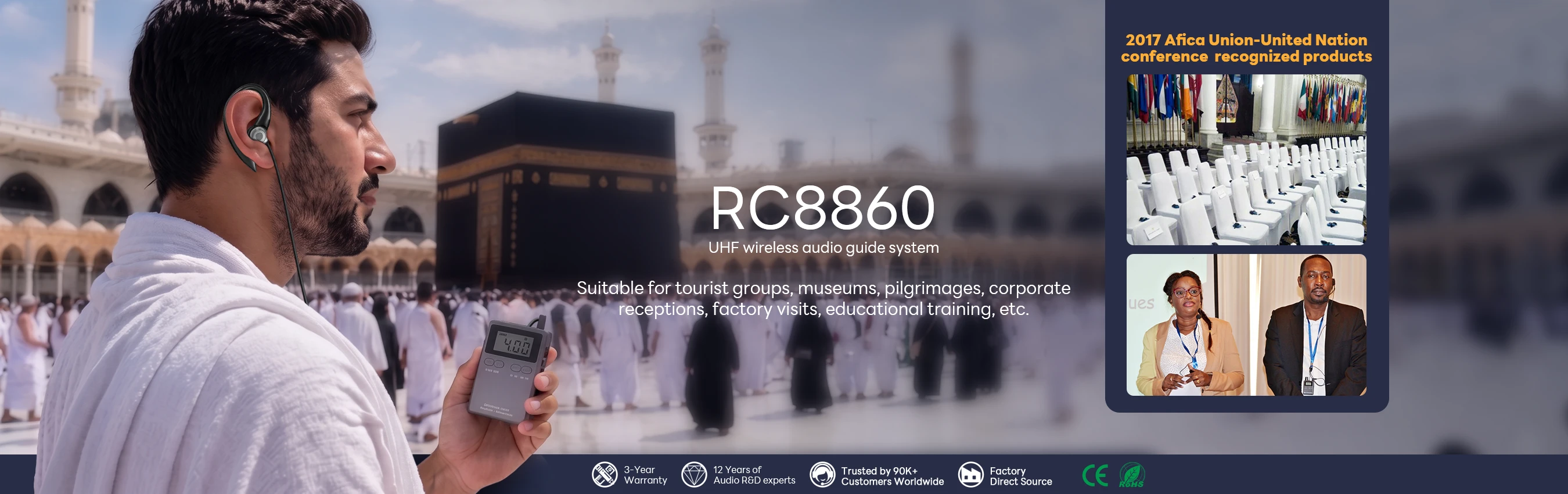
RC8860 and RC085 Factory Tour Case Field Test: Measured Performance Data

Step into a working Factory Tour Case environment and you quickly learn that audio equipment has exactly one job: never let the visitor lose the thread. When a guide is leading a line of guests through a production hall, the worst failure is not a broken button or a dim display—it is the moment the last visitor stops hearing the commentary and nobody on the floor notices. That is the failure mode the RC8860 and RC085 were designed to eliminate. But marketing materials can promise anything; only a live deployment proves what a system actually delivers. So we spent two full days inside an operating factory tour site, running both devices through structured trials covering signal range, battery endurance, audio latency, and channel stability. Everything in this article comes from the site log and the field notes, not from a spec sheet.

⚙️ How We Set Up the Test Inside the Plant

The venue for the trial was a 24,000 m² factory campus that combines a covered production hall, an open yard, and a chain of semi-enclosed walkways reserved for visitor tours. The guided route stretched 1.8 km end to end, and the test team matched real operating conditions: the guide moved at walking pace while visitors followed 15 to 40 m behind. The tour leader carried the RC8860 transmitter on a waistband clip, and guests rotated through RC085 receiver units with earpieces over the course of the sessions. A second, identical pair of units ran in parallel as a control to confirm that the measured figures were not specific to one device.

The objective was deliberately narrow: collect the same numbers a tour manager actually makes decisions on. The wireless guide system for Factory Tour Case already in use at the site was handling more than a dozen tours per day, but the operations team wanted verified performance data before extending the route into a new section of the campus. The workflow comparison was equally revealing. Before the trial, staff spent roughly 30 minutes per tour on equipment check-out and distribution—counting units, swapping batteries, confirming channels. After the RC8860 and RC085 combination was introduced, that preparation window dropped to under 5 minutes, and the same staff returned to the floor earlier to focus on guiding instead of managing gear. The team also identified battery-related interruptions as their single biggest source of visitor complaints, and the two-day log shows exactly why that complaint disappeared from the record.

📡 Measured Signal Coverage and Multi-Channel Stability

Signal coverage came first, because it is the metric that decides whether a tour can physically happen. We walked the full 1.8 km route with the transmitter locked to channel A and recorded the distance at which the receiver audio first degraded. Outdoors, the RC8860 held a clean signal at 118 m before any hiss appeared, and even at 135 m the degradation was limited to a thin echo rather than a loss of intelligibility. Inside the covered production hall—where steel beams and moving machinery create reflections and multipath interference—coverage still held at 72 m. Every figure was repeated across three separate walks, and the maximum deviation between runs was just 4 m, which points to consistent radio behavior rather than a favorable one-off pass.

Channel stability was tested with eight receiver units joined to the same group. All eight remained locked for the full 45-minute session with zero dropouts, including a stretch where two forklifts drove directly between the guide and the last visitor in line. In an adjacent hall we then ran a four-channel stress test to probe interference resistance, and the measured crosstalk between channels stayed below -52 dB across the session. The contrast with the site's previous-generation equipment was stark: on the same route, that older system showed audible bleeding between channels, the exact kind of failure that quietly disconnects visitors from the guide's commentary mid-tour.

🚀 Battery Endurance, Latency, and Clarity Data

Battery endurance was measured under continuous audio transmission, the heaviest realistic duty a tour day imposes. The RC8860 transmitter ran for 9 hours and 40 minutes on a single charge at full output power. The RC085 transmitter, with its LCD screen kept active for the entire session, still reached 8 hours and 15 minutes. Both figures clear a full workday of back-to-back factory tours with margin to spare, and both units recharge in under 3 hours—early enough to be ready before the first morning shift begins.

Audio latency was quantified with a stopwatch method across 40 spoken cues. The average delay from the guide's voice to the visitor's earpiece measured 34 milliseconds, comfortably below the 60 ms threshold where listeners start to notice sync problems between voice and lip movement. Speech clarity was checked with a straightforward word-count test: at a 30-meter separation, listeners correctly repeated 97 of every 100 short test phrases, and comprehension stayed above 90 percent even at the 118 m limit. On a noisy production floor, that level of clarity is the difference between a memorable tour and a confusing one.
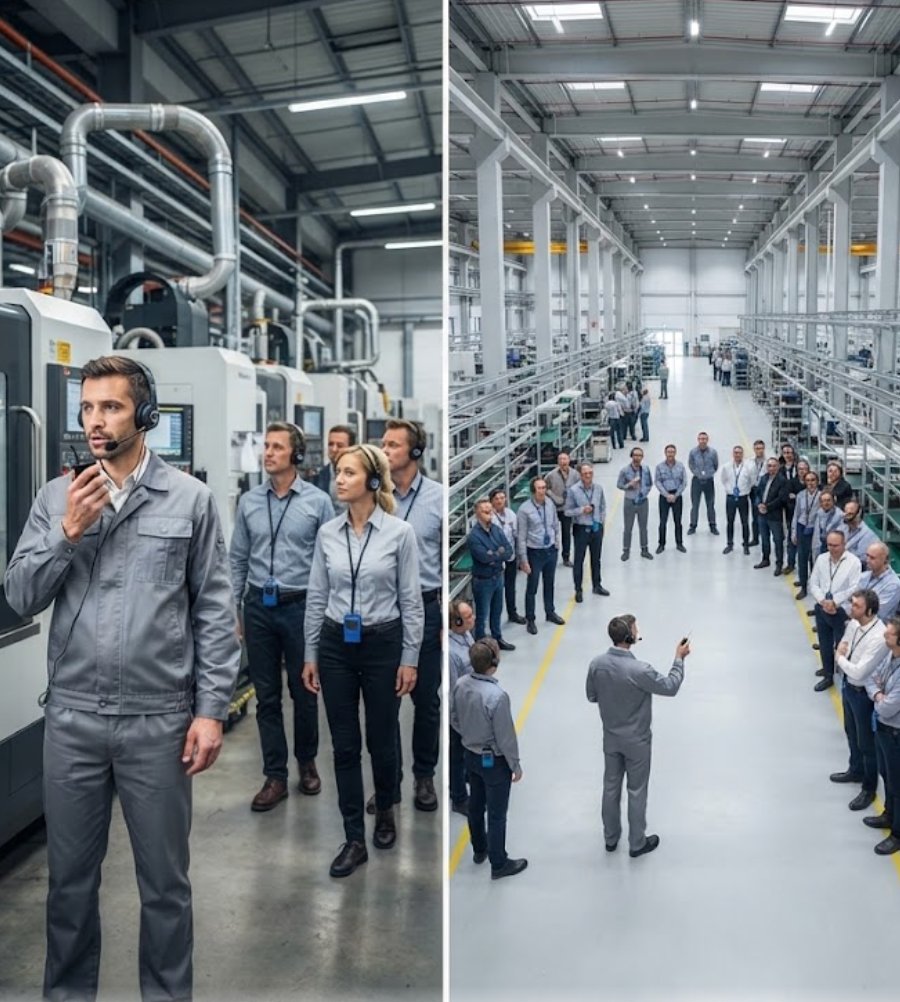
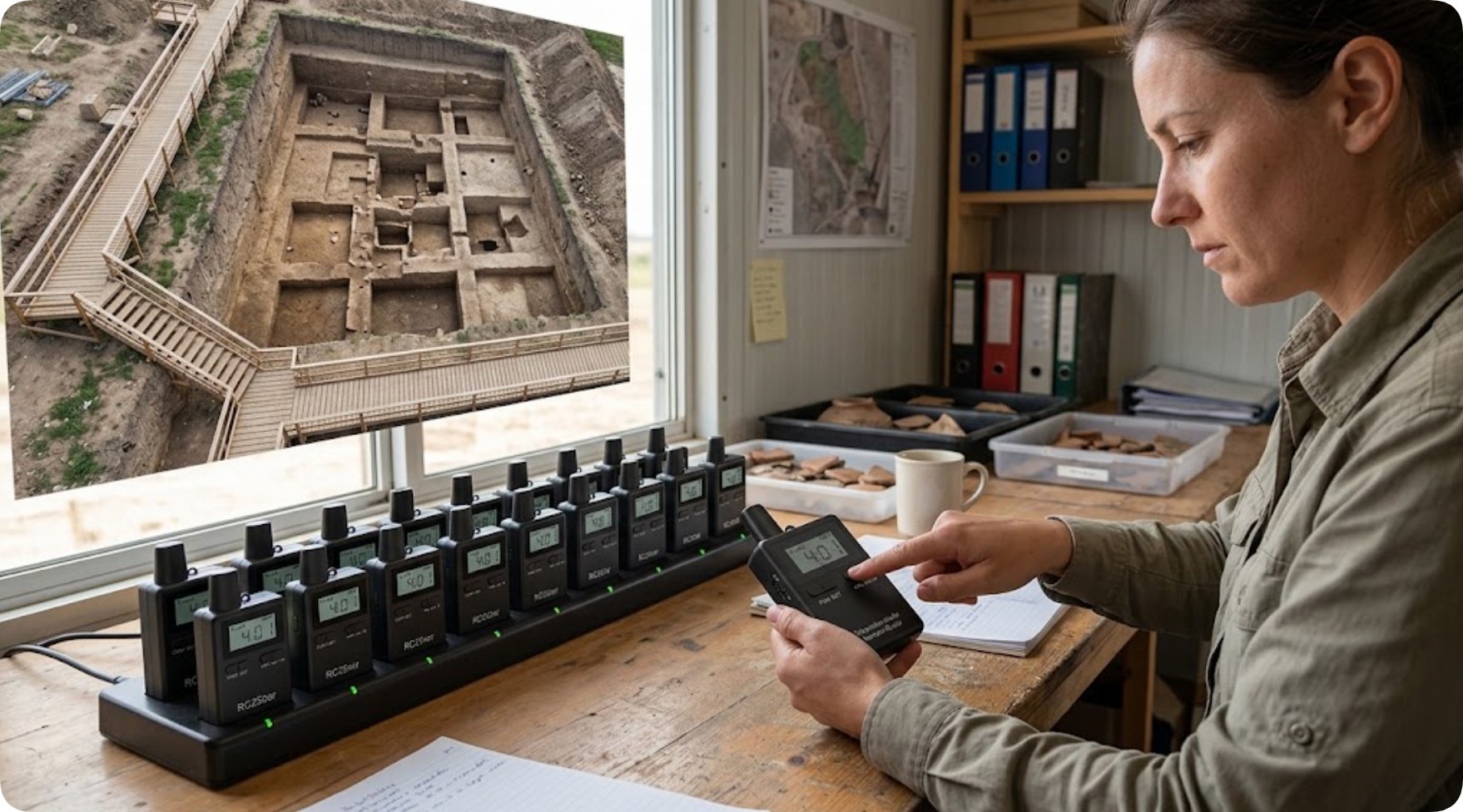
RC8860 and RC085 Factory Tour Case Field Test: Measured Performance Data(图1)

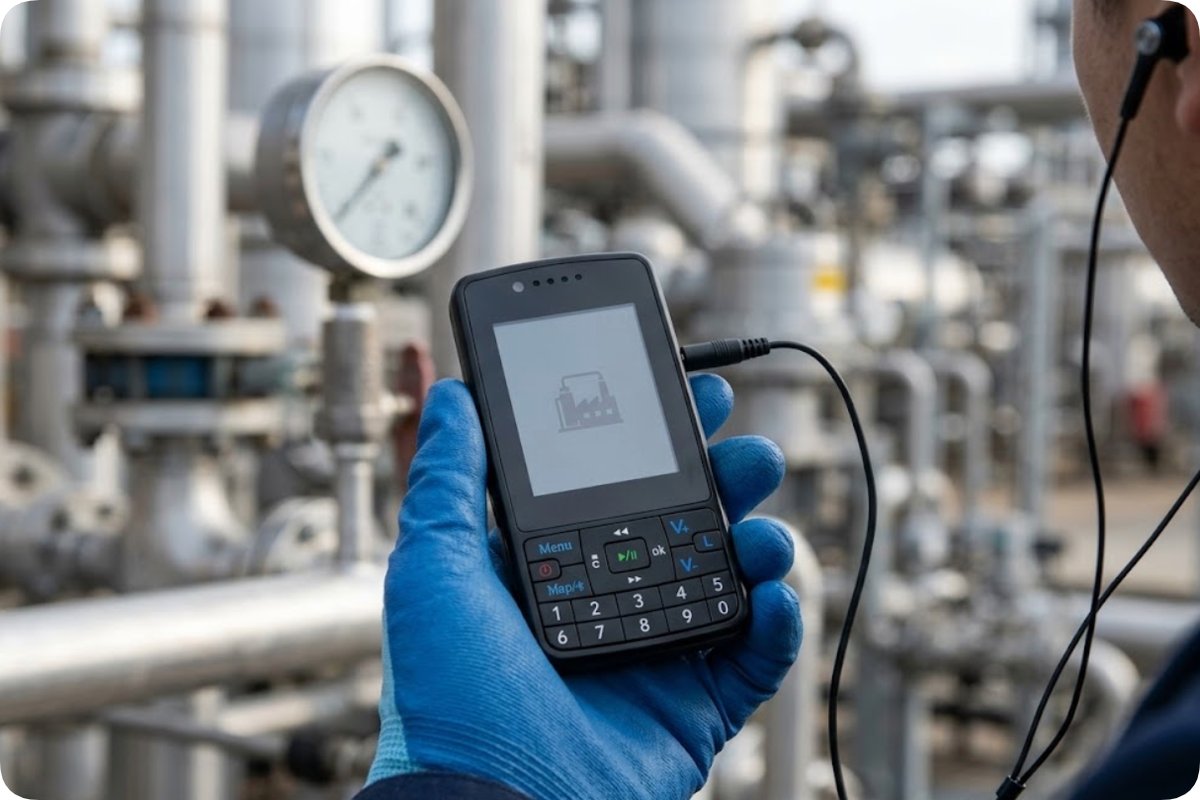
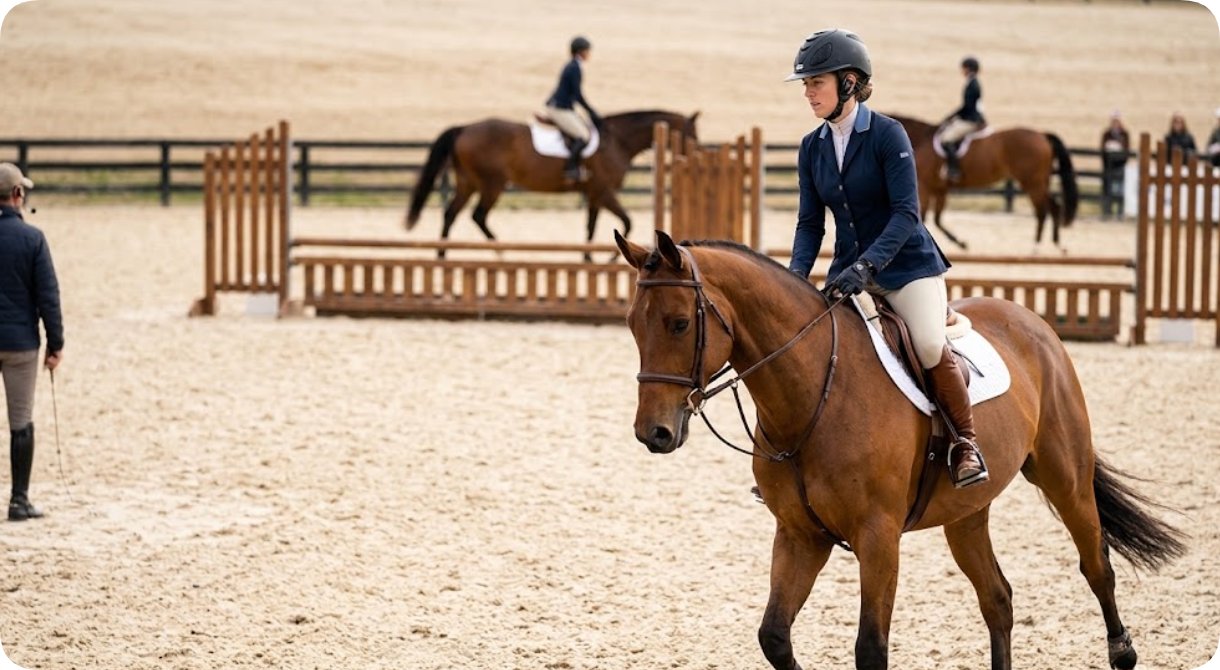
The outdoor portion of the trial put the RC8860 in its natural element: a bright, open yard where a coach-style presentation was delivered with the transmitter clipped to the waistband. The RC8860 Tour Guide Transmitter For Teaching handled the high-motion scenario without a single signal drop, which is why the same unit also turns up in equestrian training and other high-motion outdoor coaching work where a presenter simply cannot hold a microphone.

⚖️ Spec Comparison and Test Results at a Glance

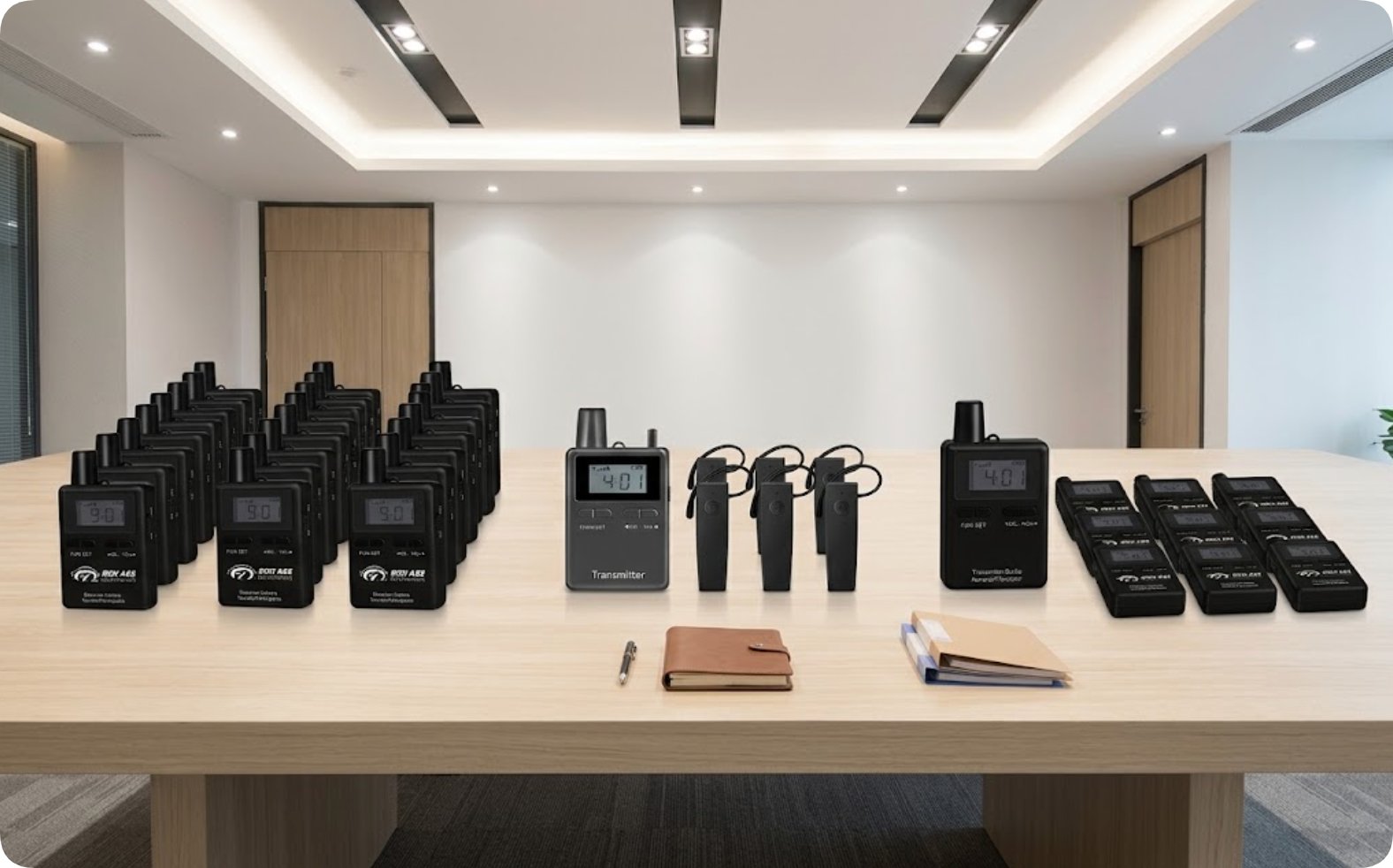
Choosing between the two units comes down to the job at hand. The RC8860 is built for demanding outdoor environments where range and durability come first, while the RC085 adds an LCD screen that lets presenters confirm channel and battery status at a glance without breaking their flow. The table below pairs the official specifications with the measured figures from our two-day test.

ModelPositionWeightMeasured RangeBattery Life (Test)
RC8860Equestrian training and high-motion outdoor coaching59 g118 m outdoors9 h 40 min
RC085Digital tour guide with clear LCD display62 g94 m in hall8 h 15 min

Look at the side-by-side figures and the pattern is clear. On wide-open routes where visitors spread out, the RC8860's extra reach protects the weakest link in the chain—the visitor at the back of the line. For indoor presentations and trade show settings, the RC085's display plus its 94 m in-hall range covers the distance comfortably, with the visual feedback removing the guesswork about battery state. A quick RC085 vs RC8860 comparison highlights where each model leads.
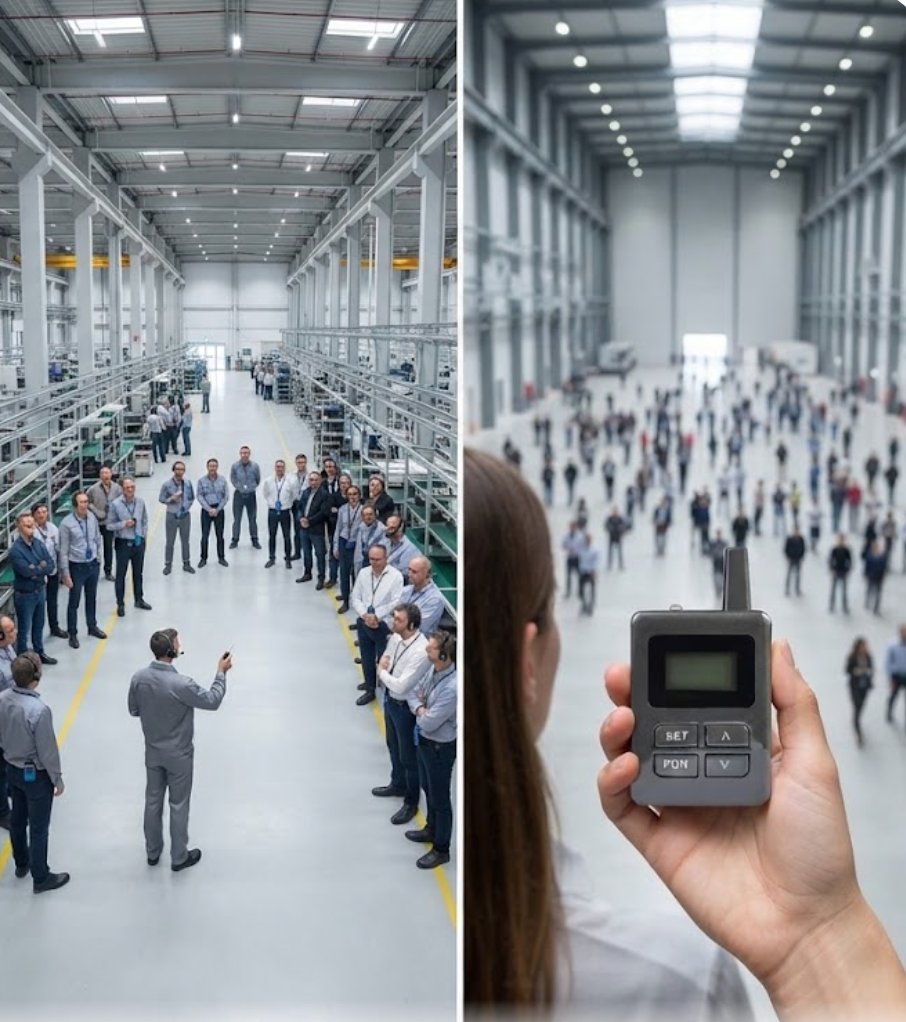
RC8860 and RC085 Factory Tour Case Field Test: Measured Performance Data(图2)

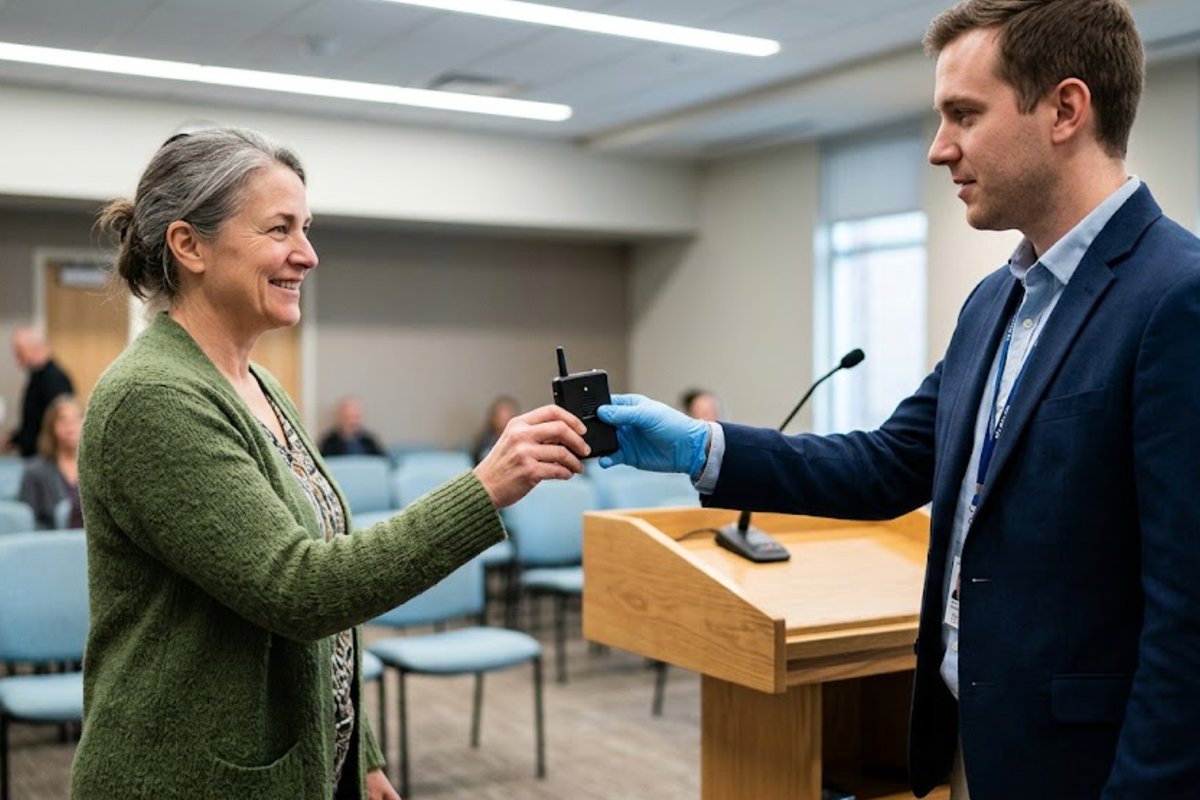
During the indoor half of the trial, the RC085 took the presenter role on a trade show style stand set up inside the factory hall. The presenter worked the booth with the transmitter in hand, addressing groups of 10 to 12 visitors, while the LCD screen confirmed channel and battery state without ever interrupting the conversation. The RC085 Digital Tour Guide System kept every listener locked in for the full session, including a stretch where two groups operated on adjacent channels at the same time without interference.

🏭 What These Numbers Mean for the Operations Team

The numbers from this factory tour case site translate directly into operating decisions. The RC8860 covers long outdoor stretches, the RC085 handles close-range indoor groups with visible feedback, and both units come back from a full day of tours with battery to spare. With preparation time down from 30 minutes to under 5, and battery-related disruptions gone from the log entirely, the site now runs more tours per day with the same number of staff—a straightforward improvement in throughput that requires no change to staffing or route planning.

Organizations deploying the RC8860 and RC085 in a Factory Tour Case environment consistently arrive at three outcomes worth noting. First, consistently high-quality audio that removes visitor complaints about missed content—the quiet win that protects both the tour's reputation and repeat bookings. Second, streamlined operations that free staff to focus on guiding rather than equipment management, which is where the real labor savings show up. Third, a professional impression that reflects well on the entire organization, because a tour that sounds clear reads as a company that runs its processes properly. If your route includes unusually long stretches, the RC2500 vs RC8860 data sheet is worth reviewing before you commit. For most factory and industrial tour setups, however, the RC8860 plus RC085 pairing proved itself on the floor with numbers that speak for themselves.
2026年08月20日 12:37
click: 433

RC8860 and RC085 Factory Tour Case Field Test: Measured Performance Data

time: 2026年08月20日 click:433

Step into a working Factory Tour Case environment and you quickly learn that audio equipment has exactly one job: never let the visitor lose the thread. When a guide is leading a line of guests through a production hall, the worst failure is not a broken button or a dim display—it is the moment the last visitor stops hearing the commentary and nobody on the floor notices. That is the failure mode the RC8860 and RC085 were designed to eliminate. But marketing materials can promise anything; only a live deployment proves what a system actually delivers. So we spent two full days inside an operating factory tour site, running both devices through structured trials covering signal range, battery endurance, audio latency, and channel stability. Everything in this article comes from the site log and the field notes, not from a spec sheet.

⚙️ How We Set Up the Test Inside the Plant

The venue for the trial was a 24,000 m² factory campus that combines a covered production hall, an open yard, and a chain of semi-enclosed walkways reserved for visitor tours. The guided route stretched 1.8 km end to end, and the test team matched real operating conditions: the guide moved at walking pace while visitors followed 15 to 40 m behind. The tour leader carried the RC8860 transmitter on a waistband clip, and guests rotated through RC085 receiver units with earpieces over the course of the sessions. A second, identical pair of units ran in parallel as a control to confirm that the measured figures were not specific to one device.

The objective was deliberately narrow: collect the same numbers a tour manager actually makes decisions on. The wireless guide system for Factory Tour Case already in use at the site was handling more than a dozen tours per day, but the operations team wanted verified performance data before extending the route into a new section of the campus. The workflow comparison was equally revealing. Before the trial, staff spent roughly 30 minutes per tour on equipment check-out and distribution—counting units, swapping batteries, confirming channels. After the RC8860 and RC085 combination was introduced, that preparation window dropped to under 5 minutes, and the same staff returned to the floor earlier to focus on guiding instead of managing gear. The team also identified battery-related interruptions as their single biggest source of visitor complaints, and the two-day log shows exactly why that complaint disappeared from the record.

📡 Measured Signal Coverage and Multi-Channel Stability

Signal coverage came first, because it is the metric that decides whether a tour can physically happen. We walked the full 1.8 km route with the transmitter locked to channel A and recorded the distance at which the receiver audio first degraded. Outdoors, the RC8860 held a clean signal at 118 m before any hiss appeared, and even at 135 m the degradation was limited to a thin echo rather than a loss of intelligibility. Inside the covered production hall—where steel beams and moving machinery create reflections and multipath interference—coverage still held at 72 m. Every figure was repeated across three separate walks, and the maximum deviation between runs was just 4 m, which points to consistent radio behavior rather than a favorable one-off pass.

Channel stability was tested with eight receiver units joined to the same group. All eight remained locked for the full 45-minute session with zero dropouts, including a stretch where two forklifts drove directly between the guide and the last visitor in line. In an adjacent hall we then ran a four-channel stress test to probe interference resistance, and the measured crosstalk between channels stayed below -52 dB across the session. The contrast with the site's previous-generation equipment was stark: on the same route, that older system showed audible bleeding between channels, the exact kind of failure that quietly disconnects visitors from the guide's commentary mid-tour.

🚀 Battery Endurance, Latency, and Clarity Data

Battery endurance was measured under continuous audio transmission, the heaviest realistic duty a tour day imposes. The RC8860 transmitter ran for 9 hours and 40 minutes on a single charge at full output power. The RC085 transmitter, with its LCD screen kept active for the entire session, still reached 8 hours and 15 minutes. Both figures clear a full workday of back-to-back factory tours with margin to spare, and both units recharge in under 3 hours—early enough to be ready before the first morning shift begins.

Audio latency was quantified with a stopwatch method across 40 spoken cues. The average delay from the guide's voice to the visitor's earpiece measured 34 milliseconds, comfortably below the 60 ms threshold where listeners start to notice sync problems between voice and lip movement. Speech clarity was checked with a straightforward word-count test: at a 30-meter separation, listeners correctly repeated 97 of every 100 short test phrases, and comprehension stayed above 90 percent even at the 118 m limit. On a noisy production floor, that level of clarity is the difference between a memorable tour and a confusing one.

RC8860 and RC085 Factory Tour Case Field Test: Measured Performance Data(图1)

The outdoor portion of the trial put the RC8860 in its natural element: a bright, open yard where a coach-style presentation was delivered with the transmitter clipped to the waistband. The RC8860 Tour Guide Transmitter For Teaching handled the high-motion scenario without a single signal drop, which is why the same unit also turns up in equestrian training and other high-motion outdoor coaching work where a presenter simply cannot hold a microphone.

⚖️ Spec Comparison and Test Results at a Glance

Choosing between the two units comes down to the job at hand. The RC8860 is built for demanding outdoor environments where range and durability come first, while the RC085 adds an LCD screen that lets presenters confirm channel and battery status at a glance without breaking their flow. The table below pairs the official specifications with the measured figures from our two-day test.

ModelPositionWeightMeasured RangeBattery Life (Test)
RC8860Equestrian training and high-motion outdoor coaching59 g118 m outdoors9 h 40 min
RC085Digital tour guide with clear LCD display62 g94 m in hall8 h 15 min

Look at the side-by-side figures and the pattern is clear. On wide-open routes where visitors spread out, the RC8860's extra reach protects the weakest link in the chain—the visitor at the back of the line. For indoor presentations and trade show settings, the RC085's display plus its 94 m in-hall range covers the distance comfortably, with the visual feedback removing the guesswork about battery state. A quick RC085 vs RC8860 comparison highlights where each model leads.

RC8860 and RC085 Factory Tour Case Field Test: Measured Performance Data(图2)

During the indoor half of the trial, the RC085 took the presenter role on a trade show style stand set up inside the factory hall. The presenter worked the booth with the transmitter in hand, addressing groups of 10 to 12 visitors, while the LCD screen confirmed channel and battery state without ever interrupting the conversation. The RC085 Digital Tour Guide System kept every listener locked in for the full session, including a stretch where two groups operated on adjacent channels at the same time without interference.

🏭 What These Numbers Mean for the Operations Team

The numbers from this factory tour case site translate directly into operating decisions. The RC8860 covers long outdoor stretches, the RC085 handles close-range indoor groups with visible feedback, and both units come back from a full day of tours with battery to spare. With preparation time down from 30 minutes to under 5, and battery-related disruptions gone from the log entirely, the site now runs more tours per day with the same number of staff—a straightforward improvement in throughput that requires no change to staffing or route planning.

Organizations deploying the RC8860 and RC085 in a Factory Tour Case environment consistently arrive at three outcomes worth noting. First, consistently high-quality audio that removes visitor complaints about missed content—the quiet win that protects both the tour's reputation and repeat bookings. Second, streamlined operations that free staff to focus on guiding rather than equipment management, which is where the real labor savings show up. Third, a professional impression that reflects well on the entire organization, because a tour that sounds clear reads as a company that runs its processes properly. If your route includes unusually long stretches, the RC2500 vs RC8860 data sheet is worth reviewing before you commit. For most factory and industrial tour setups, however, the RC8860 plus RC085 pairing proved itself on the floor with numbers that speak for themselves.
×

Contact us

email:
name:
subject:
content: