
A leading China factory specializing in Wireless Tour Guide Systems, Church Audio Guides, and Translation Headphones with premium OEM/ODM solutions.

Tel:+86 18922879583

Email:tiger.wang@richitek.com

RC2501 and RC2408 Outdoor Large Venue Wireless Tour Guide Deployment Walkthrough

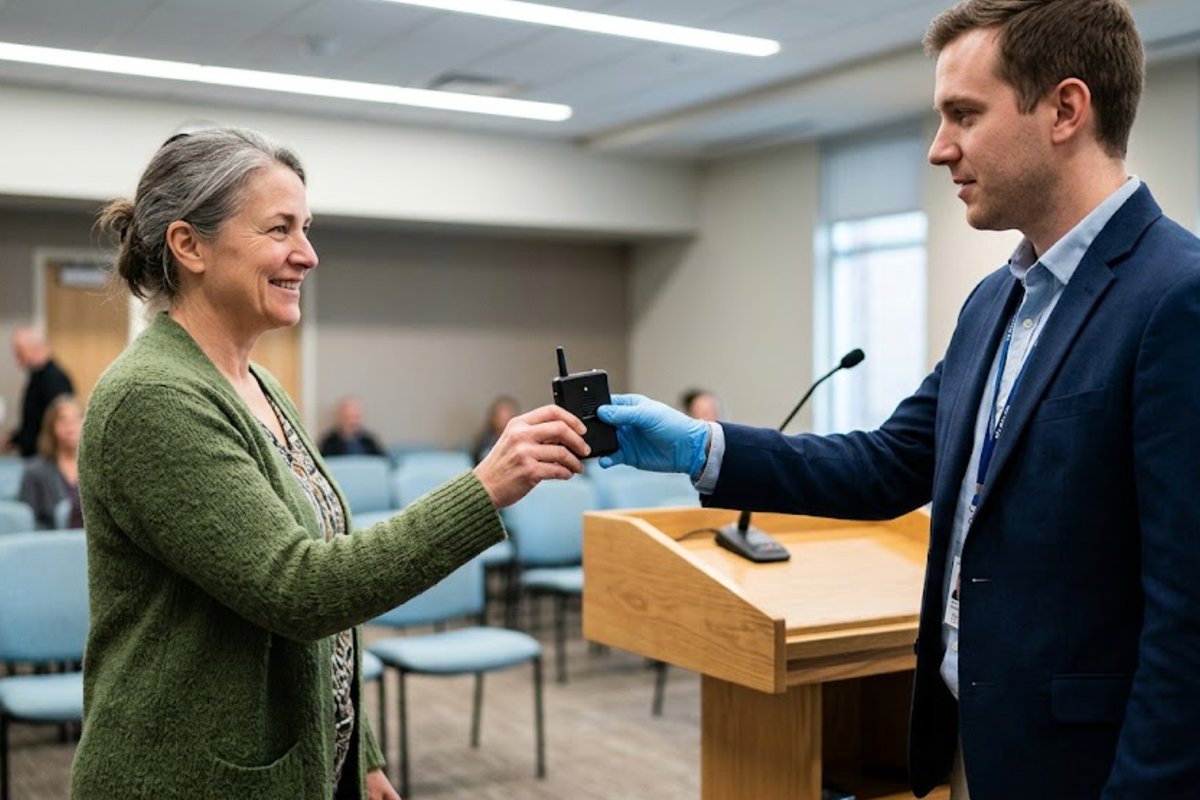
Anyone who has managed visitor audio across an outdoor large venue knows how quickly things can go wrong. The guide speaks, the group fans out across a viewing platform, and before long half the listeners have missed every other sentence. Visitors grow frustrated, staff burn time repeating themselves, and the whole experience leaves the venue looking less professional than it is. The good news is that this scenario is entirely avoidable. In this walkthrough, we cover the complete deployment of the RC2501 and RC2408 in open-air sites such as heritage parks, botanical gardens, and scenic overlooks, from unpacking the units to running a stable, professional tour on the first day.

💡 Why This Pair Makes Sense in the Field

Organizations that deploy the RC2501 and RC2408 across an outdoor large venue tend to see the same three outcomes. First, consistently high-quality audio that reaches every visitor, no matter where they choose to stand. Second, streamlined operations that free staff to focus on guiding and storytelling instead of managing equipment. Third, a professional impression that reflects well on the institution as a whole. The pairing is deliberate rather than accidental. The RC2501 covers the quiet, semi-enclosed pockets typical of large venues, such as chapels, galleries, and visitor centers, while the RC2408 carries clear audio across wide, open areas where distances stretch well beyond normal range. Used together, they form one wireless guide system for Outdoor Large Venue that adapts naturally to the mixed character of the site.

💰 What Comes in the Kit

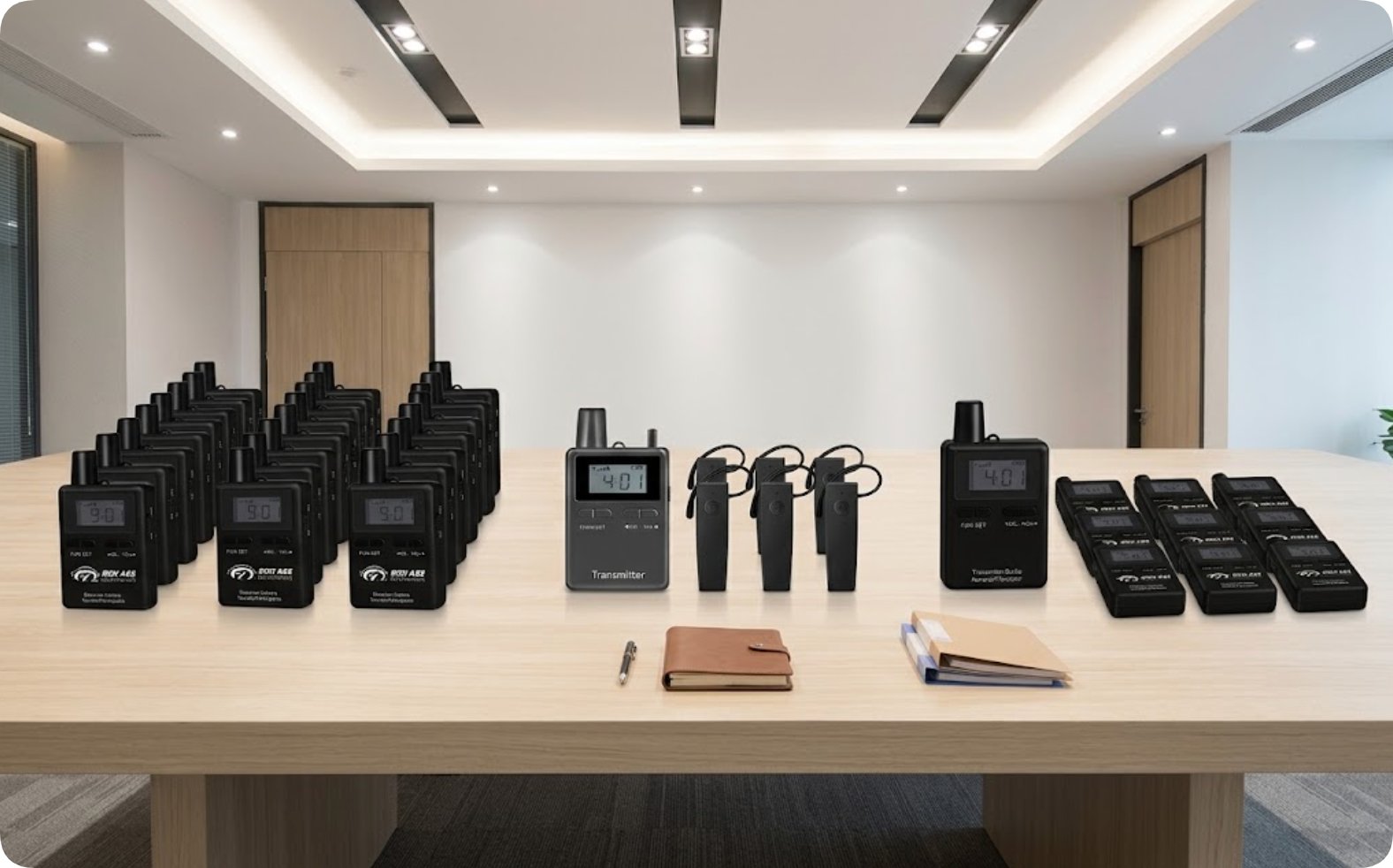
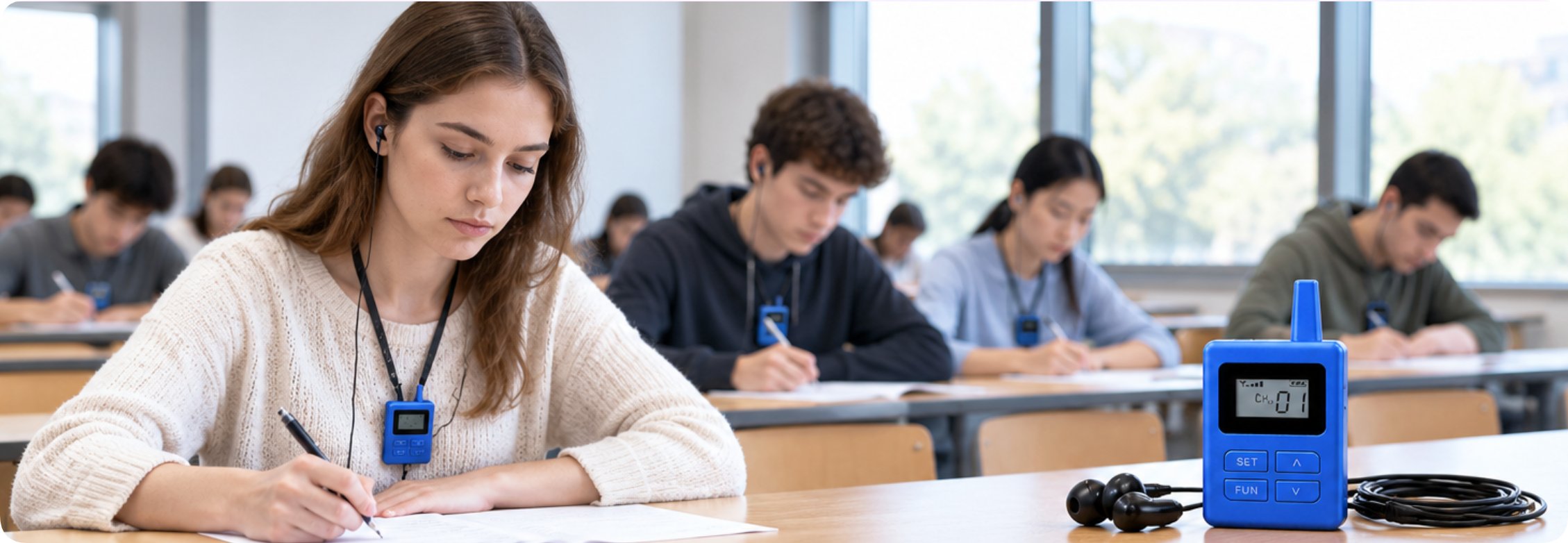
The first decision in any deployment is matching each unit to the terrain it will serve. The RC2501 is built for the quiet side of the venue. Designed to work as translation headphones for church-style settings and silent tours, it weighs just 48 g, which makes it the natural choice for groups moving through interior spaces where noise discipline matters. Visitors wear unobtrusive receivers, the guide speaks at a normal level, and the audio stays private to the group, so adjacent tours never distract one another.
RC2501 and RC2408 Outdoor Large Venue Wireless Tour Guide Deployment Walkthrough(图1)

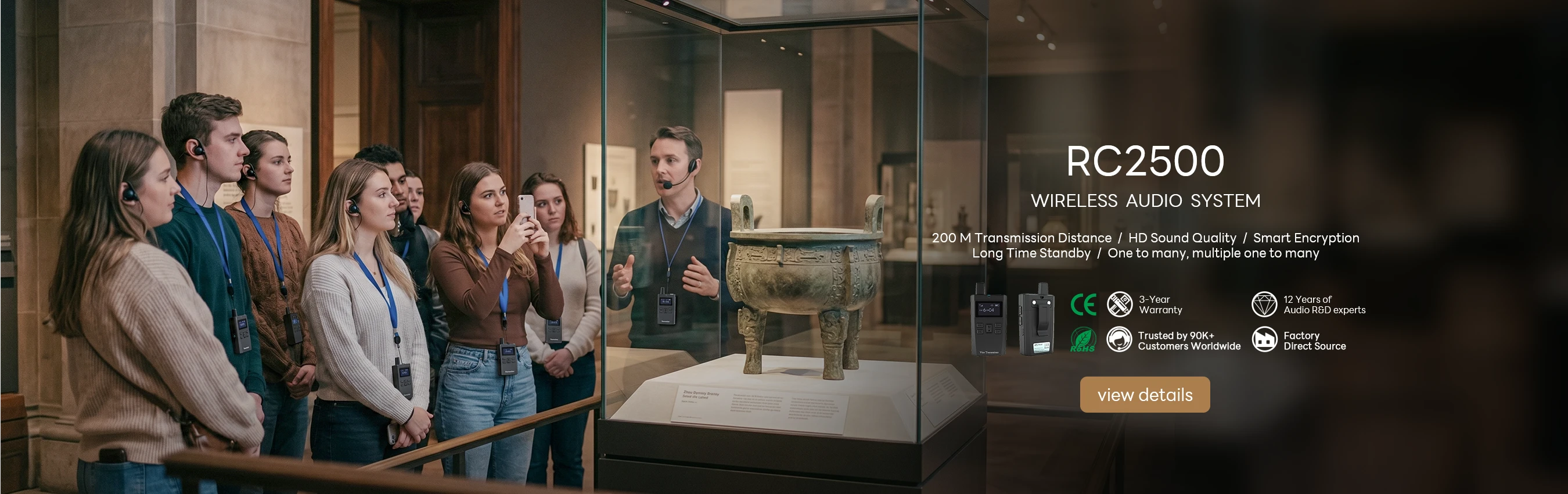
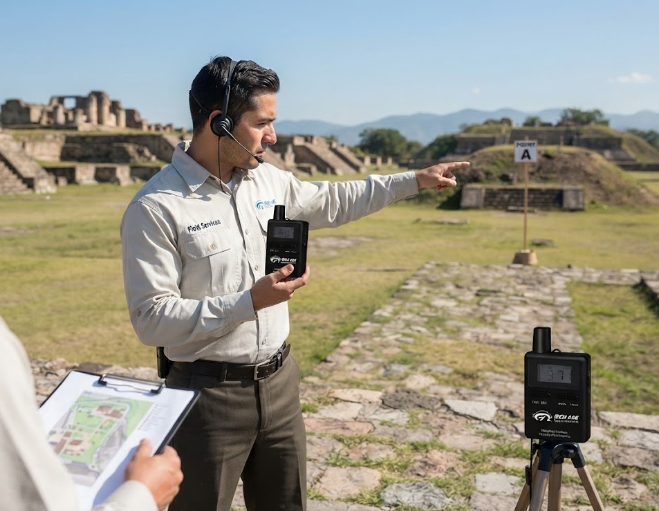
For the open-air half of the venue, the RC2408 is the workhorse. As a long-range wireless tour guide system, it carries the guide's voice across viewing platforms, promenades, and lawns where crowds spread over a wide area. At 70 g, the transmitter is light enough to wear comfortably for a full shift, yet it still delivers the range that open terrain demands. The RC2408 Wireless Tour Guide System is the recommended unit for broad outdoor zones, while the RC2501 Wireless Tour Guide System serves every interior and semi-enclosed stop on the route. Deployed this way, the two models divide the venue between them with no overlap and no gaps.

RC2501 and RC2408 Outdoor Large Venue Wireless Tour Guide Deployment Walkthrough(图2)

ModelPositionWeight
RC2501Translation headphones for church / silent tour48 g
RC2408Long-range wireless tour guide system70 g

Phase One: Site Survey and Point Planning

Every reliable deployment starts with a site survey that maps every stop on the tour route. Walk the entire venue at the time of day visitors will actually use it, and record three things for each stop: the distance between the guide position and the farthest listener, the physical obstacles in between, and any likely sources of interference, including metal structures, water features, and dense tree canopies. Keep the notes simple; a single page per route is enough to work from during later phases.

Once the route is mapped, assign each stop a coverage strategy. Stops inside chapels, visitor centers, or exhibition wings are handled by RC2501 units, where the short, quiet setup keeps groups private and undistracted. Open overlooks, lawns, and plazas are assigned to RC2408 transmitters. Mark the guide position for every stop on a simple site plan, then rely on the units' internal batteries and lightweight mounting hardware rather than fixed power points, which are rarely available in outdoor locations.

⚙️ Phase Two: Mounting, Protection, and Power

Outdoor equipment contends with rain, dust, temperature swings, and curious hands, so protection is not optional. Fit every fixed RC2408 transmitter with a weatherproof housing and mount it on a pole or railing at chest height, angled toward the listening area. Use tamper-resistant fasteners and lockable covers wherever visitor traffic is heavy, and inspect the housings during the morning routine for condensation or loose fittings. For RC2501 units used indoors, keep charging cradles on shelves away from direct sunlight and humidity, where batteries stay healthier for longer.

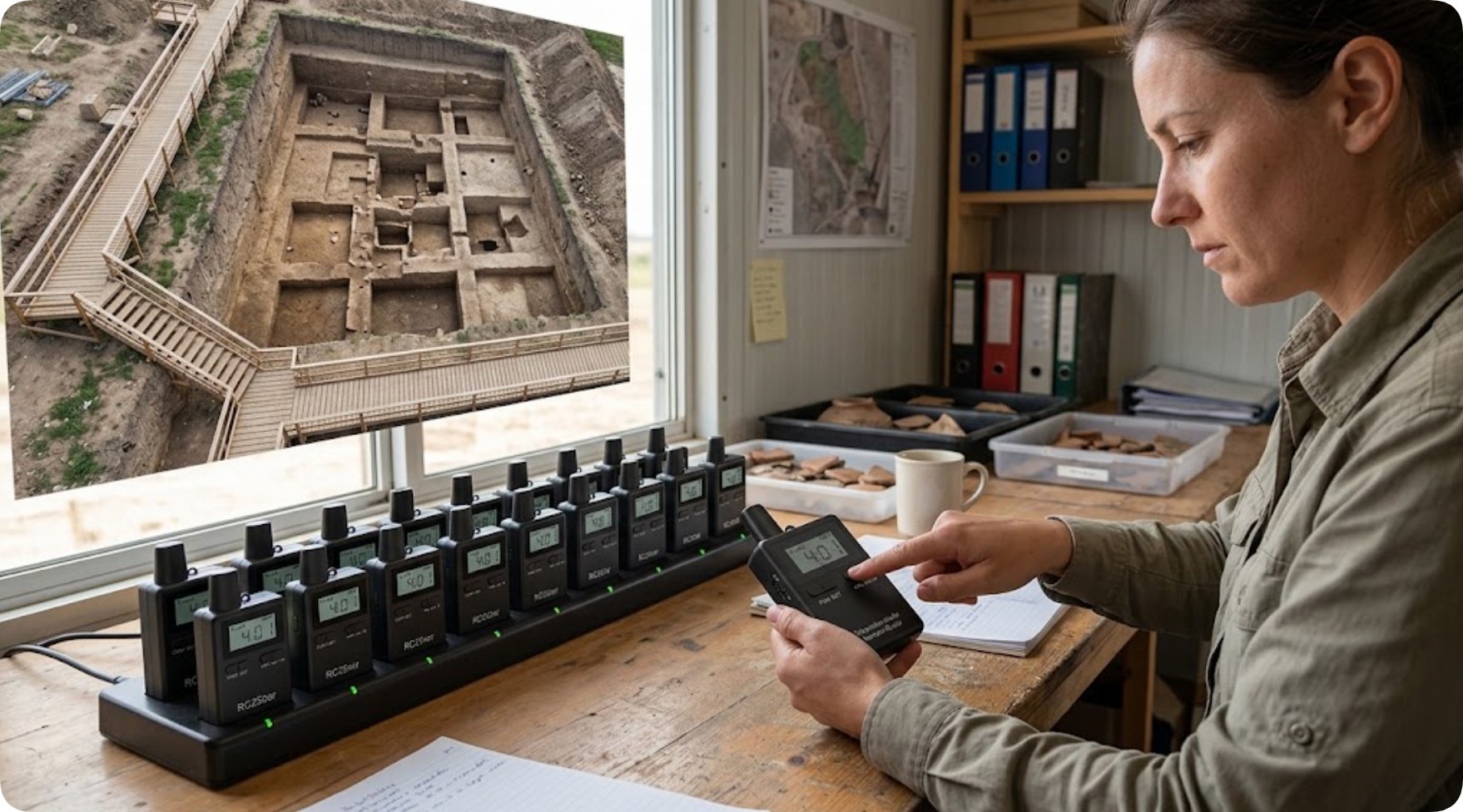
Power planning determines how long your operation can run without interruption. Establish a rotating battery schedule in which every unit is charged and tested each evening, and keep a spare bank of fully charged batteries at the tour office. A quick morning check of charge status, microphone pickup, and receiver volume takes roughly fifteen minutes and prevents most mid-tour failures before they happen.

📡 Phase Three: Signal Testing and Tuning

After mounting, run a controlled signal test before the venue opens to visitors. Ask one staff member to stand at the guide position and speak continuously while a second walks the full listening area with a receiver. Log the signal strength at every stop and mark any dead zones on your plan. In large venues, dead zones usually appear behind thick walls, near metal-clad buildings, or beyond the edge of the open ground, and they are typically fixed by relocating the transmitter or moving the guide position a few meters.

Tuning is an iterative process. Adjust the output level of each RC2408 so the signal comfortably covers the assigned zone without bleeding into neighboring stops, which would cause groups to hear one another. Verify that RC2501 units in adjacent rooms do not interfere, then run a full dry tour with both systems active at once. Repeat the walk once more in the evening, since visitor flows and acoustic conditions at twilight events can differ noticeably from daytime ones.

Phase Four: Staff Training and Daily Operations

Train guides on the daily operational routine: distributing receivers, performing the morning charge check, wearing the transmitter correctly, and collecting units at the end of each tour. A fifteen-minute training session with a simple checklist is enough for most staff, because both systems are designed to be operated without special technical skills. Keep a laminated quick-reference card at the tour office so new hires can get up to speed without disrupting the schedule.

During the first week, collect feedback from guides about comfort and from visitors about audio clarity, then adjust guide positions and volume settings accordingly. Small tweaks usually eliminate the last coverage gaps by the end of week one. By the end of the first month, review metrics such as equipment uptime and real-shift battery life, then optimize the configuration for the venue's actual usage patterns rather than the assumptions made during planning.

Phase Five: Emergency Plans and Backup

No deployment is complete without contingency planning. Keep at least two spare units of each model at the office, and define what happens if a transmitter fails mid-tour: the guide swaps in a spare, or the group continues on a backup receiver in a predefined emergency mode. Agree in advance on a rain plan, since large venues offer little cover, and maintain a simple incident log so recurring issues are resolved before they affect visitors.

🔮 Measuring Success and Next Steps

With the deployment running smoothly, compare your setup against alternatives before scaling up. Reviewing the RC2402 vs RC2408 comparison helps confirm that the RC2408 is the right long-range unit for your open zones, while the RC2500 vs RC2501 analysis clarifies the best lightweight companion for quiet interior stops. From point planning to daily operations, the RC2501 and RC2408 combination gives every visitor a clear, professional audio experience across even the most demanding large venue.

2026年08月20日 15:59
click: 144
no data

RC2501 and RC2408 Outdoor Large Venue Wireless Tour Guide Deployment Walkthrough

time: 2026年08月20日 click:144

Anyone who has managed visitor audio across an outdoor large venue knows how quickly things can go wrong. The guide speaks, the group fans out across a viewing platform, and before long half the listeners have missed every other sentence. Visitors grow frustrated, staff burn time repeating themselves, and the whole experience leaves the venue looking less professional than it is. The good news is that this scenario is entirely avoidable. In this walkthrough, we cover the complete deployment of the RC2501 and RC2408 in open-air sites such as heritage parks, botanical gardens, and scenic overlooks, from unpacking the units to running a stable, professional tour on the first day.

💡 Why This Pair Makes Sense in the Field

Organizations that deploy the RC2501 and RC2408 across an outdoor large venue tend to see the same three outcomes. First, consistently high-quality audio that reaches every visitor, no matter where they choose to stand. Second, streamlined operations that free staff to focus on guiding and storytelling instead of managing equipment. Third, a professional impression that reflects well on the institution as a whole. The pairing is deliberate rather than accidental. The RC2501 covers the quiet, semi-enclosed pockets typical of large venues, such as chapels, galleries, and visitor centers, while the RC2408 carries clear audio across wide, open areas where distances stretch well beyond normal range. Used together, they form one wireless guide system for Outdoor Large Venue that adapts naturally to the mixed character of the site.

💰 What Comes in the Kit

The first decision in any deployment is matching each unit to the terrain it will serve. The RC2501 is built for the quiet side of the venue. Designed to work as translation headphones for church-style settings and silent tours, it weighs just 48 g, which makes it the natural choice for groups moving through interior spaces where noise discipline matters. Visitors wear unobtrusive receivers, the guide speaks at a normal level, and the audio stays private to the group, so adjacent tours never distract one another.

RC2501 and RC2408 Outdoor Large Venue Wireless Tour Guide Deployment Walkthrough(图1)

For the open-air half of the venue, the RC2408 is the workhorse. As a long-range wireless tour guide system, it carries the guide's voice across viewing platforms, promenades, and lawns where crowds spread over a wide area. At 70 g, the transmitter is light enough to wear comfortably for a full shift, yet it still delivers the range that open terrain demands. The RC2408 Wireless Tour Guide System is the recommended unit for broad outdoor zones, while the RC2501 Wireless Tour Guide System serves every interior and semi-enclosed stop on the route. Deployed this way, the two models divide the venue between them with no overlap and no gaps.

RC2501 and RC2408 Outdoor Large Venue Wireless Tour Guide Deployment Walkthrough(图2)

ModelPositionWeight
RC2501Translation headphones for church / silent tour48 g
RC2408Long-range wireless tour guide system70 g

Phase One: Site Survey and Point Planning

Every reliable deployment starts with a site survey that maps every stop on the tour route. Walk the entire venue at the time of day visitors will actually use it, and record three things for each stop: the distance between the guide position and the farthest listener, the physical obstacles in between, and any likely sources of interference, including metal structures, water features, and dense tree canopies. Keep the notes simple; a single page per route is enough to work from during later phases.

Once the route is mapped, assign each stop a coverage strategy. Stops inside chapels, visitor centers, or exhibition wings are handled by RC2501 units, where the short, quiet setup keeps groups private and undistracted. Open overlooks, lawns, and plazas are assigned to RC2408 transmitters. Mark the guide position for every stop on a simple site plan, then rely on the units' internal batteries and lightweight mounting hardware rather than fixed power points, which are rarely available in outdoor locations.

⚙️ Phase Two: Mounting, Protection, and Power

Outdoor equipment contends with rain, dust, temperature swings, and curious hands, so protection is not optional. Fit every fixed RC2408 transmitter with a weatherproof housing and mount it on a pole or railing at chest height, angled toward the listening area. Use tamper-resistant fasteners and lockable covers wherever visitor traffic is heavy, and inspect the housings during the morning routine for condensation or loose fittings. For RC2501 units used indoors, keep charging cradles on shelves away from direct sunlight and humidity, where batteries stay healthier for longer.

Power planning determines how long your operation can run without interruption. Establish a rotating battery schedule in which every unit is charged and tested each evening, and keep a spare bank of fully charged batteries at the tour office. A quick morning check of charge status, microphone pickup, and receiver volume takes roughly fifteen minutes and prevents most mid-tour failures before they happen.

📡 Phase Three: Signal Testing and Tuning

After mounting, run a controlled signal test before the venue opens to visitors. Ask one staff member to stand at the guide position and speak continuously while a second walks the full listening area with a receiver. Log the signal strength at every stop and mark any dead zones on your plan. In large venues, dead zones usually appear behind thick walls, near metal-clad buildings, or beyond the edge of the open ground, and they are typically fixed by relocating the transmitter or moving the guide position a few meters.

Tuning is an iterative process. Adjust the output level of each RC2408 so the signal comfortably covers the assigned zone without bleeding into neighboring stops, which would cause groups to hear one another. Verify that RC2501 units in adjacent rooms do not interfere, then run a full dry tour with both systems active at once. Repeat the walk once more in the evening, since visitor flows and acoustic conditions at twilight events can differ noticeably from daytime ones.

Phase Four: Staff Training and Daily Operations

Train guides on the daily operational routine: distributing receivers, performing the morning charge check, wearing the transmitter correctly, and collecting units at the end of each tour. A fifteen-minute training session with a simple checklist is enough for most staff, because both systems are designed to be operated without special technical skills. Keep a laminated quick-reference card at the tour office so new hires can get up to speed without disrupting the schedule.

During the first week, collect feedback from guides about comfort and from visitors about audio clarity, then adjust guide positions and volume settings accordingly. Small tweaks usually eliminate the last coverage gaps by the end of week one. By the end of the first month, review metrics such as equipment uptime and real-shift battery life, then optimize the configuration for the venue's actual usage patterns rather than the assumptions made during planning.

Phase Five: Emergency Plans and Backup

No deployment is complete without contingency planning. Keep at least two spare units of each model at the office, and define what happens if a transmitter fails mid-tour: the guide swaps in a spare, or the group continues on a backup receiver in a predefined emergency mode. Agree in advance on a rain plan, since large venues offer little cover, and maintain a simple incident log so recurring issues are resolved before they affect visitors.

🔮 Measuring Success and Next Steps

With the deployment running smoothly, compare your setup against alternatives before scaling up. Reviewing the RC2402 vs RC2408 comparison helps confirm that the RC2408 is the right long-range unit for your open zones, while the RC2500 vs RC2501 analysis clarifies the best lightweight companion for quiet interior stops. From point planning to daily operations, the RC2501 and RC2408 combination gives every visitor a clear, professional audio experience across even the most demanding large venue.
no data
×

Contact us

email:
name:
subject:
content: