A leading China factory specializing in Wireless Tour Guide Systems, Church Audio Guides, and Translation Headphones with premium OEM/ODM solutions.

Tel:+86 13825295213

Email:tiger.wang@richitek.com

How RC8860 Evolves the Auto Factory Tour Experience

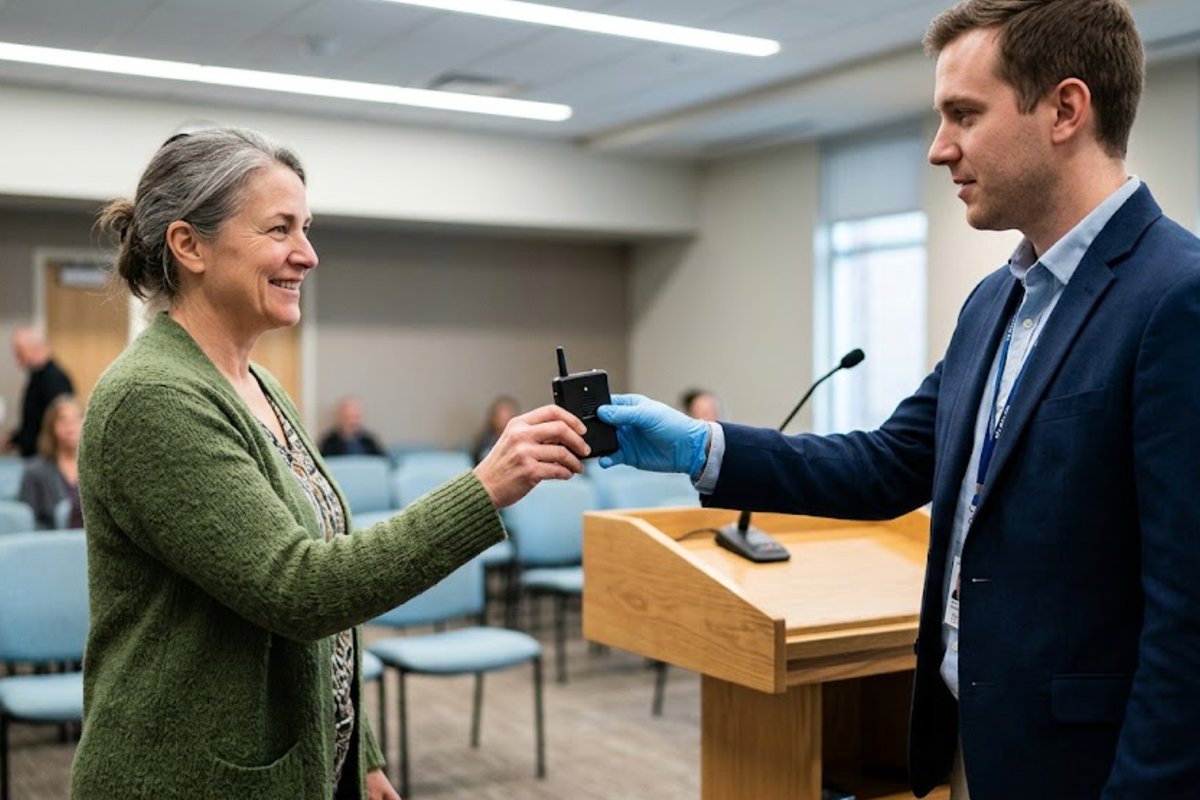
The factory tour has quietly become one of the most carefully staged experiences in modern manufacturing. By 2027, this category is expected to see sharply accelerated adoption through 2028, as automotive brands open their assembly lines to journalists, students, suppliers, and prospective customers. Tour teams are discovering that audio is no longer a supporting detail; it is the backbone of the event. Early adopters of digital wireless guide systems report measurable time and labor savings, and the gap between a well-run and a mediocre tour often comes down to the equipment in the guide's hand. This article examines how factory tour audio has evolved from rented wired headsets to lightweight digital wireless systems, and why the choice of a wireless guide system for Auto Factory Tour now shapes the quality of the entire visitor experience, from the reception desk to the final proving-ground drive.

Anyone who has stood next to a stamping press understands the problem. The noise is physical, not merely acoustic, and a guide who has to shout quickly loses the room. What has changed is not the noise, which remains punishing as ever, but the technology to cut through it. Digital transmission, compact body-worn transmitters, and dependable channel management have turned a logistical exercise into a routine part of the daily program.

💡 Why Auto Factory Tours Demand RC8860-Class Audio

Automotive plants rank among the harshest acoustic environments in industry. Robotic welding bays, stamping presses, and engine test cells routinely sit in the 85 to 100 decibel range, and at those levels conventional tour audio simply stops being intelligible. A visitor a few feet from the guide cannot reconstruct sentences from fragments; they fill in the blanks, misread safety instructions, and leave with less than the factory intended to communicate. A tour that fails audibly is worse than no tour at all, because it undermines the credibility the company is trying to build.

At the same time, the modern factory tour has become a strategic communications channel rather than a marketing nicety. Automakers use these visits to demonstrate quality control, sustainability programs, and electric vehicle production lines to an audience that expects to hear every word without shouting or guesswork. Whether the guest is a dealer or a student, the expectation is the same: clear sound, no equipment drama, and a guide who is present instead of fighting the hardware.

This is where RC8860-class transmitters change the picture. Digital wireless transmission, as opposed to analog FM or wired loops, keeps a guide's voice stable and intelligible even when visitors are spread across a moving production line or stepping into loud assembly zones. The evolution from fixed wired audio to portable wireless systems has also cut setup time dramatically, so tours start in minutes rather than after hours of cable preparation, and guides can hand over shifts without recalibrating hardware. The savings show up in small ways: no amplifier carts, no cables taped across walkways, no sound checks that eat into the first tour. For plants running several tours a day, those savings compound into real staffing relief, and for guests they mean tours that start on time and never pause for equipment fixes.

📈 The Generational Evolution of Tour Guide Technology

Factory tour audio has moved through three distinct generations. The first generation relied on hardwired headsets and stationary amplifiers. Movement was restricted, infrastructure had to be built into the building, and every tour followed a fixed route because the audio followed fixed cables. The second generation brought analog FM radio transmission, which improved mobility but left the system exposed to interference from welding inverters and overhead cranes, and to the signal drift that plagues tours stretched across a multi-building campus.

The third generation is digital. Today's systems use digital audio transmission with reliable channel management, longer battery life, and body-worn transmitters that free tour leaders to walk anywhere on the factory floor. Newer developments are pushing the category further. Digital twins and VR factory previews now let visitors walk an assembly line virtually before entering it, while real-time language interpretation is expanding plant tours to international delegations. Industry surveys show that over 80 percent of major automotive OEMs now operate some form of public plant visit program, and the RC2500 vs RC8860 comparison illustrates how quickly this category has matured from a niche broadcasting tool into a mainstream brand experience platform.

Seen against that history, the current generation is not an incremental step. It removes the two limits that defined earlier systems: range and flexibility. A guide can start in the visitor center, walk through three halls, and continue outdoors to a test track without touching the equipment once. That continuity is what a modern tour program needs when guests arrive with different backgrounds, languages, and expectations.

🏭 RC8860 and RC085: Two Roles in the Modern Factory Tour

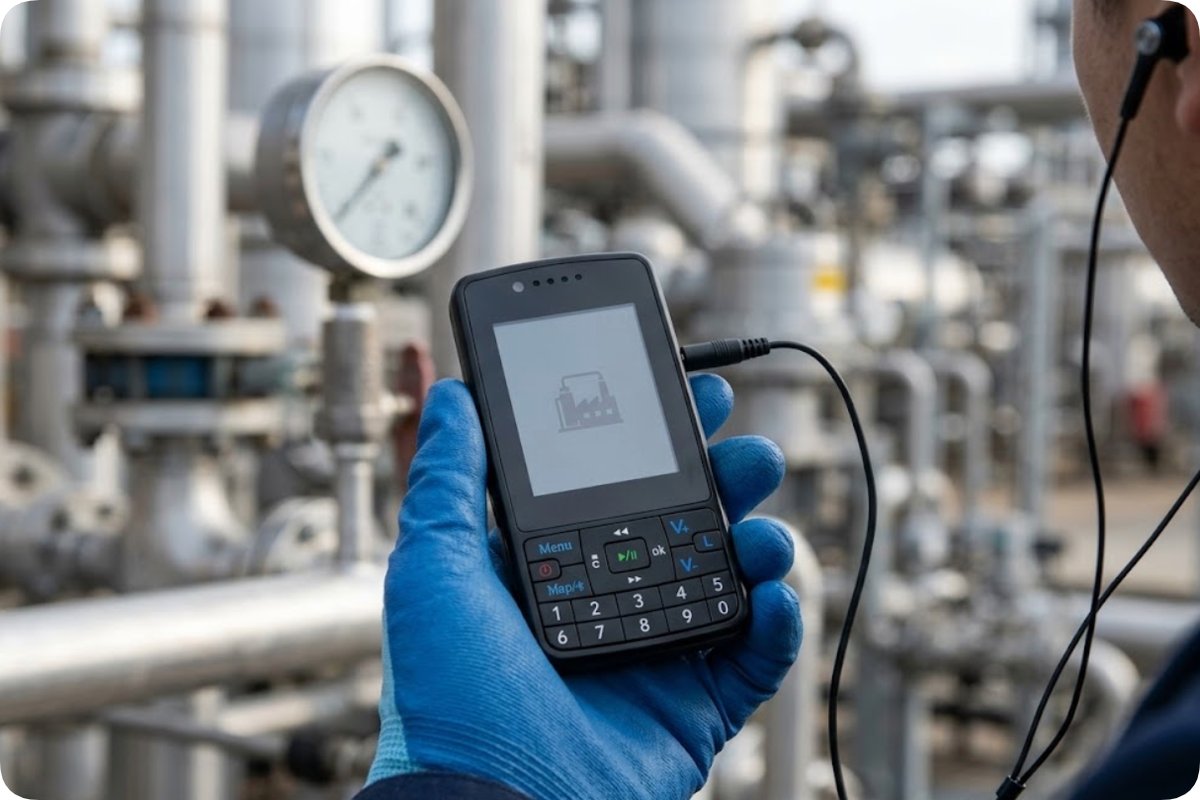
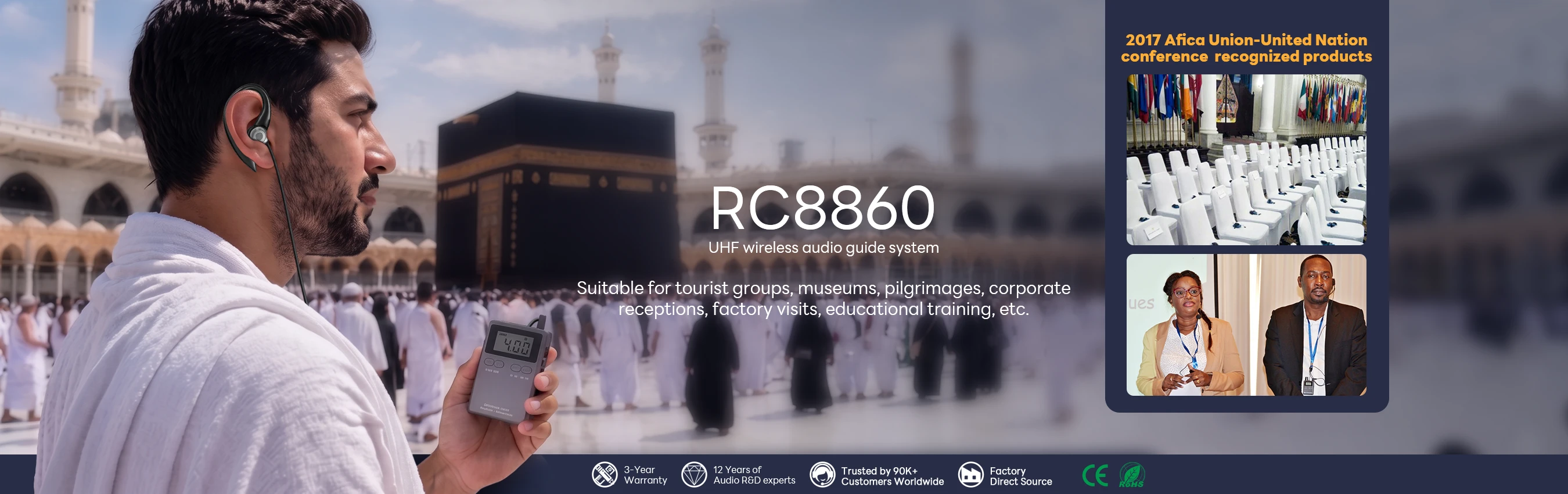
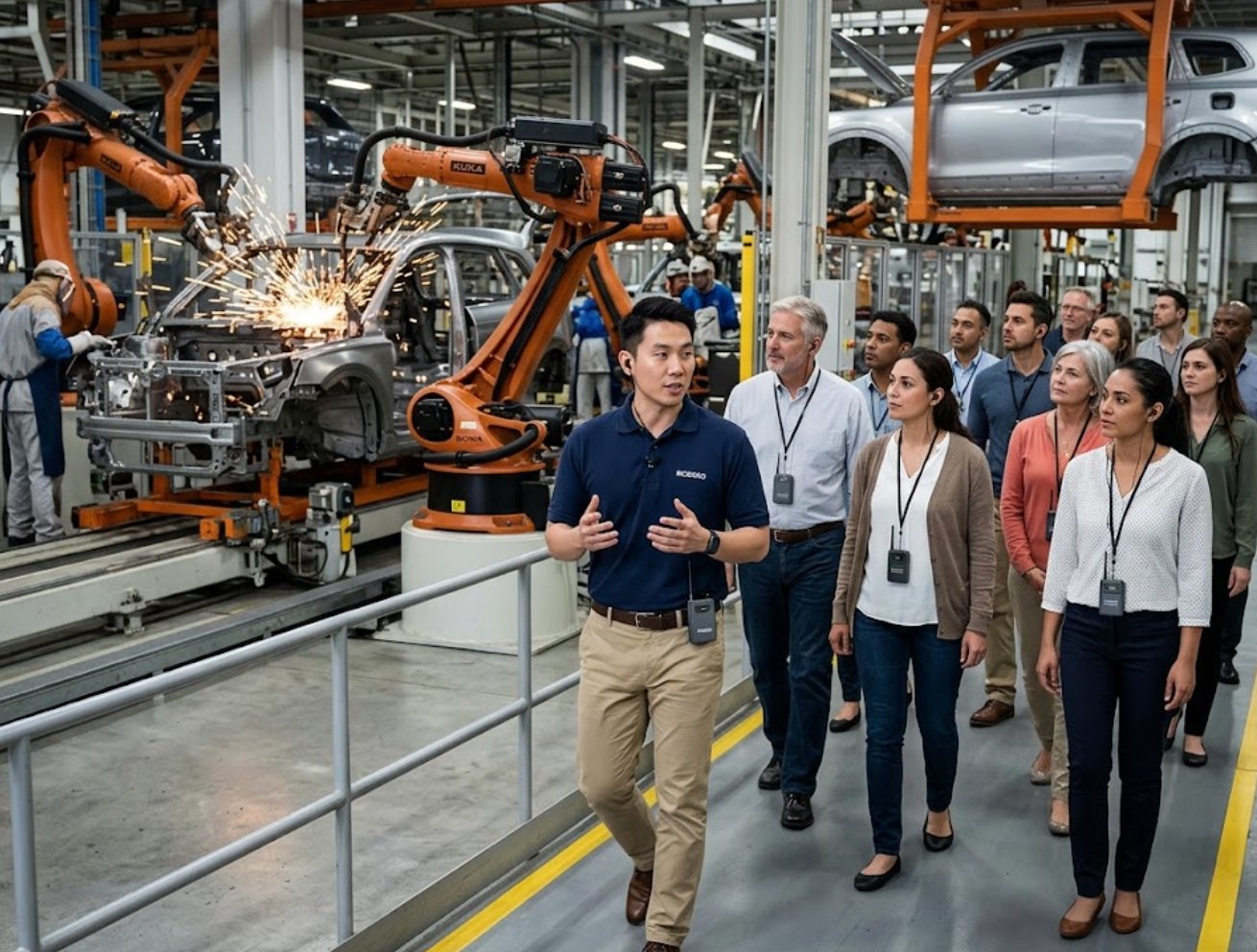
In the RC8860 role, tour teams get a 59-gram body-worn transmitter built for high-motion environments. The light form factor suits proving-ground drives, outdoor test tracks, and vehicle experience zones, where a guide needs full freedom of movement while instructing a group moving at speed. For training-heavy factory programs, the RC8860 Tour Guide Transmitter For Teaching supports both guided tours and hands-on instructional sessions without any change of equipment, which keeps staff training time low and tour throughput high.
How RC8860 Evolves the Auto Factory Tour Experience(图1)

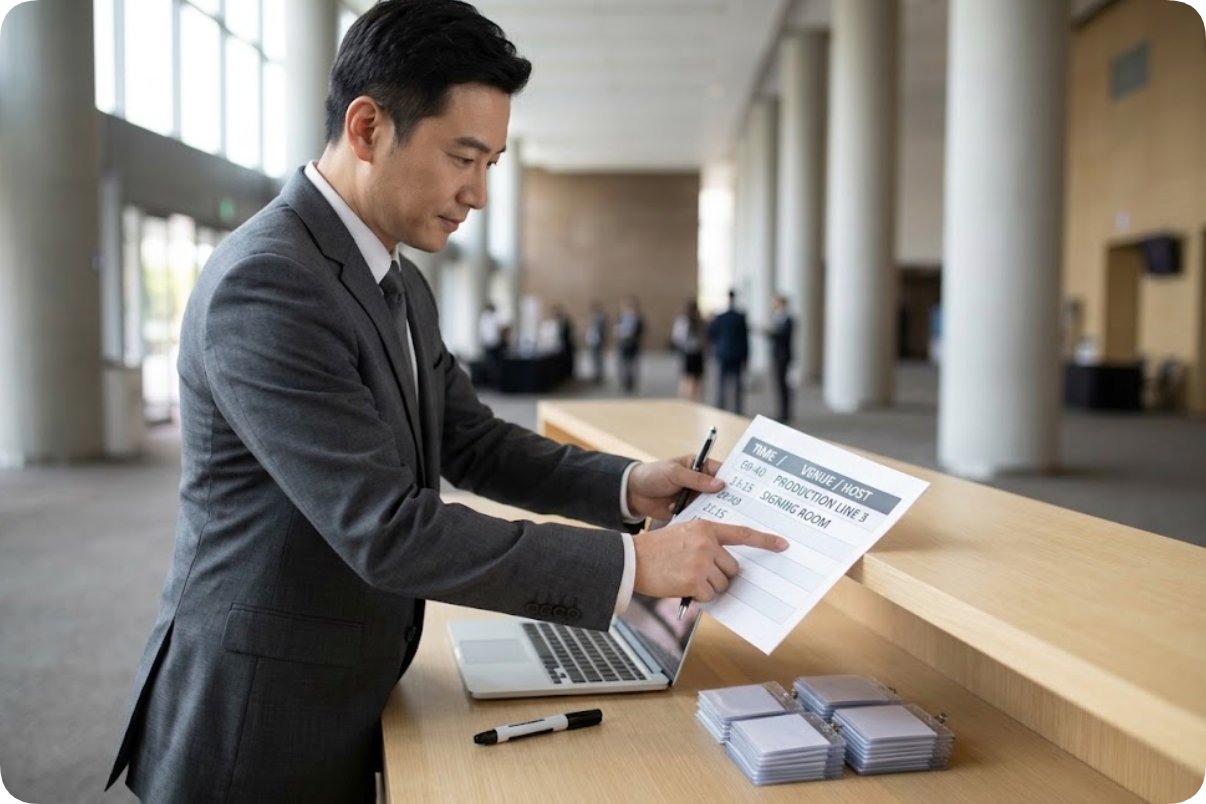
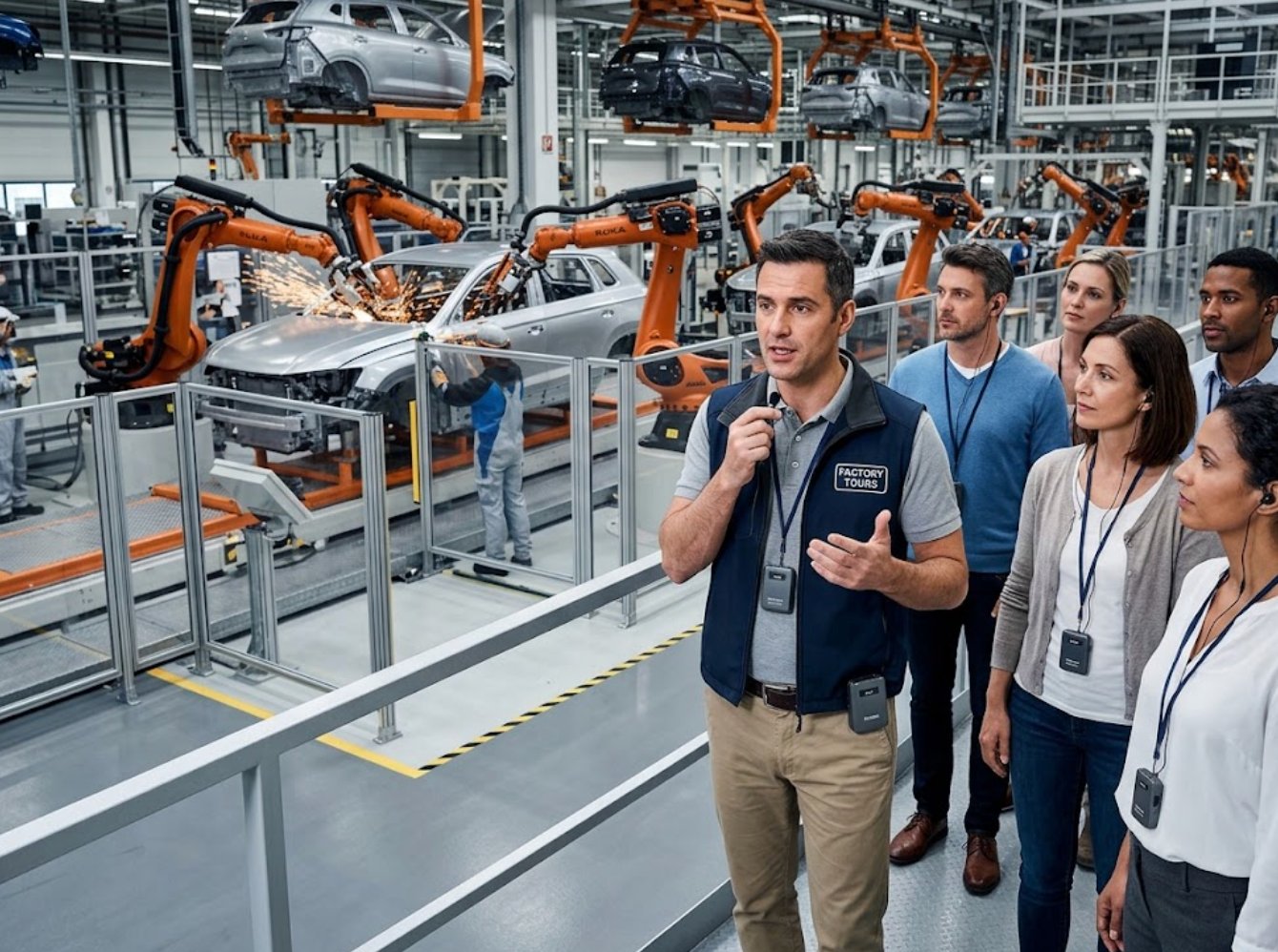
The RC085 fills a different role at the reception desk. Its clear LCD display gives guides immediate visibility of channel status, group assignment, and battery level, which is exactly what busy visitor center staff need when managing several tour groups in a single afternoon. At 62 grams, the RC085 Digital Tour Guide System pairs naturally with the RC8860, one system for open-air and high-motion areas and another for indoor exhibition halls, visitor lobbies, and product showrooms. When teams are deciding between the two, the RC085 vs RC8860 breakdown clarifies the trade-offs in display, weight, and intended use.
How RC8860 Evolves the Auto Factory Tour Experience(图2)

Technical Specification Comparison

Not all tour guide systems perform the same way in a factory setting. The specifications that matter most, weight, positioning, and deployment ease, vary significantly across models, and the right choice depends on how the system will actually be used. A unit that is perfect for a guided walk through a showroom can be the wrong tool for a high-speed proving-ground session. The comparison below highlights the features that matter for your operational needs.

ModelPositionWeightNotable Feature
RC8860High-motion outdoor coaching and proving-ground tours59 gBody-worn transmitter for open-air and proving-ground tours
RC085Digital tour guide with clear LCD display62 gLCD display for channel and battery management at reception

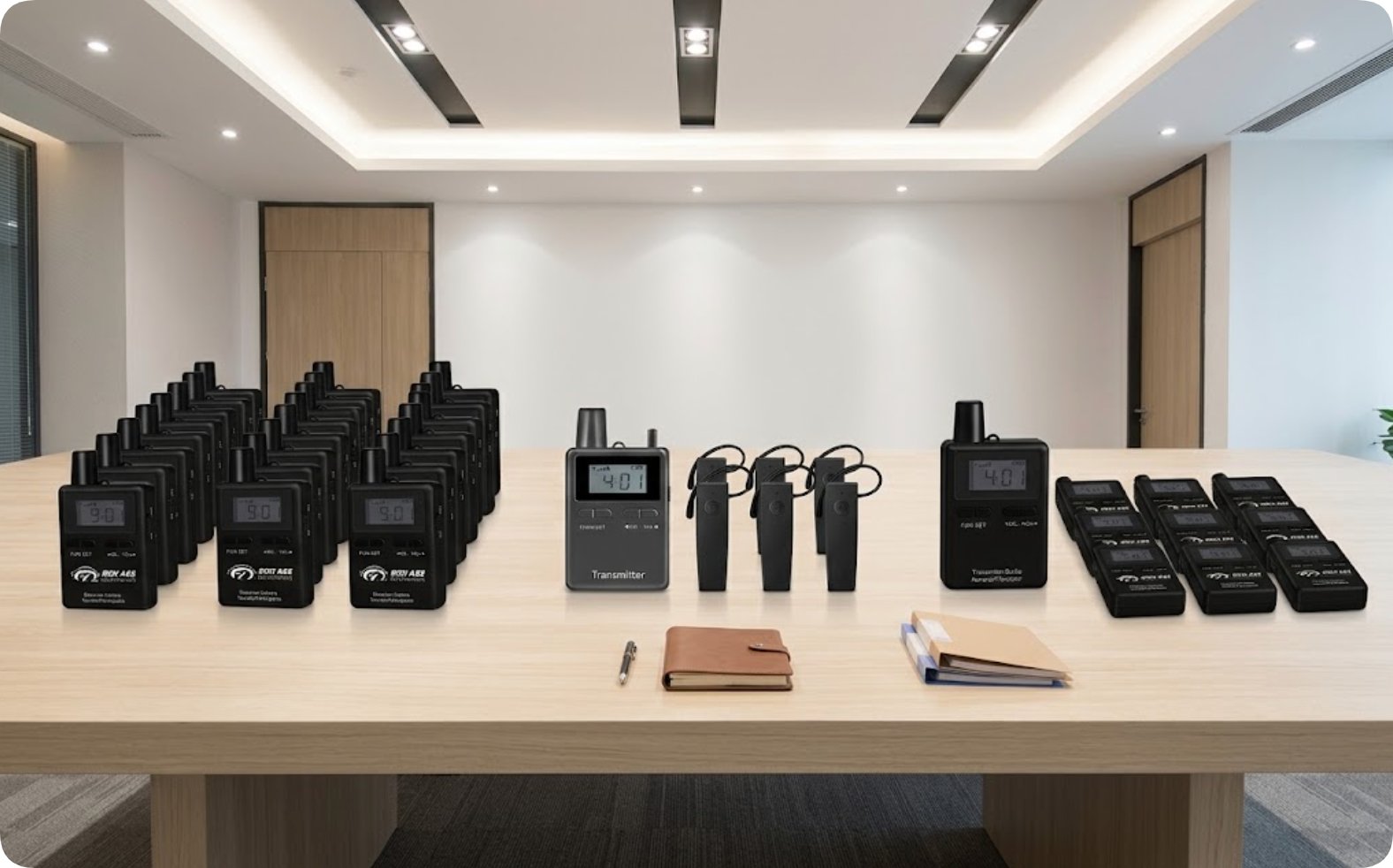
The two models are best treated as complementary rather than competing. The RC8860 lives on the tour leader's body and stays out of the guests' attention, while the RC085 puts control information where reception staff can see it at a glance. Plants that run indoor halls alongside outdoor drive experiences typically deploy both and assign units by venue.

Market Data and Industry Trends

The Auto Factory Tour technology landscape is shifting quickly. Traditional wired systems are being retired in favor of digital wireless solutions, with early adopters reporting ROI payback periods of under 12 months, primarily through reduced labor costs and increased tour capacity. Visitor experience teams across the manufacturing sector report satisfaction scores rising by 15 to 25 percent after an audio upgrade, while staff overtime from equipment troubleshooting drops measurably in the same period. These figures rarely surprise anyone who has run a tour.

Looking ahead, the convergence of factory tours with VR and digital factory platforms means audio must integrate with new content formats rather than exist as a standalone broadcast. Organizations that standardize on a single wireless ecosystem, mixing high-motion transmitters like the RC8860 with display-equipped guide units like the RC085, position themselves to scale from small VIP visits to multi-channel public open days without replacing infrastructure. That flexibility, more than any single specification, defines the next wave of the Auto Factory Tour.

The practical lesson for tour managers is straightforward: buy for the whole program, not for the next event. A mixed fleet that shares one ecosystem costs less to maintain, trains faster, and lets the same hardware serve a VIP visit one week and a public open day the next. As automakers keep expanding their visitor programs, the teams that standardize early will have the headroom to grow.

2026年08月21日 09:04
click: 542

How RC8860 Evolves the Auto Factory Tour Experience

time: 2026年08月21日 click:542

The factory tour has quietly become one of the most carefully staged experiences in modern manufacturing. By 2027, this category is expected to see sharply accelerated adoption through 2028, as automotive brands open their assembly lines to journalists, students, suppliers, and prospective customers. Tour teams are discovering that audio is no longer a supporting detail; it is the backbone of the event. Early adopters of digital wireless guide systems report measurable time and labor savings, and the gap between a well-run and a mediocre tour often comes down to the equipment in the guide's hand. This article examines how factory tour audio has evolved from rented wired headsets to lightweight digital wireless systems, and why the choice of a wireless guide system for Auto Factory Tour now shapes the quality of the entire visitor experience, from the reception desk to the final proving-ground drive.

Anyone who has stood next to a stamping press understands the problem. The noise is physical, not merely acoustic, and a guide who has to shout quickly loses the room. What has changed is not the noise, which remains punishing as ever, but the technology to cut through it. Digital transmission, compact body-worn transmitters, and dependable channel management have turned a logistical exercise into a routine part of the daily program.

💡 Why Auto Factory Tours Demand RC8860-Class Audio

Automotive plants rank among the harshest acoustic environments in industry. Robotic welding bays, stamping presses, and engine test cells routinely sit in the 85 to 100 decibel range, and at those levels conventional tour audio simply stops being intelligible. A visitor a few feet from the guide cannot reconstruct sentences from fragments; they fill in the blanks, misread safety instructions, and leave with less than the factory intended to communicate. A tour that fails audibly is worse than no tour at all, because it undermines the credibility the company is trying to build.

At the same time, the modern factory tour has become a strategic communications channel rather than a marketing nicety. Automakers use these visits to demonstrate quality control, sustainability programs, and electric vehicle production lines to an audience that expects to hear every word without shouting or guesswork. Whether the guest is a dealer or a student, the expectation is the same: clear sound, no equipment drama, and a guide who is present instead of fighting the hardware.

This is where RC8860-class transmitters change the picture. Digital wireless transmission, as opposed to analog FM or wired loops, keeps a guide's voice stable and intelligible even when visitors are spread across a moving production line or stepping into loud assembly zones. The evolution from fixed wired audio to portable wireless systems has also cut setup time dramatically, so tours start in minutes rather than after hours of cable preparation, and guides can hand over shifts without recalibrating hardware. The savings show up in small ways: no amplifier carts, no cables taped across walkways, no sound checks that eat into the first tour. For plants running several tours a day, those savings compound into real staffing relief, and for guests they mean tours that start on time and never pause for equipment fixes.

📈 The Generational Evolution of Tour Guide Technology

Factory tour audio has moved through three distinct generations. The first generation relied on hardwired headsets and stationary amplifiers. Movement was restricted, infrastructure had to be built into the building, and every tour followed a fixed route because the audio followed fixed cables. The second generation brought analog FM radio transmission, which improved mobility but left the system exposed to interference from welding inverters and overhead cranes, and to the signal drift that plagues tours stretched across a multi-building campus.

The third generation is digital. Today's systems use digital audio transmission with reliable channel management, longer battery life, and body-worn transmitters that free tour leaders to walk anywhere on the factory floor. Newer developments are pushing the category further. Digital twins and VR factory previews now let visitors walk an assembly line virtually before entering it, while real-time language interpretation is expanding plant tours to international delegations. Industry surveys show that over 80 percent of major automotive OEMs now operate some form of public plant visit program, and the RC2500 vs RC8860 comparison illustrates how quickly this category has matured from a niche broadcasting tool into a mainstream brand experience platform.

Seen against that history, the current generation is not an incremental step. It removes the two limits that defined earlier systems: range and flexibility. A guide can start in the visitor center, walk through three halls, and continue outdoors to a test track without touching the equipment once. That continuity is what a modern tour program needs when guests arrive with different backgrounds, languages, and expectations.

🏭 RC8860 and RC085: Two Roles in the Modern Factory Tour

In the RC8860 role, tour teams get a 59-gram body-worn transmitter built for high-motion environments. The light form factor suits proving-ground drives, outdoor test tracks, and vehicle experience zones, where a guide needs full freedom of movement while instructing a group moving at speed. For training-heavy factory programs, the RC8860 Tour Guide Transmitter For Teaching supports both guided tours and hands-on instructional sessions without any change of equipment, which keeps staff training time low and tour throughput high.

How RC8860 Evolves the Auto Factory Tour Experience(图1)

The RC085 fills a different role at the reception desk. Its clear LCD display gives guides immediate visibility of channel status, group assignment, and battery level, which is exactly what busy visitor center staff need when managing several tour groups in a single afternoon. At 62 grams, the RC085 Digital Tour Guide System pairs naturally with the RC8860, one system for open-air and high-motion areas and another for indoor exhibition halls, visitor lobbies, and product showrooms. When teams are deciding between the two, the RC085 vs RC8860 breakdown clarifies the trade-offs in display, weight, and intended use.

How RC8860 Evolves the Auto Factory Tour Experience(图2)

Technical Specification Comparison

Not all tour guide systems perform the same way in a factory setting. The specifications that matter most, weight, positioning, and deployment ease, vary significantly across models, and the right choice depends on how the system will actually be used. A unit that is perfect for a guided walk through a showroom can be the wrong tool for a high-speed proving-ground session. The comparison below highlights the features that matter for your operational needs.

ModelPositionWeightNotable Feature
RC8860High-motion outdoor coaching and proving-ground tours59 gBody-worn transmitter for open-air and proving-ground tours
RC085Digital tour guide with clear LCD display62 gLCD display for channel and battery management at reception

The two models are best treated as complementary rather than competing. The RC8860 lives on the tour leader's body and stays out of the guests' attention, while the RC085 puts control information where reception staff can see it at a glance. Plants that run indoor halls alongside outdoor drive experiences typically deploy both and assign units by venue.

Market Data and Industry Trends

The Auto Factory Tour technology landscape is shifting quickly. Traditional wired systems are being retired in favor of digital wireless solutions, with early adopters reporting ROI payback periods of under 12 months, primarily through reduced labor costs and increased tour capacity. Visitor experience teams across the manufacturing sector report satisfaction scores rising by 15 to 25 percent after an audio upgrade, while staff overtime from equipment troubleshooting drops measurably in the same period. These figures rarely surprise anyone who has run a tour.

Looking ahead, the convergence of factory tours with VR and digital factory platforms means audio must integrate with new content formats rather than exist as a standalone broadcast. Organizations that standardize on a single wireless ecosystem, mixing high-motion transmitters like the RC8860 with display-equipped guide units like the RC085, position themselves to scale from small VIP visits to multi-channel public open days without replacing infrastructure. That flexibility, more than any single specification, defines the next wave of the Auto Factory Tour.

The practical lesson for tour managers is straightforward: buy for the whole program, not for the next event. A mixed fleet that shares one ecosystem costs less to maintain, trains faster, and lets the same hardware serve a VIP visit one week and a public open day the next. As automakers keep expanding their visitor programs, the teams that standardize early will have the headroom to grow.
×

Contact us

email:
name:
subject:
content: