
.webp)
An automotive factory tour is not like any other plant tour, and the difference is confidentiality. In a food or electronics plant, a visitor can photograph most of what they see. In a car plant, sections of the building hold unreleased models, prototype lines, and process technology that the manufacturer does not want on social media an hour after the tour ends. Over the past year I have worked with an automotive plant that runs a daily visitor programme through three very different zones: the general assembly hall, the prototype bay, and the design studio. This case study covers how they split the tour between the RC2408 and the RC085 to keep visitors informed without leaking what stays under NDA.
💡 Why One Audio System Cannot Cover the Whole Building
The problem in an automotive plant is not noise — it is information control. A tour guide cannot simply tell visitors where they can and cannot photograph, because in a busy tour the message gets lost. The plant's solution was to treat audio as the control mechanism: in open zones, the guide's voice reaches everyone; in confidential zones, the guide explains what the team can talk about, and the group is reminded before entering that photography is restricted. Wireless tour audio lets the plant make that distinction continuously, without stopping the tour for a briefing at every boundary.
For plants planning a similar split, our factory tour wireless audio solutions page covers both the hardware selection and the zone-planning side of the deployment.
RC2408: The Multi-Zone Unit for the Main Hall
The main assembly hall is the largest zone and the one visitors see first. It is a long, open space with lines of vehicles at different build stages, and a single tour can cover several stations in one pass. The RC2408 is the unit the plant chose for this zone because it is built for large, multi-zone venues — the receiver holds its channel across the length of the hall, and the guide can switch station contexts without the group losing audio.
The measured benefit in the assembly hall was consistency. With the RC2408, every visitor in the group heard the same explanation at the same time, whether they were standing next to the guide or at the back of a twenty-person group beside the body-in-white line. The plant runs the RC2408 with a single channel for the whole hall and relies on the guide's position to separate stations, which keeps the operation simple for a zone where confidentiality is not an issue.

RC085: The UHF/VHF Unit for the Confidential Zones
The prototype bay and the design studio are a different story. These zones contain unreleased vehicles and process details, and the plant's rule is that visitors may listen but not photograph. The guide needs audio that works reliably at a longer range and with fewer interruptions — and for that zone the plant switched to the RC085, which operates on UHF and VHF bands rather than 2.4 GHz.
The reason for the band choice is practical. The confidential zones are built with heavier wall construction and shielded areas, and UHF/VHF penetration through building structures is measurably better than 2.4 GHz in this plant's layout. The RC085 also gives the guide a dedicated channel per confidential tour, so two groups moving through the prototype bay at the same time do not bleed audio into each other — which matters when the two groups are under different NDAs.

How the Two Systems Work Together on One Route
| Feature | RC2408 (Main Hall) | RC085 (Confidential Zones) |
|---|---|---|
| Frequency | 2.4 GHz | UHF / VHF |
| Zone type | Open assembly hall | Prototype bay, design studio |
| Photography rule | Allowed | Restricted, listen only |
| Best for | Large multi-station groups | Confidential, walled zones |
| Channel use | Single channel per hall | Dedicated per confidential tour |
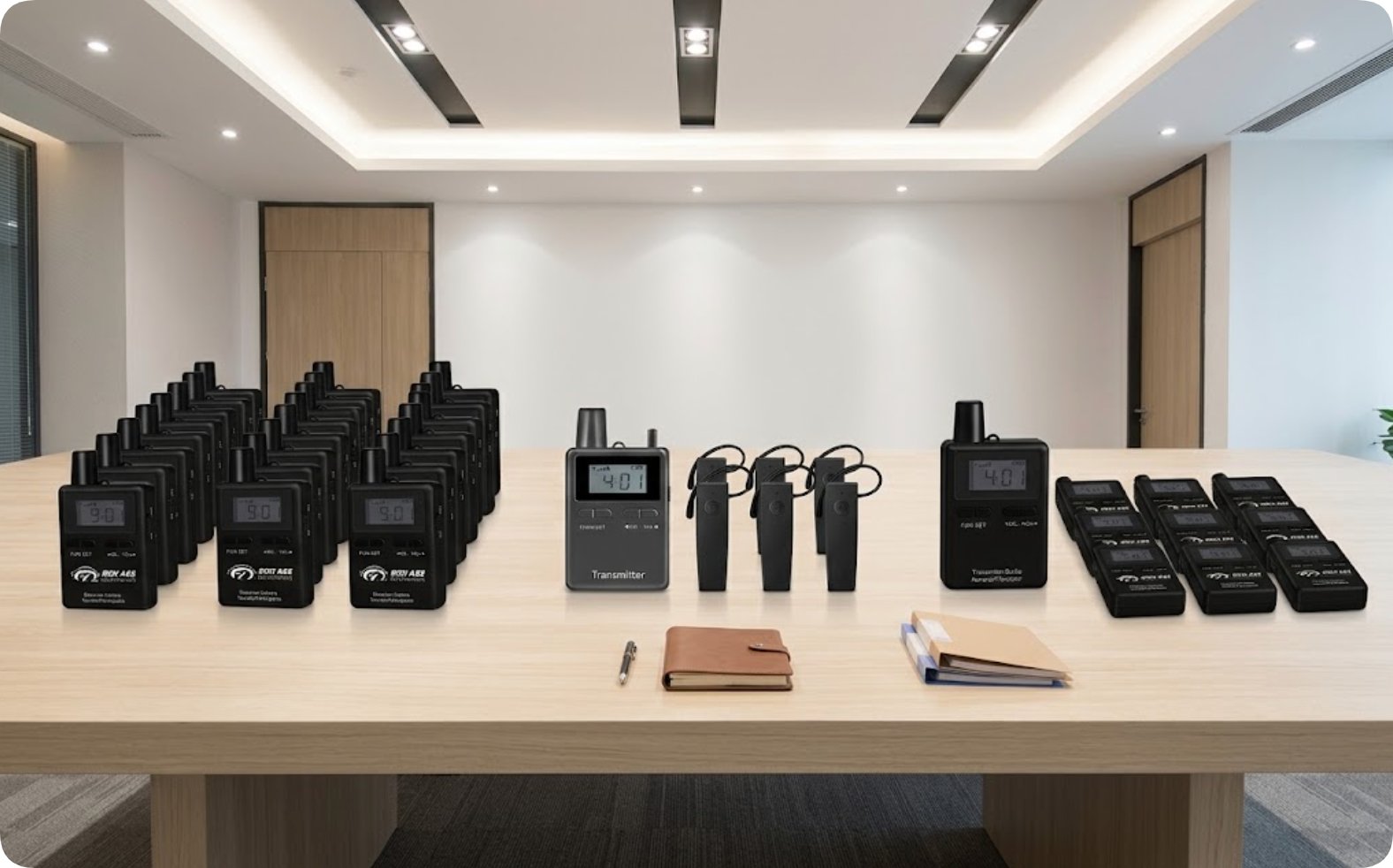
The two units do not compete; they cover different halves of the same route. The guide carries the RC2408 into the assembly hall, swaps to the RC085 at the entrance to the prototype bay, and carries the RC085 through the design studio before swapping back on the way out. The visitors wear the same receivers throughout, because the plant configured both systems to use the same receiver type across the route.
Making the Swap Invisible to Visitors
The detail that made the deployment work was the receiver compatibility. The plant wanted the visitors to wear one receiver for the whole tour, without a handover moment in the middle of the route. By pairing the RC2408 and the RC085 with the same receiver model, the guide swaps transmitters at zone boundaries and the visitors never notice the change — the audio simply continues on the next channel. The plant briefs visitors on the photography rule at the boundary, using the guide's microphone, which keeps the restriction part of the tour rather than a confrontation.
One practical note from the rollout: the plant colour-codes the receivers by zone at the start of each tour — a small sticker on the lanyard tells the guide which zone group each visitor belongs to when two tours overlap in the hall. It sounds minor, but it stopped the only confusion the team saw in the first week, when a visitor from the main-hall tour followed the wrong guide into the prototype bay.
🗺️ Planning Your Own Split-Zone Tour
Start by mapping your plant into three categories: open zones, restricted zones, and forbidden zones. Open zones can run on a single 2.4 GHz system like the RC2408; restricted zones where visitors may listen but not photograph are where a UHF/VHF unit like the RC085 earns its keep; forbidden zones simply stay off the route. Once the map exists, the audio routing follows it naturally.
The automotive plant in this case runs two tours a day with a combined visitor count of about forty people, using one RC2408 transmitter, three RC085 transmitters, and a shared receiver fleet. The confidentiality policy is now enforced by the tour design rather than by a guard at every door, which the plant's legal team prefers — the rule is visibly explained, and the technology makes it hard to miss.
What This Means for Your Plant
If your facility runs visitor tours through any area that is not fully public, the zone-split approach is worth copying: one system for the open floors, one for the protected spaces, and a shared receiver fleet so visitors never notice the boundary. Our wireless tour guide systems page has the full range, and the product pages for the RC2408 and the RC085 carry the full specifications. For another worked example from a manufacturing environment, the factory tour guide system case shows a similar deployment in a different industry.