
A leading China factory specializing in Wireless Tour Guide Systems, Church Audio Guides, and Translation Headphones with premium OEM/ODM solutions.

Tel:+86 18922879583

Email:tiger.wang@richitek.com

Open Day, Ten Groups, One Campus: Installing the RC2501 and RC8860 for University Tours

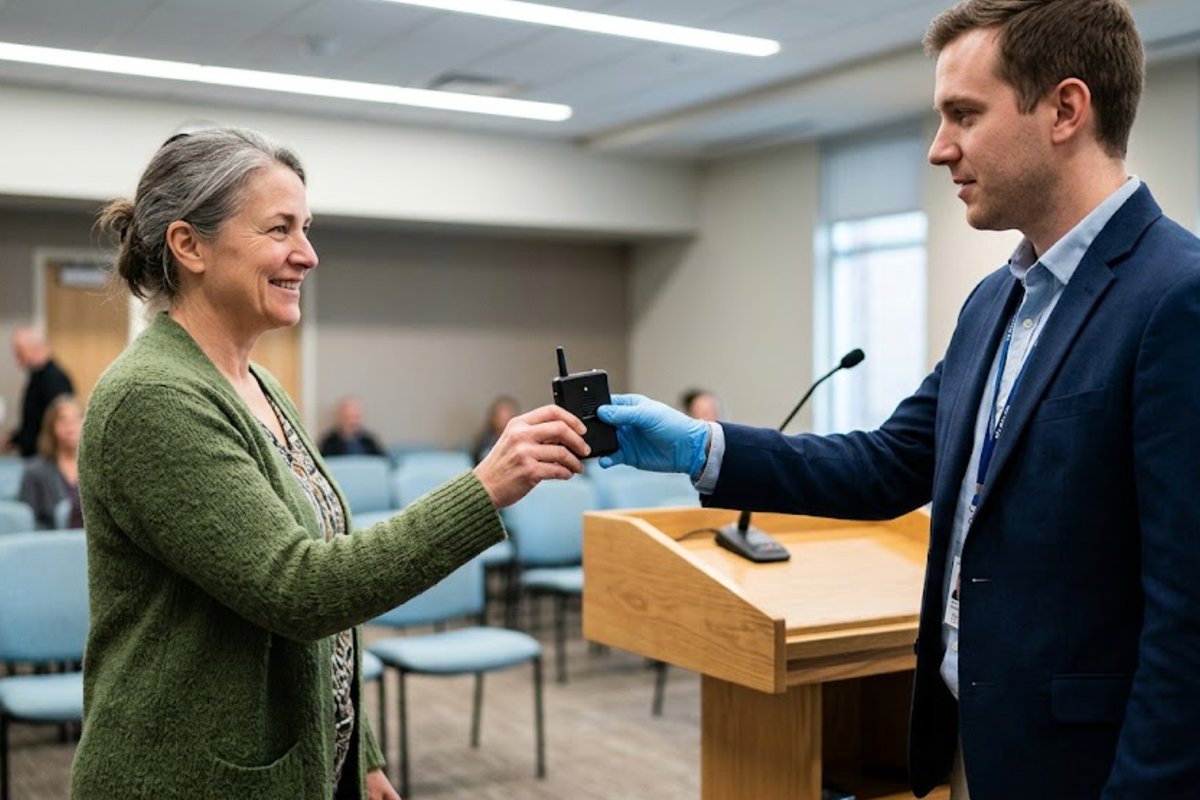
A university campus is one of the few places where a tour programme has to serve two completely different operating patterns with the same hardware. On a normal weekday, an admissions office runs two or three small groups along a fixed route. On an open day, the same team runs ten or more groups at once, several hundred visitors arrive within a two-hour window, and every route crosses at least two others somewhere on the quad. I have helped several universities plan for both, and the installations that fail are the ones planned only for the weekday pattern. This guide covers the installation decisions that matter when one campus has to do both.

📡 Two Tour Patterns, Two Radio Problems

The weekday pattern is a radio problem of penetration: a small group walks through corridors, lecture halls, and a library, and the guide's voice has to reach receivers through walls and around corners. The open-day pattern is a radio problem of density: many transmitters are live at the same time within a few hundred metres of each other, and each group has to hear only its own guide. These two problems have different solutions, and a system installed for one is not automatically ready for the other.

That is why most universities end up with a two-model fleet rather than a single model. Our campus tour solutions page covers the planning side, but in practice the split below is the one that works: one model for the indoor routes and the daily pattern, one for the open-ground routes and the open-day pattern.

Indoor Routes: Where Corridors and Lecture Halls Matter

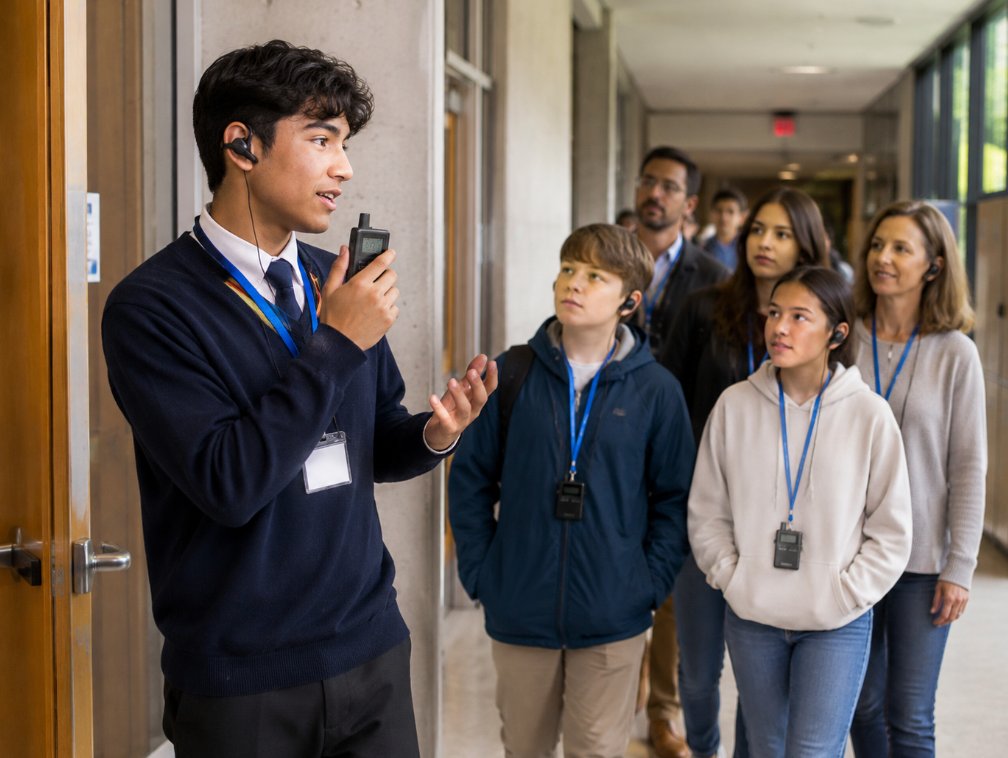
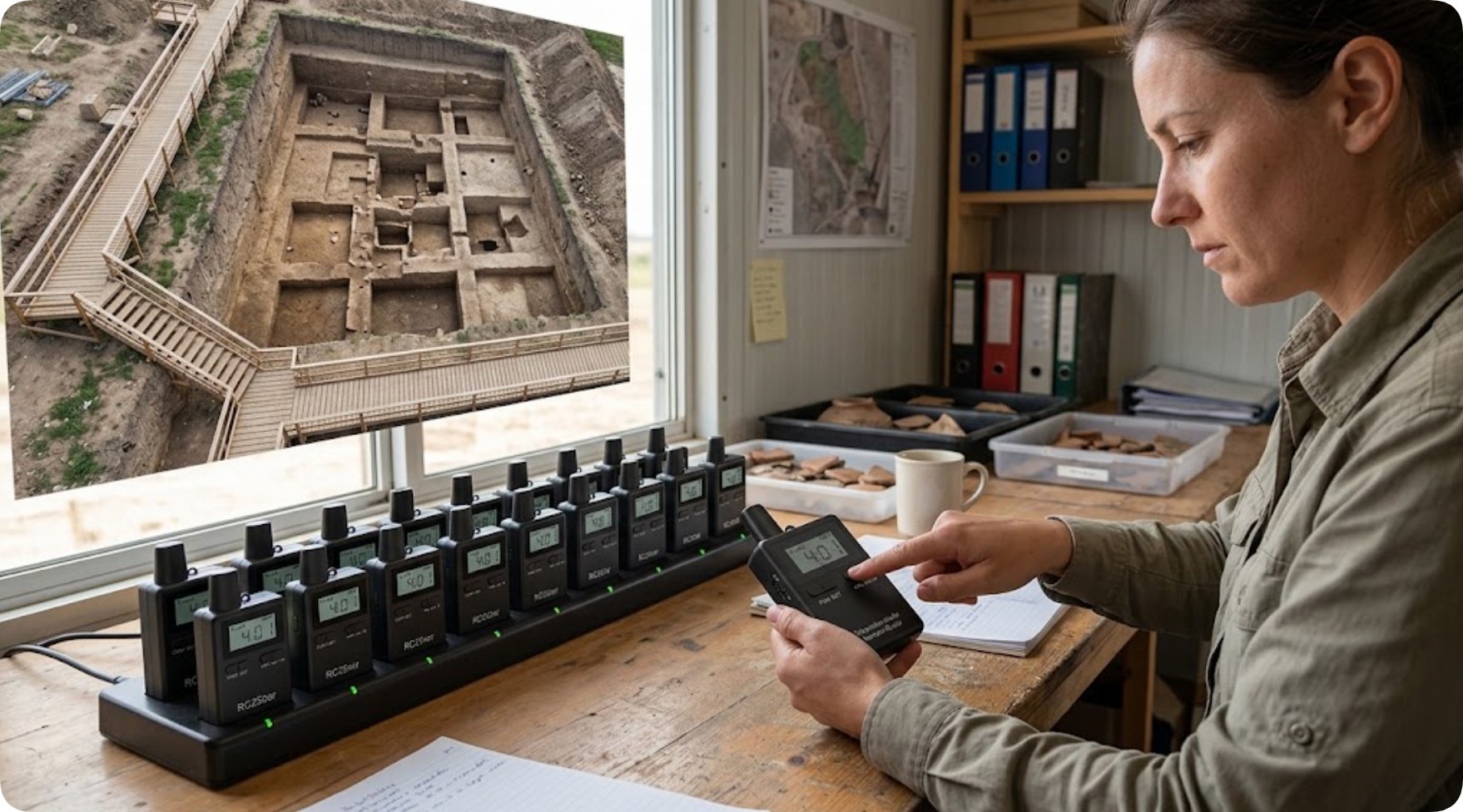
The RC2501 is the unit to plan around for the indoor route. Its strength is not raw range — it is the behaviour of the signal inside a building: it holds up through the concrete corridors, stairwells, and lecture-hall walls that a campus tour crosses in the first fifteen minutes. For a route that starts in the admissions office, moves through the main library, and ends in a laboratory building, that indoor performance is what keeps the guide audible without anyone repeating themselves.

Install the RC2501 route by walking it once with a transmitter and a receiver and marking the two or three spots where the signal drops — typically a stairwell landing, a lift lobby, and the far corner of a large lecture theatre. Those spots are not failures; they are places where the guide should pause and wait for the tail of the group before continuing. Put them on the printed route sheet the student ambassadors carry, and the indoor route stops producing complaints.
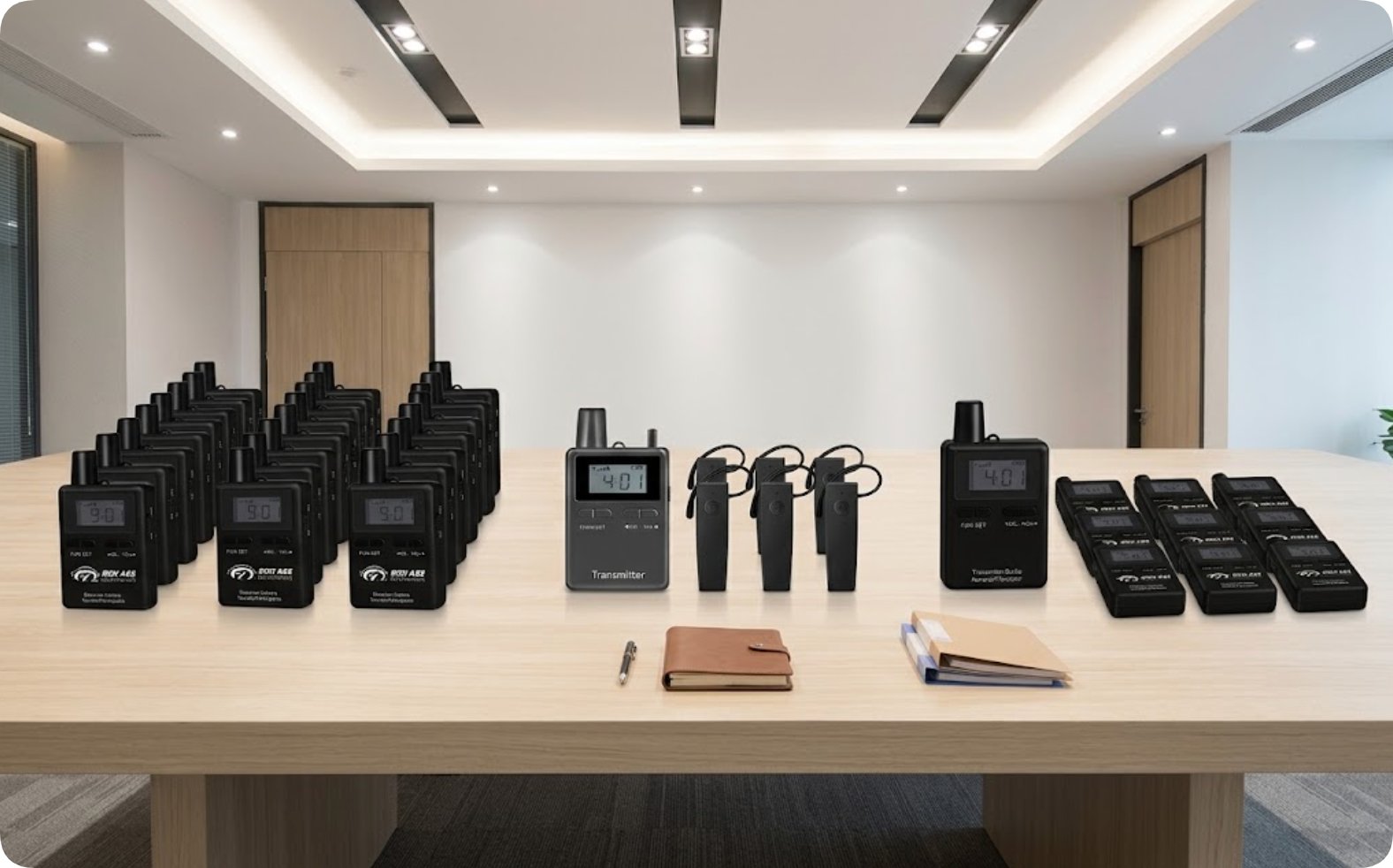
Open Day, Ten Groups, One Campus: Installing the RC2501 and RC8860 for University Tours(图1)

Outdoor Routes: Range, Weather, and Open Sightlines

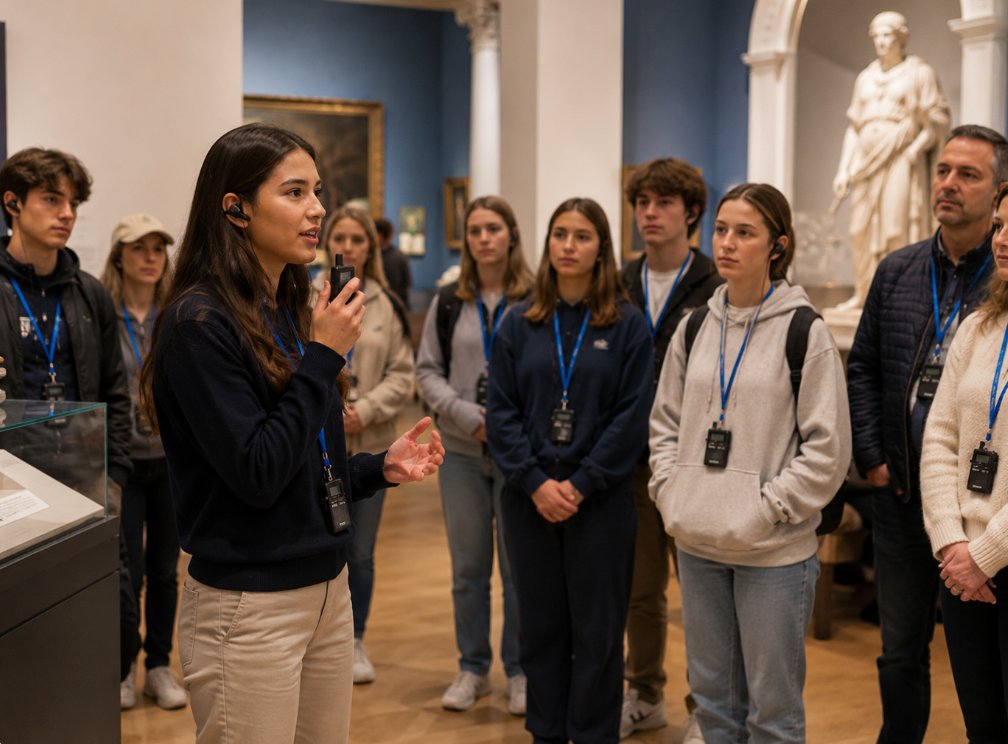
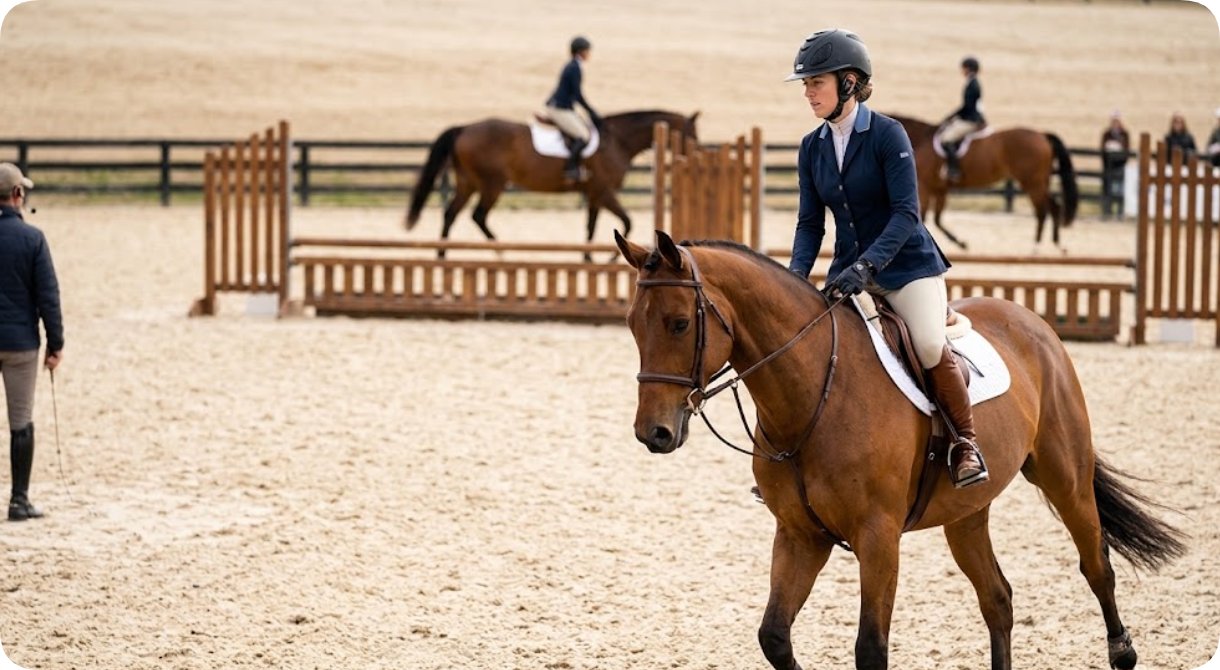
The RC8860 takes the outdoor half of the fleet. On open ground — the quad, the sports fields, the perimeter path past the older buildings — sightlines are good and the requirement is distance rather than penetration. The RC8860's transmitter is built for exactly that kind of route, and its range is what lets a guide lead a group across the full width of a campus without losing the visitors at the back.

Outdoor installation has two details that matter more than range. The first is weather: the guide's transmitter will be used in rain and direct sun, so plan a lanyard or belt clip rather than expecting it to be held, and keep a spare transmitter charged indoors for the day's second session. The second is the meeting point: pick a fixed spot with a clear sightline where a straggler can rejoin, because on open ground a visitor who stops to take a photograph will drift further than they would indoors.
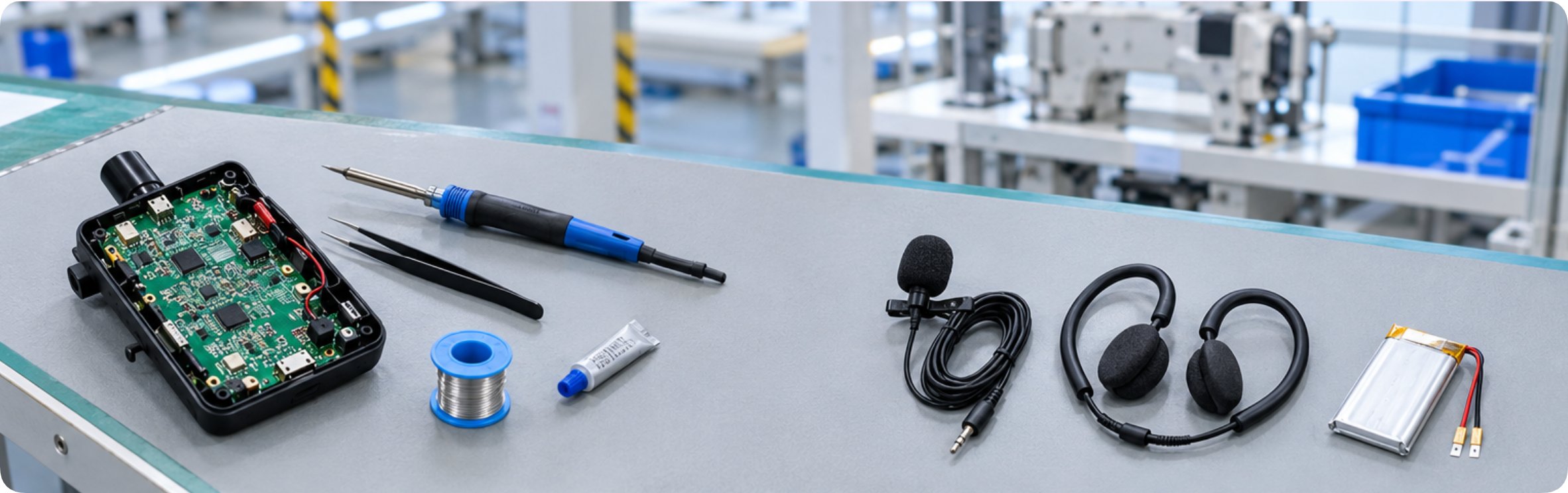
Open Day, Ten Groups, One Campus: Installing the RC2501 and RC8860 for University Tours(图2)

Channel Planning for a Multi-Group Open Day

This is the step most universities skip until the first open day goes badly. If ten groups are running at once, each group needs its own channel, and adjacent channels are a bad idea when two routes cross on the same path. Assign channels with a gap between them — channel one, channel four, channel seven, and so on — so that bleed between neighbouring groups is not audible even when they pass within a metre of each other.

Print the channel assignment on the back of each group's route card and label the receivers with the same number. The failure mode to avoid is not interference; it is a visitor picking up a receiver that was left on yesterday's channel. A numbered label on the receiver and a matching number on the route card removes that failure entirely, and it costs nothing.

A Two-Hour Pre-Event Check

CheckWhy it matters on an open day
Charge every receiver the night beforeA flat receiver mid-tour silences one visitor for the whole route
Confirm each transmitter's channel on the cardPrevents cross-group bleed at route crossings
Walk each route once with a receiverCatches a dead spot created by a new building or a parked vehicle
Stage spare receivers at the start pointSwaps take seconds instead of sending someone back to the office
Brief the guides on the two pause pointsKeeps the tail of the group within range at known weak spots

Run this checklist two hours before the first group leaves, not the morning of the event. Two hours is enough to charge a forgotten batch of receivers, and it is early enough that a route walk is still possible before visitors arrive.

🎓 Handing Over to the Student Ambassadors

On most campuses the guides are student ambassadors who change every academic year, which means the installation has to survive a complete staff turnover. The handover that works is a one-page sheet: the route, the channel number, the two pause points, and the number to call if a receiver fails. Laminate it and keep it with the charging case. The ambassadors do not need to understand radio; they need to know where to stand and what number to call.

One more detail that pays off: keep a log of each open day with the number of groups, the routes used, and anything that failed. After two or three events the pattern becomes obvious — usually the same crossing point or the same lecture-hall corner — and the next installation fixes it before it recurs.

🔮 Where to Start

A campus tour programme is two installations wearing one badge: an indoor route built for penetration and an outdoor route built for distance, plus a channel plan for the days when ten groups move at once. Our wireless tour guide systems page has the full range, and the product pages for the RC2501 and the RC8860 carry the full specifications. For a worked example from a similar setting, the solution library includes deployments from education and other guided-tour environments.
2026年08月31日 09:01
click: 533

Open Day, Ten Groups, One Campus: Installing the RC2501 and RC8860 for University Tours

time: 2026年08月31日 click:533

A university campus is one of the few places where a tour programme has to serve two completely different operating patterns with the same hardware. On a normal weekday, an admissions office runs two or three small groups along a fixed route. On an open day, the same team runs ten or more groups at once, several hundred visitors arrive within a two-hour window, and every route crosses at least two others somewhere on the quad. I have helped several universities plan for both, and the installations that fail are the ones planned only for the weekday pattern. This guide covers the installation decisions that matter when one campus has to do both.

📡 Two Tour Patterns, Two Radio Problems

The weekday pattern is a radio problem of penetration: a small group walks through corridors, lecture halls, and a library, and the guide's voice has to reach receivers through walls and around corners. The open-day pattern is a radio problem of density: many transmitters are live at the same time within a few hundred metres of each other, and each group has to hear only its own guide. These two problems have different solutions, and a system installed for one is not automatically ready for the other.

That is why most universities end up with a two-model fleet rather than a single model. Our campus tour solutions page covers the planning side, but in practice the split below is the one that works: one model for the indoor routes and the daily pattern, one for the open-ground routes and the open-day pattern.

Indoor Routes: Where Corridors and Lecture Halls Matter

The RC2501 is the unit to plan around for the indoor route. Its strength is not raw range — it is the behaviour of the signal inside a building: it holds up through the concrete corridors, stairwells, and lecture-hall walls that a campus tour crosses in the first fifteen minutes. For a route that starts in the admissions office, moves through the main library, and ends in a laboratory building, that indoor performance is what keeps the guide audible without anyone repeating themselves.

Install the RC2501 route by walking it once with a transmitter and a receiver and marking the two or three spots where the signal drops — typically a stairwell landing, a lift lobby, and the far corner of a large lecture theatre. Those spots are not failures; they are places where the guide should pause and wait for the tail of the group before continuing. Put them on the printed route sheet the student ambassadors carry, and the indoor route stops producing complaints.

Open Day, Ten Groups, One Campus: Installing the RC2501 and RC8860 for University Tours(图1)

Outdoor Routes: Range, Weather, and Open Sightlines

The RC8860 takes the outdoor half of the fleet. On open ground — the quad, the sports fields, the perimeter path past the older buildings — sightlines are good and the requirement is distance rather than penetration. The RC8860's transmitter is built for exactly that kind of route, and its range is what lets a guide lead a group across the full width of a campus without losing the visitors at the back.

Outdoor installation has two details that matter more than range. The first is weather: the guide's transmitter will be used in rain and direct sun, so plan a lanyard or belt clip rather than expecting it to be held, and keep a spare transmitter charged indoors for the day's second session. The second is the meeting point: pick a fixed spot with a clear sightline where a straggler can rejoin, because on open ground a visitor who stops to take a photograph will drift further than they would indoors.

Open Day, Ten Groups, One Campus: Installing the RC2501 and RC8860 for University Tours(图2)

Channel Planning for a Multi-Group Open Day

This is the step most universities skip until the first open day goes badly. If ten groups are running at once, each group needs its own channel, and adjacent channels are a bad idea when two routes cross on the same path. Assign channels with a gap between them — channel one, channel four, channel seven, and so on — so that bleed between neighbouring groups is not audible even when they pass within a metre of each other.

Print the channel assignment on the back of each group's route card and label the receivers with the same number. The failure mode to avoid is not interference; it is a visitor picking up a receiver that was left on yesterday's channel. A numbered label on the receiver and a matching number on the route card removes that failure entirely, and it costs nothing.

A Two-Hour Pre-Event Check

CheckWhy it matters on an open day
Charge every receiver the night beforeA flat receiver mid-tour silences one visitor for the whole route
Confirm each transmitter's channel on the cardPrevents cross-group bleed at route crossings
Walk each route once with a receiverCatches a dead spot created by a new building or a parked vehicle
Stage spare receivers at the start pointSwaps take seconds instead of sending someone back to the office
Brief the guides on the two pause pointsKeeps the tail of the group within range at known weak spots

Run this checklist two hours before the first group leaves, not the morning of the event. Two hours is enough to charge a forgotten batch of receivers, and it is early enough that a route walk is still possible before visitors arrive.

🎓 Handing Over to the Student Ambassadors

On most campuses the guides are student ambassadors who change every academic year, which means the installation has to survive a complete staff turnover. The handover that works is a one-page sheet: the route, the channel number, the two pause points, and the number to call if a receiver fails. Laminate it and keep it with the charging case. The ambassadors do not need to understand radio; they need to know where to stand and what number to call.

One more detail that pays off: keep a log of each open day with the number of groups, the routes used, and anything that failed. After two or three events the pattern becomes obvious — usually the same crossing point or the same lecture-hall corner — and the next installation fixes it before it recurs.

🔮 Where to Start

A campus tour programme is two installations wearing one badge: an indoor route built for penetration and an outdoor route built for distance, plus a channel plan for the days when ten groups move at once. Our wireless tour guide systems page has the full range, and the product pages for the RC2501 and the RC8860 carry the full specifications. For a worked example from a similar setting, the solution library includes deployments from education and other guided-tour environments.
×

Contact us

email:
name:
subject:
content: