
.webp)
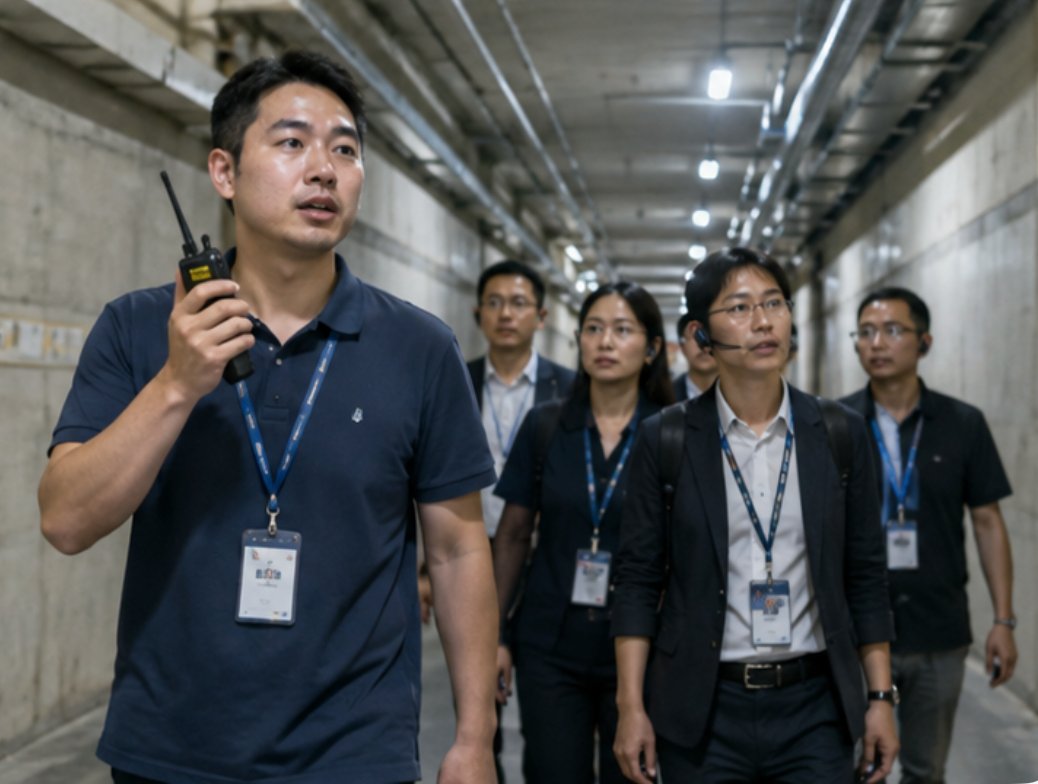
Factory tours used to be a marketing exercise: a customer walked the line, someone shouted over the machines, and everyone nodded at the end. That version is disappearing. Over the past two years the plants I work with have started running three very different visitor programmes through the same building: customer audits that need precision and confidentiality, school and university visits that need clarity at volume, and press or community open days that need to feel effortless. Each of those programmes stresses the audio system differently, and the plants handling all three well have converged on the same answer — two frequency bands instead of one.
🔍 Three Visitor Types, One Audio Problem
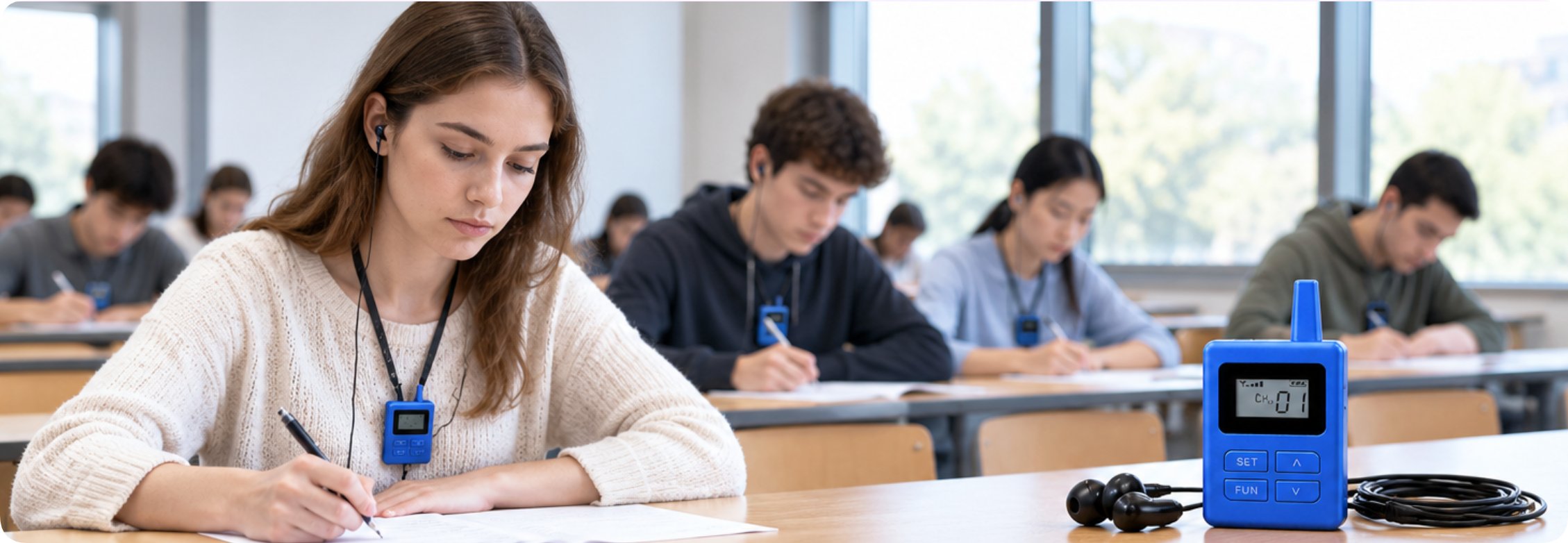
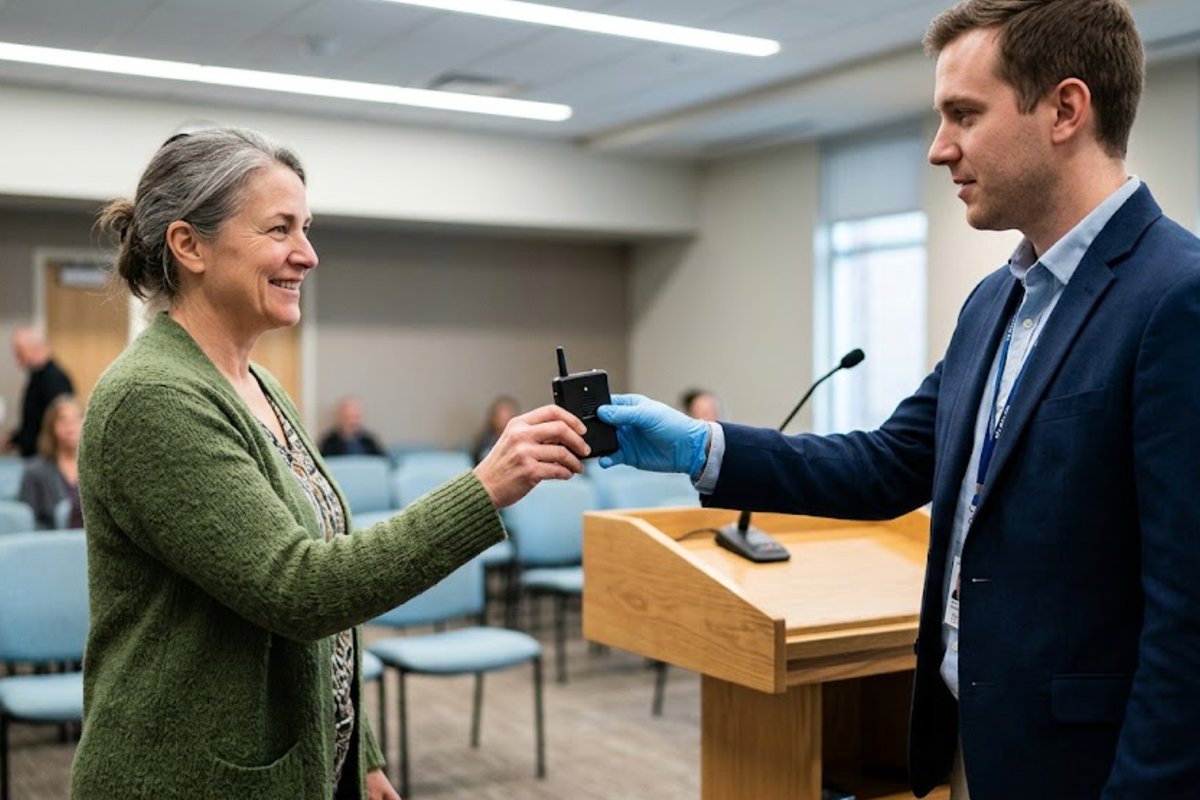
An audit group is small, senior, and often bound by a non-disclosure agreement. They need to hear technical detail accurately, and they may be walked through a zone where photography is restricted. A school group is the opposite: twenty or more young visitors, a fixed route, a teacher at the back who needs to stay in control, and a plant that does not stop for them. A press or community open day is a logistics exercise — multiple groups, a tight window, routes that cross, and no second chance to make a first impression.
Those three programmes share one audio requirement — every visitor hears the guide clearly — but they differ in range, group size, and how much of the building the route covers. That is why a single-band system struggles. Our factory tour solutions page describes the range; this article covers the trend we see driving the two-band deployment.
💡 Why Noise Rules Changed the Equipment
The second driver is regulatory rather than experiential. Occupational health rules in most markets cap the noise a worker may be exposed to, and a guide who has to shout over a production line for an hour is being asked to exceed a limit that the plant is simultaneously enforcing for everyone else. Wireless tour audio removes that conflict: the guide speaks at a normal level, the visitors hear through receivers, and nobody raises their voice above the ambient noise of the plant.
Plants that adopted tour audio for this reason report a side benefit they did not expect — the guide's voice lasts the whole day. A plant running three tours a day used to rotate guides because the strain was real. With receivers, one guide can cover the full schedule, which is a staffing saving that shows up immediately in the rota.
The 2.4 GHz Side: Parallel Groups and Channel Planning
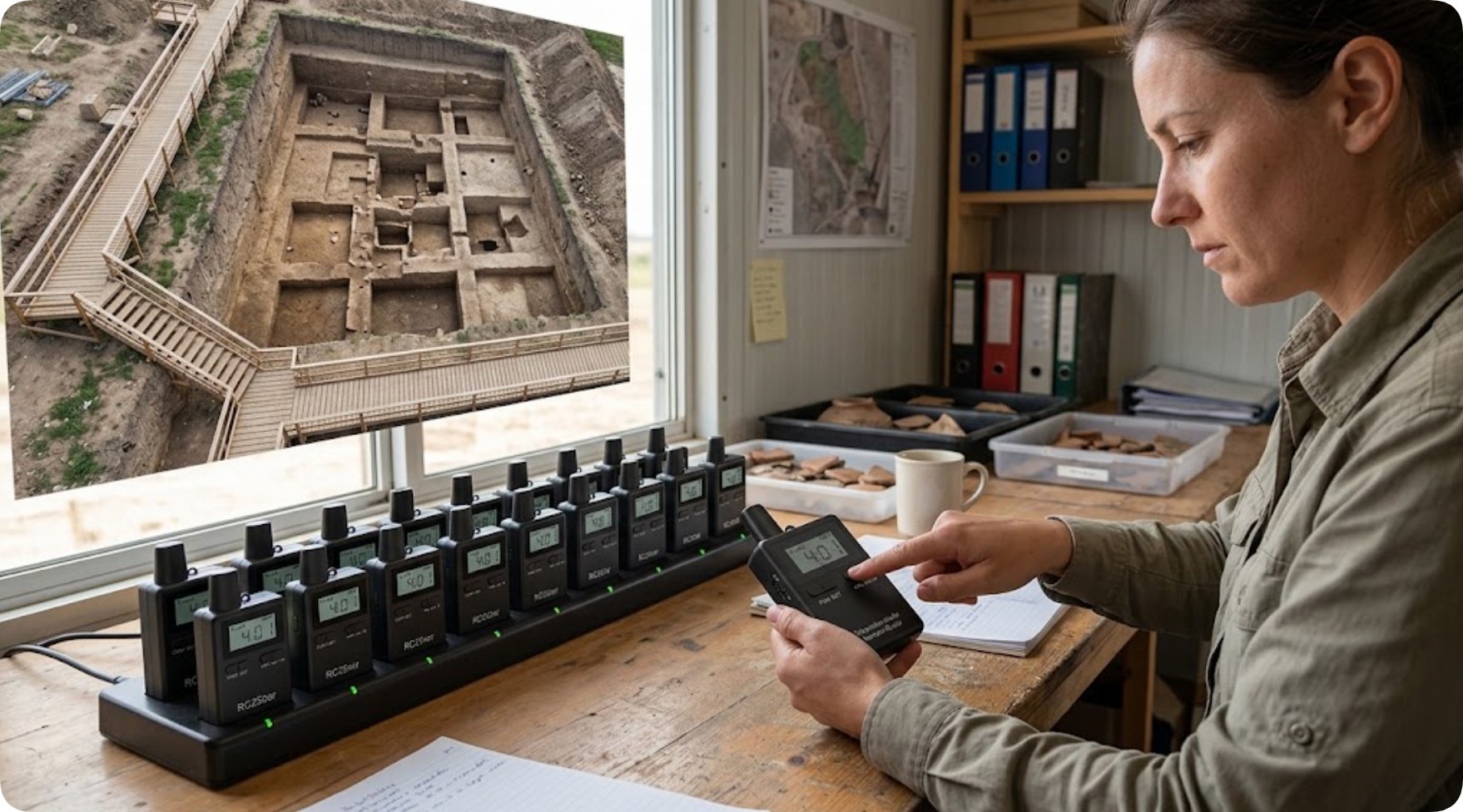
The RC2406 is the unit plants reach for when the problem is parallel groups. It is an 80-channel 2.4 GHz system, and in a plant running an audit in one wing and a school visit in another, that channel count is what keeps the two groups from hearing each other. The practical rule we give plants is to space the channels rather than use adjacent ones — channel one, channel four, channel seven — so that bleed is inaudible even when two groups pass on the same walkway.
2.4 GHz also behaves well in the open areas of a plant: assembly halls, warehouses, and the long straight routes where sightlines are clear. In those spaces the RC2406's performance is predictable, and a plant can standardise the parallel-group programme on it without a site survey for every route.

The UHF/VHF Side: Walled Zones and Long Routes
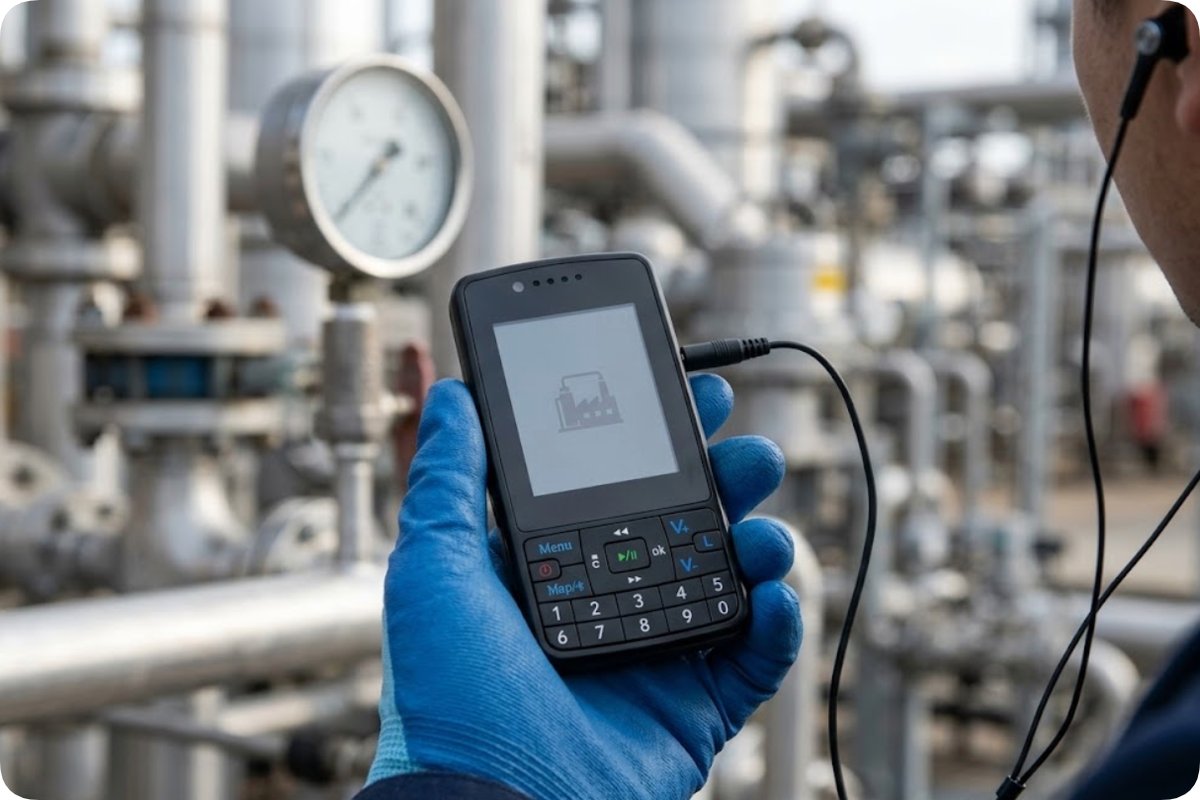
The RC2406's limitation is the same as any 2.4 GHz system's: heavy structures absorb and reflect it. In a plant with thick walls, shielded test rooms, or a route that runs the length of a site, the 2.4 GHz signal degrades in ways the guide notices as dropouts rather than as silence. For those routes plants switch to the RC085, which operates on UHF and VHF bands and measurably penetrates building structures better than 2.4 GHz.
The RC085 also suits the confidential zones that appear in audit routes. A plant that walks auditors past a prototype cell or a process it does not want photographed can give that leg of the tour a dedicated UHF/VHF channel, keeping the audio local to the group and separate from the parallel school tour on the 2.4 GHz side. It is a clean separation: one band for the open, high-volume programme and one for the sensitive, structure-heavy legs.
🎯 Mixing Bands Without Confusing the Guide
| Route type | Band | Unit |
|---|---|---|
| Open assembly hall, parallel groups | 2.4 GHz | RC2406 |
| Walled zones, shielded rooms | UHF / VHF | RC085 |
| Long cross-site routes | UHF / VHF | RC085 |
| Audit routes with photography restrictions | UHF / VHF, dedicated channel | RC085 |
| School and open-day volume groups | 2.4 GHz, spaced channels | RC2406 |
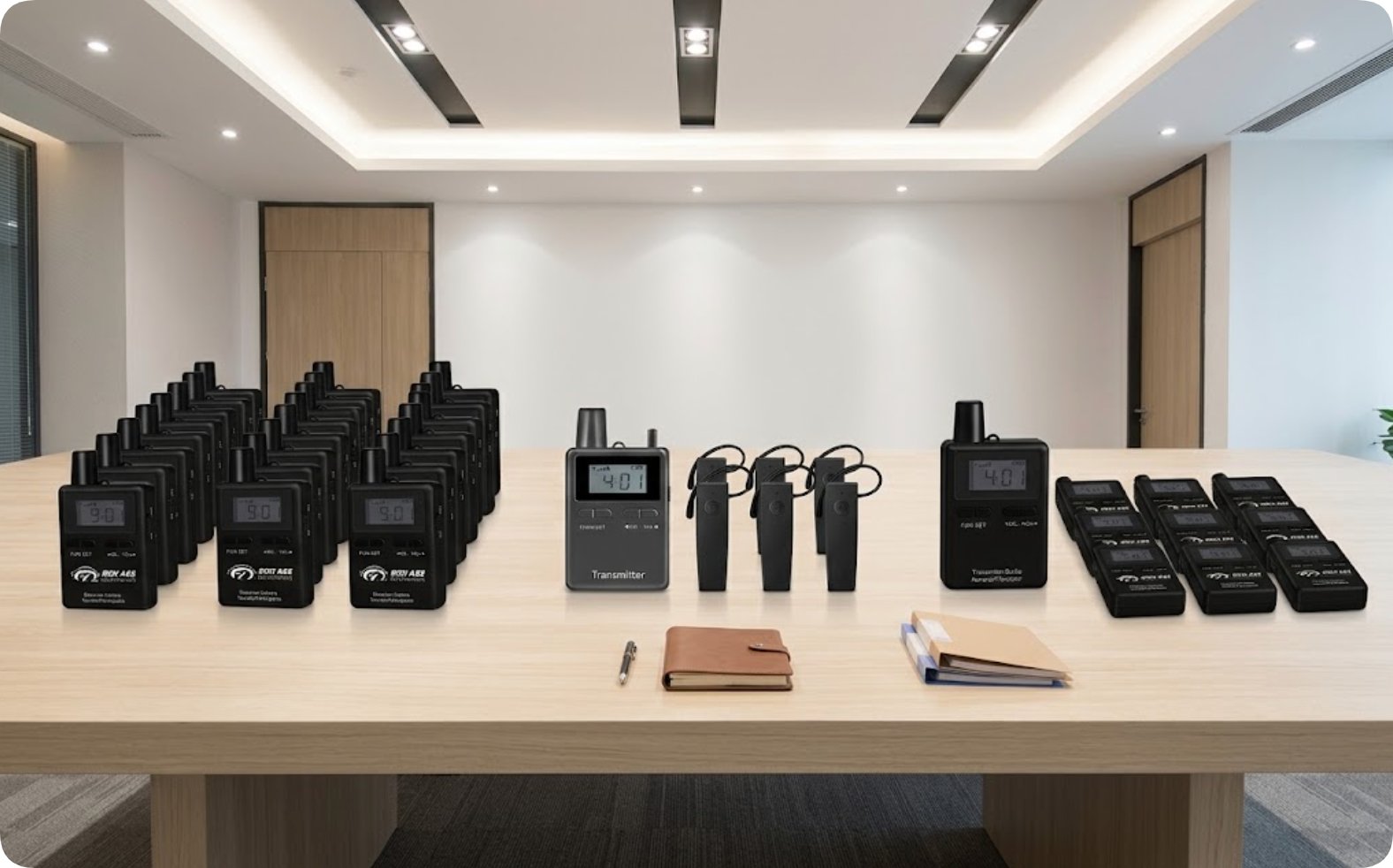
The objection we hear first is that two bands means two systems to manage. In practice it does not, because the receivers are shared: a plant configures both transmitters to work with the same receiver fleet, so a visitor wears one receiver for the whole route and the guide swaps transmitters at the zone boundary. The visitors never notice the change, which is the entire point — the technology should be invisible to everyone except the person holding the transmitter.
What to Measure Before You Standardise
If you are planning a factory tour programme, measure three things before buying. Walk each route once with a transmitter and a receiver and note the dropouts — those spots tell you which legs need UHF/VHF. Count the maximum number of simultaneous groups — that tells you how many spaced channels you need. And mark the zones where photography or recording is restricted — those become dedicated channels with a briefing at the boundary.
Plants that do this measurement first end up with a mixed fleet sized to the actual programme rather than a single system that half-works everywhere. The measurement takes half a day, and it is the difference between a tour programme that runs for years and one that gets quietly abandoned after two bad open days.
Where to Start
The trend is clear: factory tours are no longer one programme, and the audio has to cover audits, education, and open days without being rebuilt for each. Our wireless tour guide systems page has the full range, and the product pages for the RC2406 and the RC085 carry the specifications for each band. For a worked example of a manufacturing deployment, the factory tour guide system case shows a similar mixed-route programme in daily operation.