
A leading China factory specializing in Wireless Tour Guide Systems, Church Audio Guides, and Translation Headphones with premium OEM/ODM solutions.

Tel:+86 18922879583

Email:tiger.wang@richitek.com

Troubleshooting a Pharma Plant Tour: Five Zones, Five Different Failures

A pharmaceutical plant is a hard place to run a tour audio system, and the reason is physical before it is technical. Stainless reaction vessels, long stainless corridors, airlocks, gowning rooms, and packaging halls running at a noise level that makes conversation impossible all sit on the same route.

That matters because it breaks the usual troubleshooting habit. When a delegate reports crackling audio, the instinct is to swap the receiver. On a pharma route that usually wastes fifteen minutes, because the fault is not in the device - it is in the zone the group is standing in. Our factory tour solutions work starts from the same premise: divide the route into zones, then match each symptom to a zone.

🧥 Start at the Gowning Room

The gowning room causes more lost audio time than any other part of the route, and none of it is a radio problem.

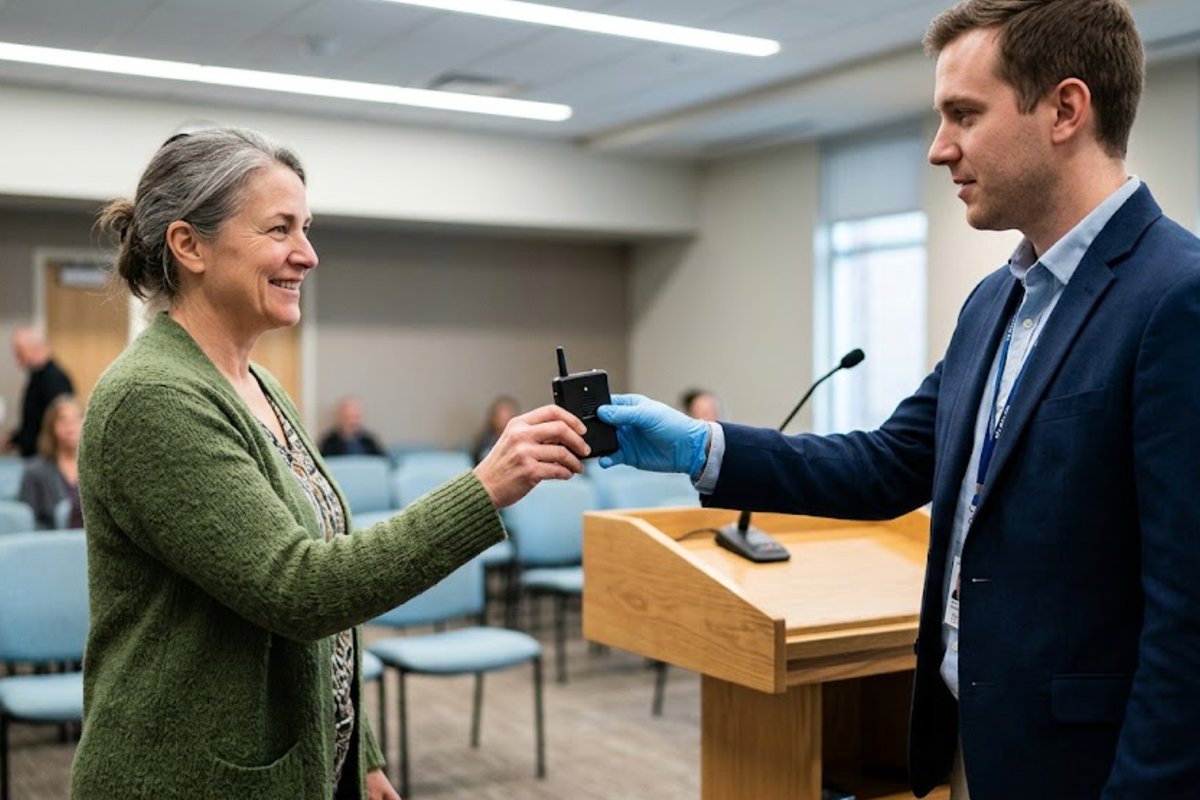
The sequence goes like this: delegates arrive, are asked to put their belongings - including the receiver they were handed thirty seconds earlier - into a locker, then gown up. Ten minutes later they emerge on the clean side without the device, or with it buried under a coat and a hairnet.

The fix is process, not hardware:

Hand the receiver over after gowning, at the clean-side bench, not at reception.

If the device must pass through, use a dedicated tray at the gowning bench so it never goes into a locker.

Brief the guide, not the delegates. The guide is the one who can catch a receiver going into a pocket.

If audio "fails" at the very start of a tour, check whether the receiver is actually switched on and out of a coat before touching anything else.

🏗️ Stainless Steel and Multipath

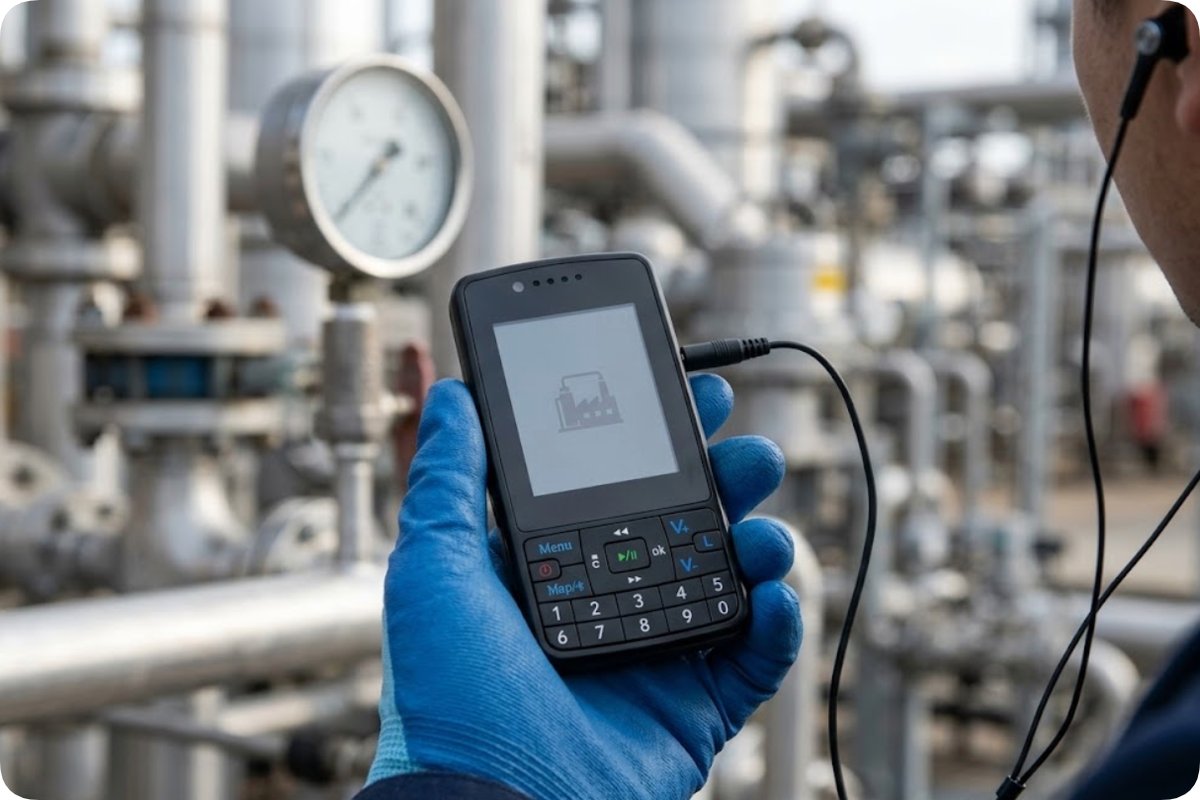
Inside the production hall, the dominant problem is reflection. A room full of large curved metal surfaces - vessels, pipework, filling machines - is close to the worst case for 2.4 GHz propagation. The signal arrives at the receiver by several paths of different lengths, and where those paths cancel, the audio drops out for a step or two before recovering.

The signature is distinctive: audio that is fine when the group stands still and breaks up when they walk. If that is what is being reported, do not replace the receiver. Move the transmitter:

Get it higher - above the vessel tops if the mount allows it.

Get it off metal - a transmitter laid on a stainless bench loses range immediately.

Get it away from the wall - a position a metre into the room usually beats one flush against it.

The RC2468 is the usual choice for these long, metal-heavy routes because the receiver is light enough that delegates keep it on for the full walk rather than handing it back halfway.

Troubleshooting a Pharma Plant Tour: Five Zones, Five Different Failures(图1)

🔊 Where the Noise Floor Wins

Tablet presses and packaging lines run loud enough that a guide cannot be heard at any volume that is comfortable for the delegates. Two things go wrong here, and they are different problems:

Ambient noise is masking the audio. The system is working; the environment is louder than the earpiece. The answer is a better seal - an over-ear or in-ear option rather than a loose ear-hook - not more transmitter power.

Delegates are removing the earpiece to hear the machine. This looks like a drop-out on the guide's side and is actually a human behaviour. Briefing the group to keep one ear free solves it.

Distinguishing the two takes five seconds: ask the delegate whether the guide is audible when they press the earpiece in. If yes, it is masking. If no, it is the radio.

📶 Corridors and the Long Walk

The long connecting corridors between buildings are where range is tested. Symptoms here are gradual rather than intermittent: audio fades as the group walks away and returns when they come back.

Before assuming a range limit, rule out the two common causes:

Body blocking. A guide who carries the transmitter clipped at the back of a belt puts their own body between the antenna and the group. Moving it to the front or to a lanyard often recovers more distance than any setting change.

Antenna position. A transmitter stuffed into a pocket or a bag loses a large part of its range.

🧪 🧪 The Laboratory Interference Pattern

Quality control laboratories are the one place on a pharma route where the interference comes from other equipment rather than from the building. Analytical instruments, access points, and handheld scanners all share the spectrum, and the effect is usually intermittent in a way that correlates with what is running in the room rather than with where the group stands.

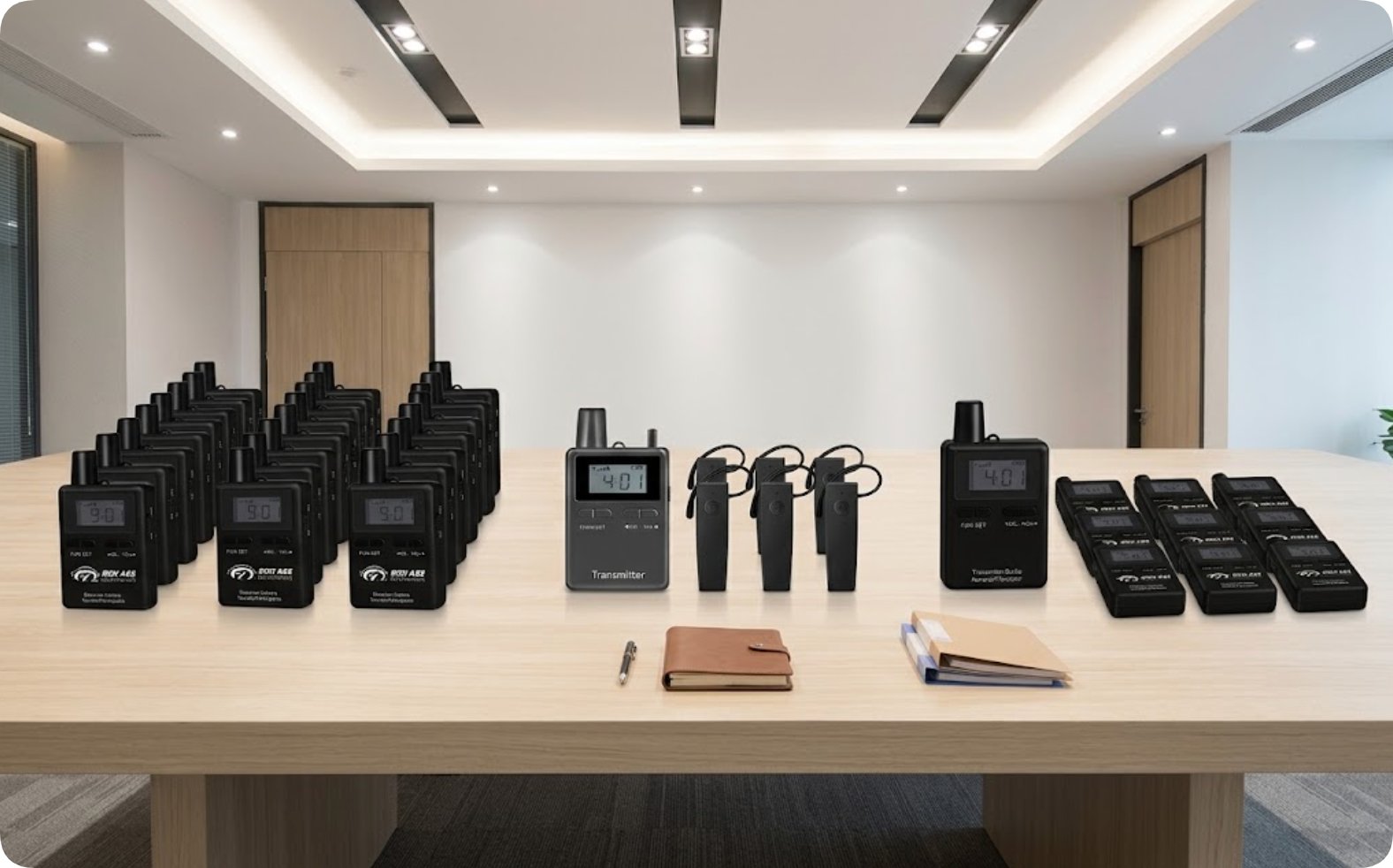
The reliable test is to walk the lab with a receiver before the tour starts and note which benches are bad. If a specific corner is unusable, plan the route to pause somewhere else rather than fighting it on the day. Where a tour regularly includes multilingual visitors - common on customer audits - the RC2501 keeps the language channels separate so a problem on one channel does not take the whole group down.

Troubleshooting a Pharma Plant Tour: Five Zones, Five Different Failures(图2)

📊 Matching the Symptom to the Cause

ZoneSymptom reportedMost likely causeFirst action
Gowning roomNo audio at all from the startReceiver in a locker, pocket, or under a coatHand devices over after gowning; check before diagnosing
Production hallBreaks up while walking, fine standingMultipath reflection off stainless surfacesRaise the transmitter, move it off metal and away from walls
Packaging / tabletingGuide inaudible over machineryAmbient noise masking, not a radio faultChange the earpiece seal; brief delegates to keep it in
Connecting corridorsFades with distance, returns on approachTransmitter carried on the back of the body or in a bagMove transmitter to front / lanyard; check antenna
QC laboratoryIntermittent, unrelated to positionOther equipment sharing the bandPre-walk the lab and plan the pause point elsewhere

🔮 Fifteen Minutes, In Order

When a tour is running and something is wrong, the order of checks matters more than their number. Working from the cheapest to the most disruptive:

    Confirm the receiver is on and actually in the delegate's ear - not in a coat.

    Ask whether it breaks up while walking or while standing. Walking points at the room, standing points at the device.

    Check where the guide is carrying the transmitter.

    Move the transmitter up and off metal.

    Only then swap the receiver, and swap it for one you have already verified.

    Swap the transmitter last, because it resets the channel plan for everyone.

Two habits prevent most of this. Walk the route with a receiver the day before and note the bad spots. And keep a single spare transmitter configured to the same channel, so step six takes thirty seconds instead of ten minutes.

If a plant tour programme is on your calendar, our wireless tour guide system range covers both receiver classes discussed here, and the solution library carries further deployment notes from manufacturing environments. Send us the route plan and the noise profile - those two tell us more about which receiver suits your tour than any specification sheet.

2026年08月31日 13:55
click: 321

Troubleshooting a Pharma Plant Tour: Five Zones, Five Different Failures

time: 2026年08月31日 click:321

A pharmaceutical plant is a hard place to run a tour audio system, and the reason is physical before it is technical. Stainless reaction vessels, long stainless corridors, airlocks, gowning rooms, and packaging halls running at a noise level that makes conversation impossible all sit on the same route.

That matters because it breaks the usual troubleshooting habit. When a delegate reports crackling audio, the instinct is to swap the receiver. On a pharma route that usually wastes fifteen minutes, because the fault is not in the device - it is in the zone the group is standing in. Our factory tour solutions work starts from the same premise: divide the route into zones, then match each symptom to a zone.

🧥 Start at the Gowning Room

The gowning room causes more lost audio time than any other part of the route, and none of it is a radio problem.

The sequence goes like this: delegates arrive, are asked to put their belongings - including the receiver they were handed thirty seconds earlier - into a locker, then gown up. Ten minutes later they emerge on the clean side without the device, or with it buried under a coat and a hairnet.

The fix is process, not hardware:

Hand the receiver over after gowning, at the clean-side bench, not at reception.

If the device must pass through, use a dedicated tray at the gowning bench so it never goes into a locker.

Brief the guide, not the delegates. The guide is the one who can catch a receiver going into a pocket.

If audio "fails" at the very start of a tour, check whether the receiver is actually switched on and out of a coat before touching anything else.

🏗️ Stainless Steel and Multipath

Inside the production hall, the dominant problem is reflection. A room full of large curved metal surfaces - vessels, pipework, filling machines - is close to the worst case for 2.4 GHz propagation. The signal arrives at the receiver by several paths of different lengths, and where those paths cancel, the audio drops out for a step or two before recovering.

The signature is distinctive: audio that is fine when the group stands still and breaks up when they walk. If that is what is being reported, do not replace the receiver. Move the transmitter:

Get it higher - above the vessel tops if the mount allows it.

Get it off metal - a transmitter laid on a stainless bench loses range immediately.

Get it away from the wall - a position a metre into the room usually beats one flush against it.

The RC2468 is the usual choice for these long, metal-heavy routes because the receiver is light enough that delegates keep it on for the full walk rather than handing it back halfway.

Troubleshooting a Pharma Plant Tour: Five Zones, Five Different Failures(图1)

🔊 Where the Noise Floor Wins

Tablet presses and packaging lines run loud enough that a guide cannot be heard at any volume that is comfortable for the delegates. Two things go wrong here, and they are different problems:

Ambient noise is masking the audio. The system is working; the environment is louder than the earpiece. The answer is a better seal - an over-ear or in-ear option rather than a loose ear-hook - not more transmitter power.

Delegates are removing the earpiece to hear the machine. This looks like a drop-out on the guide's side and is actually a human behaviour. Briefing the group to keep one ear free solves it.

Distinguishing the two takes five seconds: ask the delegate whether the guide is audible when they press the earpiece in. If yes, it is masking. If no, it is the radio.

📶 Corridors and the Long Walk

The long connecting corridors between buildings are where range is tested. Symptoms here are gradual rather than intermittent: audio fades as the group walks away and returns when they come back.

Before assuming a range limit, rule out the two common causes:

Body blocking. A guide who carries the transmitter clipped at the back of a belt puts their own body between the antenna and the group. Moving it to the front or to a lanyard often recovers more distance than any setting change.

Antenna position. A transmitter stuffed into a pocket or a bag loses a large part of its range.

🧪 🧪 The Laboratory Interference Pattern

Quality control laboratories are the one place on a pharma route where the interference comes from other equipment rather than from the building. Analytical instruments, access points, and handheld scanners all share the spectrum, and the effect is usually intermittent in a way that correlates with what is running in the room rather than with where the group stands.

The reliable test is to walk the lab with a receiver before the tour starts and note which benches are bad. If a specific corner is unusable, plan the route to pause somewhere else rather than fighting it on the day. Where a tour regularly includes multilingual visitors - common on customer audits - the RC2501 keeps the language channels separate so a problem on one channel does not take the whole group down.

Troubleshooting a Pharma Plant Tour: Five Zones, Five Different Failures(图2)

📊 Matching the Symptom to the Cause

ZoneSymptom reportedMost likely causeFirst action
Gowning roomNo audio at all from the startReceiver in a locker, pocket, or under a coatHand devices over after gowning; check before diagnosing
Production hallBreaks up while walking, fine standingMultipath reflection off stainless surfacesRaise the transmitter, move it off metal and away from walls
Packaging / tabletingGuide inaudible over machineryAmbient noise masking, not a radio faultChange the earpiece seal; brief delegates to keep it in
Connecting corridorsFades with distance, returns on approachTransmitter carried on the back of the body or in a bagMove transmitter to front / lanyard; check antenna
QC laboratoryIntermittent, unrelated to positionOther equipment sharing the bandPre-walk the lab and plan the pause point elsewhere

🔮 Fifteen Minutes, In Order

When a tour is running and something is wrong, the order of checks matters more than their number. Working from the cheapest to the most disruptive:

    Confirm the receiver is on and actually in the delegate's ear - not in a coat.

    Ask whether it breaks up while walking or while standing. Walking points at the room, standing points at the device.

    Check where the guide is carrying the transmitter.

    Move the transmitter up and off metal.

    Only then swap the receiver, and swap it for one you have already verified.

    Swap the transmitter last, because it resets the channel plan for everyone.

Two habits prevent most of this. Walk the route with a receiver the day before and note the bad spots. And keep a single spare transmitter configured to the same channel, so step six takes thirty seconds instead of ten minutes.

If a plant tour programme is on your calendar, our wireless tour guide system range covers both receiver classes discussed here, and the solution library carries further deployment notes from manufacturing environments. Send us the route plan and the noise profile - those two tell us more about which receiver suits your tour than any specification sheet.
×

Contact us

email:
name:
subject:
content: