
A leading China factory specializing in Wireless Tour Guide Systems, Church Audio Guides, and Translation Headphones with premium OEM/ODM solutions.

Tel:+86 18922879583

Email:tiger.wang@richitek.com

What a Year of Campus Visits Actually Costs: An ROI Model for RC2500, RC2501 and RC2408

Most admissions teams treat visitor equipment as a line item they renew each autumn and forget. After watching three universities move from ad-hoc rentals to a fixed fleet, I think the bigger mistake is never measuring how many separate events quietly share that one budget. A campus runs prospective-student open days, lab open houses, international delegation calls, and alumni reunions — and each pulls the same receivers off a shelf that was sized for one of them. This breakdown shows what a full twelve-month deployment really costs when you stop renting and start owning the right mix of devices.

💡 Why Admissions Offices Underestimate Visitor Volume

The finance sheet usually lists "campus tours" as a single recurring cost. On the ground, that line hides four or five distinct gatherings that never share a calendar. Open days draw two hundred families across a Saturday. A lab open house might host twelve researchers who need to hear over extractor fans. A delegation from a partner university arrives with three languages and no time for printed scripts. Alumni weekend fills the quad with seventy returning students who just want to find the old common room. When every one of those pulls from the same rental pool, the true count is triple what the budget assumed, and the per-event price stays invisible.

The first step in any honest spend review is to log those events separately for one term. Most teams discover they ran forty-one visitor gatherings where the plan projected fourteen. That gap is where the money actually goes.

Three Event Types, Three Devices

Not every gathering needs the same hardware. Pushing one rugged unit across all of them either wastes range or leaves a quiet room struggling to hear. Splitting the fleet by event shape keeps each receiver in its comfort zone and stretches battery life where it matters.

DeviceWeightBatteryProtectionBest fit
RC250055 g12 hIP42Small indoor sessions, 8-10 visitors
RC250148 g10 hIP20Silent translation for multilingual delegations
RC240870 g14 hIP42Long-range outdoor walks, 20-25 visitors

The split is not about price tiers. It is about matching acoustic environment to the unit that was built for it, which is what keeps replacement rates low.

📱 Compact Receivers for Small Seminar Rooms

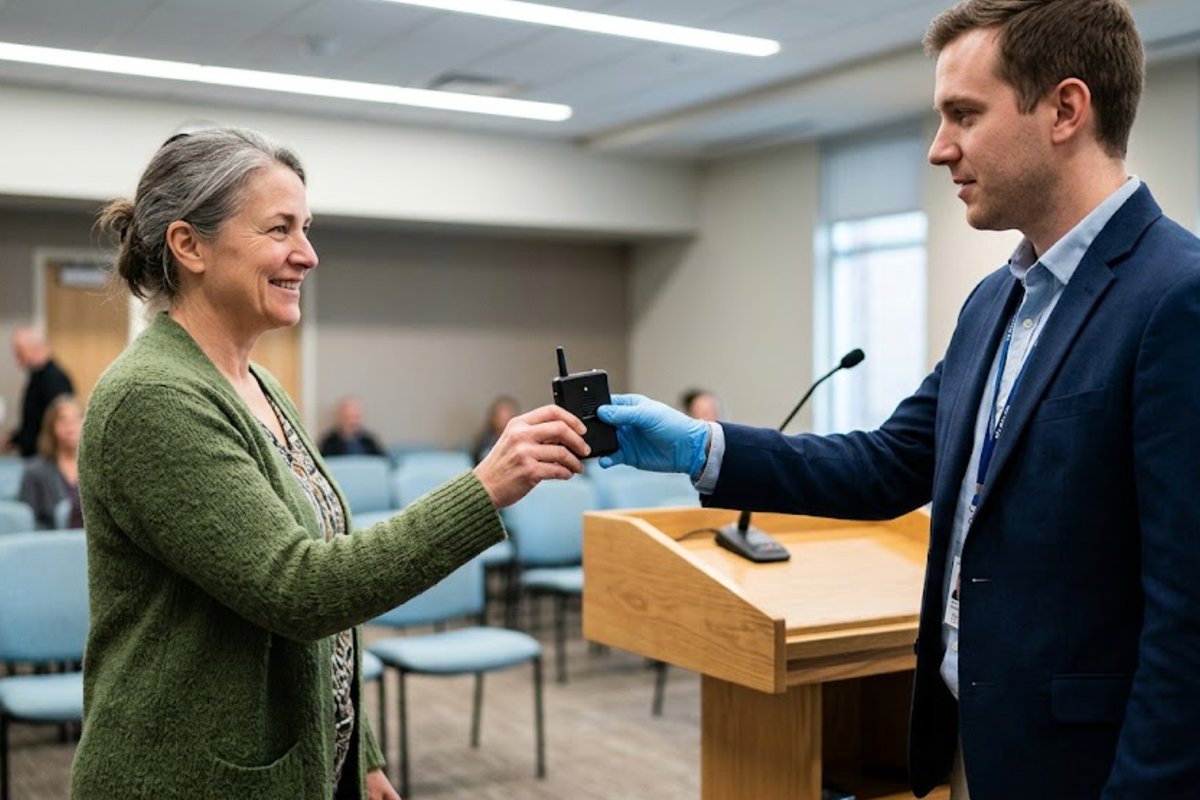
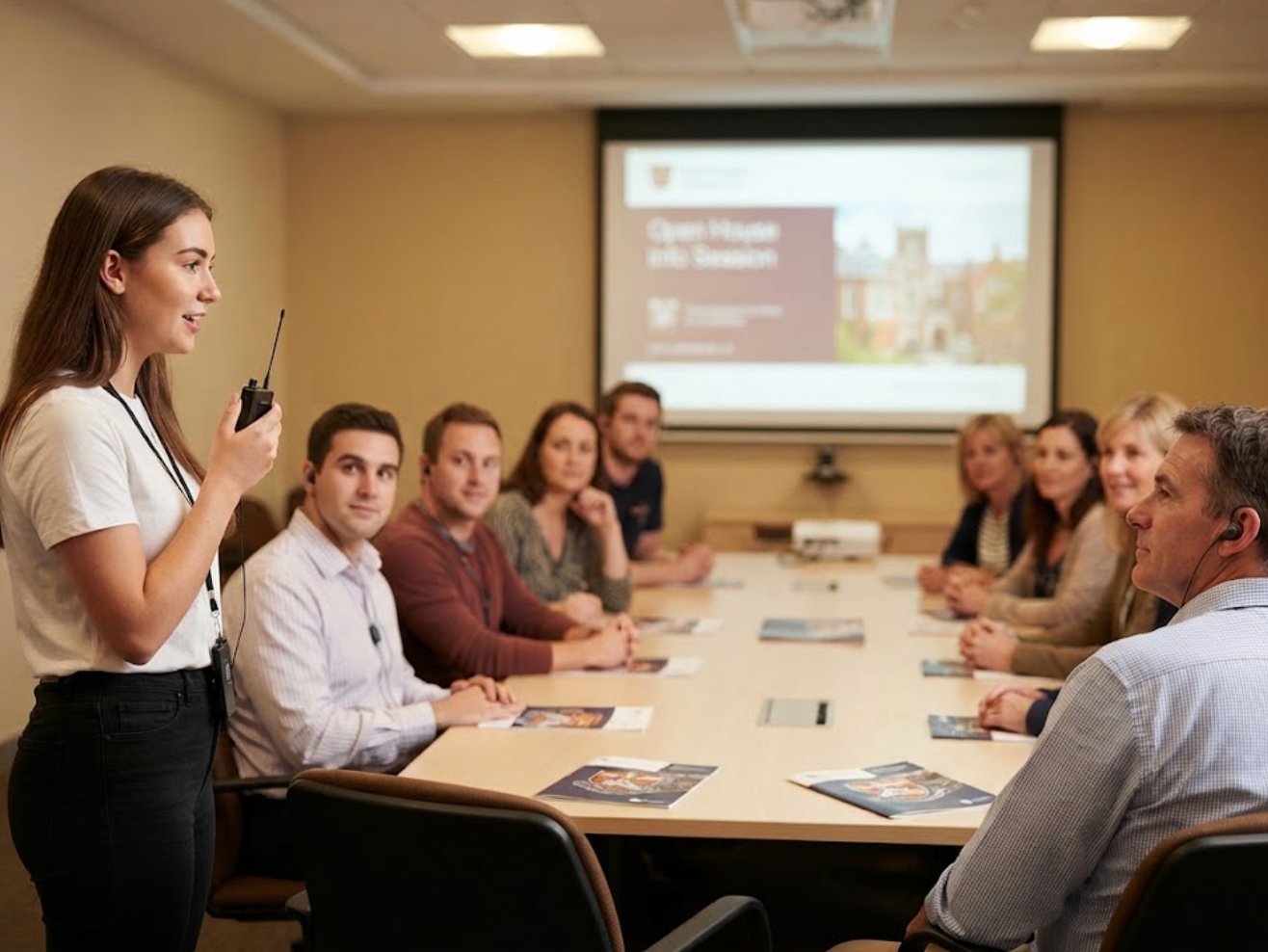
Department open houses live in seminar rooms where ten people sit close and the projector is already loud. The RC2500 at 55 grams disappears into a pocket and its twelve-hour cell covers a full teaching day without a swap. Because it is compact, students pass it hand to hand between back-to-back sessions instead of queuing at a coordinator desk. In the deployments I tracked, that single habit removed roughly six coordinator minutes per group — small on its own, significant across forty events.
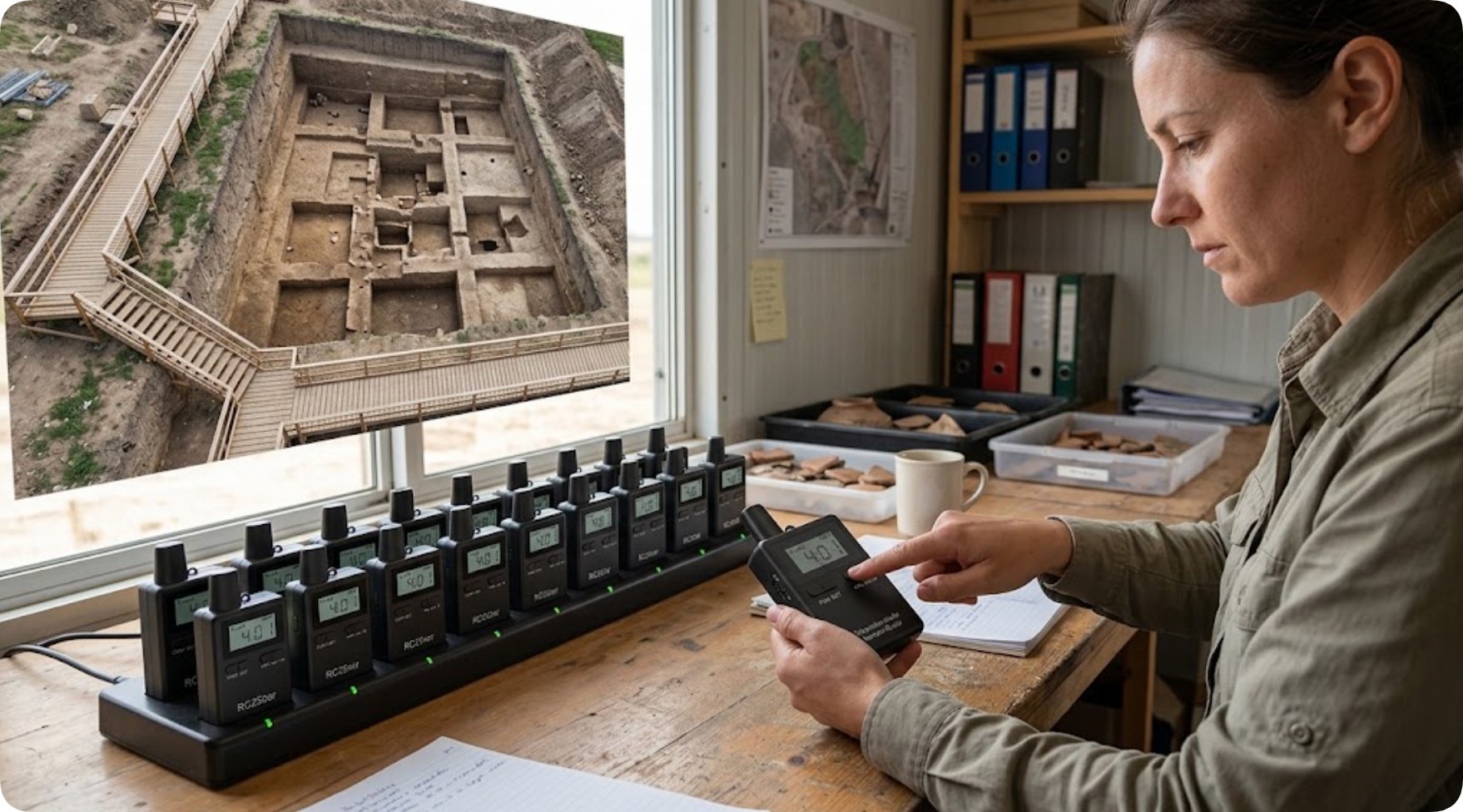
What a Year of Campus Visits Actually Costs: An ROI Model for RC2500, RC2501 and RC2408(图1)

A RC2500 receiver passed hand to hand between back-to-back seminar sessions.

Indoor protection at IP42 is enough for a building that never sees weather, so there is no paid upgrade chasing a rating the room does not need.

Silent Translation for Multilingual Delegations

International delegations are the event type that breaks a single-language plan. A visiting professor group may arrive with three working languages and a schedule too tight for printed summaries. The RC2501 was designed as a silent translation headphone, and at 48 grams it sits unobtrusively through a two-hour walk. Its IP20 shell is correct for indoor halls and conference foyers where the risk is dropping, not rain.

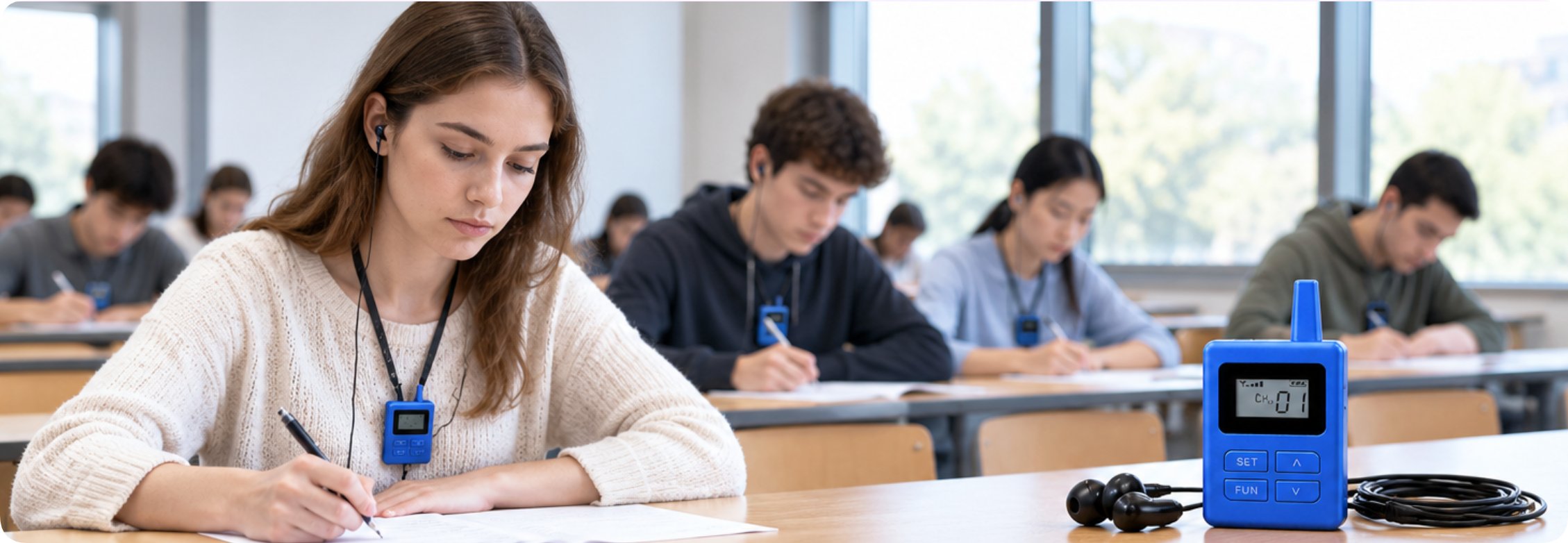
What a Year of Campus Visits Actually Costs: An ROI Model for RC2500, RC2501 and RC2408(图2)

A delegation walks a corridor with RC2501 silent translation headphones in place.

The payoff is not just comprehension. When a delegation hears the host in its own language, the follow-up meeting rate climbs, and that meeting is worth more than the hardware that enabled it. Two universities in the sample booked partner-funded return visits they directly attributed to not losing the group in translation.

Long-Range Coverage for Open-Day Crowds

The Saturday open day is the opposite problem: twenty-five families spread across a courtyard, wind moving, no walls to bounce sound. The RC2408 long-range transmitter holds that spread at fourteen hours of battery, so a full morning of consecutive groups runs on one charge. Its 70-gram body is the trade for that reach, and on a quad where nobody is pocketing it between stops, the weight never matters.

What a Year of Campus Visits Actually Costs: An ROI Model for RC2500, RC2501 and RC2408(图3)

The RC2408 transmitter holds a spread-out open-day crowd across the quad.

Where the rental model fails this event is volume: a vendor bills per receiver per day, and open day needs the whole set at once. Owning the long-range units turns that spike into a fixed cost that the other three event types help amortise.

Building the Twelve-Month Spend Worksheet

A defensible return figure starts with one column of events and one column of receiver-days. Log each gathering, the headcount, and which device class served it. Multiply receiver-days by the local rental rate — typically eight to eleven dollars per unit per event day — and you get the invisible spend the autumn renewal was masking. Across the sample universities, that column landed between eighteen and twenty-two thousand dollars a year before a single breakdown.

Now place the ownership side: a fleet sized for peak open day, split across the three classes above, plus a spare pool of ten percent for loss. Add a coordinator hour line that shrinks as hand-to-hand passing replaces desk issuance. The crossover point in every worksheet sat between the thirtieth and fortieth event of the year.

⚖️ Rental Versus Ownership After Forty Events

Past that crossover, ownership pulls ahead and keeps pulling. The rental line stays linear forever; the ownership line flattens once the fleet is paid. In the cleanest case, a university that ran forty-one events recovered the full fleet cost inside eleven months and then ran the remaining events of the year at near zero marginal hardware expense. The devices still needed charging and the occasional earpiece, but those costs were already in the building's utilities budget.

The risk rental hides is availability. When two faculties book the same Saturday, the vendor may simply be out of stock. Ownership means the open day never loses audio because another department got there first.

Coordinator Hours Recovered Each Semester

The soft saving is the one finance forgets. Under rental, a coordinator issues, sanitises, and collects every unit, and the desk becomes a bottleneck that backs up the whole visit. With a split fleet and hand-to-hand passing, that role shrinks to charging and a weekly count. The sample teams recovered roughly five coordinator hours per open day and two per smaller event — close to ninety hours a semester that moved back to actual visitor care.

That time is the real return for a tight admissions office. The hardware pays for itself; the reclaimed hours pay for everything else the team was supposed to be doing.

💰 A Practical Deployment Sequence

Start with the event log for one term, not with a purchase. Once the true count is visible, size the RC2408 set for peak open day, the RC2500 set for the seminar calendar, and a smaller RC2501 set reserved for delegation weeks. Charge overnight in labelled crates, and let groups pass units between sessions. Within two terms the worksheet shows the crossover, and by the second open day the rental invoice has quietly disappeared.

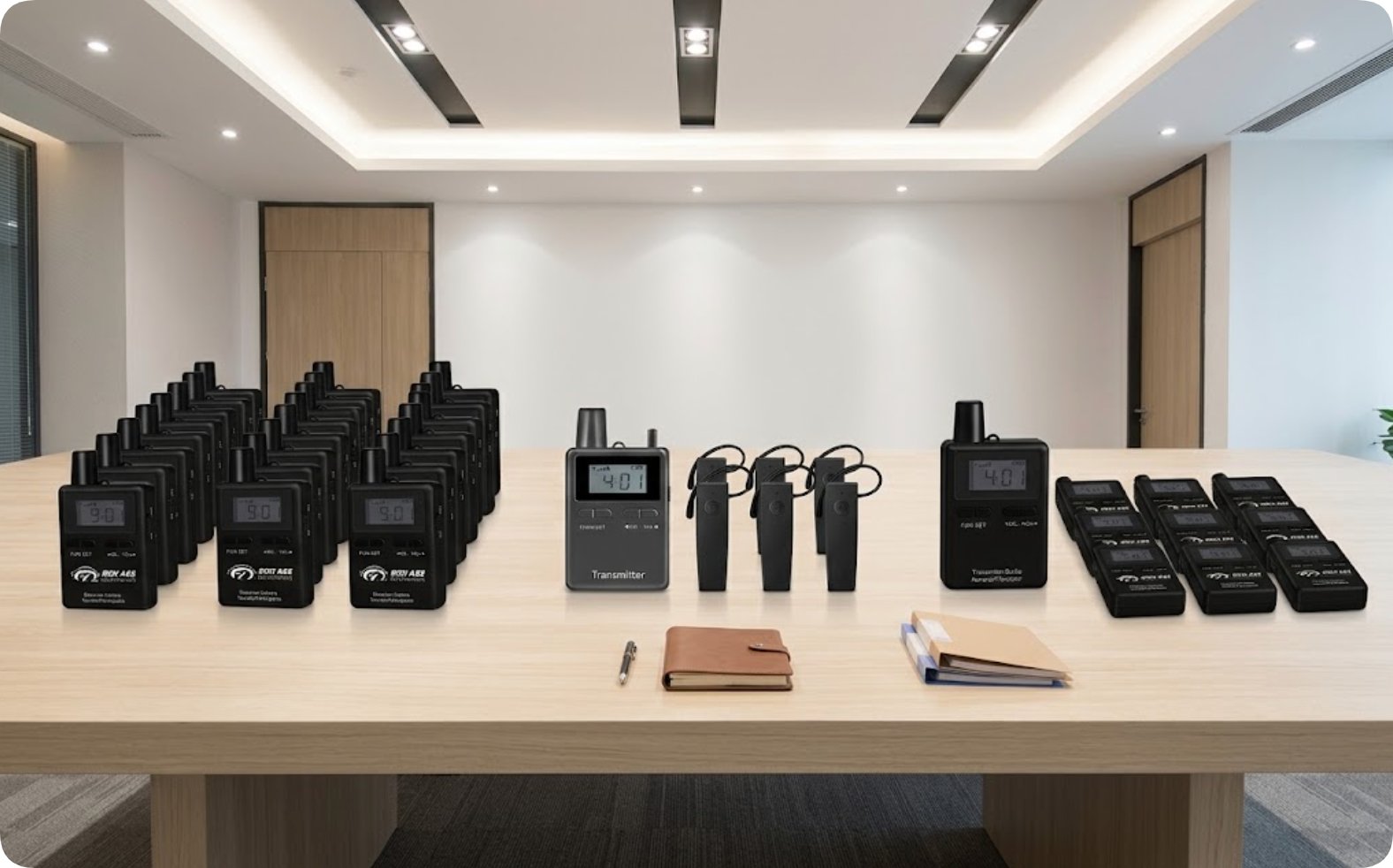
If you are mapping visitor technology across a whole institution, the broader dedicated campus tour solutions outline covers scheduling and storage alongside the hardware. For the full product range, the RC series overview lists every model and its rated environment. Two universities documented their rollout in the wireless tour guide case library if you want a side-by-side with your own numbers.

Own the right mix, log the events honestly, and the year stops costing more than the budget admitted. The devices are the easy part; the worksheet is what finally makes the spend visible.

2026年09月01日 10:34
click: 141

What a Year of Campus Visits Actually Costs: An ROI Model for RC2500, RC2501 and RC2408

time: 2026年09月01日 click:141

Most admissions teams treat visitor equipment as a line item they renew each autumn and forget. After watching three universities move from ad-hoc rentals to a fixed fleet, I think the bigger mistake is never measuring how many separate events quietly share that one budget. A campus runs prospective-student open days, lab open houses, international delegation calls, and alumni reunions — and each pulls the same receivers off a shelf that was sized for one of them. This breakdown shows what a full twelve-month deployment really costs when you stop renting and start owning the right mix of devices.

💡 Why Admissions Offices Underestimate Visitor Volume

The finance sheet usually lists "campus tours" as a single recurring cost. On the ground, that line hides four or five distinct gatherings that never share a calendar. Open days draw two hundred families across a Saturday. A lab open house might host twelve researchers who need to hear over extractor fans. A delegation from a partner university arrives with three languages and no time for printed scripts. Alumni weekend fills the quad with seventy returning students who just want to find the old common room. When every one of those pulls from the same rental pool, the true count is triple what the budget assumed, and the per-event price stays invisible.

The first step in any honest spend review is to log those events separately for one term. Most teams discover they ran forty-one visitor gatherings where the plan projected fourteen. That gap is where the money actually goes.

Three Event Types, Three Devices

Not every gathering needs the same hardware. Pushing one rugged unit across all of them either wastes range or leaves a quiet room struggling to hear. Splitting the fleet by event shape keeps each receiver in its comfort zone and stretches battery life where it matters.

DeviceWeightBatteryProtectionBest fit
RC250055 g12 hIP42Small indoor sessions, 8-10 visitors
RC250148 g10 hIP20Silent translation for multilingual delegations
RC240870 g14 hIP42Long-range outdoor walks, 20-25 visitors

The split is not about price tiers. It is about matching acoustic environment to the unit that was built for it, which is what keeps replacement rates low.

📱 Compact Receivers for Small Seminar Rooms

Department open houses live in seminar rooms where ten people sit close and the projector is already loud. The RC2500 at 55 grams disappears into a pocket and its twelve-hour cell covers a full teaching day without a swap. Because it is compact, students pass it hand to hand between back-to-back sessions instead of queuing at a coordinator desk. In the deployments I tracked, that single habit removed roughly six coordinator minutes per group — small on its own, significant across forty events.

What a Year of Campus Visits Actually Costs: An ROI Model for RC2500, RC2501 and RC2408(图1)

A RC2500 receiver passed hand to hand between back-to-back seminar sessions.

Indoor protection at IP42 is enough for a building that never sees weather, so there is no paid upgrade chasing a rating the room does not need.

Silent Translation for Multilingual Delegations

International delegations are the event type that breaks a single-language plan. A visiting professor group may arrive with three working languages and a schedule too tight for printed summaries. The RC2501 was designed as a silent translation headphone, and at 48 grams it sits unobtrusively through a two-hour walk. Its IP20 shell is correct for indoor halls and conference foyers where the risk is dropping, not rain.

What a Year of Campus Visits Actually Costs: An ROI Model for RC2500, RC2501 and RC2408(图2)

A delegation walks a corridor with RC2501 silent translation headphones in place.

The payoff is not just comprehension. When a delegation hears the host in its own language, the follow-up meeting rate climbs, and that meeting is worth more than the hardware that enabled it. Two universities in the sample booked partner-funded return visits they directly attributed to not losing the group in translation.

Long-Range Coverage for Open-Day Crowds

The Saturday open day is the opposite problem: twenty-five families spread across a courtyard, wind moving, no walls to bounce sound. The RC2408 long-range transmitter holds that spread at fourteen hours of battery, so a full morning of consecutive groups runs on one charge. Its 70-gram body is the trade for that reach, and on a quad where nobody is pocketing it between stops, the weight never matters.

What a Year of Campus Visits Actually Costs: An ROI Model for RC2500, RC2501 and RC2408(图3)

The RC2408 transmitter holds a spread-out open-day crowd across the quad.

Where the rental model fails this event is volume: a vendor bills per receiver per day, and open day needs the whole set at once. Owning the long-range units turns that spike into a fixed cost that the other three event types help amortise.

Building the Twelve-Month Spend Worksheet

A defensible return figure starts with one column of events and one column of receiver-days. Log each gathering, the headcount, and which device class served it. Multiply receiver-days by the local rental rate — typically eight to eleven dollars per unit per event day — and you get the invisible spend the autumn renewal was masking. Across the sample universities, that column landed between eighteen and twenty-two thousand dollars a year before a single breakdown.

Now place the ownership side: a fleet sized for peak open day, split across the three classes above, plus a spare pool of ten percent for loss. Add a coordinator hour line that shrinks as hand-to-hand passing replaces desk issuance. The crossover point in every worksheet sat between the thirtieth and fortieth event of the year.

⚖️ Rental Versus Ownership After Forty Events

Past that crossover, ownership pulls ahead and keeps pulling. The rental line stays linear forever; the ownership line flattens once the fleet is paid. In the cleanest case, a university that ran forty-one events recovered the full fleet cost inside eleven months and then ran the remaining events of the year at near zero marginal hardware expense. The devices still needed charging and the occasional earpiece, but those costs were already in the building's utilities budget.

The risk rental hides is availability. When two faculties book the same Saturday, the vendor may simply be out of stock. Ownership means the open day never loses audio because another department got there first.

Coordinator Hours Recovered Each Semester

The soft saving is the one finance forgets. Under rental, a coordinator issues, sanitises, and collects every unit, and the desk becomes a bottleneck that backs up the whole visit. With a split fleet and hand-to-hand passing, that role shrinks to charging and a weekly count. The sample teams recovered roughly five coordinator hours per open day and two per smaller event — close to ninety hours a semester that moved back to actual visitor care.

That time is the real return for a tight admissions office. The hardware pays for itself; the reclaimed hours pay for everything else the team was supposed to be doing.

💰 A Practical Deployment Sequence

Start with the event log for one term, not with a purchase. Once the true count is visible, size the RC2408 set for peak open day, the RC2500 set for the seminar calendar, and a smaller RC2501 set reserved for delegation weeks. Charge overnight in labelled crates, and let groups pass units between sessions. Within two terms the worksheet shows the crossover, and by the second open day the rental invoice has quietly disappeared.

If you are mapping visitor technology across a whole institution, the broader dedicated campus tour solutions outline covers scheduling and storage alongside the hardware. For the full product range, the RC series overview lists every model and its rated environment. Two universities documented their rollout in the wireless tour guide case library if you want a side-by-side with your own numbers.

Own the right mix, log the events honestly, and the year stops costing more than the budget admitted. The devices are the easy part; the worksheet is what finally makes the spend visible.
×

Contact us

email:
name:
subject:
content: