
A leading China factory specializing in Wireless Tour Guide Systems, Church Audio Guides, and Translation Headphones with premium OEM/ODM solutions.

Tel:+86 18922879583

Email:tiger.wang@richitek.com

RC2468 and RC2501: How a Zoned Food Plant Keeps Every Tour Inside Compliance

A visitor route through a food plant is not designed by the marketing team; it is designed by the HACCP plan. Every serious food operation divides its floor into hygiene zones, and the rules about which door a guest enters, which line they stand behind, and what they may carry past it are written into the GMP manual long before the first visit is booked. An audio system is a carried object, which means it is subject to exactly the same zoning logic as a clipboard or a pen. Handled carelessly, a set of receivers becomes the most efficient cross-contamination vector in the building, because it travels with the group from the raw side to the clean side and touches a different pair of hands every hour. This article walks the route zone by zone and explains what the hygiene plan demands at each boundary. If you are drawing up a visitor protocol, start from dedicated food factory tour solutions and then map the equipment to your zone map rather than to your headcount.

💡 Why Hygiene Zoning Dictates Where a Group Can Stand

Zoning exists because contamination moves in one direction and does not negotiate. Raw material carries the highest microbial load, so anything that touches the raw side is treated as contaminated until it is cleaned. The plant is therefore split into a general zone, a semi-clean zone, and a clean zone, with air pressure, clothing colour, and boot-wash stations enforcing the boundaries. A tour route has to respect that hierarchy, which is why good routes run one-way, from the cleanest area toward the least clean, and never loop back. The audio kit has to follow the same one-way logic, or it silently undoes the zoning by carrying residue backward.

The Raw Side: Handling Visitors Before the Kill Step

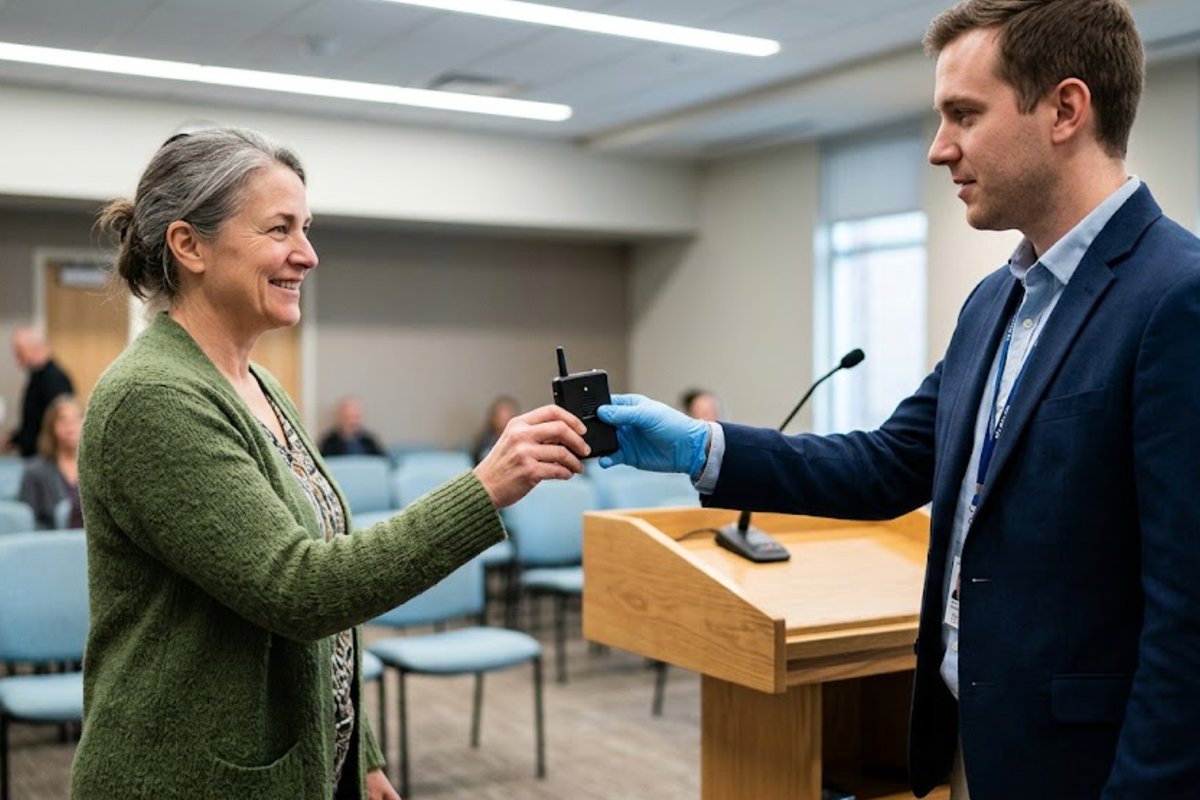
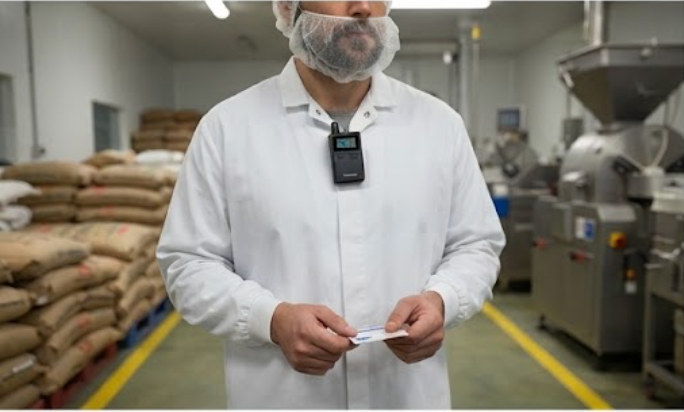
Intake, raw prep, and anything upstream of the kill step is the most sensitive part of the building from a microbiology standpoint. Visitors here wear a coat, a hairnet, and boot covers, and they are kept behind a marked line so they never lean over an open product. The RC2468 Ultra-Light 2.4G Wireless Tour Guide System suits this section because it leaves both hands free: the receiver clips to a lapel or hangs on a lanyard, so a guest can hold a visitor badge and keep their hands away from contact surfaces. At barely more than a few dozen grams it does not tug at a hairnet or snag on a coat, which matters more than it sounds when twenty people are squeezing through a single door in coats two sizes too big.
RC2468 and RC2501: How a Zoned Food Plant Keeps Every Tour Inside Compliance(图1)

Visitors on the raw intake side wearing the ultra-light RC2468 receiver clipped to a lapel, keeping both hands free behind the marked line.

Crossing Into the Clean Side Without Carrying Anything In

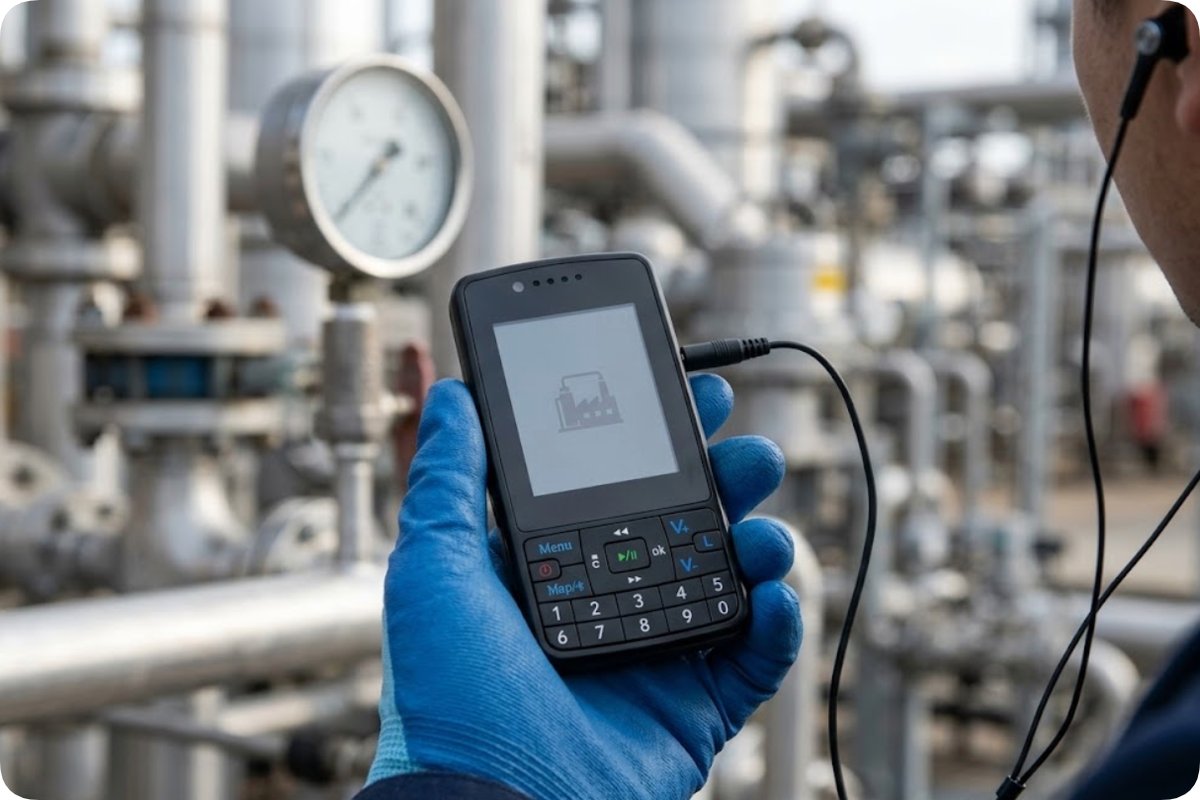
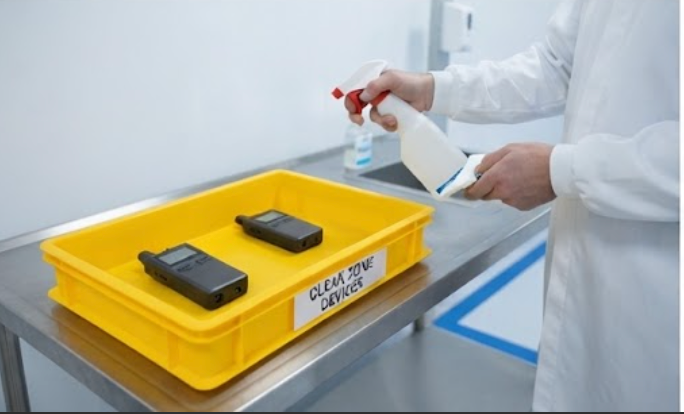
The boundary into the semi-clean and clean zones is where most visitor protocols fail, because the clothing change is visible and the equipment change is not. Guests change coats, wash hands, and pass a boot bath, then walk in carrying the same receiver they had on the raw side. The fix is unglamorous but simple: either the set gets wiped with an approved sanitiser at the boundary, or each zone owns its own colour-coded set that never leaves. The RC2501 Wireless Tour Guide System is the unit most plants assign to the clean side, because its smooth shell has no exposed connector cavity to trap residue and it tolerates a daily wipe-down without the markings fading. Whatever you choose, the rule has to be written down, because an auditor will ask.
RC2468 and RC2501: How a Zoned Food Plant Keeps Every Tour Inside Compliance(图2)

A colour-coded RC2501 set issued at the clean-zone boundary, where the group changes coats and sanitiser-wipes the equipment before crossing.

Allergen Rooms and the Dedicated Device Rule

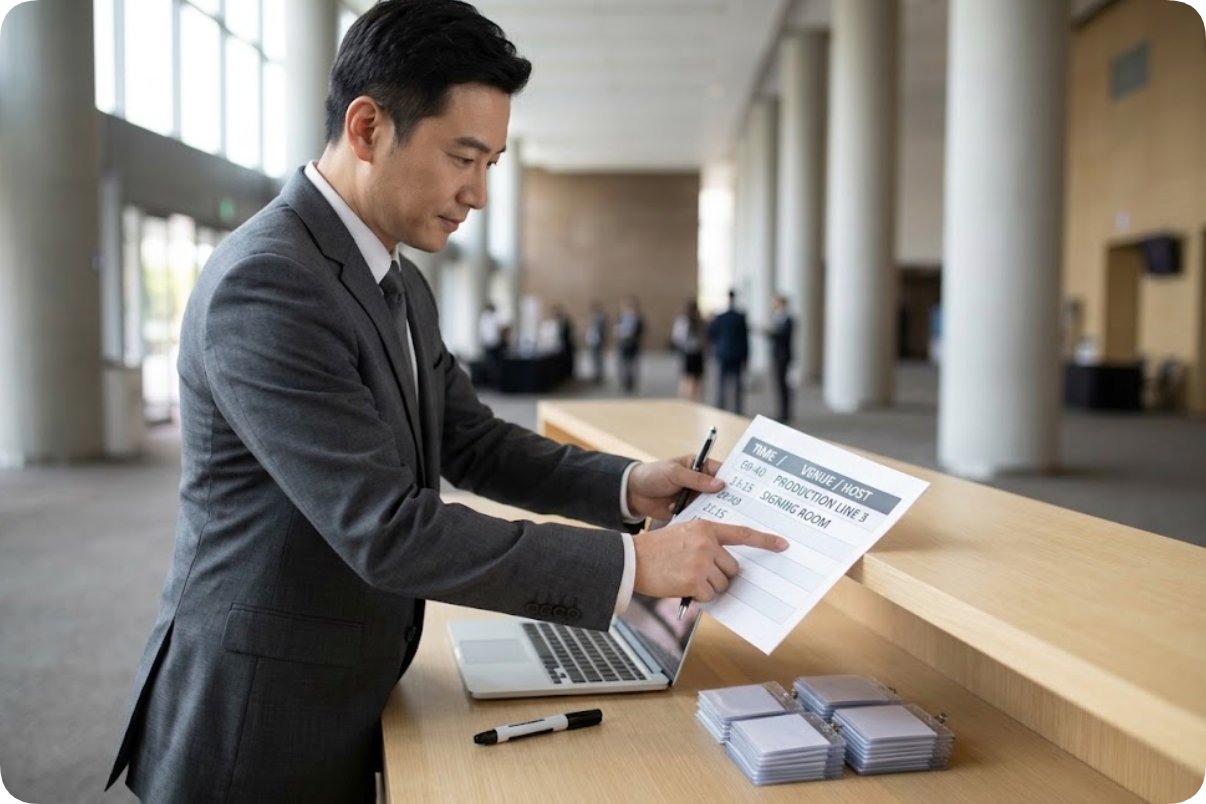
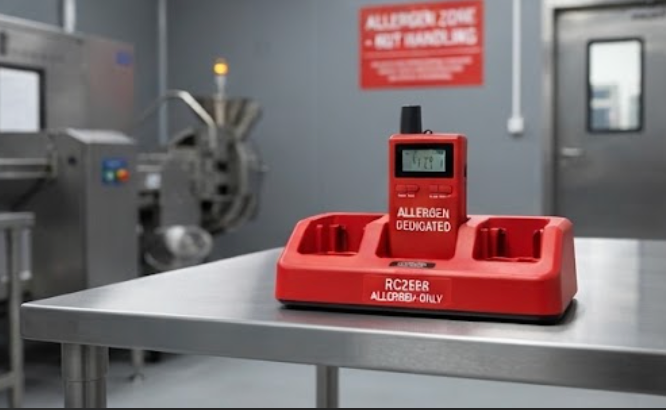
Allergen control areas are the strictest rooms on most food sites, because the consequence of a mistake is not a micro count, it is a recall. Where a plant runs a nut line, a dairy line, and a free-from line, the equipment in each room generally does not leave that room at all. That principle should extend to the tour kit: a set assigned to an allergen room stays in that room, gets its own colour, and never appears on a tour of a different line. The RC2500 Wireless Tour Guide System is the model most often specified for this duty, since the shell takes a permanent identification label and the charging cradle can be zoned alongside it. Lending a receiver across allergen boundaries is the kind of shortcut that looks harmless for two years and then ends a product line.
RC2468 and RC2501: How a Zoned Food Plant Keeps Every Tour Inside Compliance(图3)

A permanently labelled RC2500 set stored on its own cradle inside an allergen control room, colour-coded so it never crosses to another line.

Cold and Wash-Down Areas Where Gear Gets Rinsed

Chilled rooms and wash-down bays punish hardware in a different way. A cold store pulls receiver battery voltage down faster than the datasheet suggests, so a unit rated for a full shift at room temperature may not survive a two-hour tour that includes a freezer walk-through. Wash-down bays do the opposite: the enclosure has to survive a low-pressure rinse and the condensation that follows, and any label has to stay legible when wet. Practical mitigation is to keep sets warm until the moment of entry, assign a dedicated cradle outside the cold room, and check that every label survives a rinse before the first audit.

What Auditors Write Down During a Walkthrough

An auditor walking your route is not judging your audio quality; they are checking whether the visitor protocol is documented and whether the documentation matches what actually happens. The table below maps each zone to the question that gets asked and the evidence that answers it.

ZoneWhat the auditor asksEquipment requirementEvidence that satisfies it
General intakeDo visitors sign in and get briefed?Issued set logged to a nameVisitor log with serial numbers
Raw sideIs anything carried back from here?One-way route, hands-free setRoute map plus issue and return log
Clean zoneWhat crosses the boundary and how is it cleaned?Wipe-tolerant shell, no exposed cavitiesSanitiser step written into the SOP
Allergen roomCan this equipment leave the room?Colour-coded, permanently labelled, room-lockedZone assignment register
Cold and wash-downDoes the kit survive the environment?Cold-rated battery, rinse-tolerant labelsEnvironmental check in the maintenance record

Handing Sets Out and Taking Them Back Clean

The two moments that decide whether a programme survives an audit are the hand-out and the take-back. Issuing a set should produce a line in a log: who received which serial number, at what time, for which route. That single line is what lets you prove a specific unit never entered an allergen room. Taking the set back should include a wipe with an approved agent and a return to the correct zoned cradle, not a shared bucket by the door. Plants that do this well treat the audio kit like any other piece of production equipment: it has an owner, a cleaning schedule, and a location. Plants that do not are the ones explaining a mixed-up set to an auditor who has already seen the cradle.

Choosing Gear by Zone Rather Than by Room Size

The instinct is to buy by group size, but in a food plant the better first question is how many hygiene zones the route crosses. A sixty-person tour that stays in one zone needs one set and one cleaning rule. A ten-person tour crossing four zones needs four sets, four colours, and four lines in a register. Buy to the zone map first and the headcount second, and the protocol writes itself. The wider wireless tour guide system line covers the ultra-light, wipe-tolerant, and zone-labelled models discussed above, and how wireless tour guide systems are reshaping food factory tours in 2026 covers where the practice is heading. Send us your zone map and your visitor volume and we will spec the kit by boundary rather than by headcount.

2026年09月02日 09:26
click: 741

RC2468 and RC2501: How a Zoned Food Plant Keeps Every Tour Inside Compliance

time: 2026年09月02日 click:741

A visitor route through a food plant is not designed by the marketing team; it is designed by the HACCP plan. Every serious food operation divides its floor into hygiene zones, and the rules about which door a guest enters, which line they stand behind, and what they may carry past it are written into the GMP manual long before the first visit is booked. An audio system is a carried object, which means it is subject to exactly the same zoning logic as a clipboard or a pen. Handled carelessly, a set of receivers becomes the most efficient cross-contamination vector in the building, because it travels with the group from the raw side to the clean side and touches a different pair of hands every hour. This article walks the route zone by zone and explains what the hygiene plan demands at each boundary. If you are drawing up a visitor protocol, start from dedicated food factory tour solutions and then map the equipment to your zone map rather than to your headcount.

💡 Why Hygiene Zoning Dictates Where a Group Can Stand

Zoning exists because contamination moves in one direction and does not negotiate. Raw material carries the highest microbial load, so anything that touches the raw side is treated as contaminated until it is cleaned. The plant is therefore split into a general zone, a semi-clean zone, and a clean zone, with air pressure, clothing colour, and boot-wash stations enforcing the boundaries. A tour route has to respect that hierarchy, which is why good routes run one-way, from the cleanest area toward the least clean, and never loop back. The audio kit has to follow the same one-way logic, or it silently undoes the zoning by carrying residue backward.

The Raw Side: Handling Visitors Before the Kill Step

Intake, raw prep, and anything upstream of the kill step is the most sensitive part of the building from a microbiology standpoint. Visitors here wear a coat, a hairnet, and boot covers, and they are kept behind a marked line so they never lean over an open product. The RC2468 Ultra-Light 2.4G Wireless Tour Guide System suits this section because it leaves both hands free: the receiver clips to a lapel or hangs on a lanyard, so a guest can hold a visitor badge and keep their hands away from contact surfaces. At barely more than a few dozen grams it does not tug at a hairnet or snag on a coat, which matters more than it sounds when twenty people are squeezing through a single door in coats two sizes too big.

RC2468 and RC2501: How a Zoned Food Plant Keeps Every Tour Inside Compliance(图1)

Visitors on the raw intake side wearing the ultra-light RC2468 receiver clipped to a lapel, keeping both hands free behind the marked line.

Crossing Into the Clean Side Without Carrying Anything In

The boundary into the semi-clean and clean zones is where most visitor protocols fail, because the clothing change is visible and the equipment change is not. Guests change coats, wash hands, and pass a boot bath, then walk in carrying the same receiver they had on the raw side. The fix is unglamorous but simple: either the set gets wiped with an approved sanitiser at the boundary, or each zone owns its own colour-coded set that never leaves. The RC2501 Wireless Tour Guide System is the unit most plants assign to the clean side, because its smooth shell has no exposed connector cavity to trap residue and it tolerates a daily wipe-down without the markings fading. Whatever you choose, the rule has to be written down, because an auditor will ask.

RC2468 and RC2501: How a Zoned Food Plant Keeps Every Tour Inside Compliance(图2)

A colour-coded RC2501 set issued at the clean-zone boundary, where the group changes coats and sanitiser-wipes the equipment before crossing.

Allergen Rooms and the Dedicated Device Rule

Allergen control areas are the strictest rooms on most food sites, because the consequence of a mistake is not a micro count, it is a recall. Where a plant runs a nut line, a dairy line, and a free-from line, the equipment in each room generally does not leave that room at all. That principle should extend to the tour kit: a set assigned to an allergen room stays in that room, gets its own colour, and never appears on a tour of a different line. The RC2500 Wireless Tour Guide System is the model most often specified for this duty, since the shell takes a permanent identification label and the charging cradle can be zoned alongside it. Lending a receiver across allergen boundaries is the kind of shortcut that looks harmless for two years and then ends a product line.

RC2468 and RC2501: How a Zoned Food Plant Keeps Every Tour Inside Compliance(图3)

A permanently labelled RC2500 set stored on its own cradle inside an allergen control room, colour-coded so it never crosses to another line.

Cold and Wash-Down Areas Where Gear Gets Rinsed

Chilled rooms and wash-down bays punish hardware in a different way. A cold store pulls receiver battery voltage down faster than the datasheet suggests, so a unit rated for a full shift at room temperature may not survive a two-hour tour that includes a freezer walk-through. Wash-down bays do the opposite: the enclosure has to survive a low-pressure rinse and the condensation that follows, and any label has to stay legible when wet. Practical mitigation is to keep sets warm until the moment of entry, assign a dedicated cradle outside the cold room, and check that every label survives a rinse before the first audit.

What Auditors Write Down During a Walkthrough

An auditor walking your route is not judging your audio quality; they are checking whether the visitor protocol is documented and whether the documentation matches what actually happens. The table below maps each zone to the question that gets asked and the evidence that answers it.

ZoneWhat the auditor asksEquipment requirementEvidence that satisfies it
General intakeDo visitors sign in and get briefed?Issued set logged to a nameVisitor log with serial numbers
Raw sideIs anything carried back from here?One-way route, hands-free setRoute map plus issue and return log
Clean zoneWhat crosses the boundary and how is it cleaned?Wipe-tolerant shell, no exposed cavitiesSanitiser step written into the SOP
Allergen roomCan this equipment leave the room?Colour-coded, permanently labelled, room-lockedZone assignment register
Cold and wash-downDoes the kit survive the environment?Cold-rated battery, rinse-tolerant labelsEnvironmental check in the maintenance record

Handing Sets Out and Taking Them Back Clean

The two moments that decide whether a programme survives an audit are the hand-out and the take-back. Issuing a set should produce a line in a log: who received which serial number, at what time, for which route. That single line is what lets you prove a specific unit never entered an allergen room. Taking the set back should include a wipe with an approved agent and a return to the correct zoned cradle, not a shared bucket by the door. Plants that do this well treat the audio kit like any other piece of production equipment: it has an owner, a cleaning schedule, and a location. Plants that do not are the ones explaining a mixed-up set to an auditor who has already seen the cradle.

Choosing Gear by Zone Rather Than by Room Size

The instinct is to buy by group size, but in a food plant the better first question is how many hygiene zones the route crosses. A sixty-person tour that stays in one zone needs one set and one cleaning rule. A ten-person tour crossing four zones needs four sets, four colours, and four lines in a register. Buy to the zone map first and the headcount second, and the protocol writes itself. The wider wireless tour guide system line covers the ultra-light, wipe-tolerant, and zone-labelled models discussed above, and how wireless tour guide systems are reshaping food factory tours in 2026 covers where the practice is heading. Send us your zone map and your visitor volume and we will spec the kit by boundary rather than by headcount.
×

Contact us

email:
name:
subject:
content: