A leading China factory specializing in Wireless Tour Guide Systems, Church Audio Guides, and Translation Headphones with premium OEM/ODM solutions.

Tel:+86 18922879583

Email:tiger.wang@richitek.com

RC2501 and RC2468: Where Museums Lose Money When Visitors Stop Understanding

Most multilingual audio guide business cases are built the same way and they all start from the wrong end. They add up the cost of the equipment, the content production and the staffing, compare that against an assumed uplift in ticket or audio guide revenue, and produce a payback period. The number is usually unimpressive, because the ticket is the smallest figure in an international visitor's spend and the audio guide fee is smaller still. What that method cannot see is the money that leaves the building when a visitor stops understanding what they are looking at. They leave earlier, they spend less in the shop, they do not join, they do not return, and they write a review that shapes next season's bookings. For a museum drawing international visitors, admission is only a fraction of the total value of the visit: travel, accommodation, meals, retail and the recommendation to other travellers all dwarf the entry fee, which is why measuring interpretation against ticket revenue will always produce a marginal answer. Framed the other way round, the question is what an average international visitor is worth to the institution and how much of that value is lost when the commentary is not in their language. None of those losses appear in an equipment budget, and all of them are larger than the equipment. If you are building the case this year, start with the museum audio guide solutions and then work through where the money actually goes.

Dwell Time Is Where the Spend Hides

The second problem is that the loss is invisible because it takes the form of time rather than money. A visitor who cannot follow the commentary does not complain at the desk; they simply move faster. They walk the rooms at pace, they skip the sections that require explanation, and they reach the exit an hour earlier than a visitor who understood the same galleries. That hour is the entire retail and catering opportunity, and it disappears quietly. Museums that install multilingual provision and then measure only guide uptake routinely report disappointing results, because uptake was never the variable that mattered. The variable that matters is dwell time, and it is measurable: average visit duration segmented by language group, before and after, is the single most informative number available and almost nobody tracks it.

🔮 The Review That Costs Next Season

The third loss arrives after the visitor has gone home. International visitors disproportionately write reviews, and the reviews that mention interpretation tend to mention its absence: the audio guide was only in two languages, the captions were English only, the group commentary was impossible to follow. Those reviews are read by the next season's visitors, by tour operators assembling itineraries, and by travel writers deciding whether the museum is worth a mention. A cluster of complaints about language provision does not reduce this year's revenue, which is exactly why it survives budget scrutiny, but it shapes the consideration set for travellers who have not yet decided to come. Treating interpretation as a customer experience cost rather than a marketing asset is the reason this line is so consistently underfunded.

Group Bookings Ask One Question First

The fourth loss is the most commercially direct, because it happens before anyone visits. Group and school organisers evaluating a museum ask a short set of questions, and language provision is near the top. A school group travelling with students who do not share the museum's language, or a coach operator assembling a mixed-nationality itinerary, will simply remove a venue that cannot accommodate them. That is a lost booking rather than a reduced spend, and it is decided by a single line in an email. Institutions that can answer the language question confidently convert a category of business that their competitors cannot touch at all, and the equipment required to do so is rarely the expensive part of the proposition.

🎯 When One Guide Cannot Cover Four Languages

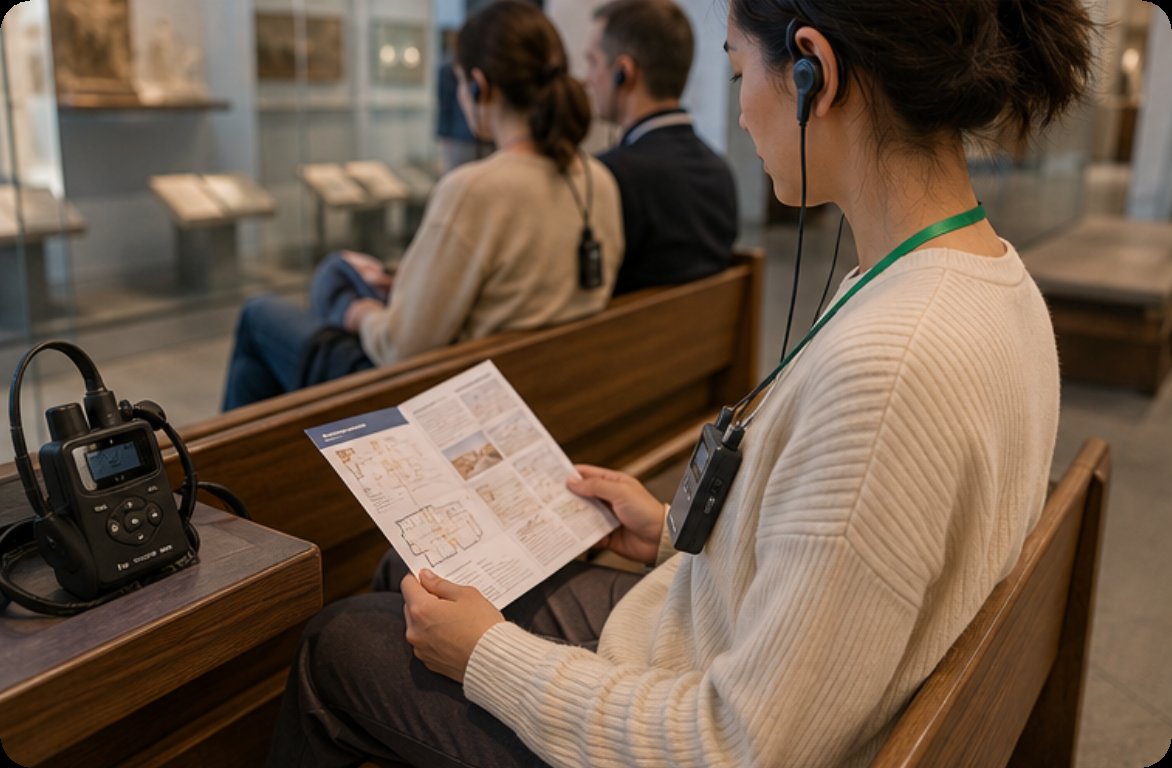
The practical constraint underneath all of this is that multilingual provision is usually delivered by people, and people do not scale. A museum that needs four languages can either hire four guides, which is rarely viable outside the largest institutions, or run one guide and distribute the commentary in the visitor's own language. The second model is the one that scales, and it imposes a specific requirement on the equipment: enough channels to carry every required language simultaneously, with the ability to switch between them without re-pairing an entire group. Channel count is therefore not a specification nicety, it is the difference between serving four language groups and serving one well. The RC2406 is specified for exactly this pattern, because an eighty-channel architecture lets an institution add a language as a channel rather than as a new system, and handover between channels takes seconds rather than minutes.
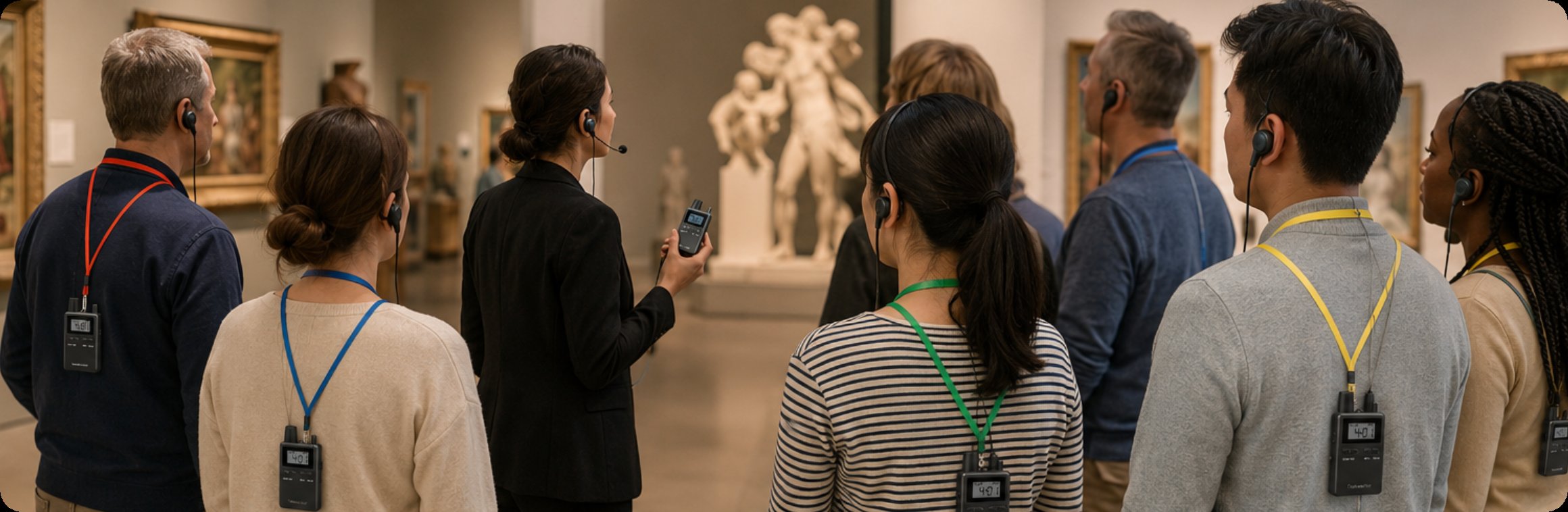
RC2501 and RC2468: Where Museums Lose Money When Visitors Stop Understanding(图1)

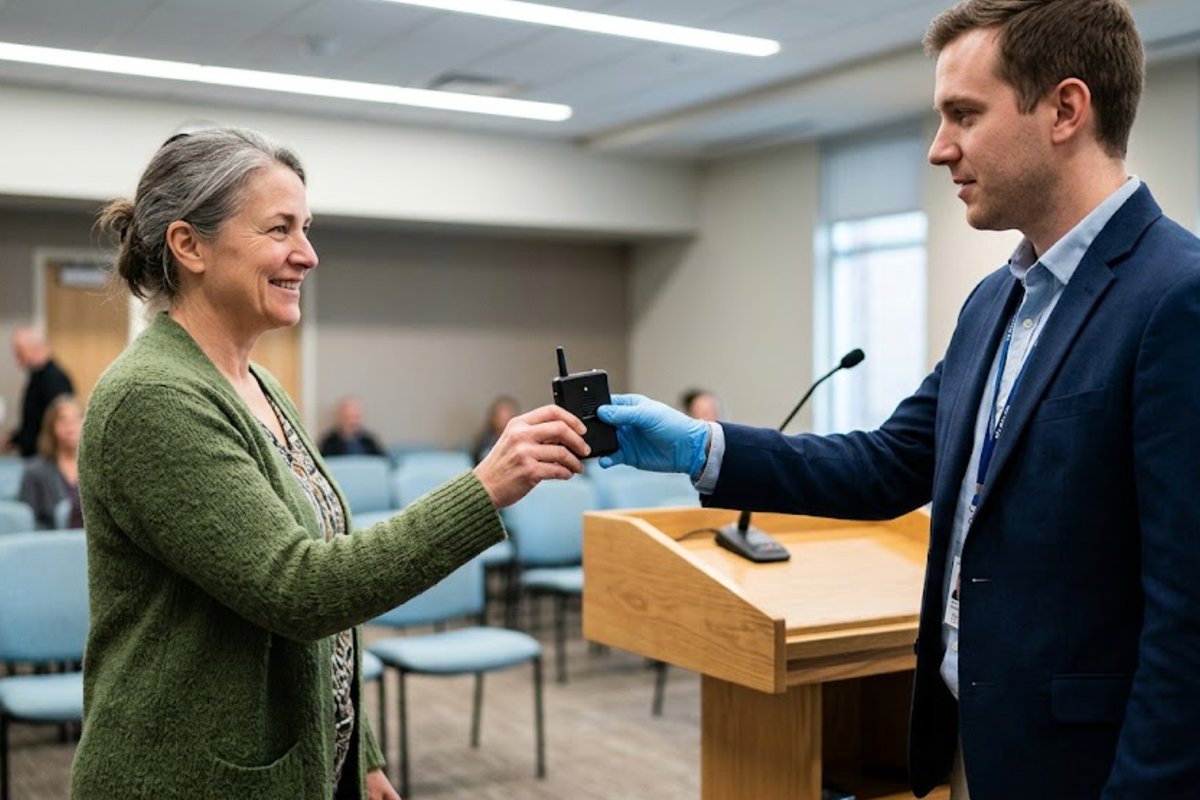
An RC2406 carrying several language channels at once, so a single guide's commentary reaches every group without a re-pairing break between languages.

The Receiver Nobody Returns

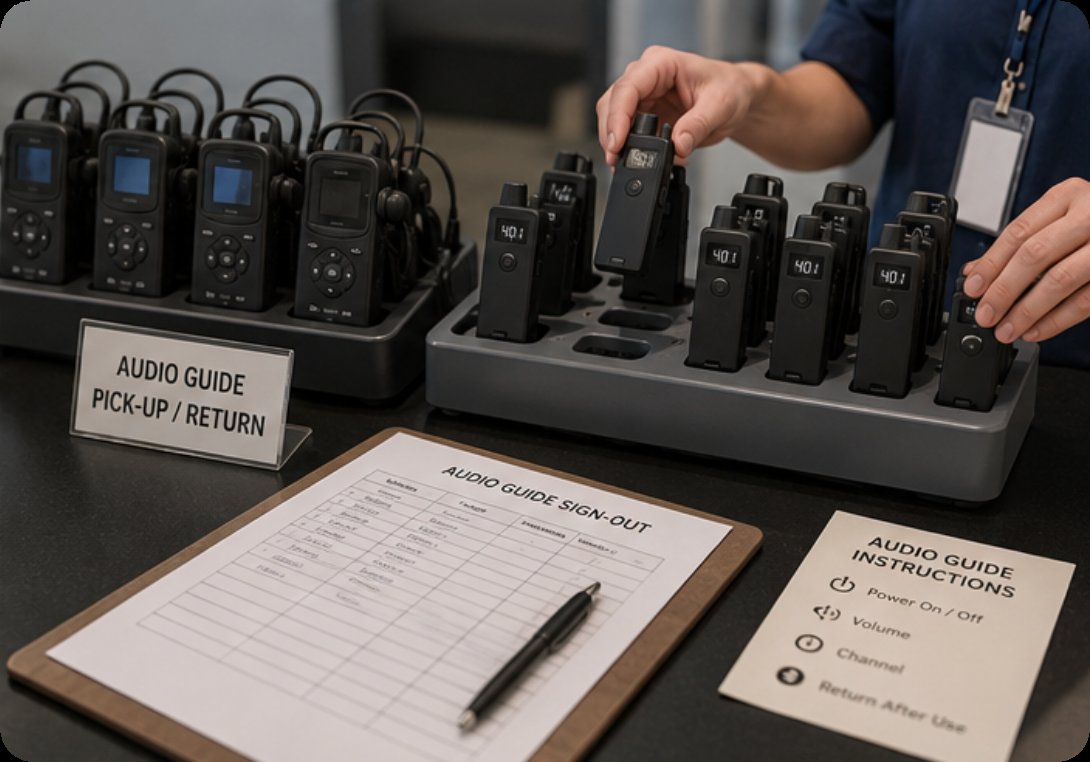
The second practical constraint is the one that quietly destroys equipment budgets, and it has nothing to do with the specification sheet. Receivers that are uncomfortable get taken off. Visitors who remove an uncomfortable receiver after twenty minutes receive no commentary for the rest of the visit, which converts an interpretation investment into a sunk cost, and units that go into pockets rather than back into the charging case are units that go missing. Both outcomes are measurable and both are caused by the same thing: weight and wearing comfort over the length of a real visit rather than the length of a demonstration. The RC2468 exists for this reason. An ultra-light receiver is not a luxury specification, it is the difference between equipment that stays on the visitor's head for ninety minutes and equipment that ends up in a bag, and therefore between an interpretation programme that works and one that only appears to.
RC2501 and RC2468: Where Museums Lose Money When Visitors Stop Understanding(图2)

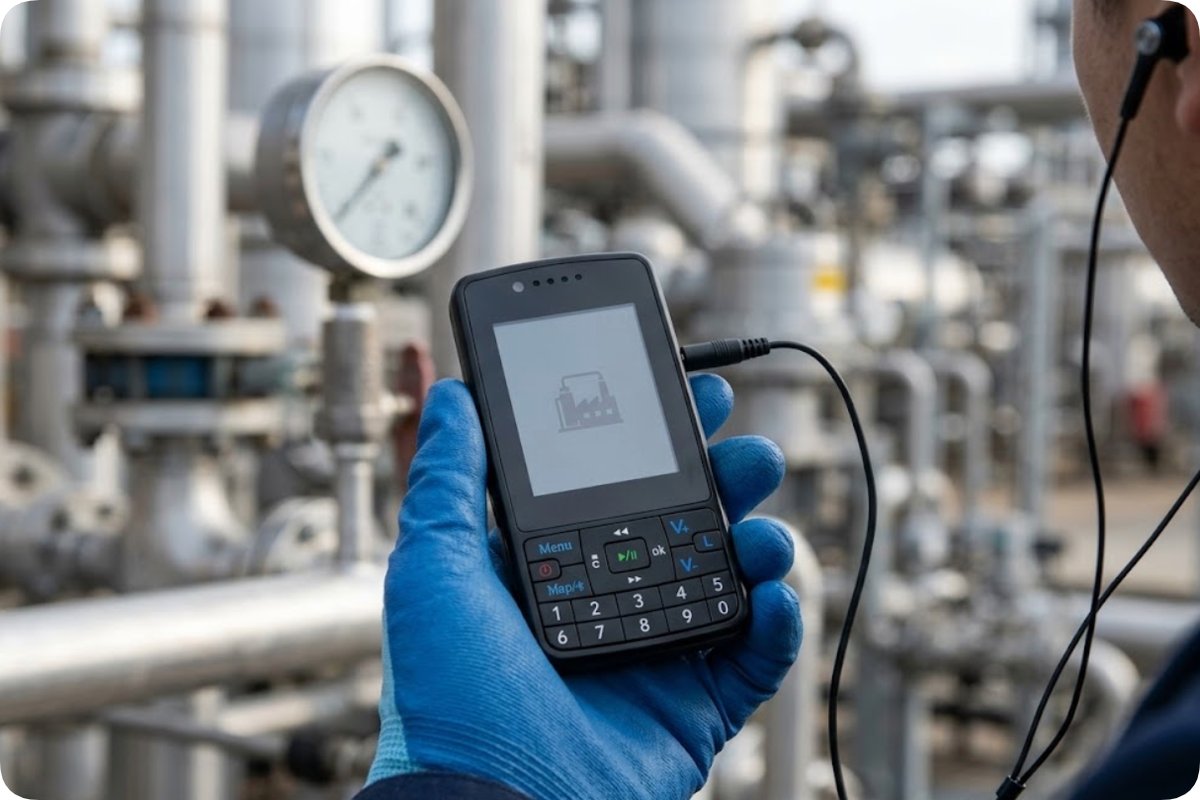
An ultra-light RC2468 still being worn an hour into a visit, which is the point at which heavier receivers tend to be taken off.

💰 The Sunk Cost of Kit Already Bought

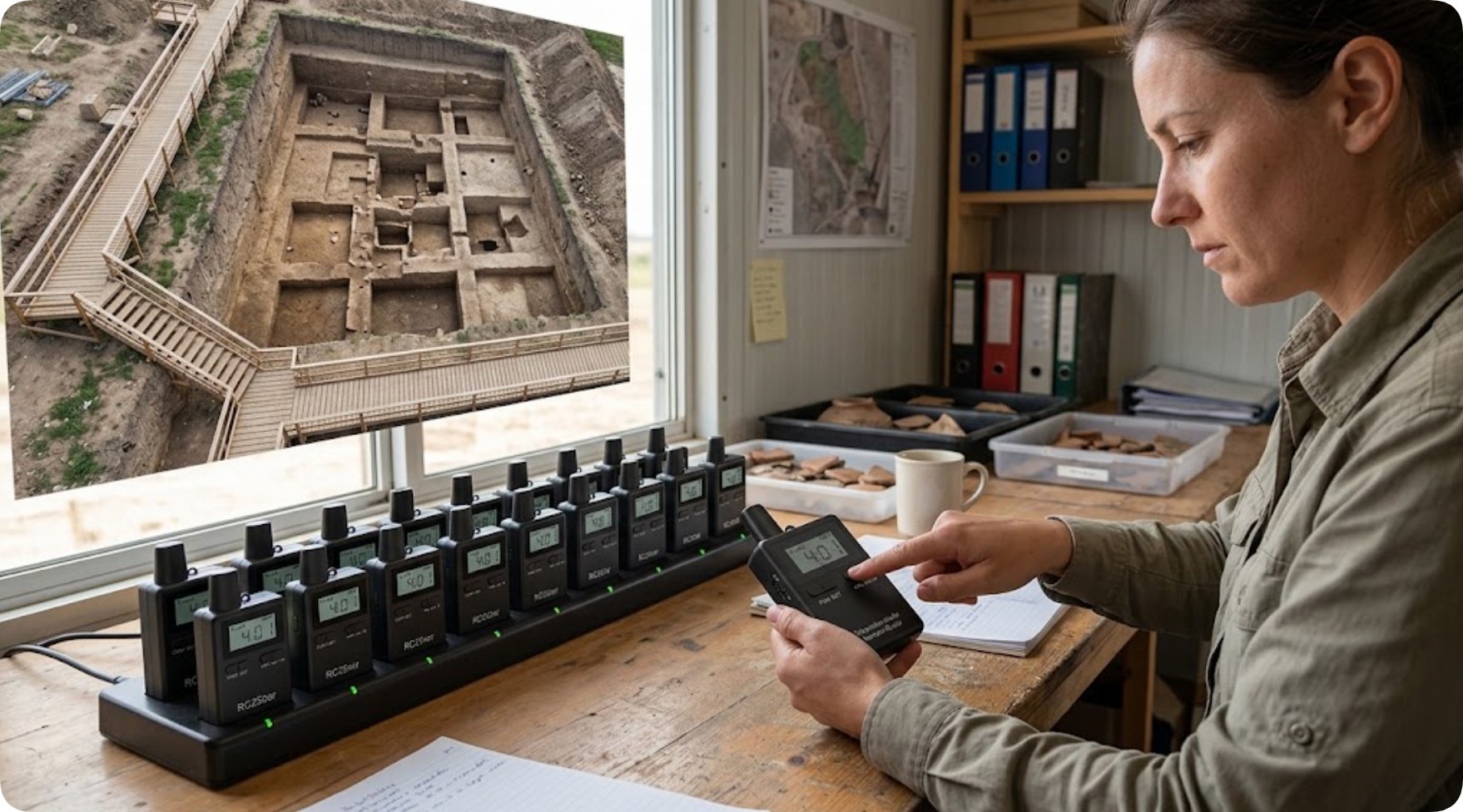
The fifth consideration is the one that stops institutions acting, and it deserves a straight answer. Many museums already own equipment. It may be a single-language system, it may be ageing, and replacing all of it is genuinely expensive. The instinct is to defer the whole project until a full replacement can be funded, which means deferring the multilingual capability for years while the losses described above continue. The alternative is to treat the existing fleet as a base to be extended rather than a sunk cost to be written off: keep what still works, add the channels and the receivers needed for the languages that are actually requested, and plan the replacement around demand rather than around the procurement cycle. The RC2501 is the model most often used as that base, because it integrates with existing charging and issuing routines instead of requiring the whole front-of-house process to be rebuilt.
RC2501 and RC2468: Where Museums Lose Money When Visitors Stop Understanding(图3)

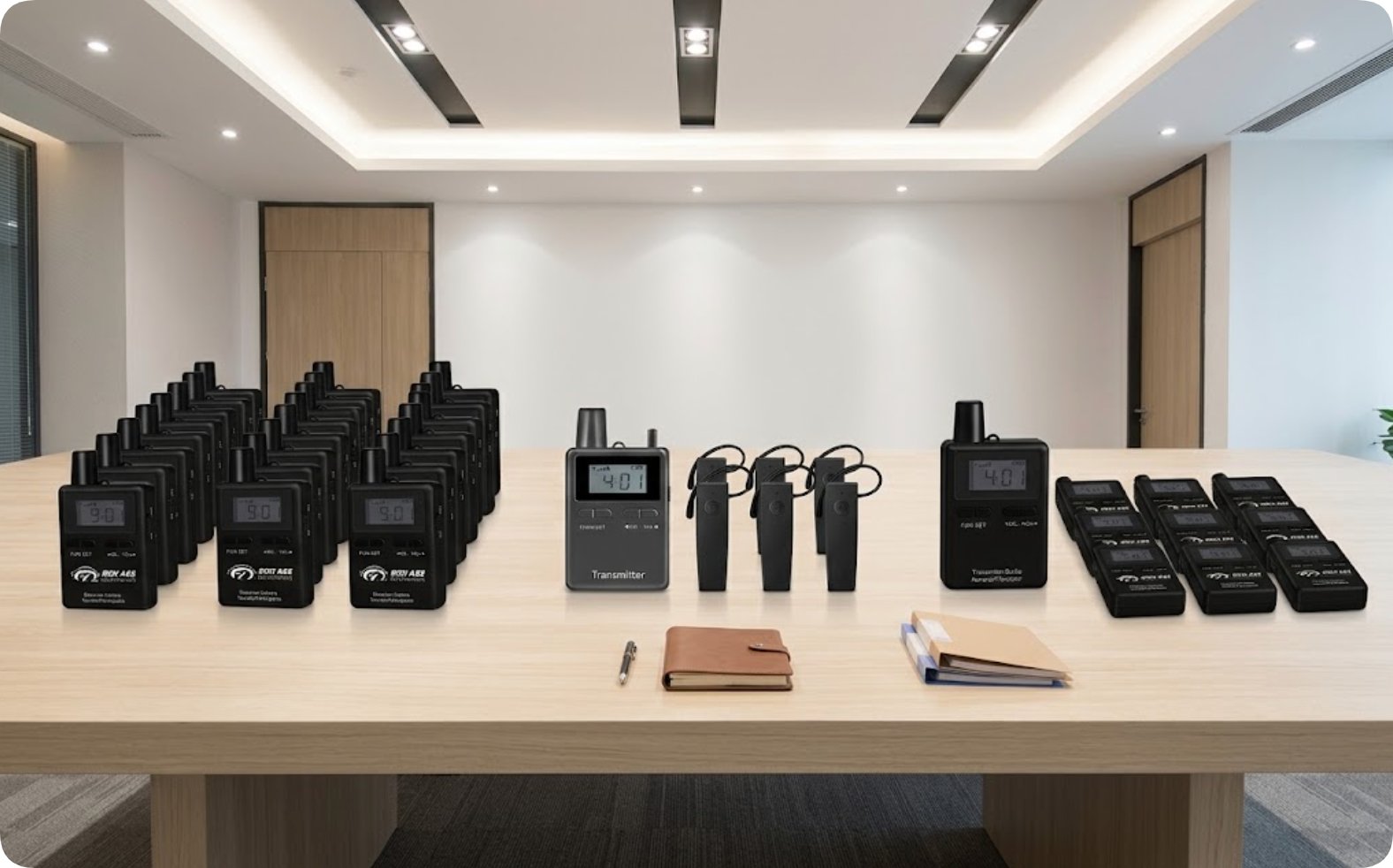
An RC2501 extending an existing fleet, added to the current charging and issuing routine rather than replacing the whole front-of-house process.

Counting What the Gap Actually Drains

Putting the losses in one place makes the case legible, and it is worth doing before the next budget round rather than after. The table below sets out the five leaks, how to measure each one, and what typically closes it. None of the measurement methods require new systems; most require someone to segment an existing report by language.

Where the loss occursHow to measure it nowWhat closes it
Reduced dwell timeAverage visit duration by language groupCommentary in the visitor's language
Retail and cateringSpend per head by language groupLonger engagement with the collection
Reviews and reputationReview mentions of language provisionVisible multilingual offering at entry
Group and school bookingsEnquiries lost on language groundsChannel capacity for several languages
Equipment that is not wornReturn rate and in-visit removalLighter receivers visitors keep on
Deferred replacementYears of unmet language demandExtend the existing fleet instead

What the Case Looks Like When Inverted

The argument for inverting the calculation is not that equipment is cheap, because it is not, and it is not that multilingual provision is simple, because running four channels well takes planning. The argument is that the conventional calculation measures a small benefit against a visible cost and therefore always produces a marginal answer, while the inverted calculation measures a large and ongoing loss against the same visible cost. Museums that make the switch tend to stop asking whether the system pays for itself and start asking which language to add next, which is the question that actually matters. Our wireless tour guide system range is specified against the leaks in that table rather than against a unit price, and the engagement pattern is documented in a museum case where visitor engagement was measured before and after. The institutions that get the best results are not the ones that bought the most equipment, they are the ones that worked out where the money was going first.

2026年09月04日 09:16
click: 213

RC2501 and RC2468: Where Museums Lose Money When Visitors Stop Understanding

time: 2026年09月04日 click:213

Most multilingual audio guide business cases are built the same way and they all start from the wrong end. They add up the cost of the equipment, the content production and the staffing, compare that against an assumed uplift in ticket or audio guide revenue, and produce a payback period. The number is usually unimpressive, because the ticket is the smallest figure in an international visitor's spend and the audio guide fee is smaller still. What that method cannot see is the money that leaves the building when a visitor stops understanding what they are looking at. They leave earlier, they spend less in the shop, they do not join, they do not return, and they write a review that shapes next season's bookings. For a museum drawing international visitors, admission is only a fraction of the total value of the visit: travel, accommodation, meals, retail and the recommendation to other travellers all dwarf the entry fee, which is why measuring interpretation against ticket revenue will always produce a marginal answer. Framed the other way round, the question is what an average international visitor is worth to the institution and how much of that value is lost when the commentary is not in their language. None of those losses appear in an equipment budget, and all of them are larger than the equipment. If you are building the case this year, start with the museum audio guide solutions and then work through where the money actually goes.

Dwell Time Is Where the Spend Hides

The second problem is that the loss is invisible because it takes the form of time rather than money. A visitor who cannot follow the commentary does not complain at the desk; they simply move faster. They walk the rooms at pace, they skip the sections that require explanation, and they reach the exit an hour earlier than a visitor who understood the same galleries. That hour is the entire retail and catering opportunity, and it disappears quietly. Museums that install multilingual provision and then measure only guide uptake routinely report disappointing results, because uptake was never the variable that mattered. The variable that matters is dwell time, and it is measurable: average visit duration segmented by language group, before and after, is the single most informative number available and almost nobody tracks it.

🔮 The Review That Costs Next Season

The third loss arrives after the visitor has gone home. International visitors disproportionately write reviews, and the reviews that mention interpretation tend to mention its absence: the audio guide was only in two languages, the captions were English only, the group commentary was impossible to follow. Those reviews are read by the next season's visitors, by tour operators assembling itineraries, and by travel writers deciding whether the museum is worth a mention. A cluster of complaints about language provision does not reduce this year's revenue, which is exactly why it survives budget scrutiny, but it shapes the consideration set for travellers who have not yet decided to come. Treating interpretation as a customer experience cost rather than a marketing asset is the reason this line is so consistently underfunded.

Group Bookings Ask One Question First

The fourth loss is the most commercially direct, because it happens before anyone visits. Group and school organisers evaluating a museum ask a short set of questions, and language provision is near the top. A school group travelling with students who do not share the museum's language, or a coach operator assembling a mixed-nationality itinerary, will simply remove a venue that cannot accommodate them. That is a lost booking rather than a reduced spend, and it is decided by a single line in an email. Institutions that can answer the language question confidently convert a category of business that their competitors cannot touch at all, and the equipment required to do so is rarely the expensive part of the proposition.

🎯 When One Guide Cannot Cover Four Languages

The practical constraint underneath all of this is that multilingual provision is usually delivered by people, and people do not scale. A museum that needs four languages can either hire four guides, which is rarely viable outside the largest institutions, or run one guide and distribute the commentary in the visitor's own language. The second model is the one that scales, and it imposes a specific requirement on the equipment: enough channels to carry every required language simultaneously, with the ability to switch between them without re-pairing an entire group. Channel count is therefore not a specification nicety, it is the difference between serving four language groups and serving one well. The RC2406 is specified for exactly this pattern, because an eighty-channel architecture lets an institution add a language as a channel rather than as a new system, and handover between channels takes seconds rather than minutes.

RC2501 and RC2468: Where Museums Lose Money When Visitors Stop Understanding(图1)

An RC2406 carrying several language channels at once, so a single guide's commentary reaches every group without a re-pairing break between languages.

The Receiver Nobody Returns

The second practical constraint is the one that quietly destroys equipment budgets, and it has nothing to do with the specification sheet. Receivers that are uncomfortable get taken off. Visitors who remove an uncomfortable receiver after twenty minutes receive no commentary for the rest of the visit, which converts an interpretation investment into a sunk cost, and units that go into pockets rather than back into the charging case are units that go missing. Both outcomes are measurable and both are caused by the same thing: weight and wearing comfort over the length of a real visit rather than the length of a demonstration. The RC2468 exists for this reason. An ultra-light receiver is not a luxury specification, it is the difference between equipment that stays on the visitor's head for ninety minutes and equipment that ends up in a bag, and therefore between an interpretation programme that works and one that only appears to.

RC2501 and RC2468: Where Museums Lose Money When Visitors Stop Understanding(图2)

An ultra-light RC2468 still being worn an hour into a visit, which is the point at which heavier receivers tend to be taken off.

💰 The Sunk Cost of Kit Already Bought

The fifth consideration is the one that stops institutions acting, and it deserves a straight answer. Many museums already own equipment. It may be a single-language system, it may be ageing, and replacing all of it is genuinely expensive. The instinct is to defer the whole project until a full replacement can be funded, which means deferring the multilingual capability for years while the losses described above continue. The alternative is to treat the existing fleet as a base to be extended rather than a sunk cost to be written off: keep what still works, add the channels and the receivers needed for the languages that are actually requested, and plan the replacement around demand rather than around the procurement cycle. The RC2501 is the model most often used as that base, because it integrates with existing charging and issuing routines instead of requiring the whole front-of-house process to be rebuilt.

RC2501 and RC2468: Where Museums Lose Money When Visitors Stop Understanding(图3)

An RC2501 extending an existing fleet, added to the current charging and issuing routine rather than replacing the whole front-of-house process.

Counting What the Gap Actually Drains

Putting the losses in one place makes the case legible, and it is worth doing before the next budget round rather than after. The table below sets out the five leaks, how to measure each one, and what typically closes it. None of the measurement methods require new systems; most require someone to segment an existing report by language.

Where the loss occursHow to measure it nowWhat closes it
Reduced dwell timeAverage visit duration by language groupCommentary in the visitor's language
Retail and cateringSpend per head by language groupLonger engagement with the collection
Reviews and reputationReview mentions of language provisionVisible multilingual offering at entry
Group and school bookingsEnquiries lost on language groundsChannel capacity for several languages
Equipment that is not wornReturn rate and in-visit removalLighter receivers visitors keep on
Deferred replacementYears of unmet language demandExtend the existing fleet instead

What the Case Looks Like When Inverted

The argument for inverting the calculation is not that equipment is cheap, because it is not, and it is not that multilingual provision is simple, because running four channels well takes planning. The argument is that the conventional calculation measures a small benefit against a visible cost and therefore always produces a marginal answer, while the inverted calculation measures a large and ongoing loss against the same visible cost. Museums that make the switch tend to stop asking whether the system pays for itself and start asking which language to add next, which is the question that actually matters. Our wireless tour guide system range is specified against the leaks in that table rather than against a unit price, and the engagement pattern is documented in a museum case where visitor engagement was measured before and after. The institutions that get the best results are not the ones that bought the most equipment, they are the ones that worked out where the money was going first.
×

Contact us

email:
name:
subject:
content: