
A leading China factory specializing in Wireless Tour Guide Systems, Church Audio Guides, and Translation Headphones with premium OEM/ODM solutions.

Tel:+86 18922879583

Email:tiger.wang@richitek.com

RC2406 and RC2401: What a Plant Tour Kit Earns on the Days Nobody Visits

Every factory tour equipment purchase I have reviewed was justified with the same arithmetic: count the visits per year, divide the kit price by that number, and the cost per visit looks comfortably small. The arithmetic is fine and the conclusion is wrong, because it prices the equipment against the handful of days a delegation walks the line and ignores the other two hundred and forty working days when the same receivers sit in a charging case. A car plant buys audio gear for the investor day and the dealer launch, then discovers the kit is idle on any ordinary Tuesday. The return is not in what a visit costs. It is in how many different jobs the same hardware can be made to do. Start by treating factory tour audio planning as a utilisation problem rather than a purchase.

Where the Business Case Usually Stops

The standard justification runs to roughly one page. A plant expects forty or fifty hosted visits a year, a kit costs a known amount, and dividing the second by the first produces an attractive figure that survives the meeting. What that page never contains is the denominator nobody wants to discuss: the equipment is built to last several years, and across its whole life it will be switched on for perhaps eighty hours. Idle assets are not free, they are simply billed in a way that never reaches the invoice. The uncomfortable version of the question is not what a tour costs, but what each hour of actual use costs once you admit how few of those hours there are.

Idle Hardware Is the Real Expense

Run the honest numbers on a single kit. Fifty visits a year at two hours each is a hundred hours of operation out of roughly two thousand available working hours. That is five percent utilisation, and no other piece of plant equipment would survive a review at that figure. The kit is not expensive because it is overpriced; it is expensive because it works one week and waits the rest. The fix is not to buy less, it is to find the second and third job. A plant already runs supplier audits, contractor inductions, safety briefings, and line-side training sessions, and every one of those is a room or a route where people need to hear one voice clearly. The equipment does not care which of those it is serving.

Eighty Channels Mean Parallel Groups

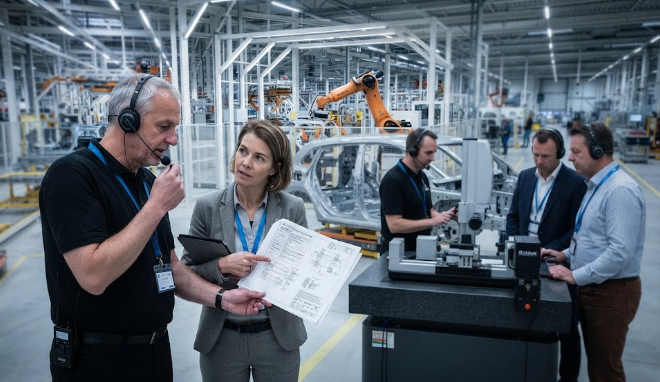
The first way to raise that utilisation figure is to stop running one group at a time. The RC2406 carries eighty selectable channels on 2.4G, which in practice means three or four groups can be on the floor simultaneously without any of them hearing the others. A tier-one supplier audit, a press group, and a student visit no longer have to be scheduled on separate days because the frequencies will not collide. At 65 grams with a 12-hour battery it is light enough for a full morning of back-to-back groups, and IP42 handles the dust and light oil mist that settles on everything near the assembly line. Throughput, not price, is where this unit earns its place.
RC2406 and RC2401: What a Plant Tour Kit Earns on the Days Nobody Visits(图1)

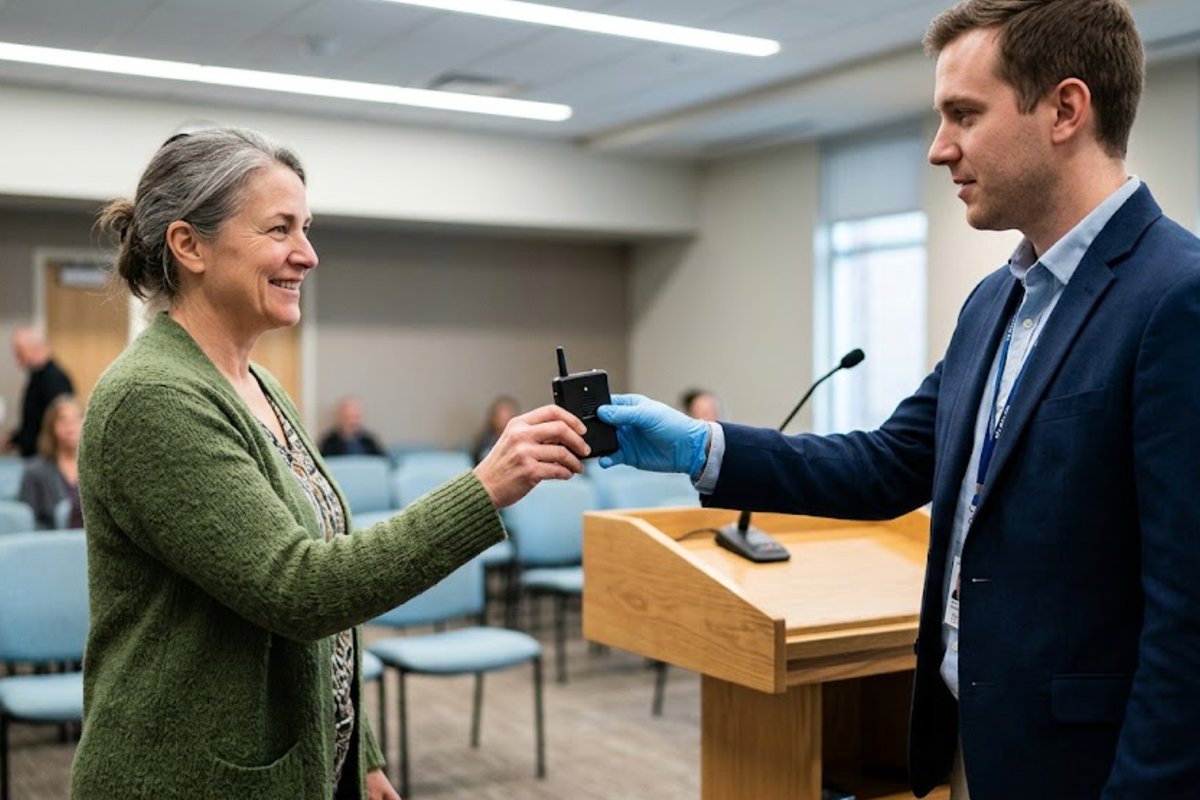
Multiple visitor groups moving through an assembly plant at once, each locked to its own channel so none of them overhears the others.

A Second Shift for the Same Gear

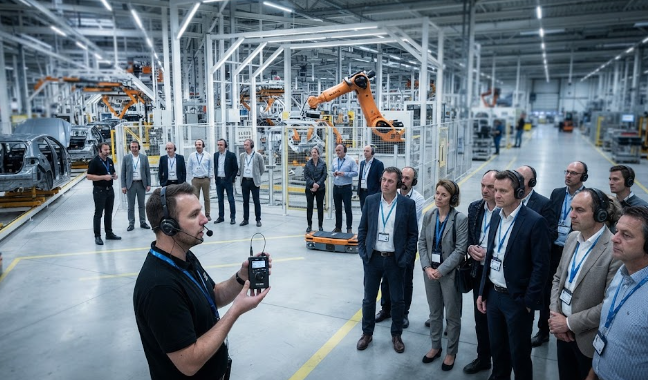
The second lever is the one that changes the arithmetic most: give the kit a job on the days no visitor comes. The RC2401 is specified for multi-channel corporate training as much as for guided groups, and that dual purpose is the entire point. Contractor inductions, safety briefings in a noisy hall, and line-side operator training are all sessions where the instructor needs to be heard over ambient noise without shouting. A kit that serves fifty visits and eighty training sessions has moved from five percent utilisation to something a finance director will actually sign off. At 72 grams it is comfortable for a trainer wearing it through a long session.
RC2406 and RC2401: What a Plant Tour Kit Earns on the Days Nobody Visits(图2)

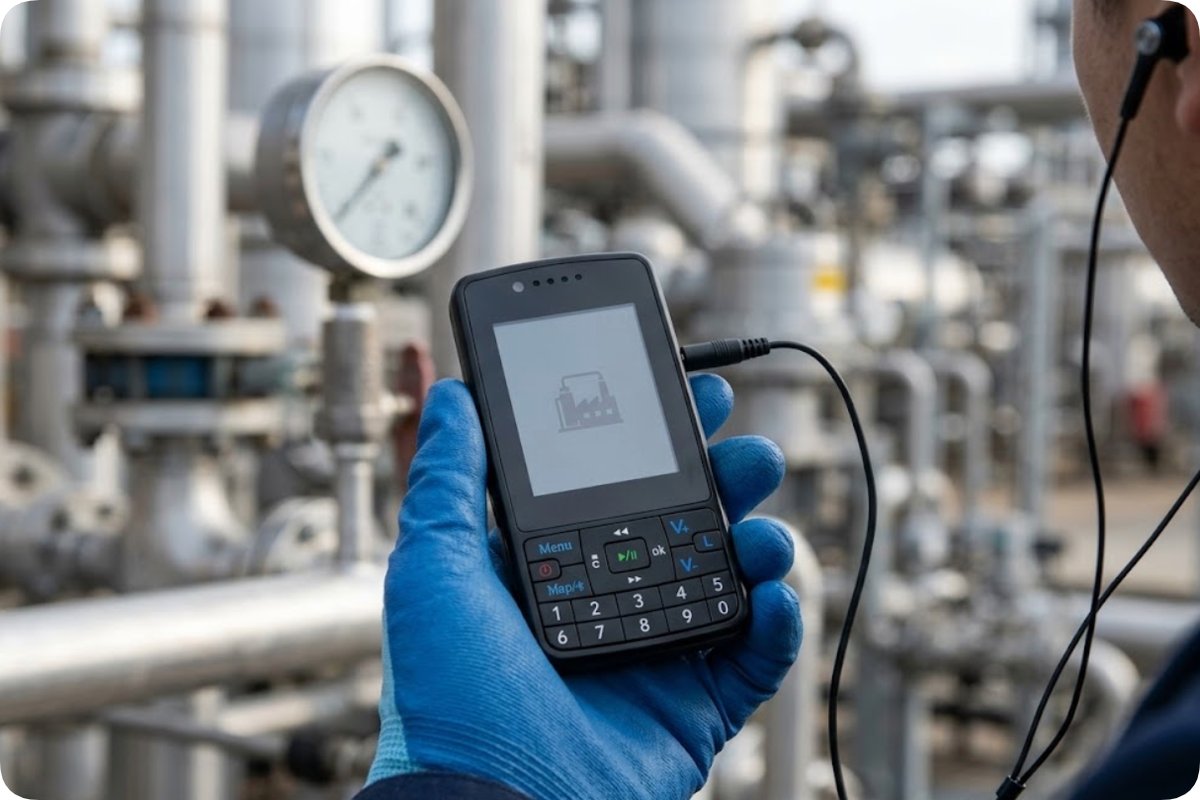
The same receivers deployed for a line-side training session, the shift that turns an idle asset into a tool the plant uses every week.

Fourteen Hours Covers a Training Day

Battery specification looks like a minor line item until you count sessions rather than visits. A two-hour tour needs almost nothing, but a training day runs early shift briefing, mid-morning session, and an afternoon repeat for the next crew. The RC2401 is rated at 14 hours against the RC2406's 12, and that difference is the gap between recharging between sessions and simply working through the day. Both units are IP42, which is adequate for a plant floor but worth stating plainly: these are indoor industrial units, not equipment for an uncovered yard in the rain. Knowing where the boundary sits prevents the disappointed call six months later.

💰 Counting Utilisation Instead of Cost

The healthier calculation replaces cost per visit with cost per operating hour, and then asks how many hours a year the plant can realistically generate. Fifty visits at two hours is a hundred hours. Add weekly line-side training and induction sessions at two hours each and another hundred hours appears without buying anything. Add the ability to run two or three groups in parallel and the hosted-visit figure climbs again on the same calendar. None of this requires a larger budget. It requires that the specification be written for the week rather than for the showcase day, which is a decision made at purchase and cannot be retrofitted afterwards.

Side-by-Side Specifications

The comparison below is organised by the job each unit takes on, because that is how the utilisation argument is actually won.

ModelPrimary jobSecond jobChannelsBatteryWeightRating
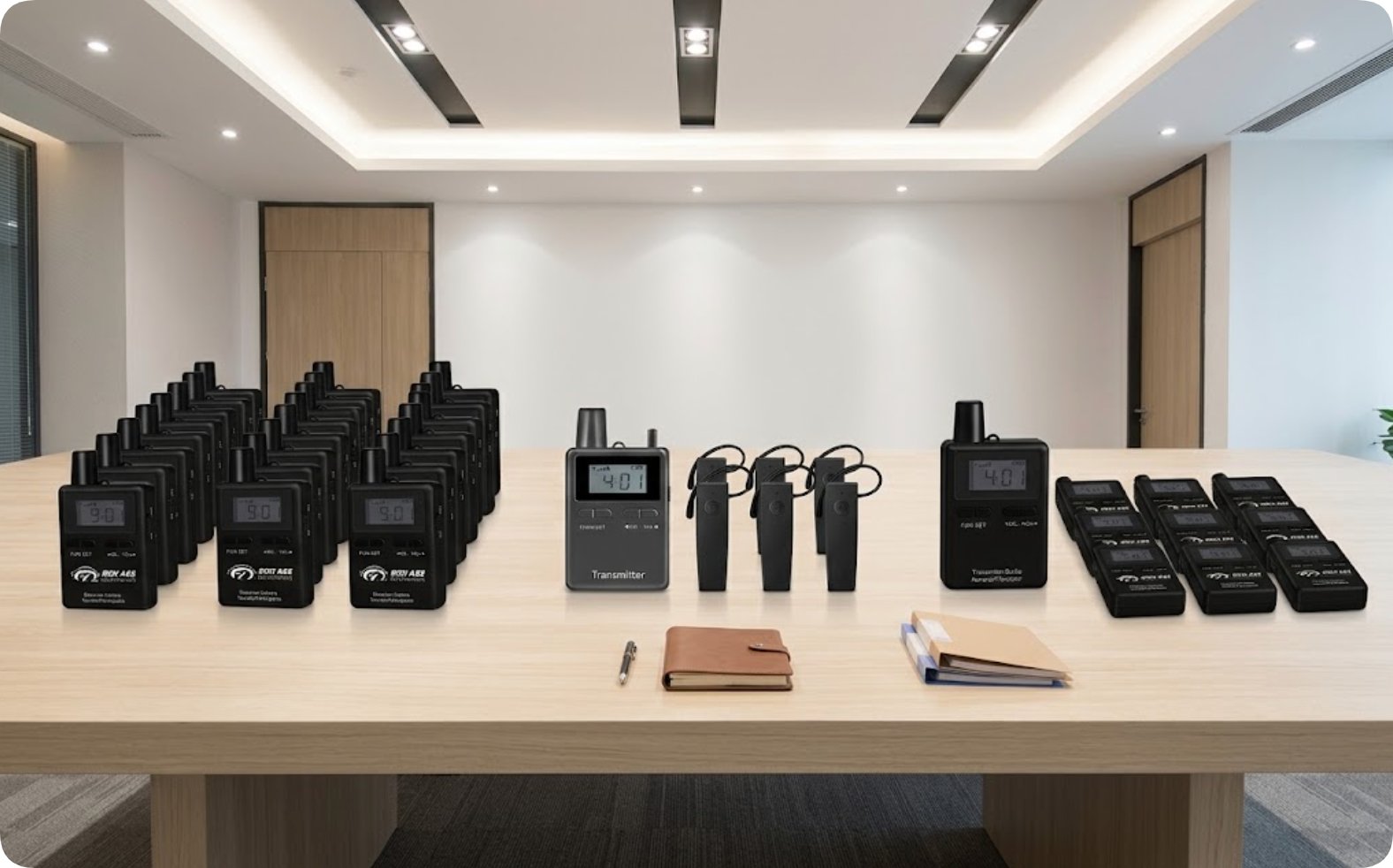
RC2406Hosted plant visits, parallel groupsSupplier audits on the same day80 channels12 hours65 gIP42
RC2401Corporate training and inductionsTrade show and booth presentationMulti-channel14 hours72 gIP42

Building a Utilisation Forecast

The method that gets approved is a three-line forecast written before the order goes in. Line one counts hosted visits per year and multiplies by average duration. Line two counts every internal session that could plausibly use the same receivers: inductions, safety briefings, line-side training, and contractor walkthroughs. Line three notes how many of those visits could run in parallel once channel capacity stops being the constraint. Add the three, divide the kit price by that hour total, and the number is both defensible and dramatically better than the one-page version. Where a plant discovers that visits dominate and parallel running matters most, the choice lands on the eighty-channel unit; where training sessions dominate, the longer battery wins. If you want the hardware comparison behind that choice, our earlier look at why a standard tour guide system falls short in a car factory walks through the failure modes, and the full wireless tour guide system range covers both models. To see where else this applies across our other venues, explore our solutions starting with the factory segment.

2026年09月04日 14:47
click: 1351

RC2406 and RC2401: What a Plant Tour Kit Earns on the Days Nobody Visits

time: 2026年09月04日 click:1351

Every factory tour equipment purchase I have reviewed was justified with the same arithmetic: count the visits per year, divide the kit price by that number, and the cost per visit looks comfortably small. The arithmetic is fine and the conclusion is wrong, because it prices the equipment against the handful of days a delegation walks the line and ignores the other two hundred and forty working days when the same receivers sit in a charging case. A car plant buys audio gear for the investor day and the dealer launch, then discovers the kit is idle on any ordinary Tuesday. The return is not in what a visit costs. It is in how many different jobs the same hardware can be made to do. Start by treating factory tour audio planning as a utilisation problem rather than a purchase.

Where the Business Case Usually Stops

The standard justification runs to roughly one page. A plant expects forty or fifty hosted visits a year, a kit costs a known amount, and dividing the second by the first produces an attractive figure that survives the meeting. What that page never contains is the denominator nobody wants to discuss: the equipment is built to last several years, and across its whole life it will be switched on for perhaps eighty hours. Idle assets are not free, they are simply billed in a way that never reaches the invoice. The uncomfortable version of the question is not what a tour costs, but what each hour of actual use costs once you admit how few of those hours there are.

Idle Hardware Is the Real Expense

Run the honest numbers on a single kit. Fifty visits a year at two hours each is a hundred hours of operation out of roughly two thousand available working hours. That is five percent utilisation, and no other piece of plant equipment would survive a review at that figure. The kit is not expensive because it is overpriced; it is expensive because it works one week and waits the rest. The fix is not to buy less, it is to find the second and third job. A plant already runs supplier audits, contractor inductions, safety briefings, and line-side training sessions, and every one of those is a room or a route where people need to hear one voice clearly. The equipment does not care which of those it is serving.

Eighty Channels Mean Parallel Groups

The first way to raise that utilisation figure is to stop running one group at a time. The RC2406 carries eighty selectable channels on 2.4G, which in practice means three or four groups can be on the floor simultaneously without any of them hearing the others. A tier-one supplier audit, a press group, and a student visit no longer have to be scheduled on separate days because the frequencies will not collide. At 65 grams with a 12-hour battery it is light enough for a full morning of back-to-back groups, and IP42 handles the dust and light oil mist that settles on everything near the assembly line. Throughput, not price, is where this unit earns its place.

RC2406 and RC2401: What a Plant Tour Kit Earns on the Days Nobody Visits(图1)

Multiple visitor groups moving through an assembly plant at once, each locked to its own channel so none of them overhears the others.

A Second Shift for the Same Gear

The second lever is the one that changes the arithmetic most: give the kit a job on the days no visitor comes. The RC2401 is specified for multi-channel corporate training as much as for guided groups, and that dual purpose is the entire point. Contractor inductions, safety briefings in a noisy hall, and line-side operator training are all sessions where the instructor needs to be heard over ambient noise without shouting. A kit that serves fifty visits and eighty training sessions has moved from five percent utilisation to something a finance director will actually sign off. At 72 grams it is comfortable for a trainer wearing it through a long session.

RC2406 and RC2401: What a Plant Tour Kit Earns on the Days Nobody Visits(图2)

The same receivers deployed for a line-side training session, the shift that turns an idle asset into a tool the plant uses every week.

Fourteen Hours Covers a Training Day

Battery specification looks like a minor line item until you count sessions rather than visits. A two-hour tour needs almost nothing, but a training day runs early shift briefing, mid-morning session, and an afternoon repeat for the next crew. The RC2401 is rated at 14 hours against the RC2406's 12, and that difference is the gap between recharging between sessions and simply working through the day. Both units are IP42, which is adequate for a plant floor but worth stating plainly: these are indoor industrial units, not equipment for an uncovered yard in the rain. Knowing where the boundary sits prevents the disappointed call six months later.

💰 Counting Utilisation Instead of Cost

The healthier calculation replaces cost per visit with cost per operating hour, and then asks how many hours a year the plant can realistically generate. Fifty visits at two hours is a hundred hours. Add weekly line-side training and induction sessions at two hours each and another hundred hours appears without buying anything. Add the ability to run two or three groups in parallel and the hosted-visit figure climbs again on the same calendar. None of this requires a larger budget. It requires that the specification be written for the week rather than for the showcase day, which is a decision made at purchase and cannot be retrofitted afterwards.

Side-by-Side Specifications

The comparison below is organised by the job each unit takes on, because that is how the utilisation argument is actually won.

ModelPrimary jobSecond jobChannelsBatteryWeightRating
RC2406Hosted plant visits, parallel groupsSupplier audits on the same day80 channels12 hours65 gIP42
RC2401Corporate training and inductionsTrade show and booth presentationMulti-channel14 hours72 gIP42

Building a Utilisation Forecast

The method that gets approved is a three-line forecast written before the order goes in. Line one counts hosted visits per year and multiplies by average duration. Line two counts every internal session that could plausibly use the same receivers: inductions, safety briefings, line-side training, and contractor walkthroughs. Line three notes how many of those visits could run in parallel once channel capacity stops being the constraint. Add the three, divide the kit price by that hour total, and the number is both defensible and dramatically better than the one-page version. Where a plant discovers that visits dominate and parallel running matters most, the choice lands on the eighty-channel unit; where training sessions dominate, the longer battery wins. If you want the hardware comparison behind that choice, our earlier look at why a standard tour guide system falls short in a car factory walks through the failure modes, and the full wireless tour guide system range covers both models. To see where else this applies across our other venues, explore our solutions starting with the factory segment.
×

Contact us

email:
name:
subject:
content: