
.webp)
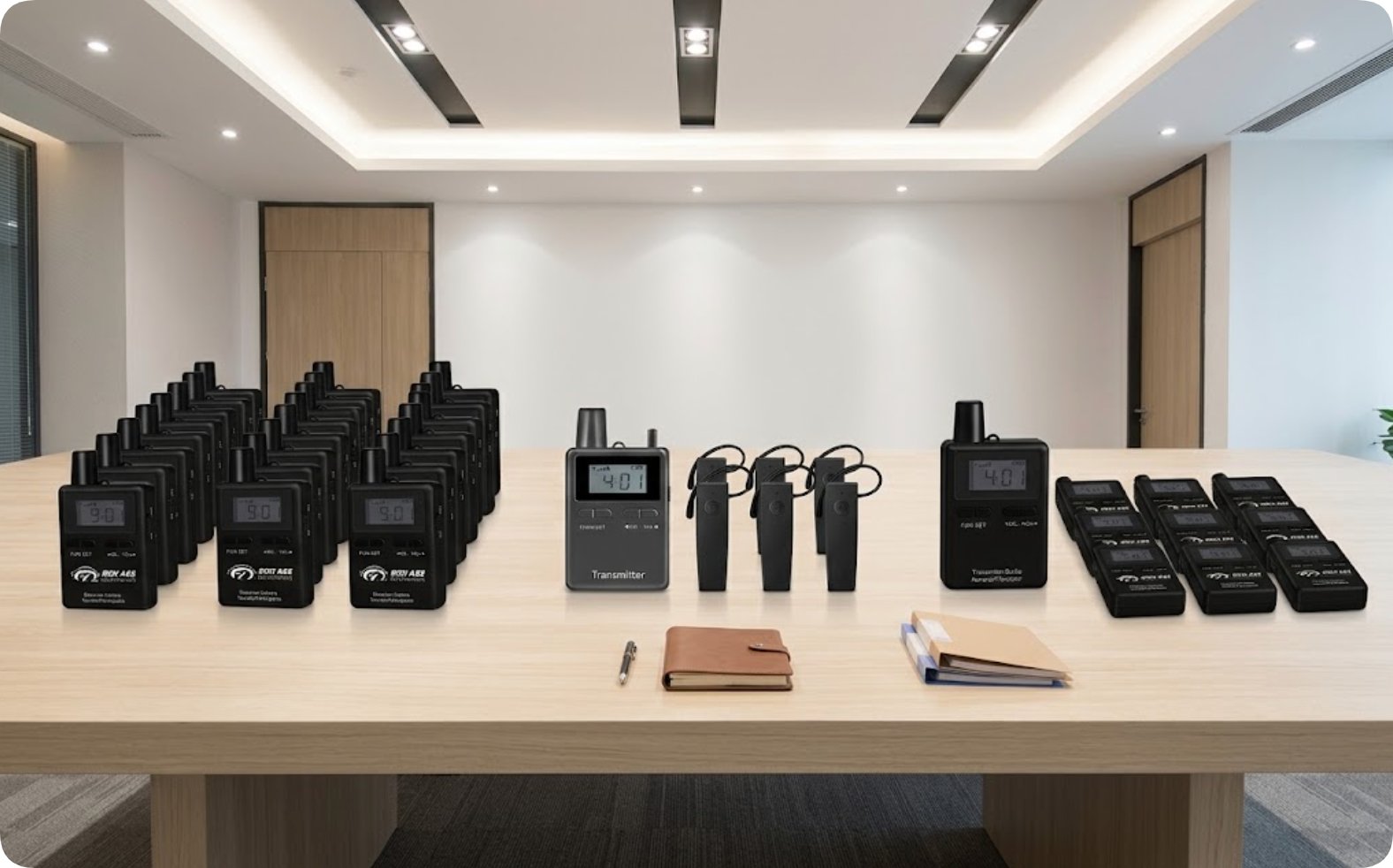
Every parish I have walked through in the last two years has been halfway through the same quiet upgrade. The old wired microphone on a single pulpit is being retired, not because it broke, but because the congregation now expects to hear the sermon in two or three languages from the same seat. That expectation is the trend driving most purchases this year, and it is a far harder problem than buying a louder box. A multilingual service needs several audio streams running at once, each locked to its own group, with no spill between them and no cable snaking across a marble floor. The cheaper path is to treat it as a church interpretation solutions project built on a wireless tour guide system rather than a one-off sound hire.
💡 Why Congregations Are Moving Past Wired Rigs
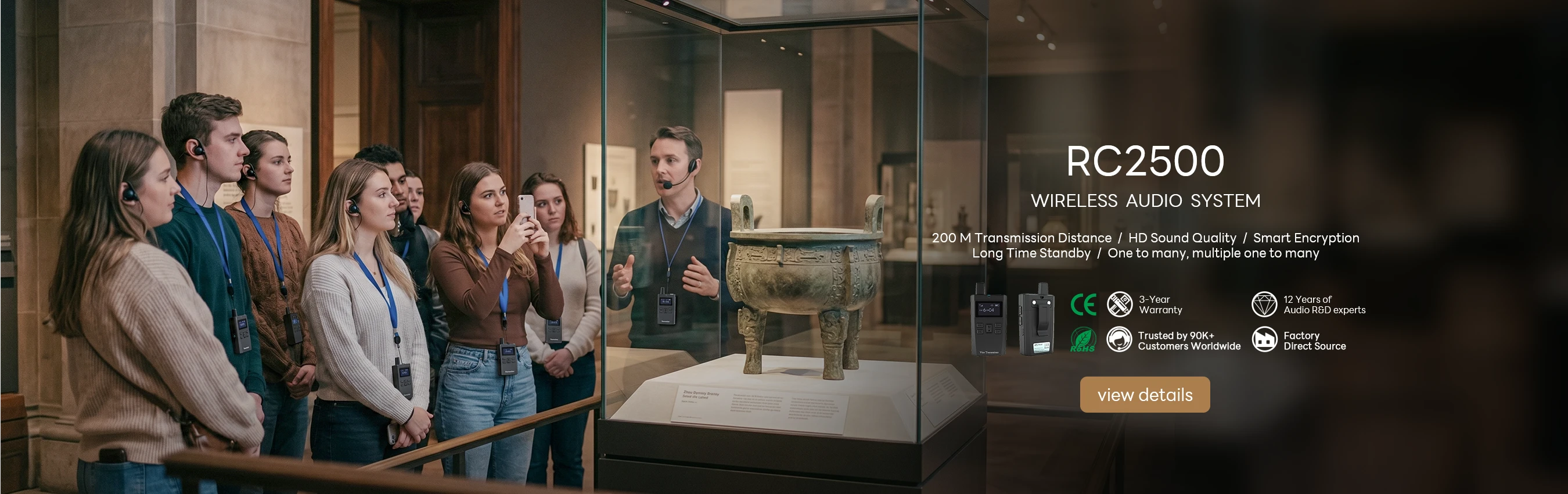
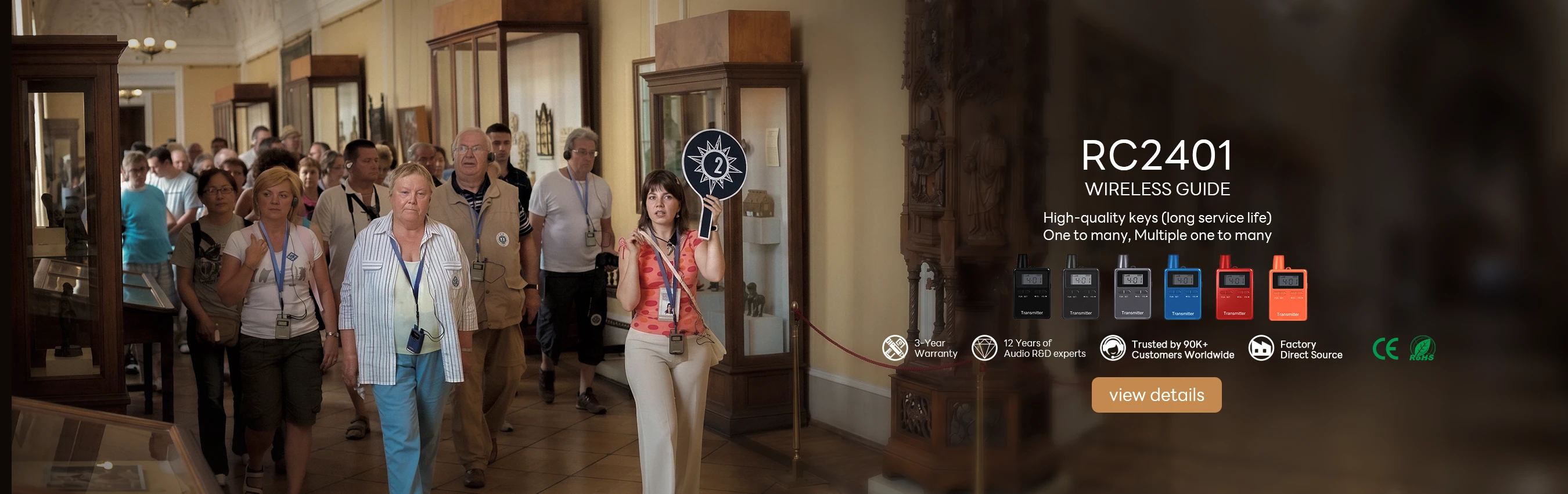
The first shift I keep noticing is the move away from fixed installations. A wired system serves one language from one point and freezes the room layout for a decade. A small parish that adds a second language on a feast day has nowhere to put the second feed. The RC2401 answers that with fifty PLL-locked channels on the license-free 2.4 GHz band, so a priest can run a local-language loop and a visitor loop from two transmitters without touching the building's cabling. Its claimed penetration through concrete and machinery-dense rooms matters more in a stone basement hall than the spec sheet suggests, and the IPX4 shell shrugs off the damp that collects in older naves. At roughly 55 grams the transmitter disappears into a pocket, which removes the visible hardware that some congregations resist.
Eighty Channels Across a Stone Nave
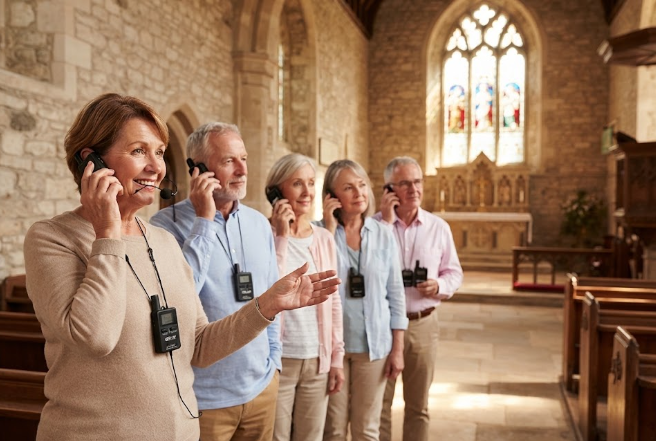
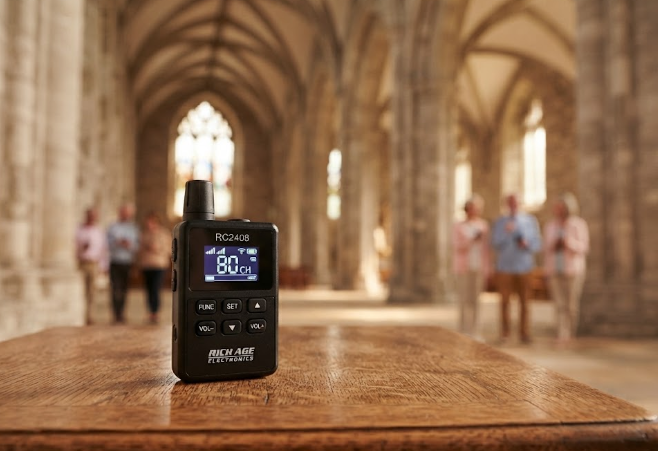
The harder venues are the cathedrals, not the chapels. A single nave can host a parish mass, a school group, and a touring choir on the same morning, and each needs its own clean audio path. This is where the RC2408 earns its place: eighty independent channels with one-key synchronisation, plus a two-way mode that lets a guide answer a question without lowering the headset. Open-area range reaches about 200 metres, enough to cover a long aisle and the side chapels without a repeater. At 59 grams on the transmitter and 50 on the receiver it stays comfortable through a full liturgy, and the twenty-hour receiver battery means the same units serve matins and evensong on one charge.
Encrypted Audio for Private Ministry
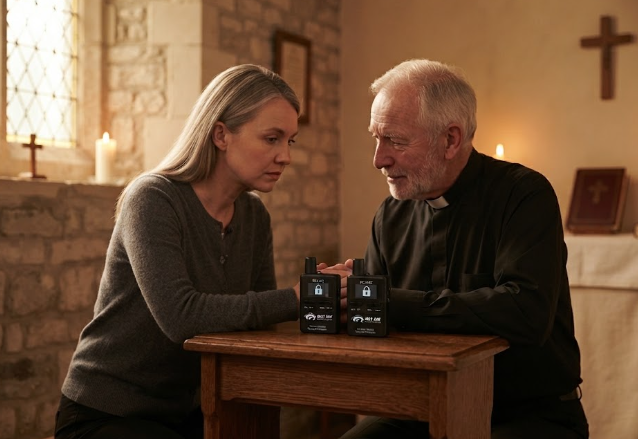
Not every stream should be open. Clergy training, donor briefings, and closed retreat sessions need a feed that neighbouring groups cannot pull in by accident. The RC2402 adds intelligent encryption on top of the same 2.4 GHz platform, so a private loop stays private even when three other groups share the building. It carries the full CE, EMC, LVD, RED and RoHS marks, which matters for dioceses that procure through formal tenders and for pilgrimage organisers shipping kits across borders. Transmitter runtime is about ten hours with twenty on the receivers, and the lightweight body with soft earpieces keeps a guide comfortable across a long day of walking the aisles.
🔋 Battery Endurance Through Weekly Services
Specification sheets list battery life as a line item, but in a church it is the difference between a Wednesday rehearsal that works and one that ends with a scramble for chargers. All three units share the same honest profile: roughly ten hours on the transmitter and twenty on the receivers. That pairing covers a morning of back-to-back services, a midday rehearsal, and an evening session without a mid-day swap. Centralised charging trays handle the whole fleet at once, which is the only way a volunteer team keeps dozens of units ready without a spreadsheet.
Side-by-Side Specifications
The table below is the one I hand to a procurement committee before they quote a number. It is organised by the job each unit takes on, because in a church the job decides the spec.
| Model | Band | Channels | Battery (TX/RX) | Weight | Protection | Best fit |
|---|---|---|---|---|---|---|
| RC2401 | 2.4 GHz | 50 PLL | 10h / 20h | ~55 g | IPX4 | Small parish, wall penetration |
| RC2408 | 2.4 GHz | 80 + two-way | 10h / 20h | 59 g / 50 g | All-day comfort | Large nave, multi-language, interactive |
| RC2402 | 2.4 GHz | Sync + encryption | 10h / 20h | ~58 g | CE / RED certified | Private ministry, pilgrimage |
📱 Lightweight Builds That Vanish From Sight
Aesthetic resistance is real. Congregations do not want a tech booth visible during worship. The consistent lightweight design across this range, with the RC2408 at 59 grams on the transmitter, means the hardware reads as a small personal receiver rather than broadcast equipment. Discreet earpieces and a pocket transmitter let a visitor follow a second language without drawing attention, which is precisely why these systems succeed in spaces that rejected larger rigs a decade ago.
🔮 What Buyers Should Watch Next Year
The trajectory is clear. Expect more cathedrals to standardise on a single 2.4 GHz fleet rather than mixing bands, more eighty-channel units in multilingual parishes, and more encrypted loops for closed ministry. The unit already loaded into the charging tray is the unit that wins the next contract, so the buying decision is less about this year's service and more about which platform the diocese can grow into. Procurement that starts from the room and works back to the spec, instead of the other way around, is the pattern that actually ships.
Picking the Right Pairing for Your Sanctuary
The practical split is straightforward. A small parish with damp stone and one or two languages starts with the RC2401 for its penetration and splash resistance. A cathedral running parallel language groups picks the RC2408 for the channel count and two-way replies. A diocese handling private sessions or cross-border pilgrimage leans on the RC2402 for encryption and full certification. For the compliance side of that decision, our separate note on church interpretation compliance walks through the certification and tendering steps that follow the hardware choice.