
A leading China factory specializing in Wireless Tour Guide Systems, Church Audio Guides, and Translation Headphones with premium OEM/ODM solutions.

Tel:+86 13825295213

Email:tiger.wang@richitek.com

RC8860, RC9150 and RC2501: Matching a Wireless Tour Guide to the Open Road

RC8860, RC9150 and RC2501: Matching a Wireless Tour Guide to the Open Road

Open-road guiding is the hardest environment to spec a tour guide system for, because no two routes behave the same. A vineyard walk has long straight rows where the guide and the last visitor drift far apart. A hillside archaeology trail climbs in switchbacks that put the guide above and behind the group at the same time. A harbor promenade tour fights wind noise and passing traffic. Buyers often start from a single question, which unit is best, and discover only later that the real question is which unit fits which kind of open route. This comparison looks at three Richitek transmitters across the outdoor conditions that actually break systems, and it maps each one to the route shape it serves best. The units are the RC8860, the RC9150, and the RC2501, and the same city tour wireless guide planning logic applies whether the route is urban, rural, or coastal.

The Three Conditions That Break Outdoor Guiding

Three conditions separate an outdoor route from an indoor hall, and each one stresses a different part of the system. Distance stretches the link between the guide's transmitter and the farthest receiver, and a route with long sightlines punishes a system with short effective range. Terrain reshapes the group: a switchback climb puts visitors at different elevations, where the signal has to pass through the guide's own body position and the hillside behind the group. Ambient noise, from wind, traffic, or water, forces the receiver volume up and exposes any weakness in the audio path. A useful comparison therefore measures the three units against distance, terrain, and noise rather than against a spec sheet alone.

📡 Distance: Where Each Transmitter Stops Being Comfortable

Open routes reveal range differences quickly because the guide cannot move closer to every visitor at once. The RC8860 is built for the widest spread of a route, with the higher output that keeps a clean signal when the guide is at one end of a long row and the farthest visitor is at the other. The RC9150 matches that reach with its own high-end radio stage, and it adds the audio clarity that matters when the distance is short but the route is noisy. The RC2501 sits below both on raw reach, which is not a fault; it is a fit. On a compact open route, such as a short garden tour or a museum courtyard, the RC2501's reach is more than enough, and the buyer who over-specifies reach pays for capacity the route never uses.

Terrain: Switchbacks and Elevation Changes

Terrain tests the system in a way that range alone cannot predict. On a switchback climb the guide is sometimes above the group and sometimes below it, and the receivers on the far side of the group sit behind a hillside that reflects and scatters the signal. A transmitter with strong output but a narrow effective pattern can still lose the far-side visitors on a sharp turn. The RC8860's design goal of holding a link during high motion, originally tuned for coaching where the guide and the group move continuously, transfers well to a climbing route where the geometry changes every minute. The RC9150 shows the same tolerance in a different way, through a radio stage that holds the link when the guide turns away from part of the group to face the slope. The RC2501 is happiest on terrain that does not fight back, and it is the honest pick for routes where the elevation change is gentle.

Ambient Noise: Wind, Traffic, and Water

Ambient noise is the condition that makes two transmitters with similar range perform very differently. When the route runs beside a road or along a waterfront, the receiver volume has to rise to beat the background, and the limiting factor becomes the clarity of the received audio rather than the raw signal strength. The RC9150's high-end audio stage earns its keep here, because it preserves the guide's voice at the volume levels the noise demands. The RC8860, tuned primarily for motion and reach, holds the link but asks the listener to work a little harder in very loud conditions. The RC2501 covers moderate noise well and is a fair choice where the ambient level is steady rather than extreme. Matching the unit to the noisiest stretch of the route is the fastest way to avoid a refund on an open-road tour.
RC8860, RC9150 and RC2501: Matching a Wireless Tour Guide to the Open Road(图1)

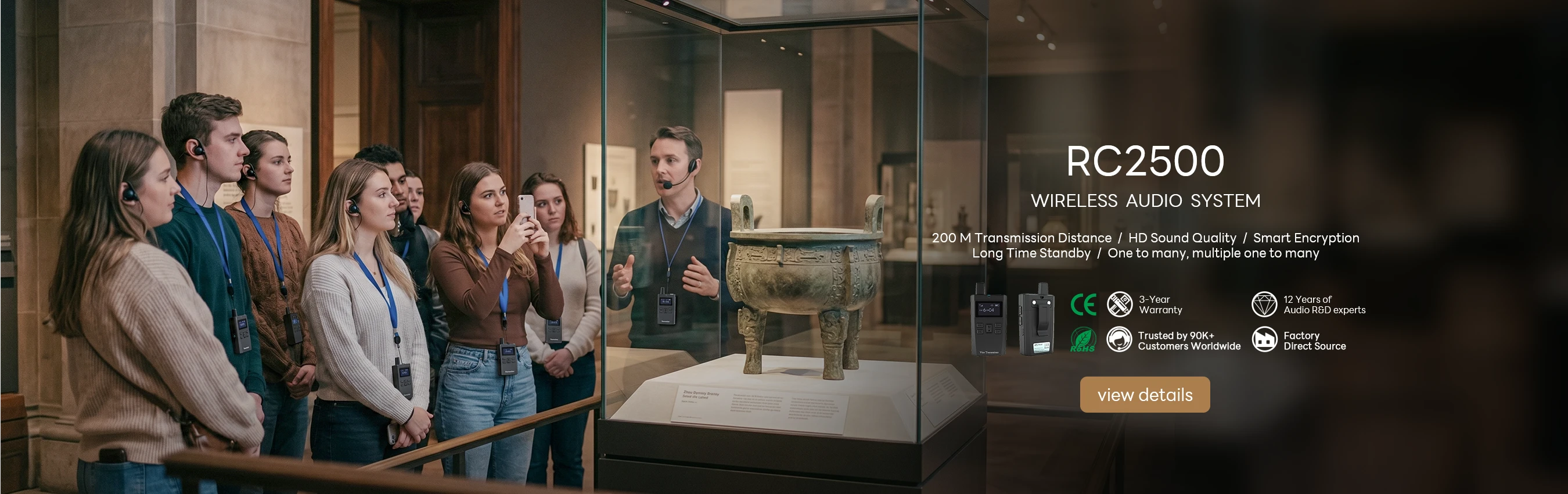
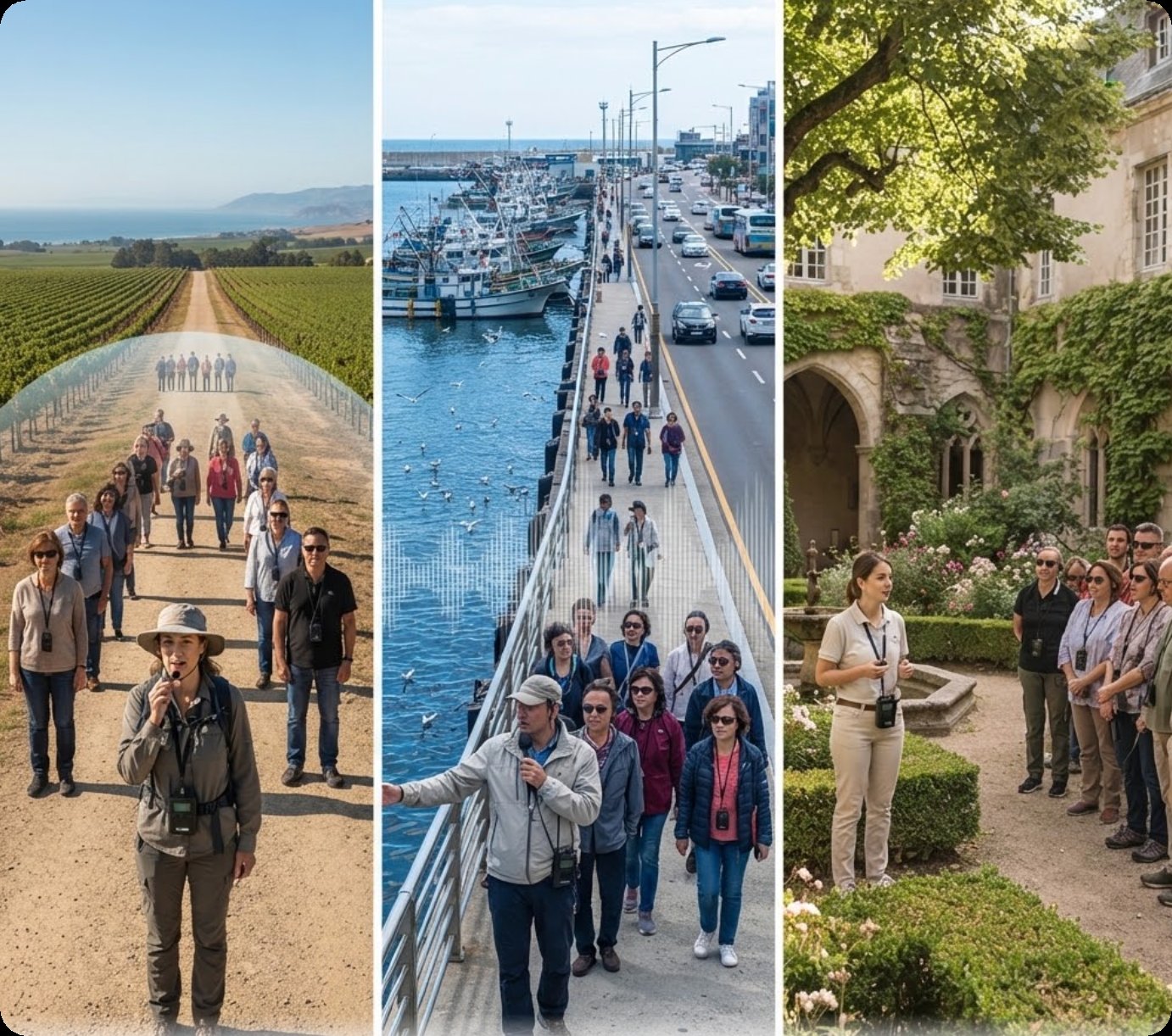
The wide-route pattern above is where the RC8860 leads the comparison: a guide at one end of a long outdoor stretch and visitors spread toward the far end, with the transmitter built to hold that link. Open sightlines and long rows are its natural terrain.

💡 The Audio-Stage Advantage on Noisy Stretches

The noisy-stretch test is where the RC9150 separates from the other two. A harbor promenade or a route beside a busy road pushes the receiver volume high enough that a less refined audio path starts to sound harsh and tired by the third hour. The RC9150's higher-end audio stage keeps the guide's voice clean at those volumes, which is the difference between a group that stays engaged and a group that starts taking off its receivers. On a route with long quiet stretches punctuated by short noisy ones, the RC9150 also spares the guide from shouting, because the audio path does the work that volume would otherwise have to do.
RC8860, RC9150 and RC2501: Matching a Wireless Tour Guide to the Open Road(图2)

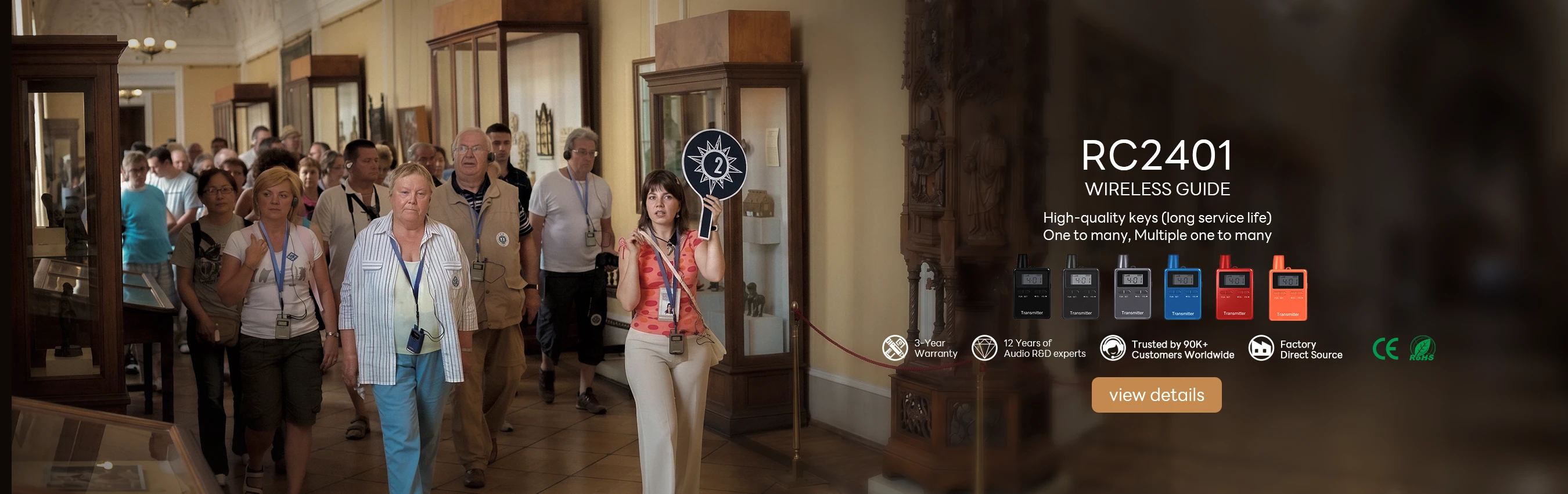
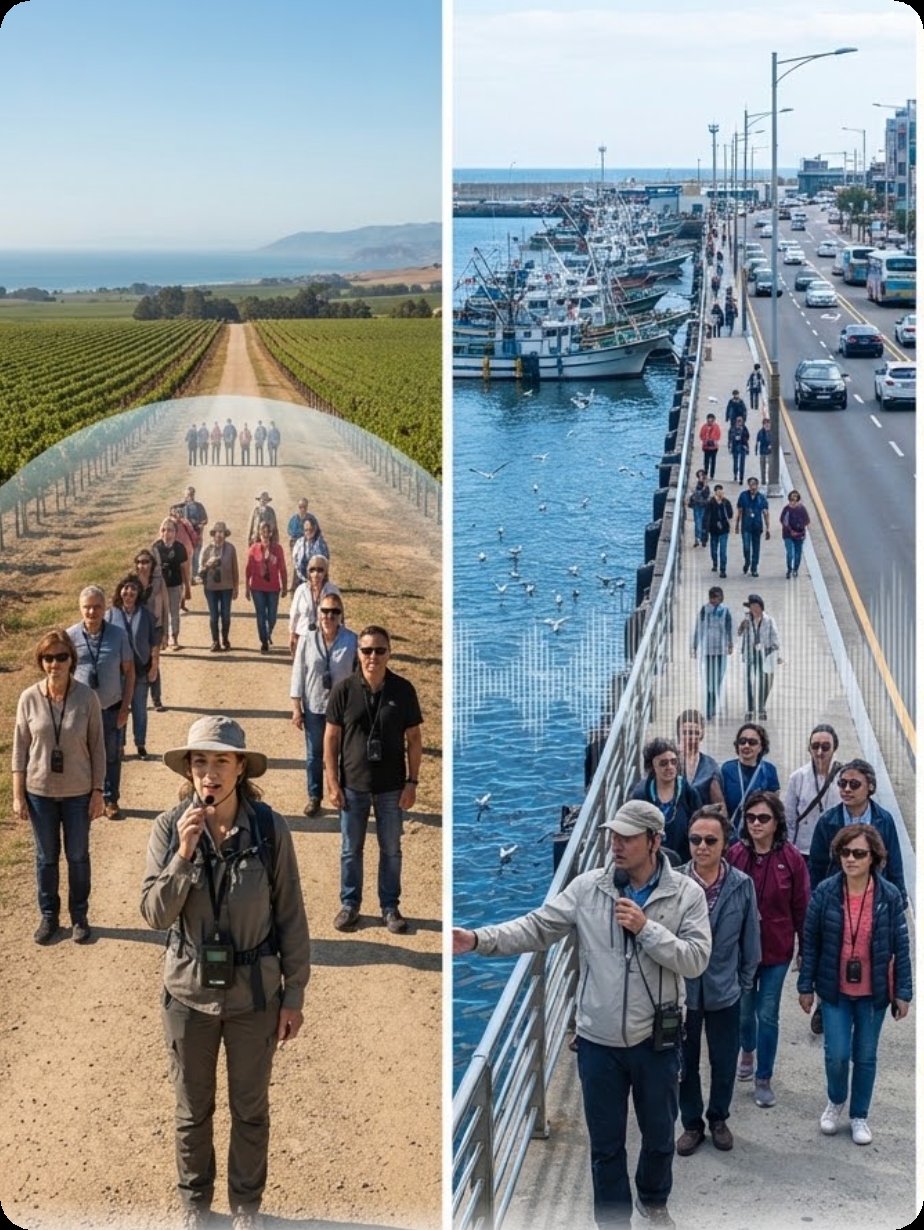
The waterfront pattern above shows the RC9150's home ground: the noise is the hardest condition, and the audio stage is the feature that carries the tour. When traffic or water dominates the background, the RC9150 is the unit that keeps the guide's voice clean at the volume the route demands.

📱 Compact Routes and the Sensible Fit

Not every open route is long or loud, and the comparison would be incomplete without naming the route where the RC2501 is the right answer. A garden tour, a museum courtyard, or a short heritage alley runs at a distance the RC2501 clears easily, at a noise level it handles comfortably, and on terrain that does not change elevation sharply. On those routes the RC2501 is not a compromise; it is the fit that avoids paying for range and audio headroom the route will never use. The operator who keeps a compact unit in the fleet for compact days, and reserves the longer-reaching units for the routes that need them, ends up with the lowest cost per route across a mixed calendar.
RC8860, RC9150 and RC2501: Matching a Wireless Tour Guide to the Open Road(图3)

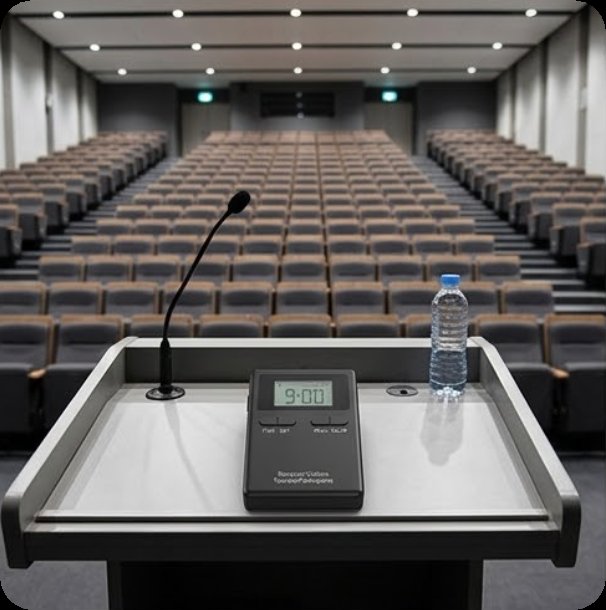
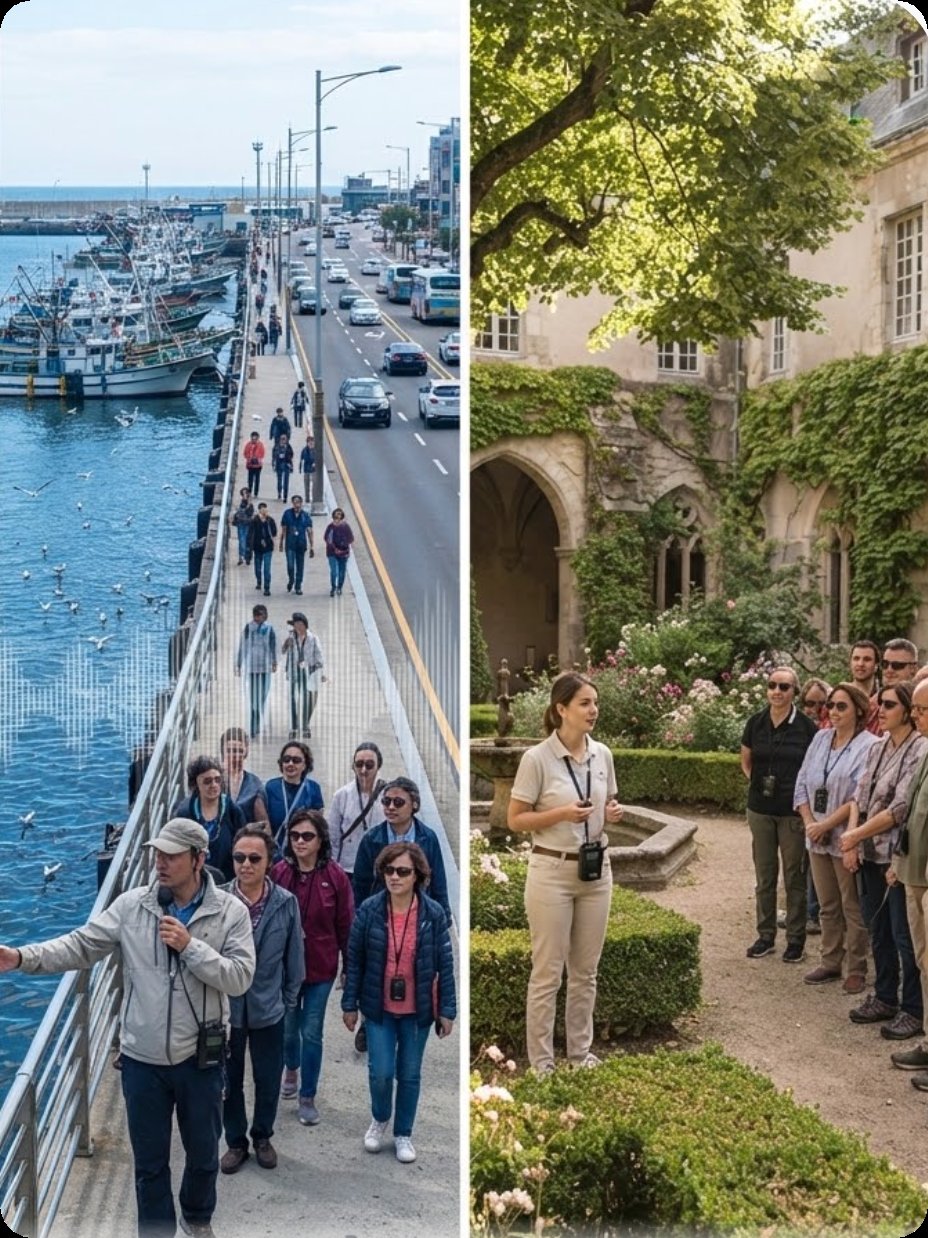
The compact route above is where the RC2501 is the deliberate choice rather than the budget choice: the spread is short, the noise is moderate, and buying more transmitter than the route needs would only add cost without adding clarity.

Putting the Three Units Side by Side

Side by side, the three units are not competitors for one slot; they are a matched set for three route shapes. The RC8860 owns the long, wide, or high-motion route. The RC9150 owns the route where noise, not distance, is the hardest condition. The RC2501 owns the compact open route where buying more reach would be waste. A tour operator running several kinds of open routes can justify all three in one fleet, with each unit assigned to the route shape it clears without strain. The table below summarizes the assignment so a buyer can match a route to a unit in one glance.

Route conditionRC8860RC9150RC2501
Long straight rows, wide group spreadBest fitStrongCompact routes only
Switchback climbs, elevation changesStrong (motion-tuned)StrongGentle terrain only
High ambient noise (traffic, wind, water)Holds linkBest fit (audio stage)Moderate noise only
Compact open route (garden, courtyard)Over-specifiedOver-specifiedBest fit

The table is the whole comparison in one view: each unit wins the route shape that plays to its design, and no unit wins every route. A buyer who names the route first and the unit second avoids the most common outdoor mistake, which is buying one transmitter and forcing every route through it.

🔋 Battery and Shift Length on Long Outdoor Days

Outdoor tours run longer shifts than indoor visits, and battery life becomes part of the fit rather than a footnote. The RC8860 is built for long coaching sessions and carries the shift comfortably, which suits a route that runs all morning. The RC9150 pairs its audio quality with the endurance a full-day program needs, and its charging behavior fits a fleet that returns to a rack between tours. The RC2501 covers a standard shift with margin, and its lighter profile suits the operator who switches routes through the day and values not carrying a heavier unit than the route requires. For a full outdoor day, the practical rule is to match the battery margin to the longest route, not to the average route, because the last tour of the day is the one that exposes a shortfall.

Putting the choice in the simplest terms: name the route's hardest condition, then pick the unit that clears it without strain. A long, wide route with open sightlines points to the RC8860; a route that fights traffic, water, or wind points to the RC9150; a compact route with moderate noise points to the RC2501. An operator with a mixed calendar can carry all three and assign by route, which keeps every group on the right tool without any single unit being overworked. The route-first logic is the same one that governs any wireless tour guide system purchase, and it applies equally to indoor halls that connect to outdoor courtyards, which is where most hybrid tours actually happen. For the same route-first thinking applied to a related outdoor environment, the earlier look at tour guide systems across equestrian, hiking, and training settings shows how the same three conditions play out in non-typical guiding.

2026年09月09日 10:51
click: 121

RC8860, RC9150 and RC2501: Matching a Wireless Tour Guide to the Open Road

time: 2026年09月09日 click:121

RC8860, RC9150 and RC2501: Matching a Wireless Tour Guide to the Open Road

Open-road guiding is the hardest environment to spec a tour guide system for, because no two routes behave the same. A vineyard walk has long straight rows where the guide and the last visitor drift far apart. A hillside archaeology trail climbs in switchbacks that put the guide above and behind the group at the same time. A harbor promenade tour fights wind noise and passing traffic. Buyers often start from a single question, which unit is best, and discover only later that the real question is which unit fits which kind of open route. This comparison looks at three Richitek transmitters across the outdoor conditions that actually break systems, and it maps each one to the route shape it serves best. The units are the RC8860, the RC9150, and the RC2501, and the same city tour wireless guide planning logic applies whether the route is urban, rural, or coastal.

The Three Conditions That Break Outdoor Guiding

Three conditions separate an outdoor route from an indoor hall, and each one stresses a different part of the system. Distance stretches the link between the guide's transmitter and the farthest receiver, and a route with long sightlines punishes a system with short effective range. Terrain reshapes the group: a switchback climb puts visitors at different elevations, where the signal has to pass through the guide's own body position and the hillside behind the group. Ambient noise, from wind, traffic, or water, forces the receiver volume up and exposes any weakness in the audio path. A useful comparison therefore measures the three units against distance, terrain, and noise rather than against a spec sheet alone.

📡 Distance: Where Each Transmitter Stops Being Comfortable

Open routes reveal range differences quickly because the guide cannot move closer to every visitor at once. The RC8860 is built for the widest spread of a route, with the higher output that keeps a clean signal when the guide is at one end of a long row and the farthest visitor is at the other. The RC9150 matches that reach with its own high-end radio stage, and it adds the audio clarity that matters when the distance is short but the route is noisy. The RC2501 sits below both on raw reach, which is not a fault; it is a fit. On a compact open route, such as a short garden tour or a museum courtyard, the RC2501's reach is more than enough, and the buyer who over-specifies reach pays for capacity the route never uses.

Terrain: Switchbacks and Elevation Changes

Terrain tests the system in a way that range alone cannot predict. On a switchback climb the guide is sometimes above the group and sometimes below it, and the receivers on the far side of the group sit behind a hillside that reflects and scatters the signal. A transmitter with strong output but a narrow effective pattern can still lose the far-side visitors on a sharp turn. The RC8860's design goal of holding a link during high motion, originally tuned for coaching where the guide and the group move continuously, transfers well to a climbing route where the geometry changes every minute. The RC9150 shows the same tolerance in a different way, through a radio stage that holds the link when the guide turns away from part of the group to face the slope. The RC2501 is happiest on terrain that does not fight back, and it is the honest pick for routes where the elevation change is gentle.

Ambient Noise: Wind, Traffic, and Water

Ambient noise is the condition that makes two transmitters with similar range perform very differently. When the route runs beside a road or along a waterfront, the receiver volume has to rise to beat the background, and the limiting factor becomes the clarity of the received audio rather than the raw signal strength. The RC9150's high-end audio stage earns its keep here, because it preserves the guide's voice at the volume levels the noise demands. The RC8860, tuned primarily for motion and reach, holds the link but asks the listener to work a little harder in very loud conditions. The RC2501 covers moderate noise well and is a fair choice where the ambient level is steady rather than extreme. Matching the unit to the noisiest stretch of the route is the fastest way to avoid a refund on an open-road tour.

RC8860, RC9150 and RC2501: Matching a Wireless Tour Guide to the Open Road(图1)

The wide-route pattern above is where the RC8860 leads the comparison: a guide at one end of a long outdoor stretch and visitors spread toward the far end, with the transmitter built to hold that link. Open sightlines and long rows are its natural terrain.

💡 The Audio-Stage Advantage on Noisy Stretches

The noisy-stretch test is where the RC9150 separates from the other two. A harbor promenade or a route beside a busy road pushes the receiver volume high enough that a less refined audio path starts to sound harsh and tired by the third hour. The RC9150's higher-end audio stage keeps the guide's voice clean at those volumes, which is the difference between a group that stays engaged and a group that starts taking off its receivers. On a route with long quiet stretches punctuated by short noisy ones, the RC9150 also spares the guide from shouting, because the audio path does the work that volume would otherwise have to do.

RC8860, RC9150 and RC2501: Matching a Wireless Tour Guide to the Open Road(图2)

The waterfront pattern above shows the RC9150's home ground: the noise is the hardest condition, and the audio stage is the feature that carries the tour. When traffic or water dominates the background, the RC9150 is the unit that keeps the guide's voice clean at the volume the route demands.

📱 Compact Routes and the Sensible Fit

Not every open route is long or loud, and the comparison would be incomplete without naming the route where the RC2501 is the right answer. A garden tour, a museum courtyard, or a short heritage alley runs at a distance the RC2501 clears easily, at a noise level it handles comfortably, and on terrain that does not change elevation sharply. On those routes the RC2501 is not a compromise; it is the fit that avoids paying for range and audio headroom the route will never use. The operator who keeps a compact unit in the fleet for compact days, and reserves the longer-reaching units for the routes that need them, ends up with the lowest cost per route across a mixed calendar.

RC8860, RC9150 and RC2501: Matching a Wireless Tour Guide to the Open Road(图3)

The compact route above is where the RC2501 is the deliberate choice rather than the budget choice: the spread is short, the noise is moderate, and buying more transmitter than the route needs would only add cost without adding clarity.

Putting the Three Units Side by Side

Side by side, the three units are not competitors for one slot; they are a matched set for three route shapes. The RC8860 owns the long, wide, or high-motion route. The RC9150 owns the route where noise, not distance, is the hardest condition. The RC2501 owns the compact open route where buying more reach would be waste. A tour operator running several kinds of open routes can justify all three in one fleet, with each unit assigned to the route shape it clears without strain. The table below summarizes the assignment so a buyer can match a route to a unit in one glance.

Route conditionRC8860RC9150RC2501
Long straight rows, wide group spreadBest fitStrongCompact routes only
Switchback climbs, elevation changesStrong (motion-tuned)StrongGentle terrain only
High ambient noise (traffic, wind, water)Holds linkBest fit (audio stage)Moderate noise only
Compact open route (garden, courtyard)Over-specifiedOver-specifiedBest fit

The table is the whole comparison in one view: each unit wins the route shape that plays to its design, and no unit wins every route. A buyer who names the route first and the unit second avoids the most common outdoor mistake, which is buying one transmitter and forcing every route through it.

🔋 Battery and Shift Length on Long Outdoor Days

Outdoor tours run longer shifts than indoor visits, and battery life becomes part of the fit rather than a footnote. The RC8860 is built for long coaching sessions and carries the shift comfortably, which suits a route that runs all morning. The RC9150 pairs its audio quality with the endurance a full-day program needs, and its charging behavior fits a fleet that returns to a rack between tours. The RC2501 covers a standard shift with margin, and its lighter profile suits the operator who switches routes through the day and values not carrying a heavier unit than the route requires. For a full outdoor day, the practical rule is to match the battery margin to the longest route, not to the average route, because the last tour of the day is the one that exposes a shortfall.

Putting the choice in the simplest terms: name the route's hardest condition, then pick the unit that clears it without strain. A long, wide route with open sightlines points to the RC8860; a route that fights traffic, water, or wind points to the RC9150; a compact route with moderate noise points to the RC2501. An operator with a mixed calendar can carry all three and assign by route, which keeps every group on the right tool without any single unit being overworked. The route-first logic is the same one that governs any wireless tour guide system purchase, and it applies equally to indoor halls that connect to outdoor courtyards, which is where most hybrid tours actually happen. For the same route-first thinking applied to a related outdoor environment, the earlier look at tour guide systems across equestrian, hiking, and training settings shows how the same three conditions play out in non-typical guiding.
×

Contact us

email:
name:
subject:
content: