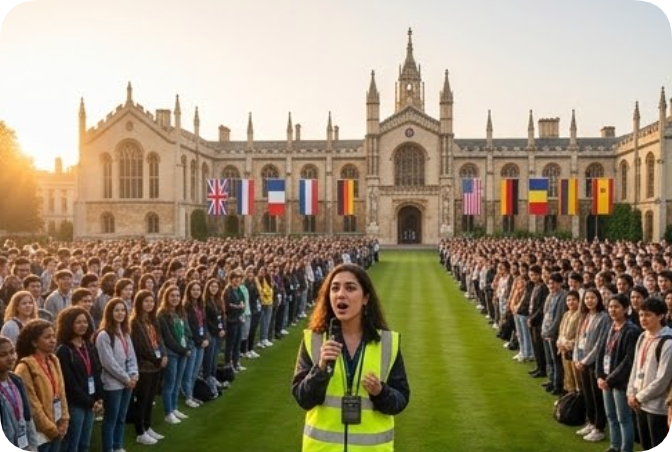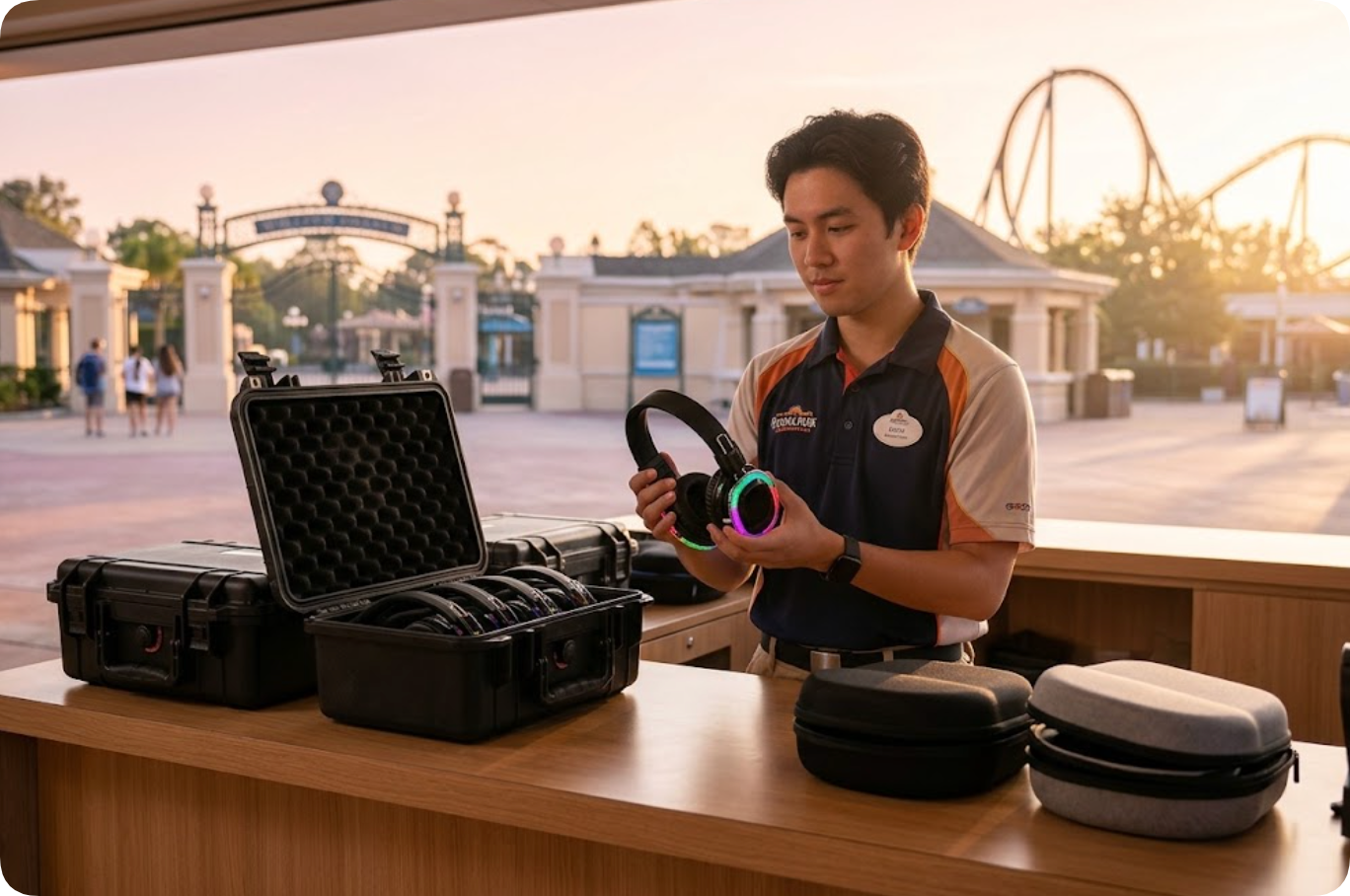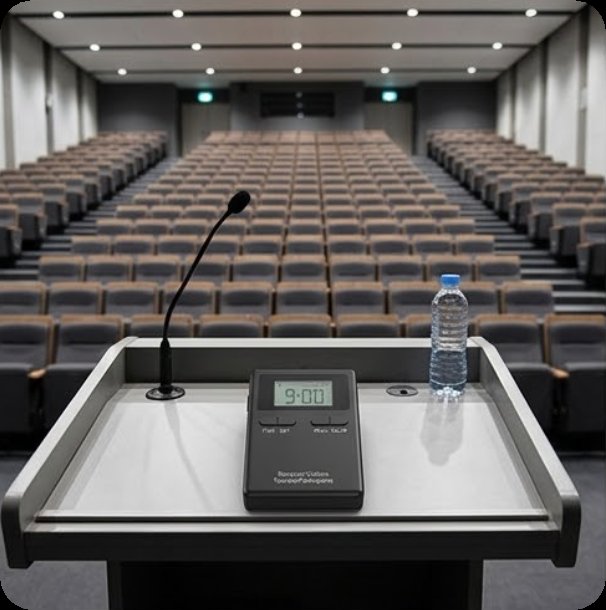
An international school does not run one open day; it runs an event year. A parent morning in October, a new-campus preview in January, a graduation weekend in June, and smaller department events in between all put visitors on the same grounds with the same need to hear a guide over distance and noise. The school that bought its first tour guide kit for a single event discovers quickly that the kit is an asset for the whole calendar, and the buying decision that survives is the one made for the whole year rather than for one morning. This case study follows one school through four events with a three-unit fleet: the RC2500 carrying the outdoor stretches, the RC2401 handling the parallel small groups, and the RC2406 managing the channel-heavy days. The same campus tour planning logic applies to any school with more than one visitor event a year.
Planning Against the Hardest Date on the List
The school's first request came from the admissions team, which needed a guide system for a single parent morning. The mistake most schools make at this point is buying for that one event: enough units for the expected headcount, one route, one morning. The school in this case avoided the trap because its events calendar showed what the admissions team had not yet said out loud: three more large events were already scheduled, and every one of them would need the same kit on a different route with a different group structure. The fleet was therefore planned against the hardest event in the year, not the first one, which is the single most important decision in the whole case.
October Parent Morning: Parallel Groups Across One Site
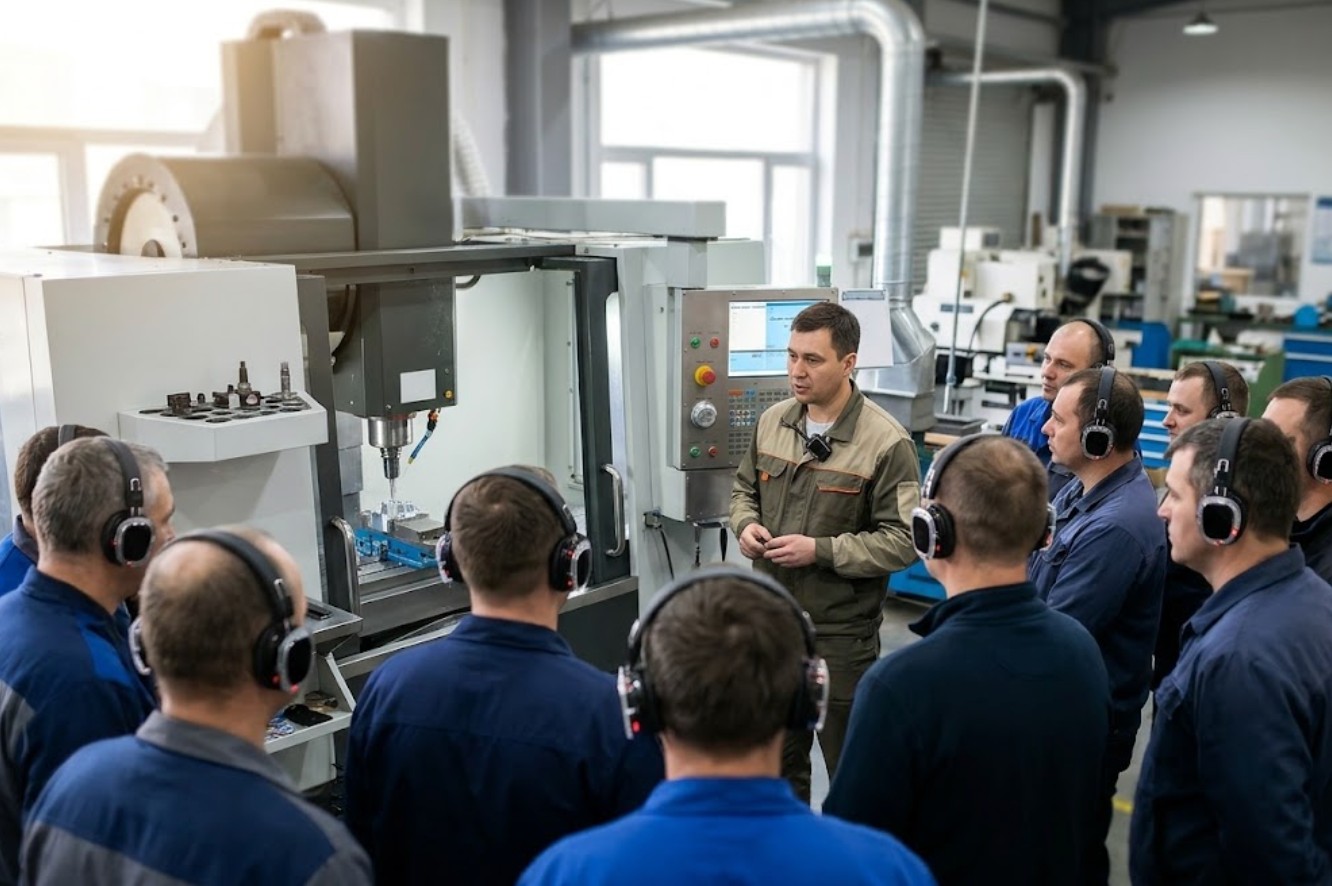
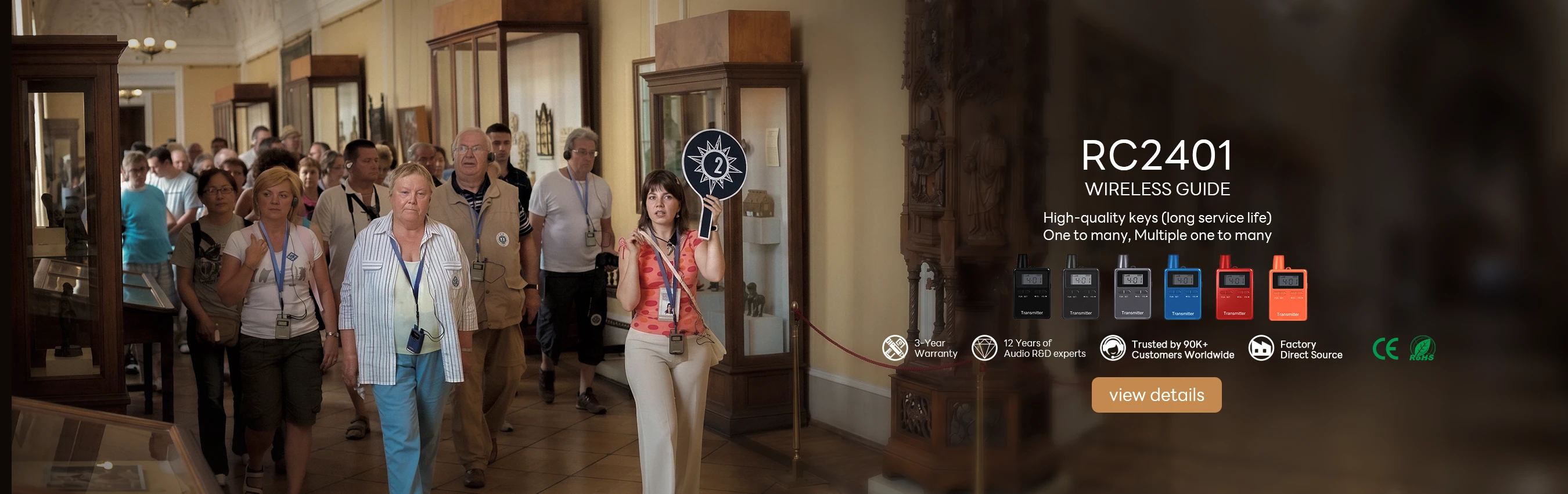
The October parent morning set the pattern. Parents arrived in cohorts and were split into four guided groups covering different wings of the school at the same time. Four groups in one building meant four simultaneous audio channels, which is where the RC2406 earned its place: its channel capacity let each group hold a clean frequency without a parent hearing the guide of the neighboring group in the next corridor. The RC2401 handled the two smaller groups that toured the arts wing, where the group size stayed under twenty and a lighter unit was more than enough. By the end of the morning the admissions team had run six tours on one kit without a single channel conflict, which is the operational result that made the case for the rest of the year.
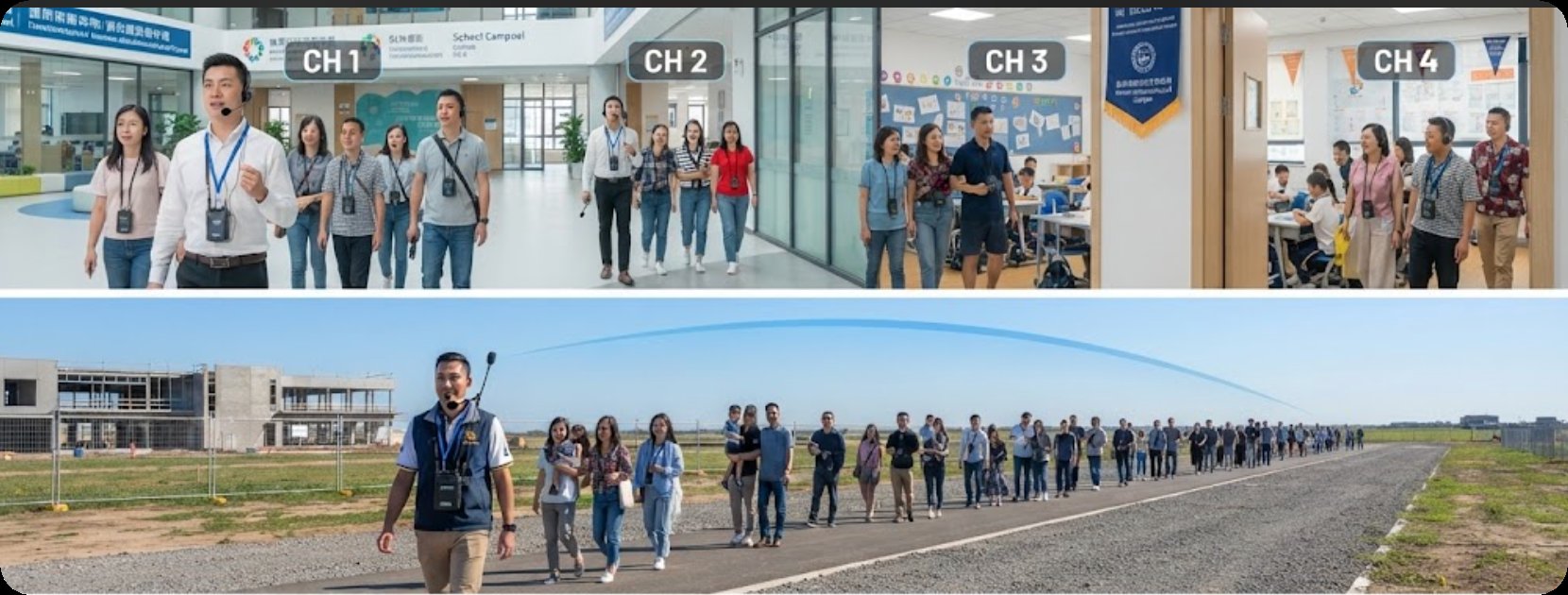
The parallel pattern above is where the RC2406 does its work: several groups moving through the same building at once, each on its own channel so no visitor hears the neighboring guide. The channel capacity is what let the October morning run six tours without a single conflict.
🎓 January New-Campus Preview: The Long Outdoor Walk
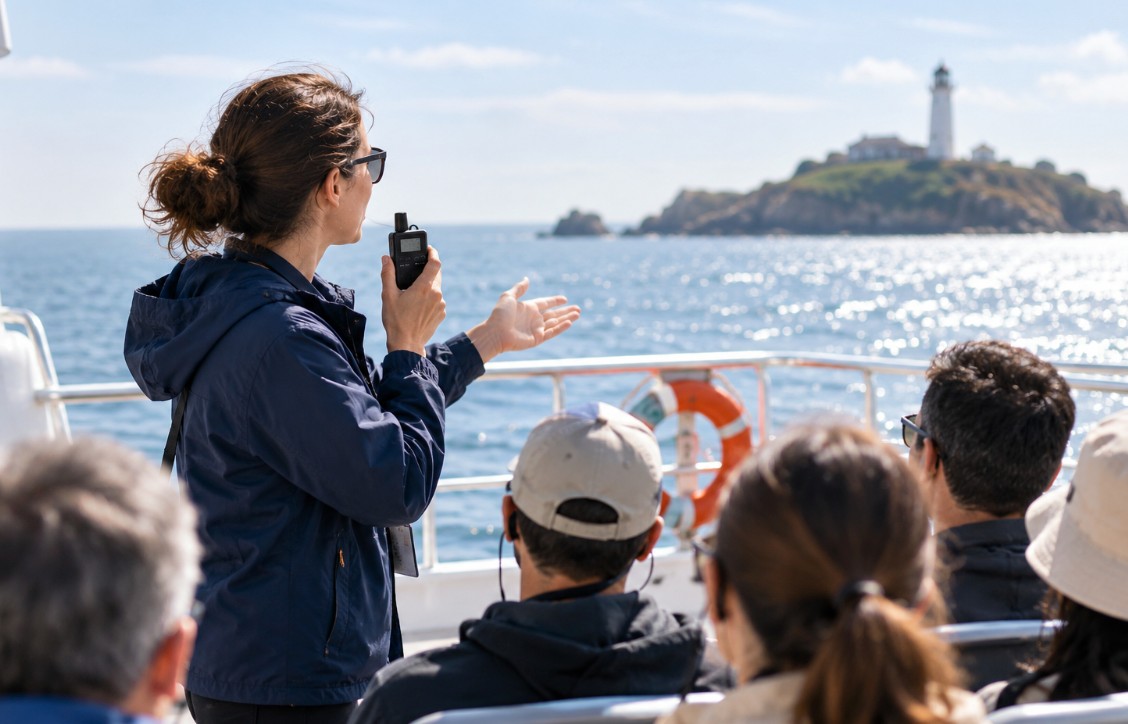
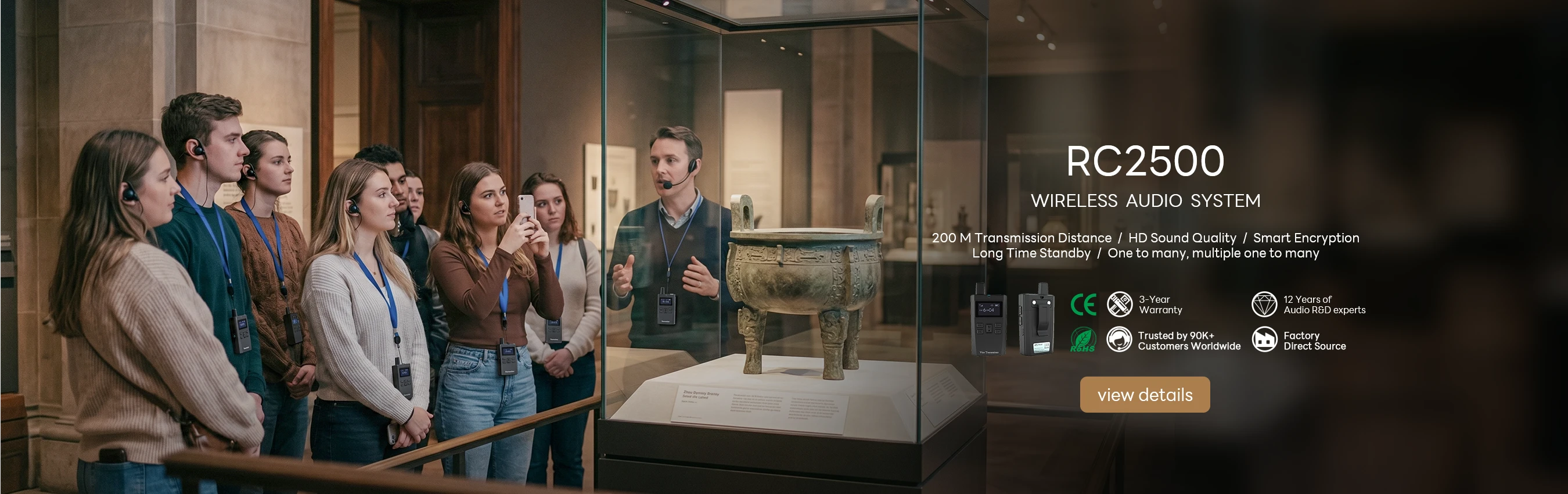
The January event moved the kit outdoors for the first time. Prospective families walked the new campus site, where the buildings are spread apart and the route crosses open ground between them. On this route the group stretched out in a way the indoor corridors never demanded, and the guide at the front could not stay close to the families at the back. The RC2500 carried the outdoor preview with the range to keep the last family in the group connected to the guide's voice across the open stretches. The contrast with the indoor events was instructive: the same fleet that managed four channels in October needed one long-reaching transmitter in January, and having both capabilities in the kit meant no second purchase was required for the new event.
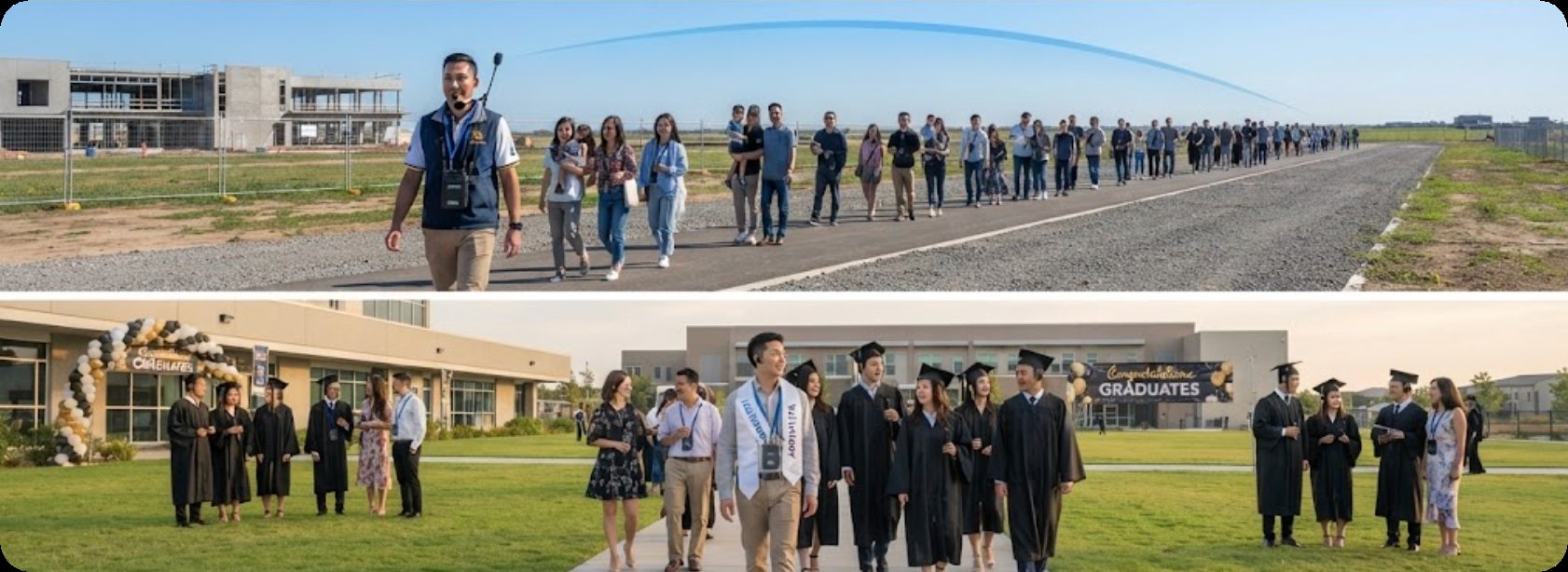
The outdoor preview above shows the RC2500 doing what indoor units cannot: holding the connection to the last family in a group stretched across open ground. One long-reaching transmitter converted the January event from a rental line item into a normal day for the fleet.
June Graduation Weekend: The Stress Test
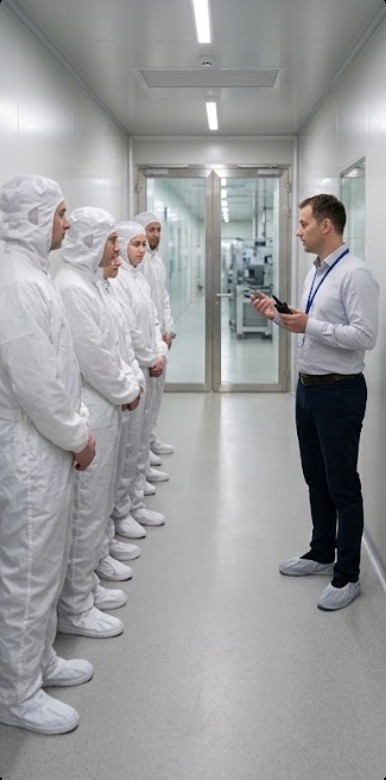
Graduation weekend was the stress test the fleet had been quietly preparing for. The program ran a morning ceremony, a campus farewell tour for visiting relatives, and an afternoon of smaller department receptions, all on the same day with overlapping schedules. The RC2406 managed the overlapping channels as it had in October, while the RC2500 carried the farewell tour across the outdoor route and the RC2401 covered the department receptions in parallel. Three units, three roles, one day, and no audio failure reported across any of them. The school's event coordinator later noted that the weekend ran with the same staff count as the previous year, when two of the three events had needed rented equipment and extra coordination.
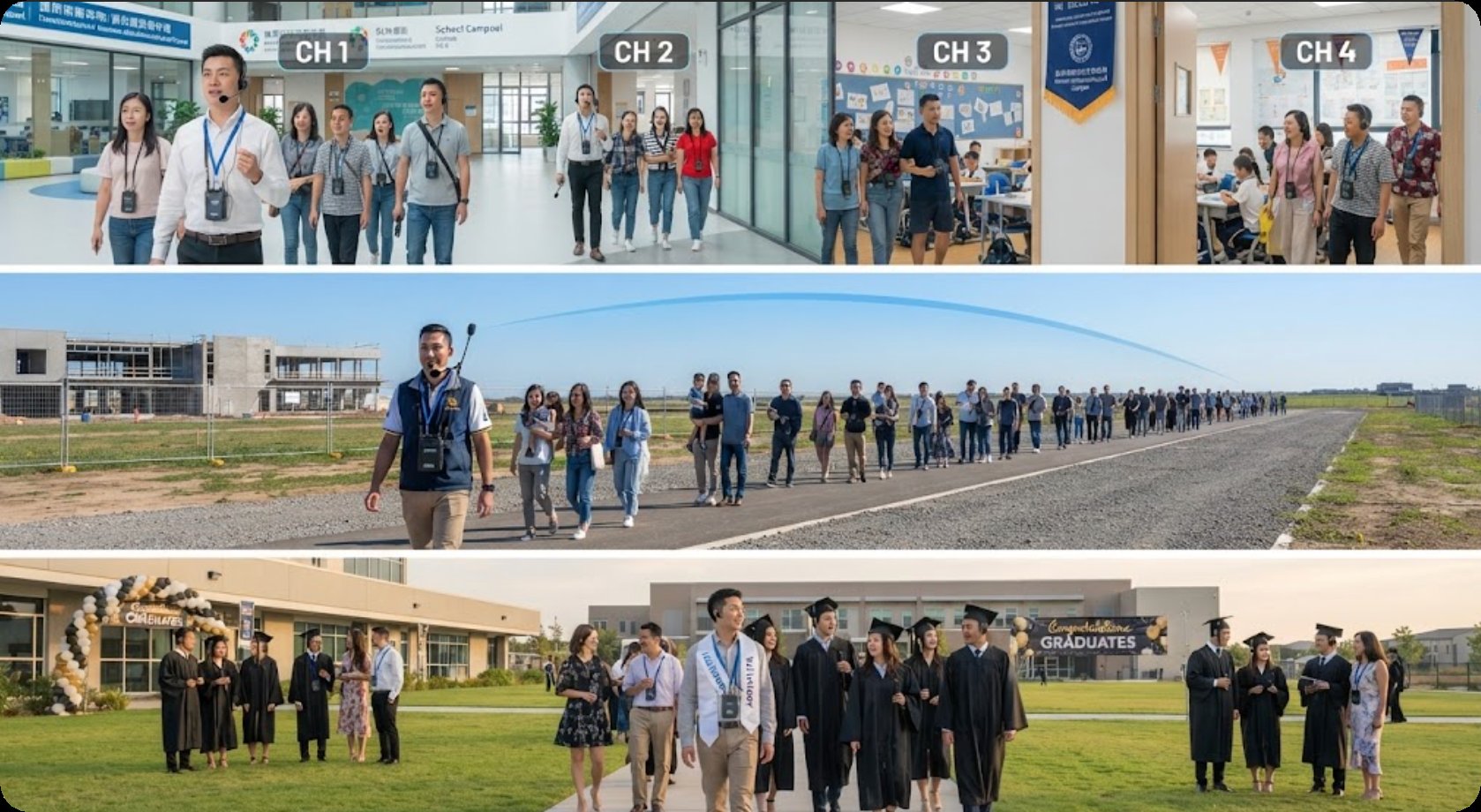
The parallel reception above was one of several running at the same time during graduation weekend, with the RC2401 keeping each small group on its own clean channel. The three-role split that day, outdoor tour on the RC2500, overlapping events on the RC2406, and parallel small groups on the RC2401, is the whole fleet strategy in one afternoon.
🏟️ What Four Dates Taught the Operations Team
Four events produced a clear set of lessons that now guide the school's planning. First, the fleet paid for itself inside the event year, because three of the four events would otherwise have required rental equipment. Second, the staff became the trainers: the admissions team that learned the kit in October trained the June volunteers, which removed the need for external support on the busiest day. Third, the event calendar became the planning unit, with each event checked against the fleet's three roles before the date rather than after. The school now treats the tour guide kit as standard event infrastructure, like signage and chairs, rather than as a special request.
The Numbers That Matter Across the Dates
The measurable results across the year are worth stating plainly. Six tours ran in parallel during the October morning and during parts of graduation weekend without channel conflicts. The January outdoor preview covered a route where the farthest visitor stood more than a hundred meters from the guide, with the RC2500 holding the connection throughout. No event required rented equipment after the fleet purchase, and no tour was delayed by an audio setup. The school estimated the rental savings across the four events at more than the fleet's purchase price, which made the first-year payback argument without any further calculation.
| Event | Route shape | Unit that carried it | Result |
|---|---|---|---|
| October parent morning | Parallel indoor groups | RC2406 + RC2401 | Six tours, no channel conflict |
| January new-campus preview | Long outdoor walk | RC2500 | Farthest family in range throughout |
| June graduation weekend | Mixed, overlapping | All three units | No audio failure, no rentals |
| Department events (year-round) | Small parallel groups | RC2401 | No setup delays |
The table compresses the event year into its essential results. Each row pairs an event shape with the unit that cleared it, and together the rows show why a three-role fleet beats a single-event purchase for any school with a full calendar.
Building the Same Fleet for Your Own Dates
For a school or campus planning the same approach, the method is to list every visitor event on the calendar before choosing hardware. Mark each event's route shape: indoor parallel, outdoor long, or mixed. Count the maximum number of groups that will run at the same time, and note the longest outdoor distance any group will cover. Those three numbers select the fleet, with the RC2406 covering channel count, the RC2500 covering outdoor range, and the RC2401 covering the small parallel groups that fill the quieter events. The same three-unit thinking is spelled out in the related university open day case study, which shows a one-day version of the same planning, and the full wireless tour guide system range carries the mounting and charging accessories that make the fleet easy to move between events.