
RC085, RC2500 and RC2408: What a Hajj Group Kit Returns Over One Season
Pilgrimage guiding is the most extreme version of the problem a tour audio system is built to solve. A group is large, it moves through crowds that are denser than any museum or factory floor, it speaks several languages at once, and the whole operation compresses into a window of days rather than a season of weekends. I have costed enough of these deployments to know that the usual assumptions break. A kit that looks over-specified for a city walking tour can be the minimum viable unit for a pilgrimage group, and the arithmetic that justifies it has nothing to do with the per-unit price. The three units I use as the reference points are the RC085 with its channel display, the RC2500 as the compact workhorse, and the RC2408 for the long-range coverage a large moving group needs. Working through what each contributes to the return is a better way to size a purchase than starting from a headcount, and it is the framework this guide follows. Groups running these itineraries often build from the Hajj and Umrah audio guide kits range, which is organised around the same seasonal pattern.
The Economics of a Short, Violent Peak
Everything about pilgrimage economics follows from the shape of the demand curve. A guided pilgrimage operator does not fill a calendar evenly; the operation spikes hard, runs at capacity for a compressed period, and then falls away. That pattern changes what counts as a good purchase. Equipment bought for a year of steady weekend tours earns its cost back slowly, while equipment bought for a peak must earn its cost back inside the peak or not at all. The practical consequence is that utilisation during the window matters more than utilisation across the year, which is why a kit that covers a large group with fewer transmitters is usually the better buy than a cheaper kit that needs two guides to manage the same crowd. Coverage during the peak is the variable that decides whether the deployment pays.
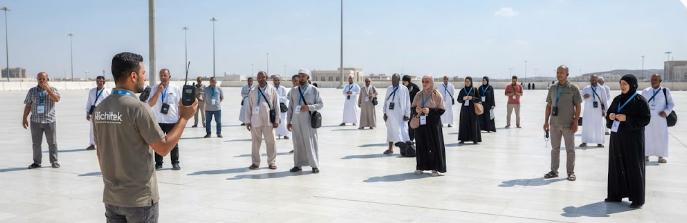
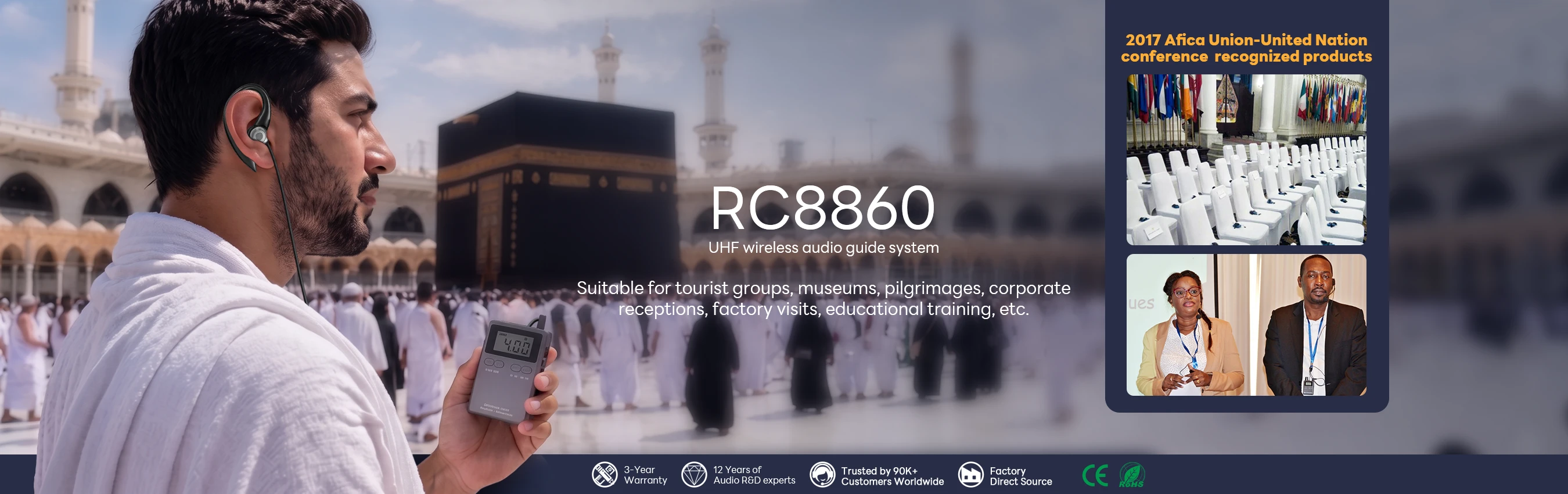
The long-range unit above decides coverage once a group spreads across an open area. Buying fewer transmitters and accepting shorter reach is the saving that most often costs an operator the peak it was meant to protect.
Rental Maths Against Ownership
The first decision most operators face is whether to rent for the peak or buy outright, and it is usually framed badly. Renting looks cheaper because the comparison is against a purchase that includes units only used at the peak. It should instead be made against the revenue the equipment protects. A guided group that loses contact loses people, and a group that loses people costs the operator guide time, transport slots and sometimes the booking itself. Once the avoided loss is in the model, the rental premium stops looking like a premium. The break-even calculation I use is simple and blunt: how many incidents would the kit have to prevent across one peak to cover its cost, and is that number plausible given the group sizes involved. Operators who run the number usually find it small, and that the real question is not rent against buy but which configuration to buy.
Language Splits Decide the Unit Count
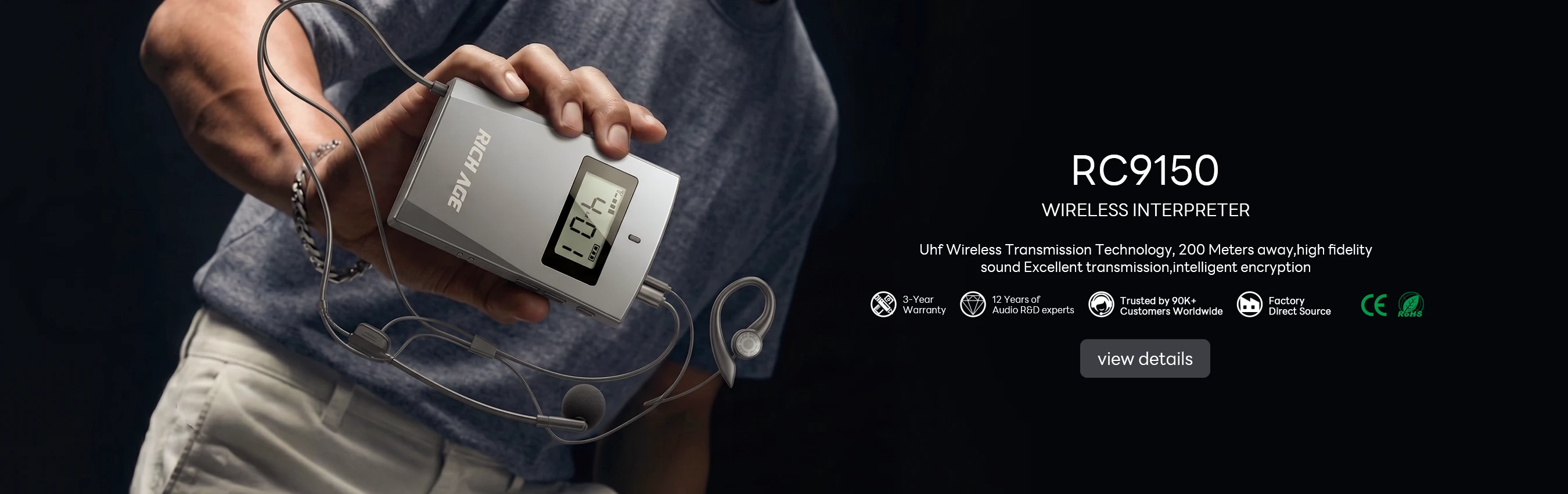
The second variable is language, and it sets the unit requirement more directly than headcount does. A pilgrimage group is rarely monolingual. A single booking may contain several language communities moving together, and each one needs its own audio stream or, at minimum, its own channel. This is where a unit with visible channel state earns its place, because a guide who can see the active channel at a glance makes fewer assignment mistakes at the point of distribution. The RC085 is built around exactly that requirement, with an LCD display that keeps the current channel legible in daylight and in a crowd. When language groups assemble at the start of a day, that legibility is not a convenience. It is the difference between a fast, correct handover and a queue of pilgrims waiting while a guide works out which unit belongs to whom.

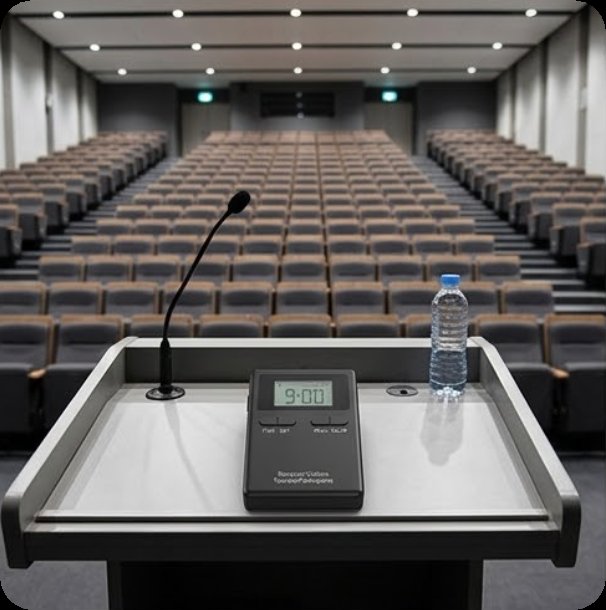
The channel display above is doing operational work rather than decorative work. When several language groups form at the same meeting point, a legible channel readout is what keeps the distribution line moving and the assignments correct.
Distribution Speed Is a Cost Line
The third factor is the one that never appears in a procurement document but dominates the labour cost of the peak: how fast units can be handed out, collected and re-issued. A pilgrimage operator may run several departures a day during the window, and every minute spent at the distribution point is guide time that has been paid for and not used for guiding. Compact hardware shortens that step, because units that fit easily into a pouch or a hand are faster to issue in a crowd than units that need careful handling. The RC2500 is the unit in this set that plays that role, at 55 g and a size that survives being handed along a line of people. Treating the distribution point as a process with its own cost, rather than an unavoidable chore, is usually where operators find the first recoverable margin.

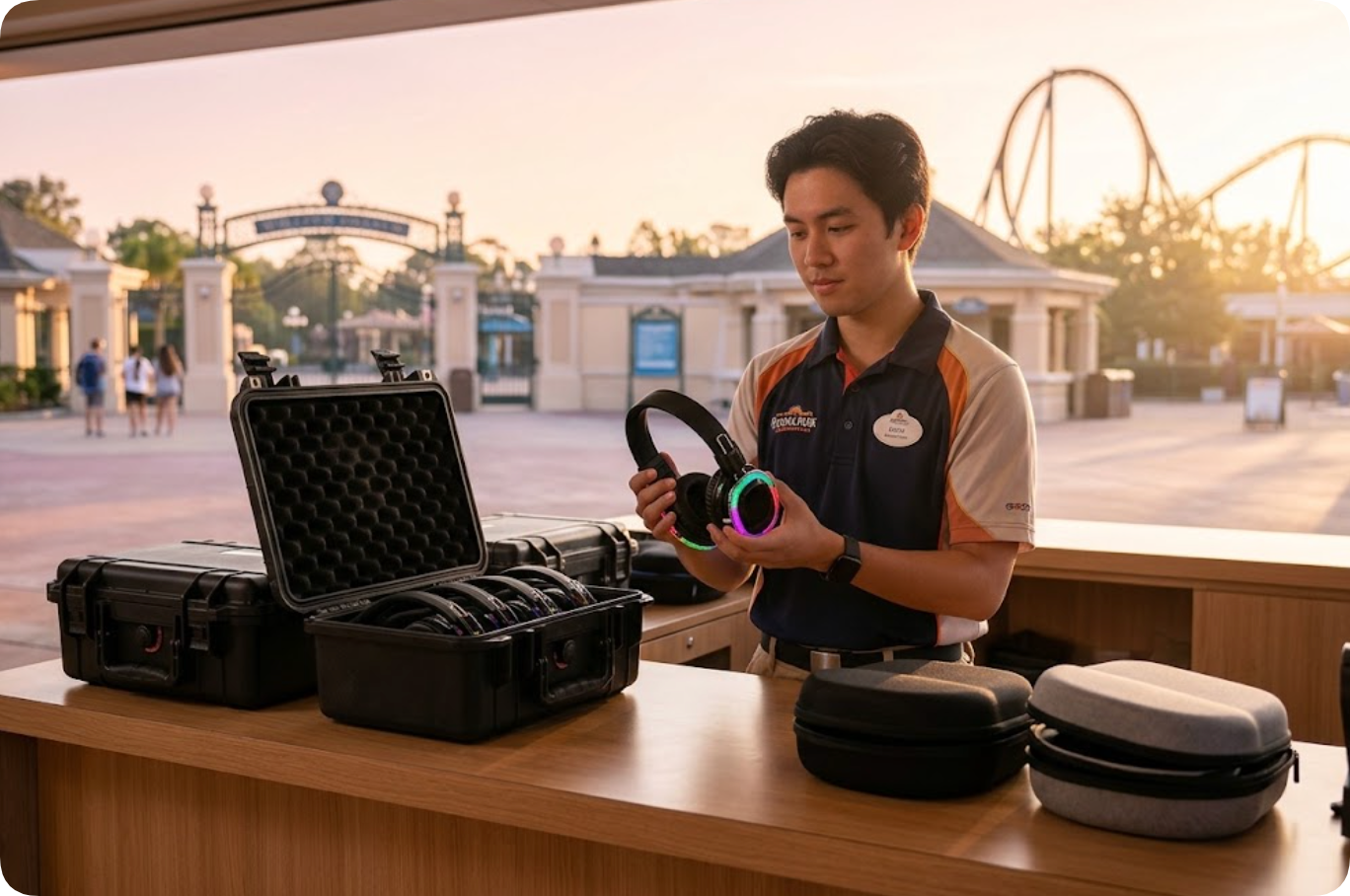
The distribution line above is the operation most often left out of a business case. It is also the one where a lighter unit pays back first, because the saving is measured in guide minutes on every departure.
Charging a Thousand Units Overnight
The fourth cost driver is charging, which is easy to underestimate because it scales with the fleet rather than the group. A pilgrimage deployment does not charge a handful of units at a hotel desk; it charges the whole kit overnight and needs every unit ready by the next departure. That makes the charging architecture part of the return calculation rather than an accessory decision. Units with predictable runtime simplify it enormously, because the number of spare units needed to cover a shortfall is a direct function of how much runtime variance the fleet shows. A 12-hour unit used on a 6-hour departure leaves a comfortable margin, and a fleet that reliably returns above its requirement can be sized closer to the actual headcount.
Loss and Attrition in a Moving Crowd
The fifth item is attrition, and it deserves to be modelled explicitly rather than absorbed as a bad surprise. Units are handed to individuals in a crowd, collected again in a crowd, and some will not come back. A deployment that assumes full recovery is a deployment with an optimistic cost model. The useful approach is to budget a recovery rate, price the shortfall into the kit, and then look for design features that raise the recovery rate rather than accepting it as fixed. Lanyards, distinctive colours and a hard rule about collection at the end of each leg all move the number, and so does unit weight, because a device a pilgrim notices wearing is one they are more likely to hand back. Attrition modelling is unglamorous and it is the line most often omitted from a pilgrimage business case.
A Payback Table for Three Configurations
| Configuration factor | RC085 | RC2500 | RC2408 |
|---|---|---|---|
| Unit weight | 62 g | 55 g | 70 g |
| Battery life | 12 hours | 12 hours | 14 hours |
| Sealing rating | IP42 | IP42 | IP42 |
| Where it earns its cost | Language assignment at handover | Fast distribution and collection | Coverage for large moving groups |
| Main saving it protects | Assignment errors and rework | Guide minutes per departure | Group separation incidents |
The table is arranged from the distribution point outwards, because that is the order in which costs actually accumulate on a pilgrimage day. The second row from the bottom is the one to read first: each unit is justified by a different saving, not by a different specification. A kit that covers all three roles is more robust than a larger kit of one model, because the deployment has three distinct failure modes and no single unit addresses all of them. The broader wireless tour guide system range covers the units either side of these three for operators who need a different balance between coverage and unit count.
What Decides the Second Purchase
The last question is what a successful first deployment tells the operator about the second. In practice the answer is almost never the headline specification, since the first kit already proved that coverage and runtime were sufficient. What decides the next order is the friction the first one exposed: how many units were lost, how long distribution really took, how often a language group needed a channel it did not have. Those observations are worth more than any comparison table, and they only exist after a peak has been run. A related pilgrim group deployment case shows the same pattern from the operator side, where the second order was shaped by what the first season revealed rather than by anything in the original brief. The deciding question is not which unit is best. It is which part of the operation the first peak exposed as fragile.