
A leading China factory specializing in Wireless Tour Guide Systems, Church Audio Guides, and Translation Headphones with premium OEM/ODM solutions.

Tel:+86 13825295213

Email:tiger.wang@richitek.com

RC2401, RC2408 and RC085: Measuring Real Output in a Multilingual Conference

RC2401, RC2408 and RC085: Measuring Real Output in a Multilingual Conference

A venue running four languages at once is not four times harder than a single-language event. It is a different problem. The failure that ruins the day is rarely silence; it is bleed, a delegate on one stream catching fragments of another, and it is almost impossible to reproduce once the room empties. This guide works through what can genuinely be checked on site, using three units from the same family: the RC2401, the RC2408 and the RC085. The room-level decisions behind any of them are covered in more detail under conference audio systems.

None of what follows is laboratory work. It is the set of checks a technician can complete in an hour with a charged set and one colleague walking the perimeter, which is the only kind of testing that survives contact with a live programme.

What Delegates Actually Hear

Every number on a specification sheet is a proxy for one thing: whether a person in the back row can follow a speaker in a language they do not share with the room. That makes the useful test position the delegate's ear, not the transmitter's antenna. Three positions decide the result, and they are never the ones a technician naturally stands in. The first is the last row of the seating block, directly behind the tallest delegate. The second is the side aisle at the point where two language zones meet. The third is the far corner, where a wall reflects the neighbouring stream back into the room. If those three are clean, the installation is clean, and the middle of the hall will take care of itself.

Numbers That Decide a Purchase

Procurement tends to ask for four figures: range, runtime, channel count and weight. Only two of them behave the way the words suggest. A published range is measured in open field with nothing between the transmitter and the receiver, and a conference hall is nothing like open field: the seating area absorbs, the walls reflect, and a bank of bodies in the middle of the room removes signal in a way that is invisible until the room fills. The figure worth carrying into a decision is not maximum reach but stable reach at the worst working position, which is why the walk-through above is worth more than a datasheet. Runtime is the more honest number of the four, and it is still deceptive, because a nine-hour programme is never a nine-hour load.

RC2401, RC2408 and RC085: Measuring Real Output in a Multilingual Conference(图1)

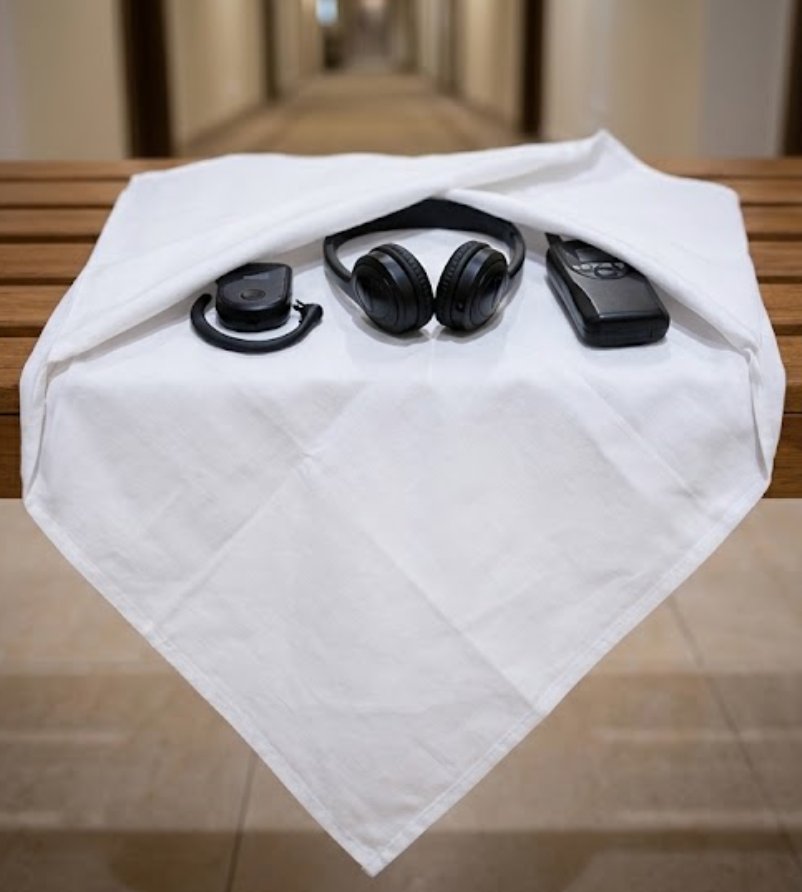
The multi-channel transmitter is usually the unit that sits closest to the audience, which is exactly where separation problems show up first.

Cross-Talk Between Language Streams

This is the technical heart of a multilingual event and the part that most often goes wrong for reasons that have nothing to do with the hardware. Separation collapses in three predictable ways. The first is physical: transmitters for different streams placed side by side on the same table, close enough that a receiver one metre away cannot tell which one it is hearing. The second is procedural: a channel plan copied from one room to another, so that a hall on the fourth floor is running the same numbers as a hall on the second. The third is an honest mistake made for a good reason: somebody raises output power to push coverage into a stubborn corner and quietly widens the interference footprint at the same time.

The fix for all three is the same discipline. Assign a channel plan per room and write it down. Separate transmitter positions by as much physical distance as the venue allows. And test separation where streams meet rather than in the middle of a zone, because the middle of a zone is always clean and proves nothing at all.

How Far a Signal Carries Across a Plenary Hall

A plenary hall is the easy case. Sight lines are long, the ceiling is high, and a long-range unit like the RC2408 will hold a link across a room that looks intimidating on a floor plan. The difficulty is never inside the hall; it is at its edges. Interpreters in a glass booth at the back, overflow seating in a foyer with a screen relay, and the corridor where delegates take calls between sessions are the positions that expose the limit. Measure at the furthest position a delegate is actually expected to sit, then measure again behind a partition, because a plasterboard wall between a transmitter and a receiver is a far bigger variable than distance. Where the signal does not reach, the answer is usually a second transmitter position rather than more power, which keeps the separation work in the previous section intact.

RC2401, RC2408 and RC085: Measuring Real Output in a Multilingual Conference(图2)

Reach is decided at the edge of the room, behind the last row and around the corner from the antenna.

Battery Life Over a Full Day

Two of these units are rated at fourteen hours and one at twelve, and on paper that looks like comfortable headroom for a conference day. The arithmetic rarely works out that simply. A delegate collects a receiver at eight in the morning and returns it after the closing session, and the unit is switched on for the whole of that window whether or not the person is listening. Add rehearsal time for the interpreters, add the morning where a rack was left powered overnight by mistake, and the margin is thinner than the rating implies. Two habits remove the risk. Charge the whole fleet overnight so every unit starts from a known state, and top up at the lunch break the units that went out first, which is a fifteen-minute job with a rack of chargers and no disruption to the programme.

Weight, Wearing and the Handover Desk

Weights here run from sixty-two to seventy-two grams, and the difference sounds trivial right up to the moment a delegate has worn a receiver for six hours. Heavier units get noticed, taken off, put down on a coffee table and left there, which shows up later as a shortfall at the return desk and a scramble before the next day. The lighter unit also carries a display, and that display earns its place at the handover desk rather than on the delegate. Staff can confirm the language a unit is set to at a glance instead of counting button presses, which matters when two hundred devices go out in a fifteen-minute window and the queue is the thing everyone remembers.

RC2401, RC2408 and RC085: Measuring Real Output in a Multilingual Conference(图3)

A readable channel indication at the handover desk prevents the most common complaint, which is not audio quality but receiving the wrong language.

One Table for the Procurement File

UnitWeightRated runtimeSealingVariable to test on site
RC240172 g14 hoursIP42Separation between adjacent streams at boundary seats
RC240870 g14 hoursIP42Stable reception at the furthest working position
RC08562 g12 hoursIP42Channel confirmation at the handover desk

Read the last column downwards and the logic of the whole exercise appears. Each unit is strongest at a different point in the day, and the variable that decides whether the event succeeds is not the same for all three. A procurement file that records weight and runtime but omits the site variable is a file that will be reopened after the first event.

What a Spreadsheet Cannot Show

The remainder of the risk sits outside any specification. Whether the handover desk can absorb a queue of two hundred people without a language mix-up. Whether the cases survive a season in a loading bay. Whether the channel plan is written down, kept with the kit, and handed to the next venue instead of being reconstructed from memory. These are the items that decide whether a second event runs smoothly, and none of them can be purchased as an option.

The single most useful action available before committing to a larger purchase is to borrow one kit and run it through a real session rather than a demonstration. A rehearsal exposes the positions that fail, the window in which batteries are marginal, and the desk process that breaks under a queue. Our wireless tour guide system range covers single-stream and multi-stream cases, and a simultaneous interpretation deployment shows how the channel plan and the desk routine come together across a full programme.


2026年09月11日 11:05
click: 14
no data

RC2401, RC2408 and RC085: Measuring Real Output in a Multilingual Conference

time: 2026年09月11日 click:14

RC2401, RC2408 and RC085: Measuring Real Output in a Multilingual Conference

A venue running four languages at once is not four times harder than a single-language event. It is a different problem. The failure that ruins the day is rarely silence; it is bleed, a delegate on one stream catching fragments of another, and it is almost impossible to reproduce once the room empties. This guide works through what can genuinely be checked on site, using three units from the same family: the RC2401, the RC2408 and the RC085. The room-level decisions behind any of them are covered in more detail under conference audio systems.

None of what follows is laboratory work. It is the set of checks a technician can complete in an hour with a charged set and one colleague walking the perimeter, which is the only kind of testing that survives contact with a live programme.

What Delegates Actually Hear

Every number on a specification sheet is a proxy for one thing: whether a person in the back row can follow a speaker in a language they do not share with the room. That makes the useful test position the delegate's ear, not the transmitter's antenna. Three positions decide the result, and they are never the ones a technician naturally stands in. The first is the last row of the seating block, directly behind the tallest delegate. The second is the side aisle at the point where two language zones meet. The third is the far corner, where a wall reflects the neighbouring stream back into the room. If those three are clean, the installation is clean, and the middle of the hall will take care of itself.

Numbers That Decide a Purchase

Procurement tends to ask for four figures: range, runtime, channel count and weight. Only two of them behave the way the words suggest. A published range is measured in open field with nothing between the transmitter and the receiver, and a conference hall is nothing like open field: the seating area absorbs, the walls reflect, and a bank of bodies in the middle of the room removes signal in a way that is invisible until the room fills. The figure worth carrying into a decision is not maximum reach but stable reach at the worst working position, which is why the walk-through above is worth more than a datasheet. Runtime is the more honest number of the four, and it is still deceptive, because a nine-hour programme is never a nine-hour load.

RC2401, RC2408 and RC085: Measuring Real Output in a Multilingual Conference(图1)

The multi-channel transmitter is usually the unit that sits closest to the audience, which is exactly where separation problems show up first.

Cross-Talk Between Language Streams

This is the technical heart of a multilingual event and the part that most often goes wrong for reasons that have nothing to do with the hardware. Separation collapses in three predictable ways. The first is physical: transmitters for different streams placed side by side on the same table, close enough that a receiver one metre away cannot tell which one it is hearing. The second is procedural: a channel plan copied from one room to another, so that a hall on the fourth floor is running the same numbers as a hall on the second. The third is an honest mistake made for a good reason: somebody raises output power to push coverage into a stubborn corner and quietly widens the interference footprint at the same time.

The fix for all three is the same discipline. Assign a channel plan per room and write it down. Separate transmitter positions by as much physical distance as the venue allows. And test separation where streams meet rather than in the middle of a zone, because the middle of a zone is always clean and proves nothing at all.

How Far a Signal Carries Across a Plenary Hall

A plenary hall is the easy case. Sight lines are long, the ceiling is high, and a long-range unit like the RC2408 will hold a link across a room that looks intimidating on a floor plan. The difficulty is never inside the hall; it is at its edges. Interpreters in a glass booth at the back, overflow seating in a foyer with a screen relay, and the corridor where delegates take calls between sessions are the positions that expose the limit. Measure at the furthest position a delegate is actually expected to sit, then measure again behind a partition, because a plasterboard wall between a transmitter and a receiver is a far bigger variable than distance. Where the signal does not reach, the answer is usually a second transmitter position rather than more power, which keeps the separation work in the previous section intact.

RC2401, RC2408 and RC085: Measuring Real Output in a Multilingual Conference(图2)

Reach is decided at the edge of the room, behind the last row and around the corner from the antenna.

Battery Life Over a Full Day

Two of these units are rated at fourteen hours and one at twelve, and on paper that looks like comfortable headroom for a conference day. The arithmetic rarely works out that simply. A delegate collects a receiver at eight in the morning and returns it after the closing session, and the unit is switched on for the whole of that window whether or not the person is listening. Add rehearsal time for the interpreters, add the morning where a rack was left powered overnight by mistake, and the margin is thinner than the rating implies. Two habits remove the risk. Charge the whole fleet overnight so every unit starts from a known state, and top up at the lunch break the units that went out first, which is a fifteen-minute job with a rack of chargers and no disruption to the programme.

Weight, Wearing and the Handover Desk

Weights here run from sixty-two to seventy-two grams, and the difference sounds trivial right up to the moment a delegate has worn a receiver for six hours. Heavier units get noticed, taken off, put down on a coffee table and left there, which shows up later as a shortfall at the return desk and a scramble before the next day. The lighter unit also carries a display, and that display earns its place at the handover desk rather than on the delegate. Staff can confirm the language a unit is set to at a glance instead of counting button presses, which matters when two hundred devices go out in a fifteen-minute window and the queue is the thing everyone remembers.

RC2401, RC2408 and RC085: Measuring Real Output in a Multilingual Conference(图3)

A readable channel indication at the handover desk prevents the most common complaint, which is not audio quality but receiving the wrong language.

One Table for the Procurement File

UnitWeightRated runtimeSealingVariable to test on site
RC240172 g14 hoursIP42Separation between adjacent streams at boundary seats
RC240870 g14 hoursIP42Stable reception at the furthest working position
RC08562 g12 hoursIP42Channel confirmation at the handover desk

Read the last column downwards and the logic of the whole exercise appears. Each unit is strongest at a different point in the day, and the variable that decides whether the event succeeds is not the same for all three. A procurement file that records weight and runtime but omits the site variable is a file that will be reopened after the first event.

What a Spreadsheet Cannot Show

The remainder of the risk sits outside any specification. Whether the handover desk can absorb a queue of two hundred people without a language mix-up. Whether the cases survive a season in a loading bay. Whether the channel plan is written down, kept with the kit, and handed to the next venue instead of being reconstructed from memory. These are the items that decide whether a second event runs smoothly, and none of them can be purchased as an option.

The single most useful action available before committing to a larger purchase is to borrow one kit and run it through a real session rather than a demonstration. A rehearsal exposes the positions that fail, the window in which batteries are marginal, and the desk process that breaks under a queue. Our wireless tour guide system range covers single-stream and multi-stream cases, and a simultaneous interpretation deployment shows how the channel plan and the desk routine come together across a full programme.
no data
×

Contact us

email:
name:
subject:
content: