
RC9150, RC2468 and RC2408: The Wear Points Nobody Checks Between Lessons
Equestrian coaching puts audio equipment somewhere no museum, plant or cathedral ever does. The gear is outdoors, it is on a moving animal's periphery, and the person wearing it is concentrating on a horse rather than on a battery indicator. Sand, sweat, rain and the occasional drop onto arena footing are the normal working conditions, not the exception.
What that changes is where failures come from. A receiver that spends its life indoors dies of a tired battery or a worn cable. A receiver that spends its life in an arena dies at the three places where it touches something: the ear, the skin, and the ground. The equestrian training systems we build are chosen for range and channel headroom, but what decides whether a set survives a season is how those three contact points are looked after.
💡 Why an Arena Ages Gear Differently
An indoor school and an outdoor arena fail equipment in the same way for the same reason: the surface moves. Footing is sand, fibre or a mix, and every canter lifts a little of it into the air. That dust is abrasive and slightly hygroscopic, which means it does not simply sit on a surface. It draws moisture out of the air and holds it against metal.
Add the other half of the equation. Horses sweat, riders sweat under helmets, and a session can swing fifteen degrees between a cold morning and a warm afternoon. Condensation plus airborne grit is far more aggressive than a conditioned gallery, and the damage shows up in mechanical and chemical ways first.
The Ear Contact: What Sweat Leaves Behind
Start with the smallest and most exposed unit in the set. RC2468 pairs a featherweight 18 gram receiver with a 59 gram transmitter, and that receiver is the part that lives on the ear, often under a helmet brim where airflow is minimal.
Sweat is salty and mildly acidic, and it dries into a film rather than evaporating cleanly. That film collects on the earhook and works its way into the speaker grille, where it does two things at once: it reduces output and it gives dust something to stick to. The symptom riders report first is not silence but a slow loss of clarity, followed by crackle when the earhook flexes.

The routine that prevents it takes under a minute per unit. Wipe the earhook with a barely damp cloth, dry it thoroughly, and leave the grille alone beyond a dry brush. Solvent cleaners are the wrong tool here because they attack the finish and push residue further into the mesh. Check the earhook spring tension at the same time; a hook that has lost its grip is the reason a receiver ends up on the floor of the arena.
The Skin Contact: Clips, Salt and Loose Screws
The second contact point is the waistband. Instructors clip the transmitter to a belt or armband and then forget about it for the next three hours, which is exactly the profile RC2408 was designed around. It carries 80 interference-free channels on the 2403-2483 MHz band, reaches up to 200 metres in the open, and runs for around 20 hours, with the transmitter and receiver weighing 59 and 50 grams.

Those figures are why the unit gets used so hard, and also why its weakest component is easy to overlook. The belt clip is a spring under constant load, and it is held on by a single screw. Repeated clipping and unclipping, combined with salt from a hand that has just adjusted a girth, loosens that screw long before anything electronic shows a problem. A clip that rotates under load lets the transmitter swing, the cable takes the strain, and eventually the connector is what fails.
The fix is a two-minute job monthly: check the clip screw, check the cable strain relief, and wipe the body with a damp cloth rather than a wet one.
⚡ The Ground Contact: Reading a Unit That Has Been Dropped
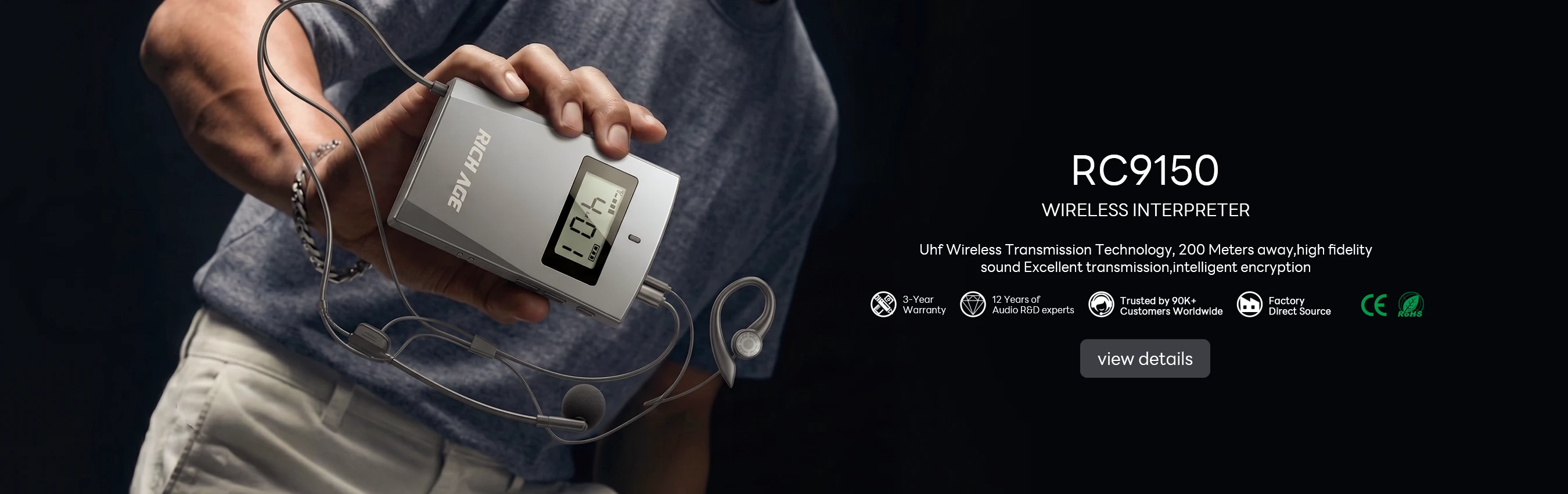
The third contact point is the one people underestimate, because a drop usually appears to do nothing. The unit that gets set down most often is the one with the most capability. RC9150 offers 100 independent channels, up to 200 metres of range and a transmitter rated for 15 hours against a receiver that runs beyond 30 hours, which makes it the natural hub for a yard running several coaches at once. Hubs get put down on mounting blocks, fence rails and tack trunks.
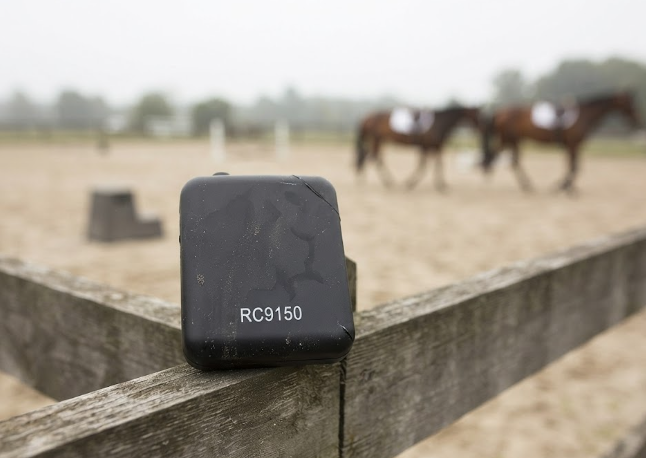
A drop that leaves no visible mark can still open a hairline gap at the battery door or the antenna joint. Dust enters through that gap, and from then on the unit behaves as though it has an intermittent fault: fine in the morning, unreliable on the far side of the arena. Because it never fails consistently, it tends to be tolerated for weeks. The cheap check is a physical one. Flex the housing gently, look for movement at the seams, and push on the battery door while the unit is switched on. If the audio cuts, the fault is mechanical.
Charging Discipline Keeps Cells Alive
Batteries fail on a schedule that has more to do with habits than with chemistry. The RC2468 transmitter carries a 1500 mAh cell good for about 12 hours and its receiver a 300 mAh cell good for around 10, charged through Micro USB at 5V/1A. Three habits shorten that life considerably: charging in an unheated tack room through winter, storing units at zero charge for months, and leaving the charging port open on a bench where dust settles into it.
| Model | Role in a yard | Channels | Battery | Weight | First thing to go |
|---|---|---|---|---|---|
| RC2468 | Rider receiver under a helmet | 50, PLL stabilised | 300 mAh receiver, about 10 hours | 18 g receiver / 59 g transmitter | Speaker grille clogged by dried sweat |
| RC2408 | Instructor transmitter on a belt | 80 | About 20 hours | 59 g transmitter / 50 g receiver | Loose belt-clip screw and strained cable |
| RC9150 | Yard hub running several coaches | 100 | 15 hours transmitter, 30+ hours receiver | Portable base unit | Hairline housing gap after a drop |
Reading the last column against the second is the useful part of the table. Each unit fails first where it touches the world, not where it is most complex.
A Monthly Channel Audit Worth Ten Minutes
An arena is a shared radio environment. Wi-Fi access points, neighbouring yards and even door controllers all occupy the same licence-free band, and the interference they cause moves as the site changes. A channel that was clean last season may not be clean now.
The audit is simple: take two receivers and the appropriate transmitter from our wireless tour guide system range and walk the arena perimeter, listening at each corner and at the furthest gate. Note which channels stay quiet at the edges, write those onto the lesson plan, and move any busy ones out of rotation. Ten minutes of walking saves the far more expensive discovery that a channel degrades halfway through a clinic.
Parts to Keep in the Tack Room
Downtime in a yard is measured in lessons, not days, so the aim is to be able to swap rather than repair. A shallow box with spare earhooks, belt-clip screws, Micro USB cables, a couple of charged 300 mAh receivers and a dry brush covers almost everything that actually happens.
The principle is to keep consumables on hand and housings closed. Anyone in the yard can change an earhook or a cable; nobody should be opening a case between lessons, because a case opened in a hurry is no longer sealed.
When to Retire a Unit Instead of Repairing It
Two rules of thumb are enough. A unit opened twice for the same fault is not really fixed, and a cracked housing will keep letting dust in however often it is cleaned. Both should leave the working set.
The cost of keeping a marginal unit in service is not the unit, it is the instructor's attention. A crackle at the wrong moment interrupts a lesson that a client is paying for, and the reputational cost of unreliable audio in a coaching business is far higher than the price of a replacement receiver. Retirement is a maintenance decision, not a purchasing one.
None of this is technical, which is exactly why it gets skipped. Yards that check the ear, the skin and the ground tend to get several seasons out of a set rather than one. If you are specifying audio for a new programme rather than maintaining one, the deployment notes on our solution pages cover how the same hardware is matched to different venues.