
.webp)
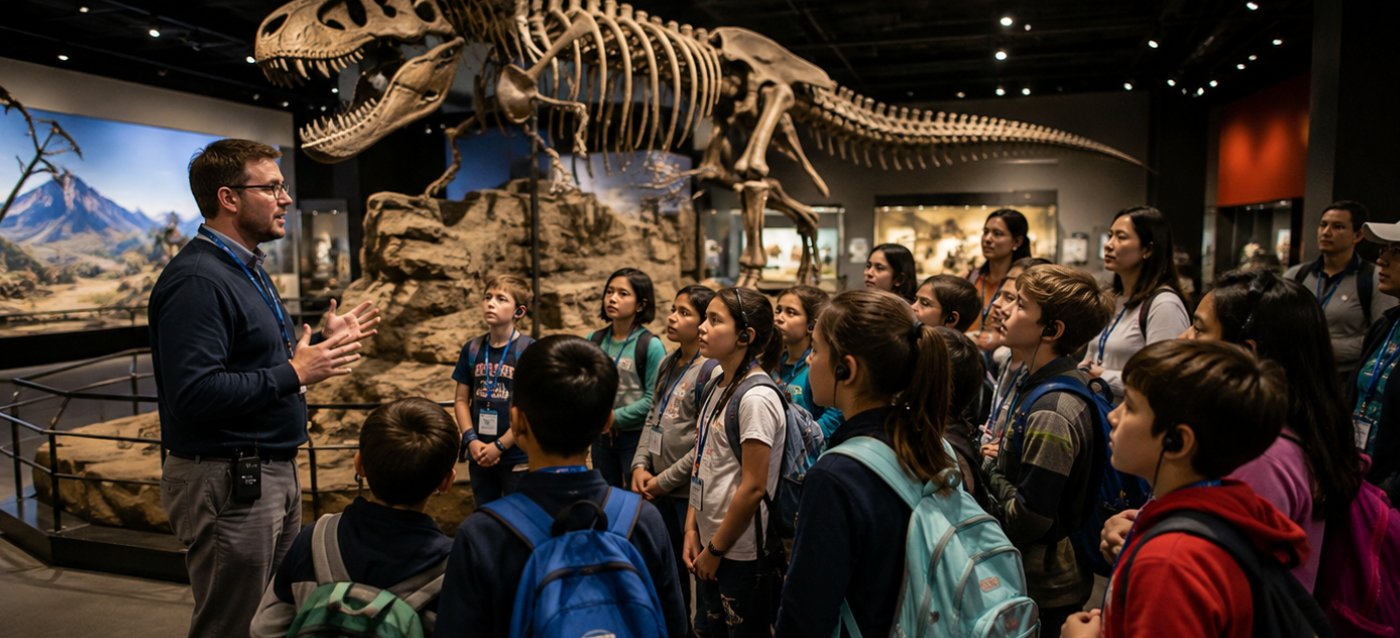
Thirty-one students, four chaperones, one clipboard. The headcount happens twice before the bus leaves the school car park, again at the museum steps, and once more before anybody is allowed near the gift shop. Between those counts a teacher is still supposed to teach, and that is the part a wireless audio system either saves or ruins. A school field trip audio solutions kit has to survive an entire teaching day: the bus ride out, a noisy exhibit hall, a small-group rotation through hands-on exhibits, lunch break in the courtyard, and an afternoon at the nature center, all with gear that gets stuffed into a backpack and sometimes dropped on a hard floor. Add permission slips, name badges that never stay pinned, and a museum visit that starts forty minutes behind schedule, and the audio link becomes the one thing nobody has time to troubleshoot.
Why a class trip is harder on equipment than a conference
A school group behaves nothing like the corporate tours these systems were originally sold into. Thirty students move as one body, then split into four smaller groups each wanting something different: the dinosaur hall, the planetarium, the worksheet station, the toilets. Every receiver changes hands at each rotation, so pairing has to be quick enough that nobody stands around waiting. The teacher talks over the combined noise of the class plus every other school group in the building, and the students who most need clear audio tend to be the ones drifting at the back near the exit. Battery life is measured in a school day rather than a meeting slot, and anything needing two hours on charge between sessions is dead weight on a packed itinerary. Then comes the durability question no museum brochure raises: equipment lent to eleven-year-olds comes back scratched, dropped, and occasionally wet.
RC2402: fifty channels for small-group rotation
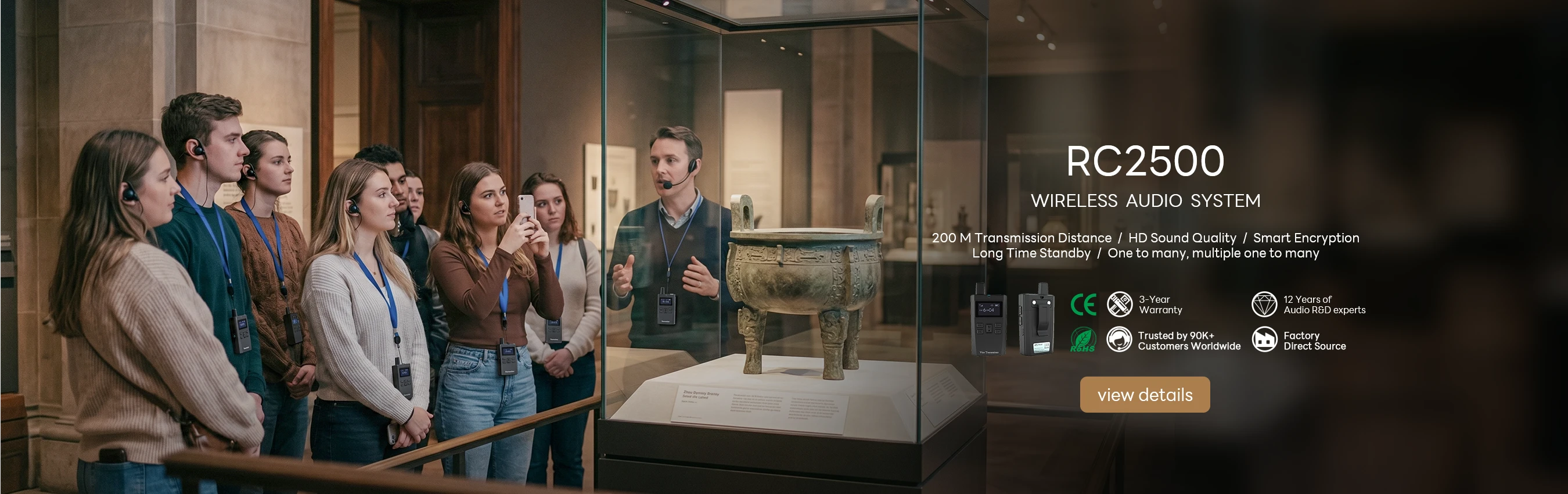
Channel count reads like spec-sheet indulgence right up to the moment a teacher tries to run four groups through one exhibit at the same time. The RC2402 multi-channel tour guide carries fifty channels, so a lead teacher, a chaperone, and a museum educator can each hold a separate group on the same field trip without anyone's audio bleeding into the next. The license-free 2.4 GHz band also removes a planning headache for schools running exchange trips across borders, since there is no frequency paperwork to file country by country. Roughly 180 metres of open range bridges the gap between a coach parked outside and a class already walking toward the entrance, while a charging dock between trips keeps a full class set ready for the next departure.
RC2468: eight hours on an ear-hook
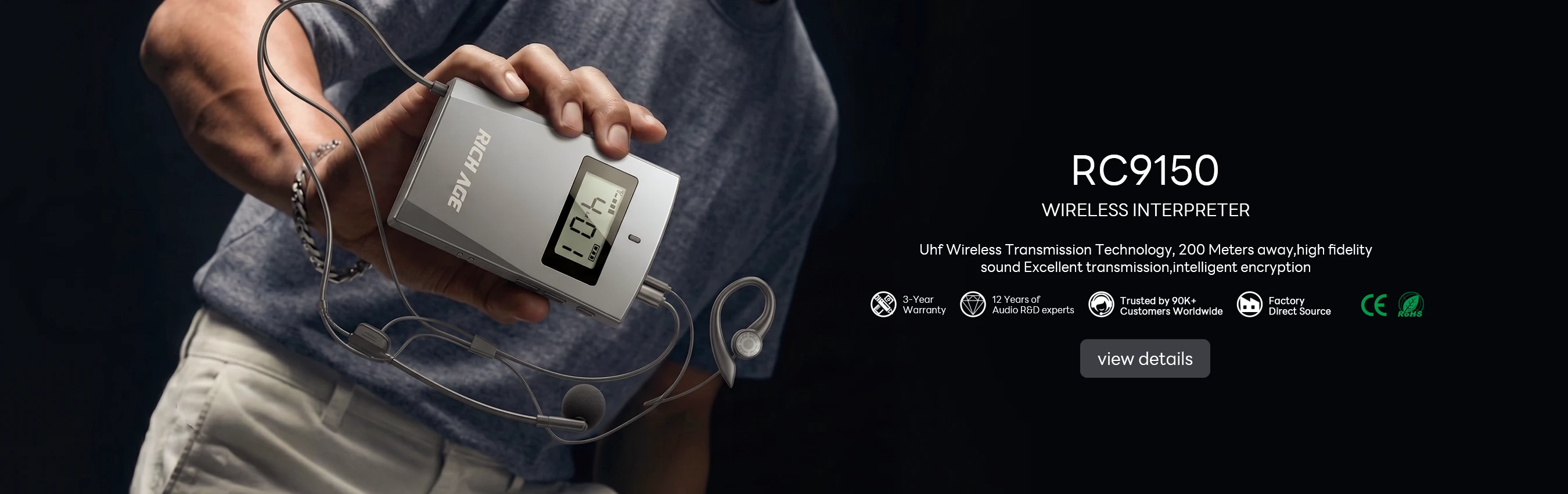
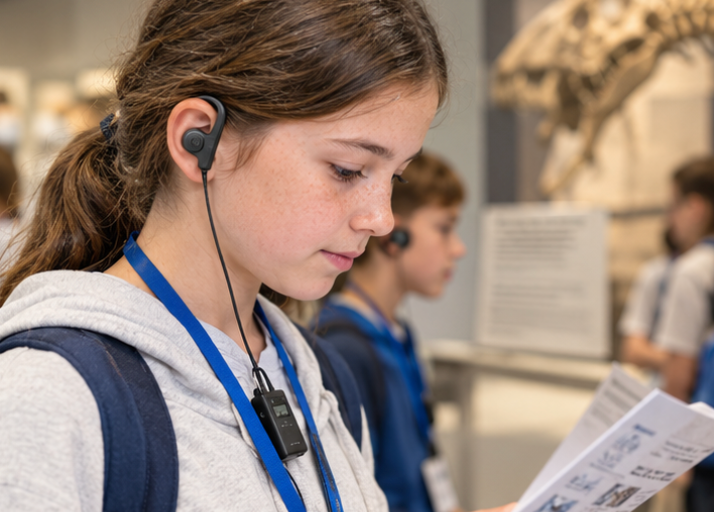
Comfort stops being a nicety when the receiver sits on a child's ear from the first exhibit to the ride home. The RC2468 ultra-light ear-hook receiver is designed around exactly that full-day duty cycle: light enough that students stop registering it, shaped to stay put through a hands-on exhibit instead of sliding off when someone leans over a display case. Teachers notice the payoff in attention rather than in the specifications, because the pupils who quietly slip a receiver off after fifteen minutes are the same ones missing the explanation from the back of the hall. For a school running class trips every term, a set that survives hours of wear and gets packed away damp is worth considerably more than a slightly longer range figure.
RC8860: built for the outdoor half of the day
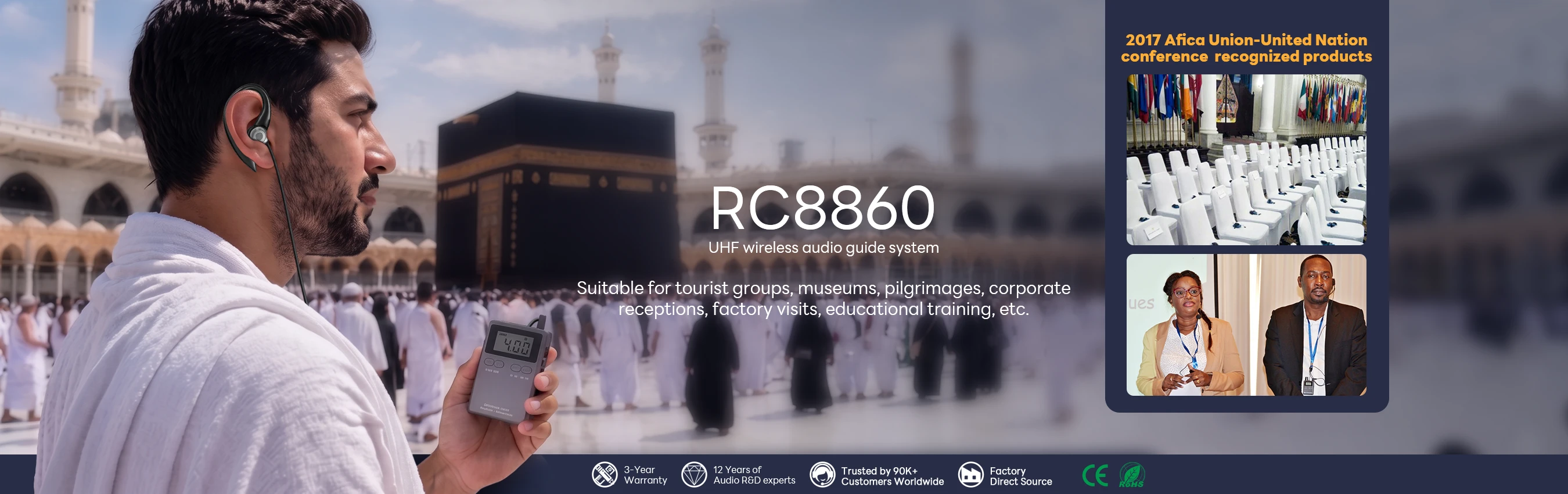
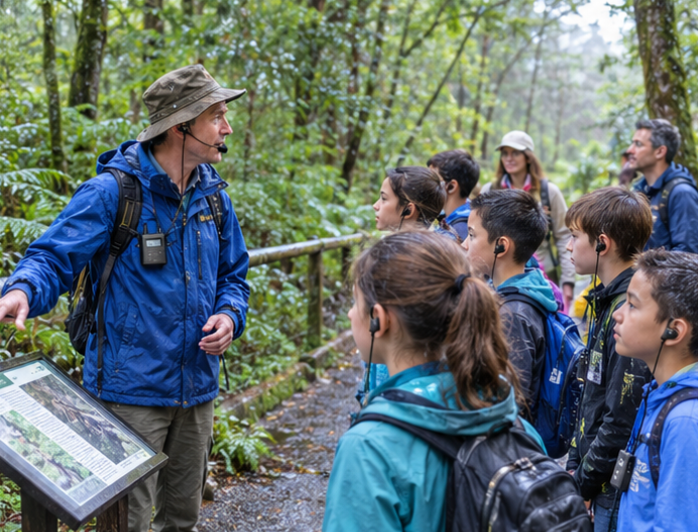
The indoor half of a field trip is the manageable half. An afternoon at the nature center, the trail behind the science center, or a sudden shower during the walk between buildings is where lighter kits tend to give up. The RC8860 rugged tour guide transmitter answers that with an IP54 rating and a 59-gram body that shrugs off dust, sweat, and rain, which matters when the itinerary is fixed and the weather is not. It is also the unit to press into a chaperone's hands: the controls are plain enough that a parent volunteer can lead a group ten minutes after being shown where the power button sits.
Specifications at a glance
| Model | Band | Key spec | Role on a field trip |
|---|---|---|---|
| RC2402 | 2.4 GHz | 50 channels, ~180 m | Small-group rotation, several educators at once |
| RC2468 | 2.4 GHz | Ultra-light ear-hook | All-day comfort for students |
| RC8860 | UHF | IP54, 59 g | Outdoor sessions, nature centers, bad weather |
How Bluehertz and Implecho compare
Two brands surface repeatedly in school procurement quotes, and neither deserves dismissing. Bluehertz Audioguides, a Spanish manufacturer, sells the SPL-1360 as a magnetic team guide offering a 250-metre range, ninety-nine channels, digital transmission, and noise reduction inside a 51-gram body, with nineteen hours of runtime from a ninety-minute charge. Those are genuinely strong figures: more channels than the RC2402 and a longer quoted range, plus a magnetic mount that suits staff who clip on and go. The sticking point is market positioning, because Bluehertz sells into museums and tourist offices at a premium tier, so a school buying several class sets pays museum pricing for hardware that will spend its working life in a backpack.
Implecho takes a different route with the Implecho 900, a UHF system pairing Bluetooth connectivity and bone-conduction receivers in a charging case. That case is the detail school administrators latch onto, since a box that stores and charges an entire class set removes the single most irritating part of field trip logistics. Bone conduction also leaves ears open to traffic and to the teacher's own voice, a real safety argument when walking between venues. The constraint is scale: with a UHF channel set well under the RC2402's fifty, running four educators and thirty pupils through simultaneous rotations leaves little headroom, and bone conduction is less forgiving in a loud exhibit hall than a sealed ear-hook.
| Brand | Key spec | Strength | Limit for school groups |
|---|---|---|---|
| Bluehertz SPL-1360 | 250 m, 99 ch, 51 g, 19 h | Channel headroom, fast recharge | Premium museum-tier pricing |
| Implecho 900 | UHF, Bluetooth, bone conduction, charging case | Class-set charging, situational awareness | Fewer channels for multi-group rotation |
Building a kit for the school year
Few schools standardise on a single model, and the ones that try usually regret it by the wet afternoon. Because the day splits into an indoor half and an outdoor half, a workable arrangement gives the RC2402 responsibility for group rotation inside the museum, keeps the RC2468 on the students from morning register to the final headcount, and hands the RC8860 to whoever leads the outdoor session. The complete wireless tour guide range covers everything from a single-class outing to a whole year group, and the detailed tour guide comparisons page sets channel counts, battery figures, and ingress ratings side by side before a purchase order ever reaches the bursar.