A leading China factory specializing in Wireless Tour Guide Systems, Church Audio Guides, and Translation Headphones with premium OEM/ODM solutions.

Tel:+86 13825295213

Email:tiger.wang@richitek.com

Three Doors Before the Packing Line

Three Doors Before the Packing Line

A food factory is the least forgiving place to run a visitor audio system. A museum asks one thing: be quiet and be clear. A plant asks three, and they pull in different directions. Equipment must survive disinfection between groups, keep working in a chilled room, and hold a signal inside a building made of stainless steel. The honest answer is usually a mix, not a winner.

Richitek RC8860, RC2500 and RC2406 vs TAKSTAR WTG-700 and Globibo Tour Guide Systems for Food Factory Tours

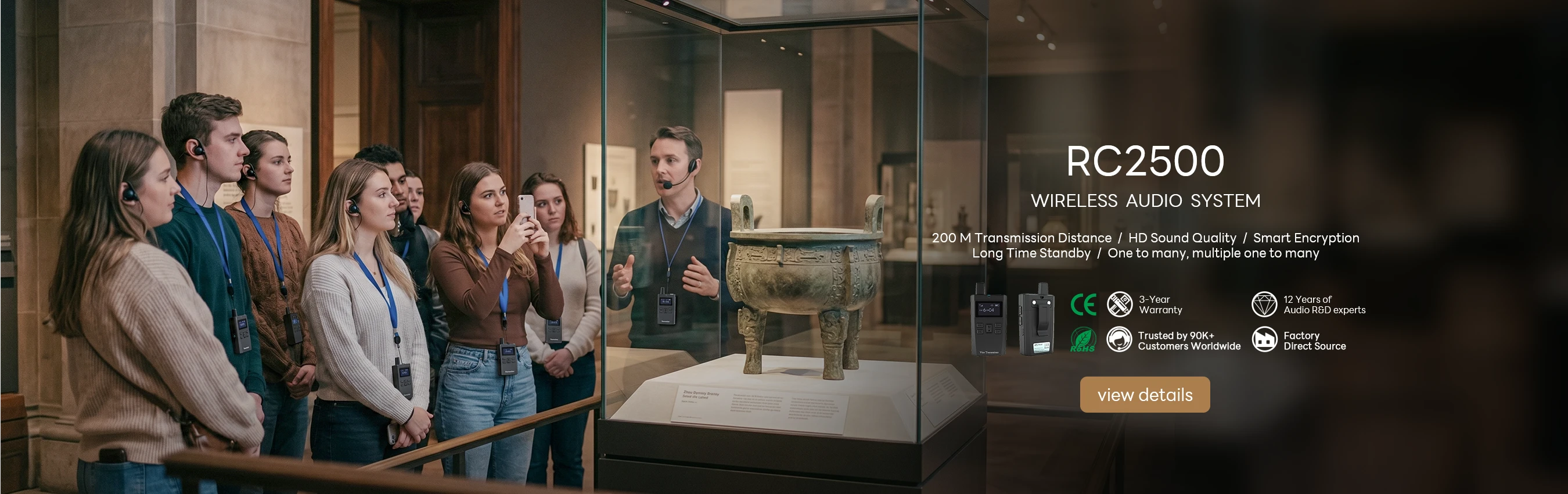
Three Richitek systems face two rivals already specified for industrial visits. The TAKSTAR WTG-700 is a UHF system sold with a charging case that disinfects. Globibo runs multi-band UHF hardware across 470-510MHz, 794-806MHz and 800-823MHz, mostly through managed rental fleets in Asia-Pacific. The RC8860 is UHF; the RC2500 and RC2406 run on 2.4GHz. That split matters.

What a Food Plant Does That a Museum Does Not

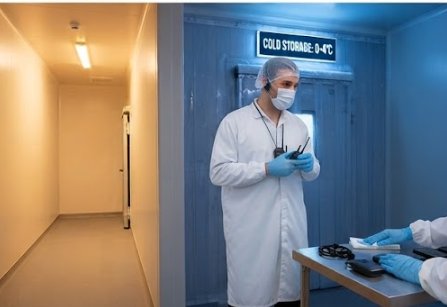
Three differences set the requirements. Visitors wear hairnets, gloves and a coat before they reach the floor, so anything handed to them goes on and off over that kit all day. Receivers are shared between strangers dozens of times a week, which makes cleaning a specification rather than a courtesy. And the route crosses zones that behave nothing alike: a dry packing hall, a chilled room near 4°C, and a washdown area.

None of the five is rated for high-pressure washdown. The best ingress protection on the Richitek side is IPX4 splash resistance; TAKSTAR and Globibo publish no IP rating at all. If a receiver must live in a washdown zone, the answer is a barrier, not a better radio: keep the electronics outside and hand off at a clean point. Anyone selling you an IP69K audio receiver is selling you something else. All five quote roughly 200m, Globibo up to 300m line of sight.

Door One: Hygiene

The two rivals are simply ahead of us here. TAKSTAR ships the WTG-700 with optional 54-slot and 30-slot charging cases, both listing UV disinfection. Globibo specifies hygienic foam windscreens and sealed packaging for its microphones. Both answer the shared-equipment problem directly.

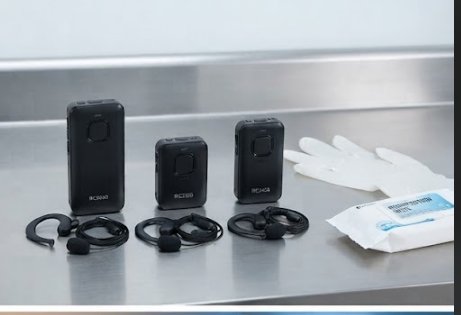
Richitek publishes no disinfection accessory, no UV case and no single-use windscreen for any of the three here. That is a real gap for a plant running four groups a day. The workaround is manual: alcohol wipes on the housings, a wipe-down station at the end of the route, and spare ear hooks. It works, but it is labour the TAKSTAR case removes.

Door Two: Cold

Chilled production runs around 0-4°C, and freezers sit far below that. Battery chemistry fails first, condensation second. Only one of the five publishes an operating temperature: the RC2500, at -15°C to 50°C. That covers a chilled room with margin. It does not cover a -18°C freezer, and no system here claims to.

For the other four, operating temperature is not published. That does not mean untested, but a buyer cannot put a number in a tender. If a route crosses a cold store, get the answer in writing on the quote. The RC2500 is also the endurance leader, at 40 hours against 8 hours for the TAKSTAR earhook receiver.

Door Three: Metal, and a Straight Answer on Spectrum

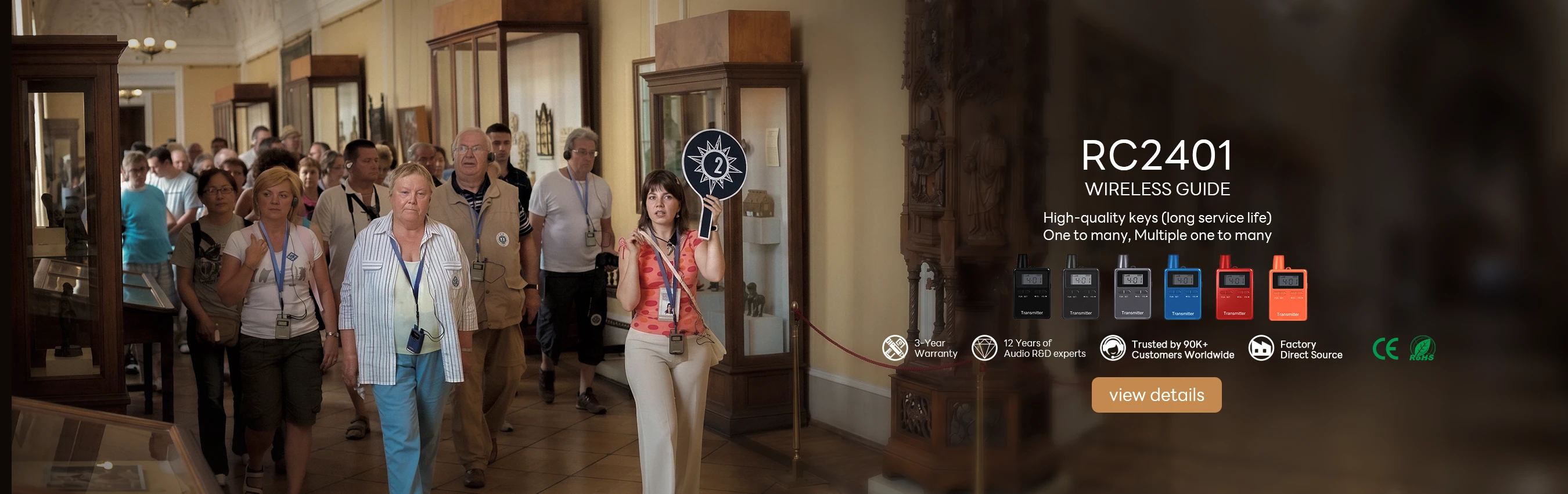
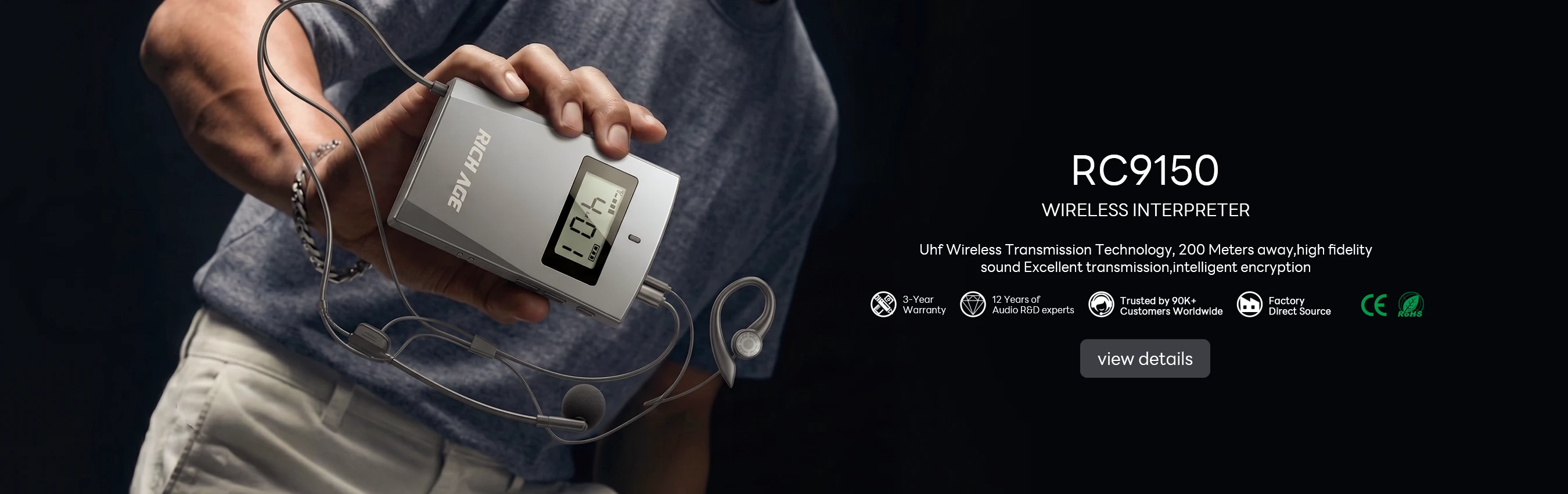
This is where our own catalogue disagrees with itself. The RC8860 page argues that UHF punches "through concrete walls, metal shelving, and industrial machinery" and calls 860-870MHz "globally accepted, no license required in most regions." The RC2406 FAQ says the opposite: "Unlike UHF systems that may require regional frequency licenses, the RC2406 operates on the global 2.4GHz band." The RC2500 takes a third position, calling its 20mW output "exceptionally reliable in large factories with dense machinery."

All three are our pages. They cannot all be the whole truth. The accurate version: UHF around 800-870MHz propagates better past metal at equal power, because lower frequencies diffract more; it is licence-exempt in some regions and restricted in others, which is exactly why Globibo sells three frequency variants. And 2.4GHz is licence-free worldwide but shares spectrum with Wi-Fi, so a plant with dense access points is hostile to it. Check your country's allocation before ordering either band, and do not take a vendor's "global" claim at face value, including ours.

The Numbers

SpecificationRC8860RC2500RC2406TAKSTAR WTG-700Globibo
BandUHF 860-870MHz2.4GHz2.4GHzUHF 800-1000MHzUHF 470-510 / 794-806 / 800-823MHz
Channels20 PLL50 PLL80 PLL6564-99 preset
TX battery10h12hFull day10hup to 14h
RX battery20h40hNot published8h10-20h
Weight TX / RX59g / 50g55g50g83g / 18g98g / 50g
Audio response50Hz-12kHz20Hz-20kHzNot published20Hz-16kHz50Hz-12kHz
IngressIPX4IP42IPX4None publishedNone published
Operating tempNot published-15 to 50°CNot publishedNot publishedNot published
HygieneNone publishedNone publishedNone publishedUV caseFoam + sealed

Three Doors Before the Packing Line(图1)

How the Three Doors Sort the Field

ZoneWhat fails firstBest fit hereWhy
Packing hall, 80dB+Fatigue, unclear voiceRC250020mW output, 40h receiver
Chilled room 0-4°CBattery, condensationRC2500Only published temperature range
Metal-dense process area2.4GHz multipathRC8860UHF diffracts around machinery
Handover, disinfectionShared ear hooksTAKSTAR WTG-700UV case, 30 or 54 slots
Multi-group visit dayChannel scarcityRC2406 or Globibo80 channels, or 99 preset

Three Doors Before the Packing Line(图2)

Where Each System Loses

The RC8860 has the narrowest audio band of the five at 50Hz-12kHz, the same figure Globibo publishes, and half the channels of the RC2406. Twenty channels suits two or three groups and is tight for a procurement day with six. The RC2406 leads on channels and ties for the lightest body at 50g, but its page lists no transmit power and no operating temperature. The RC2500 wins endurance and temperature outright, yet must fight Wi-Fi for spectrum.

Globibo is sold as a managed service, so hardware pricing is not published and receiver endurance varies from 10 to 20 hours by variant: you compare a range, not a number. TAKSTAR publishes the most complete datasheet of the five at $98 per transmitter and $58 per receiver, but its 18g earhook receiver runs only 8 hours, a single shift, with no ingress rating published.

How to Specify
Three Doors Before the Packing Line(图3)

Work backwards from the route. Map every zone, note temperature and noise, then pick hardware. If the route stays dry and warm, channel count and disinfection capacity decide it. If it crosses a chilled room, temperature and battery move to the top. If the process floor is dense with stainless vessels, shortlist UHF and verify your country's allocation before signing.

Then buy two things instead of one. A single system across every zone gets the wrong compromise somewhere; the common pattern is a 2.4GHz fleet for general visits plus a small UHF set where metal wins. Our headsets for plant tours page covers hygiene and fit, and our factory tour solutions page shows how routes get zoned.

Compare the hardware directly: the RC8860 UHF system, the RC2500 high-power system and the RC2406 80-channel system cover the three positions above. More comparisons set these against other brands.


2026年09月12日 15:53
click: 21
no data
Home > VS

Three Doors Before the Packing Line

time: 2026年09月12日 click:21

Three Doors Before the Packing Line

A food factory is the least forgiving place to run a visitor audio system. A museum asks one thing: be quiet and be clear. A plant asks three, and they pull in different directions. Equipment must survive disinfection between groups, keep working in a chilled room, and hold a signal inside a building made of stainless steel. The honest answer is usually a mix, not a winner.

Richitek RC8860, RC2500 and RC2406 vs TAKSTAR WTG-700 and Globibo Tour Guide Systems for Food Factory Tours

Three Richitek systems face two rivals already specified for industrial visits. The TAKSTAR WTG-700 is a UHF system sold with a charging case that disinfects. Globibo runs multi-band UHF hardware across 470-510MHz, 794-806MHz and 800-823MHz, mostly through managed rental fleets in Asia-Pacific. The RC8860 is UHF; the RC2500 and RC2406 run on 2.4GHz. That split matters.

What a Food Plant Does That a Museum Does Not

Three differences set the requirements. Visitors wear hairnets, gloves and a coat before they reach the floor, so anything handed to them goes on and off over that kit all day. Receivers are shared between strangers dozens of times a week, which makes cleaning a specification rather than a courtesy. And the route crosses zones that behave nothing alike: a dry packing hall, a chilled room near 4°C, and a washdown area.

None of the five is rated for high-pressure washdown. The best ingress protection on the Richitek side is IPX4 splash resistance; TAKSTAR and Globibo publish no IP rating at all. If a receiver must live in a washdown zone, the answer is a barrier, not a better radio: keep the electronics outside and hand off at a clean point. Anyone selling you an IP69K audio receiver is selling you something else. All five quote roughly 200m, Globibo up to 300m line of sight.

Door One: Hygiene

The two rivals are simply ahead of us here. TAKSTAR ships the WTG-700 with optional 54-slot and 30-slot charging cases, both listing UV disinfection. Globibo specifies hygienic foam windscreens and sealed packaging for its microphones. Both answer the shared-equipment problem directly.

Richitek publishes no disinfection accessory, no UV case and no single-use windscreen for any of the three here. That is a real gap for a plant running four groups a day. The workaround is manual: alcohol wipes on the housings, a wipe-down station at the end of the route, and spare ear hooks. It works, but it is labour the TAKSTAR case removes.

Door Two: Cold

Chilled production runs around 0-4°C, and freezers sit far below that. Battery chemistry fails first, condensation second. Only one of the five publishes an operating temperature: the RC2500, at -15°C to 50°C. That covers a chilled room with margin. It does not cover a -18°C freezer, and no system here claims to.

For the other four, operating temperature is not published. That does not mean untested, but a buyer cannot put a number in a tender. If a route crosses a cold store, get the answer in writing on the quote. The RC2500 is also the endurance leader, at 40 hours against 8 hours for the TAKSTAR earhook receiver.

Door Three: Metal, and a Straight Answer on Spectrum

This is where our own catalogue disagrees with itself. The RC8860 page argues that UHF punches "through concrete walls, metal shelving, and industrial machinery" and calls 860-870MHz "globally accepted, no license required in most regions." The RC2406 FAQ says the opposite: "Unlike UHF systems that may require regional frequency licenses, the RC2406 operates on the global 2.4GHz band." The RC2500 takes a third position, calling its 20mW output "exceptionally reliable in large factories with dense machinery."

All three are our pages. They cannot all be the whole truth. The accurate version: UHF around 800-870MHz propagates better past metal at equal power, because lower frequencies diffract more; it is licence-exempt in some regions and restricted in others, which is exactly why Globibo sells three frequency variants. And 2.4GHz is licence-free worldwide but shares spectrum with Wi-Fi, so a plant with dense access points is hostile to it. Check your country's allocation before ordering either band, and do not take a vendor's "global" claim at face value, including ours.

The Numbers

SpecificationRC8860RC2500RC2406TAKSTAR WTG-700Globibo
BandUHF 860-870MHz2.4GHz2.4GHzUHF 800-1000MHzUHF 470-510 / 794-806 / 800-823MHz
Channels20 PLL50 PLL80 PLL6564-99 preset
TX battery10h12hFull day10hup to 14h
RX battery20h40hNot published8h10-20h
Weight TX / RX59g / 50g55g50g83g / 18g98g / 50g
Audio response50Hz-12kHz20Hz-20kHzNot published20Hz-16kHz50Hz-12kHz
IngressIPX4IP42IPX4None publishedNone published
Operating tempNot published-15 to 50°CNot publishedNot publishedNot published
HygieneNone publishedNone publishedNone publishedUV caseFoam + sealed

Three Doors Before the Packing Line(图1)

How the Three Doors Sort the Field

ZoneWhat fails firstBest fit hereWhy
Packing hall, 80dB+Fatigue, unclear voiceRC250020mW output, 40h receiver
Chilled room 0-4°CBattery, condensationRC2500Only published temperature range
Metal-dense process area2.4GHz multipathRC8860UHF diffracts around machinery
Handover, disinfectionShared ear hooksTAKSTAR WTG-700UV case, 30 or 54 slots
Multi-group visit dayChannel scarcityRC2406 or Globibo80 channels, or 99 preset

Three Doors Before the Packing Line(图2)

Where Each System Loses

The RC8860 has the narrowest audio band of the five at 50Hz-12kHz, the same figure Globibo publishes, and half the channels of the RC2406. Twenty channels suits two or three groups and is tight for a procurement day with six. The RC2406 leads on channels and ties for the lightest body at 50g, but its page lists no transmit power and no operating temperature. The RC2500 wins endurance and temperature outright, yet must fight Wi-Fi for spectrum.

Globibo is sold as a managed service, so hardware pricing is not published and receiver endurance varies from 10 to 20 hours by variant: you compare a range, not a number. TAKSTAR publishes the most complete datasheet of the five at $98 per transmitter and $58 per receiver, but its 18g earhook receiver runs only 8 hours, a single shift, with no ingress rating published.

How to Specify

Three Doors Before the Packing Line(图3)

Work backwards from the route. Map every zone, note temperature and noise, then pick hardware. If the route stays dry and warm, channel count and disinfection capacity decide it. If it crosses a chilled room, temperature and battery move to the top. If the process floor is dense with stainless vessels, shortlist UHF and verify your country's allocation before signing.

Then buy two things instead of one. A single system across every zone gets the wrong compromise somewhere; the common pattern is a 2.4GHz fleet for general visits plus a small UHF set where metal wins. Our headsets for plant tours page covers hygiene and fit, and our factory tour solutions page shows how routes get zoned.

Compare the hardware directly: the RC8860 UHF system, the RC2500 high-power system and the RC2406 80-channel system cover the three positions above. More comparisons set these against other brands.
no data
×

Contact us

email:
name:
subject:
content: