
.webp)
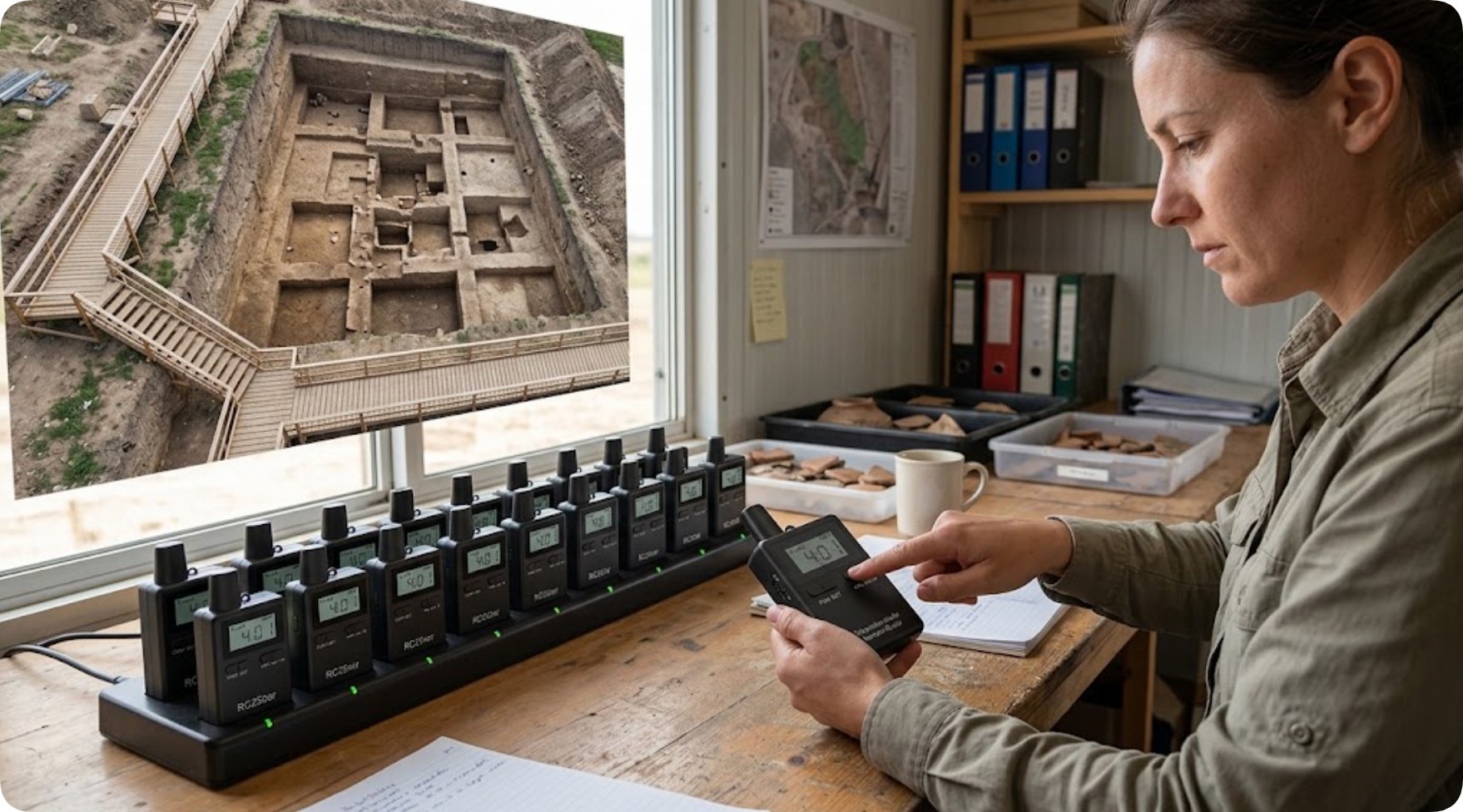
The interesting thing about outdoor venues this season is not that the equipment got better. It is that the tours changed shape underneath the equipment. Three separate operators told us versions of the same story: the group no longer moves as a group, the commentary no longer comes from one person, and the language question is no longer an occasional request but a standing assumption. Those three shifts are not marketing language, they are operational facts reported from archaeological parks, agricultural open days and industrial heritage sites, and each one invalidates a piece of conventional buying advice. Distance still matters, but it is no longer the number that decides the purchase. If you are planning the coming season, begin with outdoor large venue tour solutions and then read the three shifts before you read a range specification.
💡 Why the Flag Stopped Working
The guided group that follows a raised flag in single file is becoming the exception rather than the rule. Visitors arriving from self-guided museum and audio-walk habits expect to move at their own pace, to stop and look, and to rejoin without being marched. Operators have adapted by allowing the group to spread across a much larger footprint than a decade ago, often across several hundred metres of open ground with trees, walls and slopes in between. That behaviour breaks the old assumption that a tour is a compact cluster within easy line of sight. What matters now is whether a visitor who has drifted to the edge of the site can still hear the guide clearly, which is a coverage question rather than a distance question. A system that reaches two hundred metres in open air and thirty metres behind a hedge is only as good as its weakest direction.
From One Voice to Several
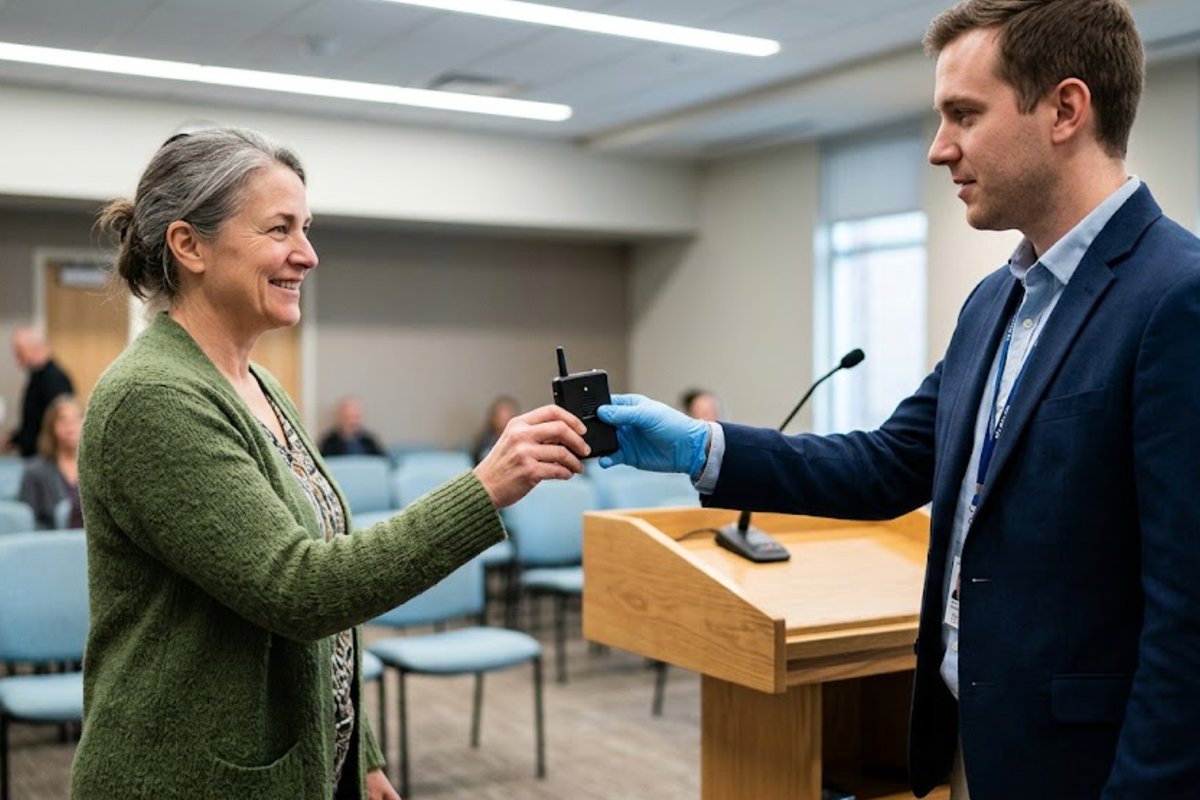
The second shift is that the commentary now comes from more than one person. A site that once ran a single guide through a fixed script now runs a curator at the entrance, a specialist at the excavation, and a local grower at the demonstration plot, each speaking from a different position and each needing to be heard by the same audience. Some operators hand the transmitter between speakers; others run two or three speakers on separate channels and switch the audience between them. Both patterns are now common enough that a system which only supports one transmitter and one channel is a constraint rather than a simplification. The practical consequence is that channel count and handover speed have become buying criteria for sites that never used to think about either.
Multilingual Is Now the Default
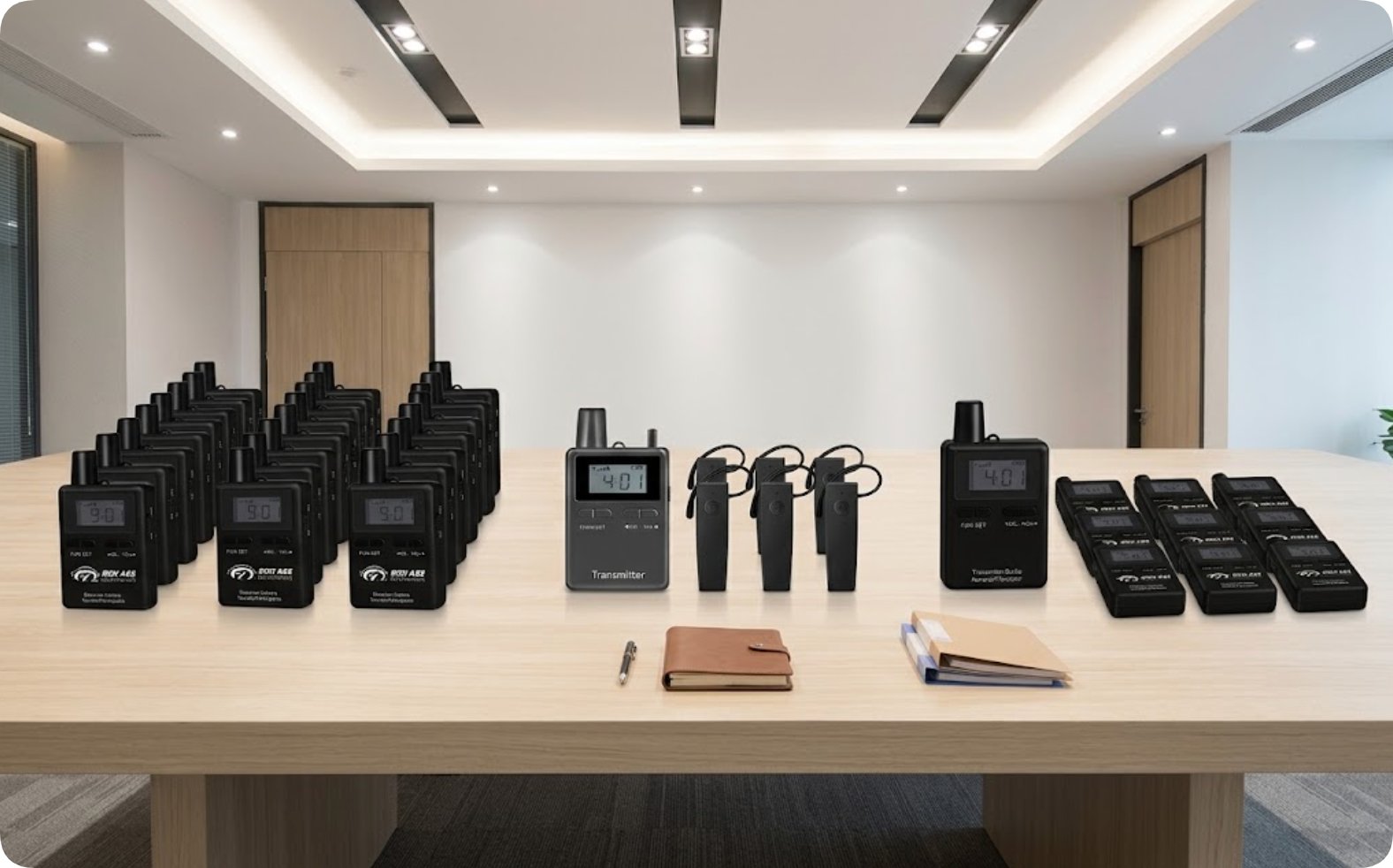
The third shift is the one with the longest procurement tail. Multilingual provision at outdoor sites has moved from a special arrangement for pre-booked international groups to a standing expectation, partly because inbound travel recovered unevenly and partly because domestic audiences at heritage and agricultural sites are themselves multilingual. Sites that used to keep two language channels as a contingency now run three or four as a matter of course, and the ones caught out are those who bought a two-channel system on the assumption that a second language would be an occasional request. Running four channels is not simply a matter of buying a four-channel transmitter; it changes how receivers are issued, labelled and collected, and it needs a channel plan written down before the season rather than improvised on the first busy morning.
📡 A Transmitter Built for Moving Speakers
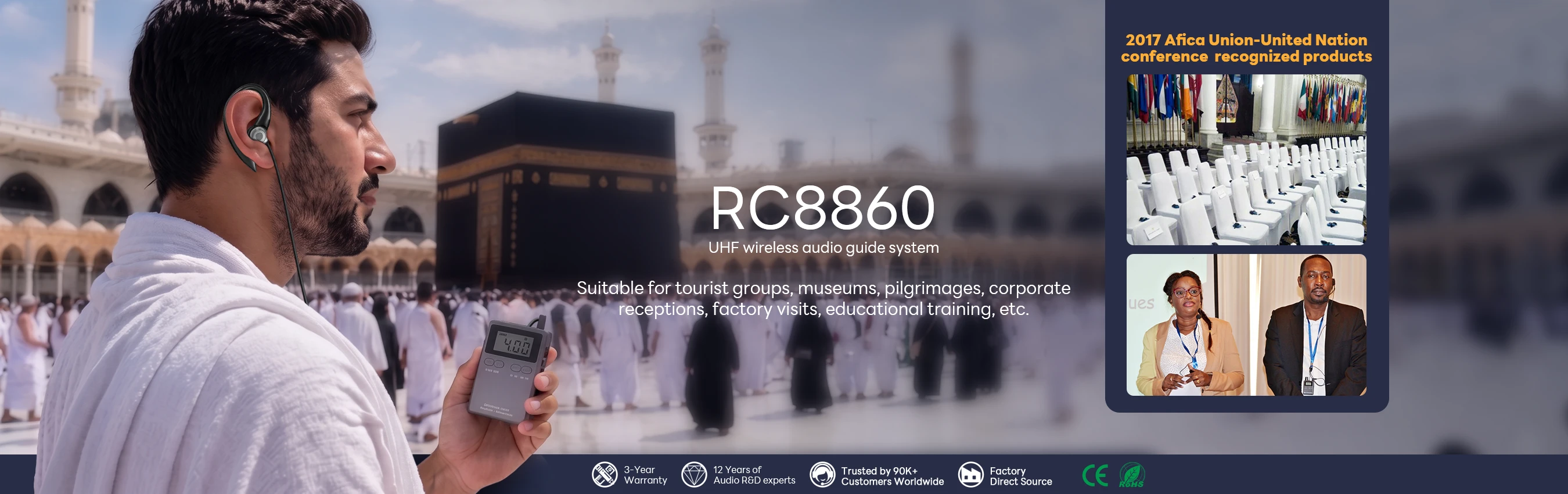
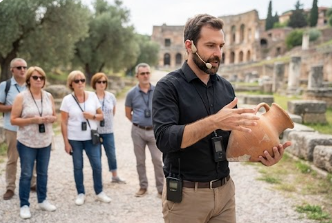
The first two shifts together explain why the transmitter has become the most re-thought part of the kit. A speaker who walks, gestures, handles props and hands over mid-sentence needs a unit that stays out of the way and survives being passed between people. The RC8860 Tour Guide Transmitter is designed for exactly that pattern of use: a belt-worn body that does not restrict a speaker who is demonstrating something with both hands, a headset that stays put across uneven ground, and enough channel capacity to keep a second or third speaker live without a re-tune between stops. The operators who adopted it earliest were the ones running demonstration-led days rather than lecture-led walks, which is a useful signal about where the format is heading.
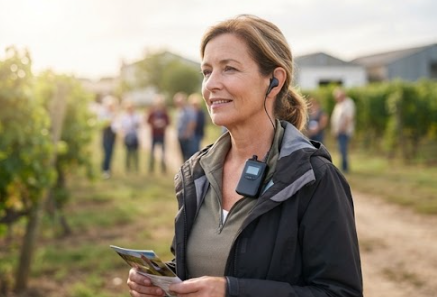
An RC8860 worn by a speaker who is walking and demonstrating, with a second channel kept live for the next presenter.
Digital Where Analogue Gives Up
The coverage problem from the first shift is best answered by changing the link rather than by increasing power. Open ground with scattered obstacles is precisely the environment where an analogue signal degrades gradually into hiss rather than failing cleanly, and a visitor who can hear that the audio is poor will drift further away looking for a better spot, which makes the perceived problem worse. A digital link holds full intelligibility out to the edge of its range and then stops, which sounds like a disadvantage until you watch a group behave: listeners who can hear clearly stop moving, and listeners who hear hiss keep wandering. The RC085 Digital Tour Guide System is the unit specified where the site has exactly that profile, and the field reports consistently describe the same effect: fewer visitors asking the guide to repeat themselves at the back.
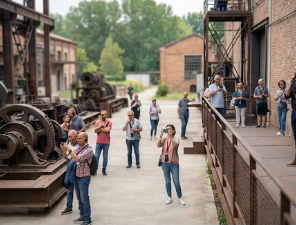
An RC085 holding intelligible audio out to the edges of a spread-out outdoor group, where an analogue link would have degraded into hiss.
Comfort Over a Whole Day, Not an Hour
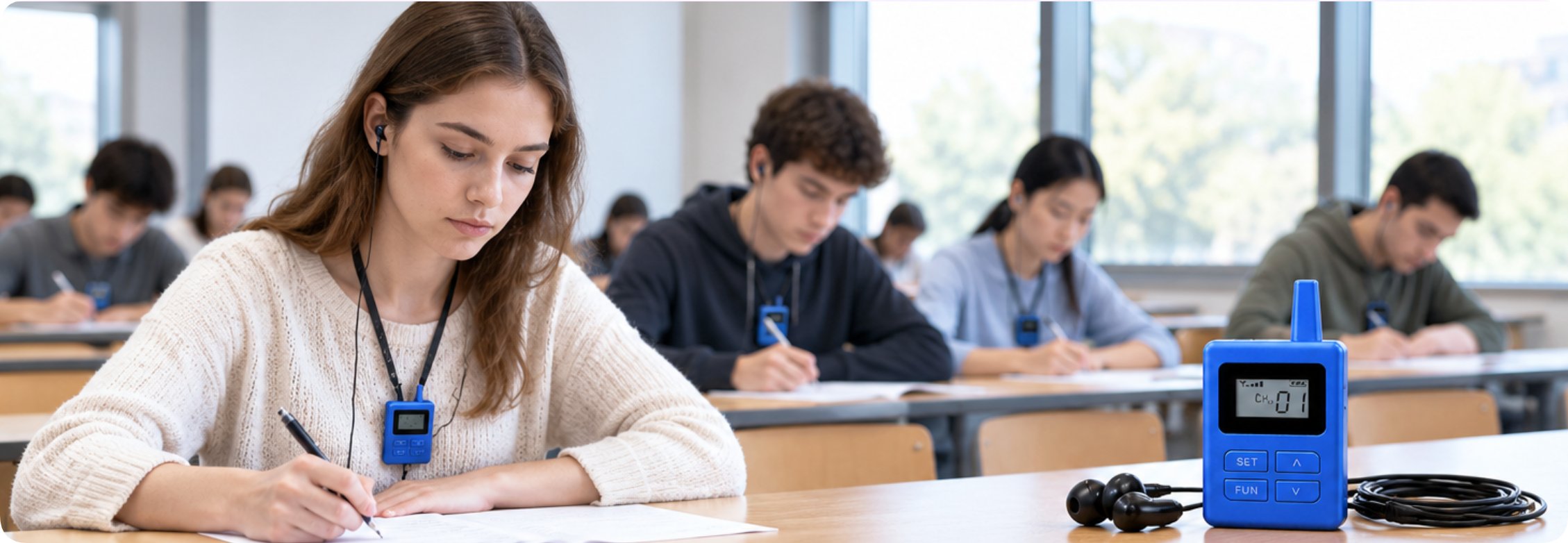
The third practical change is about duration rather than distance. A site tour that used to last ninety minutes now frequently runs a half day or a full day, often as a multi-stop programme with transport between zones. A receiver that is comfortable for an hour can become genuinely unpleasant across six, and a visitor who has been wearing an uncomfortable earpiece since morning will simply stop using it by the afternoon, which is a failure that never appears in the equipment log. The RC2501 Wireless Tour Guide System is chosen for these programmes because the wearing arrangement stays comfortable across a full day and the shell tolerates being carried in a pocket between stops. For a programme that sells itself as a day out, hour-one comfort is not the specification that matters.
An RC2501 worn across a full-day outdoor programme, where comfort at hour six matters more than comfort at hour one.
Coverage Maps replace Range Claims
The most useful thing a supplier can now produce is not a range figure but a coverage map. A single number quoted for open air tells a site almost nothing about a route that crosses a walled garden, a stand of trees and a metal-roofed barn, and two systems with identical published range can behave completely differently on the same ground. The table below sets out what to record for each zone of a site and what the recording tells you, which is the survey that replaces the brochure comparison.
| Site zone | What to record | What it tells you | Usual surprise |
|---|---|---|---|
| Open ground | Clear audio distance in four directions | True working radius | Differs by direction more than expected |
| Behind walls or hedges | Where audio breaks up, not where it stops | Digital versus analogue behaviour | Hiss starts well before total loss |
| Near metal structures | Dropout zones near barns and vehicles | Where a second transmitter is needed | Metal roofing is the worst case |
| Crowd pinch points | Body blocking at gates and stiles | Receiver height and antenna position | Pinch points fail before open ground |
| Full-day programmes | Battery at hour six, not hour one | Real endurance margin | Stated life assumes no re-tunes |
Specifying Before the Gates Open
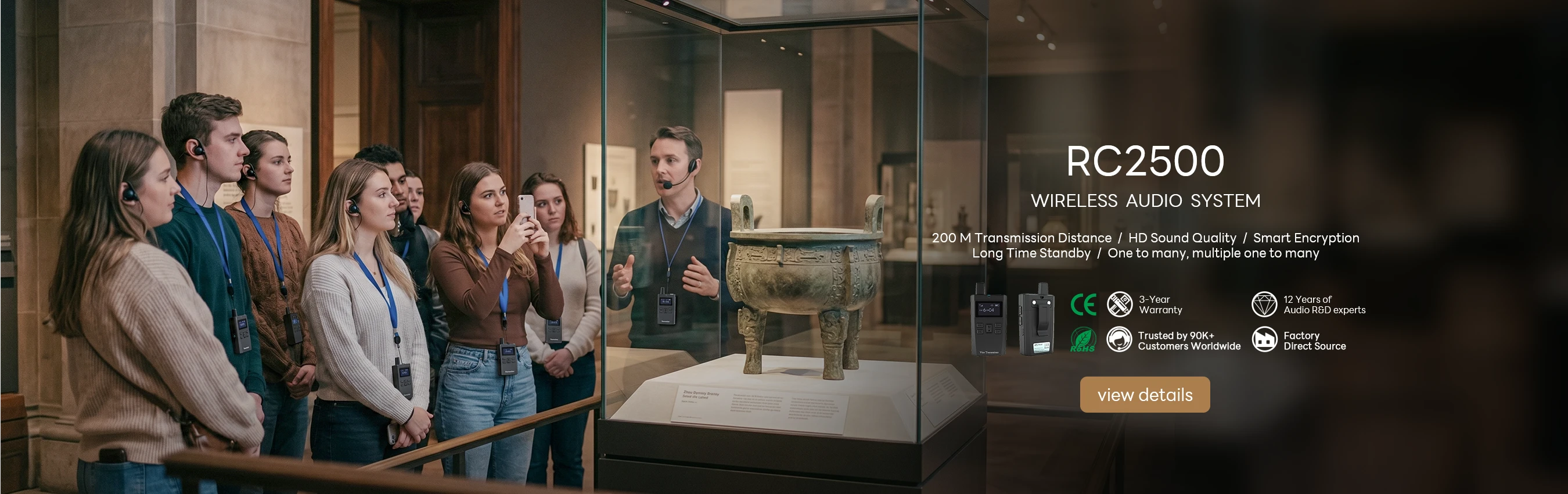
The pattern across all of this is that the equipment question has become downstream of the format question. Decide first whether the group moves as a cluster or spreads, second whether one person speaks or several, third how many languages are standing rather than occasional, and fourth how long a programme actually lasts. Those four answers determine the transmitter, the link type, the channel count and the receiver model in that order, and any of them answered wrongly produces a system that is technically adequate and operationally wrong. The wider wireless tour guide system range covers the transmitters, digital links and receivers discussed above, and RC085, RC2500 and RC2408 measured outdoors shows what the same decisions look like when the results are recorded rather than claimed. Send us a site plan and a programme outline and we will tell you which of the three shifts is going to cost you most this season.