
A leading China factory specializing in Wireless Tour Guide Systems, Church Audio Guides, and Translation Headphones with premium OEM/ODM solutions.

Tel:+86 13825295213

Email:tiger.wang@richitek.com

RC8860 and RC2500: Choosing a Wireless Tour Guide System for Heritage Sites

A heritage site is one of the few places where a single audio system has to behave like two different products. Walk a group through a covered gallery and the challenge is channel separation, because three tour parties will cross the same corridor within ten minutes of each other. Take the same group out across an open ruin and the challenge changes completely: distance, wind noise, and no power socket within two hundred metres. I have watched operators buy two sets for exactly this reason, one for indoors and one for the grounds, when the right answer is usually a single guide system chosen for the harder half of the route. The two units worth measuring against that test are the RC8860 and the RC2500, and the interesting question is not which one is newer. It is which part of the site each one was built to survive. I work this out the same way every time: walk the route first, write down what it demands, then match hardware to constraints instead of to a brochure. Sites that mix covered rooms with open ground are the reason the city tour wireless audio solutions range exists, and it is the closest starting point for a heritage trail that refuses to stay inside one building.

The Ground That Demands Two Kinds of Coverage

A heritage route is rarely one environment. It is a sequence of them, and the sequence is what breaks a badly specified setup. The first hundred metres may be a stone corridor with a vaulted ceiling that throws every word straight back at the speaker. Fifty metres later the group steps into a courtyard where the same voice has to cross open air to reach a visitor standing at the back. Later still, the route may pass a working area with machinery running on the other side of a fence. Each of these asks something different from a transmitter and a receiver, and the unit that is comfortable in the corridor is often the one that gives up in the courtyard. That is why the useful comparison is not indoor against outdoor. It is how much of the route a system can cover before the operator has to change behaviour, whether that means raising a voice, gathering the group closer, or bolting on extra hardware.

Carrying the Transmitter: A Change in Body Position

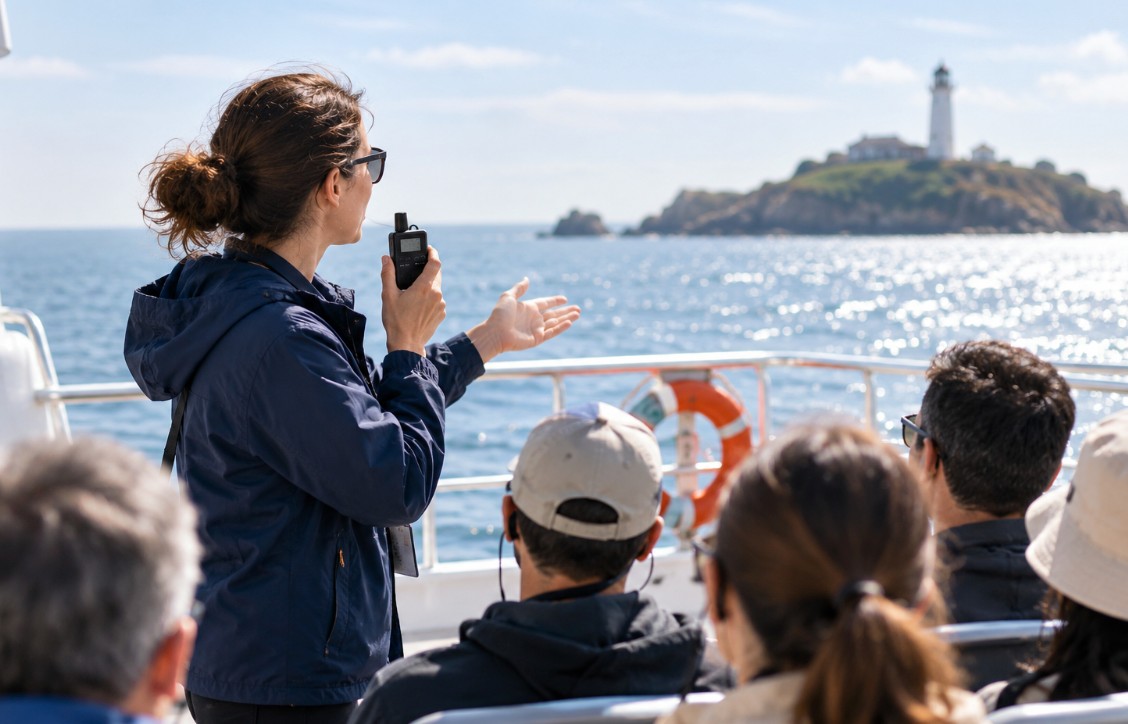
The clearest shift in this product class is where the transmitter sits on the guide's body. Older setups expected the guide to hold a small box in one hand, which is fine in a lecture room and hopeless on a staircase. The RC8860 moves the transmitter onto a belt or waistband, and at 59 g it does not change the way the guide walks, turns or gestures. That matters far more on a heritage route than it does in a hall, because a guide is constantly pointing at details, opening doors and steadying visitors on uneven steps, and every one of those actions needs a free hand. Once the transmitter is clipped on, the guide stops thinking about it. That is the actual benefit: not a specification, but the disappearance of a small task from the front of the guide's attention.
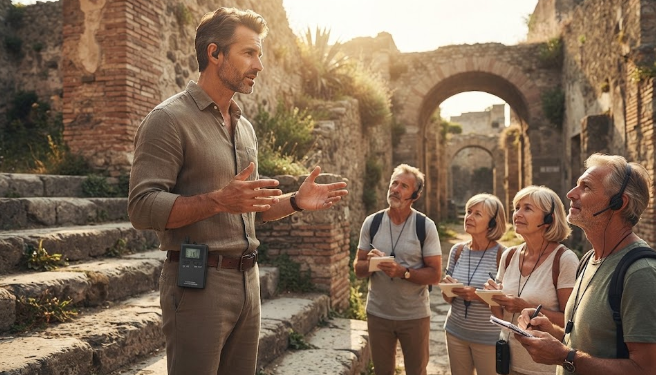
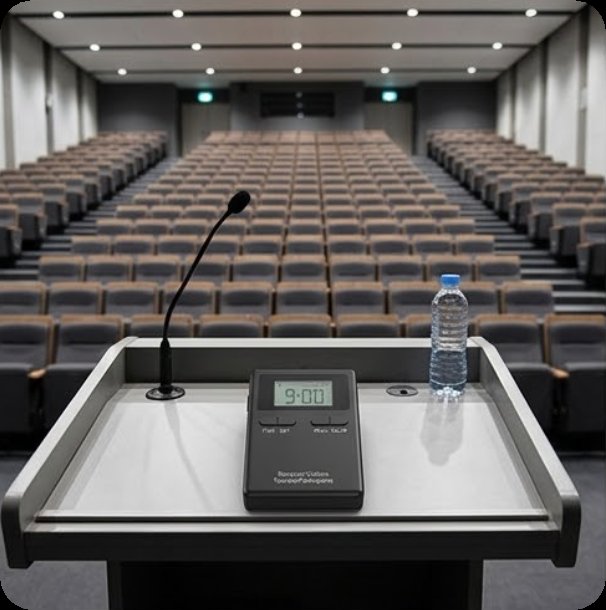
RC8860 and RC2500: Choosing a Wireless Tour Guide System for Heritage Sites(图1)

The transmitter above is worn rather than carried, which is the whole point of the change in form. A guide who is not holding a device can point at a carved panel, open a heavy door and offer a hand on a worn step without interrupting the commentary.

Group Management as Visitor Numbers Climbed

The second evolution is in how many listeners one guide can hold together. Heritage sites rarely run at a fixed group size. A quiet Tuesday may bring six people, a school booking may bring thirty, and a cruise excursion may split a single party across two languages at once. The RC2500 was designed for exactly that middle ground: at 55 g it is a compact unit for small and medium groups, light enough that visitors forget they are wearing a receiver at all. That matters because a receiver that feels like equipment changes visitor behaviour. People fidget, adjust, and stop listening. The practical result is that guides can run tighter, more frequent departures through the same rooms instead of merging everyone into one long circuit, which is how a busy site keeps its corridors from turning into a bottleneck.
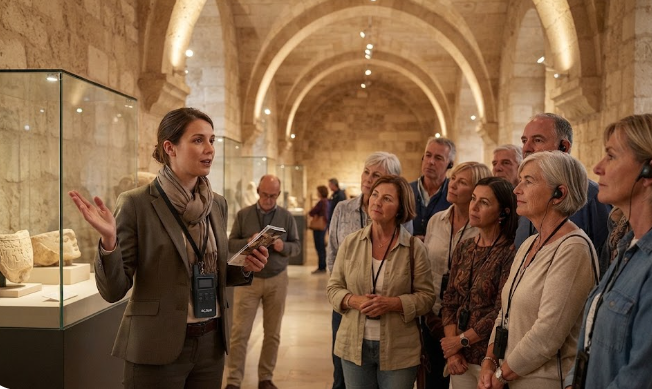
RC8860 and RC2500: Choosing a Wireless Tour Guide System for Heritage Sites(图2)

The group above is gathered at close range in a covered room, which is where a compact receiver does its best work. Light units and short, tight circuits keep a busy gallery moving without the queue that builds when one large party blocks a doorway.

Protection Ratings Once the Route Left the Building

Sealing is the specification that quietly decides whether a system survives a season. The RC8860 carries an IP54 rating, which covers dust ingress and water spray from any direction, and that is the level a device needs once a route runs outside in weather that changes during the tour. The RC2500 sits at IP42, which is the right rating for a covered interior where the risks are dust from stone and the occasional splash rather than rain. I would not read that as one unit being better than the other. A higher rating usually comes with a heavier shell and a firmer seal, which is wasted on a receiver that never leaves a gallery. The mistake to avoid is the reverse: taking a light interior unit onto an exposed ruin in autumn, then blaming the brand when a shower ends the day early. Match the rating to the most exposed point on the route, not to the average.

Battery Planning for a Full Visiting Day

Battery life is where the two units converge, and that convergence is itself the story. Both the RC8860 and the RC2500 run for around twelve hours on a charge, which is longer than most heritage sites are open. Ten years ago a full-day route needed spare batteries, a charging rotation and a staff member who owned that task. Twelve hours removes the whole problem for a visitor day, and it also tells you what the market now treats as a baseline rather than a premium feature. The remaining discipline is physical rather than electrical. A charging position at the end of the route, labelled and in the same place every evening, is worth more than a slightly larger battery, because a unit returned to a drawer will not be charged when the next group arrives.

Both Units Side by Side

SpecificationRC8860RC2500
Transmitter weight59 g55 g
Battery life12 hours12 hours
Ingress protectionIP54IP42
Designed roleHigh-motion outdoor coaching transmitterCompact guide unit for small and medium groups
Strongest section of a routeOpen ground, courtyards, uneven stepsCovered galleries, exhibition rooms, tight interiors

The table is really a map of the route rather than a ranking. Read down the protection and role rows and you get the split between the two units; read across the battery row and you see that daily endurance is no longer the deciding factor. A direct RC2500 vs RC8860 breakdown covers the channel and pairing behaviour in more depth if you are choosing between them for a single site.

Which Unit Fits Which Route

I would size this by the worst ten minutes of the route, not the average. If the ten worst minutes happen outdoors, on open ground, with a guide who has to walk and point at the same time, the RC8860 is the correct transmitter: the belt position and the IP54 shell were built for exactly that stretch. If the ten worst minutes happen indoors, in a narrow gallery with several parties moving through, the compact RC2500 is the better fit, and the lighter shell is an advantage rather than a compromise. Many heritage sites will recognise both descriptions, and that is a legitimate reason to run both units in one operation, with the choice made per route rather than per site. What I would avoid is specifying by price alone, because the cheap unit is the one that gets replaced in the middle of a season. A broader look at the wireless tour guide system range shows how the other models in the family sit around these two, which helps when a site wants one supplier for every route it runs.

Extending the Setup to New Departments

The last consideration is what happens after the first route works. A heritage site that has solved its main trail usually finds two more departments asking for the same thing: education staff running school sessions, and front-of-house staff managing arrivals. Equipment that already lives in the building can be redeployed across both, which is where a system chosen for the hardest route pays for itself a second time. Groups that run long itineraries across several sites benefit from the same logic, and the pattern is visible in operations such as Mediterránea Heritage Tours, where one kit travels between venues rather than each venue buying its own. The deciding question is not which model is more advanced. It is which one the staff can hand over, charge and trust at the end of a long day, because that is the version of the system that is still in use a year from now.
2026年09月10日 10:41
click: 13
no data

RC8860 and RC2500: Choosing a Wireless Tour Guide System for Heritage Sites

time: 2026年09月10日 click:13

A heritage site is one of the few places where a single audio system has to behave like two different products. Walk a group through a covered gallery and the challenge is channel separation, because three tour parties will cross the same corridor within ten minutes of each other. Take the same group out across an open ruin and the challenge changes completely: distance, wind noise, and no power socket within two hundred metres. I have watched operators buy two sets for exactly this reason, one for indoors and one for the grounds, when the right answer is usually a single guide system chosen for the harder half of the route. The two units worth measuring against that test are the RC8860 and the RC2500, and the interesting question is not which one is newer. It is which part of the site each one was built to survive. I work this out the same way every time: walk the route first, write down what it demands, then match hardware to constraints instead of to a brochure. Sites that mix covered rooms with open ground are the reason the city tour wireless audio solutions range exists, and it is the closest starting point for a heritage trail that refuses to stay inside one building.

The Ground That Demands Two Kinds of Coverage

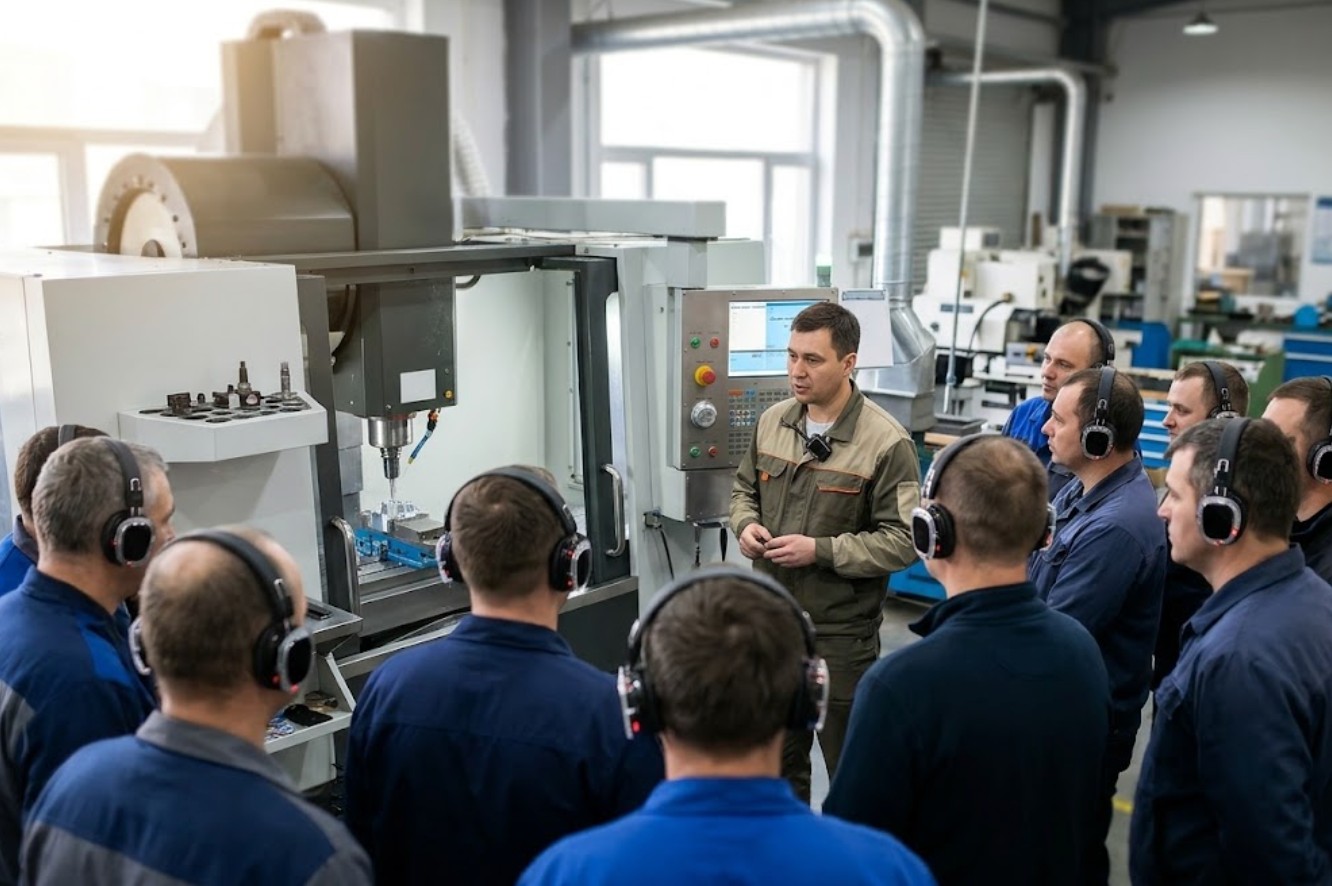
A heritage route is rarely one environment. It is a sequence of them, and the sequence is what breaks a badly specified setup. The first hundred metres may be a stone corridor with a vaulted ceiling that throws every word straight back at the speaker. Fifty metres later the group steps into a courtyard where the same voice has to cross open air to reach a visitor standing at the back. Later still, the route may pass a working area with machinery running on the other side of a fence. Each of these asks something different from a transmitter and a receiver, and the unit that is comfortable in the corridor is often the one that gives up in the courtyard. That is why the useful comparison is not indoor against outdoor. It is how much of the route a system can cover before the operator has to change behaviour, whether that means raising a voice, gathering the group closer, or bolting on extra hardware.

Carrying the Transmitter: A Change in Body Position

The clearest shift in this product class is where the transmitter sits on the guide's body. Older setups expected the guide to hold a small box in one hand, which is fine in a lecture room and hopeless on a staircase. The RC8860 moves the transmitter onto a belt or waistband, and at 59 g it does not change the way the guide walks, turns or gestures. That matters far more on a heritage route than it does in a hall, because a guide is constantly pointing at details, opening doors and steadying visitors on uneven steps, and every one of those actions needs a free hand. Once the transmitter is clipped on, the guide stops thinking about it. That is the actual benefit: not a specification, but the disappearance of a small task from the front of the guide's attention.

RC8860 and RC2500: Choosing a Wireless Tour Guide System for Heritage Sites(图1)

The transmitter above is worn rather than carried, which is the whole point of the change in form. A guide who is not holding a device can point at a carved panel, open a heavy door and offer a hand on a worn step without interrupting the commentary.

Group Management as Visitor Numbers Climbed

The second evolution is in how many listeners one guide can hold together. Heritage sites rarely run at a fixed group size. A quiet Tuesday may bring six people, a school booking may bring thirty, and a cruise excursion may split a single party across two languages at once. The RC2500 was designed for exactly that middle ground: at 55 g it is a compact unit for small and medium groups, light enough that visitors forget they are wearing a receiver at all. That matters because a receiver that feels like equipment changes visitor behaviour. People fidget, adjust, and stop listening. The practical result is that guides can run tighter, more frequent departures through the same rooms instead of merging everyone into one long circuit, which is how a busy site keeps its corridors from turning into a bottleneck.

RC8860 and RC2500: Choosing a Wireless Tour Guide System for Heritage Sites(图2)

The group above is gathered at close range in a covered room, which is where a compact receiver does its best work. Light units and short, tight circuits keep a busy gallery moving without the queue that builds when one large party blocks a doorway.

Protection Ratings Once the Route Left the Building

Sealing is the specification that quietly decides whether a system survives a season. The RC8860 carries an IP54 rating, which covers dust ingress and water spray from any direction, and that is the level a device needs once a route runs outside in weather that changes during the tour. The RC2500 sits at IP42, which is the right rating for a covered interior where the risks are dust from stone and the occasional splash rather than rain. I would not read that as one unit being better than the other. A higher rating usually comes with a heavier shell and a firmer seal, which is wasted on a receiver that never leaves a gallery. The mistake to avoid is the reverse: taking a light interior unit onto an exposed ruin in autumn, then blaming the brand when a shower ends the day early. Match the rating to the most exposed point on the route, not to the average.

Battery Planning for a Full Visiting Day

Battery life is where the two units converge, and that convergence is itself the story. Both the RC8860 and the RC2500 run for around twelve hours on a charge, which is longer than most heritage sites are open. Ten years ago a full-day route needed spare batteries, a charging rotation and a staff member who owned that task. Twelve hours removes the whole problem for a visitor day, and it also tells you what the market now treats as a baseline rather than a premium feature. The remaining discipline is physical rather than electrical. A charging position at the end of the route, labelled and in the same place every evening, is worth more than a slightly larger battery, because a unit returned to a drawer will not be charged when the next group arrives.

Both Units Side by Side

SpecificationRC8860RC2500
Transmitter weight59 g55 g
Battery life12 hours12 hours
Ingress protectionIP54IP42
Designed roleHigh-motion outdoor coaching transmitterCompact guide unit for small and medium groups
Strongest section of a routeOpen ground, courtyards, uneven stepsCovered galleries, exhibition rooms, tight interiors

The table is really a map of the route rather than a ranking. Read down the protection and role rows and you get the split between the two units; read across the battery row and you see that daily endurance is no longer the deciding factor. A direct RC2500 vs RC8860 breakdown covers the channel and pairing behaviour in more depth if you are choosing between them for a single site.

Which Unit Fits Which Route

I would size this by the worst ten minutes of the route, not the average. If the ten worst minutes happen outdoors, on open ground, with a guide who has to walk and point at the same time, the RC8860 is the correct transmitter: the belt position and the IP54 shell were built for exactly that stretch. If the ten worst minutes happen indoors, in a narrow gallery with several parties moving through, the compact RC2500 is the better fit, and the lighter shell is an advantage rather than a compromise. Many heritage sites will recognise both descriptions, and that is a legitimate reason to run both units in one operation, with the choice made per route rather than per site. What I would avoid is specifying by price alone, because the cheap unit is the one that gets replaced in the middle of a season. A broader look at the wireless tour guide system range shows how the other models in the family sit around these two, which helps when a site wants one supplier for every route it runs.

Extending the Setup to New Departments

The last consideration is what happens after the first route works. A heritage site that has solved its main trail usually finds two more departments asking for the same thing: education staff running school sessions, and front-of-house staff managing arrivals. Equipment that already lives in the building can be redeployed across both, which is where a system chosen for the hardest route pays for itself a second time. Groups that run long itineraries across several sites benefit from the same logic, and the pattern is visible in operations such as Mediterránea Heritage Tours, where one kit travels between venues rather than each venue buying its own. The deciding question is not which model is more advanced. It is which one the staff can hand over, charge and trust at the end of a long day, because that is the version of the system that is still in use a year from now.
no data
×

Contact us

email:
name:
subject:
content: